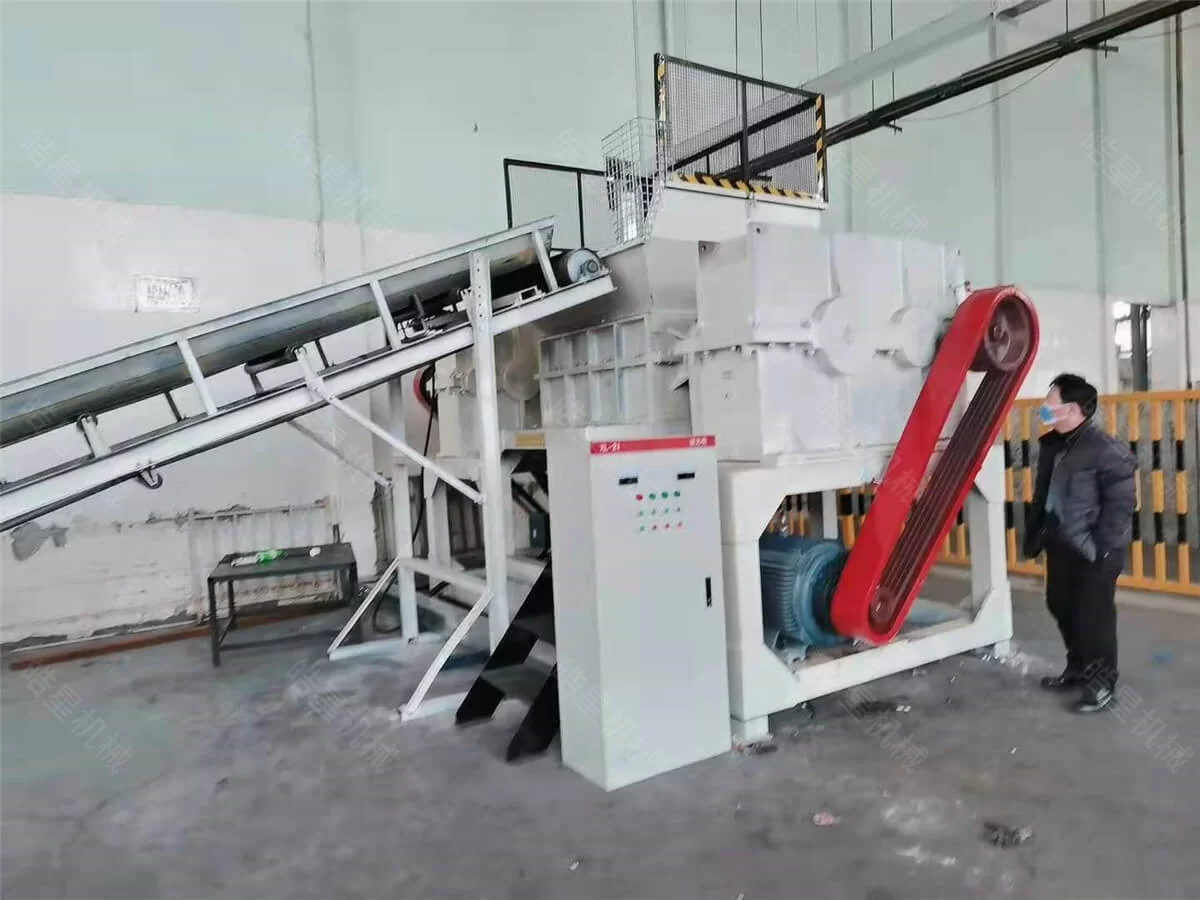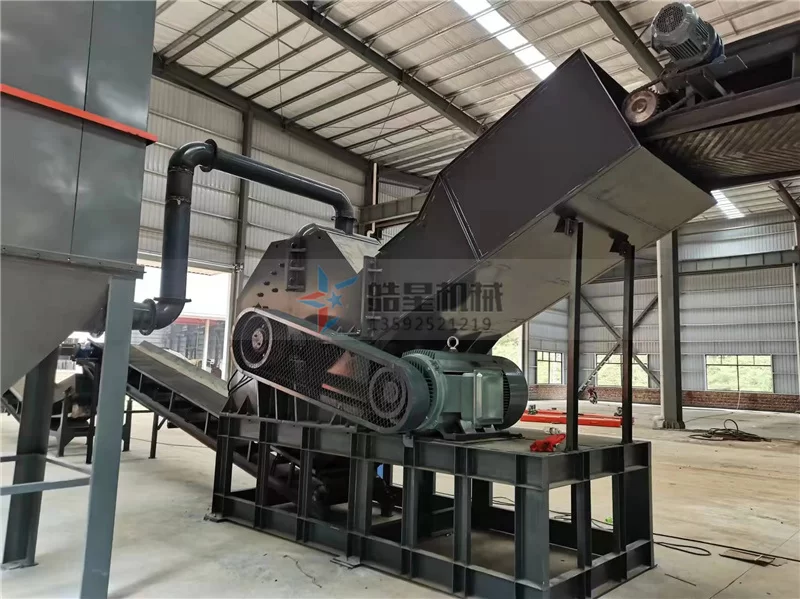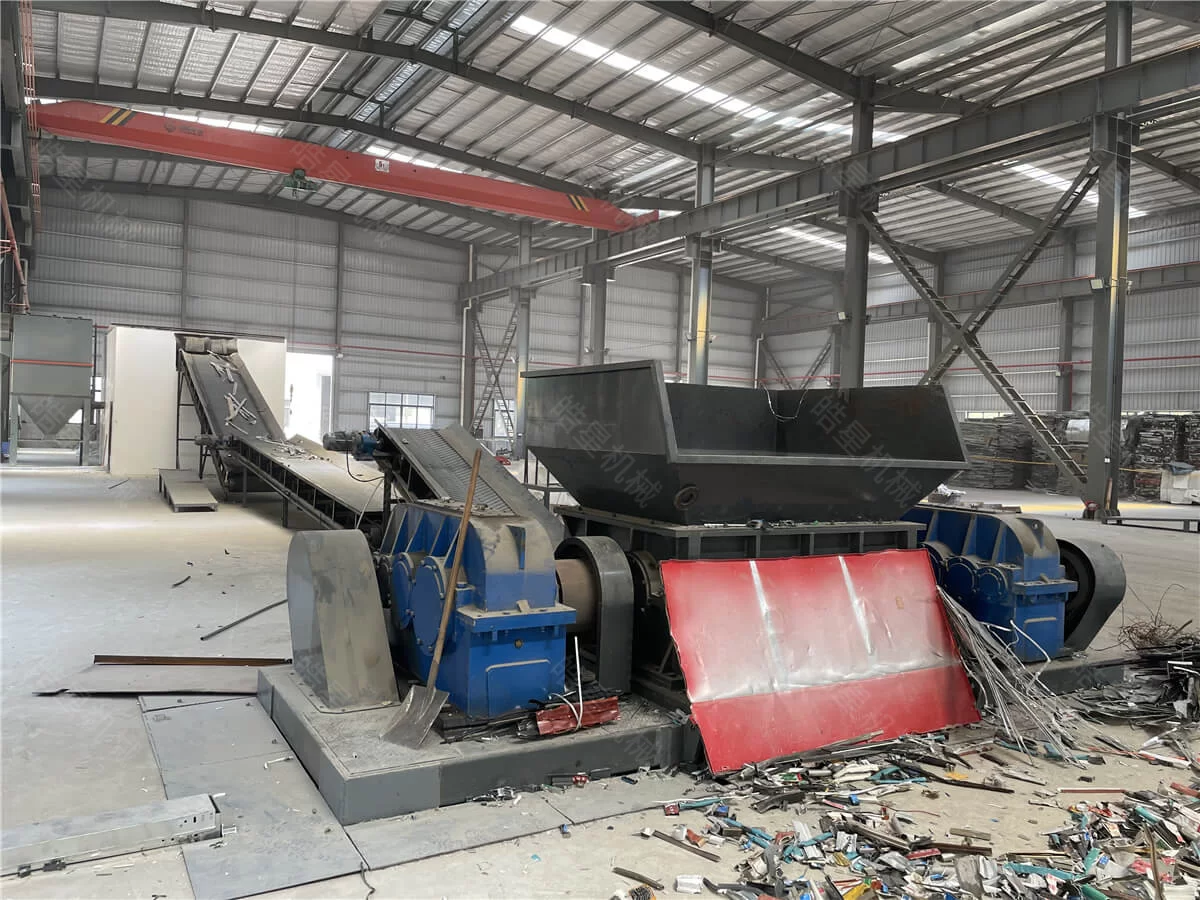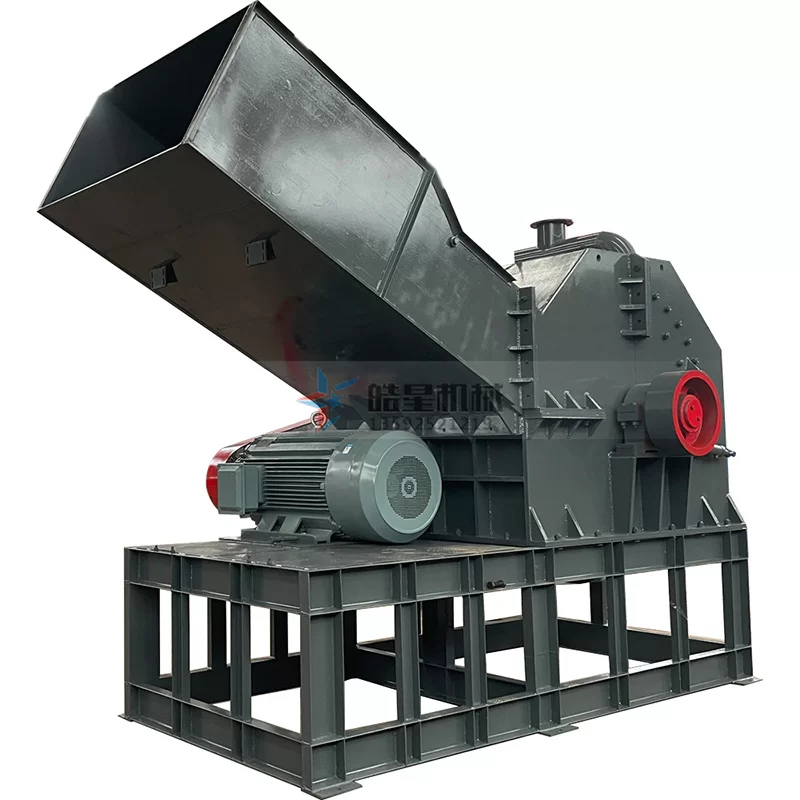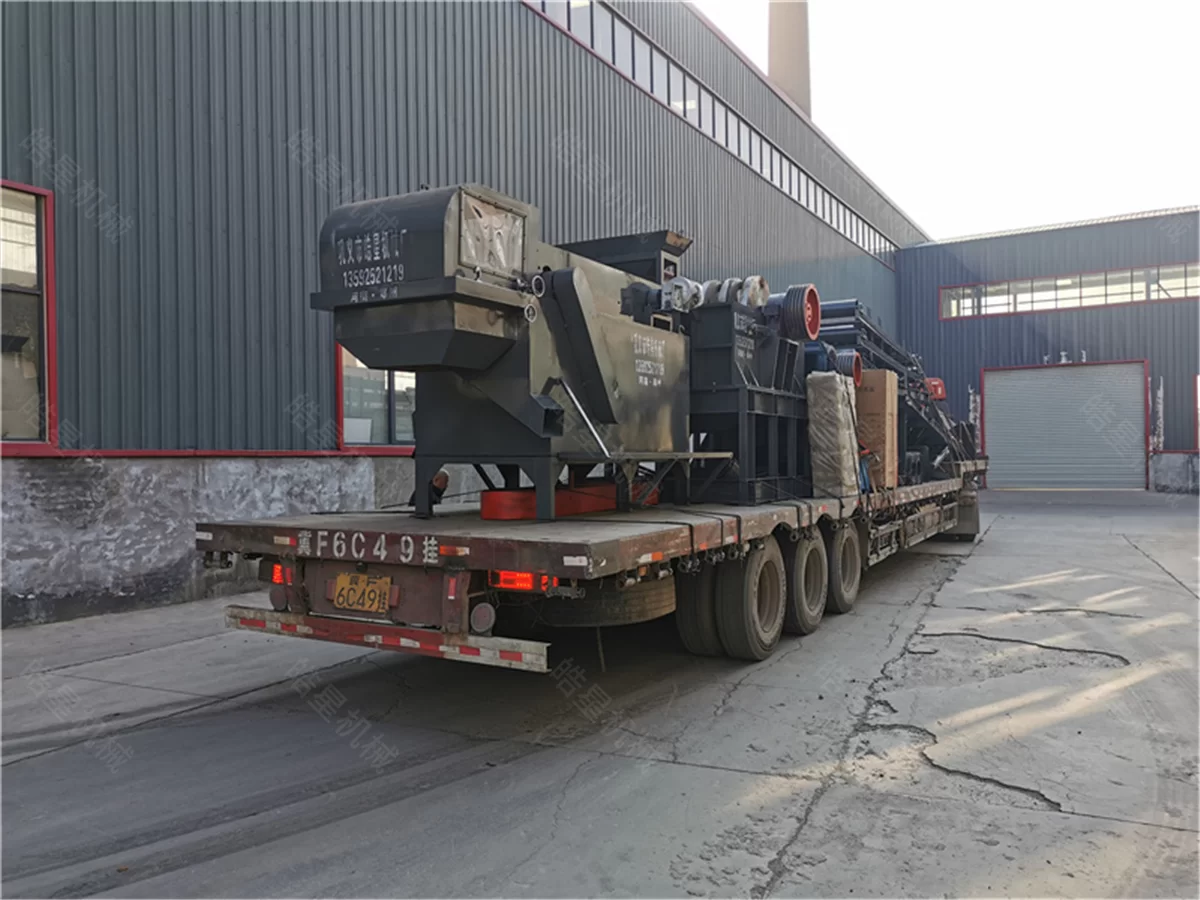
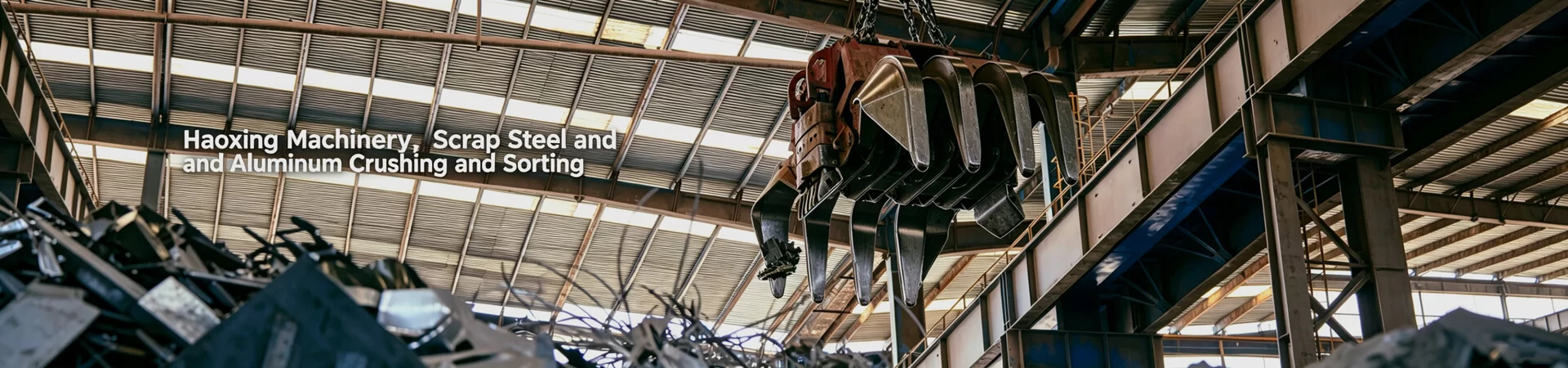
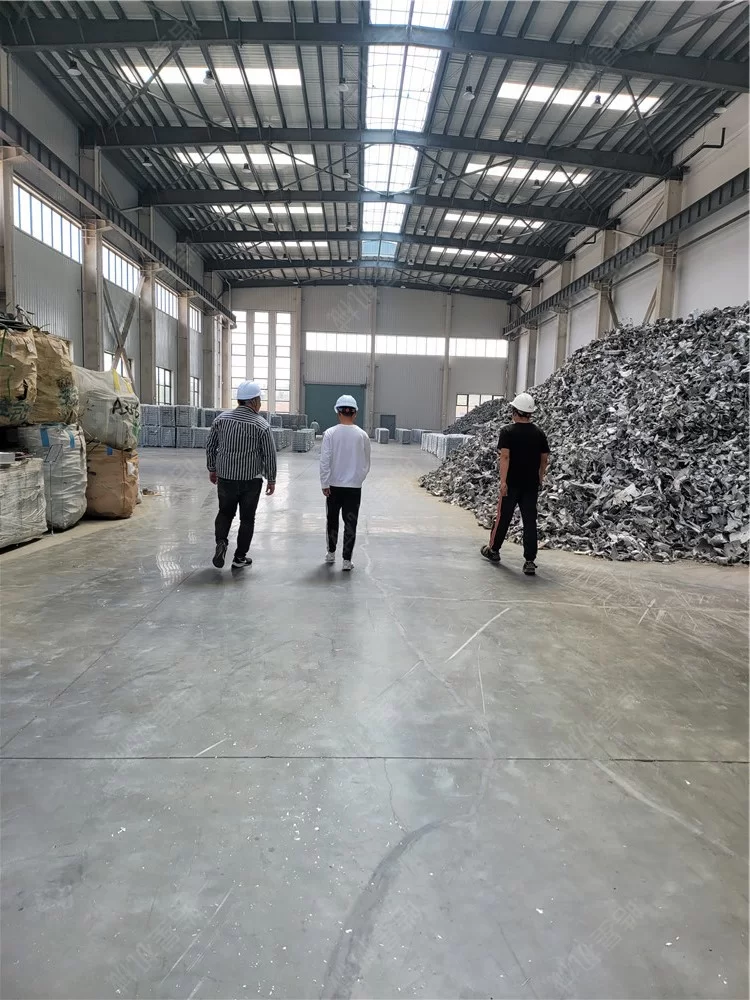
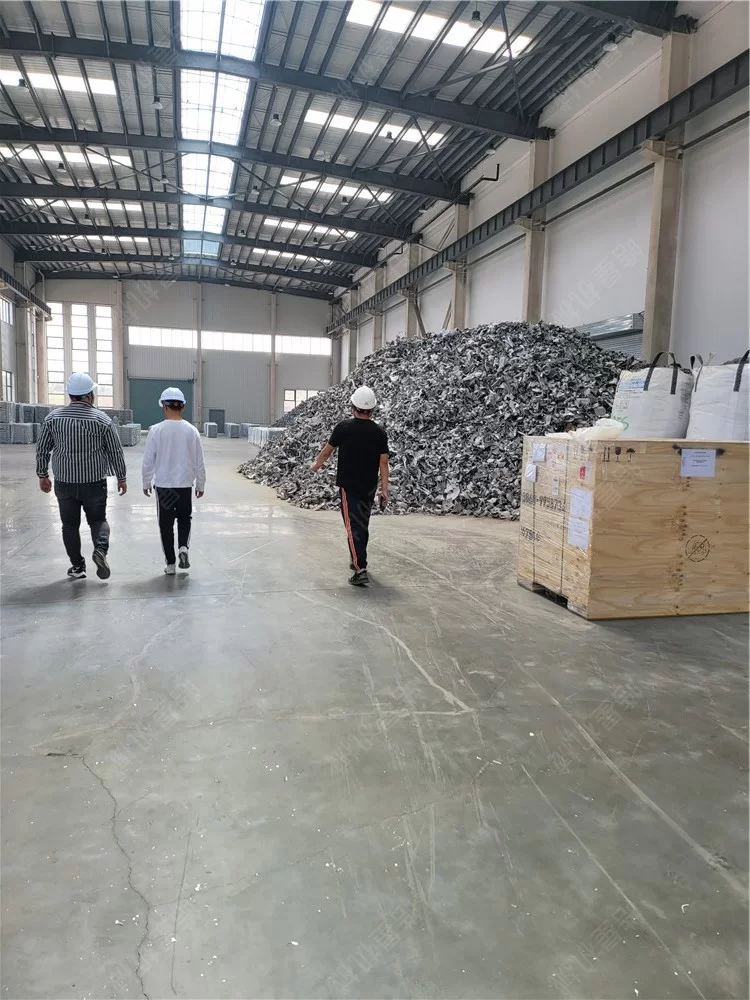

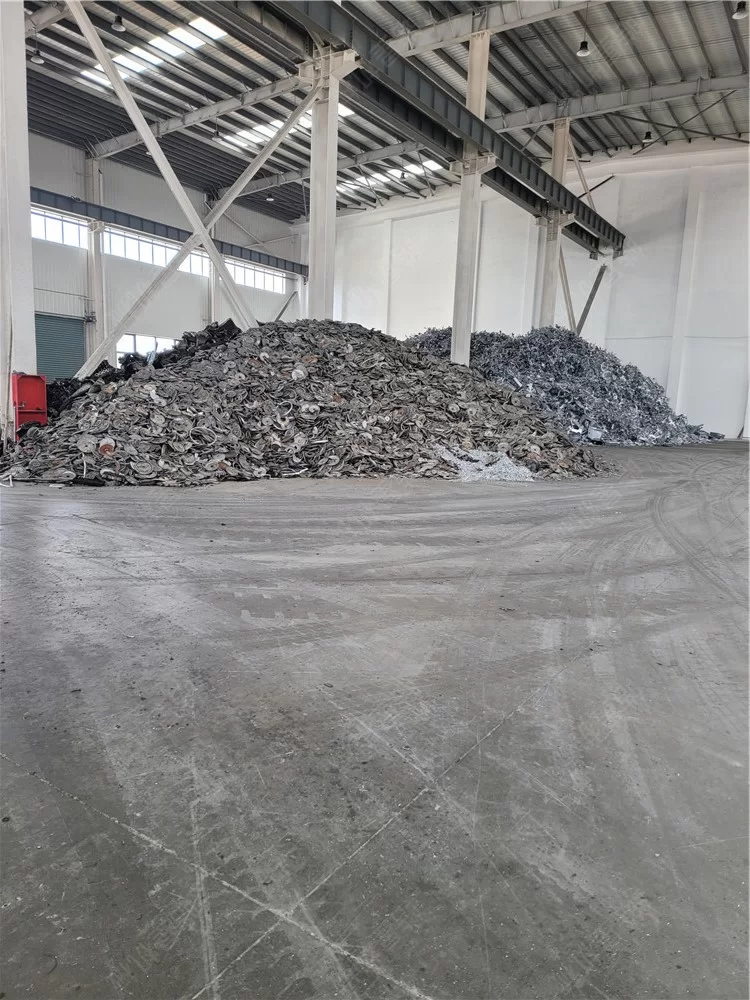
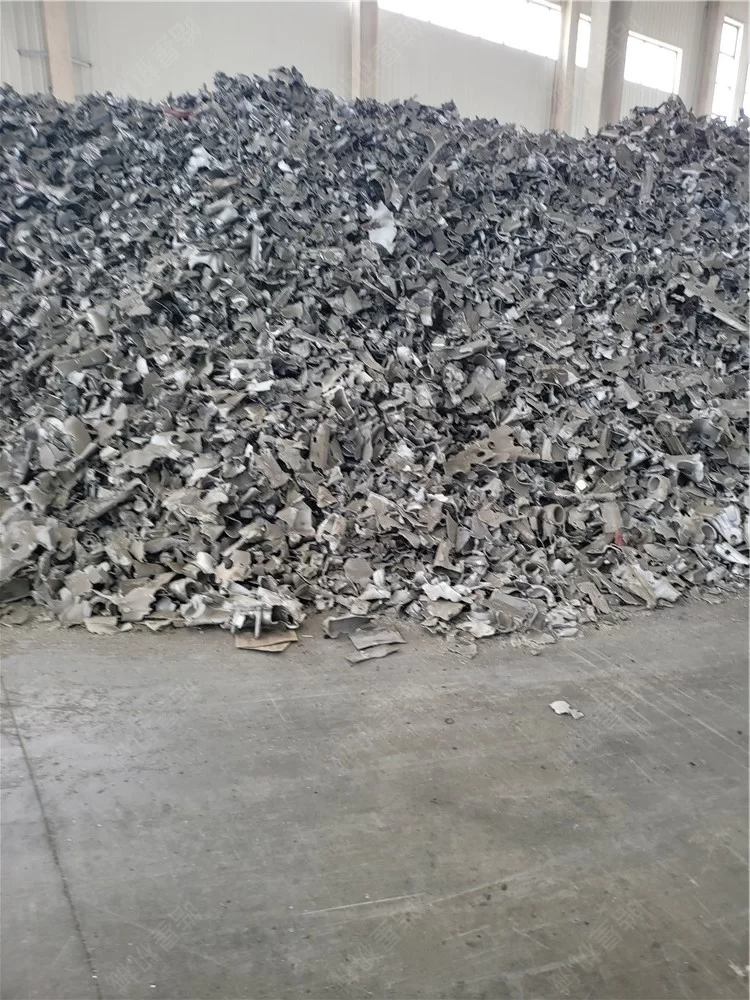
Haoxing Machinery recently carried out an on-site planning visit for a customer preparing to process light gauge metal and scrap aluminum. The photos record the actual working area, material condition and discussions about how the future metal recycling line should fit the site. Because the final equipment configuration has not yet been confirmed, the work focused on real feedstock and operating conditions rather than a standard drawing.
Starting with the Actual Material
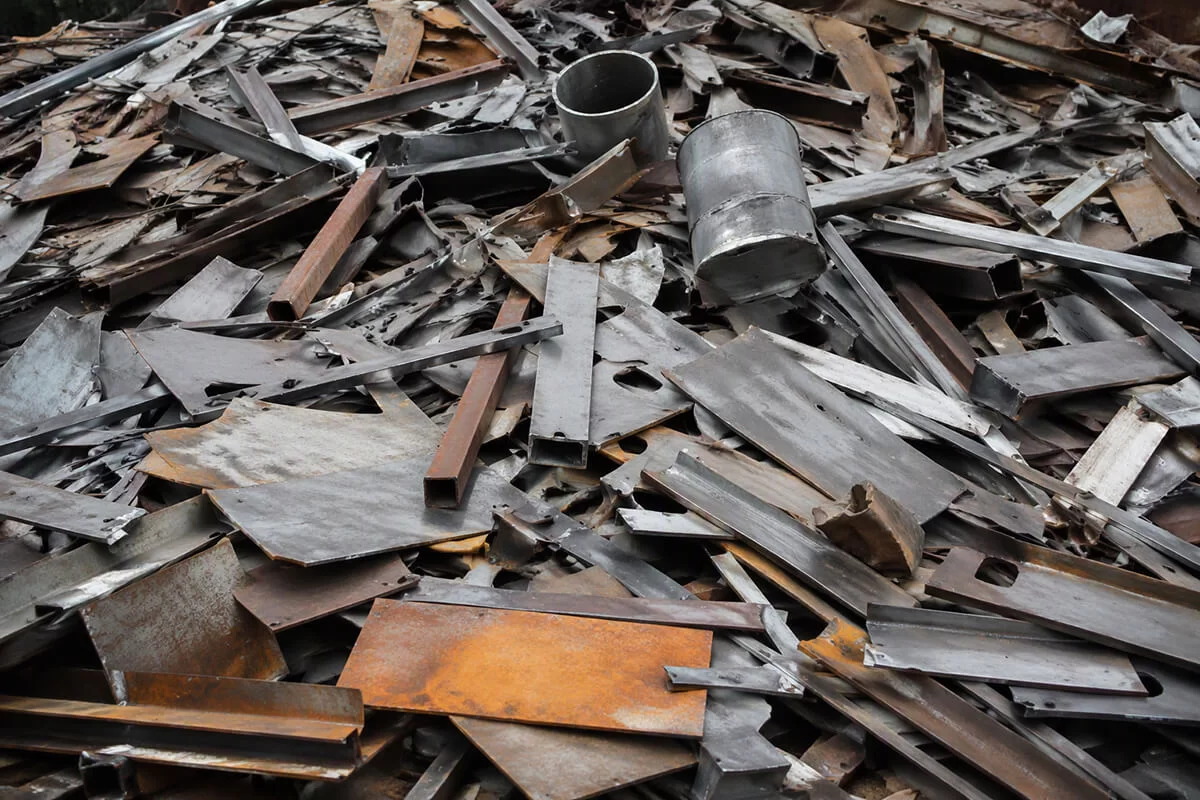
The customer plans to handle light gauge scrap metal, waste aluminum materials and other suitable thin metal feedstock. These materials differ in shape, bulk density, contamination and feeding behavior. Loose sheet, aluminum offcuts and irregular light scrap cannot be evaluated only by total weight. Maximum dimensions, thickness, bundled condition, attached steel, plastics and other impurities affect the selected process.
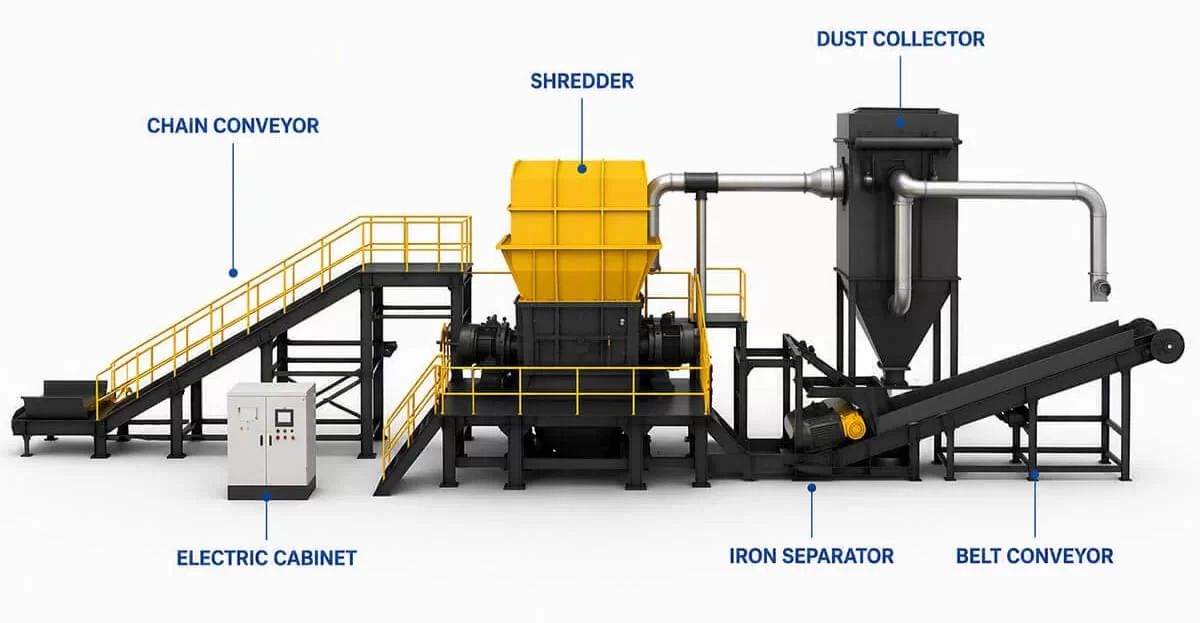
Representative material photos and samples help determine whether the project should begin with controlled feeding, a scrap aluminum shredder for coarse size reduction, or a metal crusher for impact crushing and screen-controlled output. Shredder and crusher are different stages, so selection must follow the incoming material and required final product.
Planning Material Flow Through the Workshop
The unloading area, temporary storage zone, feeding direction, processing equipment and finished-material collection point should form a clear material flow. Repeated turning, reverse transport and forklift crossing increase handling time and can create congestion.
Stable feeding is important because fluffy and irregular scrap may bridge in a hopper. The plan therefore considers the loading platform, conveyor width, hopper opening and safe loader access. The discharge side also needs room for material spreading, inspection and collection.
Possible Crushing and Sorting Route
Bulky or tangled scrap may require low-speed, high-torque shredding. Prepared light scrap that meets the feed limits may enter a suitable metal crusher directly. Once ferrous attachments are exposed, a magnetic separator can remove recoverable iron and steel.
For a prepared mixed stream containing conductive non-ferrous metal and non-metallic material, an eddy current separator may be considered after suitable crushing, screening and material spreading. It is not a universal solution for separating every aluminum alloy or every mixed-metal fraction. The required recovered products must be defined before the sorting system is finalized.
Maintenance, Safety and Dust-Control Space
The layout reserves access around the main machine, bearings, motors, screens, conveyors and electrical cabinets. Maintenance doors and lifting points must remain usable after installation. A line that fits on paper but leaves no space for screen replacement, hammer inspection or conveyor cleaning will create avoidable downtime.
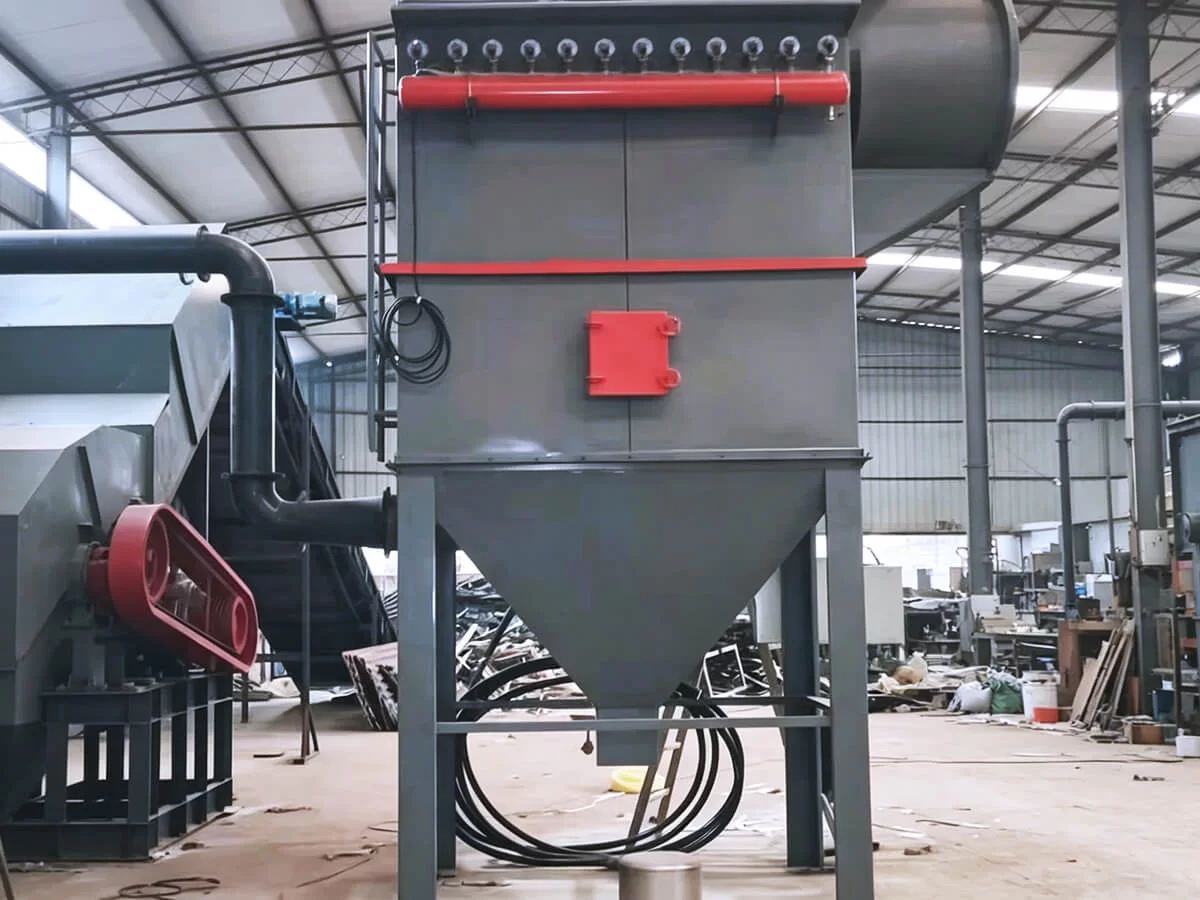
Light scrap and aluminum processing may generate dust from coatings, dirt and attached non-metallic material. The plan should leave positions for enclosed transfer points, dust collection ducts and collection equipment when required. Emergency access, cable routes and operator walkways should remain separate from forklift and loader traffic.
Information Required Before Final Configuration
The customer should confirm the material categories, maximum dimensions, thickness range, contamination, required hourly quantity, desired output size, target recovered products, local voltage and workshop dimensions. Photos of the floor, columns, doors, roof height and existing equipment help avoid installation conflicts.
This site visit turned the initial idea into a clearer engineering basis. Haoxing Machinery will continue refining the solution for light gauge metal and scrap aluminum without promising fixed capacity or separation results before representative material data and project requirements are complete.