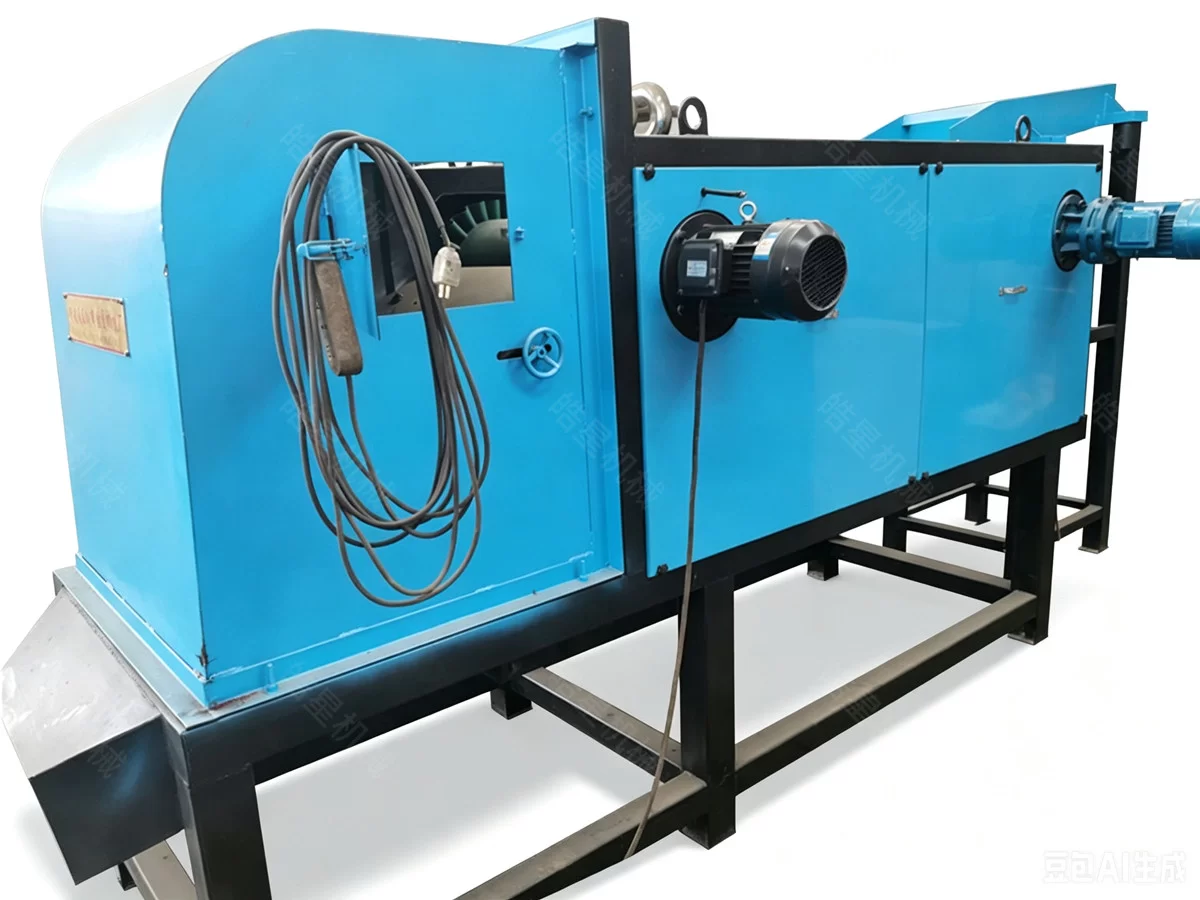
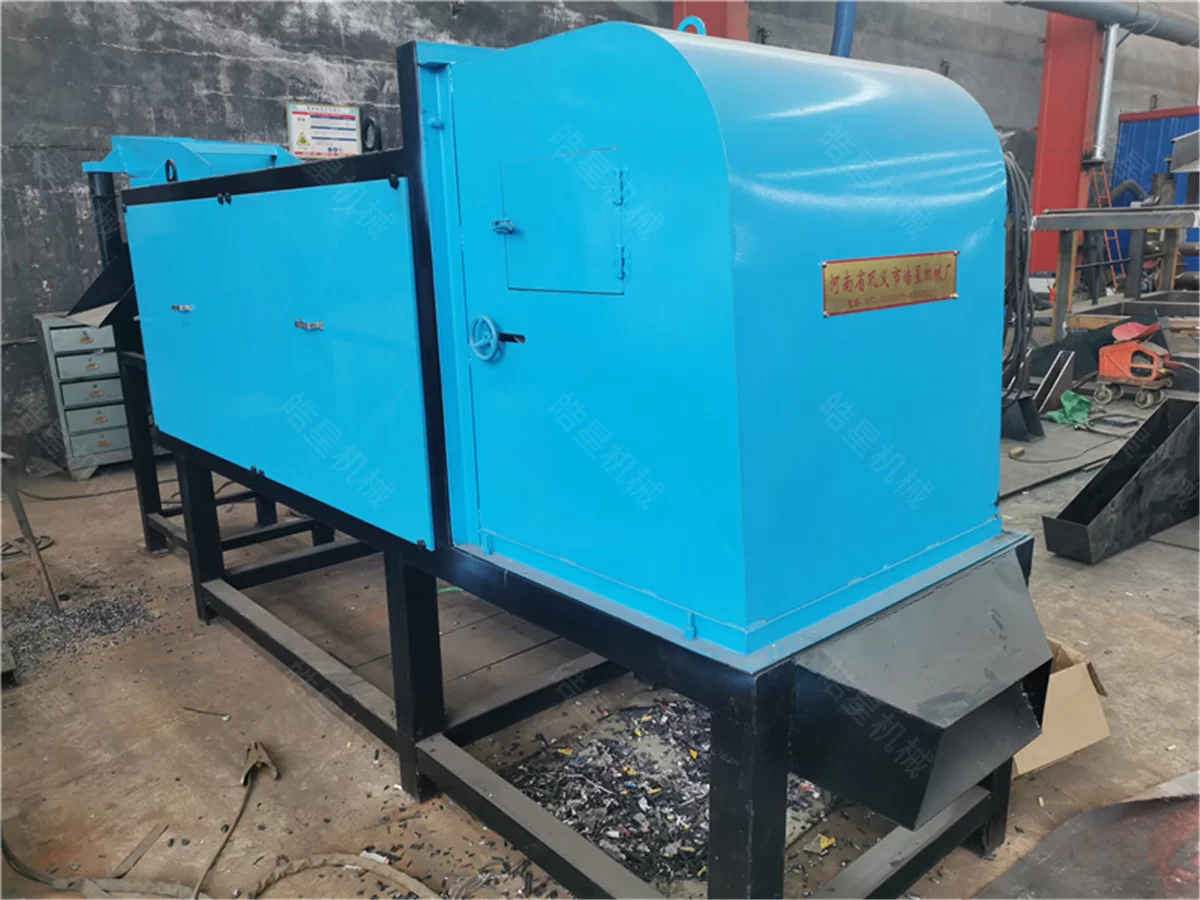
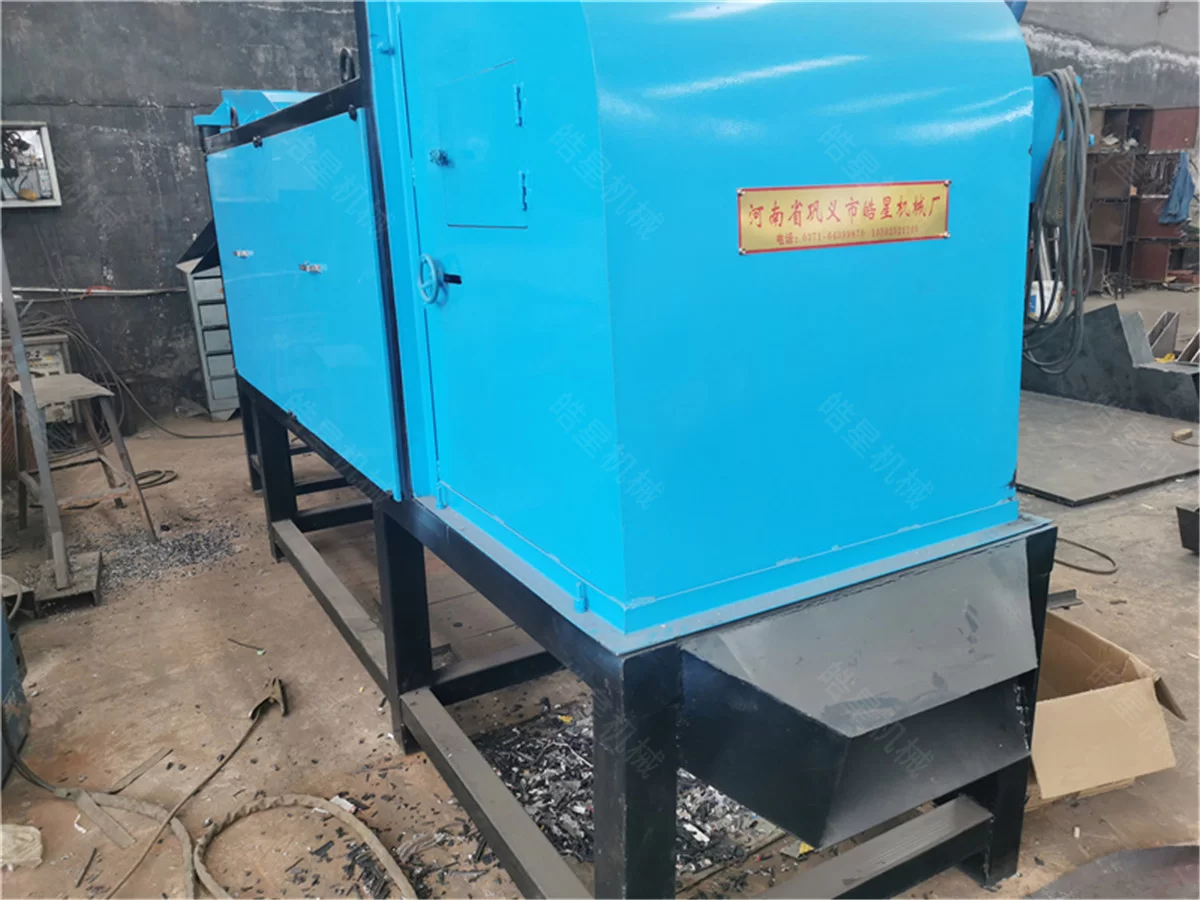
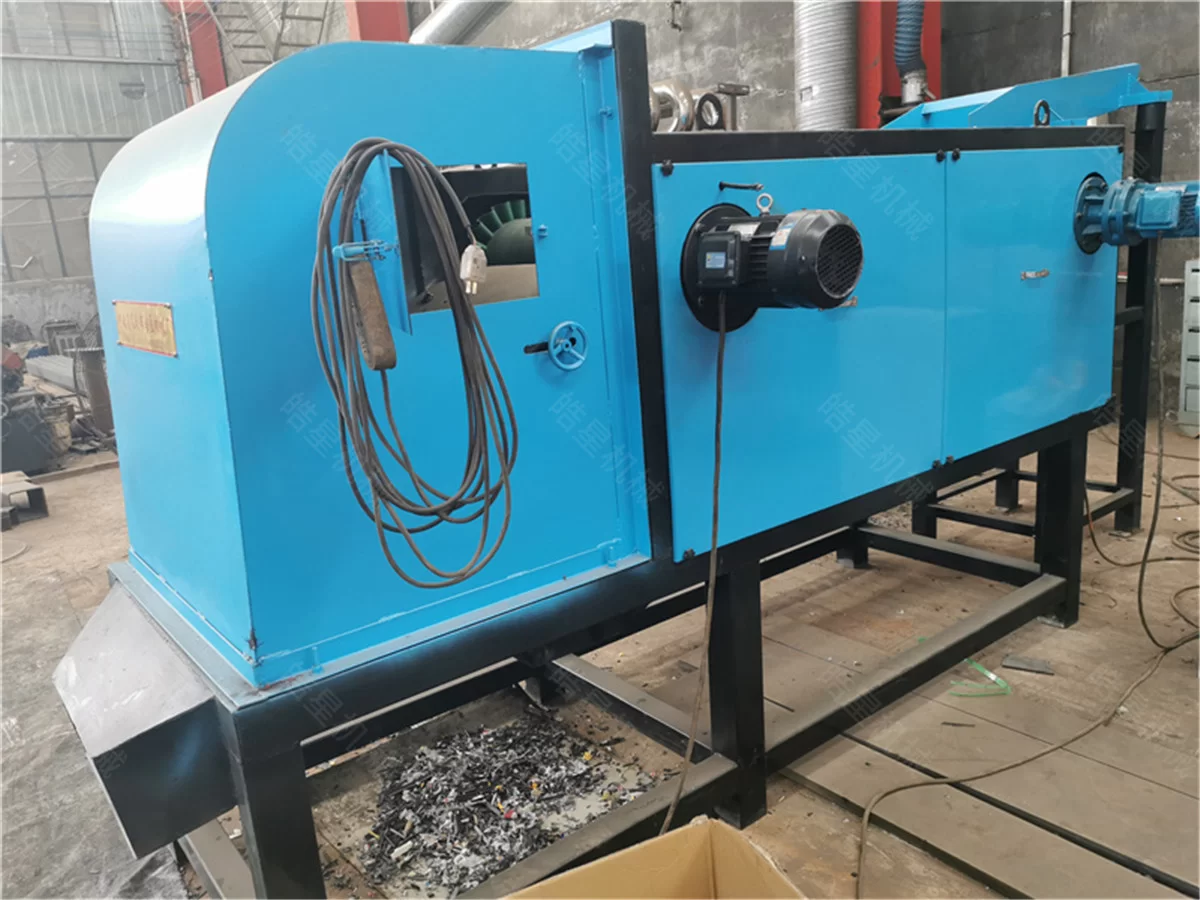
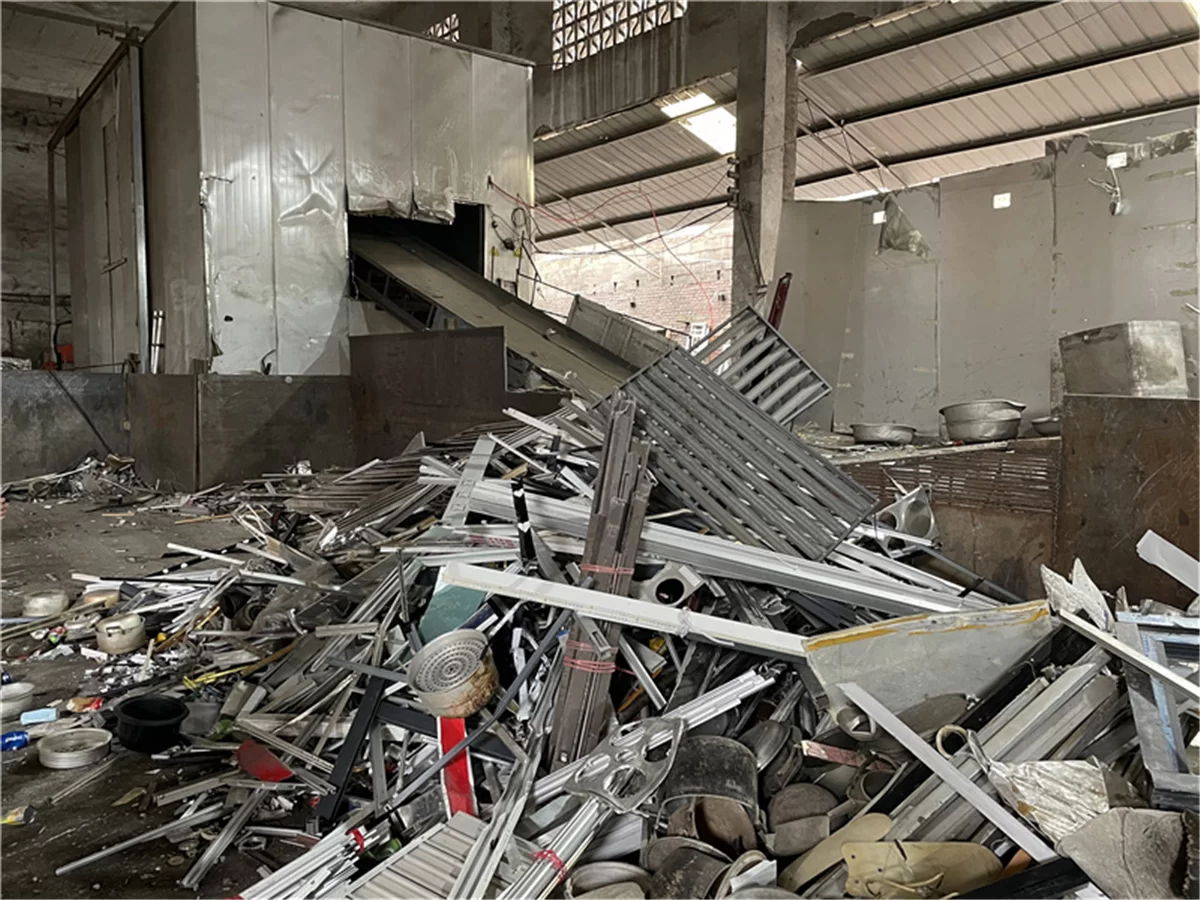
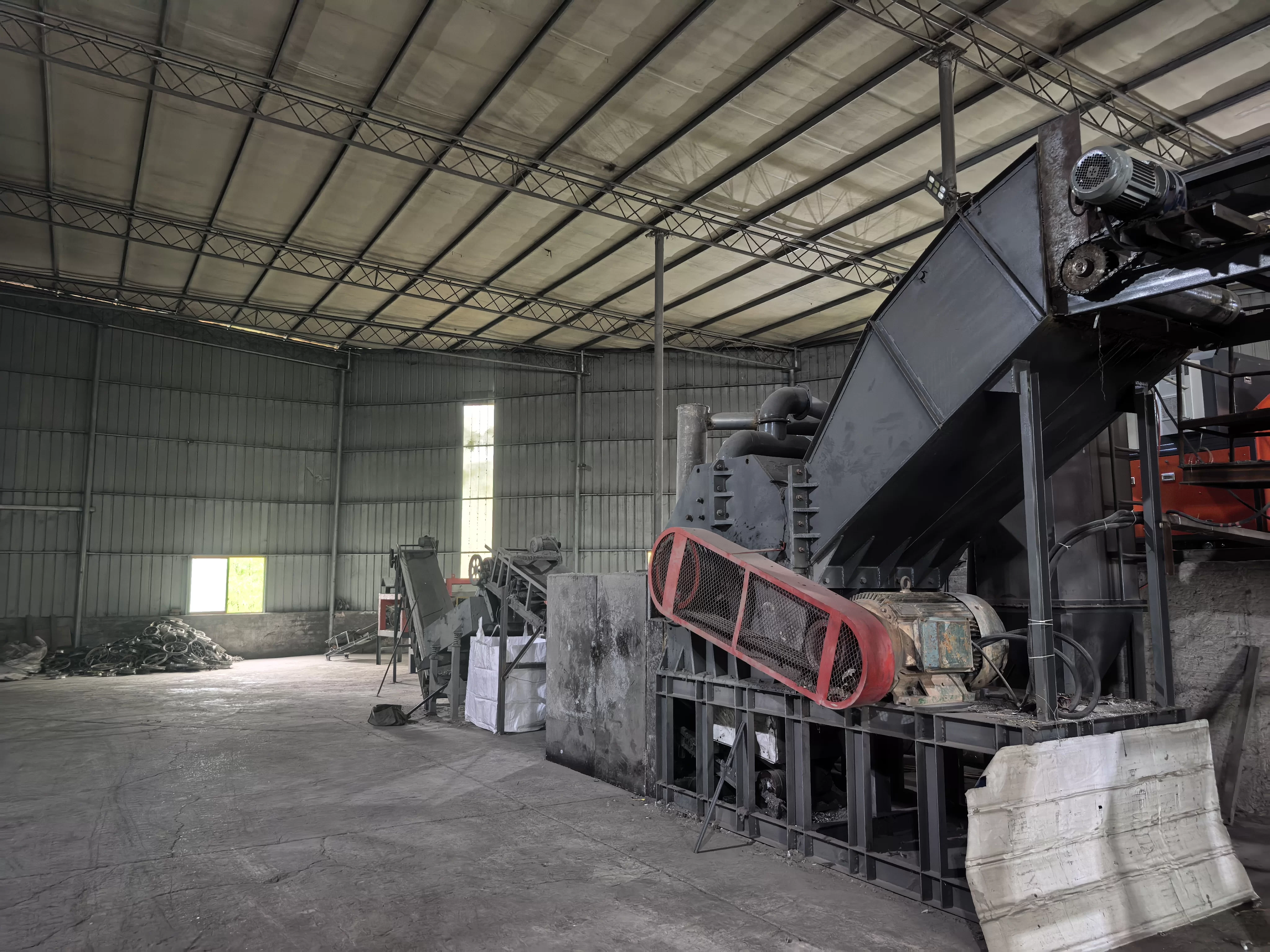
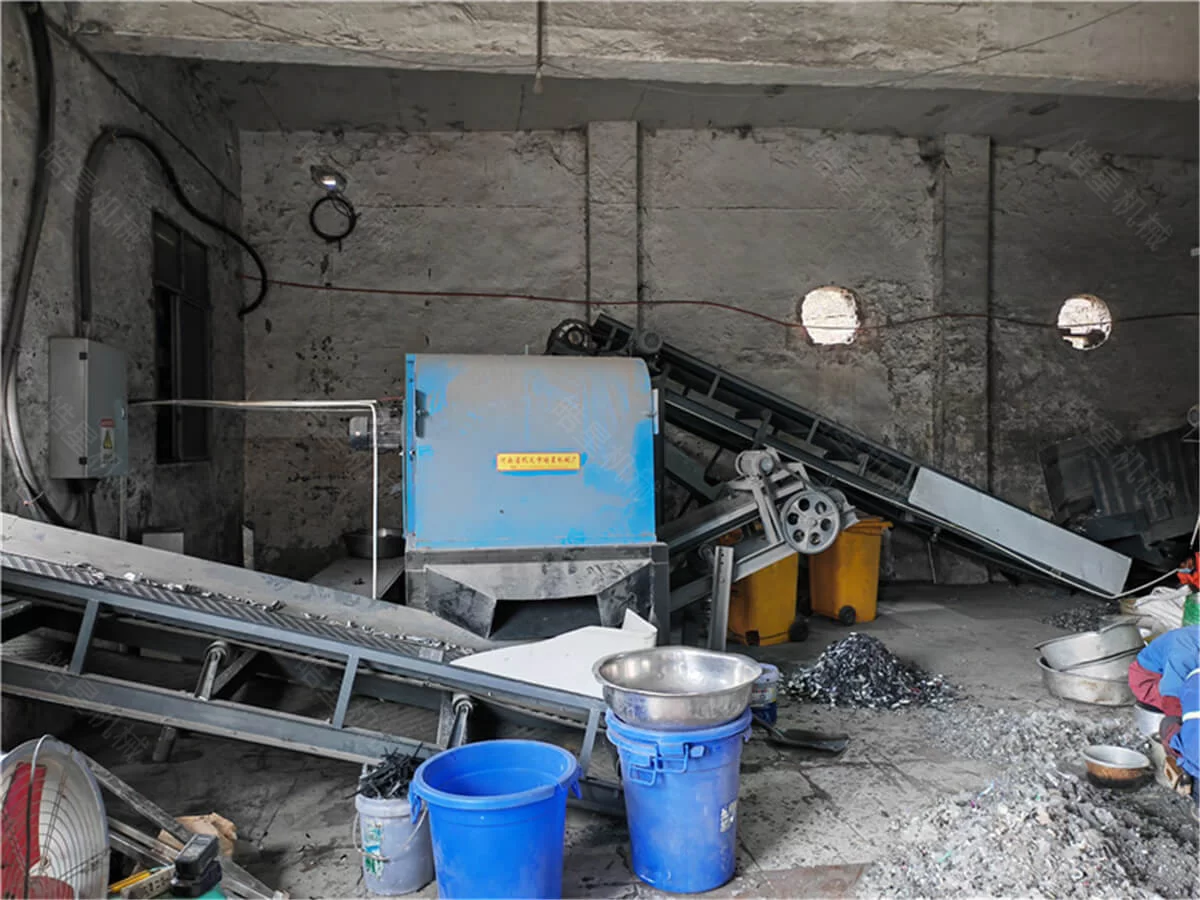
Applicable Materials:Non-ferrous metal materials such as electronic waste, automobile shredder residue, household waste, etc..
Chinese:
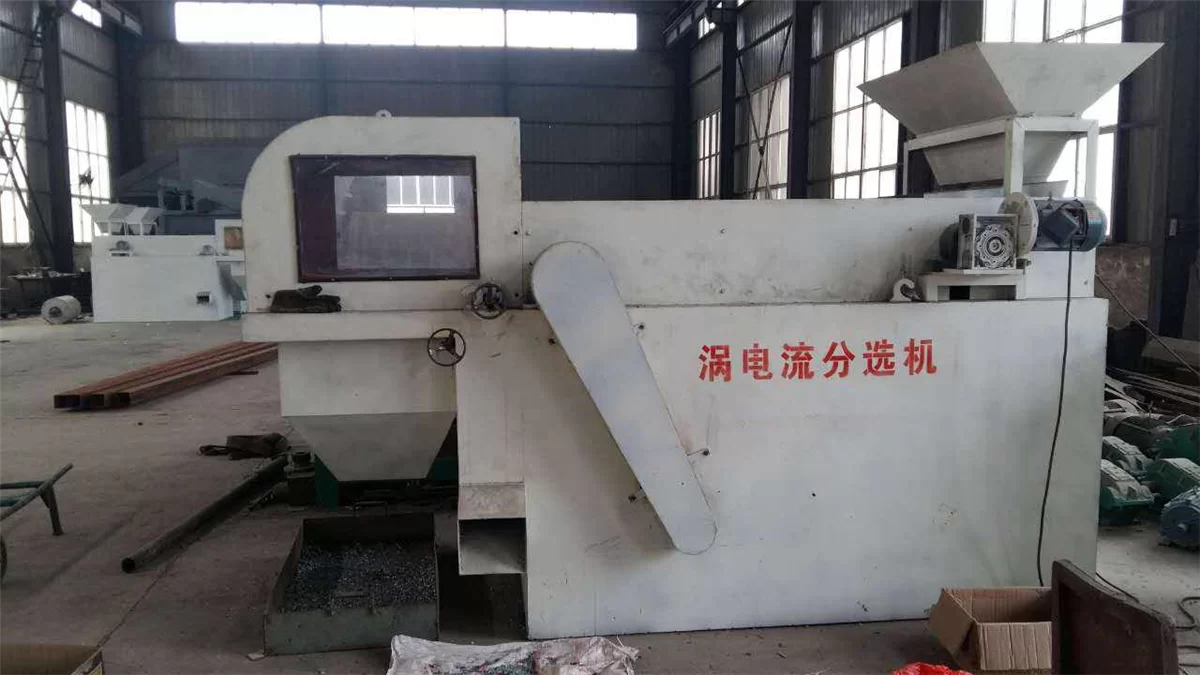
涡电流分选机
Power:
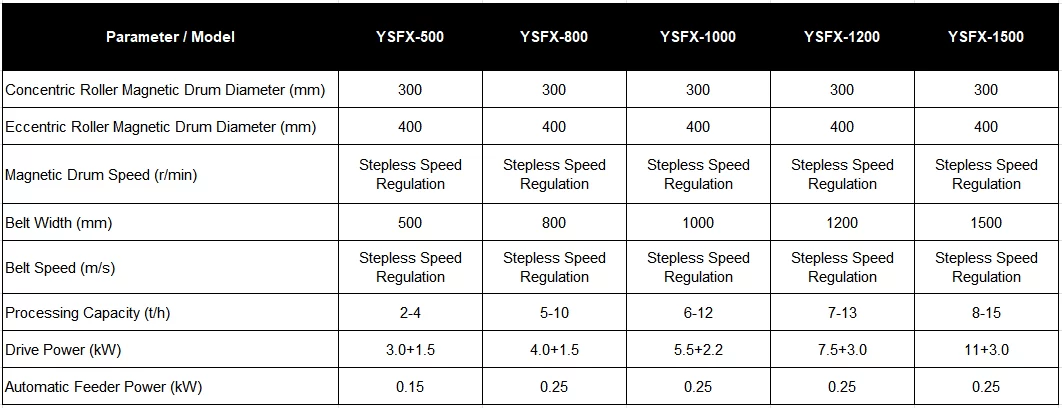
The power range is 5kW to 15kW
Production Capacity:
0.6T/h-15T/h(View Specs)
Processing Efficiency:
It depends on the material type (such as crushed can fragments or copper-aluminum mixed granules) and the equipment model.
Production Line Composition:
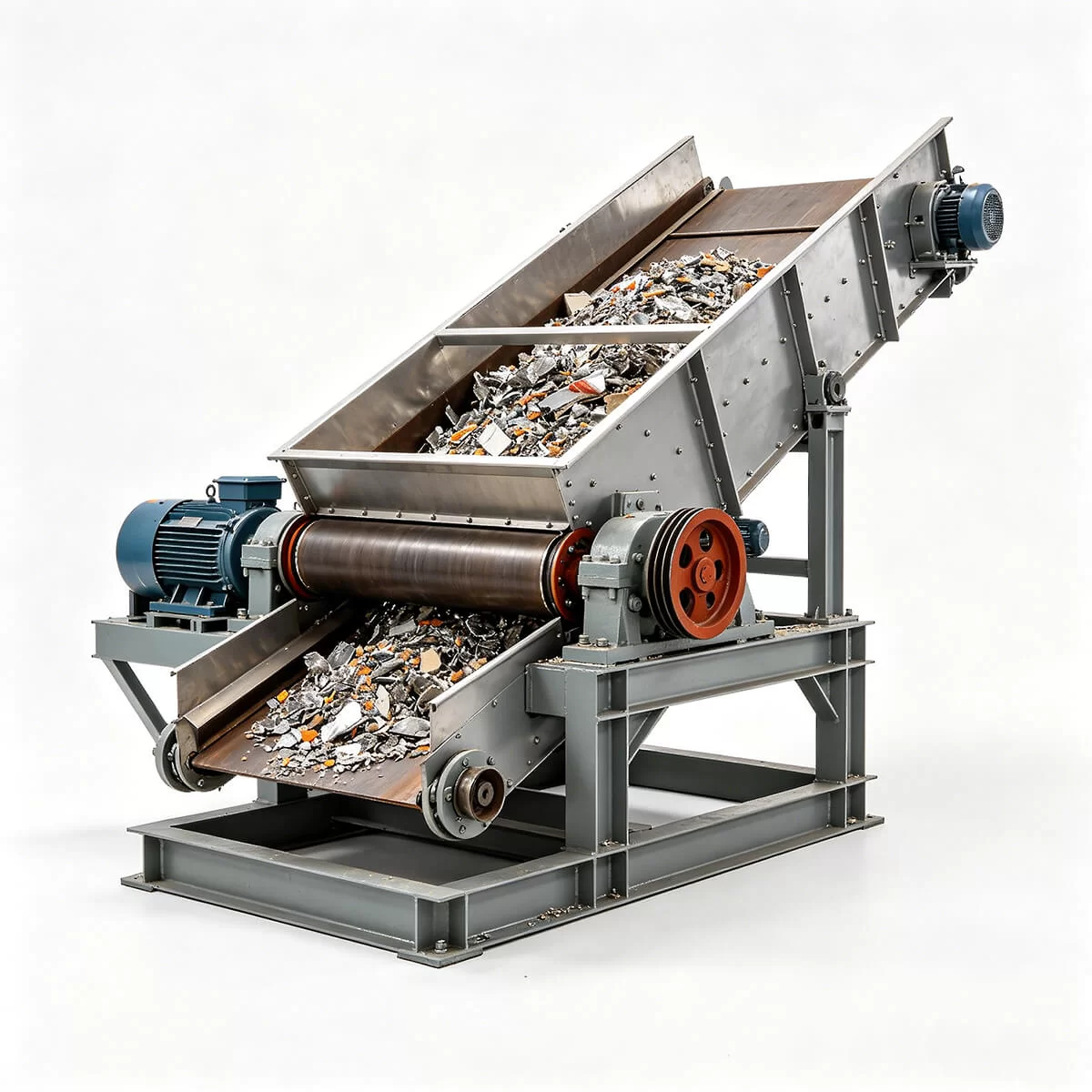
Magnetic roller assembly, sorting conveyor belt, drive motor and gear reducer, vibrating feeder, frame and protective cover, splitter plate (dividing plate), control cabinet, feeding hopper or material spreading device.
Reference Price:Price varies by model. See specs or call.
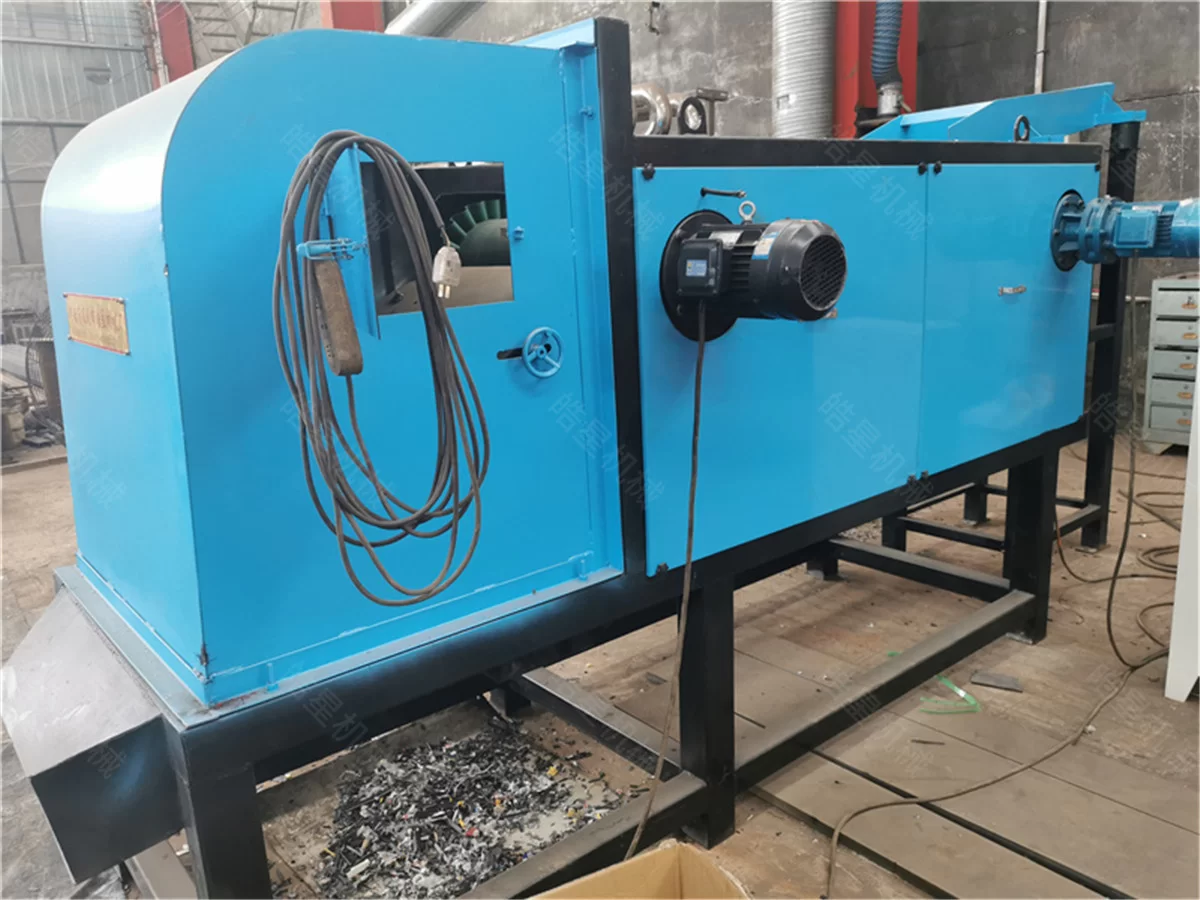
An eddy current separator, also known as an eddy current separator or metal separator, can separate non-ferrous metals such as copper and aluminum from various crushed metal mixtures. It is also widely used in environmental protection, especially in the non-ferrous metal recycling industry.
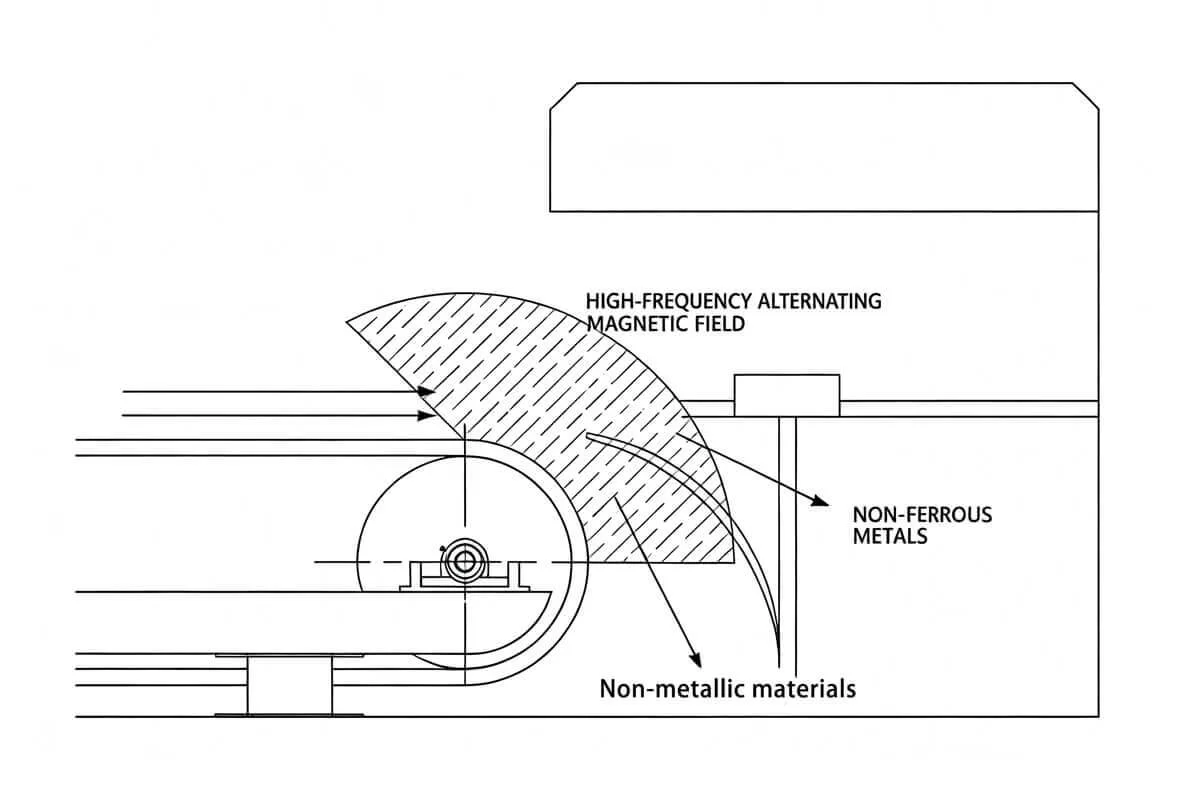
The eddy current separator is designed based on the principle that a conductor generates an induced current in a high-frequency alternating magnetic field. During operation, a high-frequency alternating magnetic field is generated on the surface of the separation magnetic rotor. When conductive non-ferrous metals pass through this magnetic field, eddy currents are induced within them. These eddy currents themselves produce a magnetic field opposite in direction to the original field. As a result, non-ferrous metals (such as copper and aluminum) are propelled forward along their conveying direction by the repulsive force of the magnetic field, thereby achieving separation from non-conductive or non-metallic materials and accomplishing the sorting purpose.
800 Type Eddy Current Scrap Aluminum and Scrap Iron Sorting Machine Operation Video Demonstration:
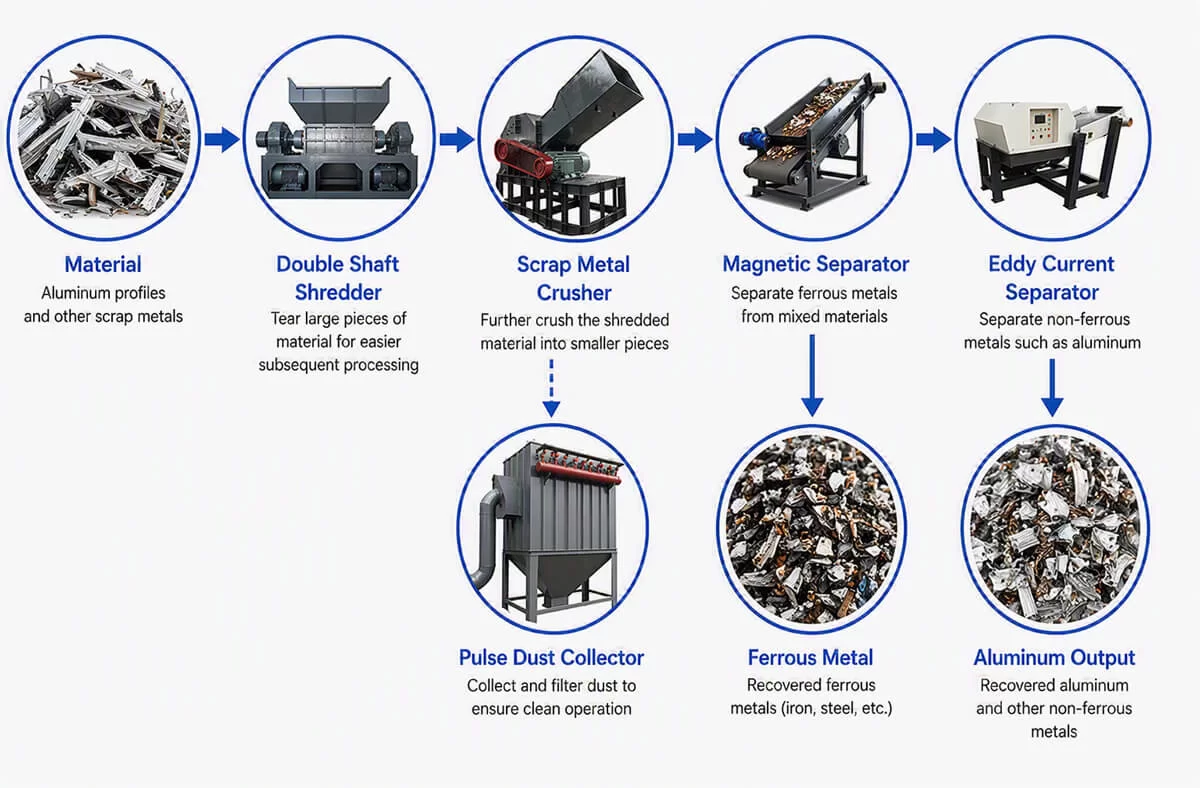
Diagram of the 1000-type Eddy Current Scrap Steel and Scrap Aluminum Crushing and Sorting Production Line:
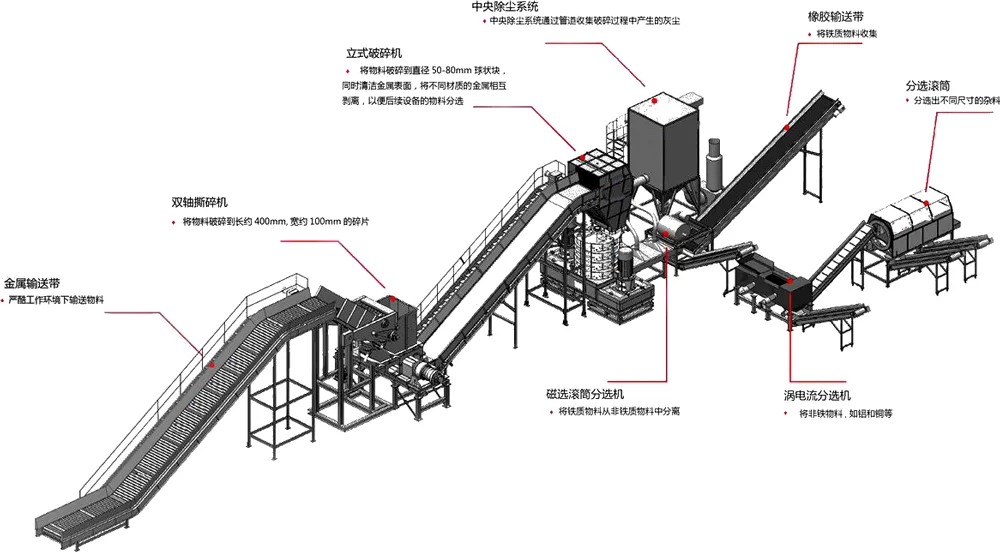
Eddy current separators are mainly used in the crushing and recycling process of various waste materials, such as circuit boards, waste doors and windows, end-of-life vehicles, and waste household appliances. Through the eddy current separator, various types of weakly magnetic non-ferrous metal materials—including copper, aluminum, tin, zinc, and stainless steel—can be effectively separated from the crushed material, delivering high economic value and environmental benefits.
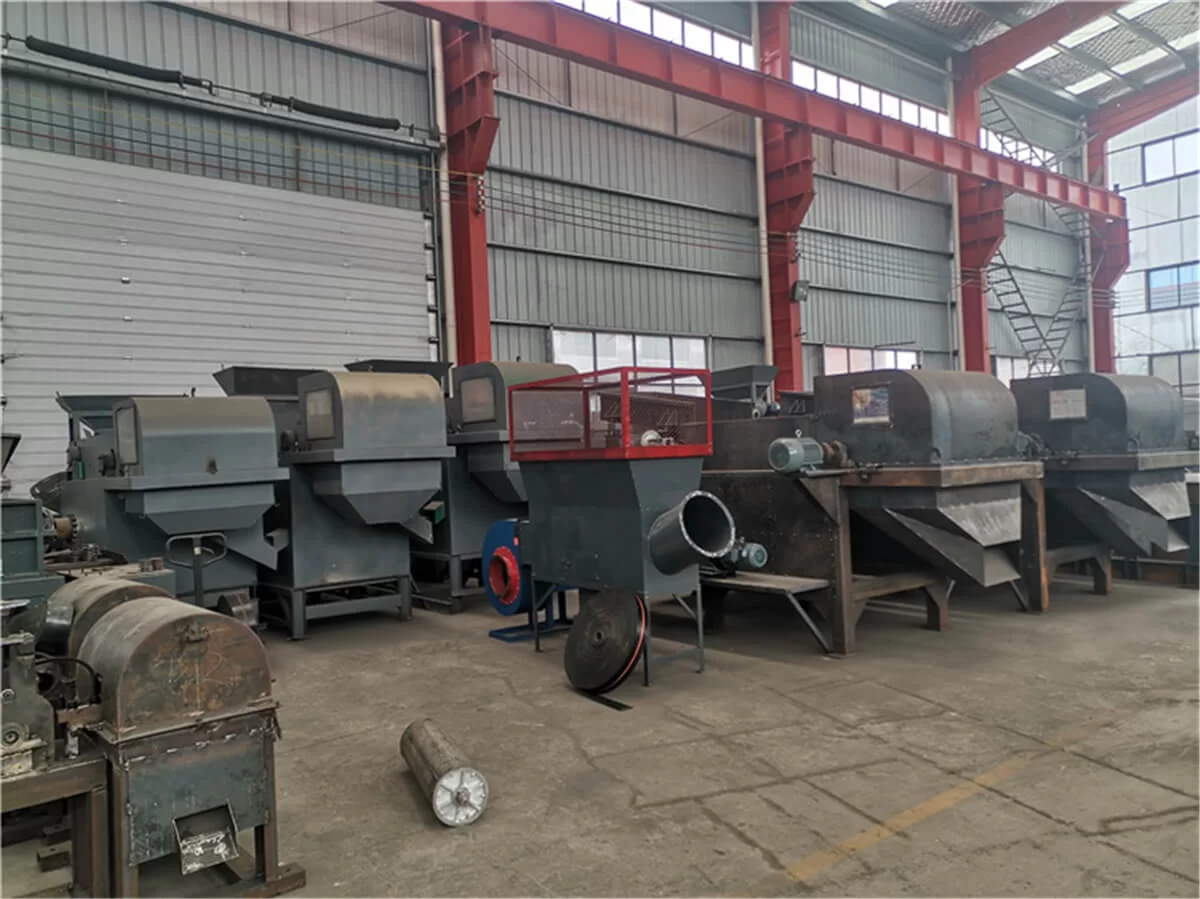
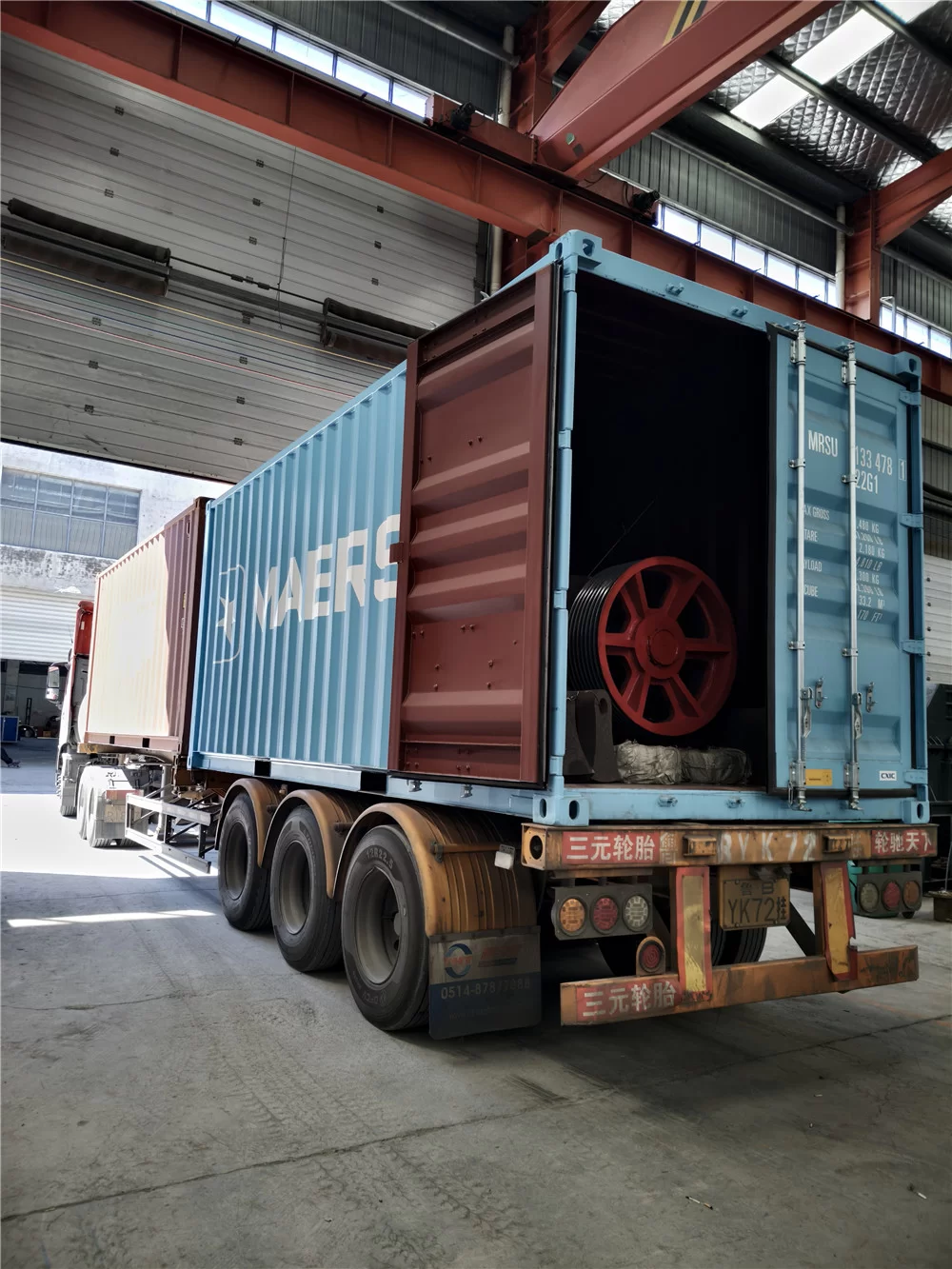
1200 Type Eddy Current Scrap Aluminum Sorting Equipment Shipping Site Video:
1000 Model Eddy Current Waste Aluminum Sorting Machine Working Principle Diagram:
Eddy current separators, also known as eddy current sorters, also known as non-ferrous metal separators.operate based on the law of electromagnetic induction. They generate a repulsive force on materials with different electrical conductivities through a high-speed rotating magnetic field, thereby achieving material separation. When mixed materials such as electronic waste or automotive shredder residue are fed via a conveyor belt into the high-speed magnetic roller—the core component equipped with permanent magnets—a high-frequency alternating magnetic field is generated. Using the principle of electromagnetic induction, the device can accurately "eject" non‑ferrous metals (e.g., aluminum, copper) from non‑conductive waste materials. The separation efficiency mainly depends on the electrical conductivity and density of the materials themselves, as well as the operating parameters of the equipment.
An eddy current separator consists of two parts: the main body of the separator and the power control cabinet.
The main body of the eddy current separator comprises: a separation system, an electric motor, and a machine frame with a protective cover.
The separation system, which is the core of the equipment, consists of: a permanent magnetic drum, a conveyor belt, a drive roller for the conveyor belt, and a geared motor.
Eddy current separators (also known as non-ferrous metal separators) have a core advantage in efficiently recovering non-ferrous metals (especially aluminum, copper, etc.), while also featuring environmental friendliness, low energy consumption, and a high degree of automation. The main product advantages are as follows:
1. Efficient separation of non-ferrous metals
High specificity: Specifically designed for non-ferrous metals such as copper, aluminum, zinc, and tin in crushed materials, enabling efficient separation from mixed solid waste. The repulsive force is strong and adjustable, offering strong adaptability.
Wide particle size range and high precision: Effectively separates non-magnetic non-ferrous metal particles ranging from 5mm to 50mm, avoiding resource waste.
2. Strong adaptability to material shape
Capable of processing irregularly shaped metal particles (e.g., crushed automotive shredder residue, broken bridge aluminum scrap, aluminum particles from scrap machinery, household appliance fragments, electronic waste), even thin flakes or wire‑shaped metals can generate sufficient eddy current repulsive force.
3. Large throughput and automatic operation
Continuous, automatic processing of large volumes (throughput from a few tons to dozens of tons per hour), suitable for large‑scale operations.
Can be integrated with metal shredders, scrap steel shredders, vibrating feeders, magnetic separators, etc., to form a fully automated production line, reducing manual labor intensity and safety risks.
4. Low operating cost
Main energy consumption comes from the magnetic rotor rotation and belt drive; no consumables (e.g., filter cloth, chemicals).
The magnetic rotor uses permanent magnets (e.g., NdFeB) requiring no external excitation power, resulting in relatively controllable long‑term electricity costs.
Simple maintenance, mainly cleaning the belt and checking bearings.
Parameter description diagram for Eddy Current Separator:
Post a comment:
Comment history:
游客 2020-09-04 15:03:51
铜、铝、不锈钢、少量银、混合的,能否分离?
管理员回复: 可以进行分离,配置上分选机即可。