Project Overview
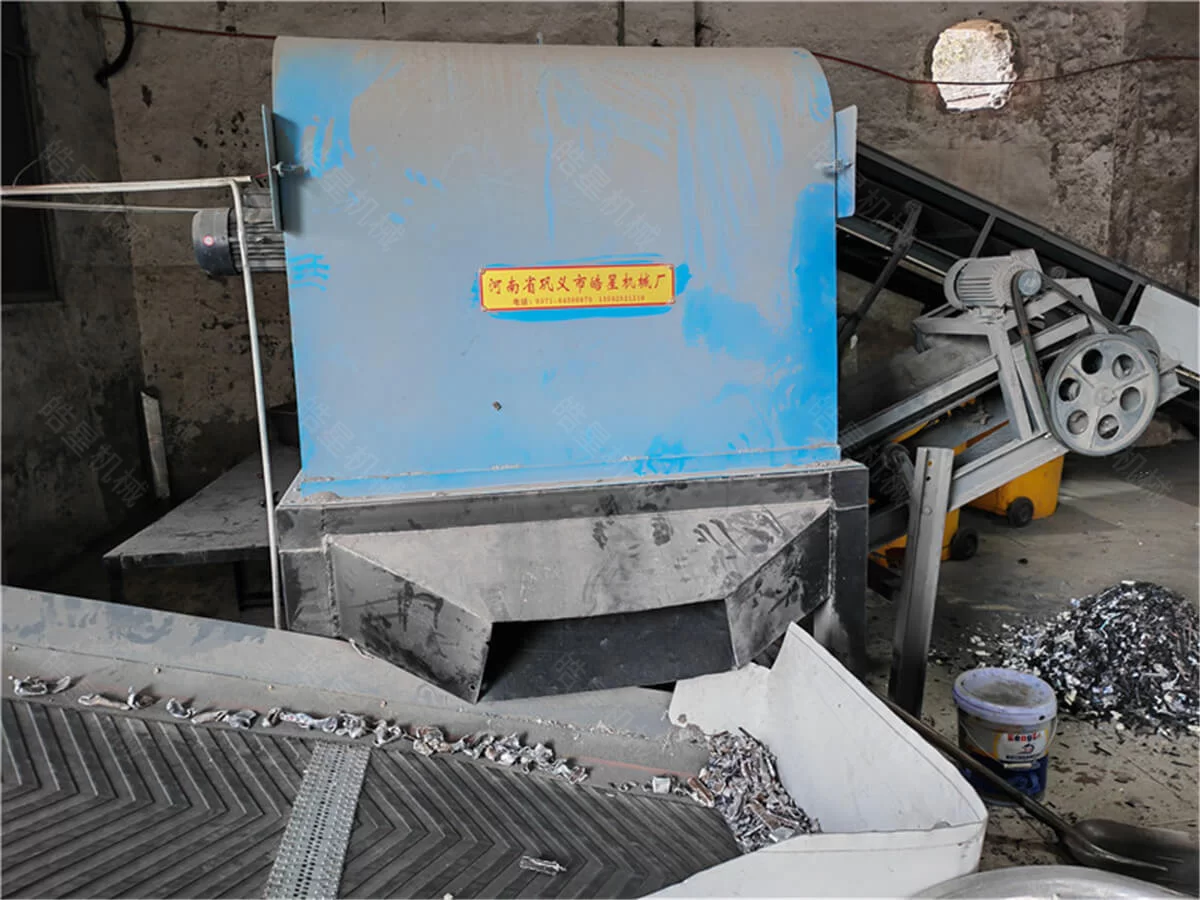
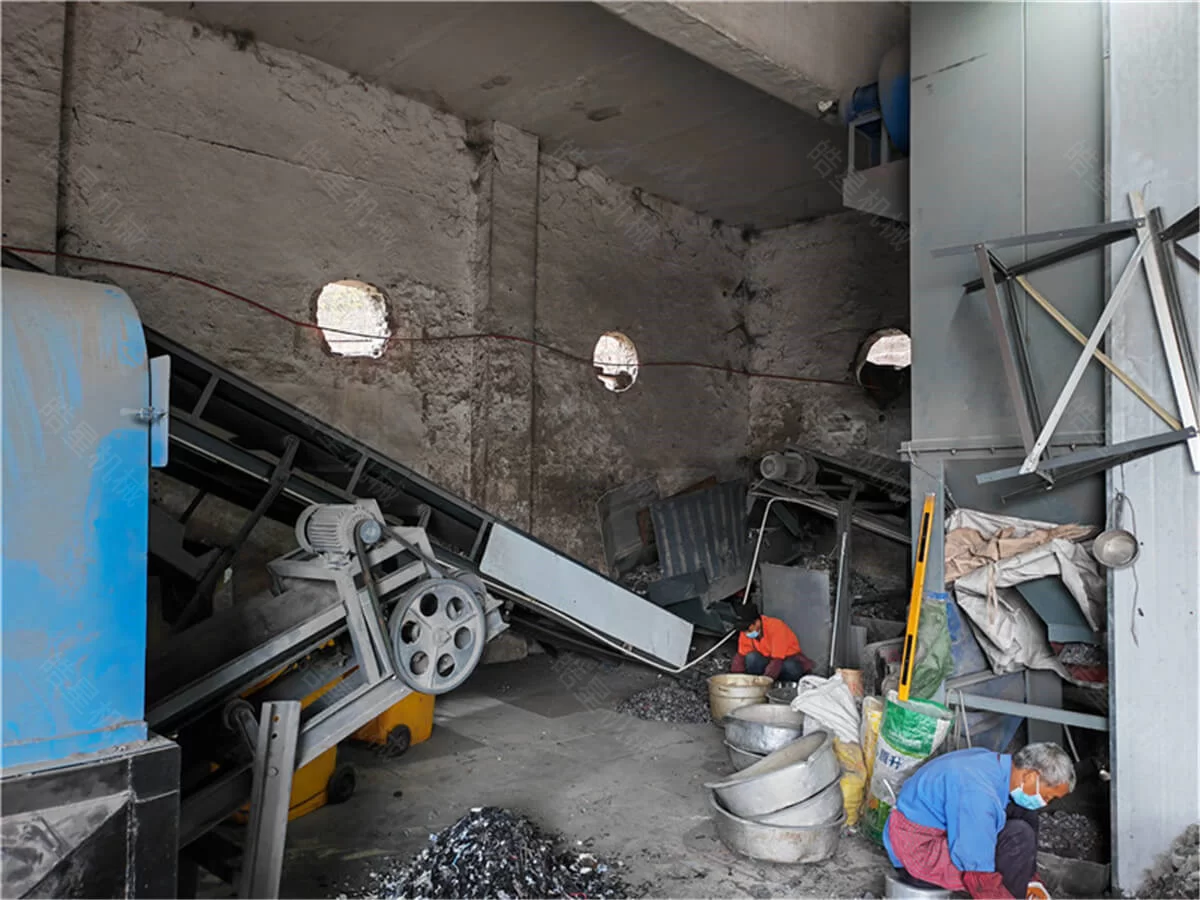
Customer-site photos of an eddy current separator processing crushed scrap aluminum, thermal break aluminum and waste profiles, with attention to rotor operation and aluminum-plastic separation performance.
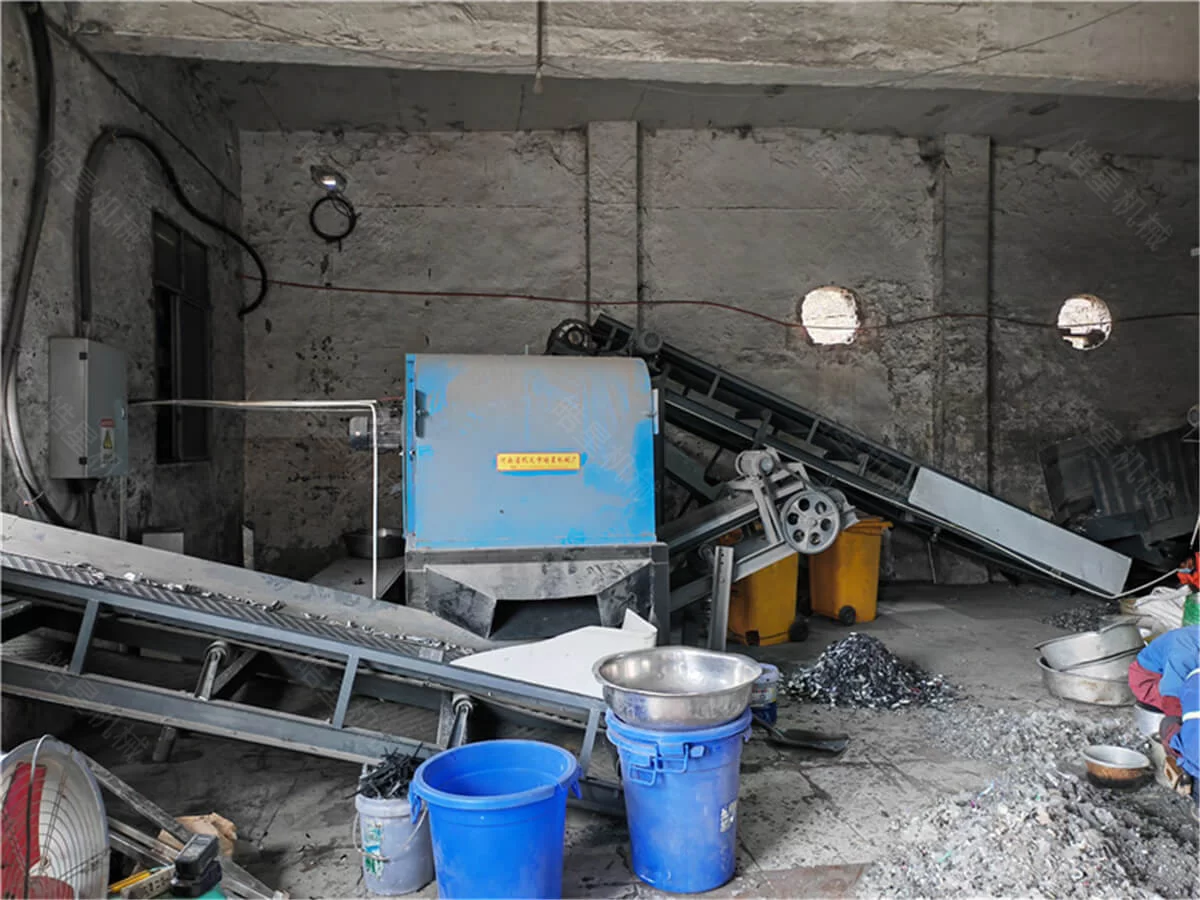
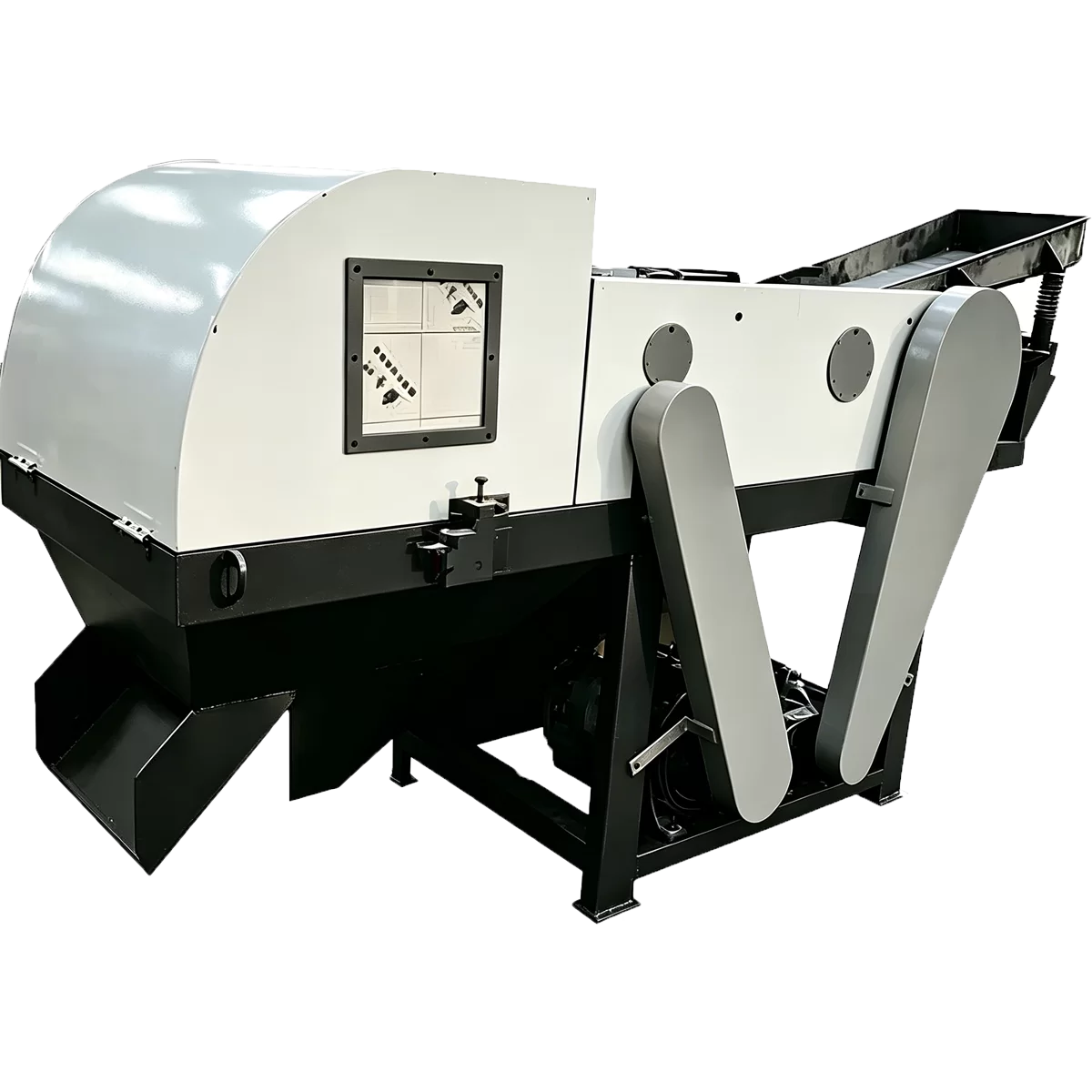
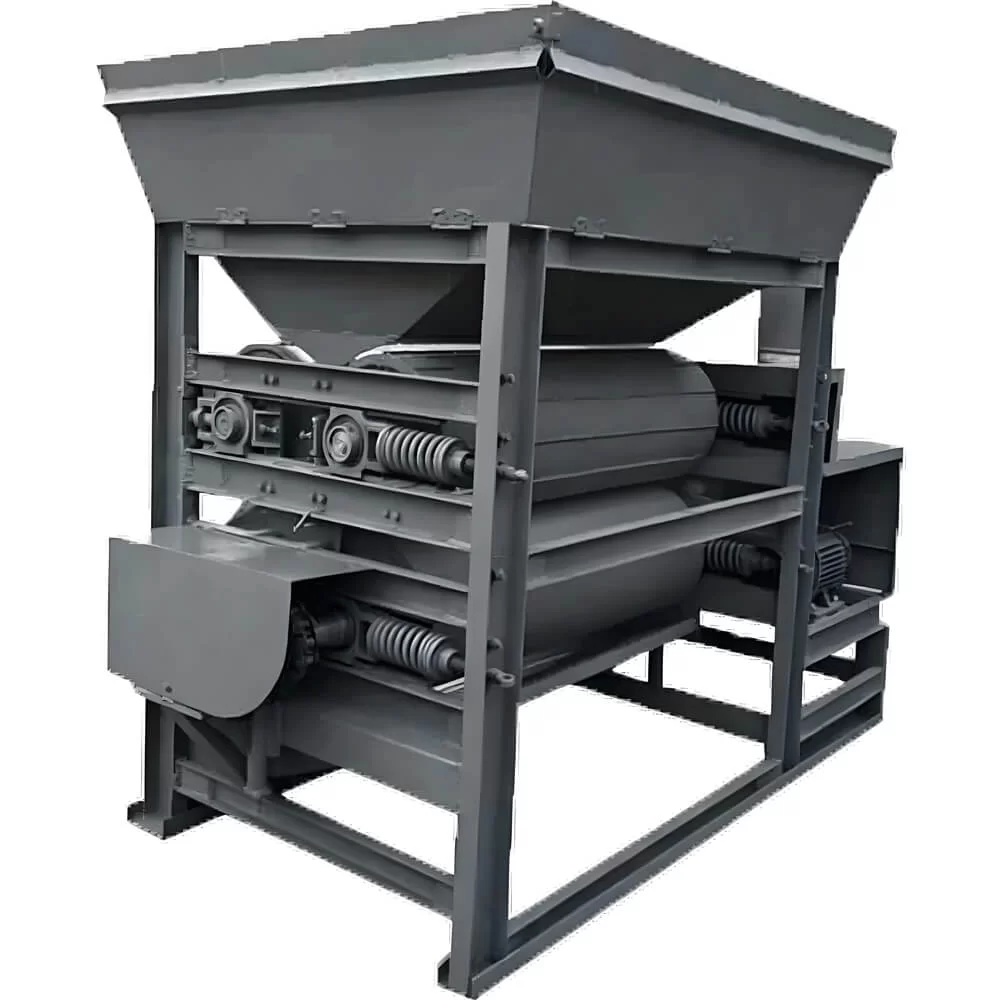
These production-site photos show an eddy current separator operating in a customer’s aluminum recycling line. The material being processed includes scrap aluminum, discarded thermal break aluminum and waste door and window profiles that have already passed through the crushing stage.
The purpose of the separator is not to process complete aluminum profiles directly. Before entering the sorting section, the material must be reduced to smaller pieces and spread into a relatively even layer. Crushing opens the profile structure and releases plastic thermal-break strips, rubber seals and other non-metallic attachments from the aluminum.
Once the mixed material reaches the separator, the aluminum and plastic follow different discharge paths. The site check focused on the operation of the rotor assembly, material feeding condition and the stability of the two output streams.
Material Condition Before Separation
Discarded thermal break aluminum profiles are composite materials. The aluminum sections are connected by insulating plastic strips, and dismantled profiles may also contain rubber seals, screws and small fittings.
If the profiles are sent directly to the sorting equipment without size reduction, the aluminum and plastic remain connected. The separator cannot divide components that are still physically locked together.
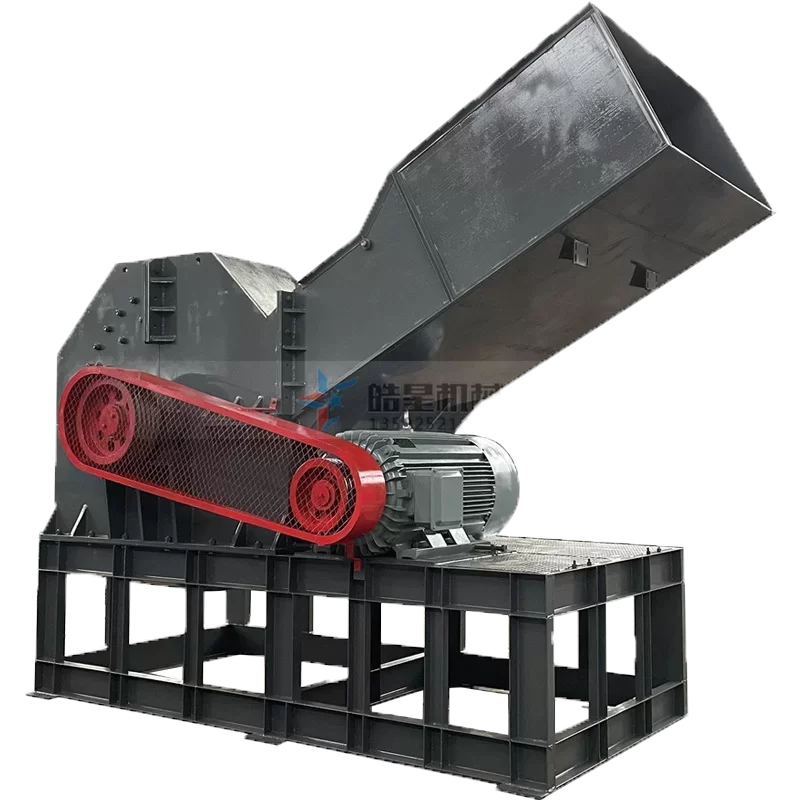
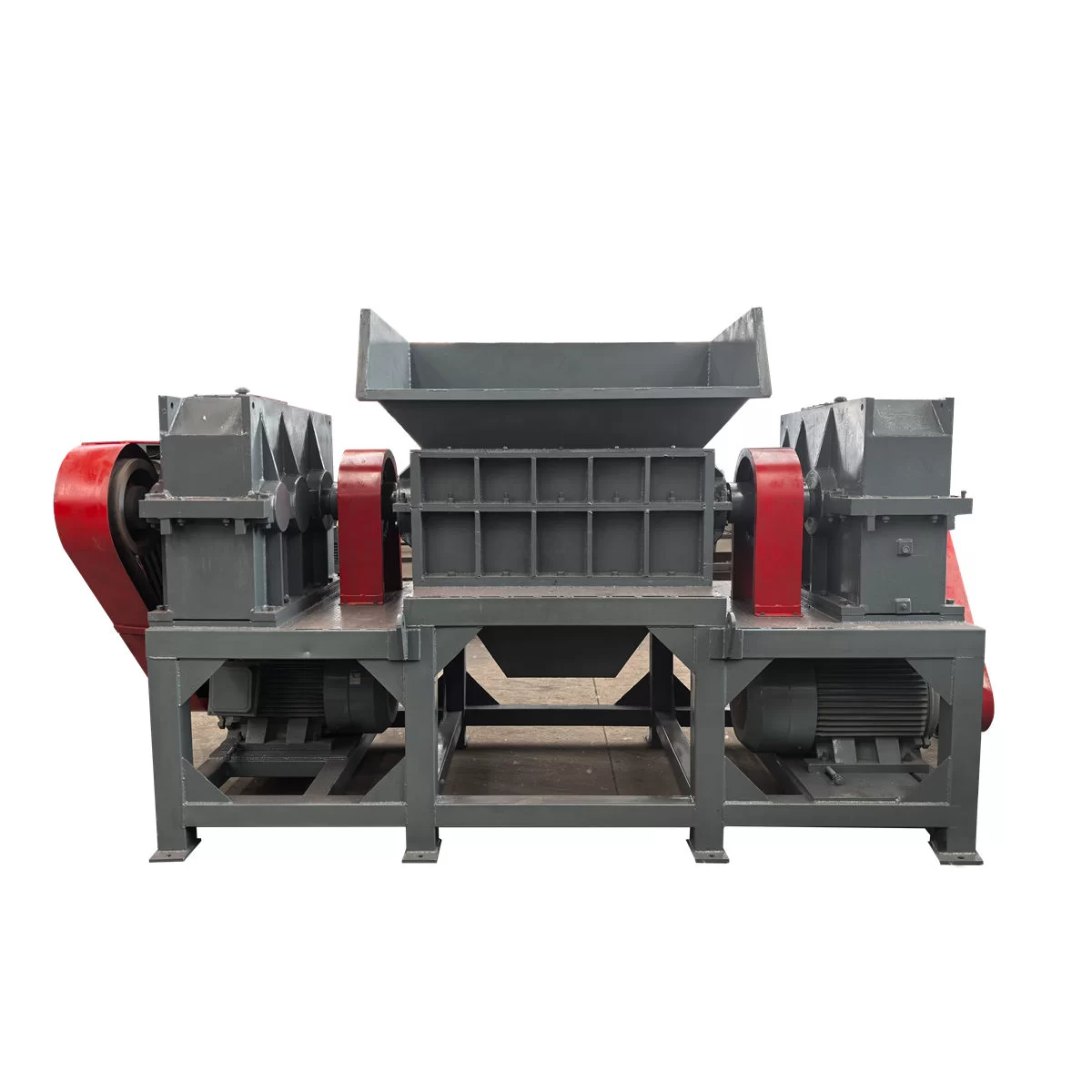
At this production site, an aluminum profile crusher is used before sorting. The crushing action reduces the long profiles, opens the hollow sections and separates much of the plastic from the aluminum body.
For material containing a higher proportion of thermal-break strips, the crushing stage must provide enough liberation without turning the plastic into excessive fine material. The thermal break aluminum crusher and downstream separator therefore need to be considered as connected processing stages rather than unrelated machines.
Feeding Crushed Material into the Separator
After crushing, the aluminum-plastic mixture is transferred to the sorting section. Stable feeding is important because the separator performs best when the material is distributed across the working width instead of arriving in piles.
During the customer-site performance check, the material layer was observed before it entered the separation area. Large clusters and overlapping pieces can prevent some aluminum particles from responding consistently, particularly when plastic covers or traps the metal.
A properly adjusted feeding system should provide:
A continuous material flow
An even layer across the belt
Limited overlap between particles
Suitable feeding speed for the material size
Enough spacing for aluminum and plastic to separate after discharge
The required setting changes with the condition of the scrap. A mixture containing large aluminum pieces may need a different feeding rate from material containing small plastic strips and thin profile fragments.
Eddy Current Separator Rotor Assembly
The rotor assembly is the main working section of the eddy current separator. It operates beneath the belt near the discharge end and produces a rapidly changing magnetic field.
When conductive aluminum enters this area, induced currents are generated within the metal. The interaction creates a repelling effect that changes the discharge trajectory of the aluminum. Plastic does not respond in the same way and follows its normal path from the belt.
This difference allows the machine to separate the incoming mixture into two principal streams:
Recovered aluminum
Plastic and other non-conductive residue
The rotor does not physically pull aluminum through the belt. Its purpose is to create the field required to alter the movement of conductive non-ferrous metal at the discharge point.
For this reason, rotor condition and operating stability directly influence the consistency of the sorting process.
Items Checked During Site Operation
The performance check was carried out while the customer’s production material passed through the equipment. Instead of observing the machine under an empty-load condition only, the operating status was checked with the actual aluminum-plastic mixture.
The main inspection points included:
Rotor operation
The rotor was checked for stable rotation during continuous production. Unusual vibration or changing operating noise may indicate that the assembly requires further inspection.
Belt tracking
The conveyor belt must remain properly aligned as it passes over the rotor area. Incorrect tracking can lead to uneven wear and affect the position at which the material leaves the belt.
Material distribution
Crushed scrap was observed across the working width. Concentrating most of the feed on one side reduces the effective use of the separation area.
Aluminum trajectory
The discharge path of the aluminum fraction was checked after the material passed through the rotor field. The trajectory needs to be sufficiently different from that of the plastic fraction.
Divider position
The splitter between the two output streams was adjusted according to the actual discharge paths. Its position should be based on production material rather than a fixed setting used for every application.
Output cleanliness
Both separated fractions were examined. Aluminum remaining in the plastic stream may indicate excessive feeding, poor material distribution, insufficient liberation or unsuitable operating settings.
Separating Aluminum from Plastic
The material inside discarded thermal break profiles is different from clean aluminum offcuts. Plastic insulating strips may vary in thickness, hardness and connection method. Some pieces are fully released during crushing, while others remain partially attached to aluminum fragments.
The non ferrous metal separator separates material according to conductivity, but it cannot correct every problem created upstream. If aluminum and plastic remain firmly connected, the combined piece may enter the aluminum outlet even though it still contains plastic.
Effective aluminum-plastic separation therefore depends on three connected conditions:
Sufficient liberation during crushing
Even feeding before sorting
Correct separator settings
The separator is responsible for dividing the released fractions. It should not be expected to replace the crushing and material preparation stages.
Production Flow at the Customer Site
The equipment photographed at the customer’s production site follows this processing sequence:
Scrap aluminum and waste profiles are collected and inspected.
Long aluminum profiles are fed into the crushing section.
The crusher reduces the profiles and releases plastic attachments.
Conveying equipment transfers the mixed output to the sorting section.
Material is distributed across the separator belt.
The eddy current separator changes the discharge trajectory of the aluminum.
Plastic and other non-conductive material follow a separate path.
The two output fractions are collected for further handling.
This arrangement forms an aluminum profile crushing plant rather than a standalone sorting machine. The crusher prepares the material, while the separator completes the principal aluminum-plastic sorting stage.
Factors Affecting the Separation Result
The rotor assembly is important, but the final result should not be judged by rotor speed alone. Several material and operating conditions affect the purity of the separated fractions.
Particle size
A wide difference between the largest and smallest particles can produce inconsistent trajectories. Screening or controlling the crusher discharge may improve the stability of the feed.
Material liberation
Plastic still connected to aluminum cannot be separated as two independent particles. The crushing stage must release enough of the attached material before sorting.
Feeding thickness
An excessively thick layer causes particles to overlap. Aluminum covered by plastic or other scrap may not respond consistently in the separation area.
Belt speed
Belt speed influences where the material leaves the machine. Changing this setting also changes the discharge distance of both aluminum and plastic.
Rotor setting
The rotor operating condition must suit the particle size and material composition. A more aggressive setting is not automatically better for every mixture.
Splitter position
The divider must be placed between the actual aluminum and plastic trajectories. An incorrect position can send correctly separated particles into the wrong collection area.
Checking Both Output Streams
A useful performance check should examine both sides of the separator.
The recovered aluminum outlet shows whether the machine is collecting the conductive fraction, but it does not reveal how much aluminum has been lost in the plastic residue. The rejected fraction must also be inspected.
When evaluating the output, the customer should check:
Plastic remaining in the recovered aluminum
Aluminum pieces remaining in the plastic stream
Partially connected aluminum-plastic particles
Very small fragments that follow an unstable path
Uneven output across the machine width
If the separated material does not meet the expected result, the cause should be identified before changing the rotor settings. The problem may originate from crushing, feeding, material distribution or splitter position.
Role of the Separator in Thermal Break Aluminum Recycling
The eddy current separator is used after the profiles have been crushed and the aluminum has been sufficiently released from the plastic strips. Its role is to recover conductive aluminum from the mixed output and reduce the amount of non-metallic material carried into the aluminum collection area.
Within a complete aluminum recycling line, the separator works together with the crusher and conveying system. Each stage performs a different function:
Crushing reduces profiles and releases attached material.
Conveying maintains continuous material movement.
Feeding distributes the mixture across the sorting width.
Eddy current separation divides aluminum from plastic.
Separate outlets prevent the two fractions from mixing again.
This production-site performance check confirmed the importance of evaluating the entire material flow. Stable rotor operation is necessary, but consistent separation also depends on how well the scrap is crushed, fed and distributed before it reaches the rotor area.
Customer Production Site Photos
The photos record the separator under actual production conditions, processing crushed scrap aluminum, thermal break aluminum and waste profile material. The visible output streams show the practical difference between the conductive aluminum fraction and the non-conductive plastic fraction.
Unlike an empty machine test, a production-site check makes it possible to observe the interaction between material condition, feed thickness, rotor operation and splitter position. These details provide a more reliable basis for adjusting the separator to the customer’s material.
The Eddy Current Separator Rotor Assembly and Factory Performance Check was therefore carried out as part of the complete aluminum-plastic separation process, not as an isolated mechanical inspection.