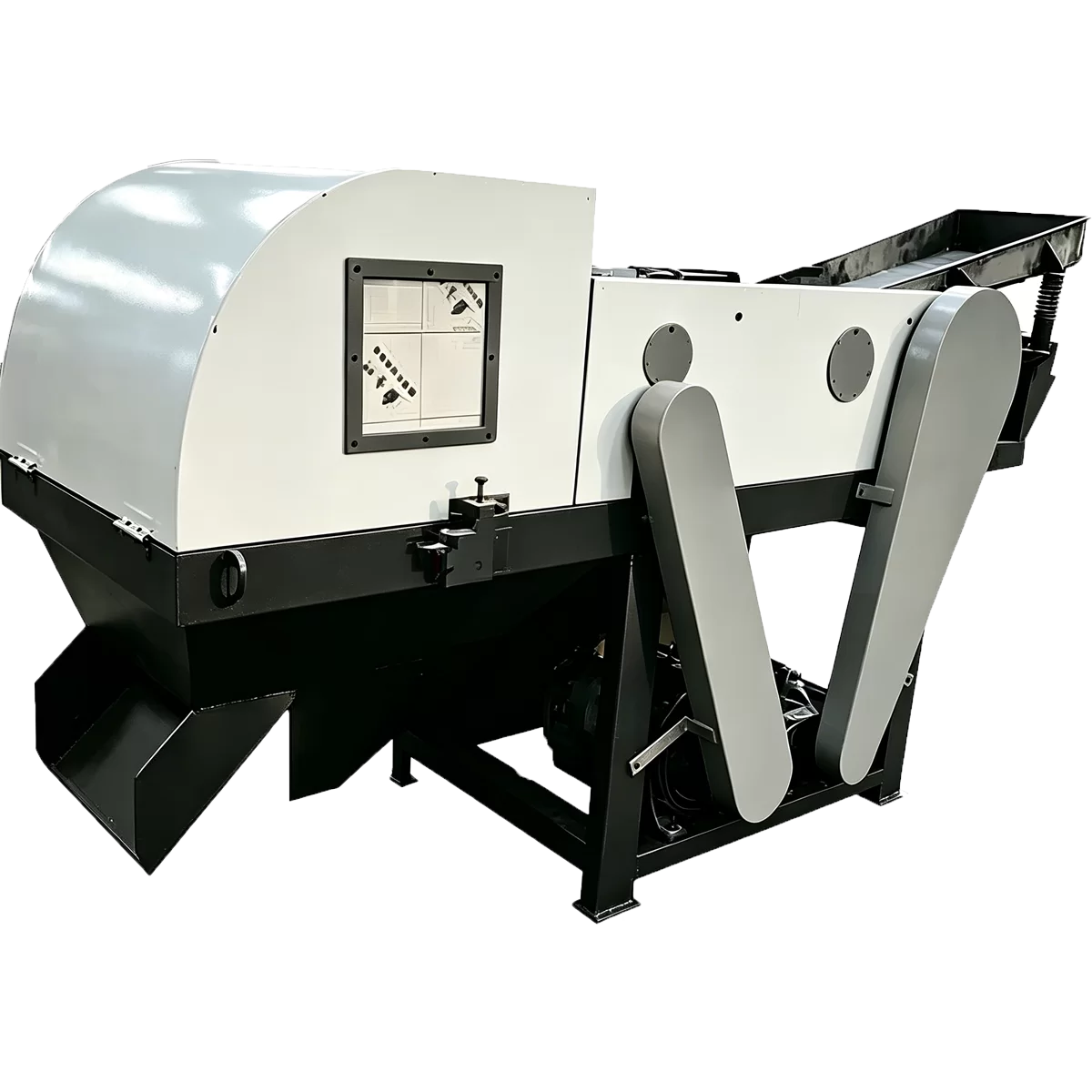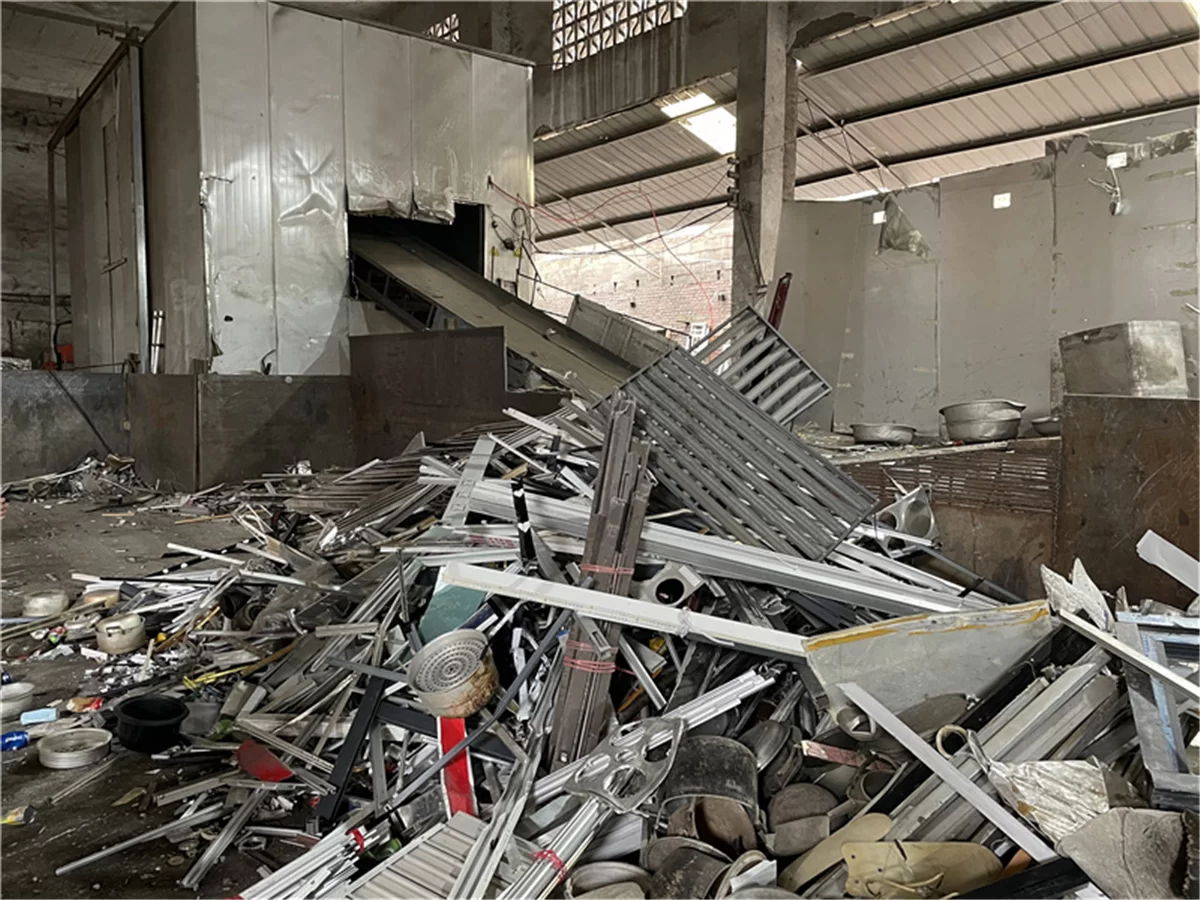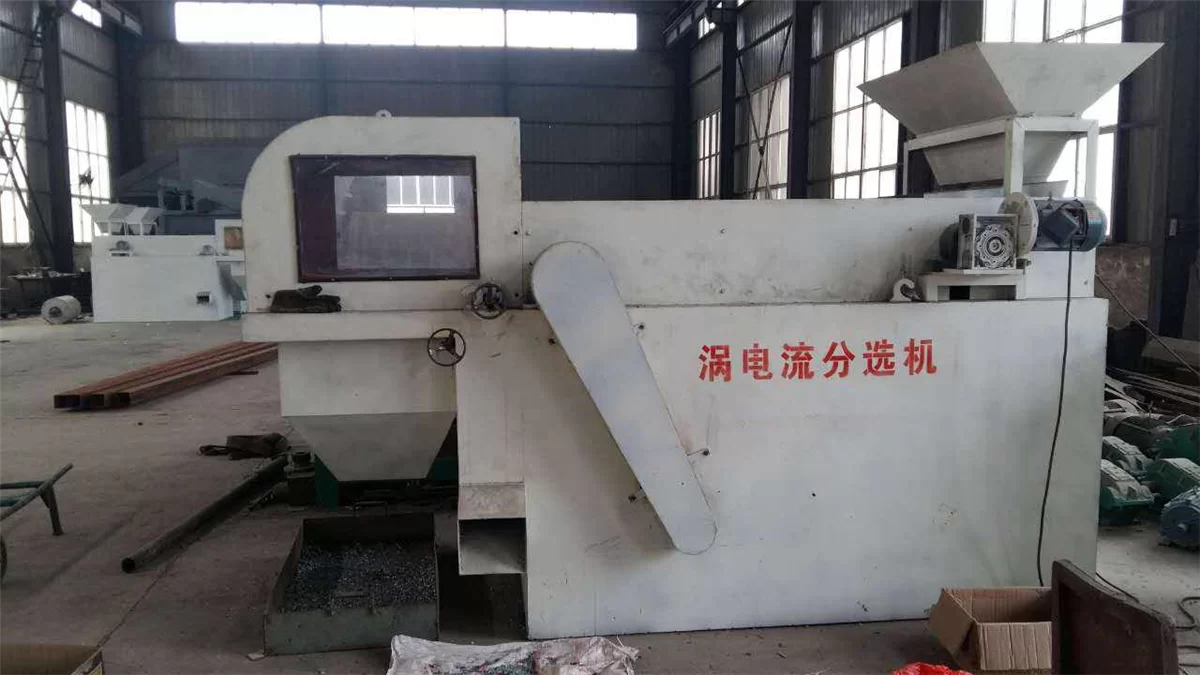
An eddy current separator cannot produce stable results if the incoming material arrives in thick piles, narrow strips or sudden surges.
The separator may have a suitable magnetic rotor and enough working width, but separation performance still depends on how the material is presented on the belt. Each particle needs a reasonable opportunity to reach the active separation area without being covered by other pieces.
For this reason, uniform feeding is not just a conveyor issue. It is part of the separation process.
When planning an eddy current separation system, the crusher, screen, magnetic separator, vibrating feeder and sorting belt must be considered as one connected line.
What Uniform Feeding Means
Uniform feeding does not mean every particle must be identical or perfectly arranged.
In practical operation, it means the material should:
Cover the useful belt width
Form a relatively thin and stable layer
Move forward without sudden surges
Contain limited overlapping between particles
Remain within a suitable particle-size range
Enter at a rate the separator can process continuously
The objective is to expose as many conductive non-ferrous metal pieces as possible.
When aluminum, copper or brass is buried below plastic, rubber, iron or other particles, the covered metal may not follow its expected discharge path. Even if the magnetic rotor generates sufficient repulsive force, surrounding material can interfere with the movement of the metal.
What Happens When the Material Layer Is Too Thick
A thick material layer is one of the most common causes of unstable separation.
When too much material enters at once, particles overlap. Larger pieces cover smaller ones, while flexible materials may hold several particles together.
This can lead to:
Non-ferrous metals remaining in the non-metallic fraction
Plastic and rubber entering the metal fraction
Unstable discharge trajectories
Reduced recovery of small metal particles
Higher recirculation requirements
Frequent adjustment of the splitter plate
Lower final product purity
Increasing the total feed rate may appear to improve hourly production, but it can reduce the value of the recovered material.
A better operating point is usually the highest stable feed rate that maintains an exposed and controllable material layer.
Why the Full Belt Width Should Be Used
Feeding material into only the center of a wide belt wastes part of the separator’s working area.
For example, if material is concentrated in a narrow stream, the center section may become overloaded while both sides of the belt remain nearly empty. The machine may have enough total working width, but the actual usable separation area has been reduced.
A suitable material spreading device should distribute the feed across the belt before the material reaches the magnetic rotor.
The spreading method depends on:
Separator working width
Required capacity
Particle size
Bulk density
Material shape
Moisture
Percentage of light impurities
Condition of the upstream discharge
A vibrating feeder is often used because it can meter and spread loose particles at the same time. The final design should still be matched to the actual material.
Sudden Surges Reduce Separation Stability
A crusher does not always discharge material at a perfectly constant rate.
Some material may remain in the crushing chamber before being released in a larger batch. A conveyor can also carry an uneven load when the upstream machine stops and restarts.
If this fluctuating flow enters the eddy current separator directly, the material layer changes every few seconds. The original belt-speed and splitter settings may no longer suit the changing load.
A surge can cause:
Temporary overloading
Thick piles near the magnetic rotor
Material collision at the discharge end
Mixed discharge fractions
Unstable recovery results
Difficulty evaluating the actual machine performance
A buffer hopper or vibrating feeder can help separate the operating rhythm of the crusher from the feed rate of the sorting system.
The buffer should not be used to store excessive material. Its purpose is to absorb short fluctuations and provide a more regular discharge.
Particle Size Must Be Controlled Before Feeding
Uniform feeding becomes difficult when very large and very small particles are mixed together.
Large pieces can cover several smaller particles. Fine material can collect below or between the larger pieces. Light dust and film may also behave differently from metal particles moving at the same belt speed.
Screening the material into suitable size ranges can improve feeding and separation.
The exact particle-size range depends on:
Type of metal being recovered
Strength and configuration of the magnetic rotor
Conveyor-belt speed
Material shape
Required product purity
Required recovery rate
Upstream crushing process
A vibrating screen may be installed before the separator when the crusher output has a wide size distribution.
Oversized pieces can be returned for further crushing if necessary. Fine material can be processed separately or collected according to the project requirement.
Material Liberation Comes Before Uniform Feeding
A perfectly even layer will not solve the problem if the metal and non-metallic materials remain physically connected.
Typical examples include:
Aluminum profiles with plastic thermal-break strips
Copper and aluminum radiator fragments
Wires with insulation
Appliance fragments with attached plastic
Aluminum sheets with rubber or foam
Electronic scrap with composite components
These materials usually require crushing or dismantling before separation.
The purpose of upstream crushing is not only size reduction. Crushing also opens the material structure and releases individual components.
After sufficient liberation, the particles can be screened, spread and presented to the eddy current separator in a controlled layer.
If the components remain connected, the combined piece may follow an unpredictable discharge trajectory.
Iron Should Be Removed Before Eddy Current Separation
Ferrous metals should normally be removed before mixed material reaches the eddy current separator.
Iron pieces can affect material movement, increase wear and reduce the available sorting area. Large ferrous objects may also damage the belt or interfere with the rotor section.
A common process is:
Metal crusher → Discharge conveyor → Magnetic separator → Vibrating screen → Vibrating feeder → Eddy current separator
The actual order can change according to the material and line layout, but magnetic separation generally takes place before non-ferrous separation.
Removing iron also makes the remaining material layer easier to control because a large part of the heavy magnetic fraction has already left the processing flow.
Belt Speed and Feeding Rate Must Work Together
Belt speed should not be adjusted independently from feeding rate.
If the feed rate increases while belt speed remains unchanged, the material layer becomes thicker. Increasing belt speed may spread the material along the belt, but excessive speed can change the discharge trajectory and reduce the time available for stable material transfer.
The correct setting depends on:
Material density
Particle dimensions
Metal type
Rotor speed
Rotor position
Belt length
Splitter position
Required capacity
During commissioning, adjustments should be made in small steps.
The operator should collect and inspect both output fractions after each adjustment. Looking only at the visible metal discharge is not enough. The non-metallic fraction should also be checked for lost aluminum, copper or other recoverable metal.
Moisture Can Make Uniform Feeding More Difficult
Wet material tends to stick together and form clusters.
Fine particles may attach to larger pieces, while plastic film, dust and fibrous impurities can gather into uneven lumps. These conditions prevent the material from spreading naturally across the feeding equipment.
Moisture can also cause material to accumulate in:
Feed hoppers
Vibrating feeder trays
Transfer chutes
Conveyor sidewalls
Screen openings
If the incoming scrap is frequently wet, the feeding and screening sections should be designed for easier cleaning.
The customer should provide information about moisture, mud, oil and dust before equipment selection.
The Splitter Plate Cannot Correct Poor Feeding
The splitter plate divides materials according to their discharge paths.
Adjusting the splitter position can improve the separation boundary, but it cannot compensate for an excessively thick or unstable feed layer.
If the incoming material changes continuously, the operator may move the splitter repeatedly without obtaining a stable result. The real issue may be upstream feeding rather than the separator position.
Before adjusting the splitter plate, check:
Whether iron has been removed
Whether the material has been sufficiently crushed
Whether the particle-size range is suitable
Whether the material layer is even
Whether the full belt width is being used
Whether the feed rate is stable
Whether the belt surface is clean
Mechanical adjustments should be made after the feed condition is under control.
How to Check Feeding During a Material Test
A useful material test should record more than the final separated products.
The operator should also observe:
Distribution across the belt
Average layer thickness
Presence of material piles
Amount of particle overlap
Feed-rate fluctuations
Percentage of oversized pieces
Moisture and dust
Metal losses in the non-metallic discharge
Impurities in the recovered metal
Stability of the discharge trajectories
Representative samples should be collected over a reasonable operating period. A short video showing a few successful particles does not prove that the line can maintain stable separation during continuous production.
The test should use material that is similar to the customer’s regular feed.
Information Required for Separator Selection
Before recommending a suitable separator and feeding system, the customer should provide:
Clear photos of the feed material
A representative material video
Minimum and maximum particle sizes
Main material composition
Approximate metal percentages
Required hourly capacity
Bulk density, if known
Moisture and dust condition
Percentage of iron
Target non-ferrous metals
Required recovery rate
Required product purity
Available installation area
Local power supply
Upstream crushing equipment
Downstream collection method
A sample test is recommended when the material contains several metals, composite parts or a wide particle-size range.
Stable Feeding Supports Stable Separation
An eddy current separator performs best when the upstream system provides released, screened and evenly distributed material.
Increasing rotor speed or motor power cannot fully correct poor feeding. If metal particles remain covered, connected or concentrated in thick piles, the final product will remain unstable.
A well-designed scrap sorting line should coordinate crushing, magnetic separation, screening, feeding and eddy current separation. The objective is not simply to move more material onto the belt. The objective is to expose each recoverable particle under suitable and repeatable conditions.
Gongyi Haoxing Machinery Factory manufactures eddy current separators and complete scrap metal sorting systems in China. Vibrating feeders, magnetic separators, conveyors, metal crushers, screens, dust collection and electrical control systems can be configured according to the customer’s material and required output.
Send us your material photos, particle sizes, composition, required capacity and separation targets. We can evaluate the feeding condition and recommend a suitable equipment configuration.
WhatsApp: +86 186 2491 0209
Website: www.hxjx08.com