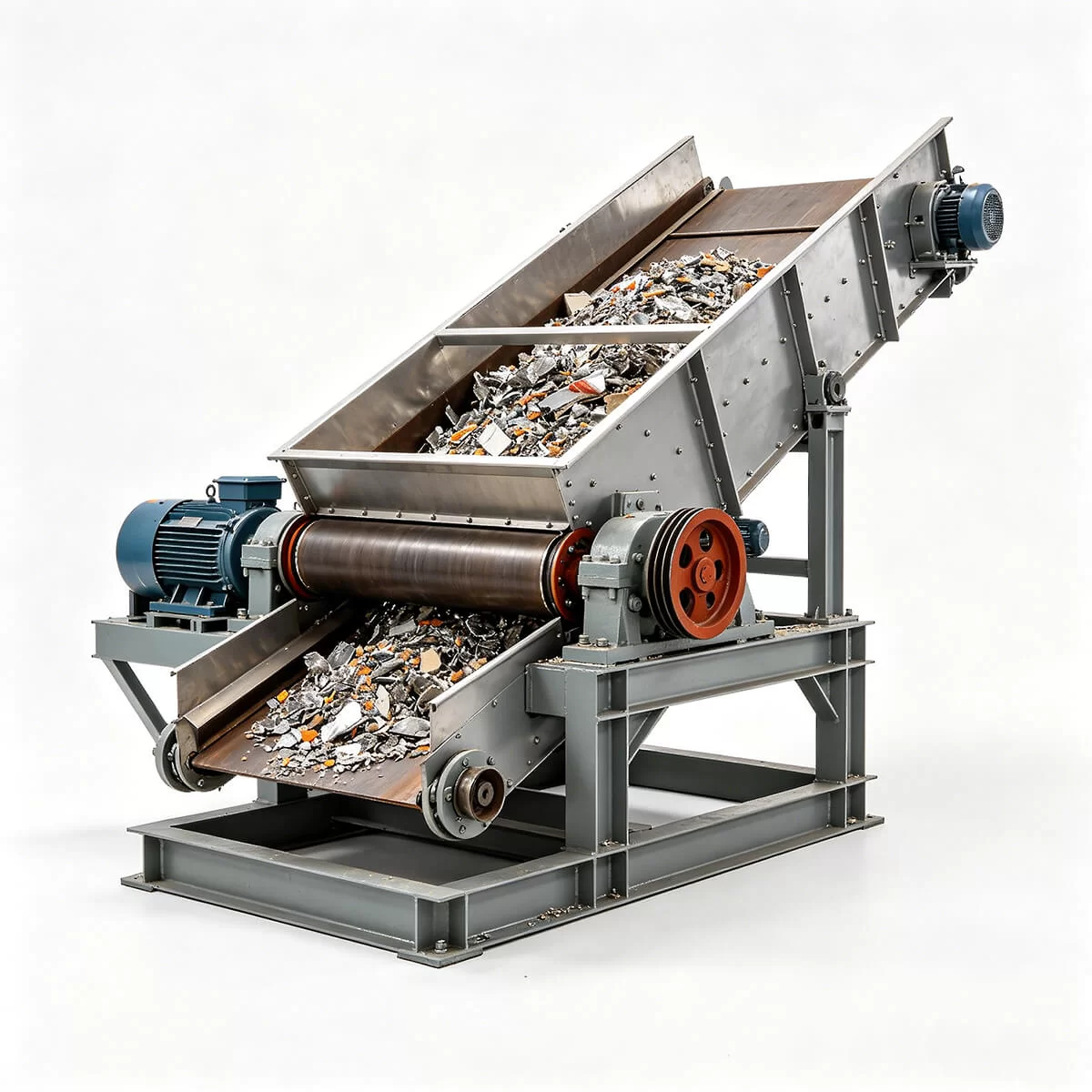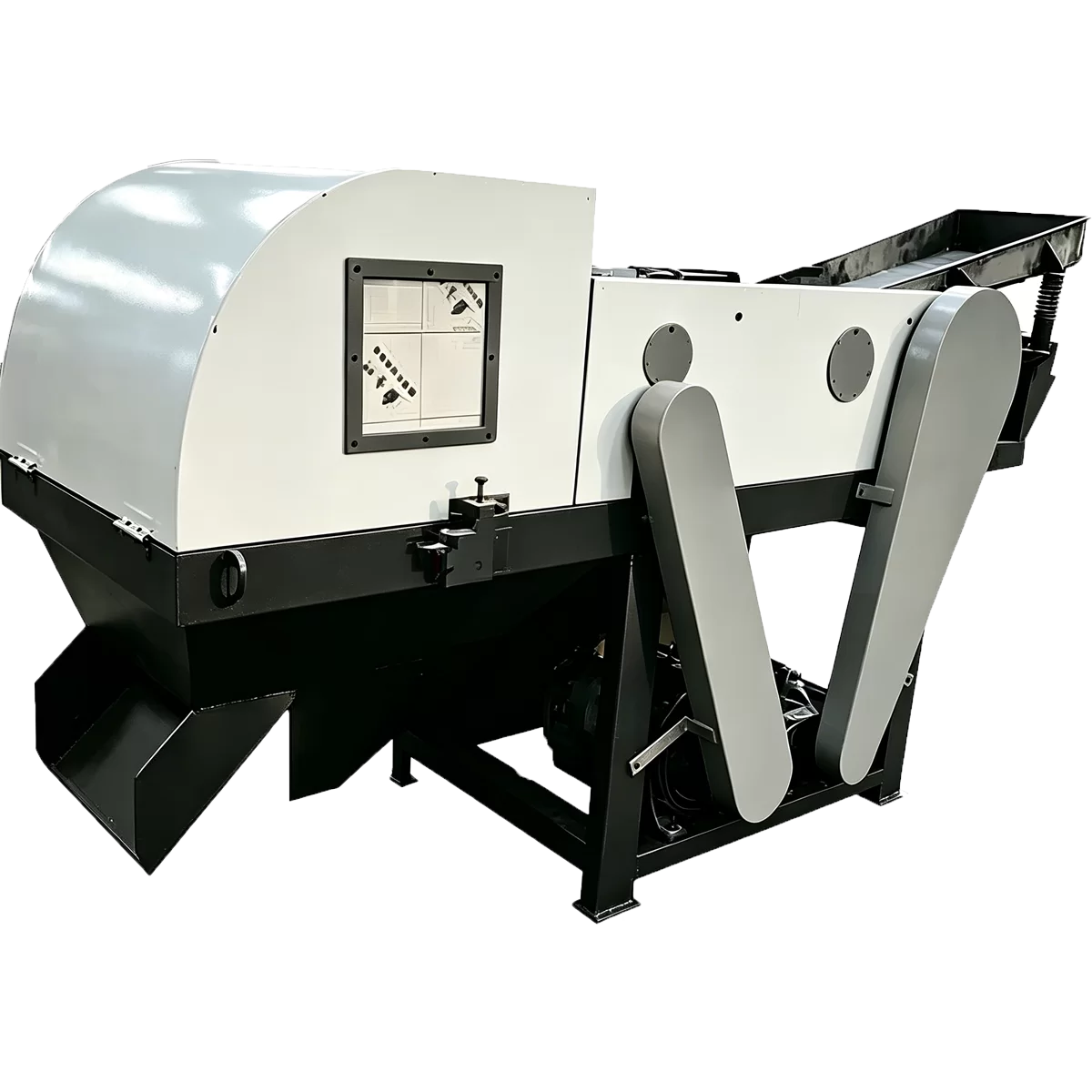
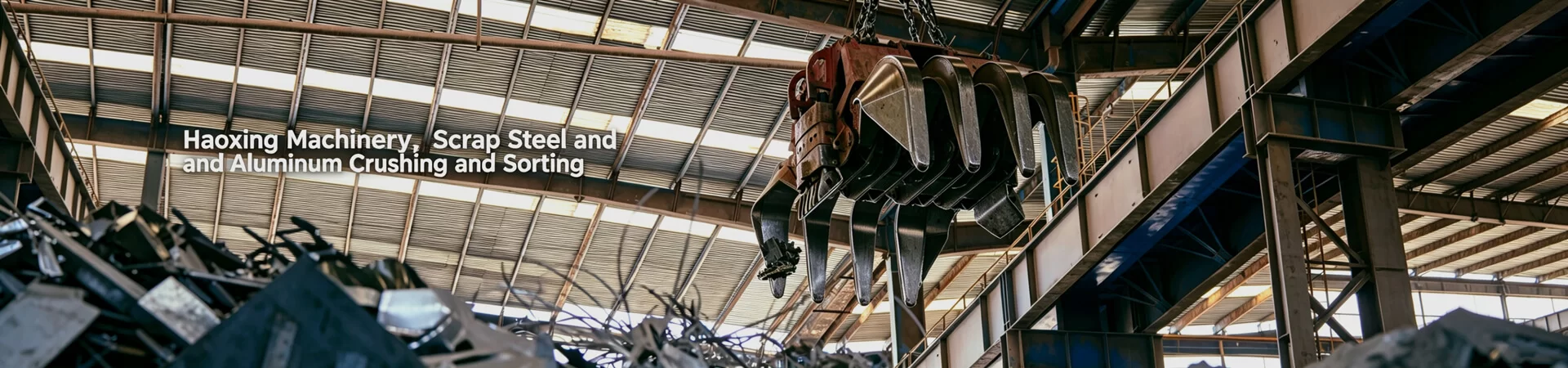
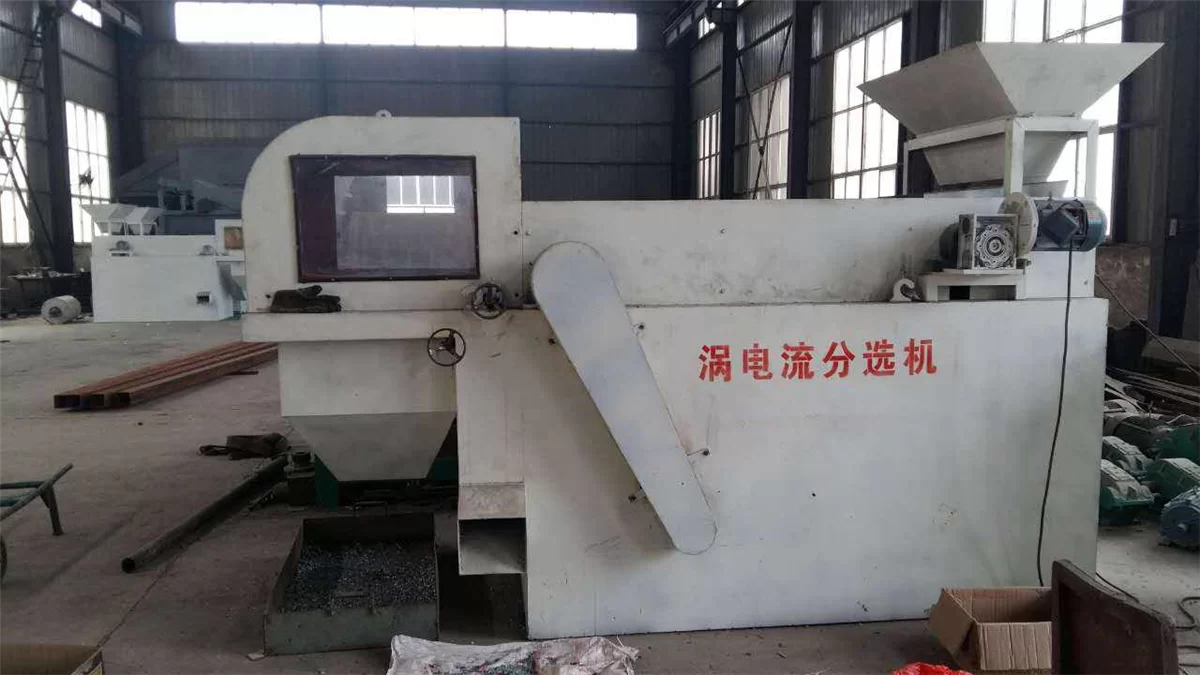
An eddy current separator is designed to recover conductive non-ferrous metals from a mixed material stream. It should not be used as the primary machine for removing large quantities of iron and steel.
When ferrous metal remains in the feed, the problem is not limited to lower product purity. Iron can disturb the material flow, increase belt wear and create unnecessary risk around the high-speed rotor section.
For mixed scrap recycling, magnetic separation should normally take place before eddy current separation.
Magnetic Separation and Eddy Current Separation Have Different Jobs
A magnetic separator recovers ferrous metals such as iron and steel.
An eddy current separator acts on conductive non-ferrous metals such as aluminum, copper, brass and zinc. The equipment creates a rapidly changing magnetic field that induces currents inside conductive particles. The resulting force changes their discharge trajectory.
Although both machines use magnetic effects, the processing objectives are different.
A suitable line does not ask one machine to complete both tasks. The magnetic separator first removes the ferrous fraction. The eddy current separator then processes the remaining mixed stream to recover suitable non-ferrous metals.
Why Residual Iron Is a Problem
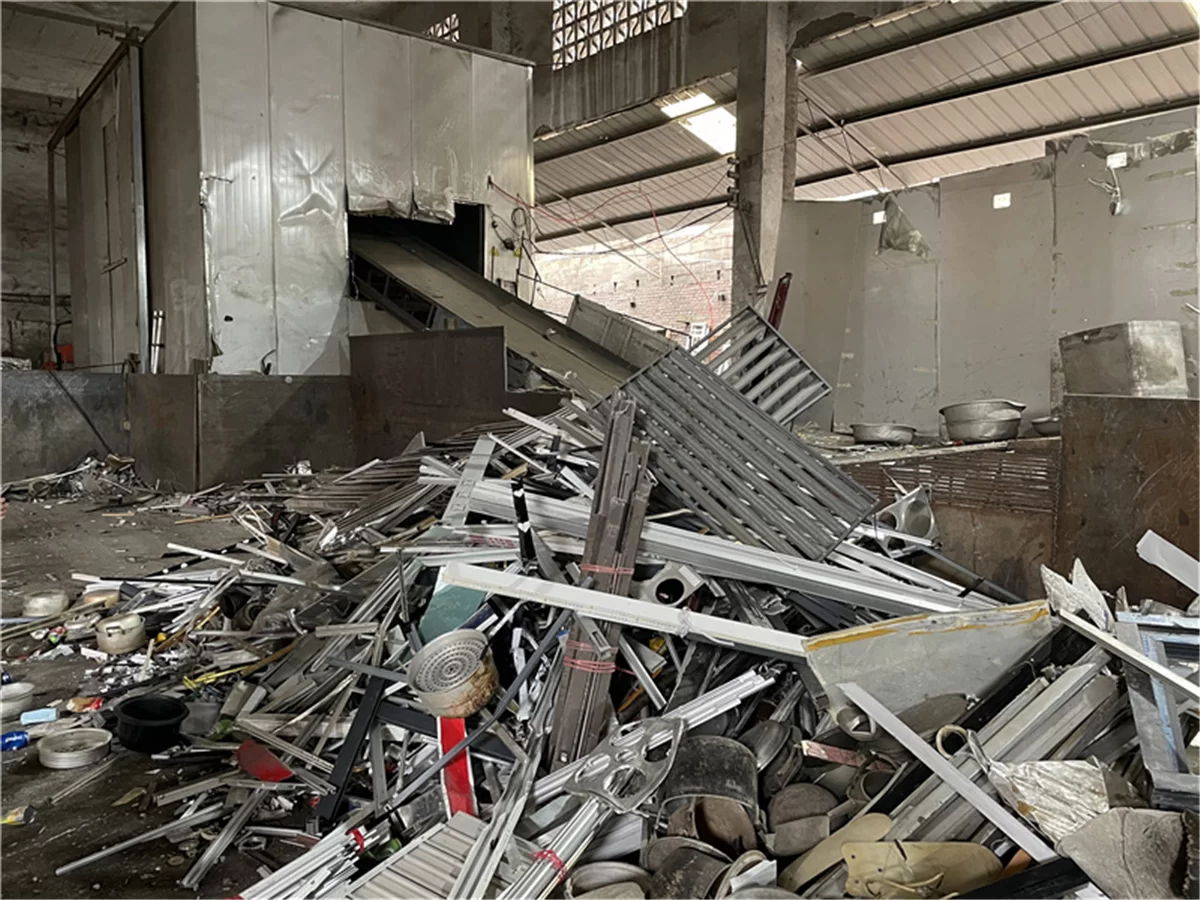
After crushing, mixed scrap may contain:
Steel sheet fragments
Iron screws
Nails
Steel wire
Iron brackets
Small cast-iron pieces
Ferrous dust
Stainless steel
Aluminum and steel combinations
Some of these materials are easy to remove with a magnetic separator. Others may remain because they are covered, physically connected to non-ferrous material or too far from the effective magnetic field.
Residual iron can create several problems in the next processing stage.
Iron Can Interfere with Material Movement
Ferrous particles respond strongly to magnetic fields.
When residual iron reaches the rotor area, the movement of the particles may become less predictable. Iron can be attracted, held or redirected instead of following the normal path of non-metallic material.
This can cause:
Irregular discharge trajectories
Material bouncing near the belt end
Contamination between output fractions
Local material accumulation
Unstable splitter adjustment
Greater difficulty evaluating the non-ferrous recovery rate
The eddy current separator performs more consistently when the incoming material contains only a limited amount of residual ferrous metal.
Large Iron Pieces Can Damage the Belt
Crushed iron fragments often have sharp corners.
If large or sharp ferrous pieces reach the sorting belt, they can scratch, puncture or cut the belt surface. Wire and thin strips may also become trapped around transfer points.
Damage risk increases when:
The pieces are oversized
Material is fed in a thick layer
Heavy particles fall from excessive height
The belt runs at high speed
Sharp scrap collects near the discharge end
Ferrous wire is mixed with flexible waste
Removing large iron pieces before the eddy current separator reduces the mechanical load on the sorting belt and related components.
Residual Iron Reduces Useful Sorting Capacity
Every kilogram of iron entering an eddy current separator occupies space on the conveyor.
If a line is expected to process five tons per hour but a large proportion of that flow is iron, much of the separator’s working width is being used by material that should have been removed earlier.
The result can be:
A thicker feed layer
More particle overlap
Reduced exposure of aluminum and copper
Lower recovery of smaller non-ferrous particles
Greater output contamination
Unnecessary energy consumption
Removing the ferrous fraction first reduces the material load entering the non-ferrous sorting stage.
This does not automatically increase the speed of the eddy current separator. It improves the quality and condition of the material presented to the machine.
Iron Can Cover Valuable Non-Ferrous Metal
Mixed crushed scrap rarely travels as a perfect single layer.
A flat steel sheet can cover several smaller aluminum or copper pieces. When the material reaches the active rotor area, the covered non-ferrous particles may not move freely.
Even if a repulsive force is generated, physical contact with surrounding particles can block the expected trajectory.
This is one reason a magnetic separator and material-spreading device should be installed before eddy current separation.
Removing ferrous pieces reduces overlap and makes it easier to distribute the remaining material in a thinner layer.
Magnetic Separation Works Better After Material Liberation
A magnet cannot fully separate materials that remain physically connected.
Examples include:
Steel screws attached to aluminum
Iron frames connected to plastic housings
Copper coils with steel cores
Aluminum sheets folded around steel parts
Steel wire tangled with non-ferrous fragments
Composite appliance components
Shredding or crushing is often required before magnetic separation.
The size-reduction machine opens the material and breaks connections between different components. Once the particles are released, the magnetic separator can recover the ferrous fraction more effectively.
A common process is:
Shredding or crushing → Discharge conveying → Magnetic separation → Screening → Eddy current separation
The equipment order may be adjusted according to the feed material, but liberation normally takes place before precision sorting.
Where the Magnetic Separator Should Be Installed
The installation position depends on the line layout and material condition.
Common positions include:
Over the Discharge Conveyor
A suspended magnetic separator can be installed above the material conveyor. Magnetic pieces are lifted from the moving layer and discharged separately.
This arrangement is useful when the material contains loose ferrous parts and the layer thickness is controlled.
At a Conveyor Head Pulley
A magnetic pulley or magnetic drum can separate ferrous material as particles leave the conveyor.
The material follows different paths according to its magnetic response. Installation dimensions and splitter positions must match the flow.
After Primary Shredding
Large ferrous pieces can be removed after a twin shaft shredder opens bulky or baled material. The remaining stream can then enter a metal crusher or additional sorting stage.
After Secondary Crushing
A second magnetic separator can remove smaller ferrous particles released by the crusher.
Some projects use more than one magnetic separation stage because primary opening and secondary crushing release different materials.
One Magnetic Separator May Not Be Enough
A single separator may be sufficient for relatively clean and uniformly sized material. Complex mixed scrap can require two stages.
A first magnetic separator removes the larger and easier ferrous pieces. After secondary crushing, another unit recovers smaller iron particles that were previously trapped inside composite material.
A possible process is:
Twin shaft shredder → Primary magnetic separator → Metal crusher → Secondary magnetic separator → Vibrating screen → Eddy current separator
This type of configuration may be used when:
The feed contains both bulky and small ferrous parts
Materials remain connected after primary shredding
Higher non-ferrous product purity is required
Iron content varies significantly
The secondary crusher releases hidden steel fasteners
Residual iron creates problems in the sorting section
Additional equipment should only be included when the material condition requires it.
Material Layer Thickness Affects Iron Removal
A magnetic separator cannot efficiently reach every iron particle if the material layer is excessively thick.
Ferrous pieces at the bottom of the layer may be covered by aluminum, plastic, rubber or other scrap. Small iron particles may pass with the remaining stream.
To improve removal:
Control the crusher discharge
Avoid sudden conveyor surges
Spread material across the belt
Limit the feed-layer thickness
Remove oversized pieces
Maintain a suitable magnet position
Keep the conveyor running steadily
Inspect both discharge fractions
The required belt width should be selected according to material volume as well as tons per hour.
Light, bulky material may occupy more conveyor area than a heavier but compact material stream.
Particle Size Also Affects Magnetic Recovery
Large pieces and very fine particles may require different separation conditions.
Oversized iron can be easy to attract but difficult to discharge if it is too heavy or tangled. Fine iron may be covered by dust or carried with other small particles.
A wide particle-size distribution also makes it difficult to form an even material layer.
Screening can divide the material into more suitable size ranges before final separation. Different fractions may need different conveyor speeds, magnetic settings or sorting equipment.
The goal is not to produce one universal particle size. The goal is to present each stream under conditions suitable for reliable recovery.
Not All Stainless Steel Is Removed by a Standard Magnet
Customers sometimes assume that all steel responds in the same way to a magnetic separator.
In practice, magnetic response depends on the material grade and condition. Some stainless steel may not be recovered effectively by a conventional magnetic separator.
An eddy current separator is also not a universal stainless steel separator.
If stainless steel must be recovered as a separate product, the customer should clearly specify:
Stainless steel content
Expected particle size
Required recovery rate
Required purity
Other metals present
Whether manual sorting is acceptable
Whether sensor-based sorting is required
The equipment configuration must be based on the actual metal fractions the customer wants to produce.
How to Check Residual Iron Before Eddy Current Separation
The remaining material should be sampled after magnetic separation.
A practical inspection can include:
Collecting a representative sample from the non-magnetic stream
Spreading the sample into a thin layer
Checking it with a hand magnet
Weighing the recovered residual iron
Inspecting whether iron remains connected to other materials
Recording the type and size of missed ferrous particles
Adjusting the material layer or magnet position
Repeating the test under stable operating conditions
A short visual inspection is not always enough, especially when the feed contains small screws, wire fragments or iron dust.
The test should be repeated at different times during production because material composition may change.
Product Purity and Recovery Rate Must Be Considered Together
Removing more iron before eddy current separation generally improves the condition of the remaining stream. However, the magnetic separator should not remove valuable non-ferrous metal that is physically attached to iron without considering the project objective.
For example, an aluminum part with a steel fastener may enter the ferrous fraction. If the aluminum value is important, further crushing may be required to release the materials before separation.
The line should therefore balance:
Ferrous metal recovery
Non-ferrous metal recovery
Final product purity
Material loss
Processing cost
Equipment wear
Energy consumption
A clean ferrous fraction and a high-quality non-ferrous fraction depend on sufficient liberation, not only on stronger magnetic separation.
Information Needed for Process Design
Before selecting the magnetic and eddy current separation stages, the customer should provide:
Feed material photos and videos
Main metal types
Approximate iron percentage
Approximate aluminum and copper percentages
Particle-size range
Maximum piece size
Material thickness
Required capacity
Required ferrous purity
Required non-ferrous purity
Target recovery rate
Percentage of plastic and rubber
Moisture and dust conditions
Upstream shredder or crusher details
Available installation area
Local power supply
Representative material samples can provide a more reliable basis for equipment selection when the composition is complex.
Remove Ferrous Metal Before Non-Ferrous Sorting
Magnetic separation and eddy current separation are complementary processes.
The magnetic separator removes iron and steel. The eddy current separator then recovers suitable conductive non-ferrous metals from the remaining material.
Sending a high-iron material stream directly to an eddy current separator can reduce useful sorting capacity, increase belt wear and make the final results unstable.
The most reliable process is to release the materials first, remove the ferrous fraction and then provide a thin, evenly distributed feed to the non-ferrous sorting stage.
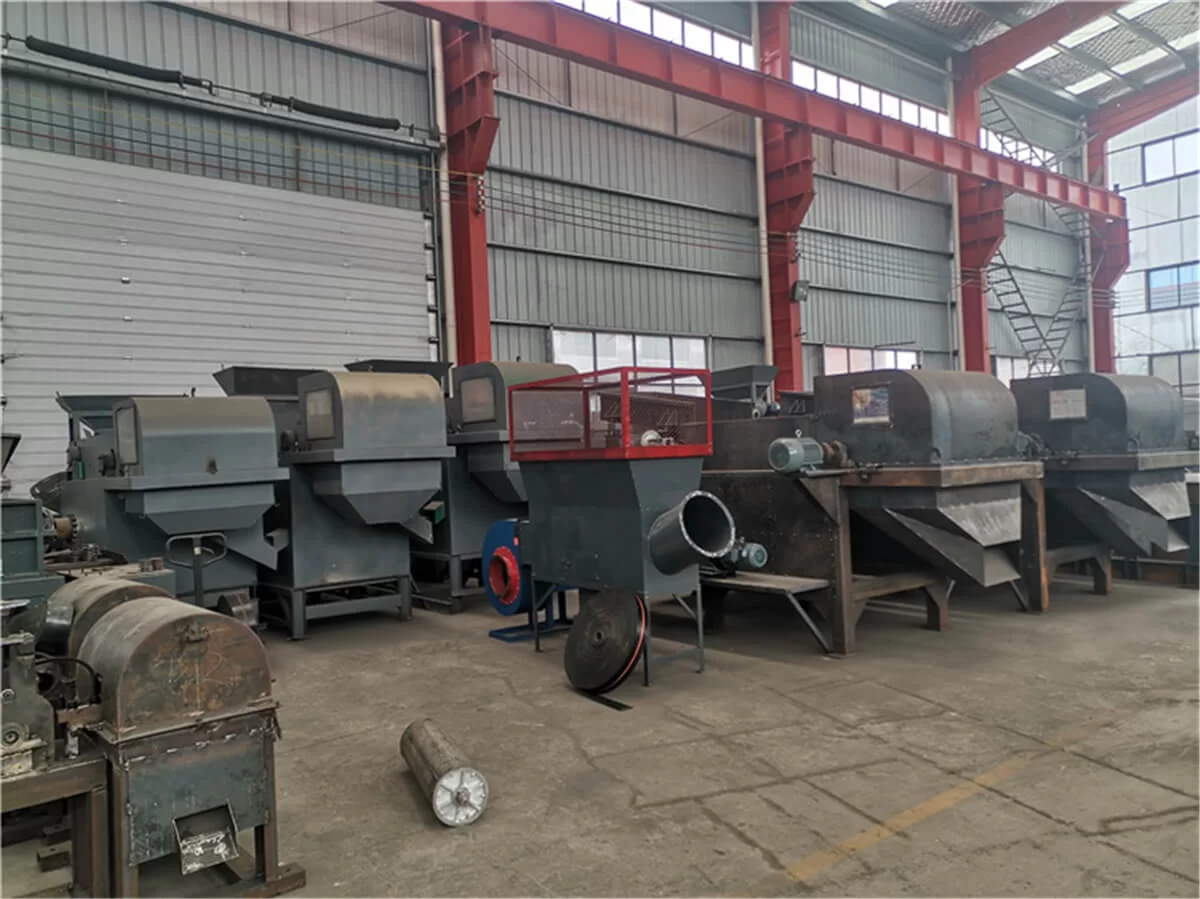
Gongyi Haoxing Machinery Factory manufactures magnetic separators, eddy current separators and complete scrap sorting systems in China. The line can be configured with shredders, metal crushers, vibrating screens, feeding equipment, conveyors, dust collection and centralized electrical control according to the material composition and required products.
Send us your material photos, particle sizes, metal percentages, required capacity and purity targets. We will evaluate the process and recommend suitable magnetic and non-ferrous separation equipment.
WhatsApp: +86 186 2491 0209
Website: www.hxjx08.com