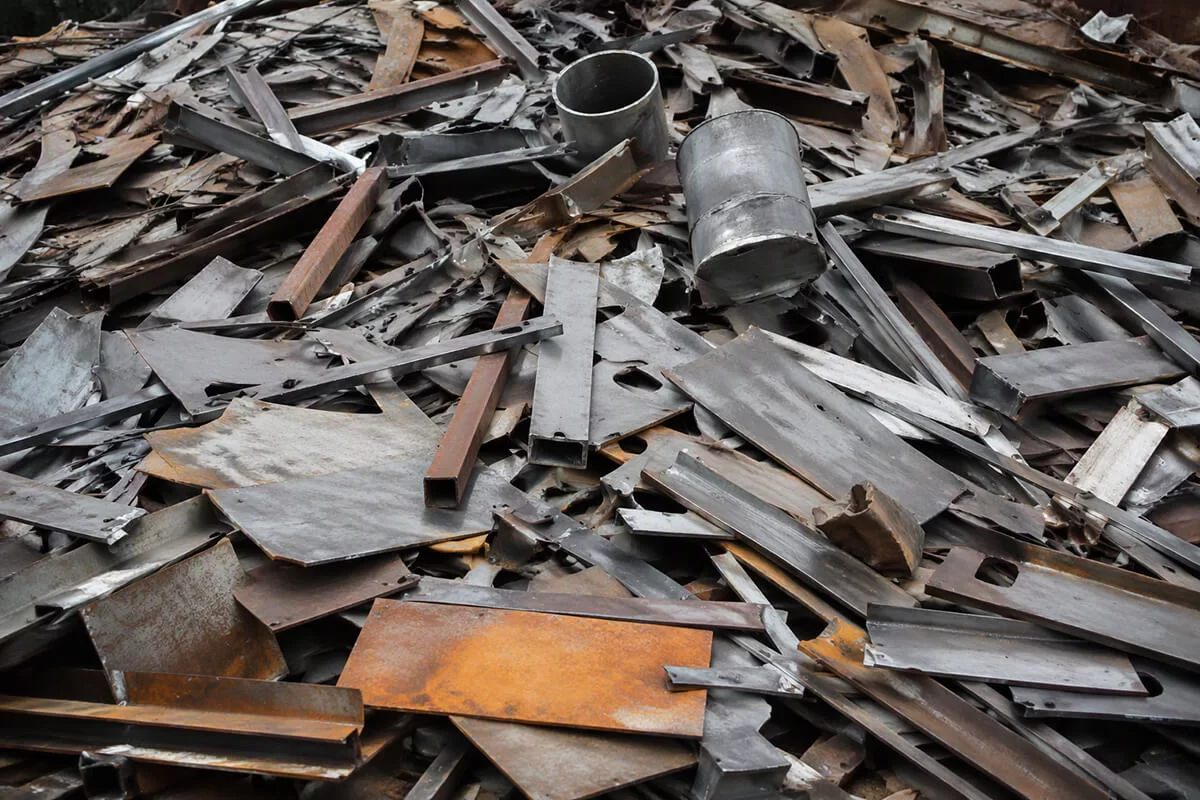
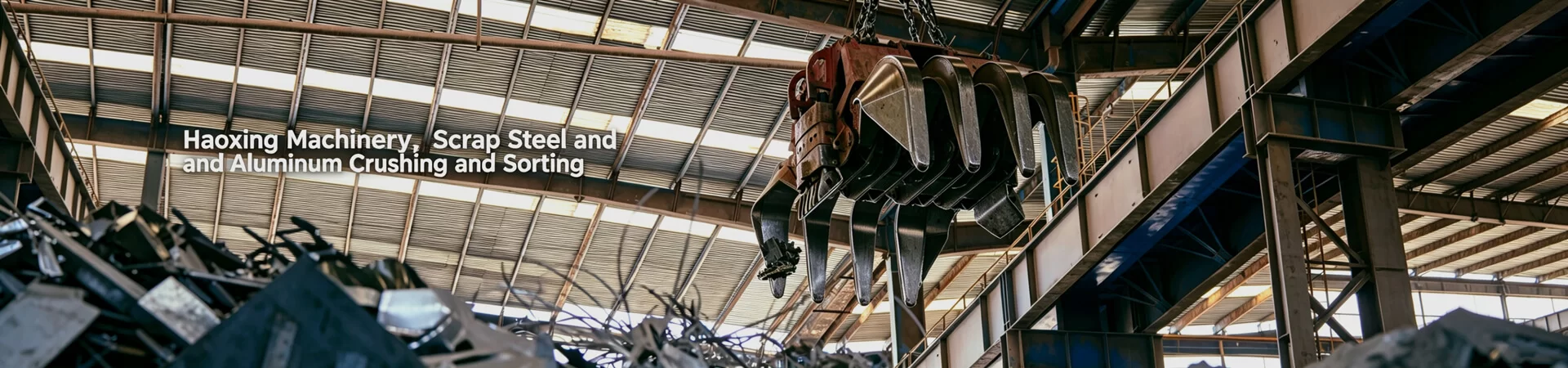
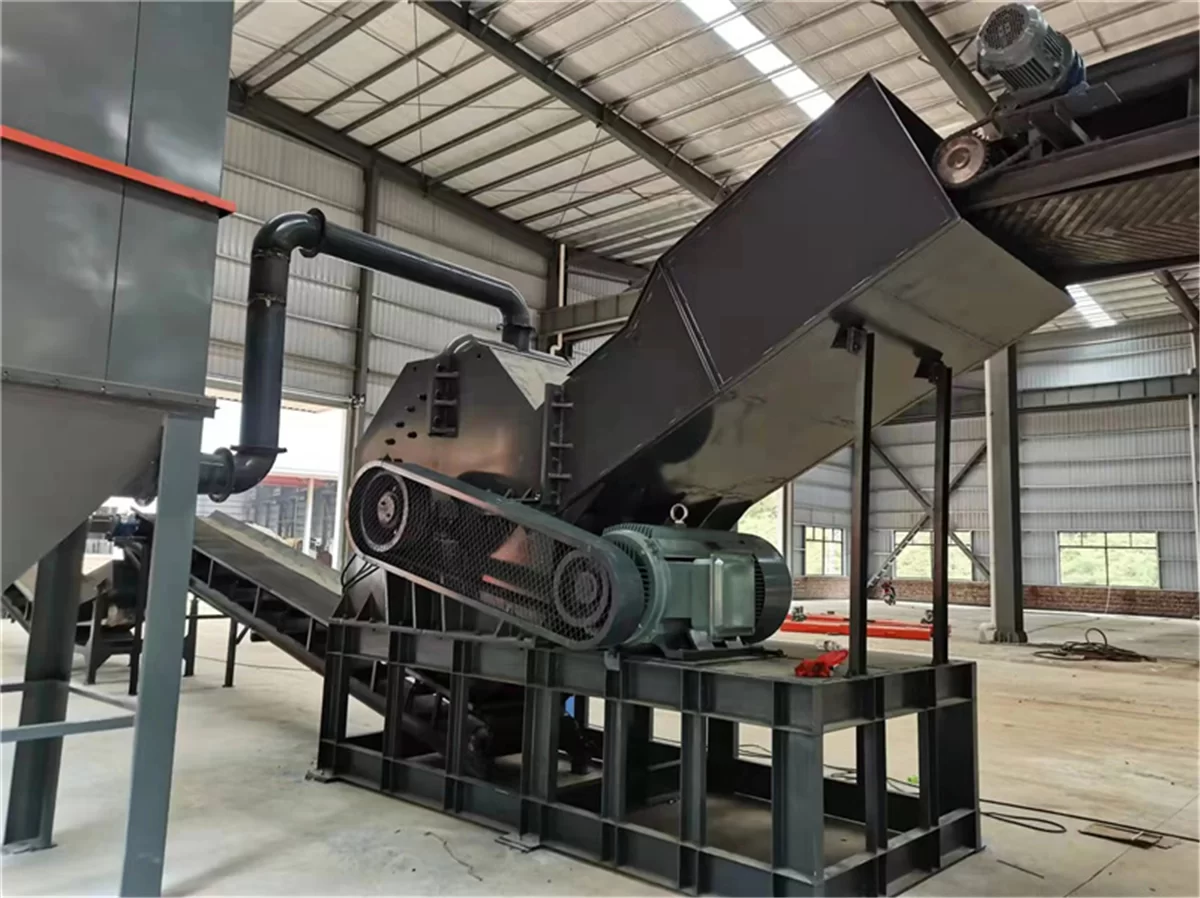
A metal crusher is not required in every baled scrap processing project.
If the material will be charged directly into a furnace after the bales are opened, a twin shaft shredder may provide sufficient size reduction. However, the correct process still depends on the bale composition, furnace feeding system, acceptable scrap size and impurity level.
Some steel mills only need the compressed bales to be opened into loose pieces. Other facilities require smaller, cleaner and more consistent furnace feed. These two applications should not use the same equipment configuration.
Before adding a metal crusher, the buyer should first define what the furnace can accept.
Why Scrap Bales Are Opened Before Furnace Charging
Baling reduces the storage and transportation volume of loose scrap. At the melting facility, however, a compact bale may not always be suitable for direct furnace charging.
The internal composition of a scrap bale is difficult to inspect while the material remains compressed. Plastic, rubber, wood, sealed containers and non-ferrous metal may be hidden inside the bale.
Dense or oversized bales can also create feeding difficulties. The outside dimensions may fit the charging area, but the bale weight and internal structure can still affect handling and melting.
Opening the bale before furnace charging provides several practical benefits:
The material becomes easier to inspect.
Oversized pieces can be identified.
Non-metallic impurities are easier to remove.
Loose scrap can be fed at a more controlled rate.
Magnetic separation can be added when necessary.
The furnace operator can evaluate the material before charging.
Large fluctuations between individual bales can be reduced.
A baled scrap shredder is normally used for this coarse opening stage. Its purpose is to tear apart the compressed structure and reduce large bales into loose, manageable pieces.
When Twin Shaft Shredding May Be Enough
A twin shaft shredder uses low-speed, high-torque cutting and tearing. It is suitable for opening compressed scrap without relying on high-speed impact.
The shredded material may be sent directly to the furnace when the following conditions are met:
The bales mainly contain known ferrous scrap.
The individual metal pieces are relatively thin.
Large solid steel parts are not present.
Plastic, rubber, wood and other impurities are limited.
The discharged pieces are acceptable for the furnace.
The furnace charging system can handle irregular loose scrap.
A highly uniform particle size is not required.
The buyer does not need further metal sorting.
In this situation, a basic process can be used:
Feeding conveyor → Twin shaft shredder → Discharge conveyor → Furnace charging
A magnetic separator may still be installed if the material contains mixed ferrous and non-ferrous metals or if the plant wants to inspect the opened material before melting.
The important point is that a twin shaft shredder performs coarse shredding. It does not normally produce small, screen-controlled pieces with a uniform shape.
If the furnace can accept the coarse output, further crushing may add unnecessary equipment cost and energy consumption.
When a Metal Crusher Is Still Required
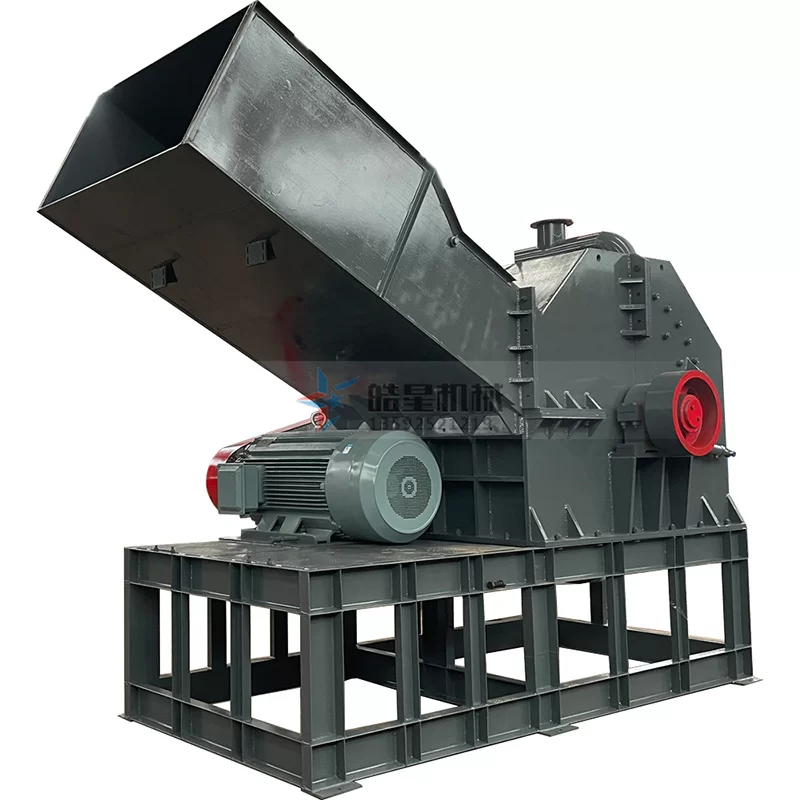
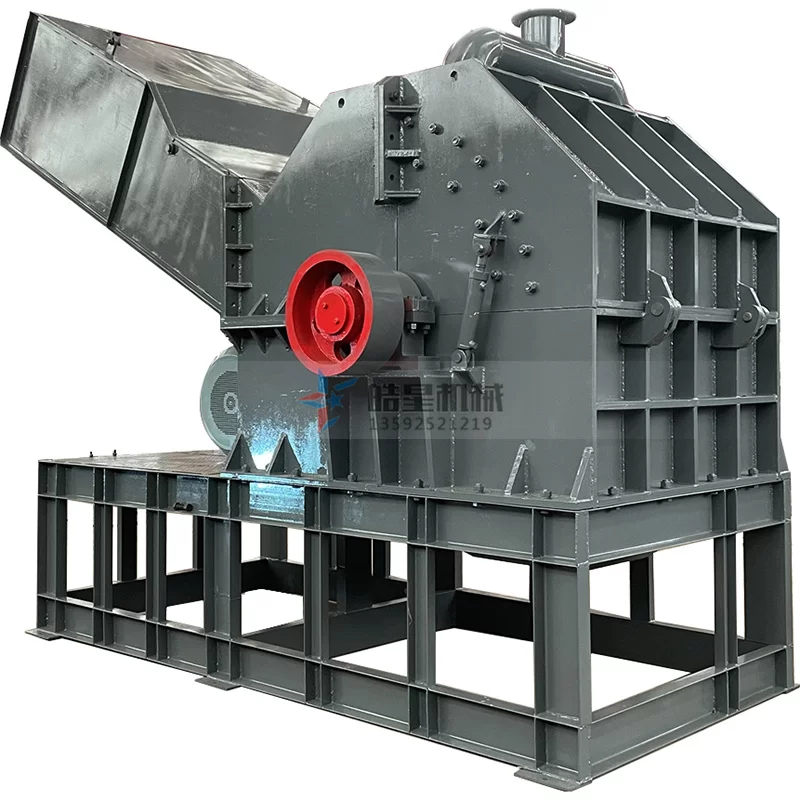
A metal crusher performs a different job from a twin shaft shredder.
The twin shaft shredder opens the bale and reduces the size through low-speed shearing and tearing. The metal crusher uses high-speed hammer impact and a screen to produce smaller and more consistent material.
A metal crusher may be required after primary shredding in the following situations.
The Furnace Requires Smaller Feed
Some furnace feeding systems cannot accept long, folded or irregular pieces discharged from a twin shaft shredder.
If the furnace requires material below a specified size, the primary shredder may not provide enough size control. A secondary metal crusher can further reduce the material before charging.
The required size must be confirmed before selecting the crusher and screen opening.
The Bale Contains Folded or Interlocked Sheet Metal
Compressed sheet metal can remain folded after the bale has been opened. Some pieces may separate from the bale without passing through several complete cutting cycles.
These pieces may still be too large or irregular for stable furnace feeding.
Secondary crushing breaks the opened scrap into shorter pieces and provides a more consistent flow.
Better Separation Is Required
A bale may contain iron, aluminum, copper, stainless steel and non-metallic contaminants.
Opening the bale exposes these materials, but they may still be connected or trapped together. Further crushing can improve material liberation before magnetic separation, screening or eddy current separation.
A possible process is:
Feeding conveyor → Twin shaft shredder → Magnetic separator → Metal crusher → Vibrating screen → Sorting system
This configuration is more suitable when the objective is to recover different metal fractions instead of sending all opened material directly to the furnace.
The Furnace Feed Must Be More Consistent
Irregular scrap creates an uneven material flow. One section of the conveyor may carry thin loose sheets, while another section carries larger folded pieces.
A metal crusher and screen can reduce these differences. More consistent feed may simplify conveyor transfer, storage and furnace charging.
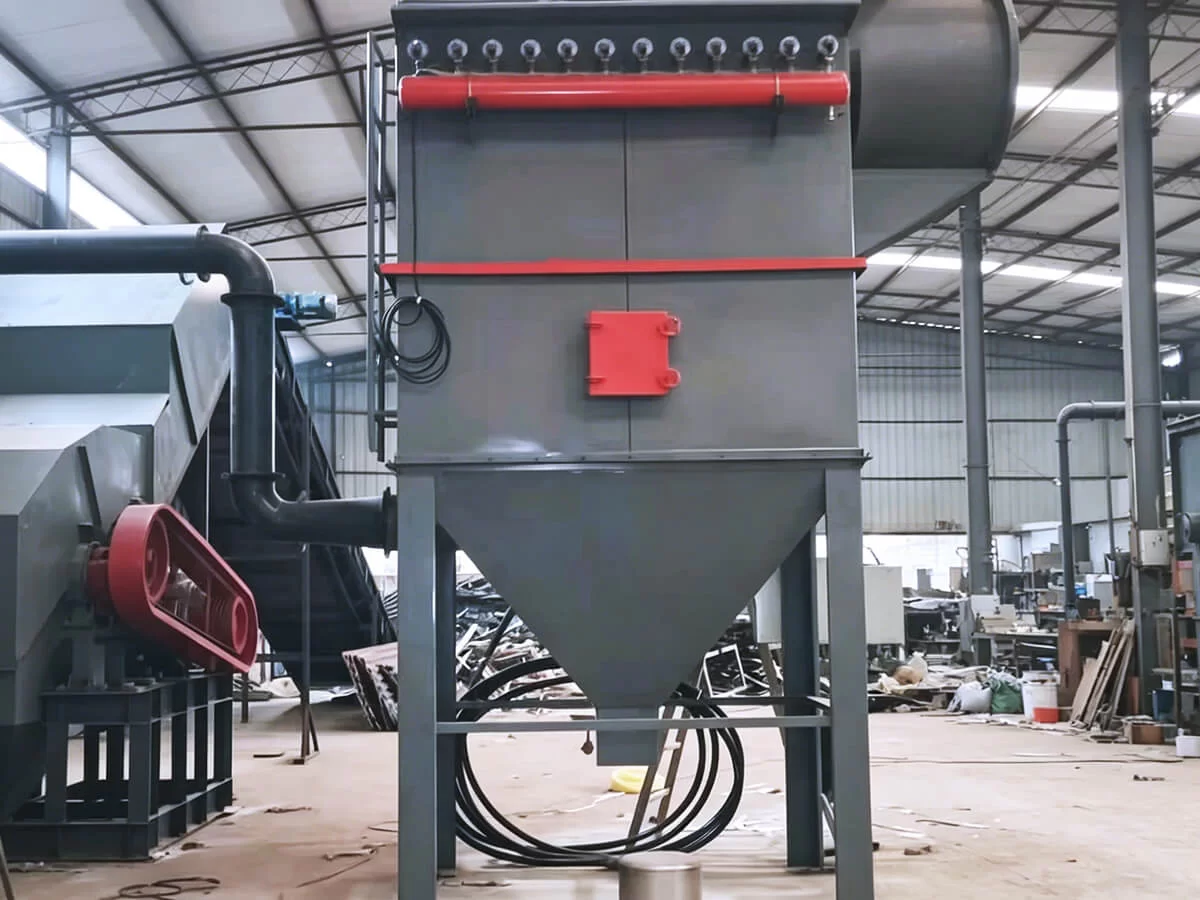
However, the benefit should be compared with the additional investment, power consumption, wear parts and dust collection requirements.
The Opened Scrap Still Contains Large Pieces
The discharge from a twin shaft shredder depends on the original material shape, cutter arrangement and number of cutting cycles.
Some pieces may pass through after the bale opens without being reduced to the desired size. If these oversized pieces cannot enter the furnace charging system, secondary crushing or additional cutting will be needed.
When a Metal Crusher Should Not Be Added Automatically
Adding more equipment does not always improve the project.
If the opened scrap already meets the furnace requirements, installing a metal crusher may increase:
Total installed power
Equipment investment
Hammer and liner wear
Maintenance work
Dust generation
Noise
Space requirements
Conveyor requirements
Electrical control complexity
High-speed crushing also creates more fine material than coarse twin shaft shredding. Excessive fines may not be desirable for every furnace or scrap handling process.
The decision should therefore be based on the required final material condition, not on the assumption that every complete line needs a crusher.
For direct furnace charging, the simplest reliable process is often more economical than installing equipment that does not improve the final result.
The Furnace Type Must Be Confirmed
The phrase “burned directly” or “charged directly into the furnace” is not enough to finalize the equipment configuration.
Different furnaces and charging systems can have different material requirements. Before selecting the shredder and deciding whether secondary crushing is needed, the customer should provide:
Furnace type
Furnace charging opening
Maximum acceptable scrap size
Preferred scrap size
Maximum acceptable piece weight
Charging conveyor or bucket dimensions
Acceptable impurity level
Acceptable moisture level
Desired hourly charging rate
Whether loose fines are acceptable
Whether non-ferrous metals must be removed
Whether the scrap will be stored before melting
The equipment supplier does not need to redesign the furnace. However, the scrap processing output must be compatible with the existing charging method.
Material Composition Is More Important Than the Bale Name
“Baled scrap” describes the physical condition of the material, not its exact composition.
A buyer may use the same name for very different bales, including:
Baled light-gauge steel
Compressed sheet metal
Tinplate bales
Color-coated steel sheet bales
Appliance shell bales
Mixed metal bales
Aluminum can bales
Aluminum sheet bales
Vehicle body sheet bales
Industrial production offcut bales
These materials do not produce the same output after shredding.
Known light ferrous scrap may only require opening and coarse size reduction. Mixed metal bales may require pre-sorting, magnetic separation and further processing before any material is sent to a furnace.
The customer should provide representative photos showing both the complete bales and the individual materials inside them.
Bale dimensions and weight are also necessary. Two visually similar bales can have significantly different densities and processing times.
A Magnetic Separator May Be More Useful Than a Crusher
If the main purpose is to remove non-ferrous material before melting, a magnetic separator may provide more value than additional size reduction.
After the bale is opened, the loose material passes under or around a magnetic separation unit. Ferrous material is recovered, while suitable non-ferrous and non-metallic material follows a different discharge path.
A simplified process can be:
Feeding conveyor → Twin shaft shredder → Magnetic separator → Ferrous scrap discharge
This system does not create a small, uniform product. Its purpose is to open the bales and recover the magnetic fraction before furnace charging.
The actual separation result depends on:
Material layer thickness
Conveyor speed
Magnet position
Magnetic field strength
Size and shape of the scrap
Degree of material liberation
Presence of tangled or overlapping pieces
If different materials remain tightly connected, opening alone may not provide sufficient separation. Further crushing can then be evaluated.
Screening Is Not Always Necessary for Direct Melting
A vibrating screen is commonly used to classify crushed material by size. It can remove fines or separate the output into different particle ranges.
For direct furnace charging after coarse shredding, screening may not be necessary if:
The furnace accepts mixed piece sizes.
Fine material is limited.
The customer does not require classified products.
The discharge conveyor can handle the complete output.
No precision sorting equipment follows the shredder.
Screening becomes more useful when:
The furnace has strict feed size requirements.
Excessive fines must be removed.
Oversized material must return for secondary crushing.
An eddy current separator requires a controlled feed range.
The final products will be sold by particle size.
The screen should be selected according to an actual downstream requirement, not simply included as a standard part of every processing line.
Compare Three Possible Processing Routes
Route 1: Bale Opening for Direct Furnace Charging
Suitable for known ferrous bales when coarse output is acceptable.
Process:
Feeding conveyor → Twin shaft shredder → Discharge conveyor → Furnace charging
Main purpose:
Open compressed bales
Reduce handling size
Provide loose furnace feed
This is generally the simplest configuration.
Route 2: Bale Opening and Ferrous Metal Recovery
Suitable for mixed bales when the ferrous fraction will be charged into the furnace.
Process:
Feeding conveyor → Twin shaft shredder → Magnetic separator → Ferrous material discharge
Main purpose:
Open the bale
Expose mixed materials
Recover ferrous metal
Reduce unwanted material entering the furnace
The material does not necessarily become small or uniform.
Route 3: Shredding, Crushing and Sorting
Suitable when the furnace requires smaller feed or when the customer needs cleaner, classified metal fractions.
Process:
Feeding conveyor → Twin shaft shredder → Primary magnetic separation → Metal crusher → Vibrating screen → Secondary separation → Product conveyors
Main purpose:
Open dense bales
Improve material liberation
Control the final particle size
Recover different metal fractions
Prepare more consistent furnace feed
This configuration requires more power, space, wear parts and dust control.
Do Not Select the Line Only by Tons per Hour
A requirement such as five tons per hour does not provide enough information to select the equipment.
The supplier also needs to know:
Average bale weight
Maximum bale weight
Bale dimensions
Bale density
Metal thickness
Main material composition
Percentage of impurities
Maximum individual piece size
Required final size
Furnace charging method
Daily operating hours
For direct furnace charging, the meaning of the required capacity should also be confirmed.
Five tons per hour may refer to:
Nominal bale input
Average shredded output
Ferrous material recovered after separation
Minimum continuous furnace feed
Short-term maximum production
Equipment selection can change depending on which definition applies.
Information Required Before Confirming the Process
Before recommending a twin shaft shredder or adding a metal crusher, the customer should provide:
Clear photos and videos of the complete bales.
Photos showing the individual materials inside the bales.
Maximum and typical bale dimensions.
Average and maximum bale weight.
Main metal types and approximate percentages.
Maximum metal thickness.
Details of long strips, wires, cables or solid parts.
Percentage of plastic, rubber, wood and other impurities.
Required hourly capacity.
Furnace type and charging method.
Maximum acceptable furnace feed size.
Whether magnetic separation is required.
Whether fines are acceptable.
Local voltage, frequency and phase.
Available installation area.
This information allows the equipment configuration to be based on the customer’s actual material and melting process.
Choose the Shortest Process That Meets the Furnace Requirement
If baled scrap will be charged directly into a furnace, the processing line does not automatically need a metal crusher.
A twin shaft shredder may be sufficient when the bales contain known ferrous scrap and the furnace accepts coarse, irregular pieces. A magnetic separator can be added when the ferrous fraction needs to be recovered from mixed material.
A metal crusher is more suitable when the opened scrap remains too large, improved material liberation is required, or the furnace needs smaller and more consistent feed.
The correct approach is to start with the furnace requirement and work backward. This avoids unnecessary equipment while ensuring that the final material can be handled and melted as intended.
Gongyi Haoxing Machinery Factory manufactures twin shaft shredders, metal crushers and complete baled scrap processing lines in China. Feeding conveyors, magnetic separators, vibrating screens, dust collection and electrical control systems can be configured according to the bale condition and furnace charging requirements.
Send us your bale photos, dimensions, weight, material composition, required capacity and furnace feed size. We will evaluate whether primary shredding is sufficient or whether secondary crushing and separation are needed.
WhatsApp: +86 186 2491 0209
Website: www.hxjx08.com