Project Overview
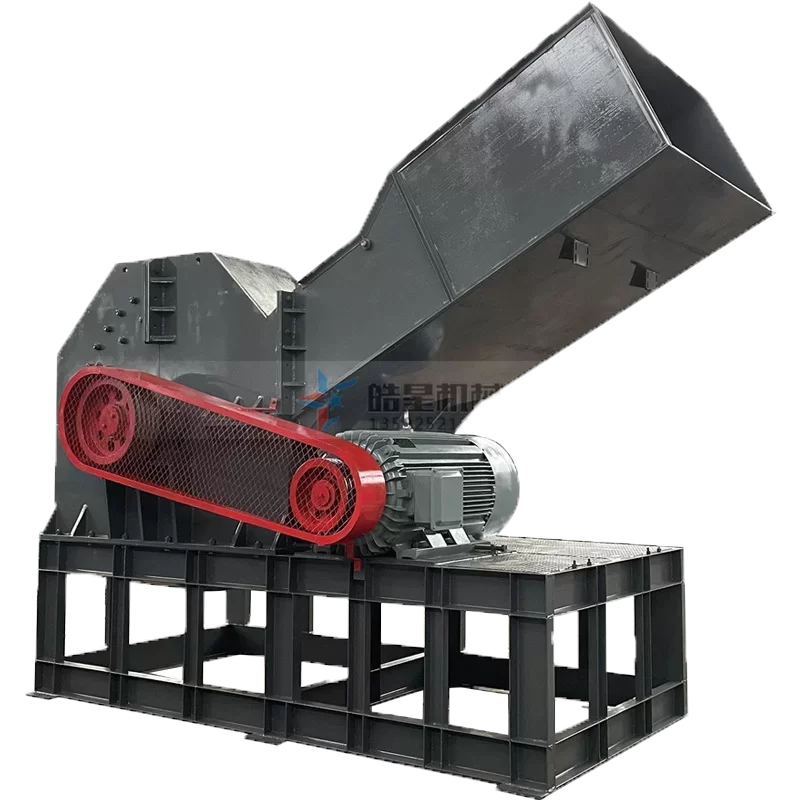
Feeding conveyor, HXPS-1600 aluminum crusher, discharge conveyor and electrical control cabinet, with magnetic separation used when the material contains ferrous inserts.
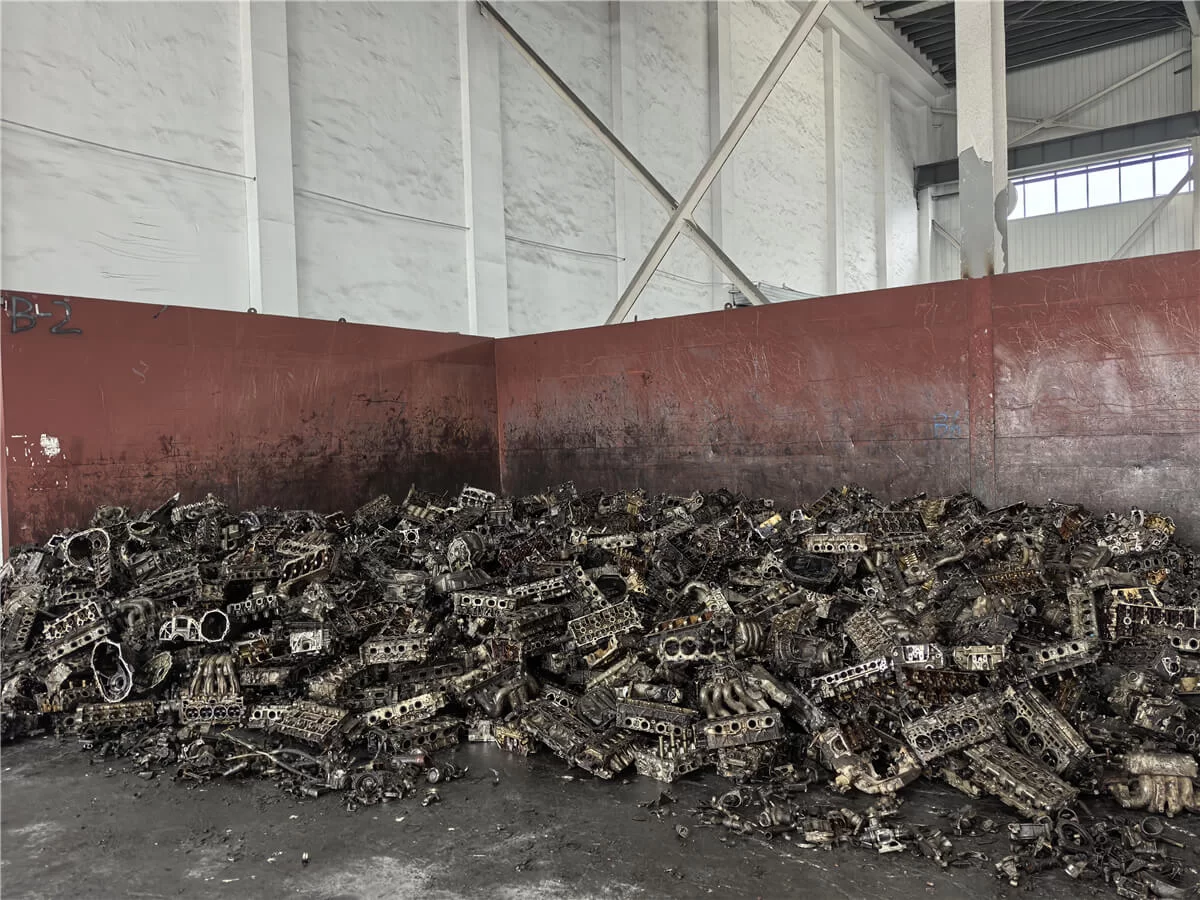
A customer from Nantong brought approximately 300–500 kg of defective cast aluminum engine housings and aluminum crankcases to our factory for a crushing test. Most of the samples were rejected castings generated during aluminum component production rather than automotive parts recovered after dismantling.
The customer wanted to confirm two points before selecting the equipment: whether the rejected cast aluminum housings could be crushed steadily and whether the discharged aluminum pieces would remain within a reasonably consistent size range.
An HXPS-1600 aluminum crusher was used for the test. The machine operated for approximately 30 minutes and produced irregular cast aluminum pieces measuring mainly around 3–5 cm under the test conditions.
Material Supplied by the Nantong Customer
The test material mainly consisted of defective and scrapped engine housings generated during the casting process. These parts had been rejected because they did not meet the required production or inspection standards.
Although the housings could no longer be used as finished components, the cast aluminum still had recycling and remelting value.
Compared with used engine housings removed from vehicles, production rejects are generally cleaner and may contain fewer assembled components. However, their shape, wall thickness and reinforced structures can still vary considerably.
The material supplied for the test included:
Defective cast aluminum engine housings
Rejected aluminum crankcases
Irregular cast aluminum sections
Castings with reinforced ribs
Parts with different wall thicknesses
Individual pieces that could contain steel sleeves or other iron inserts
A cast aluminum parts crusher should be tested with representative material rather than one lightweight or unusually clean sample. For this reason, the customer provided housings with different shapes and structural features.
The samples were inspected before feeding. Large solid steel components and unsuitable foreign materials should be removed before the castings enter the aluminum crankcase crusher.
Do Aluminum Crankcases Contain Iron?
The main body of an aluminum crankcase or cast aluminum engine housing is made of aluminum alloy. However, some castings may contain ferrous components, depending on their design and the stage at which they were rejected.
Possible steel components include:
Threaded sleeves
Bushings
Positioning pins
Bearing-related parts
Steel bolts
Reinforcing inserts
Attached machining fixtures or remnants
Rejected castings produced before final assembly may contain less iron than dismantled automotive housings. The material should still be inspected because the type and amount of iron can vary from one batch to another.
When iron inserts are present, impact crushing breaks the surrounding aluminum structure and can make the ferrous parts easier to identify. Exposed steel components can then be removed by a magnetic separator installed after the crusher.
Magnetic separation is not necessary for every batch. Clean castings without steel sleeves, bolts or inserts can be processed without this stage.
Purpose of the Factory Test
The Nantong customer was mainly interested in the actual crushing result rather than a theoretical production figure.
The test was arranged to confirm:
Whether the HXPS-1600 could process the rejected engine housings
Whether the irregular castings could enter the crushing chamber steadily
Whether reinforced ribs and thicker sections could be reduced
Whether most discharged pieces could remain around 3–5 cm
Whether large unbroken housing sections remained in the output
Whether steel inserts became exposed after crushing
Whether magnetic separation was required for the regular material
Using the customer’s own production rejects provided a more useful basis for equipment selection than choosing a machine from material names or photographs alone.
Pre-Test Inspection
Before starting the machine, the castings were checked for dimensions, irregular structures and attached components.
The rejected engine housings were hollow castings with reinforced ribs and sections of different thicknesses. Because of their irregular shape, individual pieces could approach the crusher inlet from different directions.
The inspection focused on three areas.
Maximum Feed Dimensions
The largest engine housings needed to match the crusher inlet. Oversized pieces that could not enter steadily would require preliminary handling.
Solid Steel Components
Small sleeves, bolts and inserts could remain in the samples when the purpose was to observe iron exposure after crushing. Large shafts, gears and heavy solid steel parts should be removed because the HXPS-1600 was being tested as a cast aluminum crusher rather than a heavy steel processing machine.
Contamination and Foreign Material
The production rejects were relatively clean, but the samples still needed to be checked for oil, loose tooling parts, sealed cavities and other unsuitable material.
After inspection, the castings were arranged for controlled feeding.
Feeding the Cast Aluminum Housings
The material was supplied to the HXPS-1600 at a controlled rate. Continuous feeding did not mean loading the entire 300–500 kg batch into the machine at once.
The interval between individual castings was adjusted according to their size, shape and the working load of the crusher. This prevented several irregular housings from reaching the crushing chamber together.
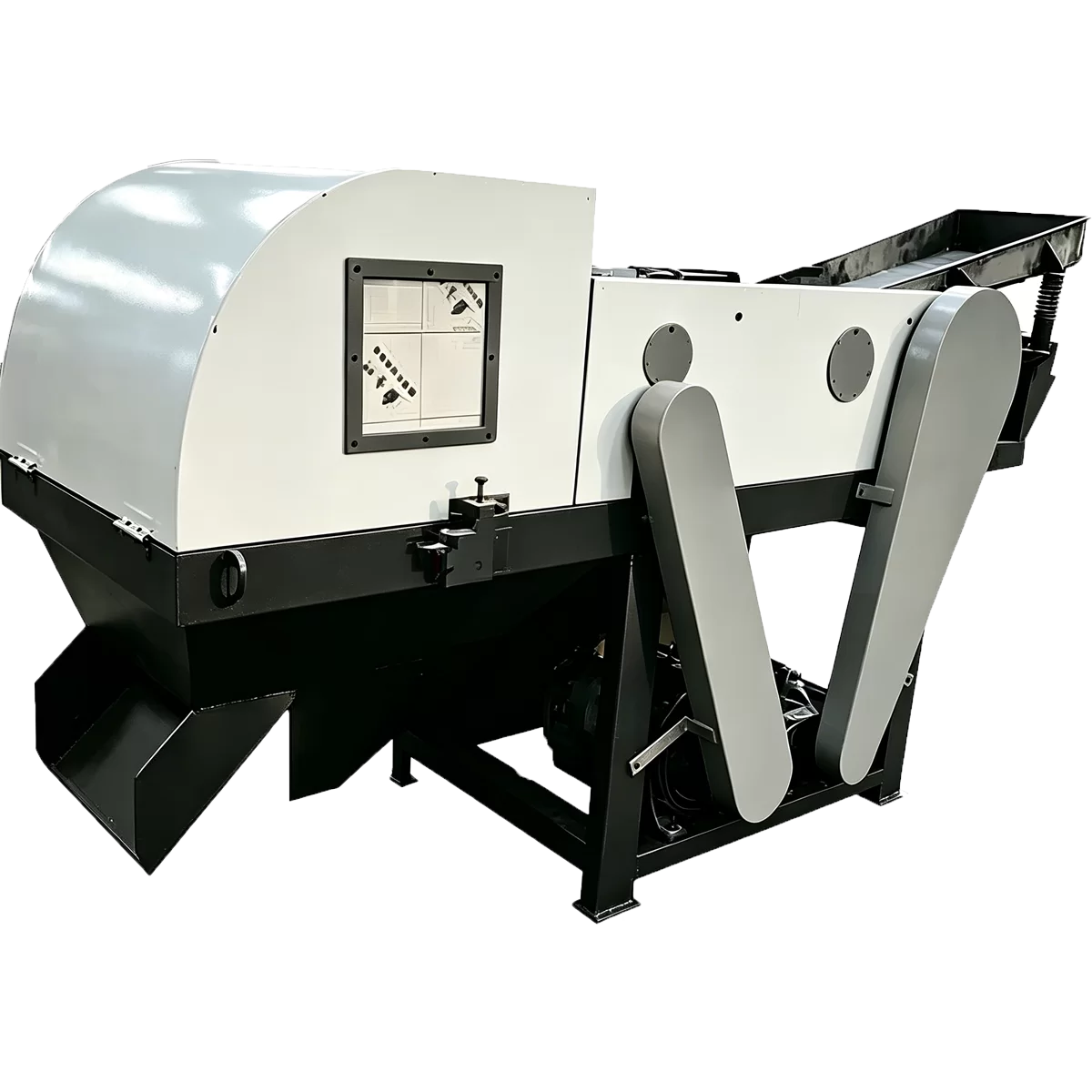
For a continuous production system, a slat conveyor can be used to feed large and irregular cast aluminum housings. The conveyor specification should be selected according to casting dimensions, individual weight and the required processing rate.
Crushing with the HXPS-1600
Inside the crushing chamber, the high-speed rotor and hammer system repeatedly struck the cast aluminum housings.
Hollow walls generally broke first. Reinforced ribs, thick mounting positions and other stronger sections remained in the chamber until they were reduced sufficiently to pass through the installed screen.
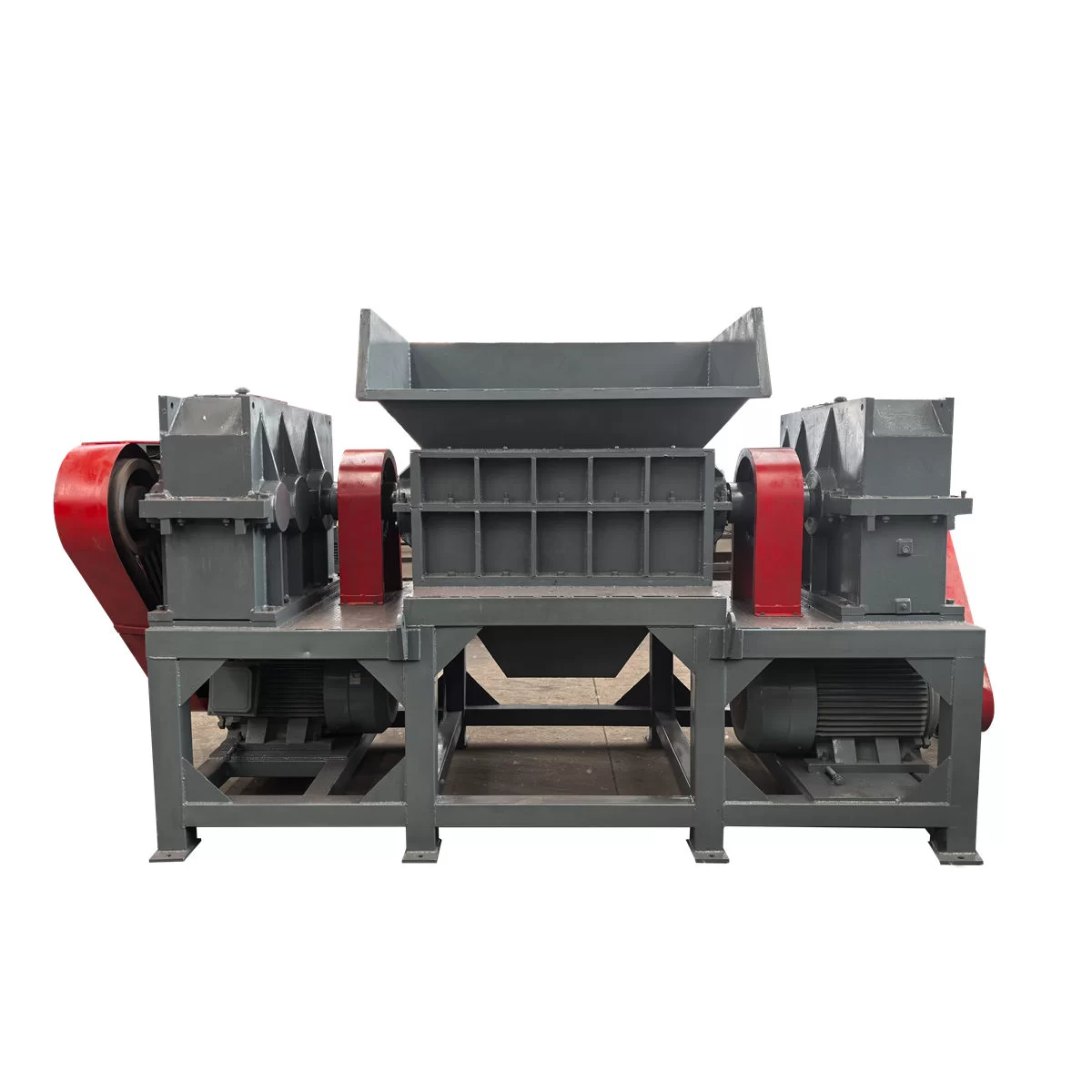
A cast aluminum crusher performs a different function from a low-speed shredder. The crusher uses high-speed impact to break castings into smaller pieces, while the screen helps control the discharge range.
The HXPS-1600 was selected because the customer required aluminum pieces of approximately 3–5 cm. A low-speed twin shaft shredder would be more suitable for coarse preprocessing but would not normally provide the same type of screen-controlled discharge.
Thirty-Minute Test Run
Approximately 300–500 kg of rejected cast aluminum material was prepared for the test. The HXPS-1600 operated for about 30 minutes, including controlled feeding and inspection of the discharged pieces.
This short test should not be used to calculate the formal hourly capacity of the machine. Time was also spent checking the feed condition, observing the machine and inspecting the output.
A reliable production capacity would need to be confirmed through a longer continuous test using:
A representative quantity of regular material
Confirmed casting dimensions
Average weight per casting
A fixed screen specification
Continuous conveyor feeding
A defined discharge requirement
A known percentage of attached steel
An acceptable proportion of fine aluminum
The purpose of this test was to verify crushing feasibility and discharge quality, not to publish an estimated hourly output from a limited batch.
Discharge Condition After Crushing
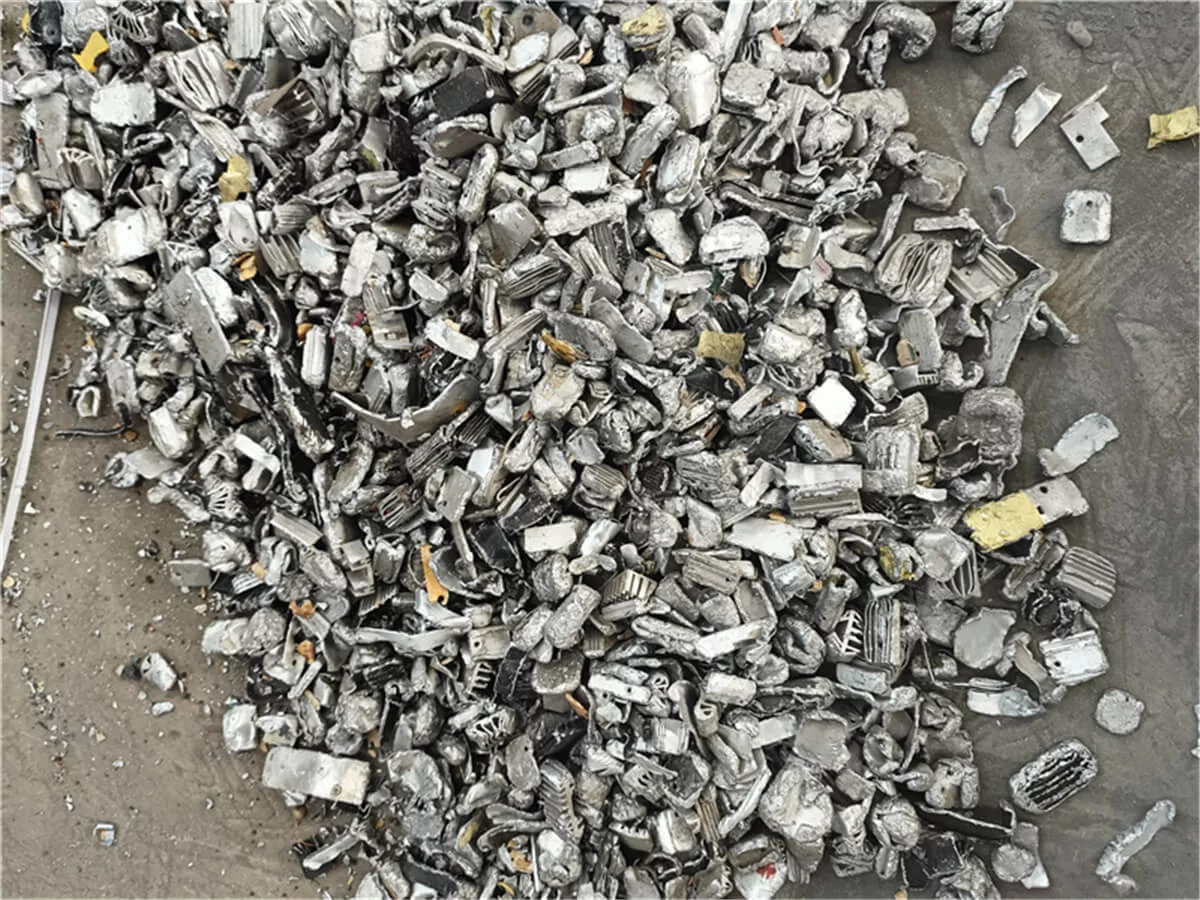
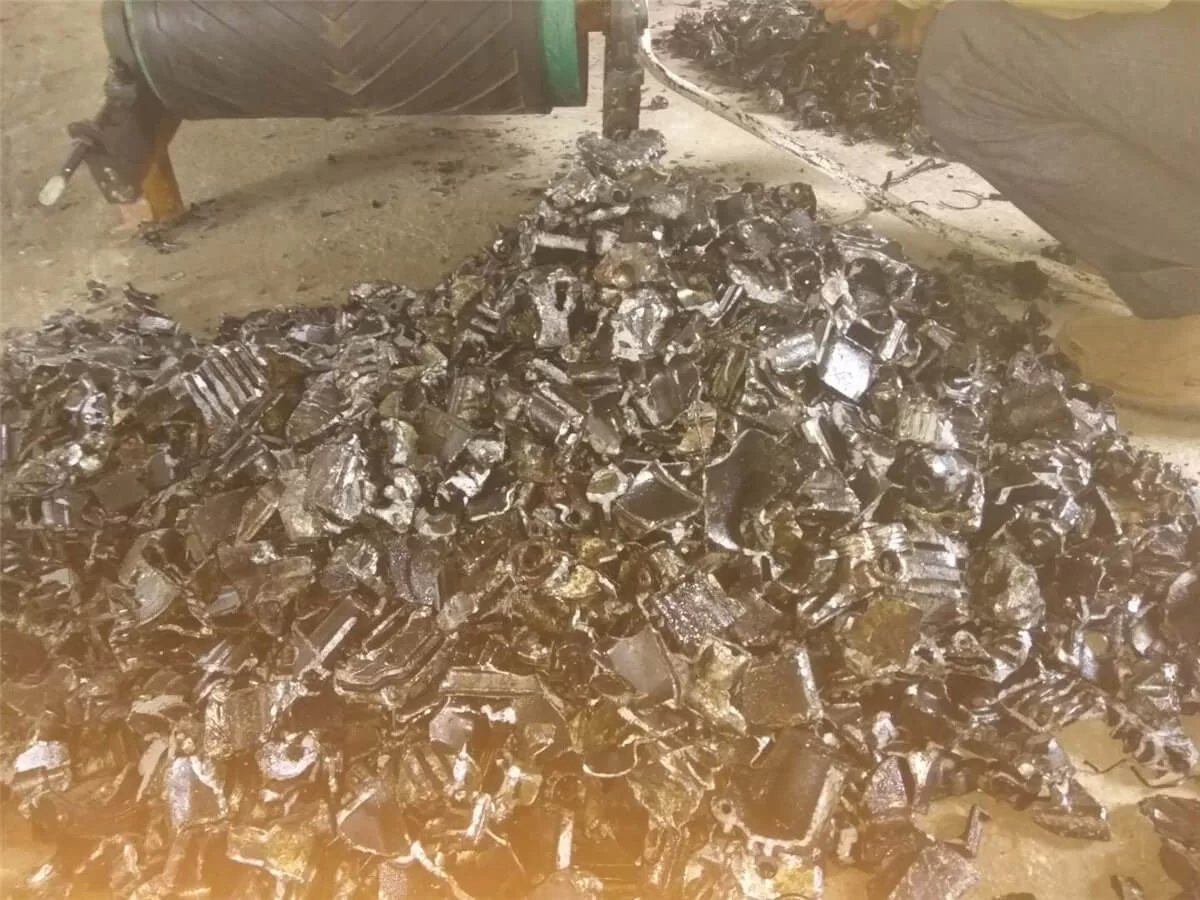
After crushing, the complete shapes of the engine housings and crankcases were no longer present. Hollow bodies, reinforced ribs and irregular casting structures had been reduced into smaller aluminum fragments.
Most of the discharged material measured approximately 3–5 cm. The pieces were not identical because the original castings contained walls, ribs and mounting sections of different thicknesses.
The customer checked the complete output for:
General piece size
Remaining oversized sections
Variation between thin and reinforced castings
Amount of fine aluminum
Exposure of possible iron inserts
Suitability for collection and conveyor transport
Need for subsequent magnetic separation
In this application, reasonably uniform output means that most of the material remained within a practical size range. It does not mean that every fragment had exactly the same dimensions or shape.
The photograph of the discharged material shows irregular silver-gray aluminum fragments. Ribbed, hollow and curved casting structures remain visible on some pieces, which is consistent with crushed engine housings and other cast aluminum production rejects.
Selecting a Scrap Aluminum Crusher
A suitable scrap aluminum crusher should not be evaluated by looking only at the smallest pieces in the discharge pile.
The complete batch should be checked for:
Unbroken castings
Oversized reinforced sections
Excessive fines
Screen-controlled discharge performance
Exposed steel inserts
Aluminum still attached to steel parts
Suitability for the customer’s remelting process
The screen opening, hammer condition, feeding interval and original casting structure all affect the output.
Using a smaller screen may reduce the discharge size further, but it can also increase material circulation inside the crushing chamber and produce more fine aluminum. The final setting should reflect the customer’s recycling requirements rather than simply producing the smallest possible pieces.
Iron Inserts After Crushing
Where steel inserts were present, the high-speed impact process broke the aluminum around them and made the ferrous components easier to identify.
The discharged material could contain:
Clean cast aluminum fragments
Exposed steel sleeves or bolts
Aluminum pieces carrying partially exposed iron
Steel inserts still enclosed inside thicker aluminum pieces
Fine aluminum and surface contaminants
The degree of iron exposure depends on:
Insert size
Insert position
Aluminum wall thickness
Bonding between the insert and casting
Screen opening
Final aluminum piece size
Number of impacts in the crushing chamber
A steel component that remains fully enclosed inside a thick aluminum fragment may not be removed effectively by magnetic equipment. In this situation, the crushing configuration may require adjustment.
Magnetic Separation When Iron Is Present
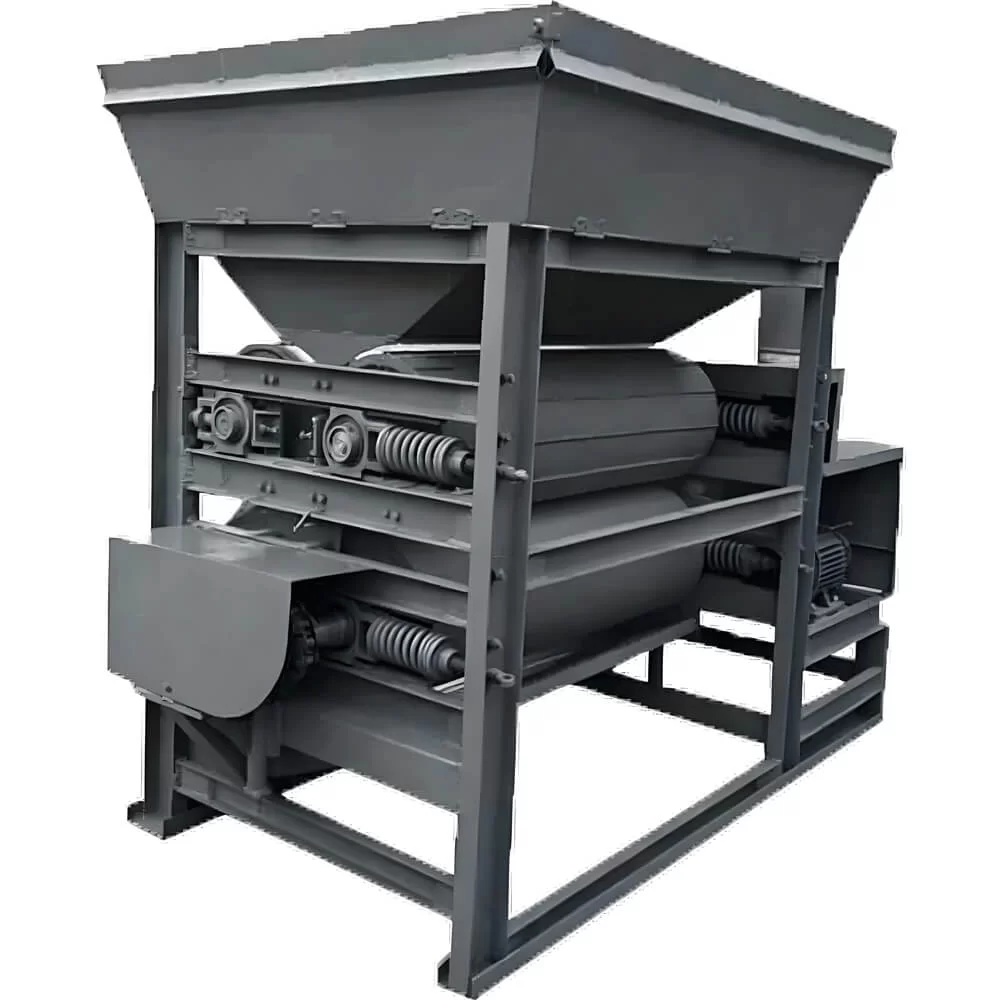
If exposed ferrous components are found in the discharged material, a magnetic separator can be installed above the discharge conveyor.
The separator removes steel bolts, sleeves, pins and other magnetic components, while the non-magnetic aluminum continues along the conveyor.
The separation result is influenced by:
Degree of iron exposure
Thickness of the material layer
Conveyor speed
Size and weight of the steel parts
Working height of the separator
Amount of aluminum still attached to the iron
Distribution of material across the conveyor
The crusher and separator perform different tasks. The HXPS-1600 first reduces the castings and exposes possible iron inserts. The magnetic system then removes the ferrous components that have been released sufficiently.
For clean casting rejects without iron components, the magnetic separation stage can be omitted.
Customer Review of the Test Results
The customer’s two main concerns were checked during the factory test.
Could the Defective Engine Housings Be Crushed?
The HXPS-1600 reduced the rejected engine housings and aluminum crankcases from complete castings into smaller aluminum fragments. Hollow sections, reinforced ribs and irregular structures were broken during high-speed impact crushing.
Was the Discharge Reasonably Uniform?
Most of the discharged material measured approximately 3–5 cm under the test conditions. Differences in casting thickness caused some variation in shape, but the output did not contain a large quantity of complete housings or excessively oversized sections.
The discharged material was suitable for collection, conveyor transport and subsequent magnetic separation when iron inserts were present.
Preliminary Equipment Recommendation
Based on the 300–500 kg test batch, the HXPS-1600 processed the customer’s rejected cast aluminum engine housings and produced pieces measuring mainly around 3–5 cm.
Before confirming the final production configuration, the customer still needed to determine:
Required hourly capacity
Maximum casting dimensions
Average casting weight
Percentage of material containing iron inserts
Required iron-removal result
Acceptable amount of fine aluminum
Daily continuous operating time
Feeding and discharge conveyor dimensions
Dust collection requirements
Available installation space
If the customer’s regular production rejects remain consistent with the tested samples, the trial provides a practical basis for selecting the crusher, screen and optional separation equipment.
Test Conclusion
The Nantong customer brought approximately 300–500 kg of defective cast aluminum engine housings and aluminum crankcases to the factory. The HXPS-1600 operated for about 30 minutes and produced irregular aluminum fragments measuring mainly around 3–5 cm.
The test confirmed that:
The defective cast aluminum engine housings could be crushed
Reinforced and irregular casting sections could be reduced
Most of the output remained within a practical size range
Possible steel inserts could become exposed during crushing
A magnetic separator could be added when ferrous components were present
The final production configuration should be based on the customer’s required capacity and iron-removal target
For manufacturers and recycling companies processing similar production rejects, a representative material test can help confirm whether the crusher inlet, hammer arrangement, screen and downstream separation equipment match the actual cast aluminum scrap.