Project Overview
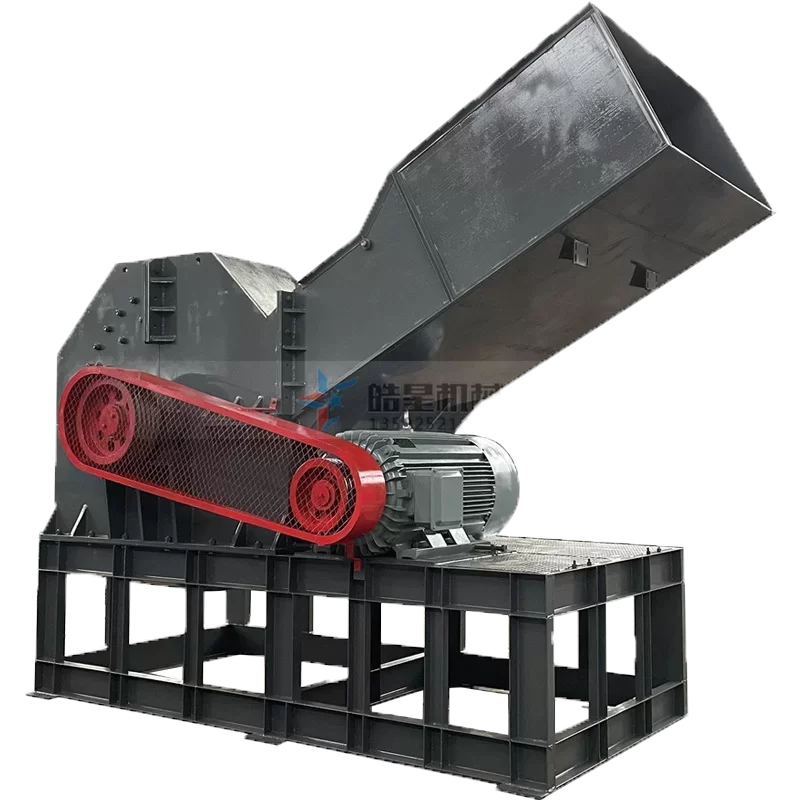
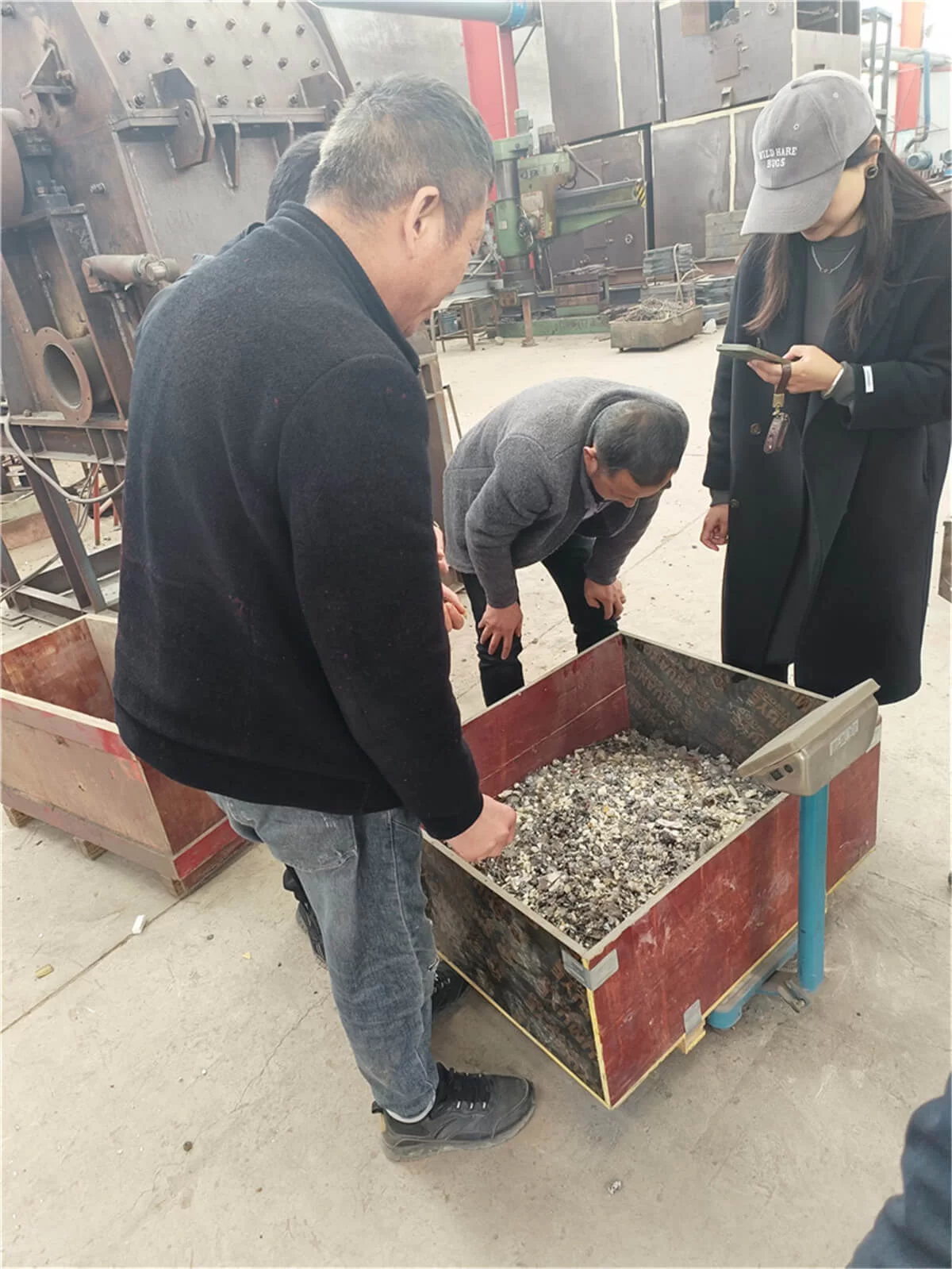
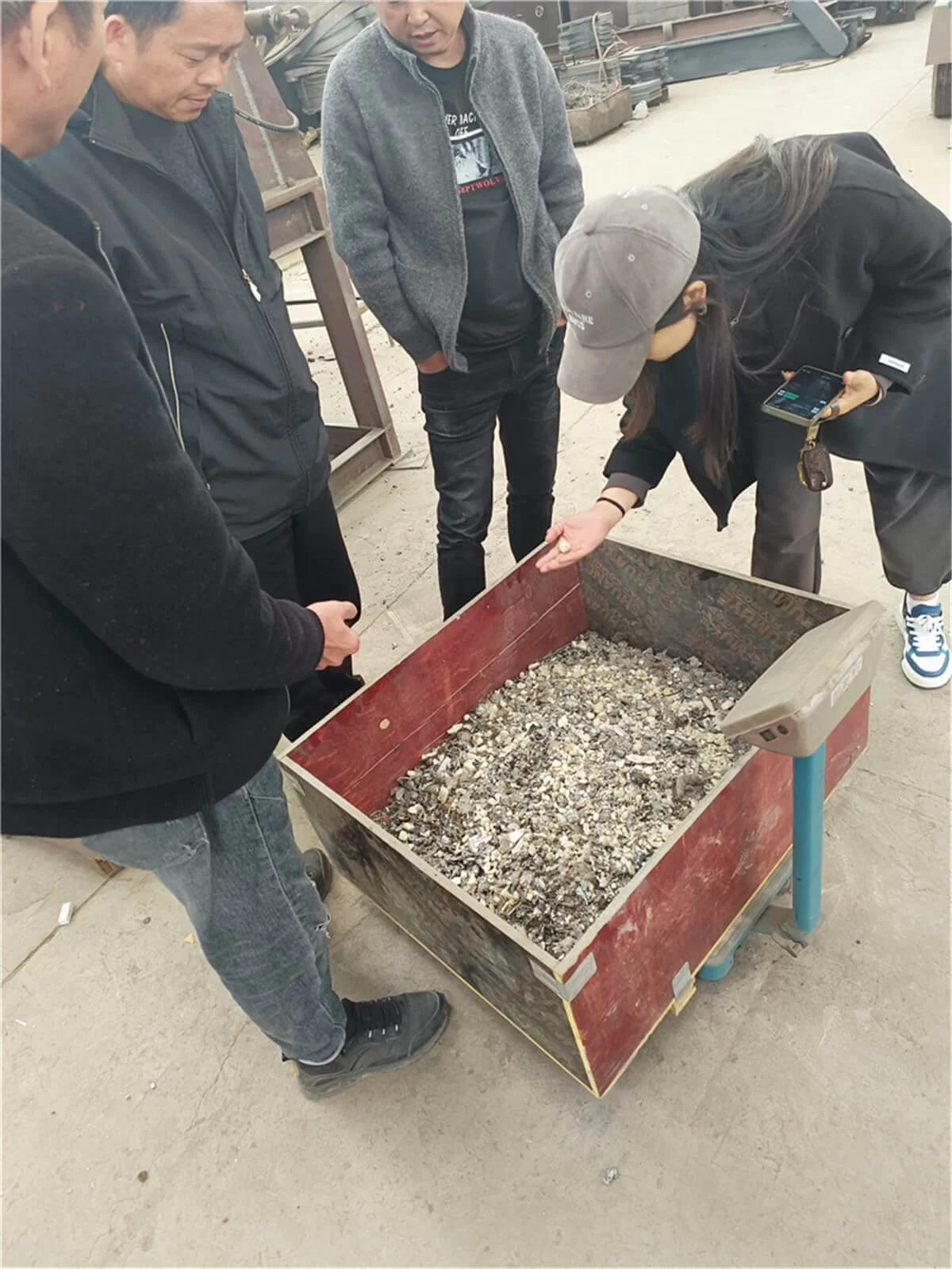
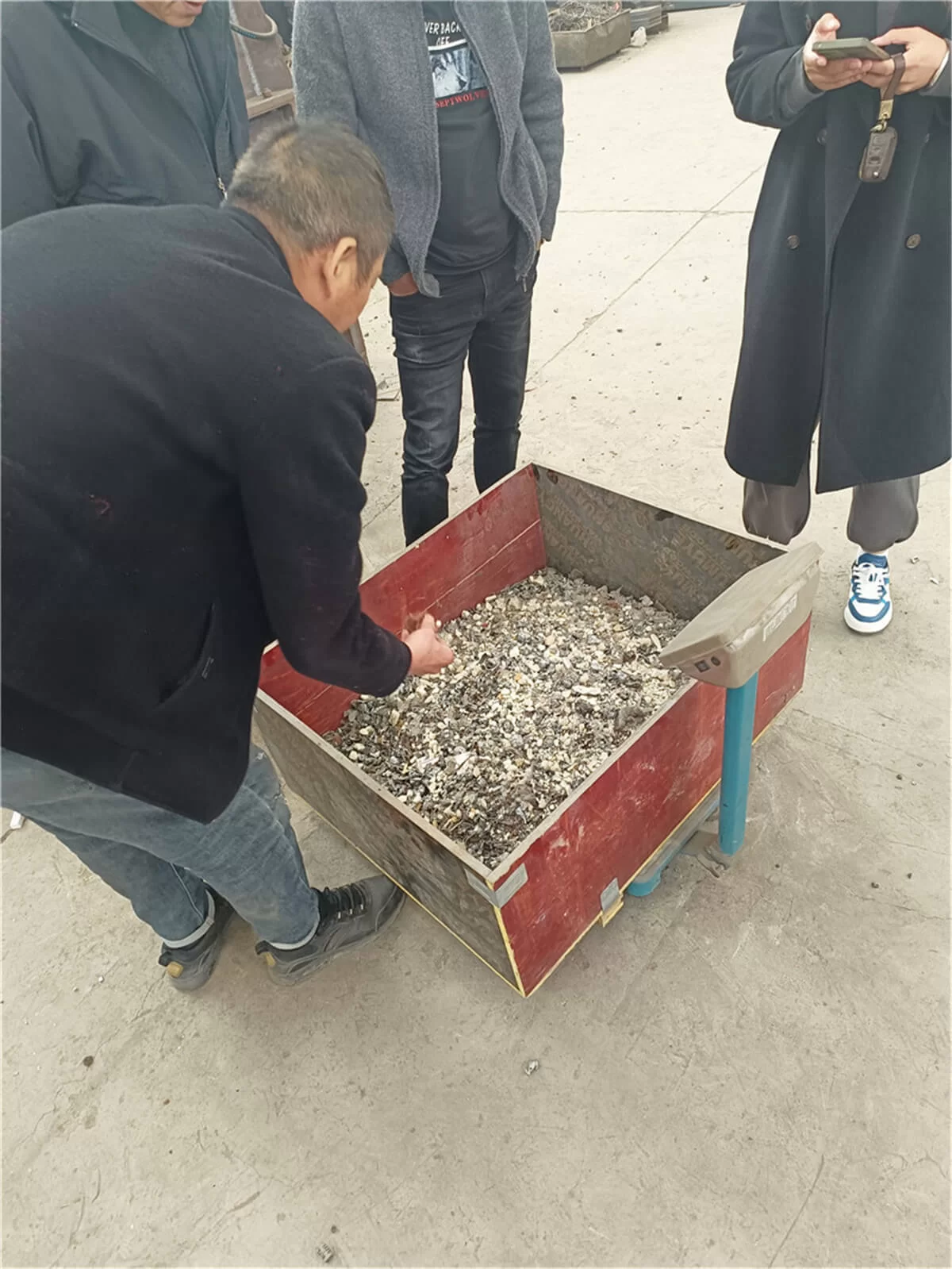
A customer tested gearbox housing scrap with an HXPS-1400 crusher to examine the discharge condition, aluminum liberation and exposure of embedded steel components before magnetic separation.
The customer brought scrap aluminum gearbox housings and mixed cast aluminum components to our factory for a crushing test. An HXPS-1400 machine was selected according to the material dimensions, casting structure and expected discharge condition.
For this type of irregular casting, a cast aluminum parts crusher should be evaluated using representative samples rather than one clean or lightweight part. The supplied material included hollow housing sections, reinforced ribs, mounting positions and individual steel attachments.
The test was intended to determine whether the housings could be reduced effectively and whether the embedded steel parts could be exposed for subsequent separation.
Crushing the Gearbox Housings
The gearbox housings were delivered to the HXPS-1400 at a controlled rate. Where continuous loading is required, a slat conveyor can be used to carry heavy and irregular castings toward the crusher inlet.
Inside the crushing chamber, the high-speed rotor and hammer system repeatedly struck the material. Hollow walls broke first, while reinforced ribs and thicker mounting positions remained inside the chamber until they could pass through the installed screen.
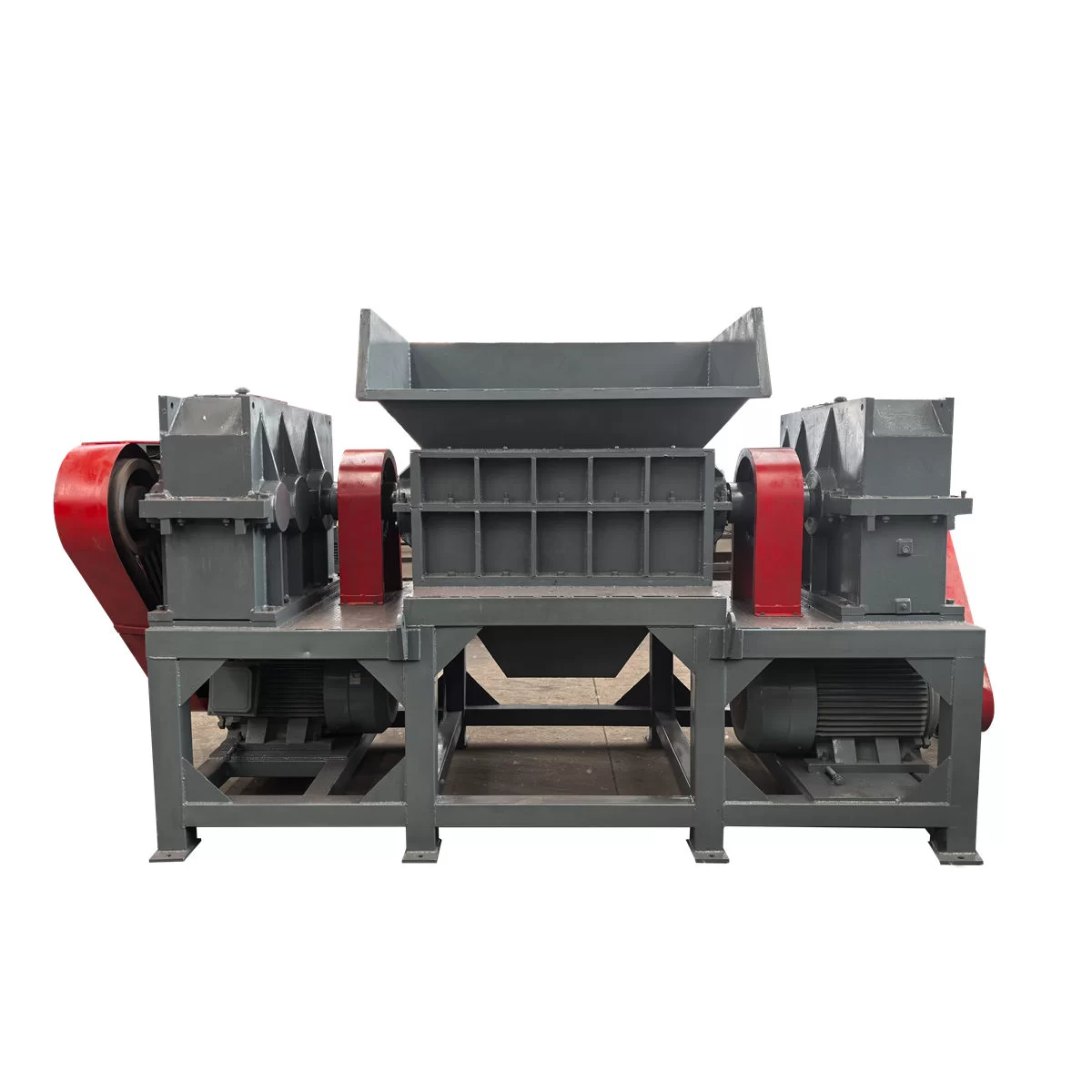
A cast aluminum crusher performs a different function from a low-speed shredder. The crusher uses high-speed impact to reduce the casting into smaller pieces, while the screen helps control the discharge range.
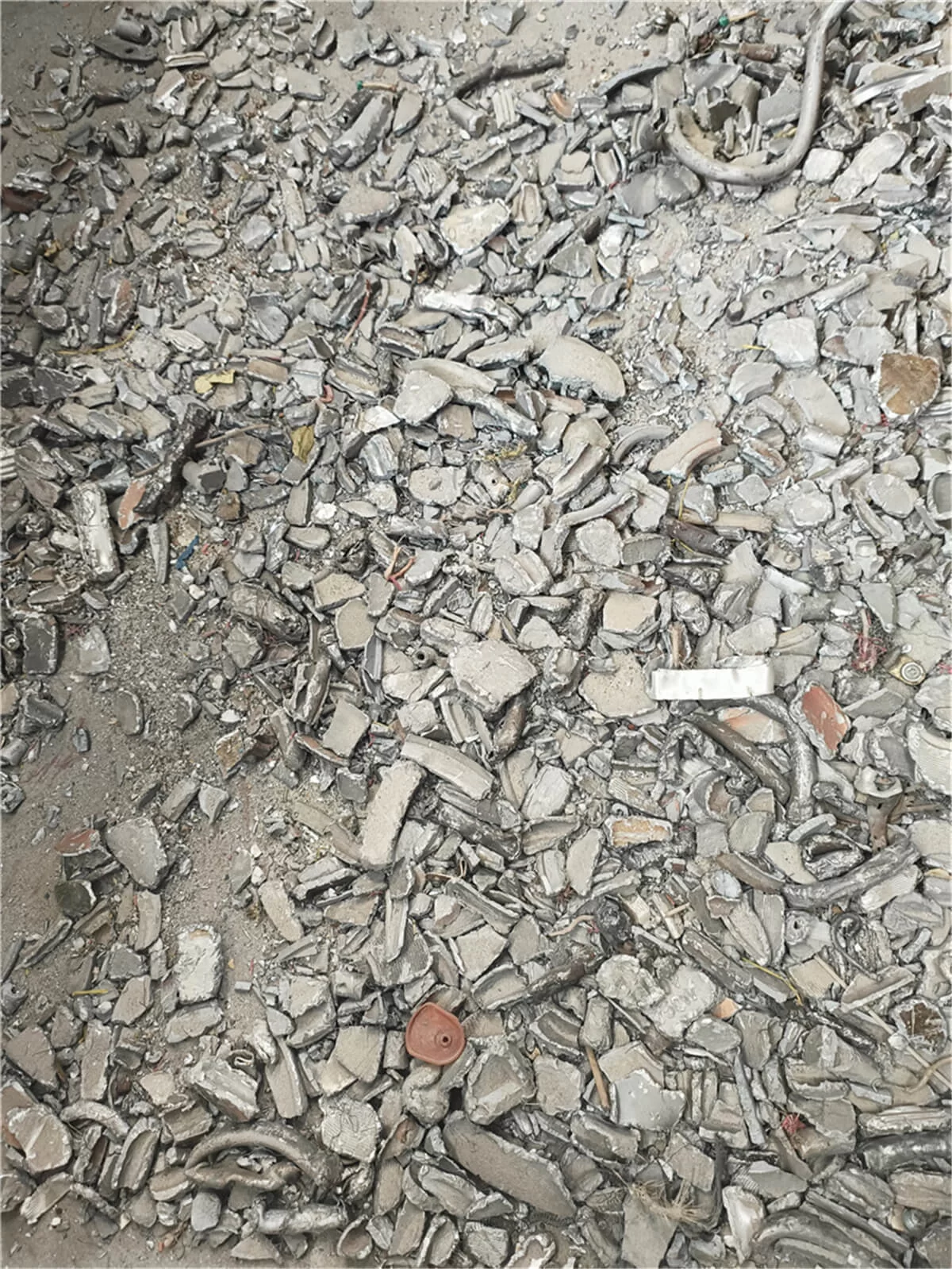
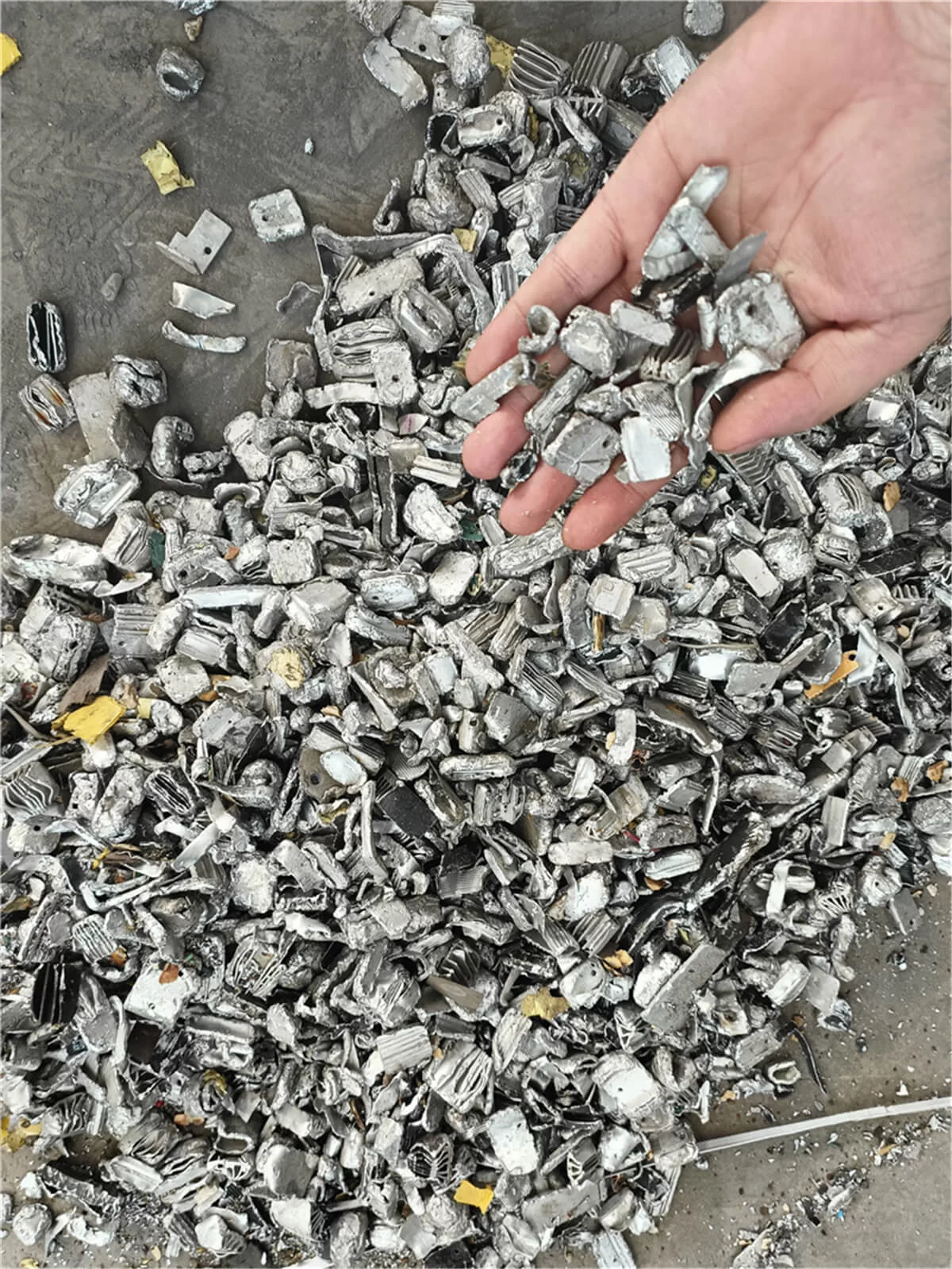
In this test, the complete gearbox housing structure was opened, and the material was reduced into irregular silver-gray aluminum fragments.
Discharge Condition
The discharged material contained broken ribs, hollow sections, curved casting pieces and smaller aluminum blocks. Complete gearbox housing shapes were no longer visible in the collected output.
Because the original castings had different wall thicknesses and reinforced structures, the discharged pieces were not identical. However, the output was sufficiently reduced for collection, conveyor transport and further inspection.
A suitable scrap aluminum crusher configuration should not be judged only by the smallest pieces in the output. The complete batch should be checked for:
Unbroken housing sections
Oversized reinforced pieces
Excessive fine aluminum
Steel inserts still enclosed in aluminum
Exposed bolts, sleeves and bearing components
Suitability for downstream separation
The two test photographs show a mixed batch of irregular cast aluminum fragments. Ribbed and hollow casting structures remain visible on many pieces, which is consistent with crushed gearbox housings and other cast aluminum components.
Exposing Steel Components
The HXPS-1400 does not complete the aluminum and steel separation by itself. Its role is to break the cast aluminum structure and expose the ferrous components originally attached to or embedded inside the housing.
After crushing, the output may include:
Cast aluminum fragments without visible iron
Exposed steel bolts and sleeves
Bearing-related steel components
Aluminum pieces still containing embedded steel
Small amounts of coating or other attachments
The degree of liberation depends on the position of the steel insert, the surrounding aluminum thickness and the final discharge size.
If a steel component remains fully enclosed inside a thick aluminum fragment, the separation result may remain limited. Further crushing or a different screen setting may be needed, but reducing the discharge size too far can also increase the amount of fine aluminum.
Magnetic Separation After Crushing
When the gearbox housings contain steel bolts, sleeves, pins or bearing components, a magnetic separator can be installed after the crusher discharge conveyor.
The crusher first exposes the ferrous components. The magnetic separation stage then removes the material that responds to the magnetic field, while the non-magnetic aluminum continues along the conveyor.
The actual separation result depends on:
How completely the steel components are exposed
Material layer thickness
Conveyor speed
Steel component size and weight
Distance between the magnet and the material
Amount of aluminum still attached to the steel
The photographs confirm that the gearbox housing material was crushed and inspected by the visitors. However, the photographs do not show a completed magnetic separation test. For this reason, the result should be described as preparation for aluminum and steel separation rather than complete separation inside the crusher.