
Suitable Projects
Selected crushed residue, aluminum-rich mixtures, prepared automotive fractions and appliance recycling fractions.
A sorting line for suitably prepared mixed material, combining ferrous removal, screening, controlled feeding, eddy current separation and optional additional sorting.
The line page explains the complete system rather than repeating one machine page.
Automatic separation works best after suitable size reduction, liberation, ferrous removal, screening and uniform spreading.
One separator does not normally produce every metal grade as a separate high-purity product. Additional sorting may be required.
Selected crushed residue, aluminum-rich mixtures, prepared automotive fractions and appliance recycling fractions.
Recover exposed ferrous metal and separate conductive non-ferrous metal from non-conductive residue.
Bulky, tangled, wet, sticky or iron-rich feed and uncontrolled particle sizes need pre-treatment.
Shredding, crushing, airflow, density separation, sensor sorting and manual inspection.
Particle size, liberation, conductivity, density, shape, moisture and feeding thickness determine the achievable result.
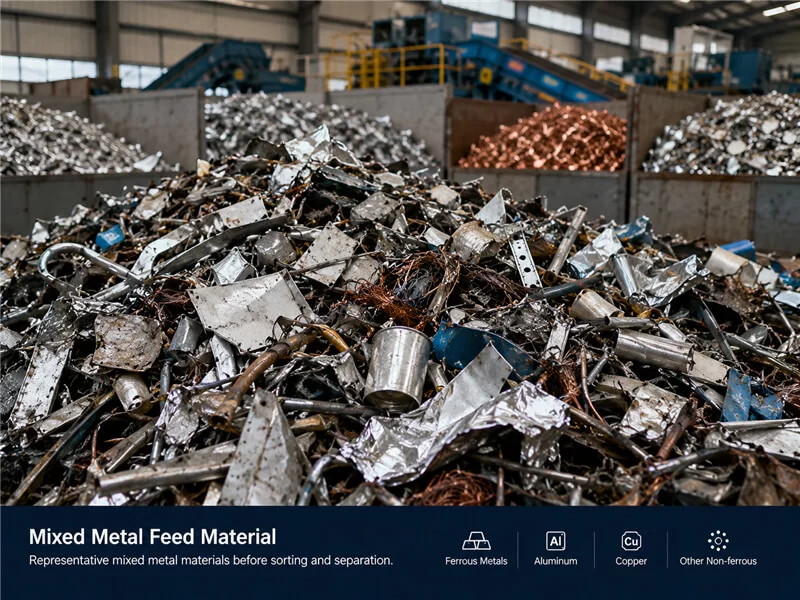
Only the stages required by the material and target output are included.
Remove unsuitable and oversized objects.
Improve liberation when required.
Remove exposed iron and steel.
Create narrower particle-size fractions.
Spread material in a thin even layer.
Recover conductive non-ferrous metal.
Separate further grades when required.
Equipment is selected for a specific task rather than added as a fixed package.
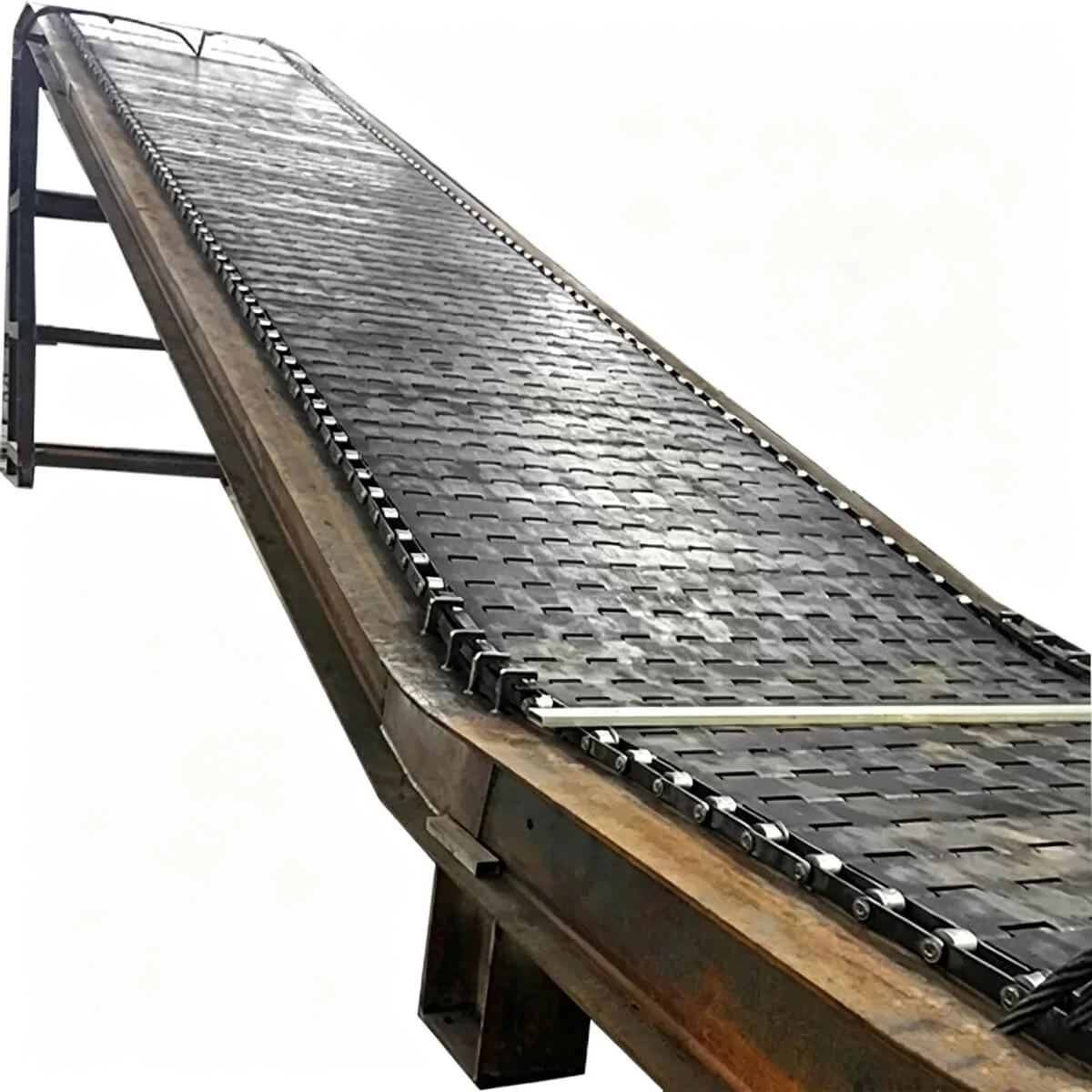
Transfers and spreads material between stages.
View equipment details →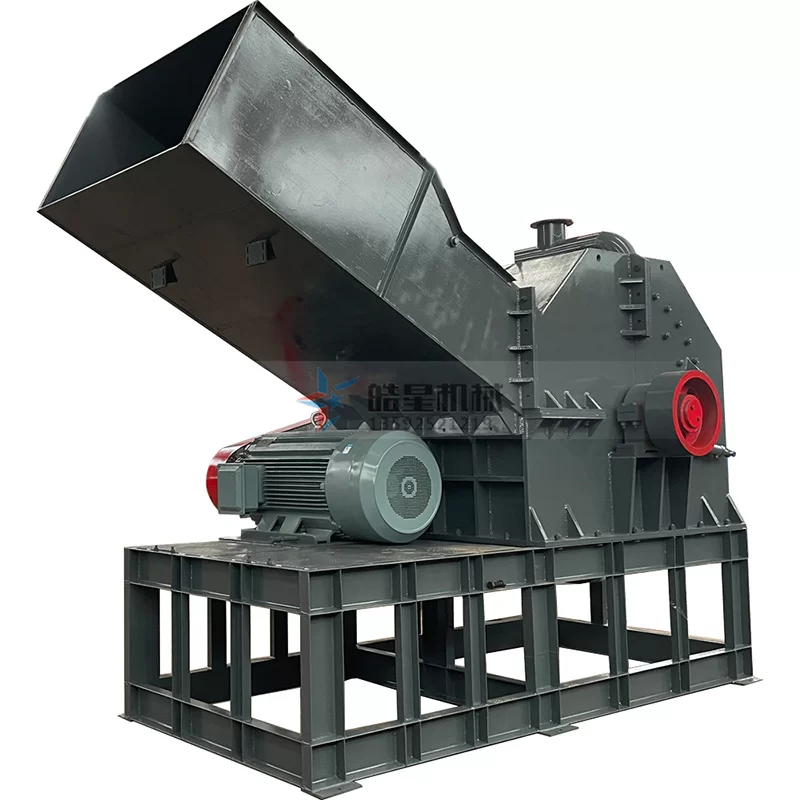
Improves liberation and controls crushed output size.
View equipment details →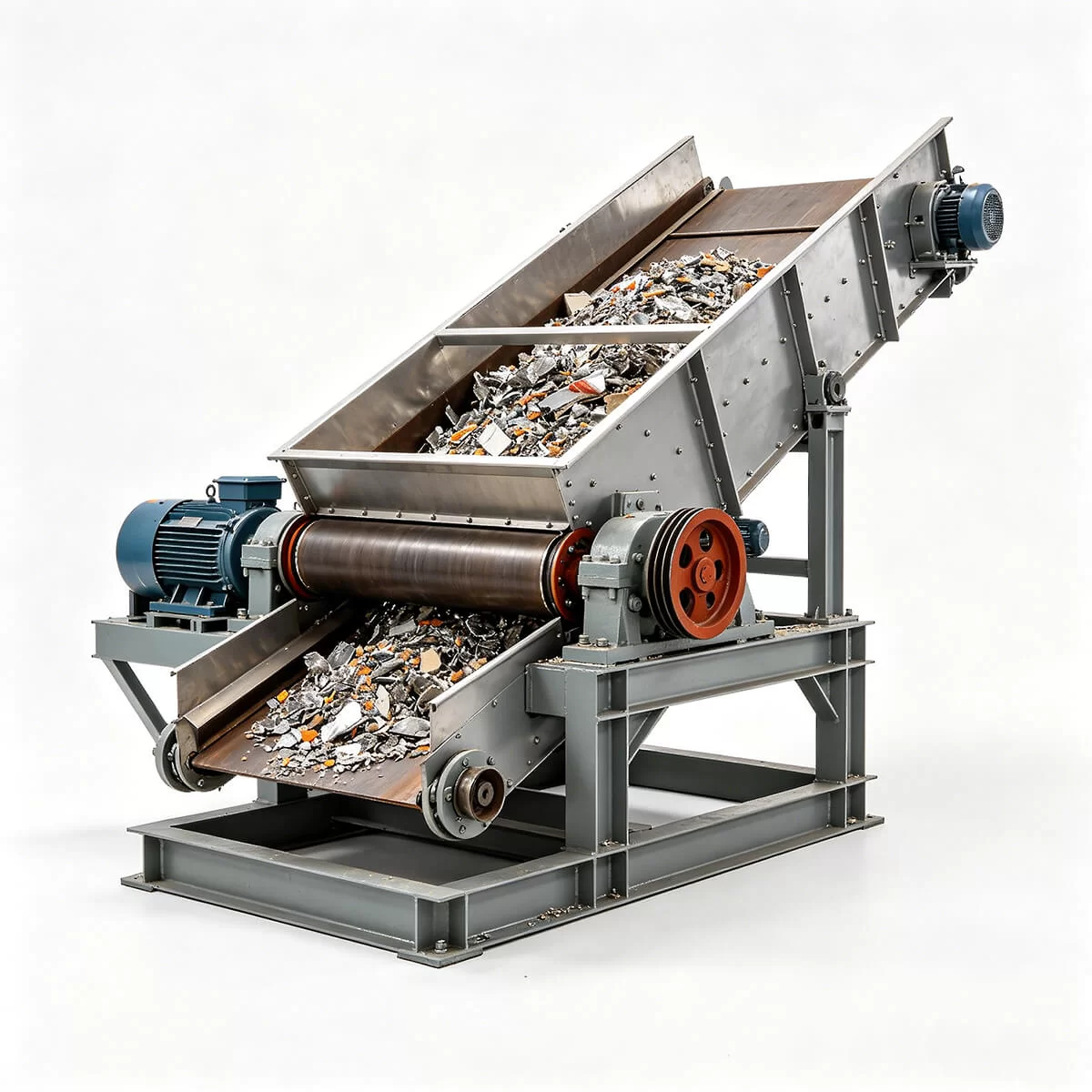
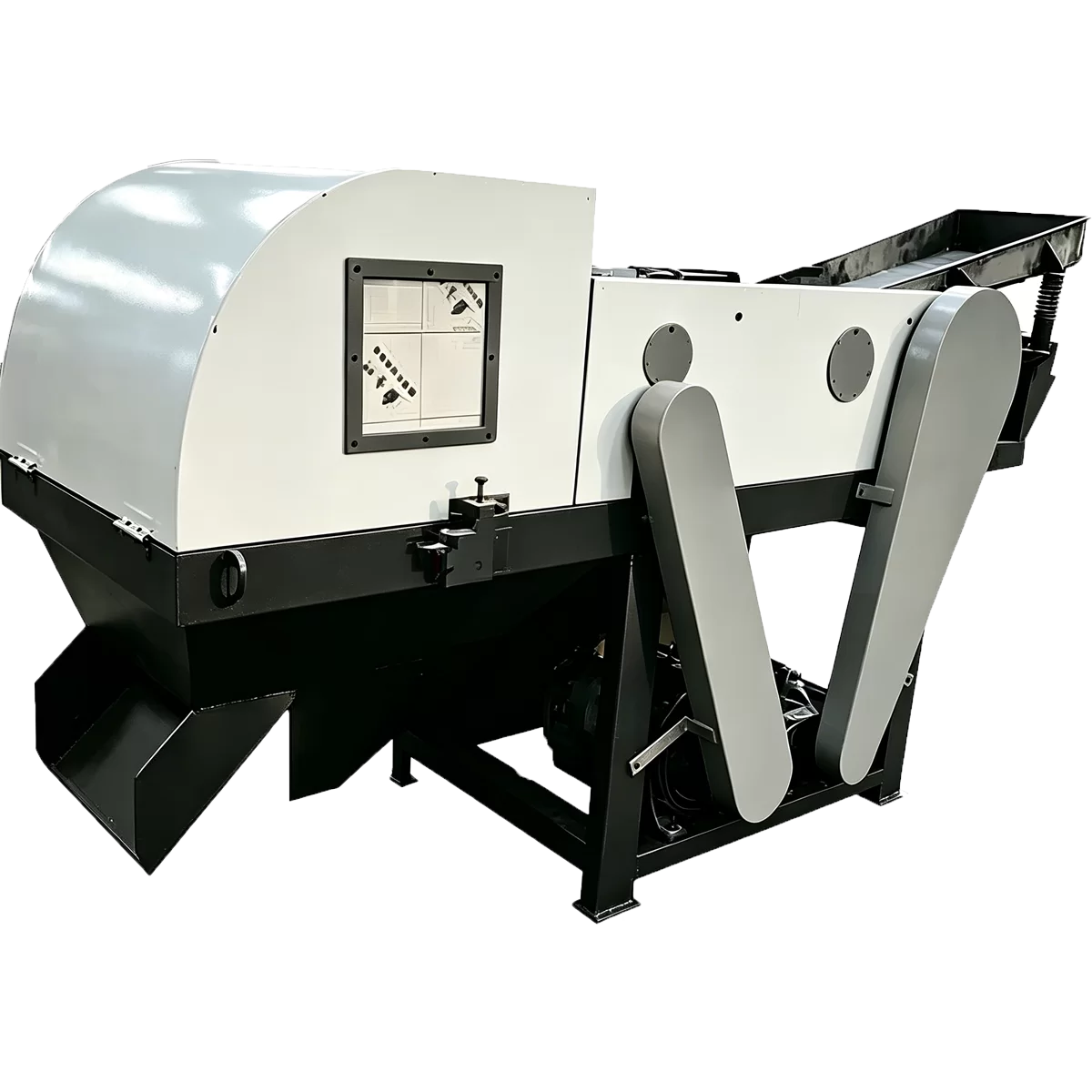
Separates conductive metal from non-conductive material.
View equipment details →Different machines solve different processing problems and should not be presented as interchangeable.
The final output depends on feed composition, liberation and installed separation stages.
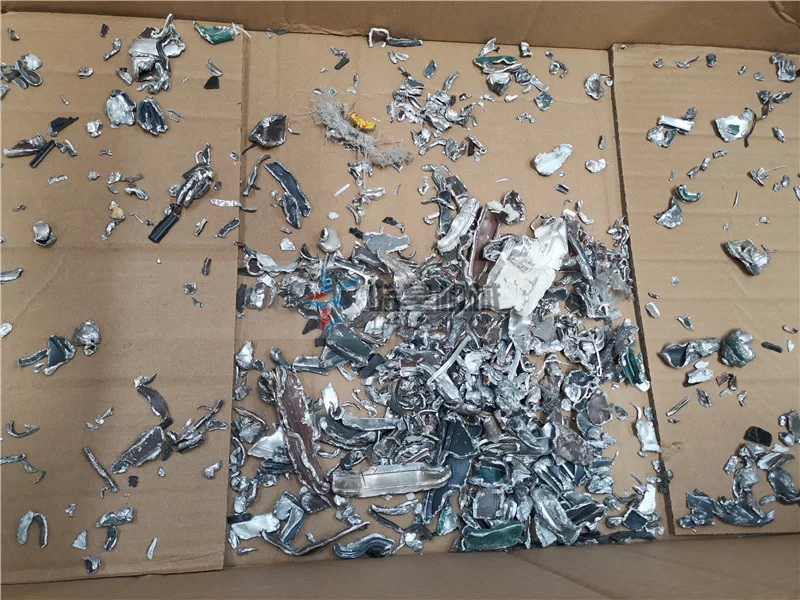
See the processing and separation results of prepared ferrous and aluminum material using crushing, magnetic separation and eddy current sorting equipment.
View Processing Record →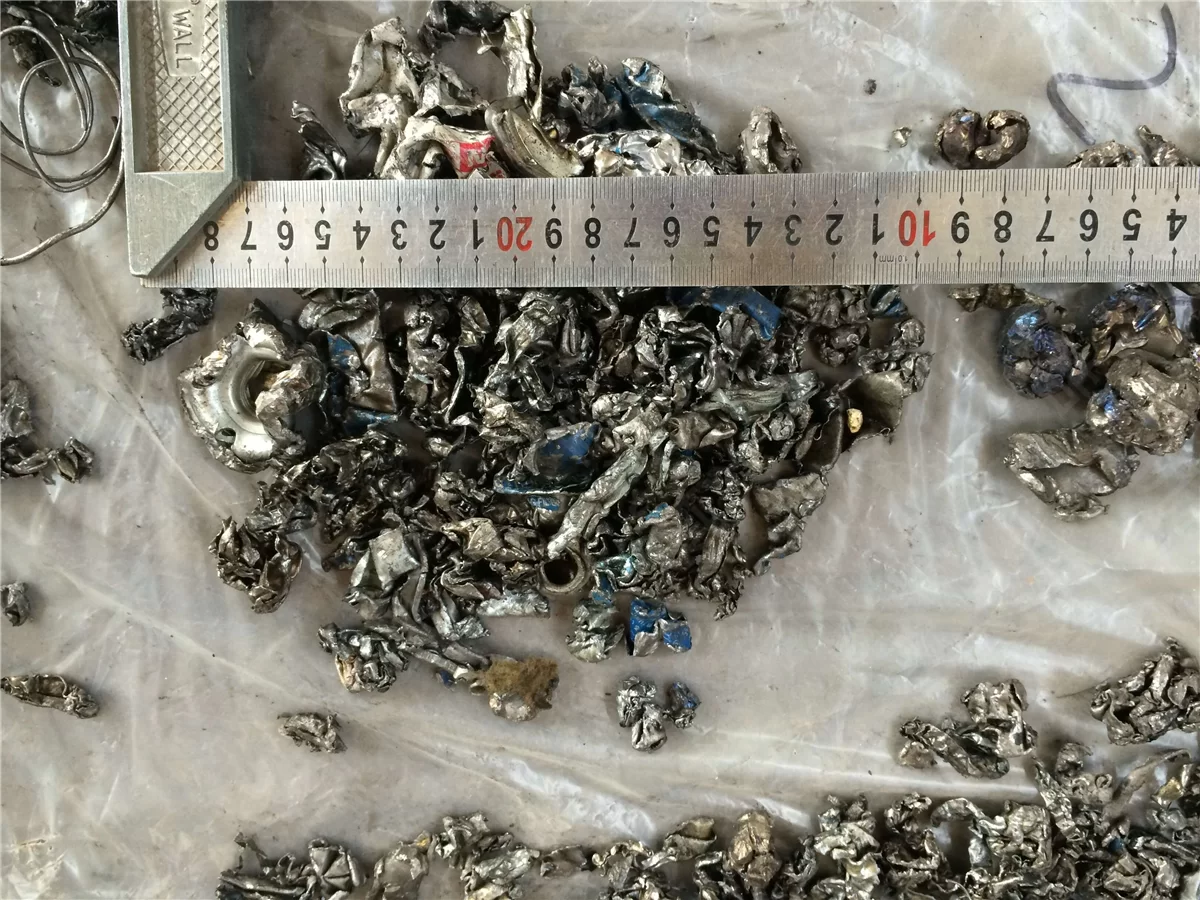
View the crushing result of properly drained and prepared used oil filters, including volume reduction and material output for downstream separation.
View Processing Record →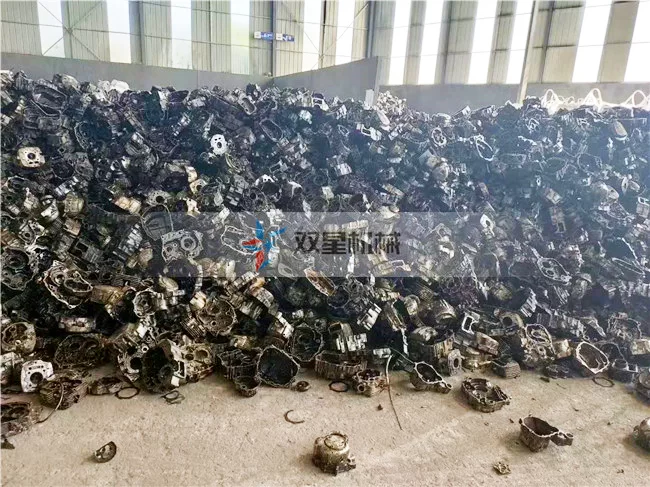
View the crushing result of prepared machinery aluminum parts, including feed condition, reduced particle size and output appearance.
View Processing Record →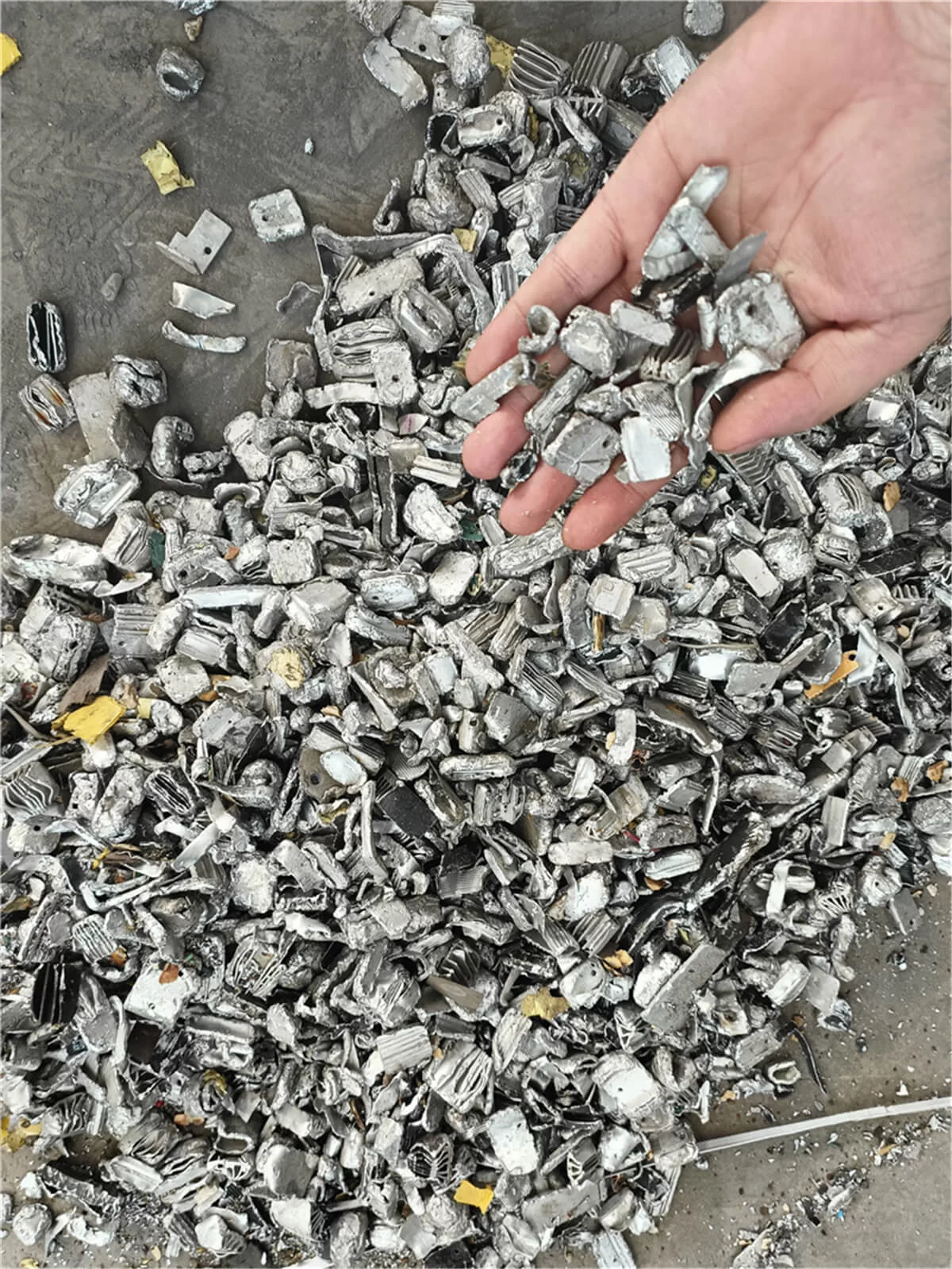
A customer tested gearbox housing scrap with an HXPS-1400 crusher to examine the discharge condition, aluminum liberation and exposure of embedded steel components before magnetic separation.
View Processing Record →Review working videos, technical data and project information.
The mixed metal sorting line is designed for suitably prepared material containing ferrous metal, conductive non-ferrous metal and non-metallic residue. The process may combine size reduction, magnetic separation, screening, controlled feeding and eddy current separation.
Automatic sorting performance depends heavily on material preparation. Bulky, tangled or insufficiently liberated scrap should not be fed directly into the sorting equipment.
The incoming material should have a suitable particle-size range and be capable of forming a stable layer on the feeding conveyor. Excessive moisture, sticky contaminants, wide particle-size differences and overlapping material can reduce separation stability.
Shredding or crushing may be required when valuable metals remain attached to plastic, rubber or other materials. Screening is then used to create narrower size fractions before automatic sorting.
Magnetic separation is normally performed before eddy current separation to remove exposed iron and steel. Excessive ferrous contamination can interfere with downstream sorting and affect equipment operation.
The remaining material is fed evenly into the eddy current separator. Conductive non-ferrous particles react to the changing magnetic field and are discharged separately from suitable non-conductive residue.
An eddy current separator does not normally divide aluminum, copper, zinc and brass into individual high-purity products. If separate metal grades are required, the line may need density separation, sensor-based sorting, X-ray sorting, optical sorting or manual inspection.
Please provide representative samples or clear material photos and videos, together with particle-size distribution, composition, moisture condition, required capacity and target recovered products. Testing is recommended when the feed contains several metals with similar sizes or uncertain liberation.
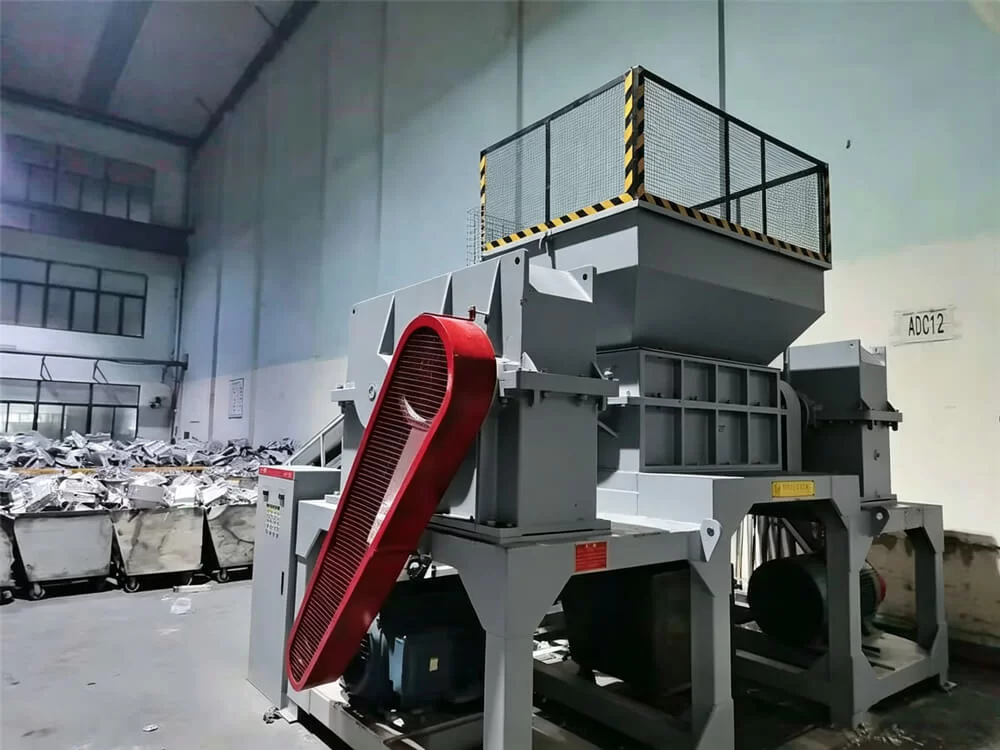
The final configuration may include a crusher or shredder, magnetic separator, vibrating screen, controlled feeder, eddy current separator, airflow separator and separate collection conveyors. Each stage should be selected according to the actual material and required recovered fractions.
A mixed metal separation line is designed for prepared material containing ferrous metal, conductive non-ferrous metal and suitable non-metallic residue. It is not a universal receiving line for unsorted bulky scrap. The feed must first reach a controlled size range and sufficient liberation so that each separator can act on exposed material rather than complete assemblies.
Depending on the incoming scrap, preparation may include dismantling, cutting, coarse shredding, impact crushing and screening. Oversized pieces, tangled wire, sealed containers, batteries, residual liquids and hazardous items must be removed or handled separately. The required preparation route depends on dimensions, composition, compaction and target products.
A configurable sequence can include controlled feeding, screening, ferrous removal, material spreading, air separation and eddy current separation. Magnetic separation normally removes exposed iron and steel before the eddy current stage. Screening and even distribution help control particle-size range and material-layer thickness, which directly affect separation stability.
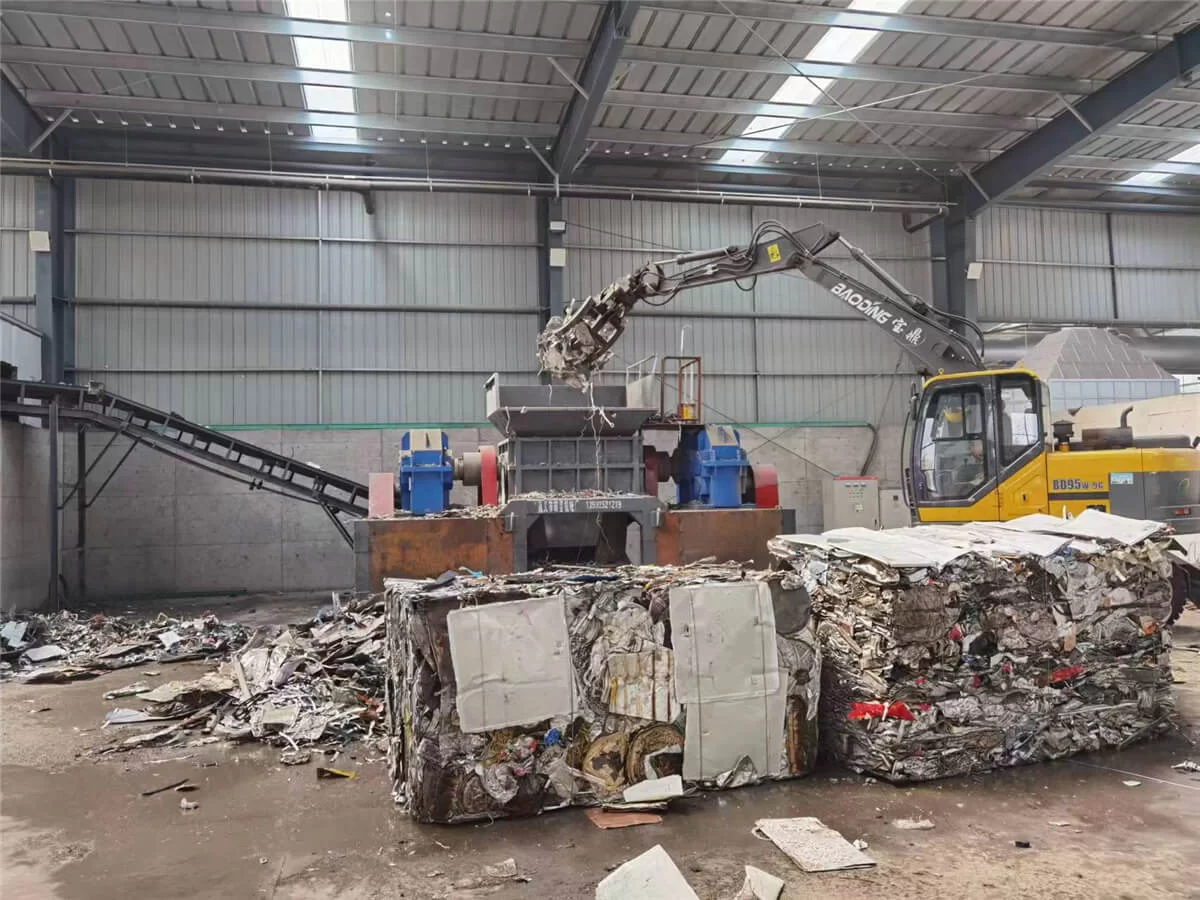
A shredder discharge should not automatically be connected directly to a separator. Irregular flow, surges, oversized pieces and thick material layers can reduce separation performance. A buffer hopper, metering conveyor, screen, transfer conveyor or material spreader may be required between the shredder or crusher and the sorting equipment. Interlocked controls should coordinate upstream load, conveyor speed and separator feeding.
Magnetic equipment recovers exposed ferrous material. An eddy current separator ejects suitable liberated conductive non-ferrous particles from suitable non-conductive residue. It does not automatically separate every mixture of aluminum, copper, brass, zinc and stainless steel into individual high-purity products. Stainless steel and closely related non-ferrous fractions may require density, sensor, X-ray, color, manual or other specialized sorting.
The line should be configured from the required products, such as ferrous scrap, aluminum-rich material, copper-bearing material, stainless-steel fraction, light non-metal residue or a cleaner mixed non-ferrous product. More product categories generally require tighter size control, better liberation and additional separation or recirculation stages.
Please provide representative samples or photos, feed composition, minimum and maximum particle size, bulk density, moisture, hourly quantity, target products, acceptable residue, upstream equipment, available space, local voltage and operating hours. Fixed recovery or purity should not be promised without representative testing.
Final models and performance are confirmed after reviewing representative material information.
For basic iron and steel recovery.
For conductive metal mixed with non-conductive residue.
For more fractions or higher product control.
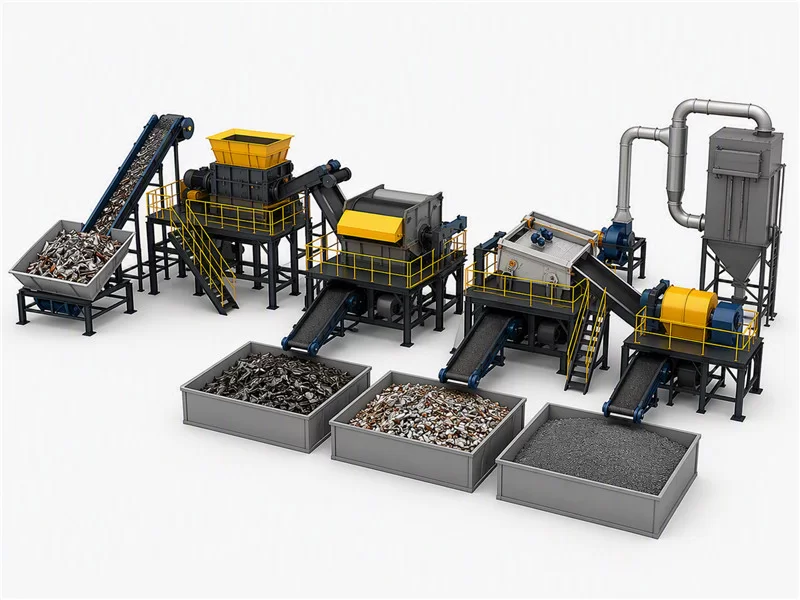
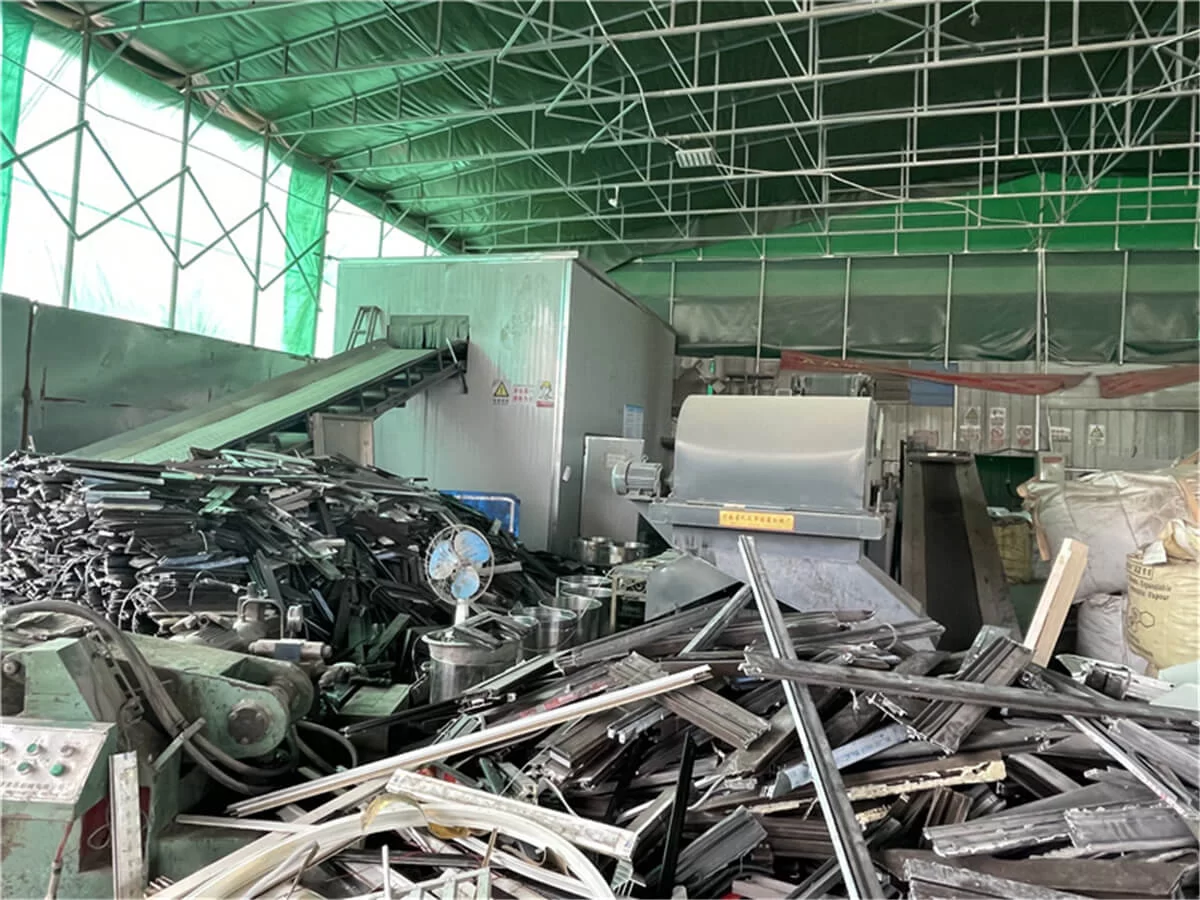
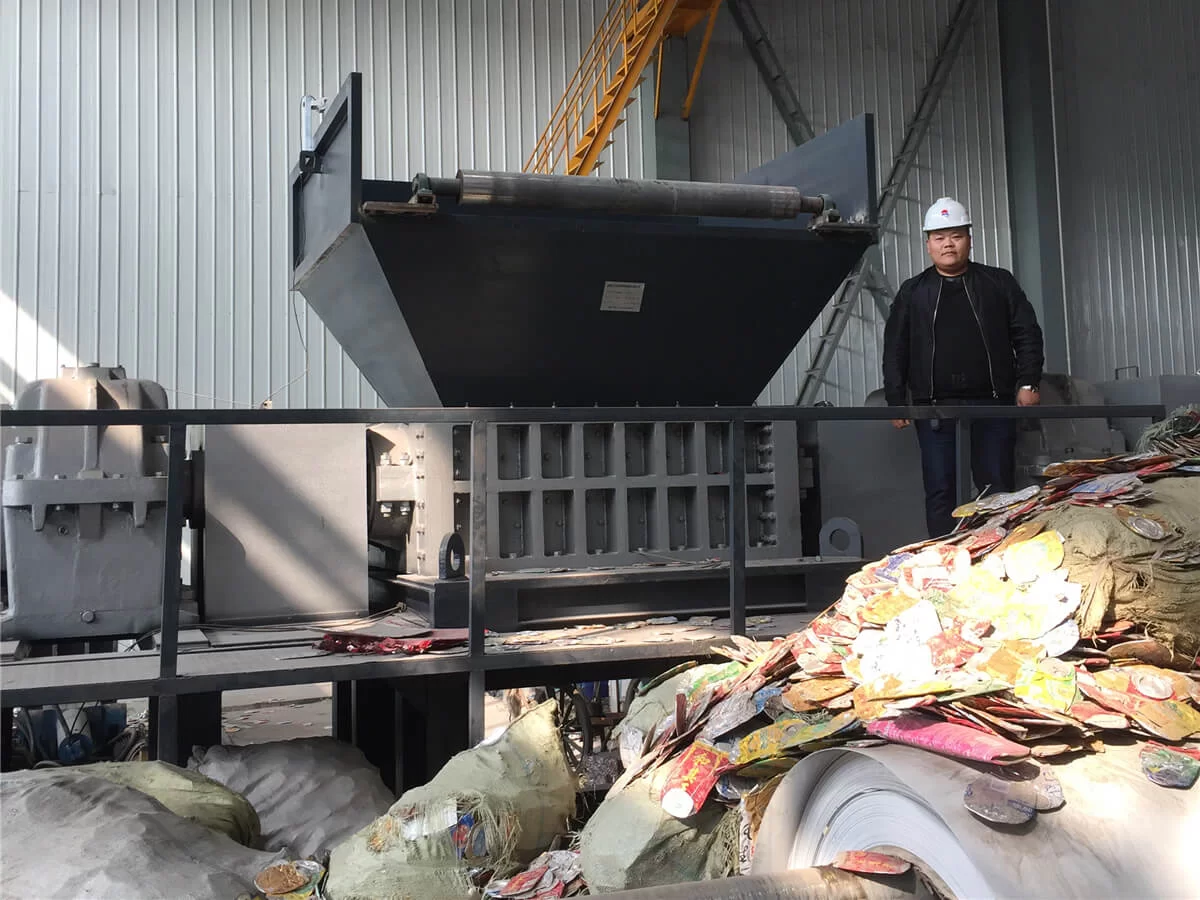
Equipment spacing, conveyor length and collection positions depend on building dimensions, loading method, maintenance access and final material handling.
The gallery stays in the content rather than dominating the top like a single-machine carousel.
Not normally. An eddy current separator mainly separates conductive non-ferrous metals from suitable non-conductive material. It does not usually divide aluminum, copper, zinc and brass into separate high-purity products. Additional density separation, sensor-based sorting or manual sorting may be required for individual metal grades.
Excessive ferrous contamination can affect separation stability and interfere with downstream equipment. A magnetic separator is normally installed before the eddy current separator to remove exposed iron and steel from the prepared material stream.
No. Bulky, tangled or insufficiently liberated scrap normally requires shredding or crushing before automatic sorting. The prepared material should have a suitable particle-size range and be capable of forming a stable layer on the feeding conveyor.
Screening divides the prepared material into narrower particle-size fractions. Material with large size differences may not travel or respond consistently during separation. A more controlled particle-size range helps improve feeding stability and allows the sorting equipment to operate under more suitable conditions.
Excessive moisture, oil, mud and sticky contaminants can cause particles to adhere to each other, overlap on the conveyor or accumulate inside the equipment. The material may require drying, cleaning or another preparation stage before screening and automatic sorting.
Additional sorting may be required when the project needs separate aluminum, copper, zinc, brass or stainless steel products rather than one mixed non-ferrous fraction. The appropriate method depends on particle size, material liberation, density, conductivity and the required final product quality.
The final configuration should be based on real feed conditions and required output, not a fixed equipment package.