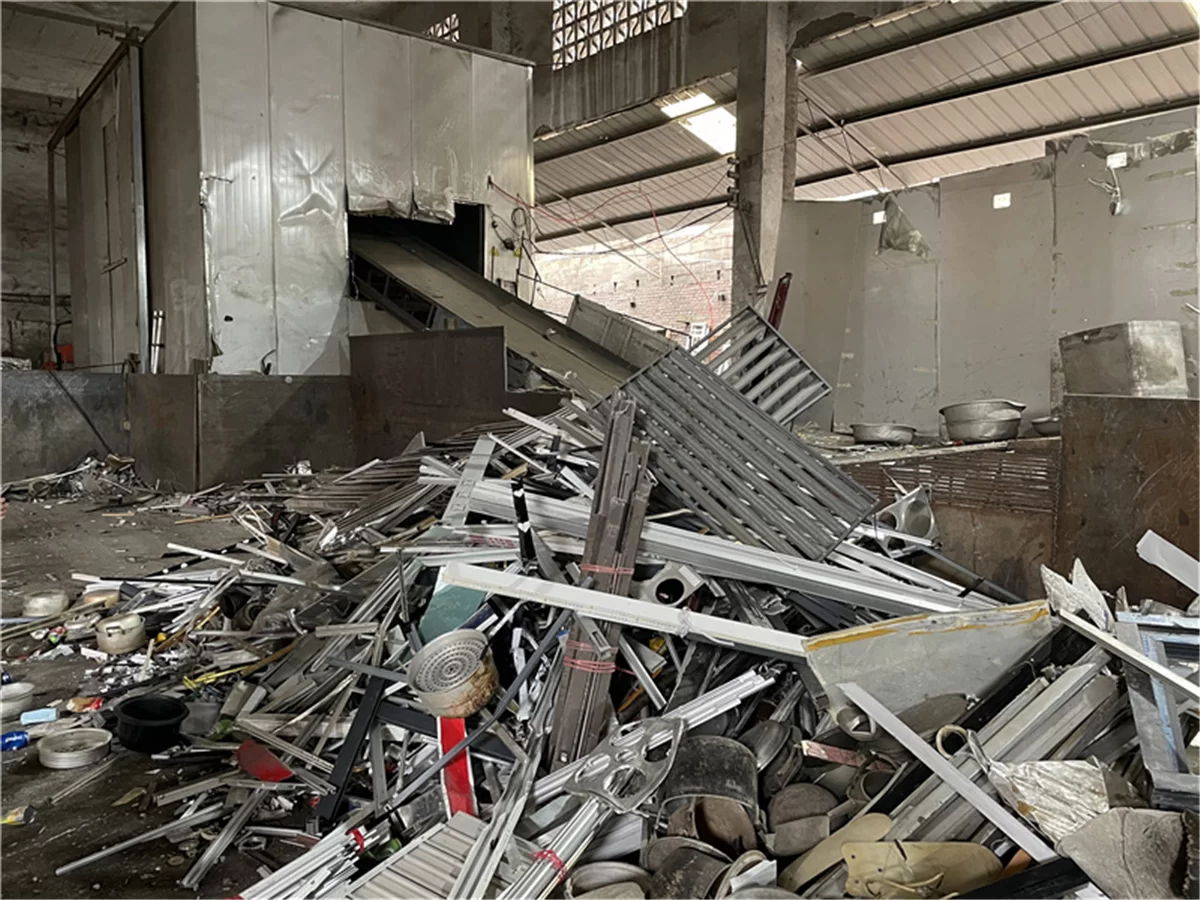
Mixed metal scrap does not always need to be shredded before sorting.
If the incoming material is already loose, clean and separated into a suitable size range, it may enter magnetic or non-ferrous sorting equipment after controlled feeding. If the material consists of bulky parts, compressed bales, connected components or tangled scrap, primary shredding may be necessary before effective sorting can take place.
The decision depends on what the material looks like before processing and what products the customer expects to recover.
Shredding should be used to solve a specific feeding, size-reduction or material-liberation problem. It should not be added automatically to every scrap sorting line.
Start with the Condition of the Incoming Scrap
The term “mixed metal scrap” can describe many different material streams, including:
Loose steel and aluminum sheets
Compressed metal bales
Appliance fragments
Aluminum profiles with plastic attachments
Vehicle dismantling waste
Production offcuts
Metal packaging
Copper and aluminum components
Electric motor parts
Mixed ferrous and non-ferrous metal pieces
Metal mixed with plastic, rubber, wood or fabric
Some of these materials are already small enough for conveyor sorting. Others cannot be fed evenly or separated while the individual components remain connected.
Clear photos and videos of the actual material should be reviewed before selecting the process.
When Sorting Can Begin Without Shredding
Primary shredding may not be required when the material has already been prepared.
Direct sorting may be possible if:
The material is loose rather than compressed
Individual pieces fit the conveyor and transfer points
The particle-size range is relatively narrow
Ferrous and non-ferrous materials are already physically separated
Long wire and tangled material are limited
The feed can be spread into a thin layer
The required capacity is moderate
The equipment can identify or separate the material in its existing form
For example, a stream of loose, separated aluminum and plastic particles may enter a vibrating feeder and eddy current separator without another shredding stage, provided the particles have suitable dimensions and are no longer connected.
Adding a shredder in this case can increase power consumption, wear and fines without improving the separation result.
Bulky Scrap Often Requires Primary Shredding
Large and irregular scrap can be difficult to transfer through a sorting system.
Bulky material may:
Bridge inside a hopper
Fall unevenly onto the conveyor
Block transfer chutes
Cover smaller particles
Damage sorting belts
Exceed the feeding limits of downstream machines
Prevent the material from forming a single layer
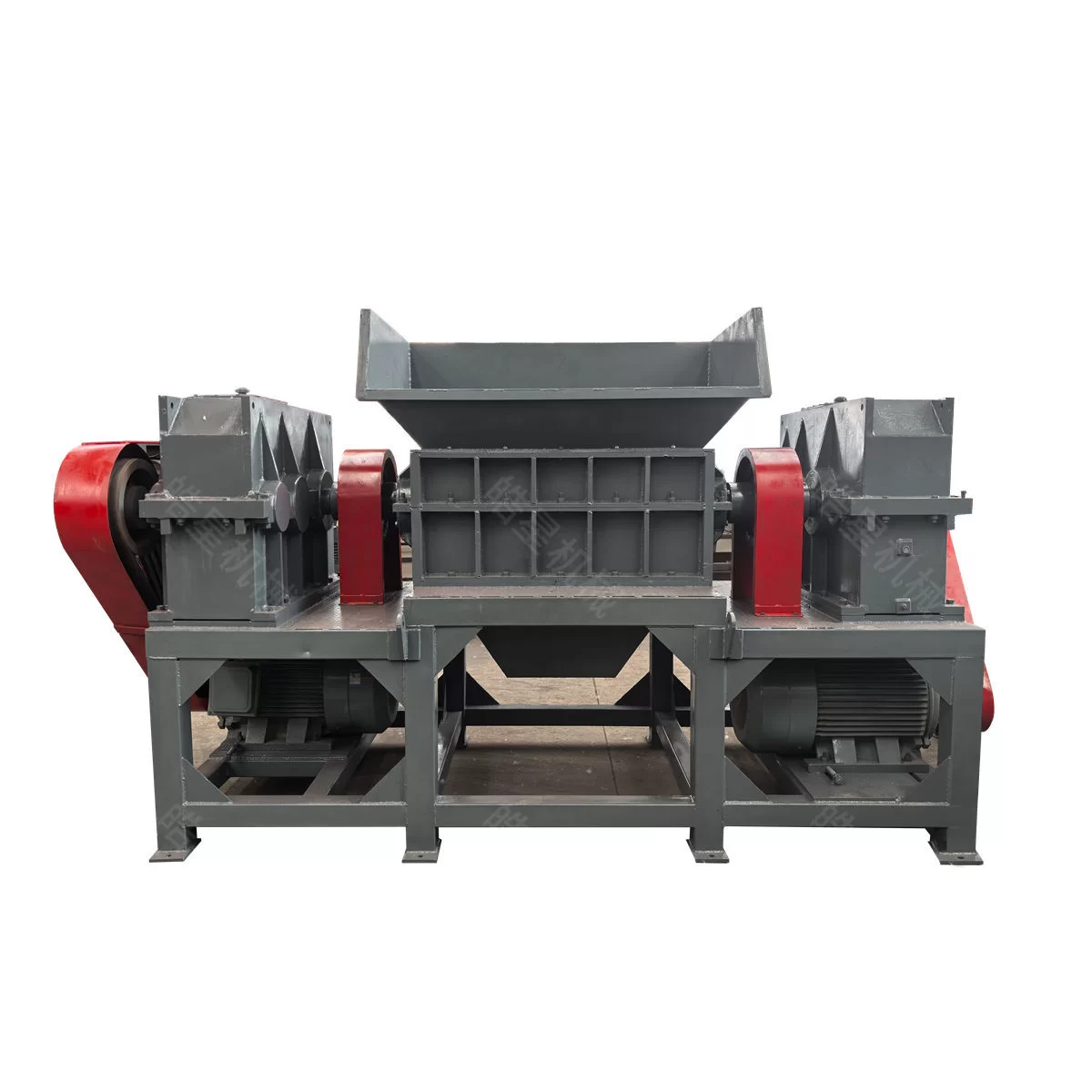
A twin shaft shredder can reduce bulky scrap into smaller, loose pieces using low-speed, high-torque tearing and shearing.
This primary size reduction does not complete the sorting process. It prepares the material for conveying, inspection, crushing or separation.
Compressed Bales Usually Need to Be Opened
A compressed bale cannot be sorted effectively while its contents remain packed together.
The exterior of the bale does not reveal whether it contains:
Iron or steel
Aluminum
Copper
Stainless steel
Plastic
Rubber
Wood
Sealed containers
Heavy solid parts
A baled scrap shredder opens the compressed structure and exposes more of the individual materials.
After bale opening, the loose output can be:
Inspected manually
Passed through a magnetic separator
Sent to a metal crusher
Screened by particle size
Processed by an eddy current separator
Sent directly for furnace charging when suitable
The correct next step depends on the composition and required final result.
Shredding Is Needed When Materials Are Tangled
Wire, cable, sheet-metal strips and long production scrap can become tangled into a large mass.
A sorting machine cannot separate individual materials if they do not move independently.
Primary shredding can reduce the size of tangled material, but the cutter arrangement must be suitable for long and flexible scrap. Excessively long wire may wrap around the shafts and could still require pre-sorting or pre-cutting.
The customer should provide:
Maximum material length
Percentage of wire or cable
Metal thickness
Whether the material is loose or bundled
Presence of flexible non-metallic material
The process should not assume that every tangled material can be solved by increasing motor power.
Material Liberation Determines Sorting Performance
Size reduction and material liberation are related, but they are not identical.
A component may become smaller without separating into its individual materials.
Examples include:
Aluminum profile sections still connected to plastic strips
Steel screws remaining in aluminum parts
Copper wire still covered by insulation
Rubber attached to steel
Aluminum sheets folded around iron pieces
Electric motor components containing copper and steel
If the materials remain physically connected, downstream sorting becomes less reliable.
A magnetic separator may recover an aluminum component together with an attached steel fastener. An eddy current separator may move a combined aluminum-plastic piece, bringing plastic into the metal fraction.
Shredding or crushing is useful when it releases these connections. The required machine depends on the construction and strength of the material.
Know the Difference Between Shredding and Crushing
A twin shaft shredder provides low-speed primary size reduction. It is useful for bulky, compressed or difficult-to-feed material.
A metal crusher uses high-speed hammer impact and a screen. It is used when the process requires:
Smaller material
Better liberation
More consistent output
Screen-controlled particle size
Improved preparation for sorting
Some mixed scrap lines require both stages:
Feeding → Pre-sorting → Twin shaft shredding → Magnetic separation → Metal crushing → Screening → Eddy current separation
Other lines only require one stage:
Feeding → Metal crushing → Magnetic separation → Screening → Eddy current separation
The original material determines whether primary shredding is necessary.
Magnetic Separation Requires Exposed Ferrous Material
A magnetic separator removes exposed iron and steel from the processing stream.
It performs more effectively when:
Ferrous pieces are no longer trapped inside compressed bales
The material layer is controlled
Individual particles can move independently
Large pieces have been reduced
The conveyor is not overloaded
Connected materials have been sufficiently released
Primary shredding may be enough for coarse ferrous recovery from opened scrap.
If small steel fasteners and inserts remain connected to aluminum or other materials, secondary crushing may be required before another magnetic separation stage.
Eddy Current Separation Needs Prepared Material
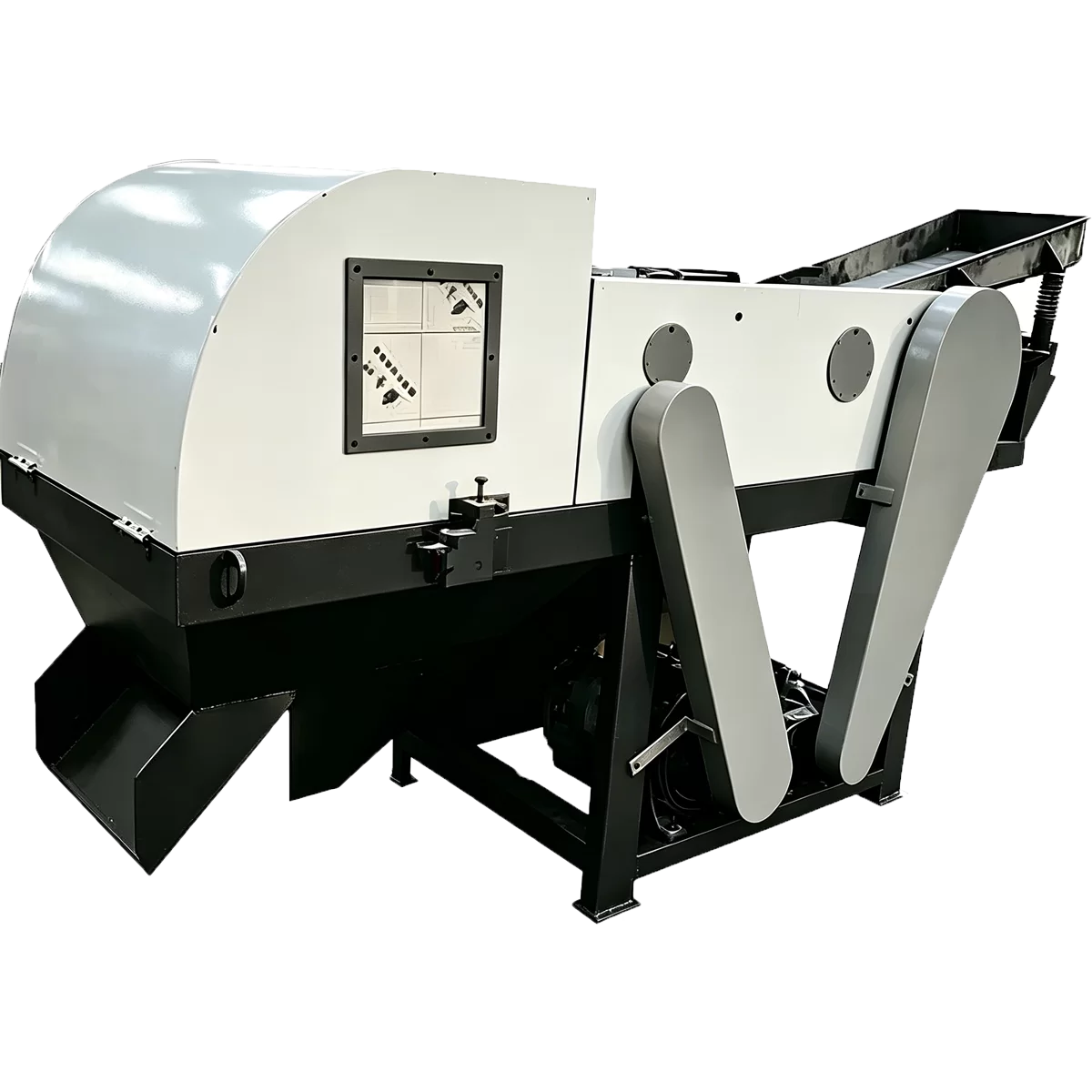
An eddy current separator recovers suitable conductive non-ferrous metals such as aluminum and copper from a mixed material stream.
It is not designed to process complete appliances, large metal bales or long profiles directly.
Before eddy current separation, the material normally needs to be:
Reduced to a suitable size
Sufficiently liberated
Cleared of large ferrous pieces
Screened when necessary
Spread across the sorting belt
Fed in a controlled layer
Shredding may be part of this preparation, but it does not replace crushing, magnetic separation or screening when those stages are required.
Particle Size Determines Whether Screening Is Needed
A wide particle-size range makes stable sorting difficult.
Large pieces cover smaller particles. Fine material gathers below larger scrap and may move differently at the discharge end.
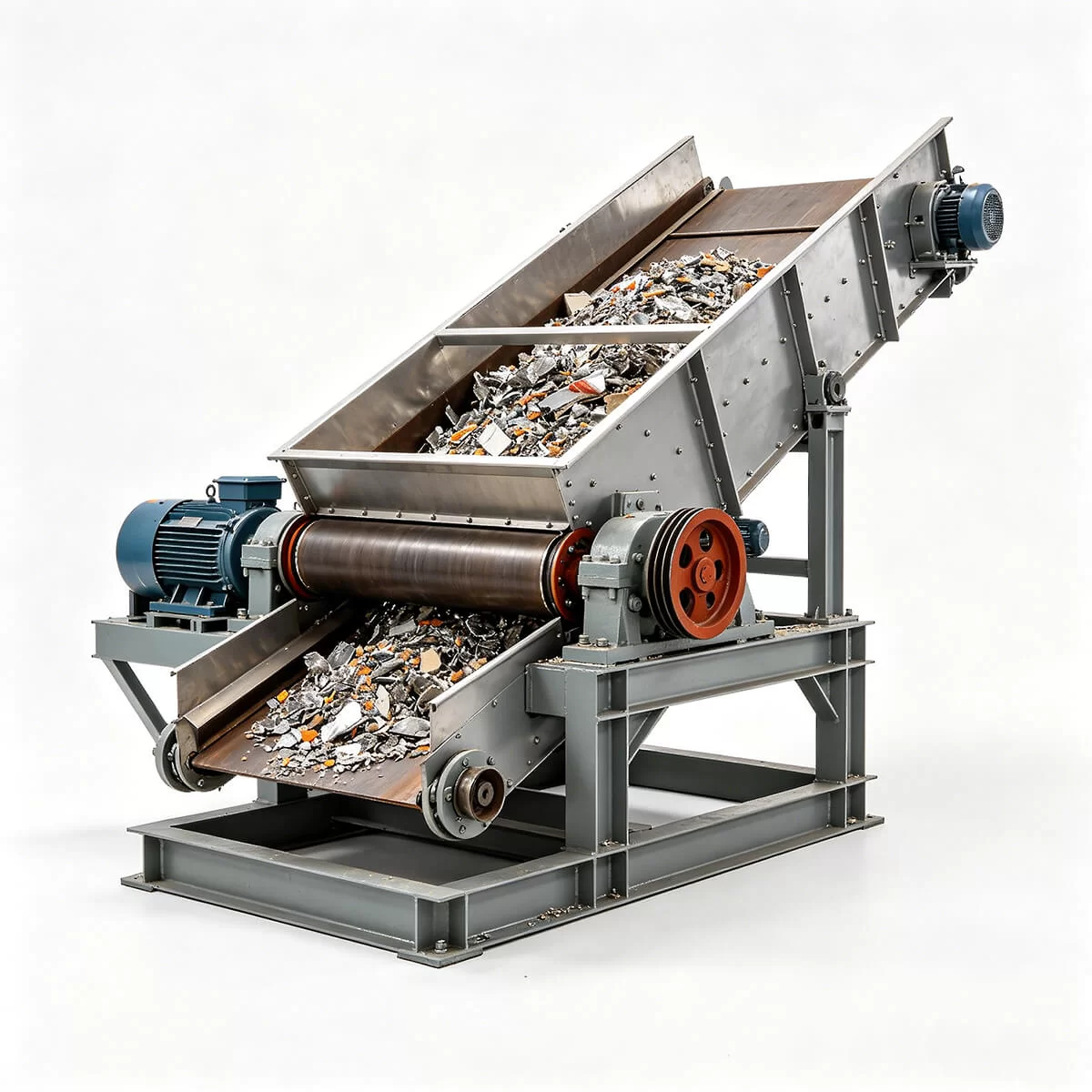
A vibrating screen can divide the material into more suitable size fractions.
Screening may be required when:
Crusher output has a wide size range
Oversized material must be returned for further crushing
Fine material needs separate collection
The eddy current separator requires a controlled feed
Final products are sold by particle size
Dust and fines affect product purity
If the primary shredder produces only coarse material for furnace feeding, screening may not be necessary.
Pre-Sorting Still Has a Role
Mechanical equipment should not be expected to process every item inside mixed scrap.
Pre-sorting can remove:
Gas cylinders
Sealed containers
Fuel tanks
Batteries
Pressurized components
Heavy shafts
Large castings
Oversized steel sections
Hazardous material
Unidentified objects
Pre-sorting also allows valuable components to be recovered before they are damaged or mixed with smaller fractions.
The pre-sorting platform can be positioned before primary shredding or at another suitable point according to the project.
Compare Three Common Process Routes
Route 1: Sorting Without Primary Shredding
Suitable for prepared, loose and suitably sized material.
Process:
Controlled feeding → Magnetic separation → Screening → Eddy current separation
This route avoids unnecessary primary size reduction.
Route 2: Shredding Before Coarse Separation
Suitable for bales, bulky light scrap and material that needs to be opened.
Process:
Feeding conveyor → Twin shaft shredder → Magnetic separator → Manual inspection or final collection
This route is useful when coarse ferrous recovery or furnace-feed preparation is the main objective.
Route 3: Shredding, Crushing and Sorting
Suitable for complex mixed scrap requiring improved liberation and smaller output.
Process:
Pre-sorting → Twin shaft shredder → Primary magnetic separator → Metal crusher → Vibrating screen → Secondary magnetic separation → Eddy current separator
This route has higher equipment, power and maintenance requirements, but it provides more processing stages for complex material.
Not every project needs the complete route.
Define the Required Final Products
The process cannot be selected until the customer states what the line should produce.
Possible final fractions include:
Ferrous metal
Mixed non-ferrous metal
Aluminum-rich fraction
Copper-rich fraction
Stainless steel
Plastic and other non-metallic material
Fine material and dust
A standard eddy current separator does not automatically separate aluminum, copper, brass, zinc and stainless steel into individual high-purity products.
Further sensor sorting, density separation or manual sorting may be needed depending on the target products.
The expected purity and recovery rate should be discussed under defined material conditions.
Capacity Must Be Based on the Complete Line
The capacity of a scrap sorting line is determined by its slowest processing stage.
The shredder may process material faster than the screen or separator can accept it. Increasing the upstream feed rate can then create material accumulation rather than higher finished-product output.
Each stage should be matched according to:
Feed weight
Expanded material volume
Particle-size distribution
Percentage of ferrous metal
Percentage of non-ferrous metal
Bulk density
Required product quality
Daily operating hours
The requested capacity should also be defined as input capacity or finished-product capacity.
Information Required Before Designing the Process
The customer should provide:
Feed material photos and videos
Main metals and approximate percentages
Percentage of plastic, rubber and other impurities
Maximum and typical dimensions
Maximum metal thickness
Maximum weight of one piece
Presence of bales, bundles or tangled material
Required hourly capacity
Required final products
Required particle size
Required purity and recovery
Downstream use of the products
Available plant dimensions
Local voltage, frequency and phase
Dust, noise and safety requirements
Material testing is recommended for complex or changing mixed scrap.
Use Shredding Only When It Improves the Process
Mixed metal scrap needs primary shredding when the original material is too bulky, compressed, tangled or connected for stable feeding and separation.
Prepared loose material may proceed directly to magnetic separation, screening or eddy current separation. Adding unnecessary shredding increases investment, energy use, wear and maintenance.
The correct process starts with the incoming material and works toward the required final products.
Gongyi Haoxing Machinery Factory manufactures twin shaft shredders, metal crushers, magnetic separators, eddy current separators and complete scrap sorting systems in China. Each line can be configured according to the actual material, capacity and separation objective.
Send us your material photos, dimensions, composition, required capacity and final products. We will evaluate whether primary shredding is needed and recommend a suitable process.
WhatsApp: +86 186 2491 0209
Website: www.hxjx08.com