Project Overview
A customer in Nanchong, Sichuan uses a baled scrap shredding plant to open compressed scrap, stabilize the material flow and separate ferrous metal from non-metal attachments.
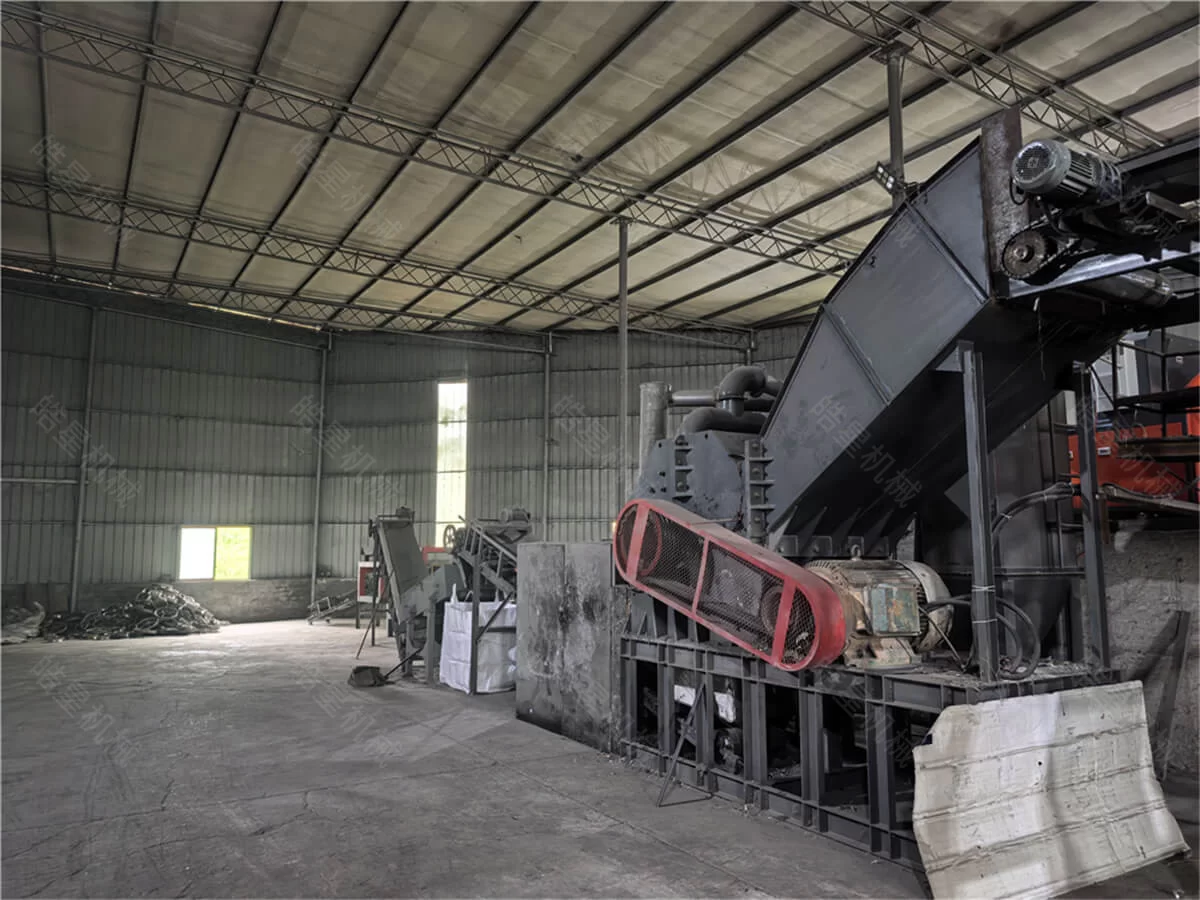
A metal recycling customer in Nanchong, Sichuan required a production line for processing compressed scrap bales containing ferrous sheet metal and attached non-metal materials. The customer’s objective was not simply to break the bales apart. The material also needed to be spread across a conveyor so that the ferrous scrap could be separated more effectively from plastic, rubber and other loose attachments.
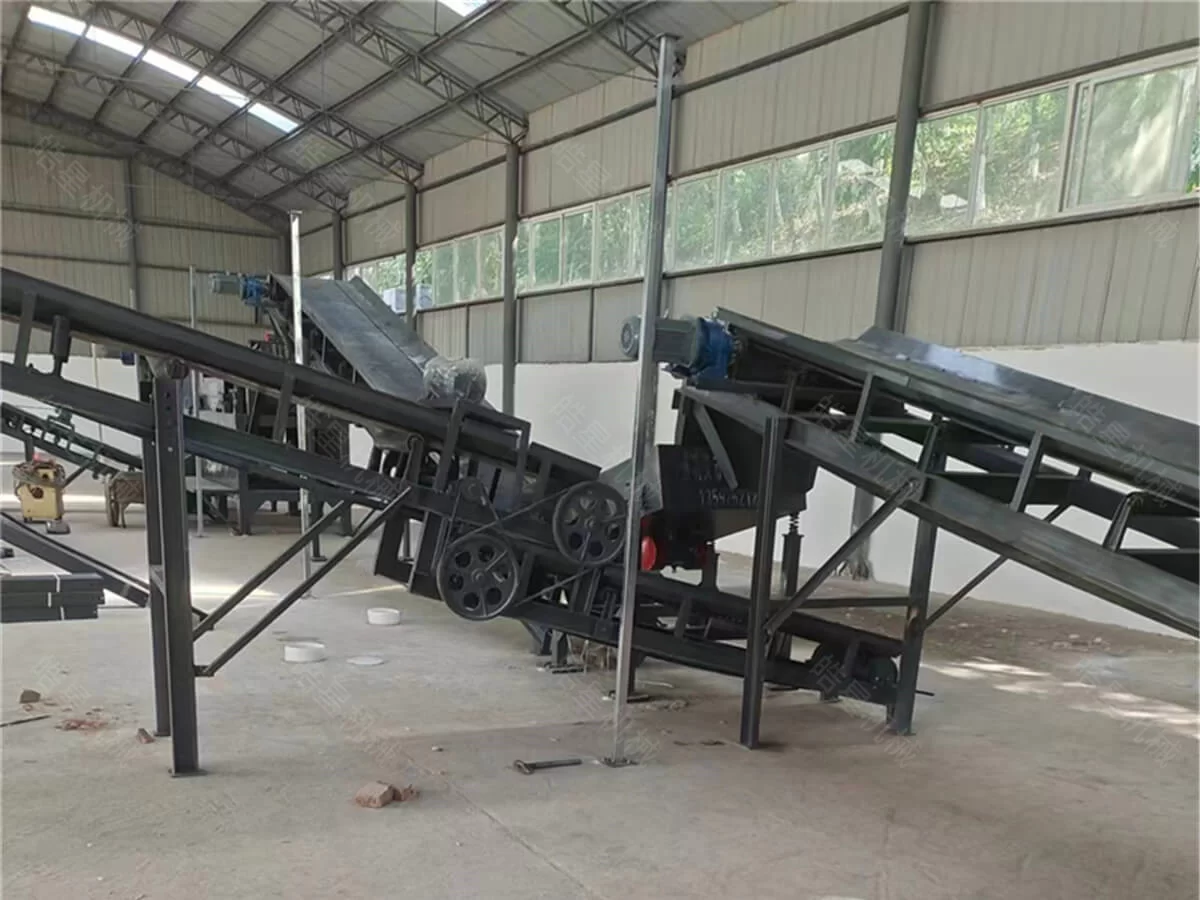
A baled scrap shredding plant was configured for this application. The production line combines controlled feeding, low-speed primary shredding, material discharge and magnetic separation. Each section has a specific function, and the separation stage depends heavily on the condition of the material leaving the shredder.
Project Information
Customer location: Nanchong, Sichuan, China
Processed material: Baled scrap metal
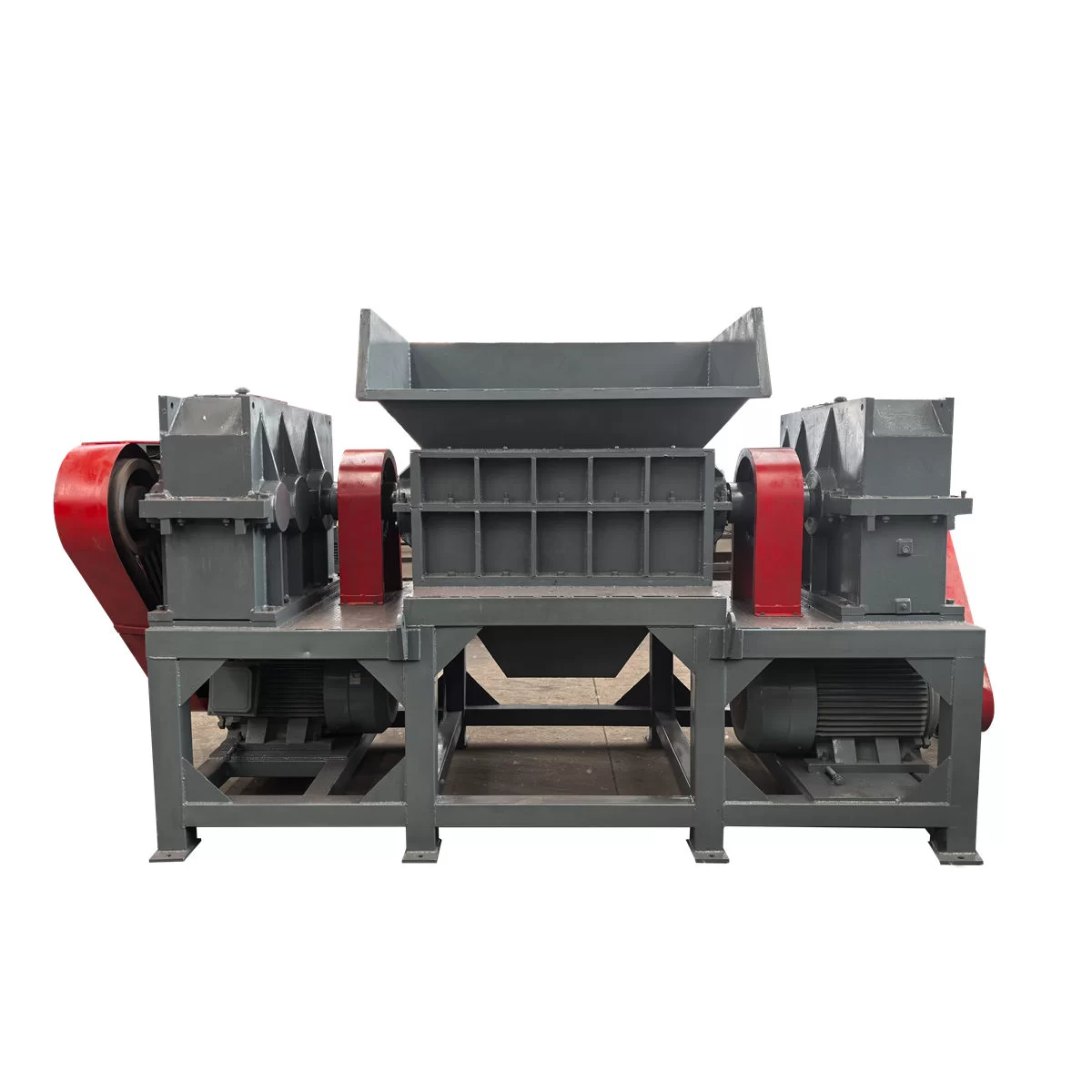
Core equipment: Twin shaft shredder
Main process: Controlled feeding, bale opening, coarse shredding and magnetic separation
Processing purpose: Open compressed bales and separate ferrous scrap from loose non-metal attachments
Final material condition: Loosened ferrous scrap suitable for collection, sorting or secondary processing
Why Magnetic Separation Was Included
The incoming bales contained compressed ferrous scrap together with attached or mixed non-metal materials. Before shredding, these materials were pressed into dense blocks. Individual metal pieces were difficult to expose, and the compressed bale could not form an even layer on a sorting conveyor.
Installing a magnetic separator before opening the bales would not have addressed this problem effectively. The entire bale would still behave as one dense mass, leaving plastic, rubber and other attachments trapped between the compressed metal pieces.
The plant was therefore designed to open the bales first. Primary shredding releases the compressed layers and reduces large, interlocked sections. Once the material becomes loose, it can spread across the discharge conveyor and pass beneath the magnetic separator in a more manageable form.
In this project, the magnetic separator is used to recover ferrous scrap from the loosened material stream. It is not used to separate iron from iron. Its purpose is to lift or discharge the magnetic metal while allowing non-magnetic attachments and loose contaminants to follow a different path.
Feeding the Compressed Scrap Bales
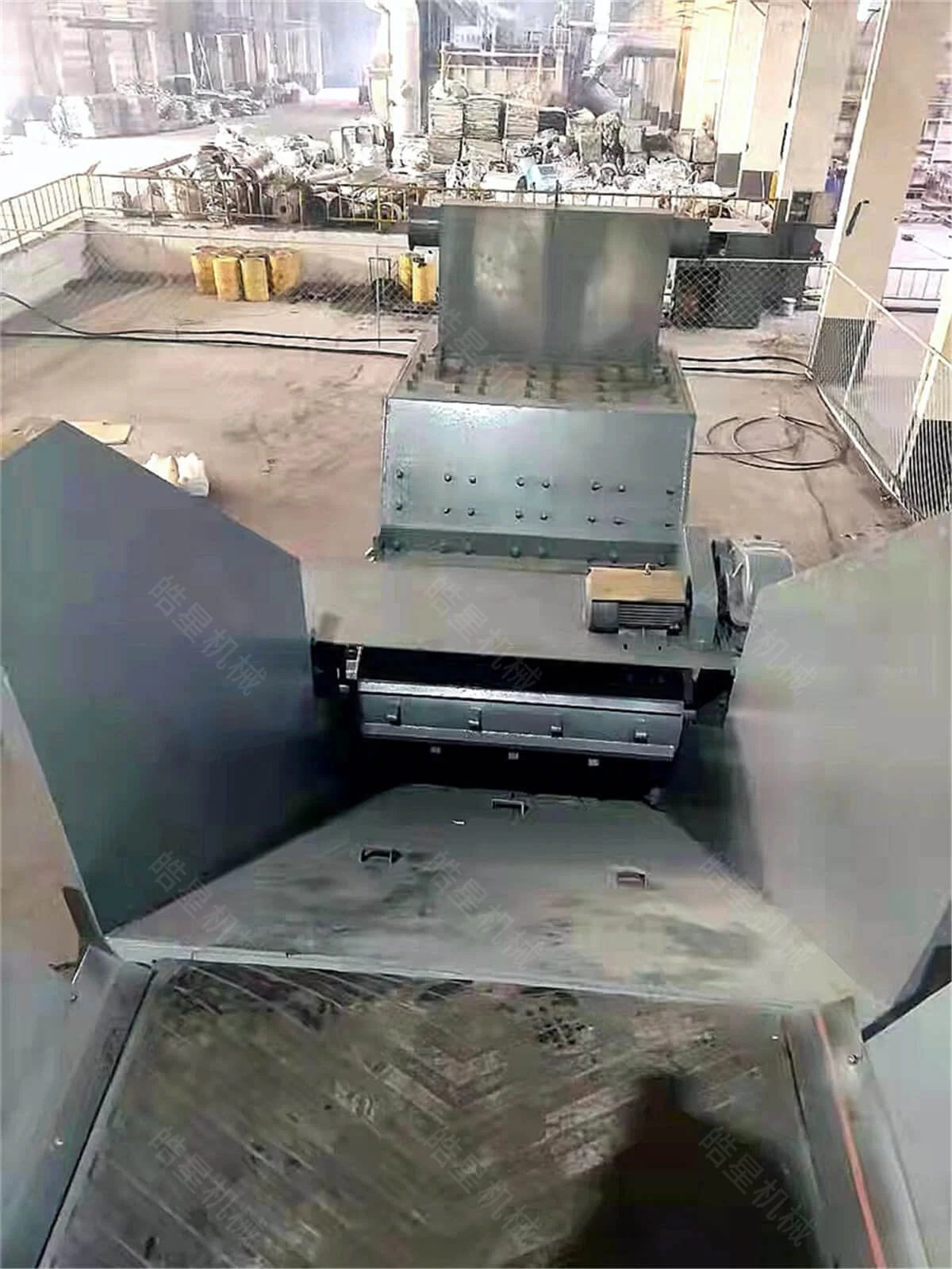
The baled scrap metal is loaded onto the feeding conveyor before entering the shredder. The conveyor provides a controlled route into the cutter chamber and reduces direct manual handling of sharp, compressed scrap.
Because bale weight and density may vary, the feeding speed cannot be treated as a fixed value. A tightly compressed bale may place a higher load on the shredder than a lighter or less compact bale of the same external size.
The feeding conveyor and shredder control system therefore work together. When the shredder experiences a higher load, the feeding rate can be reduced or paused. After the load returns to a suitable level, feeding continues.
This arrangement helps prevent several problems:
Excessive material entering the cutter chamber
Sudden changes in the shredder load
Material building up around the feed opening
Irregular discharge onto the next conveyor
Unstable operation of the magnetic separation stage
The objective is to maintain a controlled material flow rather than push the bales through the plant as quickly as possible.
Opening the Bales with a Twin Shaft Shredder
The twin shaft shredder performs the first size-reduction stage. Its two cutter shafts grip the compressed bale and pull the material into the shredding chamber.
As the cutters rotate, the compacted layers are torn apart gradually. Folded sheet metal and interlocked pieces are separated from the original bale structure, while large sections are reduced to a size that can move through the discharge system.
The baled scrap shredder is used here for opening and coarse shredding. It does not depend on a screen to produce an exact final size, and the discharged pieces remain irregular.
That irregular output is acceptable for this project because the immediate objective is to expose and loosen the material before magnetic separation. The process creates space between individual pieces and reduces the dense structure that previously trapped non-metal attachments inside the bale.
Preparing the Material Layer for Separation
The condition of the material on the conveyor has a direct influence on magnetic separation.
If the shredded scrap accumulates in a thick, uneven pile, some non-metal materials may remain trapped beneath the ferrous pieces. The magnetic separator may also receive more material than it can handle effectively at one time.
The discharge conveyor is therefore used to move the shredded material away from the cutter chamber and distribute it toward the magnetic separation area. Conveyor width, speed and discharge height must correspond with the actual material volume.
At the Nanchong site, the main objective of this section is to create a continuous and reasonably even flow. It does not need to arrange every piece separately, but it should prevent large piles from entering the magnetic separation zone.
A more consistent material layer provides several practical advantages:
Ferrous pieces are more exposed to the magnetic field
Loose plastic and rubber are less likely to remain trapped
Operators can inspect the material more easily
The separator receives a more stable feed
Downstream collection becomes easier to arrange
Magnetic Separation Process
After coarse shredding, the opened scrap moves toward the magnetic separator. Ferrous material responds to the magnetic field and is carried or discharged into the designated collection area. Non-magnetic attachments continue along a separate route.
The actual separation result depends on more than magnetic strength. It is also affected by:
Thickness of the material layer
Conveyor speed
Distance between the separator and the scrap
Size and shape of the ferrous pieces
Amount of non-metal contamination
Moisture and surface condition
Stability of the upstream feeding process
For this reason, the magnetic separator should not be selected as an isolated machine. Its width and working position must match the conveyor and the volume of material produced by the shredder.
If the material contains non-ferrous metals such as aluminum or copper, magnetic separation alone cannot recover them. Additional sorting equipment may be required after the ferrous metal has been removed.
Project Configuration
The main equipment used in this baled scrap shredding plant includes:
Feeding Conveyor
Carries the compressed bales into the processing area and controls the feeding rate according to the shredder load.
Twin Shaft Shredder
Opens the bales and performs low-speed, high-torque coarse shredding. Its main function is to release compressed and interlocked material.
Discharge Conveyor
Receives the shredded scrap, moves it away from the cutter chamber and prepares a more stable material flow for separation.
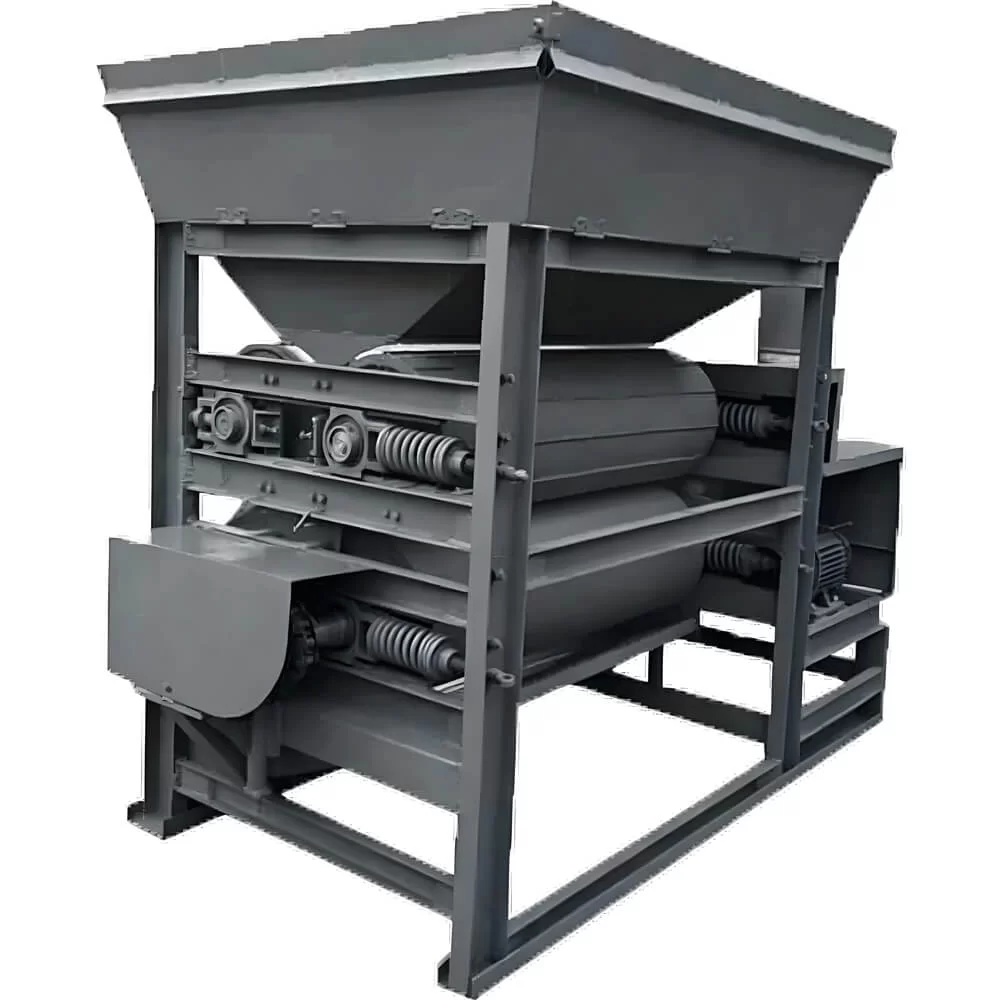
Magnetic Separator
Recovers ferrous scrap from loose plastic, rubber and other non-magnetic attachments after the bales have been opened.
Electrical Control Cabinet
Coordinates the operating sequence of the conveyors, shredder and magnetic separator. It also supports load monitoring and equipment protection.
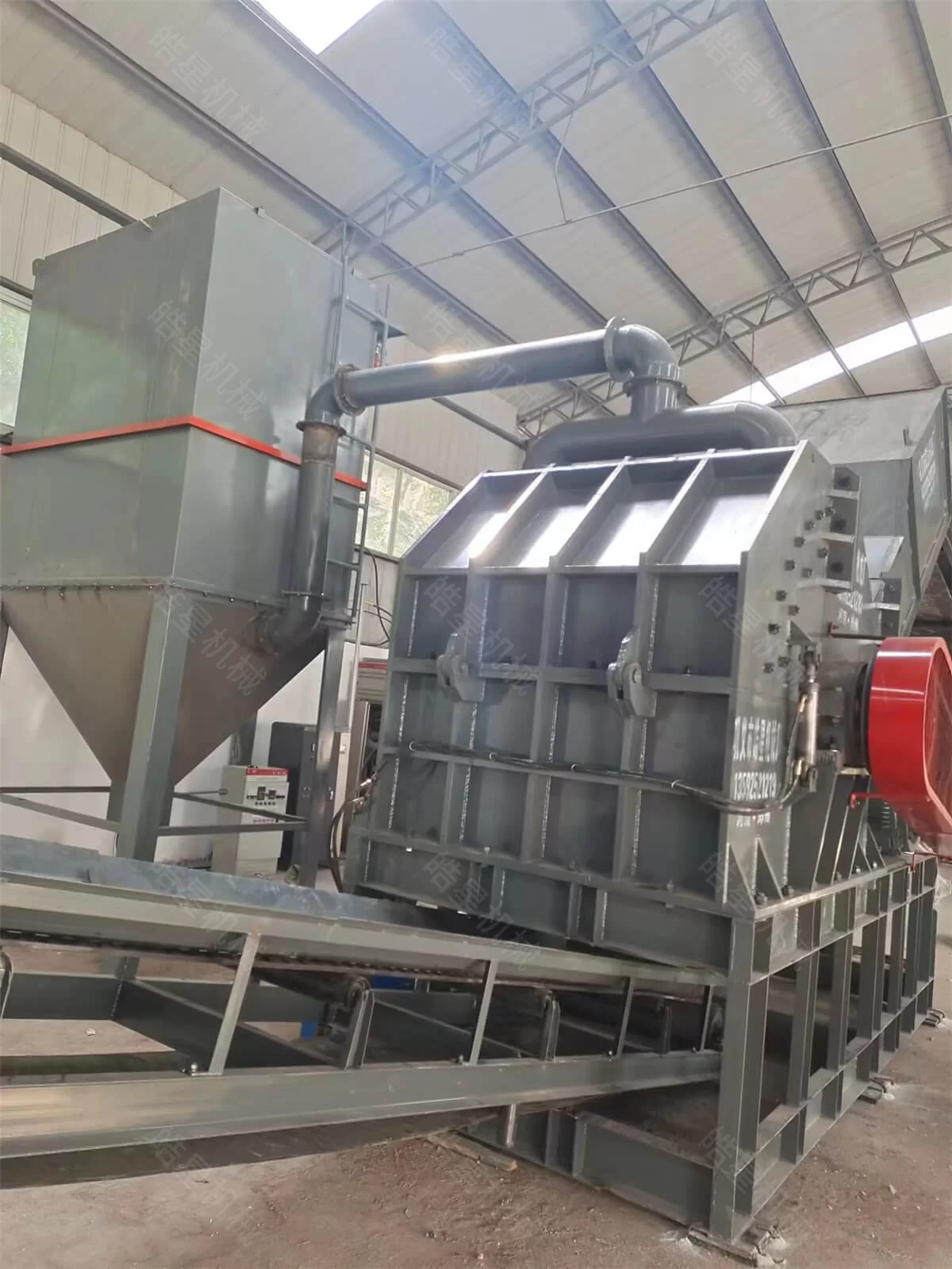
Optional equipment can be added according to the required finished material. A metal crusher may be installed when the customer needs further size reduction. A sorting conveyor can provide an inspection position, while a dust collection system may be considered according to the material condition and processing environment.
Processing Results at the Customer Site
After entering the twin shaft shredder, the compressed bales were opened and changed from dense blocks into a loose material stream. Large, interlocked sections were reduced, making the scrap easier to transfer on the discharge conveyor.
The main improvement was not a precise reduction to one particle size. Instead, the process changed the physical condition of the material:
The original bale structure was opened
Compressed layers were separated
Large folded sections became easier to handle
Ferrous pieces were more exposed
Loose non-metal attachments could separate from the steel scrap
The material formed a more suitable layer for magnetic separation
The magnetic separator then recovered ferrous scrap from the loosened stream. Plastic, rubber and other non-magnetic attachments were able to continue along a separate path instead of remaining compressed inside the bale.
The result demonstrated why bale opening and magnetic separation should be considered as connected processing stages. The shredder prepares the material, while the conveyor and magnetic separator complete the separation process.
Difference Between Shredding and Secondary Crushing
The twin shaft shredder used in this project performs low-speed primary shredding. Its job is to open the bales and reduce large pieces enough for conveying and separation.
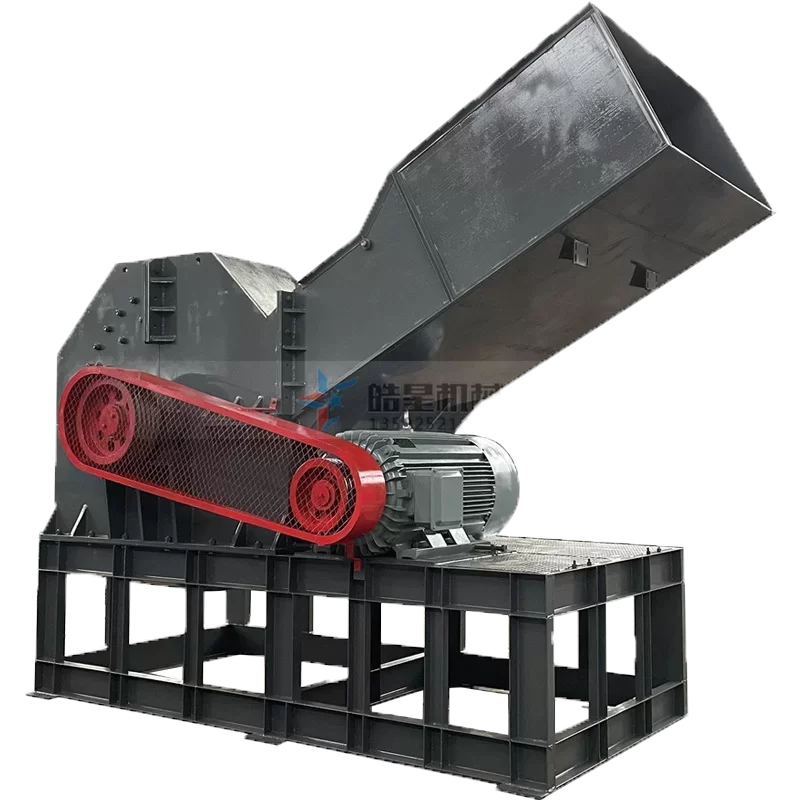
If the customer needs smaller and more uniform output, the material can enter a metal crusher after primary shredding and initial separation. The crusher uses high-speed impact, and its screen helps control the final discharge size.
The two machines have different functions:
Twin shaft shredder: Opens compressed bales and performs coarse primary shredding.
Metal crusher: Performs high-speed secondary crushing and controls discharge size through a screen.
Adding a crusher is not automatically necessary. The decision depends on whether the customer sells the separated scrap in a coarse form or needs a smaller product for subsequent recycling.
Selecting a Similar Production Line
A suitable production line cannot be selected from the material name alone. Baled scrap varies in density, composition and contamination level, and these differences affect both shredding and magnetic separation.
Before configuring a similar project, the customer should provide:
Photographs and videos of the scrap bales
Bale dimensions and average weight
Approximate compression density
Main ferrous scrap composition
Thickness of the metal pieces
Types of plastic, rubber or other attachments
Expected hourly processing capacity
Required condition of the separated metal
Existing downstream equipment
Available workshop dimensions
Local voltage and power frequency
These details help determine the shredder size, cutter arrangement, conveyor width, magnetic separator specification and need for secondary crushing.
An Integrated Shredding and Separation Solution
The Nanchong project was designed around the relationship between bale opening and material separation. The shredder releases the compressed scrap, the discharge conveyor forms a continuous material stream, and the magnetic separator recovers the exposed ferrous metal.
Compared with using a standalone machine, the complete plant reduces intermediate handling and provides a clearer route from incoming scrap bales to separated output.
For customers processing similar baled scrap metal, the production line can be adjusted according to bale density, material composition and the required finished product. The most appropriate configuration may be a basic shredding and magnetic separation system or a larger plant that also includes secondary crushing, screening and manual sorting.