Project Overview
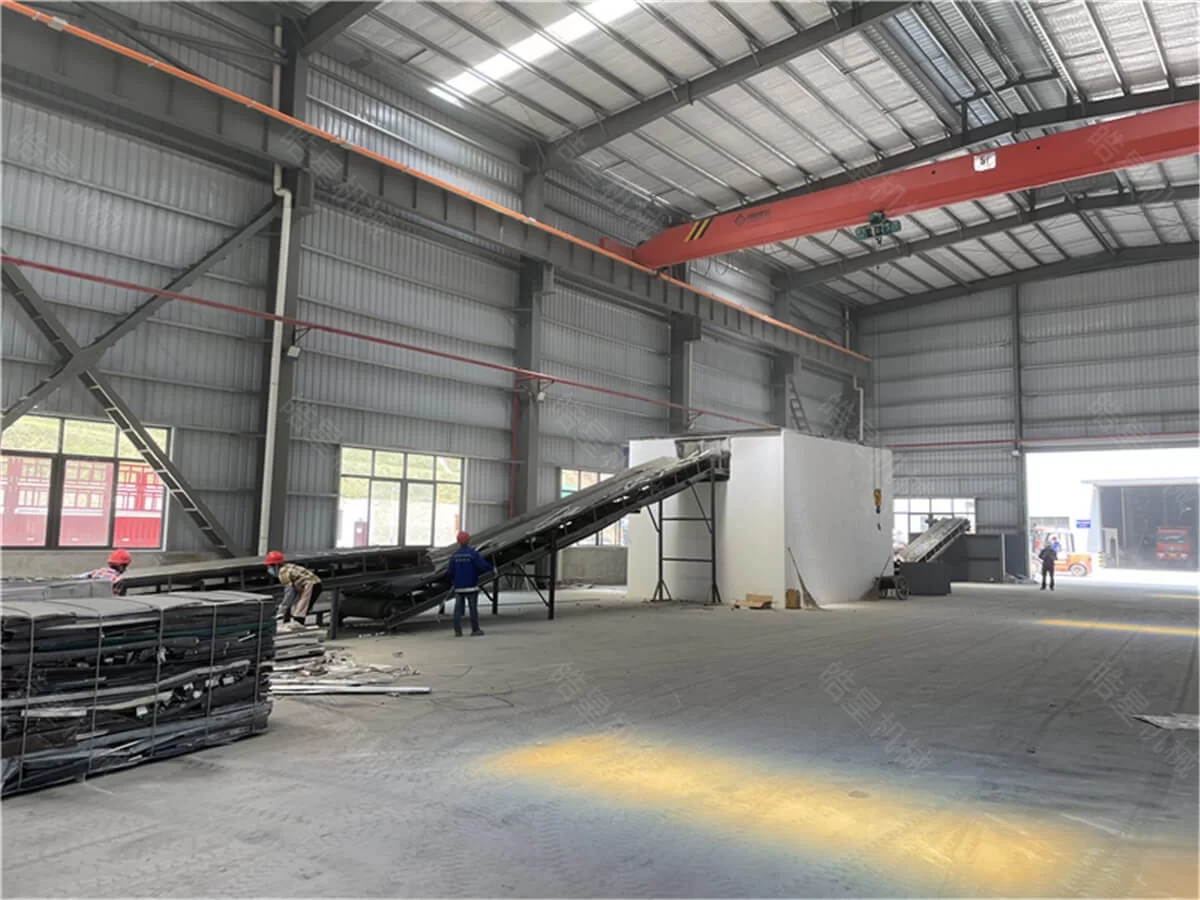
A Dazhou recycling customer uses a baled scrap shredding plant with controlled feeding, twin shaft shredding, discharge conveying and magnetic separation to process baled light scrap.
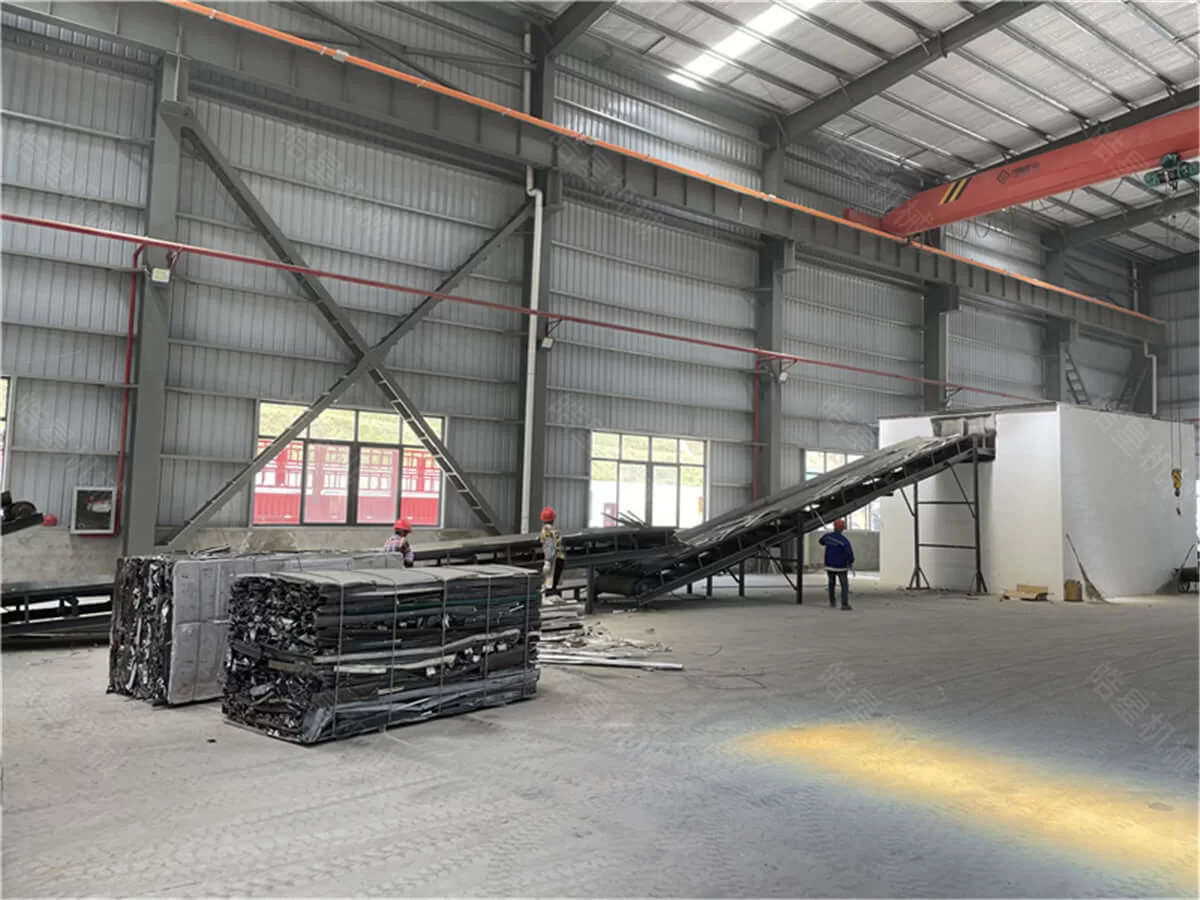
A metal recycling customer in Dazhou, Sichuan required a continuous system for processing baled light scrap. The compressed bales could not be opened efficiently by manual work, and feeding them directly into downstream equipment would have caused an unstable material flow.
The project was therefore configured as a baled scrap shredding plant rather than a standalone shredding machine. The system combines controlled feeding, primary shredding, discharge conveying and magnetic separation, allowing the baled material to move through each processing stage continuously.
Project Overview
Customer location: Dazhou, Sichuan, China
Processed material: Baled light scrap
Core machine: Twin shaft shredder
Main process: Feeding, bale opening, coarse shredding, discharge conveying and magnetic separation
Processing purpose: Prepare compressed light scrap for sorting or further size reduction
Equipment configuration: Feeding conveyor, twin shaft shredder, discharge conveyor, magnetic separator and electrical control cabinet
Optional equipment: Metal crusher, vibrating screen and dust collection system
Why the Customer Chose a Complete Shredding Plant
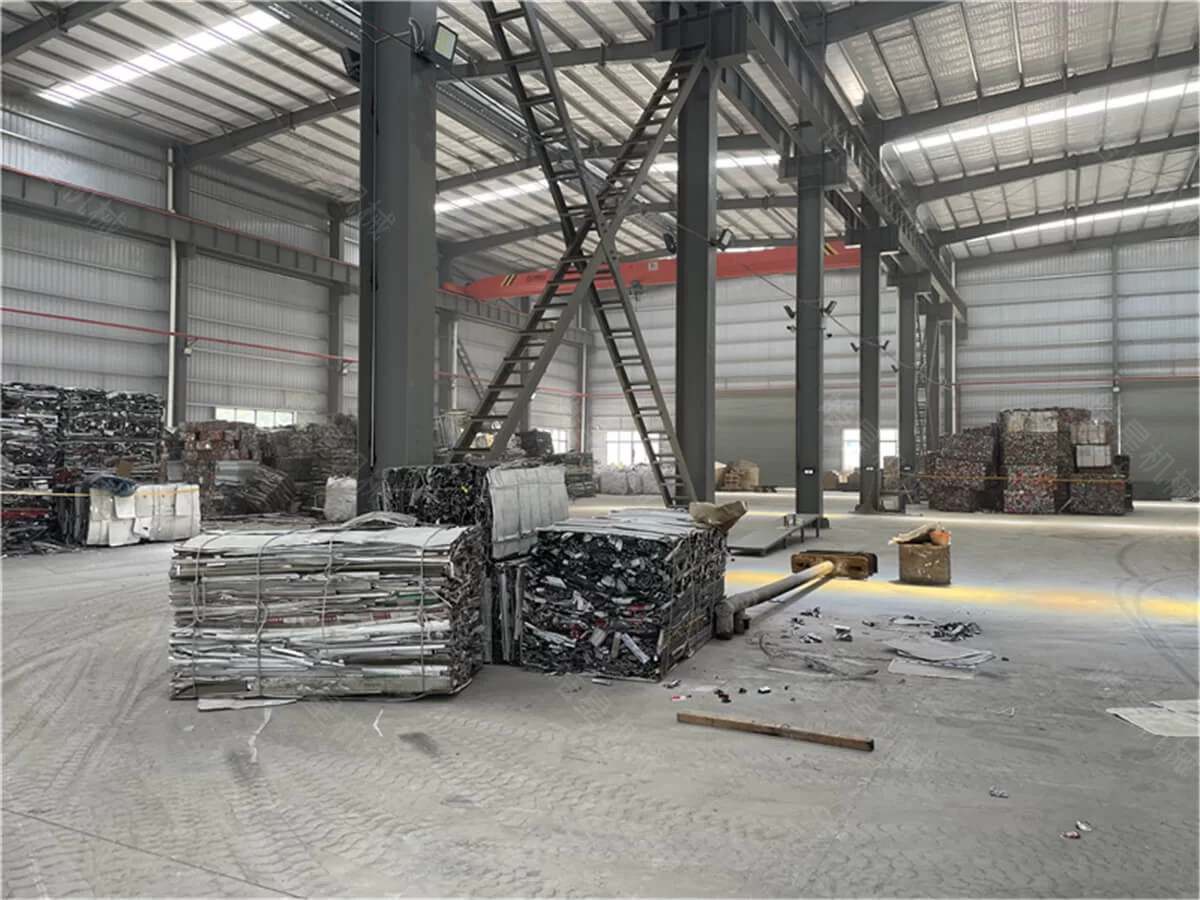
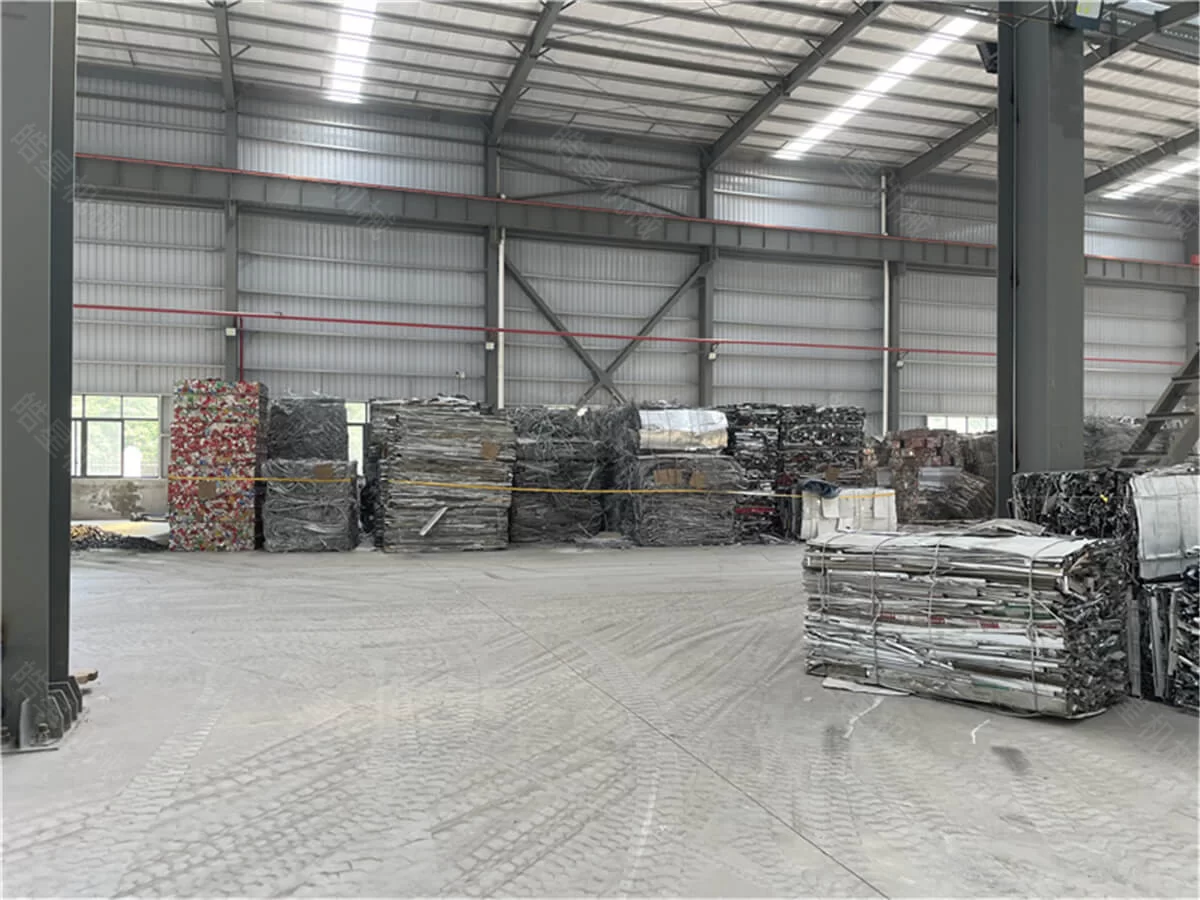
The customer’s raw material consisted of compressed light-gauge ferrous scrap. Baling made the material easier to store and transport, but it also created problems at the processing site.
The scrap pieces were pressed tightly together and could not be transferred evenly to the next production stage. Opening the bales manually required additional labor, while the sharp and irregular metal pieces made manual handling inconvenient.
A standalone baled scrap shredder could open and coarse-shred the material, but the customer also needed controlled feeding, automatic discharge and magnetic separation. For this reason, the equipment was arranged as a continuous processing plant.
Each machine performs a separate task:
The feeding conveyor delivers the compressed bales at a controlled rate.
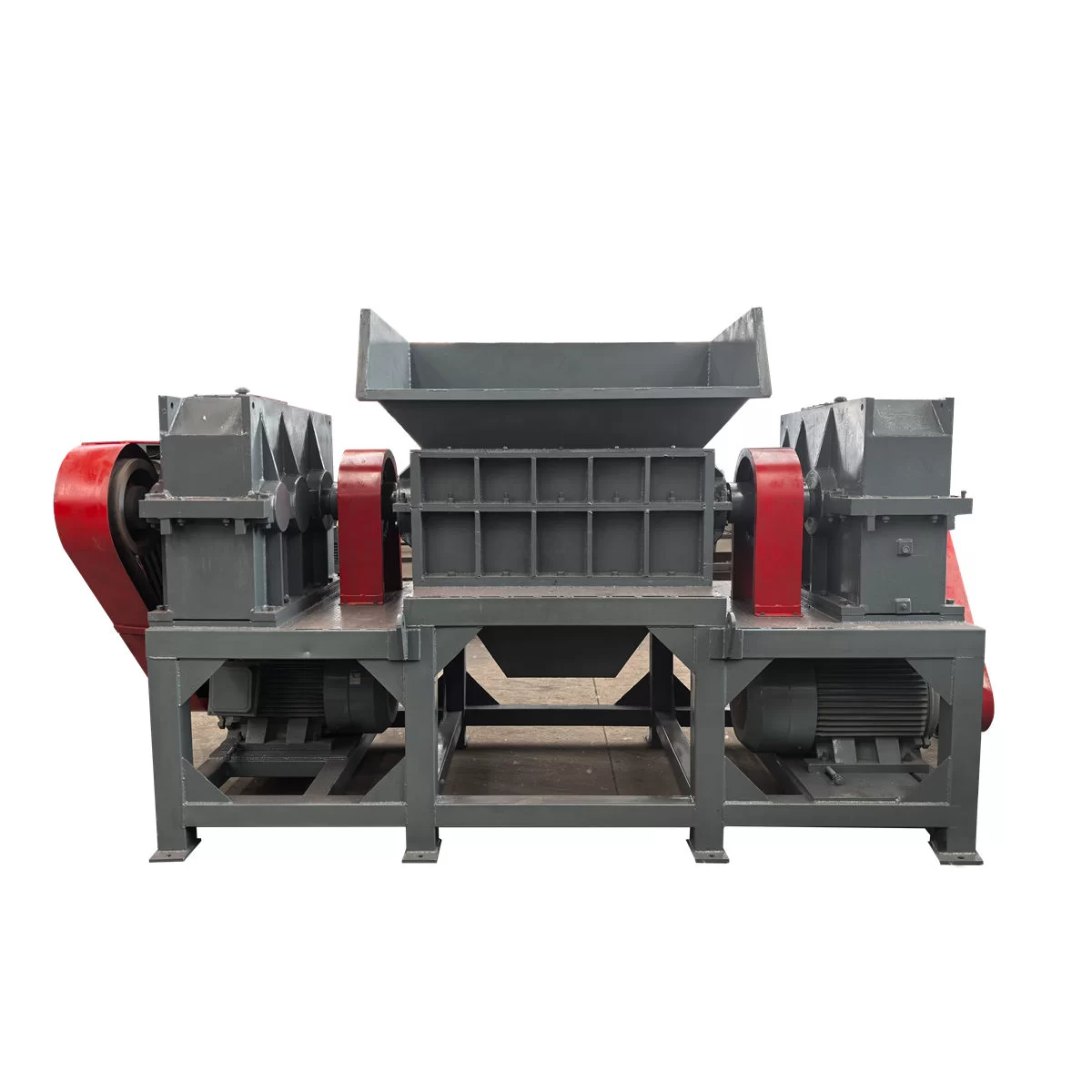
The twin shaft shredder opens the bales and tears apart interlocked scrap.
The discharge conveyor moves the loosened material away from the shredder.
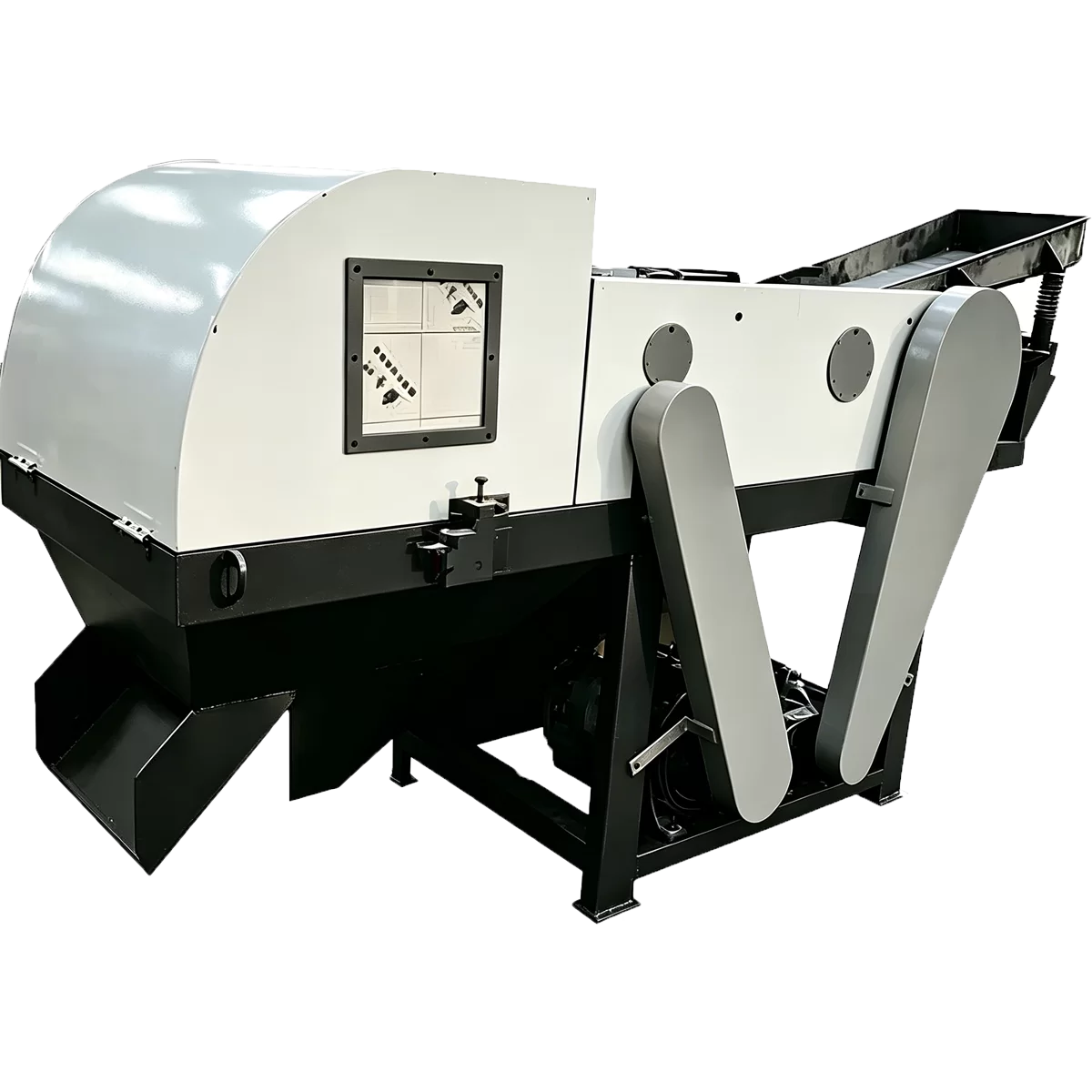
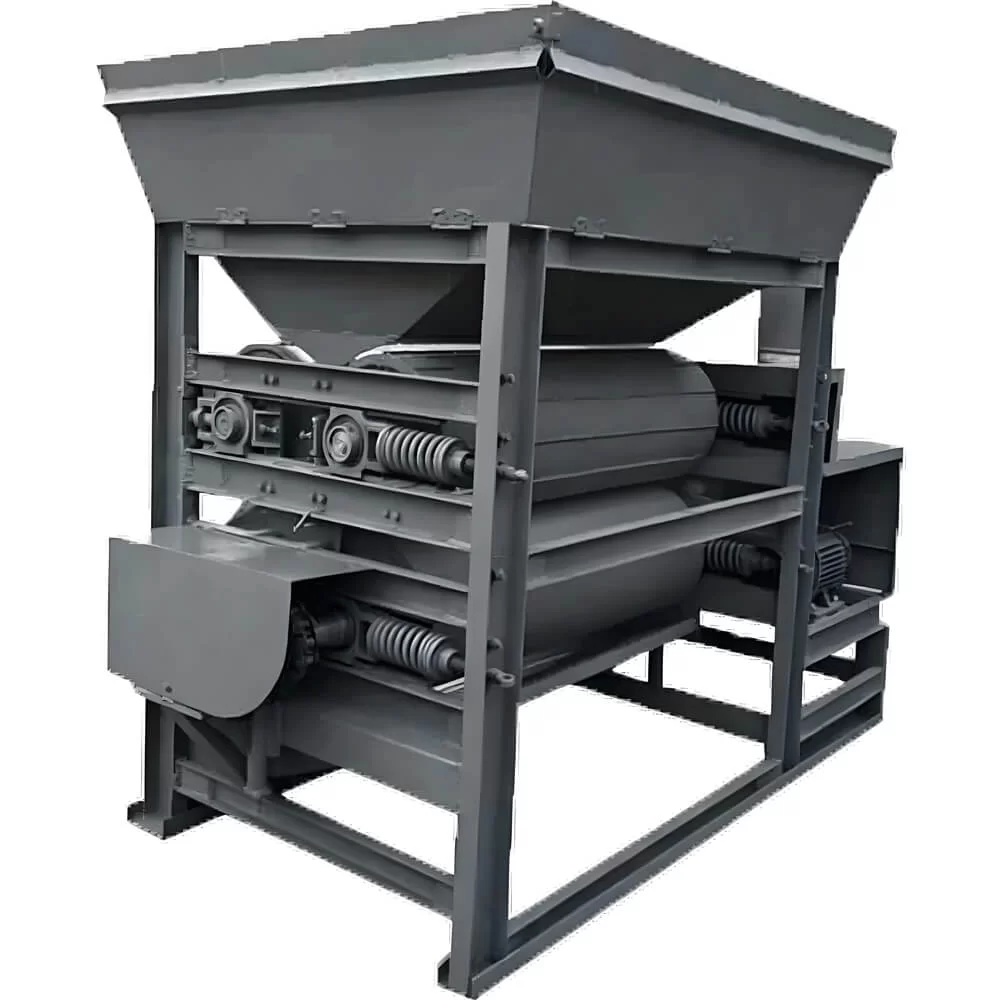
The magnetic separator recovers or removes ferrous material.
The electrical control system coordinates the operating sequence.
This configuration reduces repeated material handling between individual machines and provides a more stable flow through the production site.
Controlled Feeding of Baled Light Scrap
Stable feeding is important when processing compressed bales. The size, weight and density of each bale may vary, even when the material comes from the same recycling source.
At the Dazhou production site, the feeding conveyor is used to carry the bales toward the shredding chamber. Its operating speed can be adjusted according to the load on the shredder.
When the machine is working under a higher load, the feeding rate can be reduced. When the bale has been opened and the load returns to normal, the conveyor continues feeding. This coordination prevents too much material from entering the cutter chamber at one time.
The conveyor also reduces the need to move the compressed scrap manually. Operators can place the bales in the feeding area and monitor the process from a safer working position.
Primary Shredding with a Twin Shaft Shredder
The twin shaft shredder is the primary size-reduction machine in this plant. Its two cutter shafts rotate at low speed and apply high torque to the incoming bale.
As the bale enters the cutter chamber, the cutters grip its surface and gradually pull the compressed material apart. Sheet metal and other interlocked scrap are released from the original bale structure and reduced to more manageable sections.
The machine is used for bale opening and coarse shredding. It is not intended to produce a small or completely uniform final particle size.
After this stage, the baled scrap metal becomes loose enough for conveyor transport, magnetic separation or secondary crushing. The actual discharge condition depends on the compression density, metal thickness, bale composition and cutter arrangement.
Discharge Conveying and Material Flow
The discharge conveyor receives the processed scrap from beneath the shredder. Its purpose is not simply to move the material away from the machine; it also creates a more consistent material layer for the next processing stage.
Before shredding, the scrap is concentrated inside a dense bale. After the bale has been opened, the individual pieces spread across the conveyor and become easier to inspect and separate.
The conveyor arrangement should be selected according to:
Shredder discharge height
Conveyor width
Material volume
Size of the shredded pieces
Required discharge point
Position of the magnetic separator
Available space at the production site
A properly arranged discharge conveyor prevents material from accumulating beneath the shredder and helps maintain continuous plant operation.
Magnetic Separation After Primary Shredding
The loosened material passes through the magnetic separation stage after leaving the shredder.
Opening the bales before separation gives the magnetic separator better access to the individual metal pieces. Materials that were previously compressed together can spread across the conveyor instead of passing through as one dense block.
The separation result is influenced by the material layer thickness, conveyor speed, magnetic field strength and distance between the separator and the material.
In this project, the magnetic separator works as part of the continuous plant rather than as an independent machine. The feeding conveyor, shredder and discharge conveyor must maintain a suitable material flow so that the separation stage is not overloaded.
Baled Scrap Shredder or Complete Plant
The choice between a standalone machine and a complete plant depends on what the customer needs to achieve.
A standalone baled scrap shredder is suitable when the primary requirement is to open compressed bales and reduce large or interlocked pieces. The processed material can then be collected or transferred using the customer’s existing equipment.
A complete baled scrap shredding plant is more suitable when several stages must operate continuously. It can combine feeding, coarse shredding, material discharge, magnetic separation and optional secondary crushing in one coordinated process.
For the Dazhou customer, the complete configuration reduced the amount of intermediate material handling and provided a clearer route from the incoming bale to the separated output.
Optional Secondary Crushing
The discharge from the twin shaft shredder remains coarse and irregular. This is suitable when the customer only needs to open the bales or prepare the material for sorting.
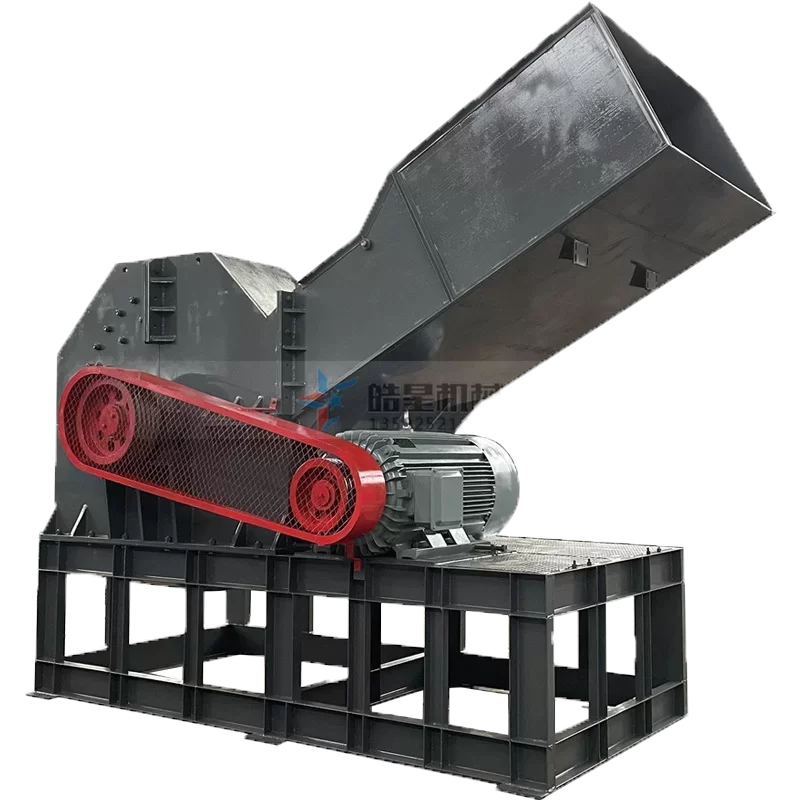
If smaller and more consistent pieces are required, a metal crusher can be installed after the primary shredding stage. The crusher uses high-speed impact to reduce the material further, while a screen helps control the discharge size.
In this arrangement, the two machines perform different functions:
Twin shaft shredder: Bale opening and coarse primary shredding
Metal crusher: High-speed secondary crushing and screen-controlled discharge
Whether secondary crushing is necessary depends on the required finished material, downstream separation process and intended recycling method.
On-Site Processing Result
During production, the feeding conveyor delivered the compressed light scrap to the shredder in a controlled manner. The twin shaft shredder opened the bales and released the tightly packed material before discharging it onto the next conveyor.
Compared with the original compressed bales, the processed scrap formed a looser and more manageable material stream. This made it easier to transport the material continuously and arrange the subsequent magnetic separation stage.
The project demonstrates the value of coordinating the individual machines rather than treating the shredder as an isolated unit. Controlled feeding prevents sudden overloading, continuous discharge reduces material accumulation, and an even conveyor layer supports the separation process.
The final plant configuration can be adjusted when the bale size, material composition or required downstream process changes.
Information Needed for a Similar Project
Baled scrap can vary in composition and compression density. Two visually similar bales may behave differently during shredding if they contain different metal thicknesses, wires, plastic, rubber or other attached materials.
For a similar project, the following information should be provided before equipment selection:
Photos and videos of the material
Bale length, width and height
Average weight per bale
Approximate compression density
Main scrap composition
Metal thickness
Type and quantity of impurities
Required hourly capacity
Expected material condition after processing
Existing downstream equipment
Available installation space
Local power supply
This information is used to evaluate the shredder size, cutter arrangement, conveyor specification, magnetic separation method and need for secondary crushing.
A Continuous Solution for Baled Light Scrap
The Dazhou project is designed around the complete movement of the material rather than the shredder alone. The incoming bales are fed at a controlled rate, opened by the twin shaft shredder, transferred by the discharge conveyor and prepared for magnetic separation or further processing.
For customers who only need bale opening, a standalone shredder may be sufficient. When continuous feeding, conveying and separation are required, a complete plant provides a more practical arrangement.
The equipment configuration should always be based on the actual baled light scrap, the required processing capacity and the condition expected after shredding.