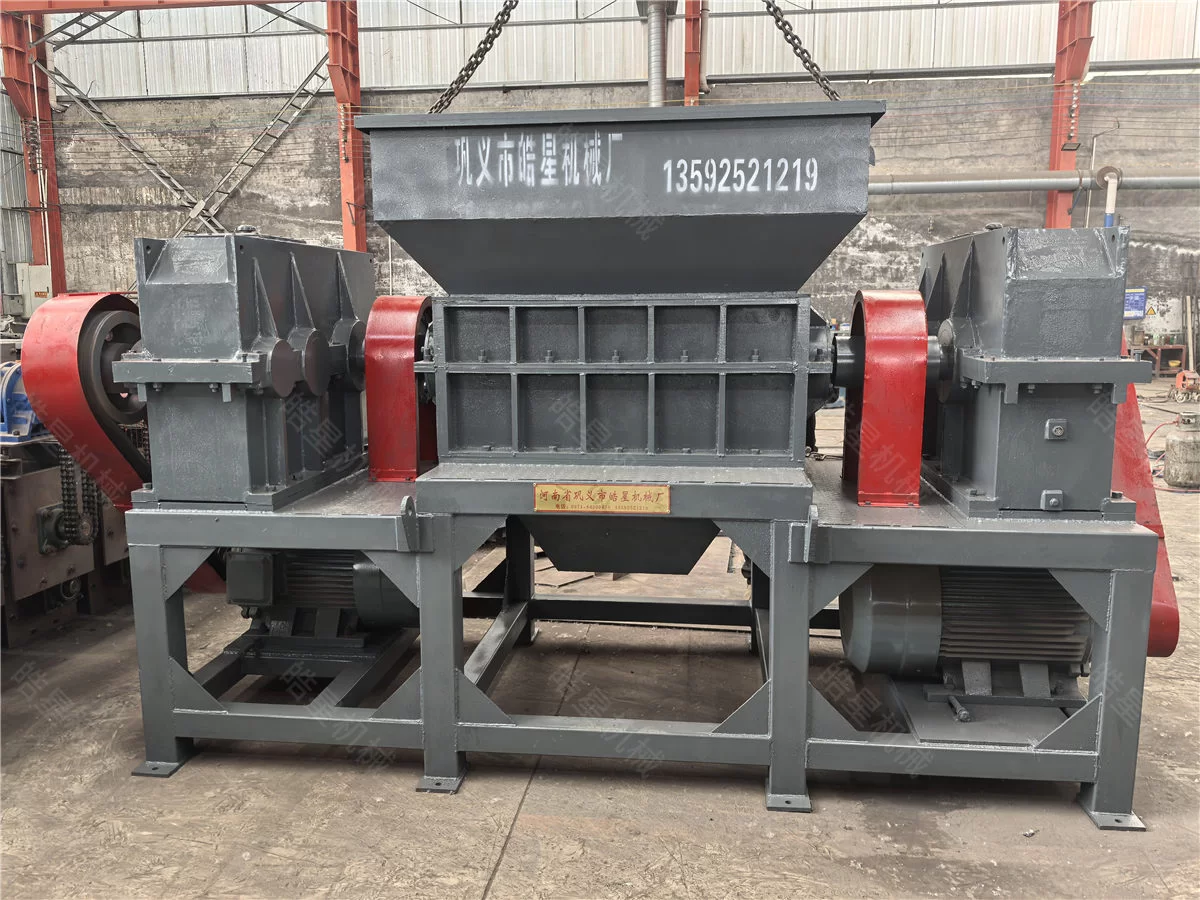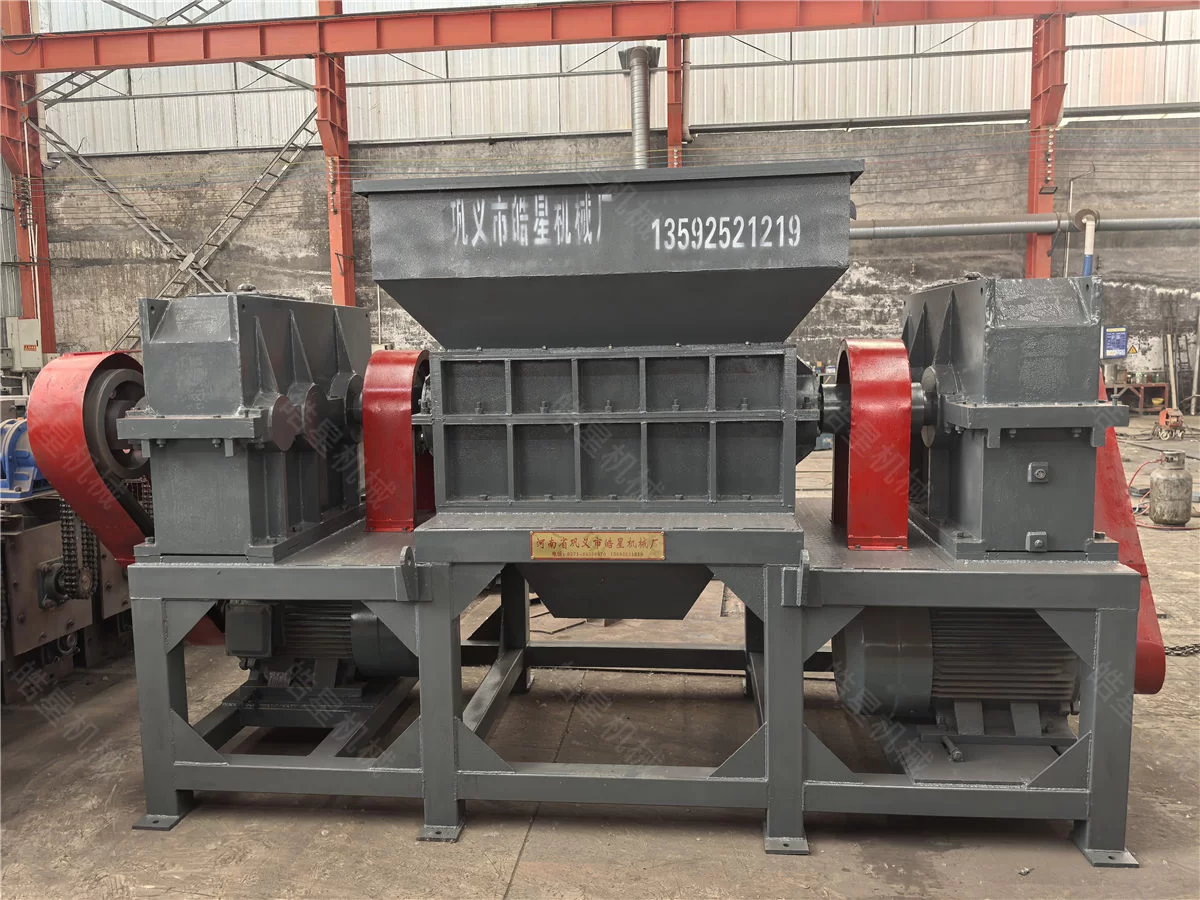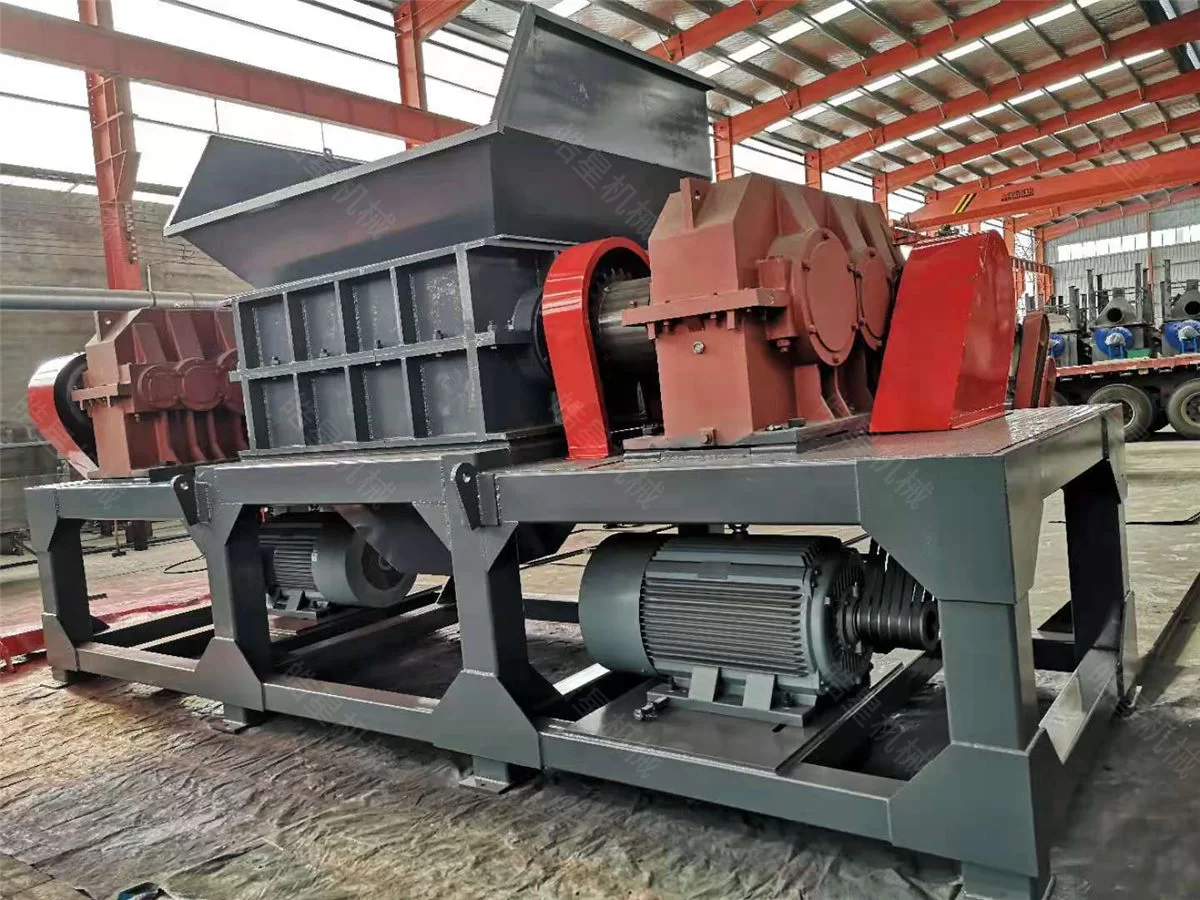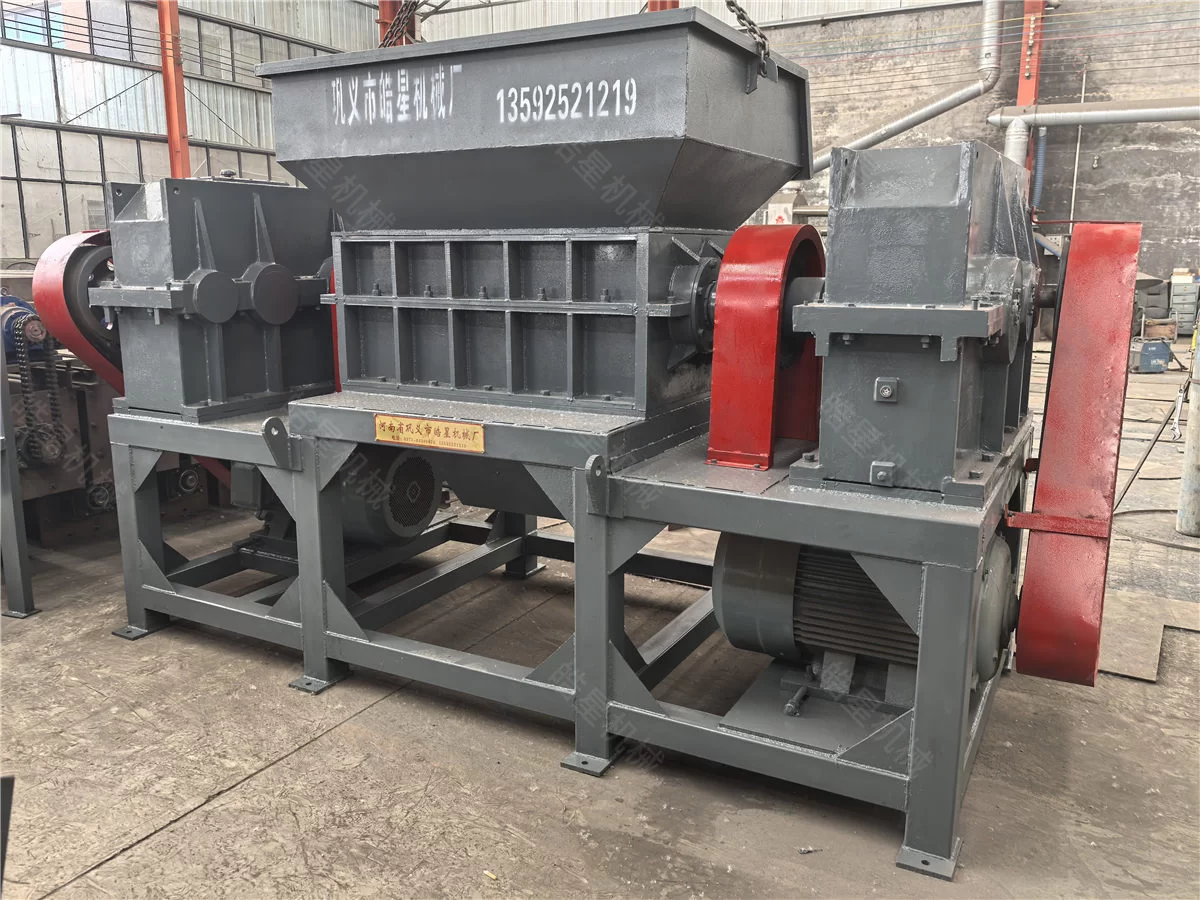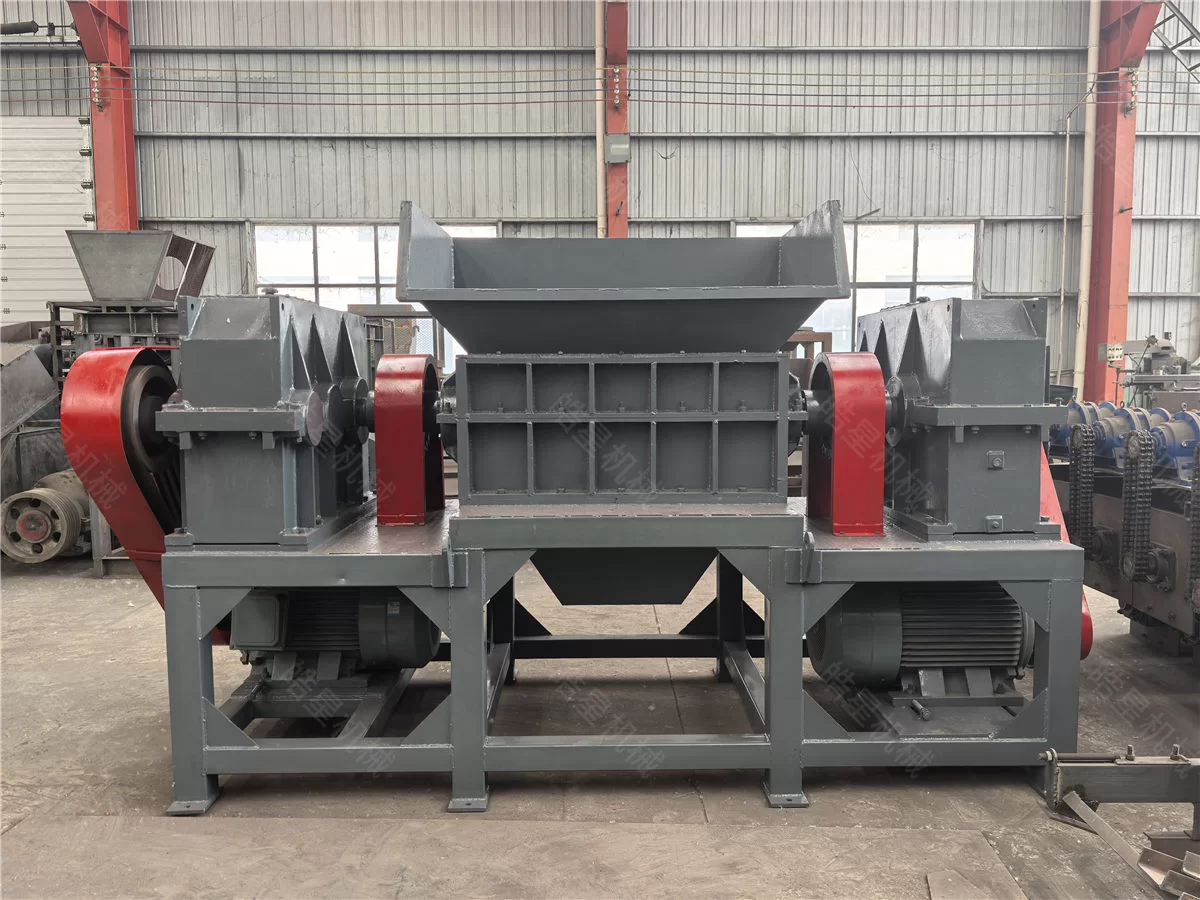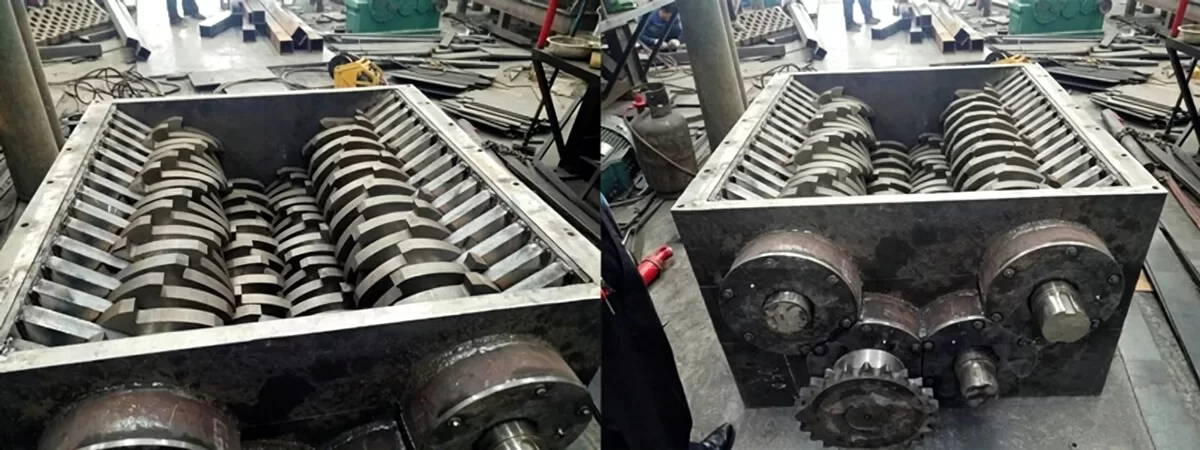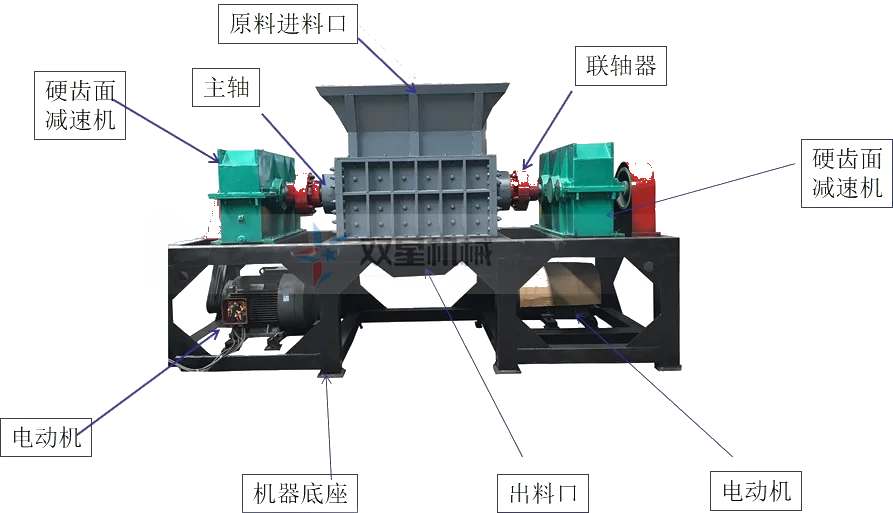
The four shaft shredder is a low-speed, high-torque size-reduction machine that uses four counter-rotating cutter shafts to grip, shear and repeatedly cut prepared recycling materials.
Compared with a twin shaft shredder used mainly for coarse primary shredding, the four shaft shredder provides additional cutting passes and can be equipped with a bottom screen to produce smaller and relatively more consistent output.
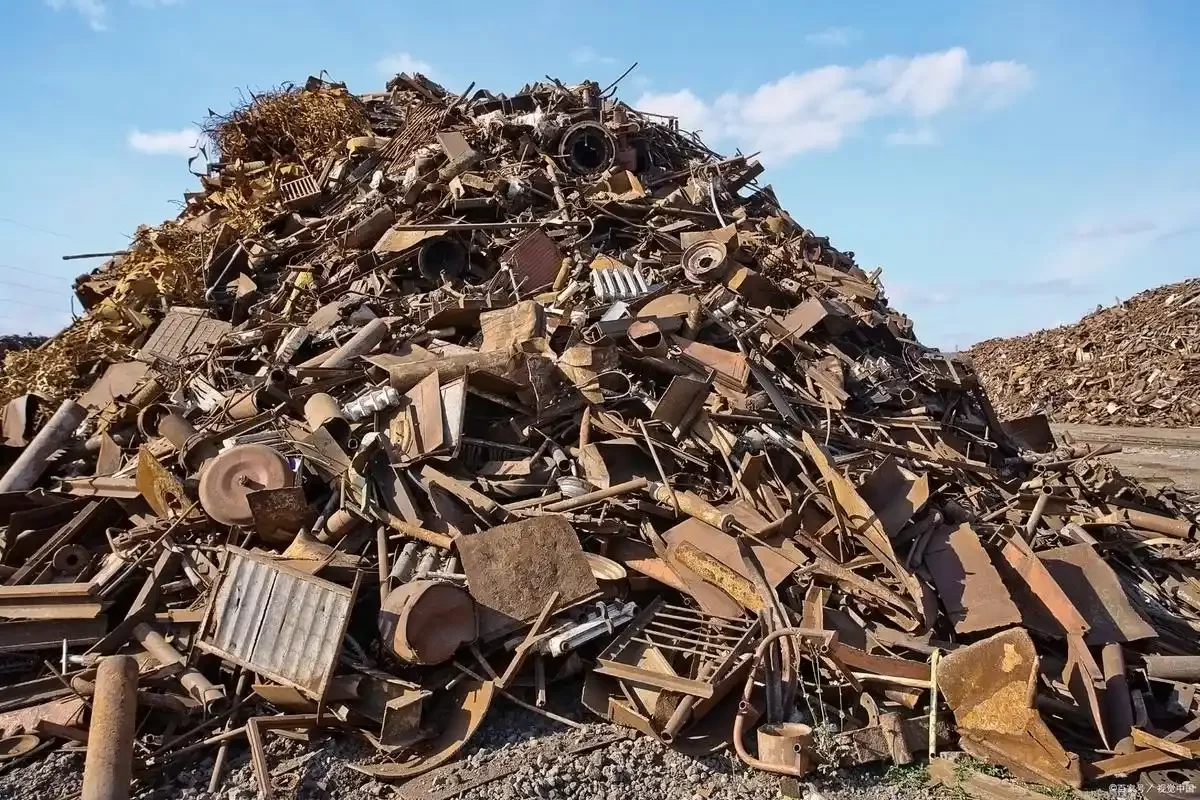
Typical materials may include prepared light scrap metal, empty metal containers, aluminum profiles, plastic drums, plastic lumps, appliance housings, rubber products, electronic waste housings and selected industrial recycling materials. Cutter and screen configurations must be selected according to the actual feed material.
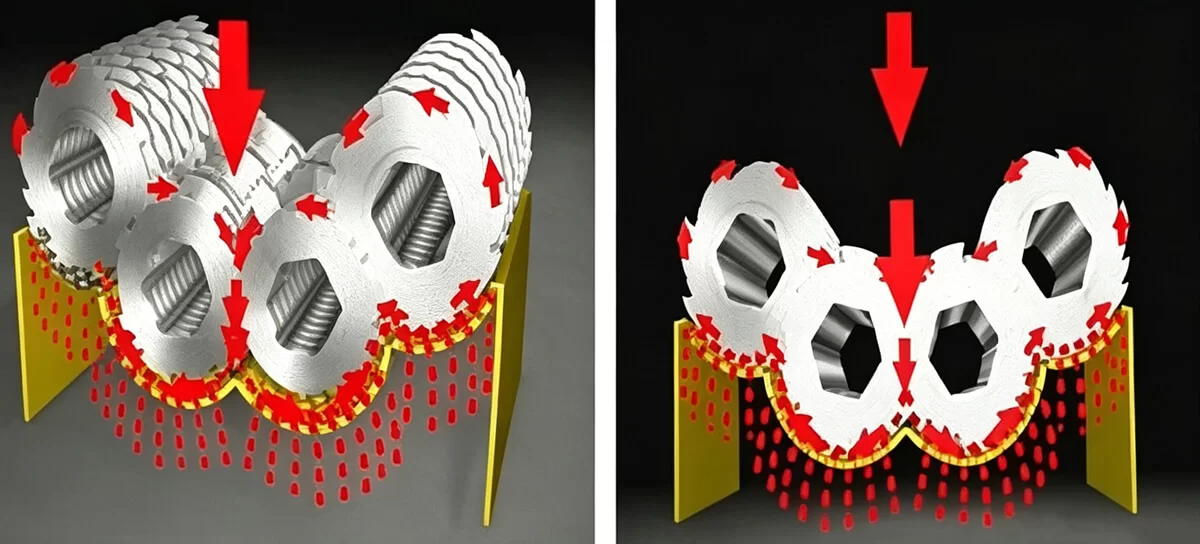
Material that meets the selected screen opening is discharged from the machine, while oversized pieces remain inside the shredding chamber for further cutting. The final output depends on the cutter width, tooth design, shaft arrangement, screen opening and material characteristics.
Bulky, compressed or oversized metal scrap may require opening or primary processing before entering the four shaft shredder. Heavy steel sections, thick solid shafts and large castings may be more suitable for hydraulic shearing, a heavy-duty twin shaft shredder or another dedicated processing method.
When further material liberation or smaller metal output is required, the shredded material may be transferred to a scrap metal crusher for secondary hammer crushing.
After shredding, a magnetic separator may recover exposed iron and steel from suitable mixed processed material. Clean, single-metal ferrous scrap may not require magnetic separation.
After ferrous metal removal, screening and suitable material preparation, an eddy current separator may recover conductive non-ferrous metals from an appropriate non-metallic material stream.
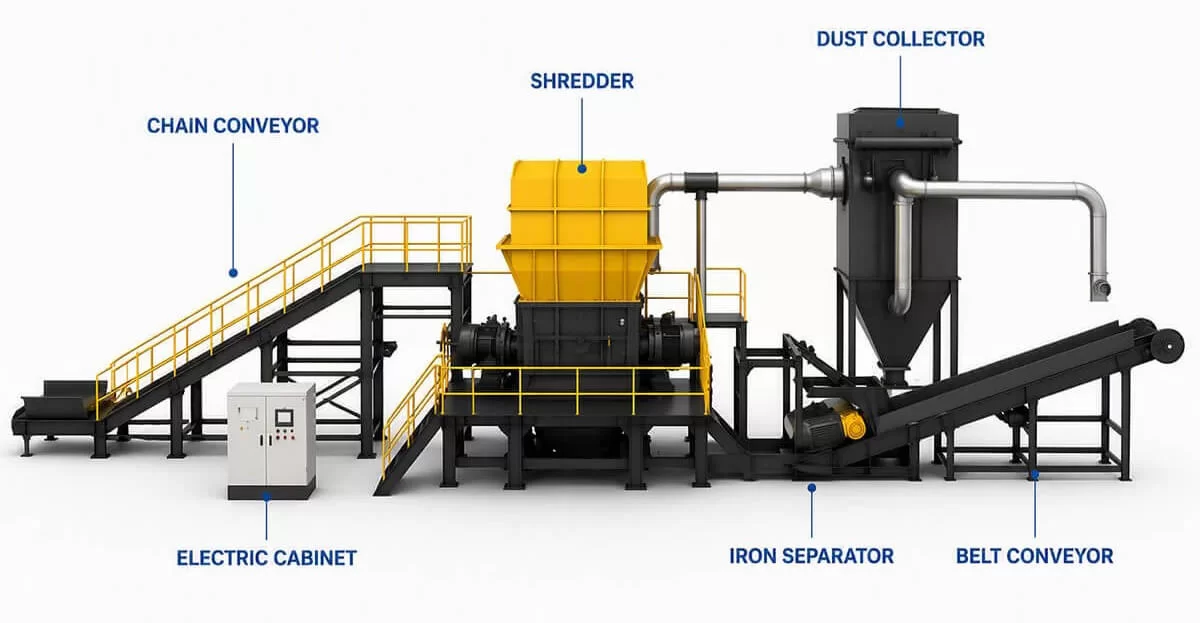
The four shaft shredder can operate as an individual machine or form part of a scrap metal recycling line with controlled feeding, discharge conveying, magnetic separation, optional secondary crushing, additional sorting, dust collection and centralized control.
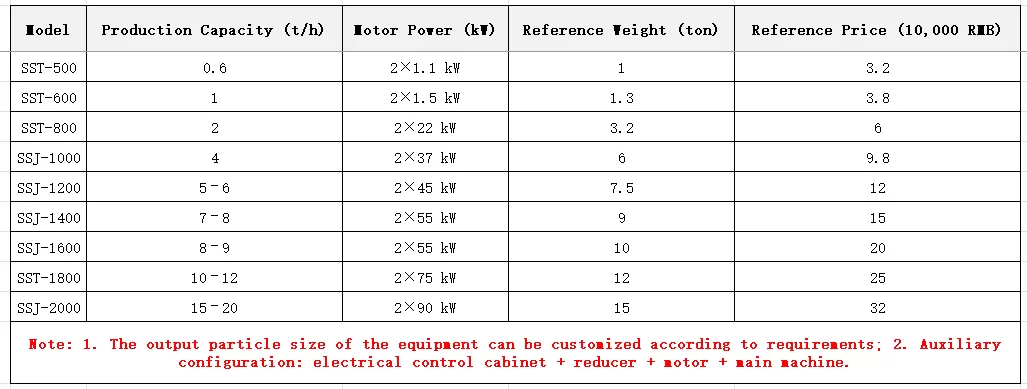
The final machine configuration depends on the material type, maximum feeding dimensions, thickness, hardness, required capacity, screen opening, expected output condition and downstream process.
How a Four Shaft Shredder Controls Material
A four shaft shredder uses four coordinated low-speed cutter shafts. The upper shafts help catch, pull and redistribute material, while the lower cutting zone continues shearing and recirculating oversized pieces until they can leave through the selected screen or discharge arrangement. This configuration is intended to improve material control and repeated cutting, not simply to double the capacity of a twin shaft shredder.
When Four Shafts May Be Appropriate
The machine can be evaluated for irregular, bulky or mixed industrial material that benefits from repeated gripping and cutting inside the chamber. Suitable applications depend on the cutter design and may include selected metal scrap, aluminum scrap, plastic products, rubber, cables and mixed recycling material. Representative samples are required because feeds with the same name can differ greatly in density, hardness and contamination.
Difference from Twin Shaft and Single Shaft Shredders
A twin shaft shredder is normally selected for coarse opening, tearing and volume reduction with two counter-rotating shafts. A single shaft shredder uses a hydraulic pusher, one rotor and a screen for controlled cutting of suitable prepared material. A four shaft shredder uses four active shafts for repeated gripping, recirculation and size reduction. The correct machine should be selected from the feed form and required output, not from the number of shafts alone.
Screening, Capacity and Wear
When a sizing screen is used, the opening influences the maximum discharge condition, but capacity also depends on shaft speed, cutter width, hook profile, chamber loading, material toughness and recirculated load. Smaller openings can increase residence time and cutter, spacer and screen wear. Throughput should be confirmed from representative material rather than motor power or chamber width alone.
Feed Restrictions and Selection Data
Pressure vessels, sealed containers, batteries, large solid shafts, massive castings, thick structural steel and unidentified hazardous items are not standard direct feed. Please provide photos, dimensions, individual weight, bulk density, metal and non-metal composition, contamination, hourly quantity, output requirement, operating hours and downstream process before configuration.