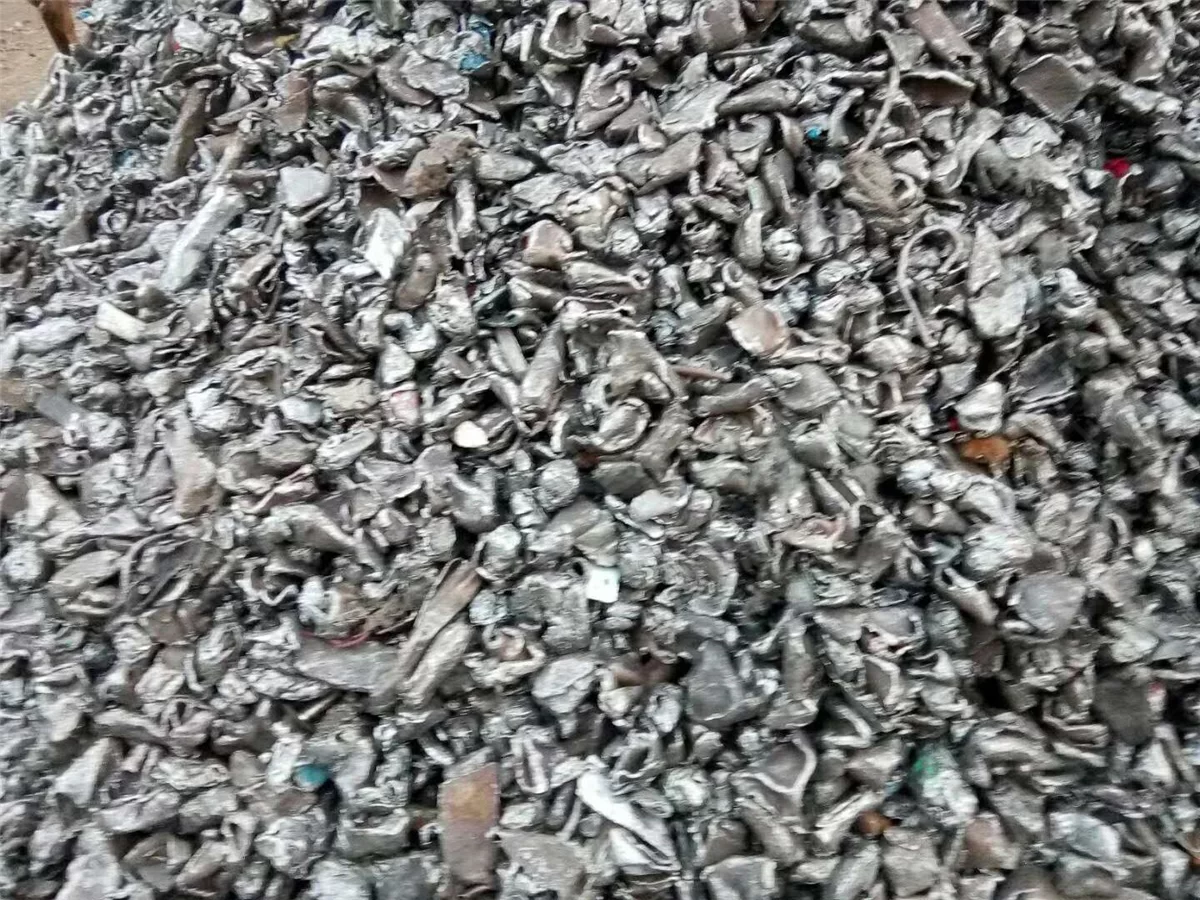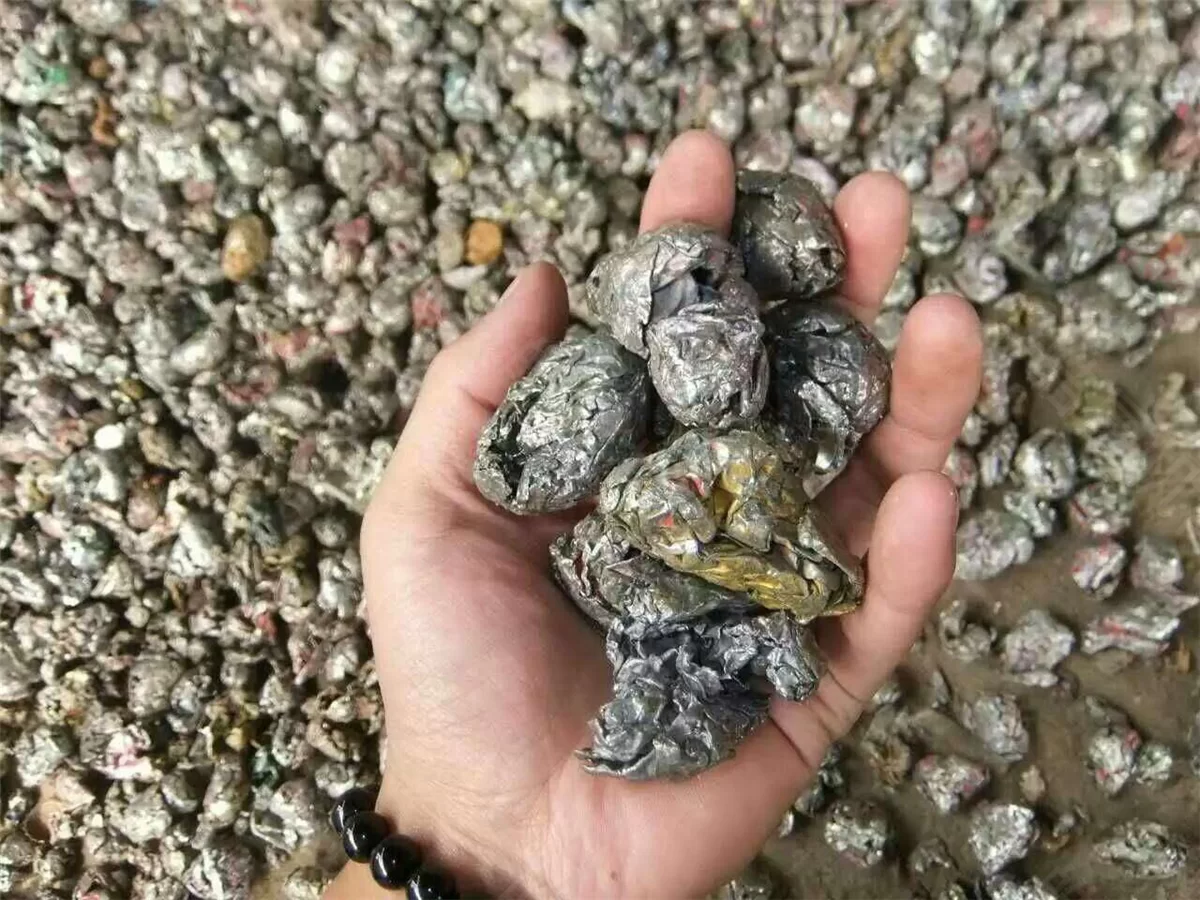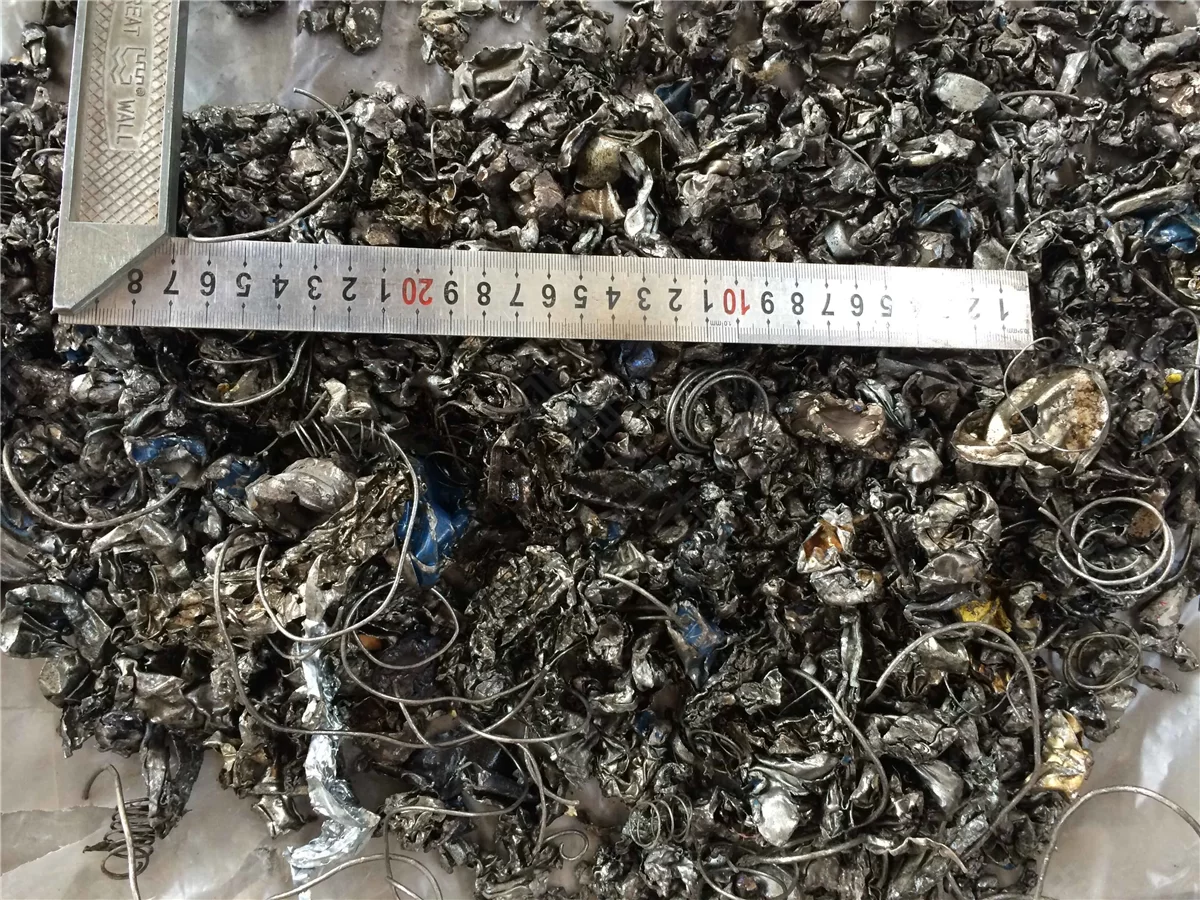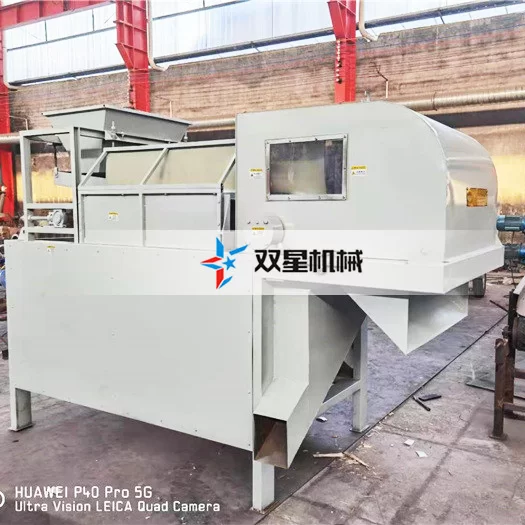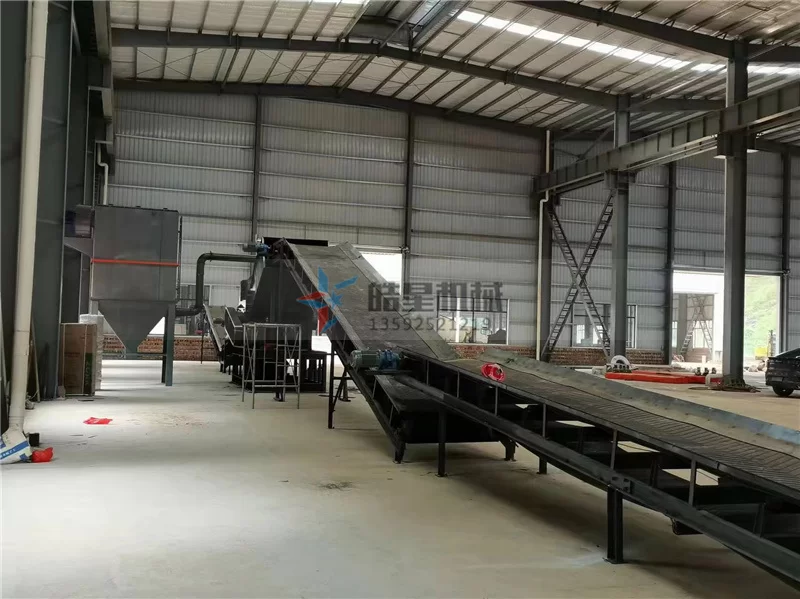

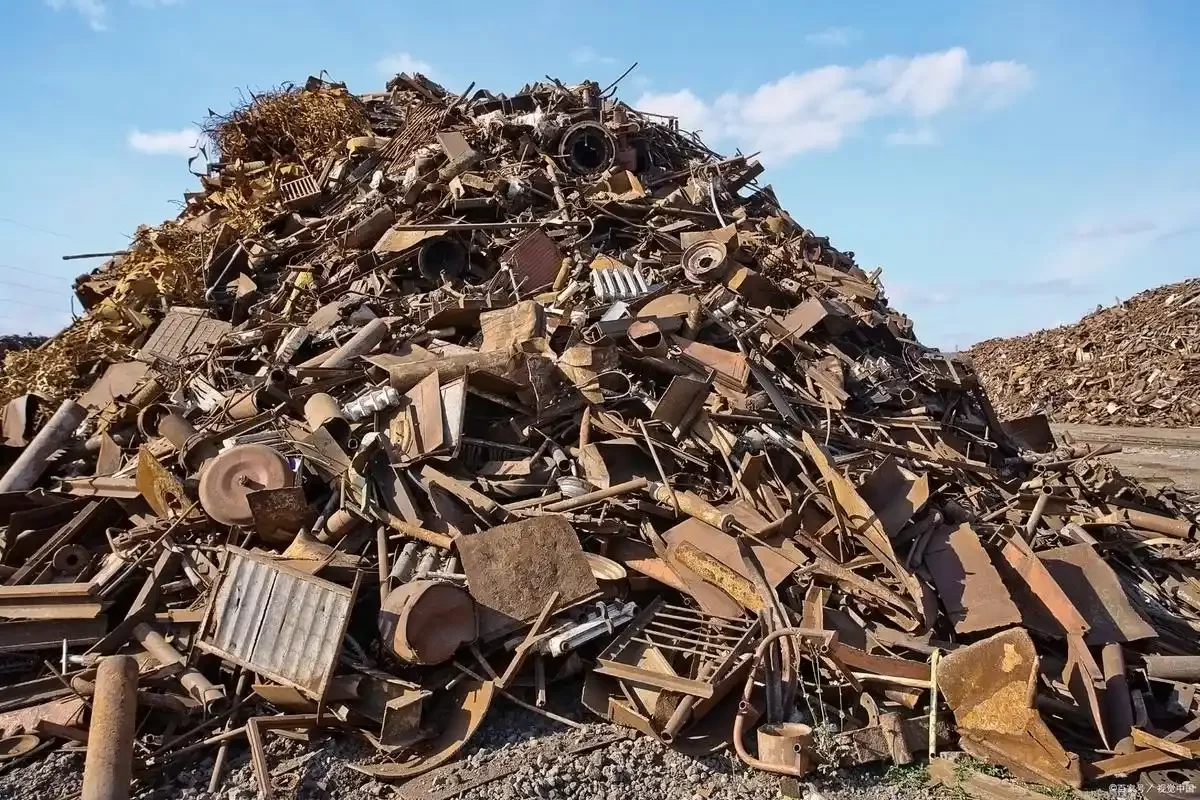
Scrap steel and iron are vital secondary resources for the steelmaking industry, but their raw forms—ELV car bodies, industrial offcuts, baled scrap, and discarded machinery—are often bulky and contaminated, unsuitable for direct furnace charging. Haoxing Machinery provides complete scrap steel and iron shredding and sorting lines, integrating hammer mills, dual-shaft shredders, magnetic separators, eddy current separators, chain plate conveyors, belt conveyors, and pulse dust collectors. These systems efficiently crush, purify, and densify various ferrous scrap into premium, furnace-ready granules that meet the strictest steel mill specifications.
1. Core Process Flow
The line adopts a modular design, flexibly configured based on material type and throughput requirements. A typical flow is as follows:
Raw Material Yard → Chain Plate Conveyor (Feeding) → Dual-Shaft Shredder (Primary Shredding) → Scrap Steel Crusher (Hammer Milling) → Belt Conveyor (Discharge) → Magnetic Separator (Ferrous Purification) → Eddy Current Separator (Non-Ferrous Recovery) → Dust Collection System (Environmental Control) → Clean Scrap Steel Granules
2. Equipment Functions in Detail
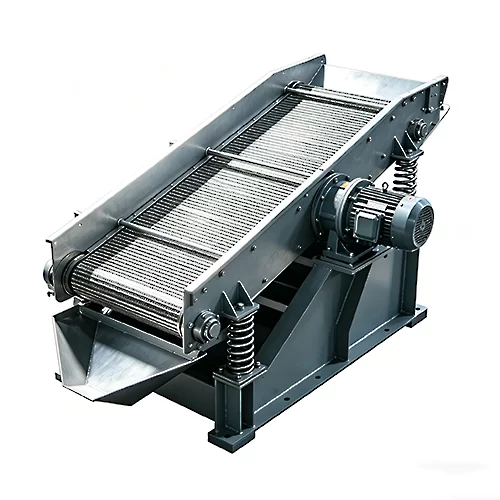
1. Feeding: Chain Plate Conveyor
Function: Smoothly transports bulky scrap, bales, and car bodies to the shredder or crusher inlet.
Features: Heavy-duty slat construction resists impact and abrasion. Variable frequency drive adjusts feed speed automatically based on crusher load to prevent bridging. Customizable width and length.
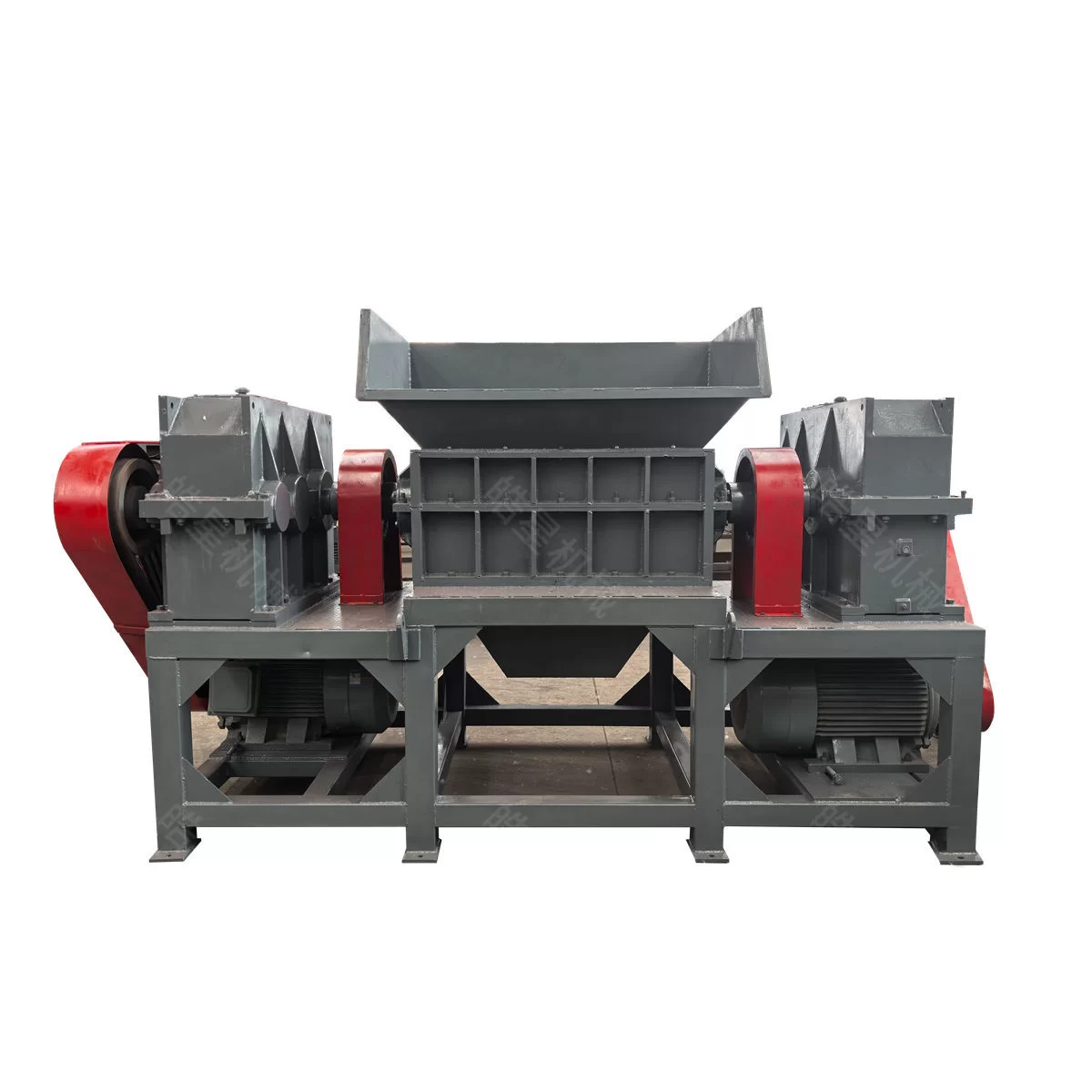
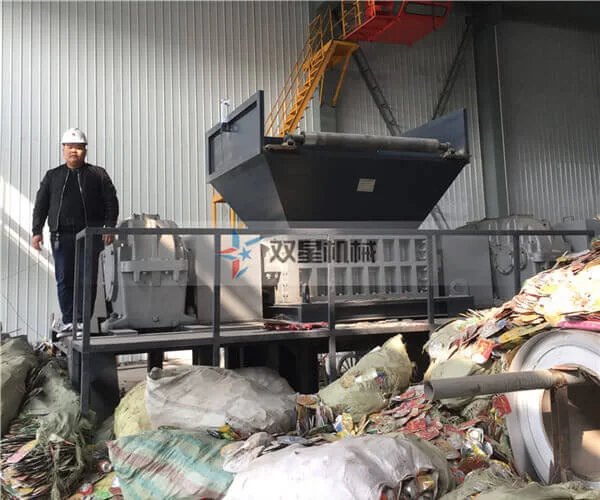
2. Primary Shredding: Dual-Shaft Shredder (Optional)
Function: Pre-shreds oversized, thick, or baled scrap into strips or chunks, preparing material for fine grinding.
Features: Two counter-rotating shafts deliver high torque at low speed. Blades made from high-alloy wear-resistant steel with four indexable cutting edges. Effectively liberates non-metallic attachments, protecting downstream hammer mill hammers and extending overall line life.
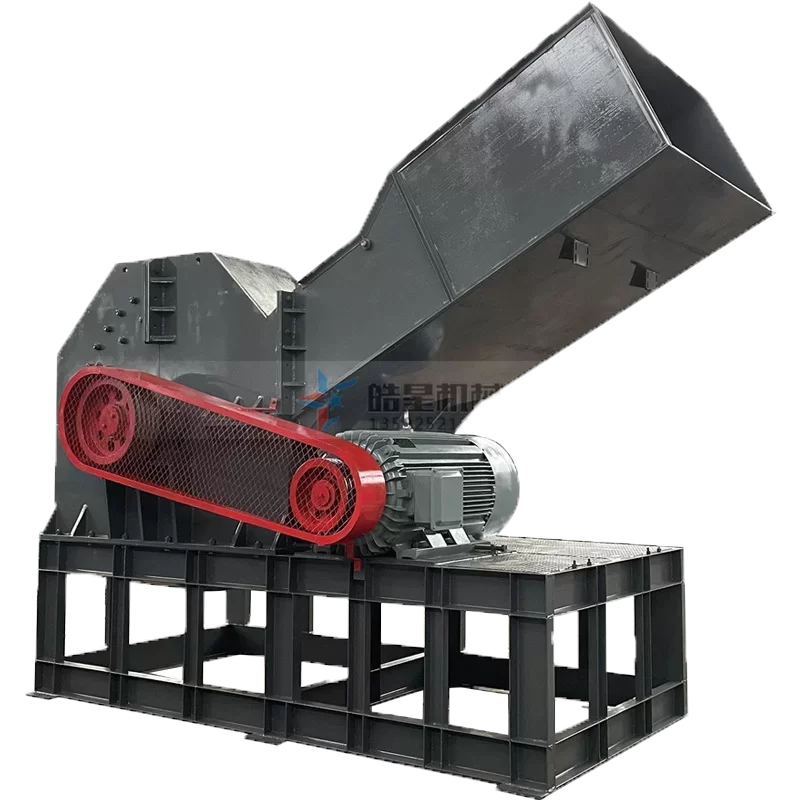
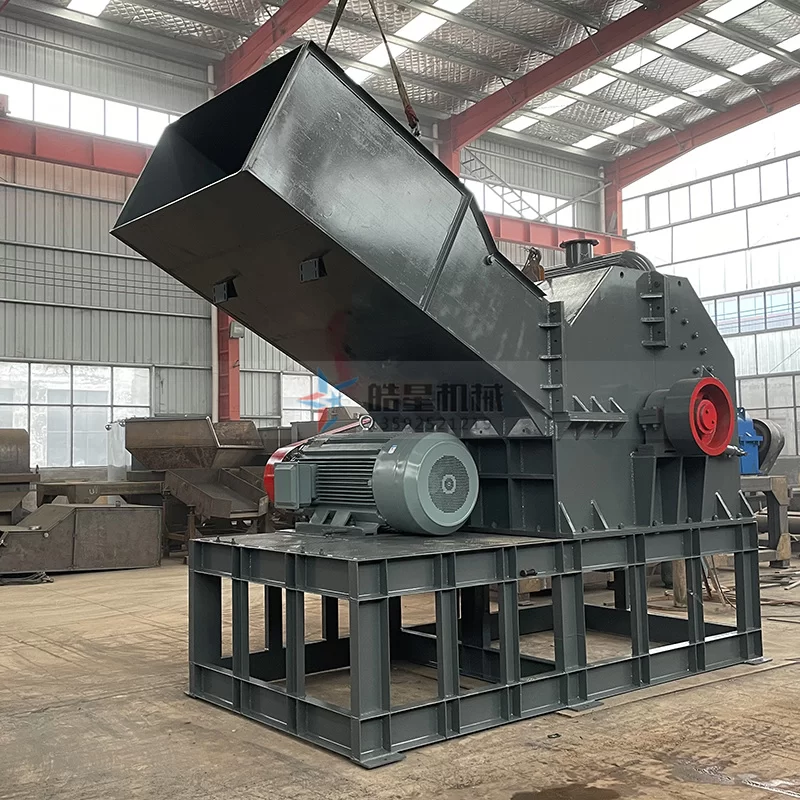
3. Fine Grinding: Scrap Steel Crusher (Hammer Mill)
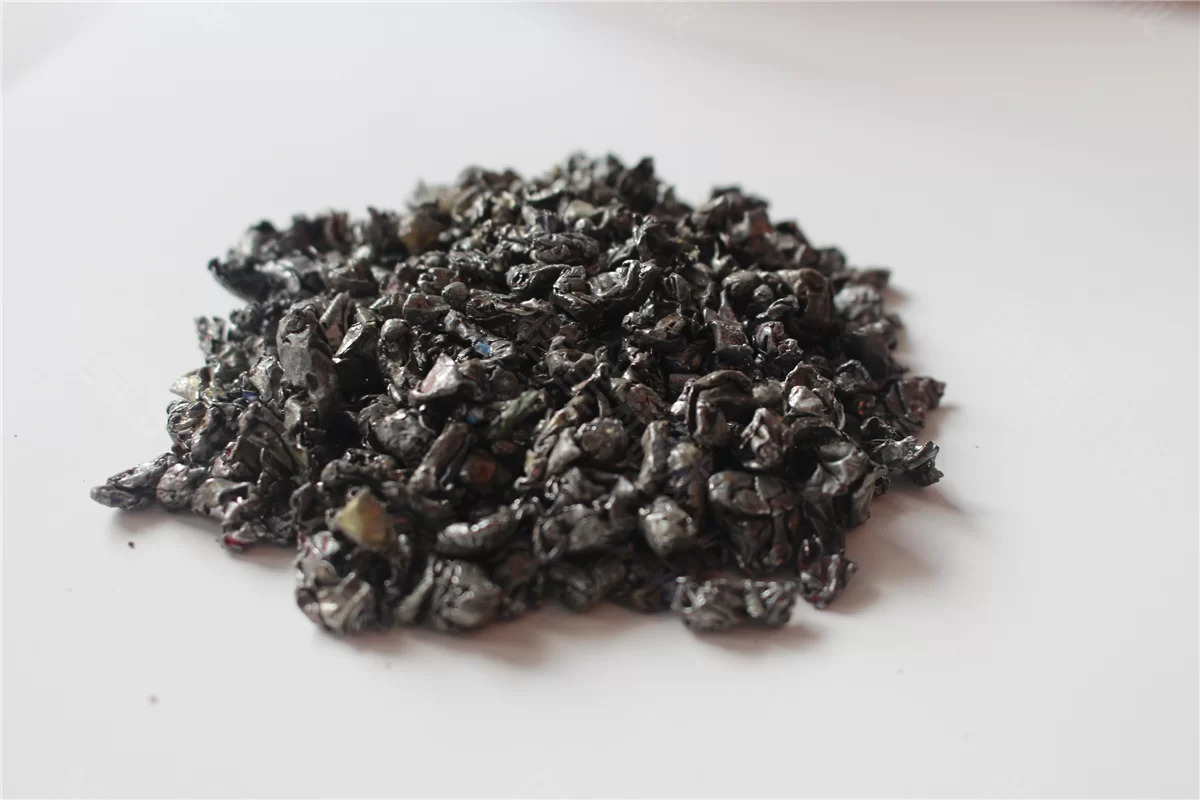
Function: Pulverizes pre-shredded material into dense, spherical granules (5–20 mm) via high-speed hammer impact.
Features: Rotor equipped with high-chromium alloy hammers. Material is repeatedly impacted and ground against manganese steel liners. Bottom screen grate controls output size (interchangeable). Paint and rust are stripped off during crushing. Housing fabricated from 20–50 mm manganese steel plate with hydraulic lid opener for easy maintenance.
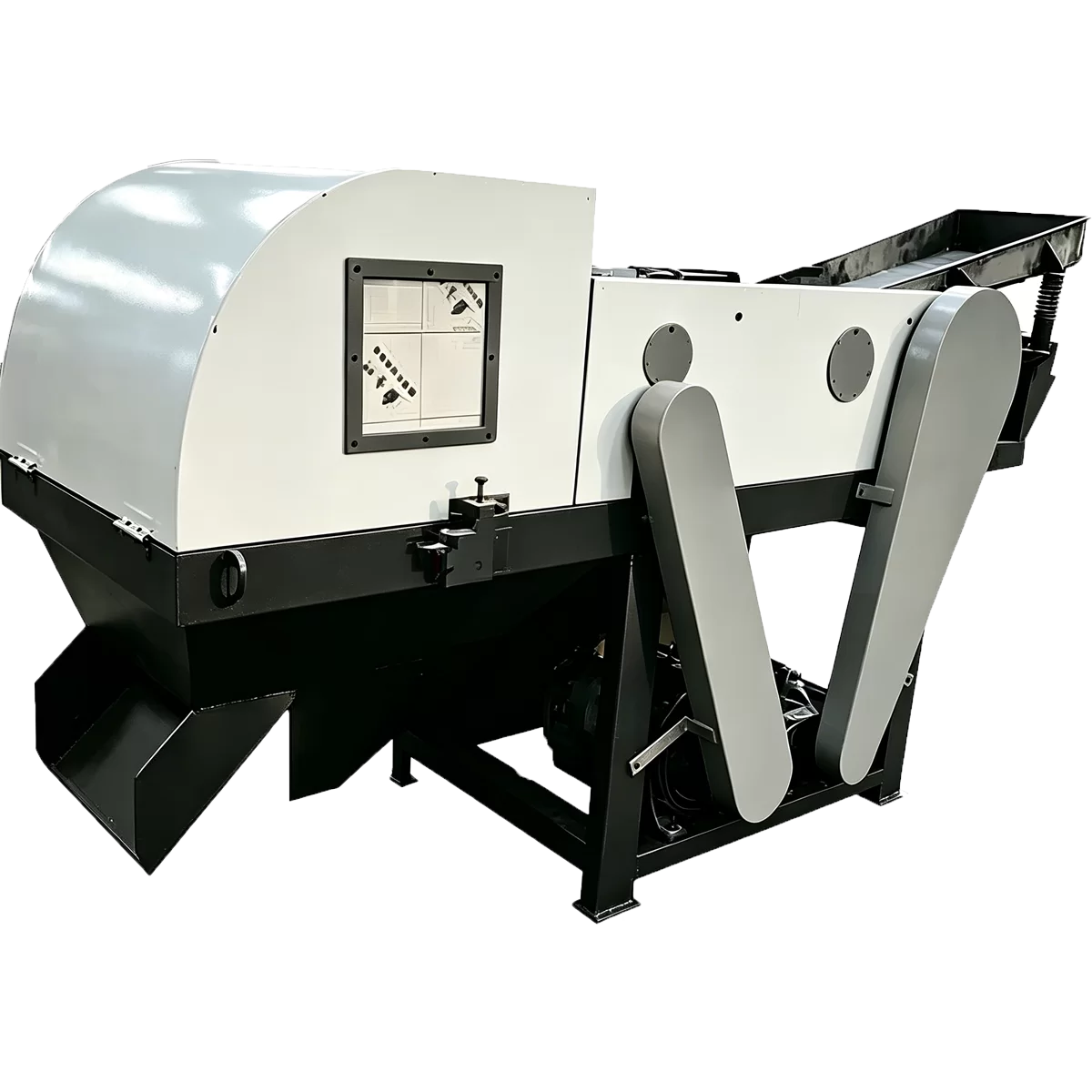
4. Magnetic Separation: Magnetic Separator
Function: Separates ferrous metals (steel, iron) from non-magnetic materials (copper, aluminum, plastics, rubber).
Features: Permanent magnetic drum or self-cleaning overband design with field strength exceeding 8000 Gauss. Ferrous material is attracted and ejected into a clean pile, while non-magnetic material continues along the conveyor. Iron removal efficiency exceeds 99%.
5. Non-Ferrous Separation: Eddy Current Separator
Function: Recovers valuable non-ferrous metals (copper, aluminum, zinc) from magnetic tailings.
Features: High-frequency alternating magnetic fields induce repulsive eddy currents, ejecting non-ferrous particles away from non-metallic waste. Adjustable rotor speed accommodates different particle sizes. Separation purity ranges from 96% to 99%.
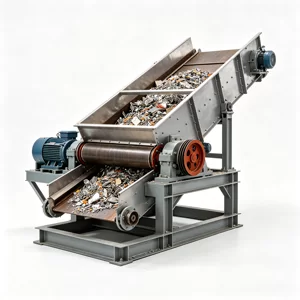
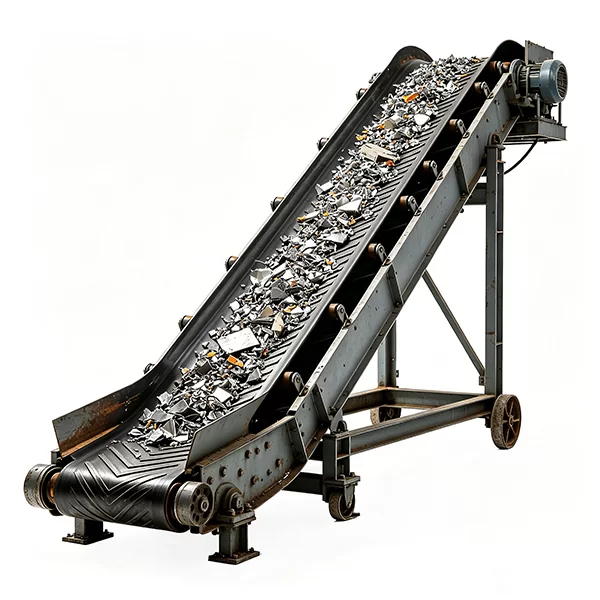
6. Material Handling: Belt Conveyors
Function: Connects individual processing units, transporting material between stages.
Features: Tear-resistant nylon belts with self-aligning idlers and cleaning scrapers. Configurable for horizontal, inclined, or curved layouts.
7. Environmental Control: Pulse Jet Baghouse Dust Collector
Function: Captures airborne dust and light fluff generated during shredding and conveying.
Features: Sealed negative-pressure ducting connects all dust sources. Pulse-jet cleaning maintains high filtration efficiency. Treated exhaust is safely vented, ensuring a clean workshop environment.
3. Adaptability to Different Metal Types
Haoxing scrap steel and iron processing lines handle not only common carbon steel and cast iron but can also be configured for various metal streams:
Scrap Steel/Iron: Car bodies, sheet metal, drums, offcuts, bales – standard configuration with hammer mill and magnetic separator.
Mixed Scrap Metal: Material containing copper, aluminum, zinc – add an eddy current separator for multi-metal recovery.
Light Gauge/Baled Scrap: Include a dual-shaft shredder for pre-conditioning, improving crusher efficiency and reducing hammer wear.
High-Hardness Alloy Steel: Specify high-chromium hammers and thicker wear liners for enhanced durability.
4. Reference Line Configuration
| Equipment | Recommended Model | Power | Capacity | Remarks |
|---|---|---|---|---|
| Chain Plate Conveyor | LB1200×12m | 11 kW | 40–80 t/h | Heavy-duty, VFD control |
| Dual-Shaft Shredder | HX-SS1000 | 37 kW × 2 | 8–15 t/h | Optional, for bale pre-shredding |
| Scrap Steel Crusher | HXPS1600 | 280 kW | 15–20 t/h | Primary size reduction unit |
| Belt Conveyor | B1000×15m | 7.5 kW | Matches crusher | Discharge and transfer |
| Magnetic Separator | CX800 | 4 kW | 20–35 t/h | Self-cleaning drum type |
| Eddy Current Separator | ECS1000 | 7.5 kW | 8–12 t/h | Optional, for non-ferrous recovery |
| Pulse Dust Collector | DMC-200 | 15 kW | 15,000 m³/h airflow | Workshop dust control |
Haoxing Machinery's scrap steel and iron shredding and sorting lines are operating reliably in numerous large-scale scrap yards and steel mill feedstock plants. Whether building a new facility or upgrading an existing one, we provide customized equipment configurations and process designs tailored to your material characteristics and throughput goals, helping you maximize the value of your ferrous scrap resources