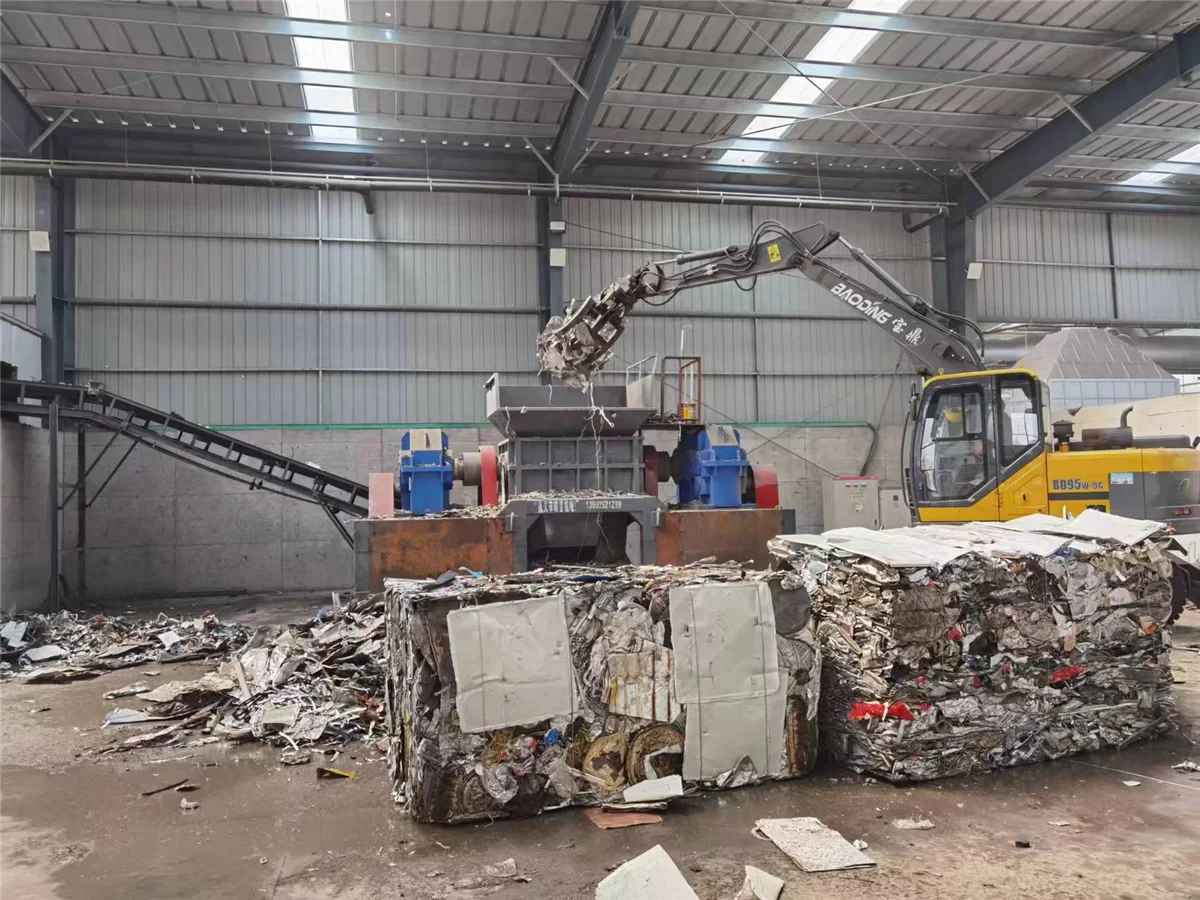
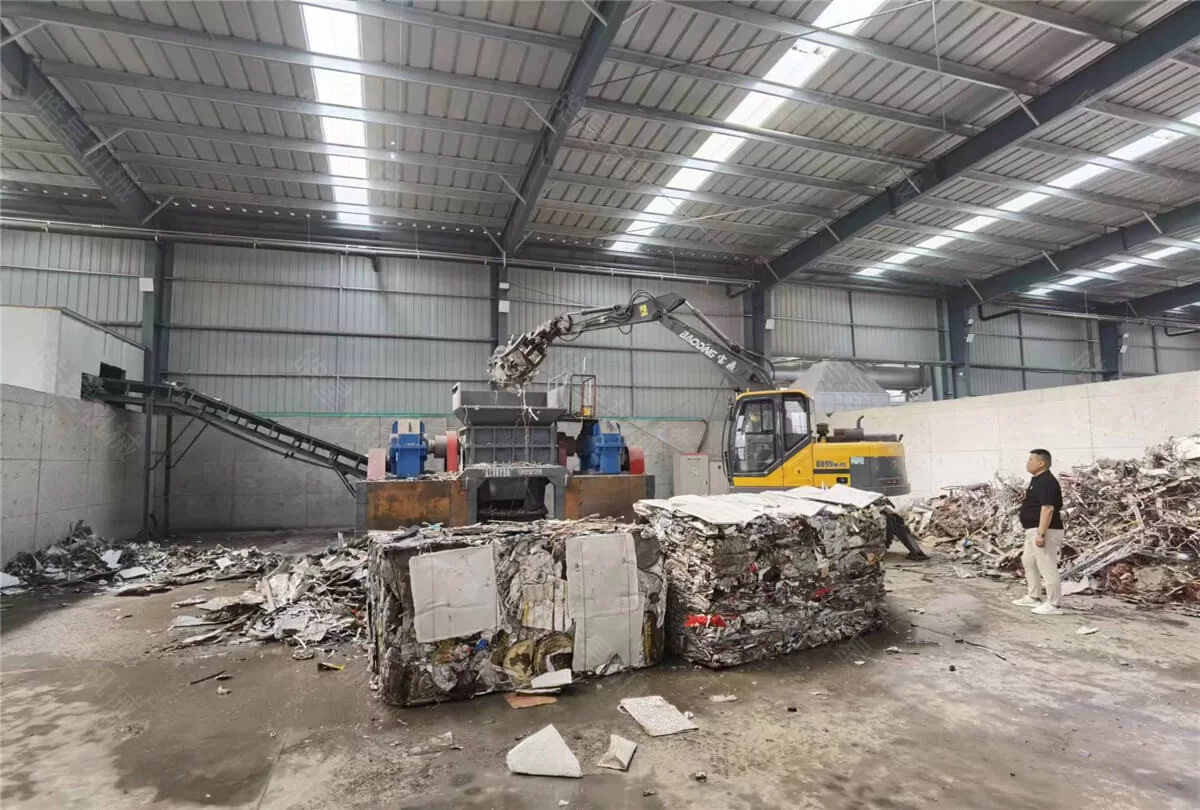
Two scrap metal bales with the same dimensions do not necessarily produce the same shredder output.
One bale may open quickly after entering the cutting chamber, while another may require repeated gripping, tearing and reversing. The difference often comes from bale density, although material thickness, composition and the way the bale was compressed also matter.
For recycling plants processing baled cans, light sheet metal, metal offcuts or mixed scrap, bale density affects more than the load on the shredder. It also changes the feeding interval, motor current, discharge volume and the performance of downstream equipment.
Understanding these differences helps buyers evaluate a baled scrap shredder based on actual operating conditions rather than relying only on a general capacity figure.
What Does Bale Density Mean?
Bale density is the weight of a compressed bale divided by its volume.
The basic calculation is:
Bale density = Bale weight ÷ Bale volume
For example, consider two bales measuring 1,000 × 800 × 600 mm. If one bale weighs 300 kg and the other weighs 600 kg, the second bale contains twice as much material in the same space.
However, the calculated density does not fully describe how the bale will behave during shredding.
A bale made from aluminum cans may contain many thin, folded layers. A bale with similar dimensions may contain steel sheets, reinforcing bars or thick metal offcuts. Although both materials have been compacted, the second bale may require much more torque and processing time.
When evaluating baled scrap, the following information should be considered together:
Bale dimensions
Average and maximum bale weight
Main material composition
Metal thickness
Compression method
Type of binding wire or strap
Presence of solid or oversized pieces
Bale density is therefore an important reference, but it should not be used as the only basis for selecting a shredder.
How Low-Density Bales Enter the Shredder
Low-density bales usually contain more internal gaps. These gaps give the shredder cutters space to grip the outer layers and gradually pull the compressed material apart.
Once the outer structure opens, the remaining pieces tend to enter the cutting chamber more easily. This can provide several operating advantages:
Shorter processing time per bale
Fewer high-current periods
Less frequent automatic reversing
Smoother discharge from the cutting chamber
More stable feeding to downstream conveyors
Easier adjustment of the feeding interval
Low density does not mean the bale will always be easy to handle. Light metal sheets and cans may expand after the straps are removed. The expanded material occupies more volume and may bridge above the cutting chamber.
Long strips, steel wire and cables can also hold different parts of the bale together. In this situation, the bale may be light but still difficult to feed smoothly.
The feeding hopper must therefore be designed according to both the compressed bale size and the way the material expands after opening.
Why High-Density Bales Take Longer to Open
A high-density bale has less space between the compressed metal pieces. The cutters may initially contact a hard outer surface instead of entering between individual layers.
The bale may move, rotate or remain temporarily suspended above the cutters before the shafts obtain a firm grip. After the bale enters the cutting chamber, the shredder must overcome two types of resistance:
The strength and thickness of the individual metal pieces
The compression force holding the entire bale together
This usually results in a longer processing cycle.
Dense bales may cause:
Higher torque demand
Larger motor current fluctuations
More frequent reverse cycles
Slower feeding conveyor speed
More wear on cutters and counter blades
Increased load on shafts and reducers
Lower average output over a full shift
Automatic reversing helps protect the equipment when the load rises above the preset limit. However, the shredder is not producing normal output during a reverse cycle. If difficult bales cause frequent reversing, the actual hourly capacity will decrease.
This is why the output measured with loose, light scrap cannot be applied directly to heavily compressed metal bales.
Bale Density Changes the Feeding Interval
The feeding interval is the time between one bale entering the shredder and the next bale being loaded.
For low-density bales that open quickly, the feeding conveyor may run more frequently. For dense bales, the conveyor may need to stop until the previous bale has been sufficiently opened.
Loading the next bale too early can create several problems:
Additional bale weight presses on the material already in the chamber.
Opened scrap cannot move freely.
Motor current rises quickly.
The shredder reverses more often.
Material accumulates around the hopper opening.
The discharge flow becomes uneven.
Waiting too long between bales also reduces output. The shredder may run without material while the feeding conveyor remains stopped.
A suitable feeding system should not simply push bales into the hopper at a fixed speed. Conveyor operation should be coordinated with the actual load of the shredder.
A more stable control method can monitor:
Main motor current
Cutter shaft speed
Reverse cycle frequency
Material level in the hopper
Discharge conveyor load
Downstream equipment condition
When the shredder approaches its preset load, the feeding conveyor stops or slows down. Feeding resumes after the load returns to the normal range.
This type of control is especially useful when bale weights and densities are not consistent.
Material Composition Can Be More Important Than Density
Density alone does not show how difficult a bale will be to shred.
A compressed aluminum can bale may have a relatively high density but still open quickly because the individual metal pieces are thin. A lower-density bale containing thick steel offcuts, shafts or cast components may be more difficult to process.
Several material characteristics must be checked.
Metal thickness
Thin sheet metal generally folds and tears more easily. Thick plate and heavy structural pieces place a greater load on the cutter shafts.
Even when heavy pieces represent only a small part of the bale, they can lead to repeated reversing or sudden current increases.
Long metal pieces
Steel strips, wires, cables and long offcuts can wrap around the shafts or remain connected after the surrounding material has been torn apart.
These materials may prevent the bale from opening evenly and can also affect discharge.
Solid metal parts
Solid shafts, gears, large castings and heavy machine parts are different from baled light scrap. Oversized solid parts should be removed during pre-sorting unless the shredder has been designed specifically for them.
Mixed non-metallic materials
Plastic, rubber, fabric, foam and insulation materials can change the way a bale breaks apart. These materials can also affect magnetic separation, screening and later crushing stages.
Compression method
Bales made by different balers may have different internal structures. Some are compressed evenly from several directions, while others contain folded layers or densely packed sections.
For this reason, two bales with the same weight and outside dimensions may still require different processing times.
Why Shredder Capacity Is Usually Given as a Range
The output of a metal shredder is not determined by motor power alone. Actual production depends on the interaction between the raw material, feeding system, cutting system and downstream process.
Important factors include:
Bale density and weight
Bale dimensions
Material composition
Metal thickness
Cutter diameter
Blade width and hook design
Shaft speed
Installed motor power
Available shaft torque
Feeding conveyor control
Required discharge condition
Frequency of reversing
Discharge conveyor capacity
A shredder may process light can bales quickly but produce a lower hourly output when handling dense mixed steel bales. Quoting one fixed capacity without defining the test material can therefore be misleading.
For a new project, the customer should also explain what the required capacity means.
For example, 5 tons per hour could refer to:
Maximum short-term input
Nominal input under normal conditions
Average production during one shift
Minimum guaranteed continuous output
Weight of final qualified products
These definitions are not the same. A line designed for an occasional peak of 5 tons per hour may have a different configuration from one required to maintain at least 5 tons per hour continuously.
Does a Denser Bale Produce Smaller Output?
Not necessarily.
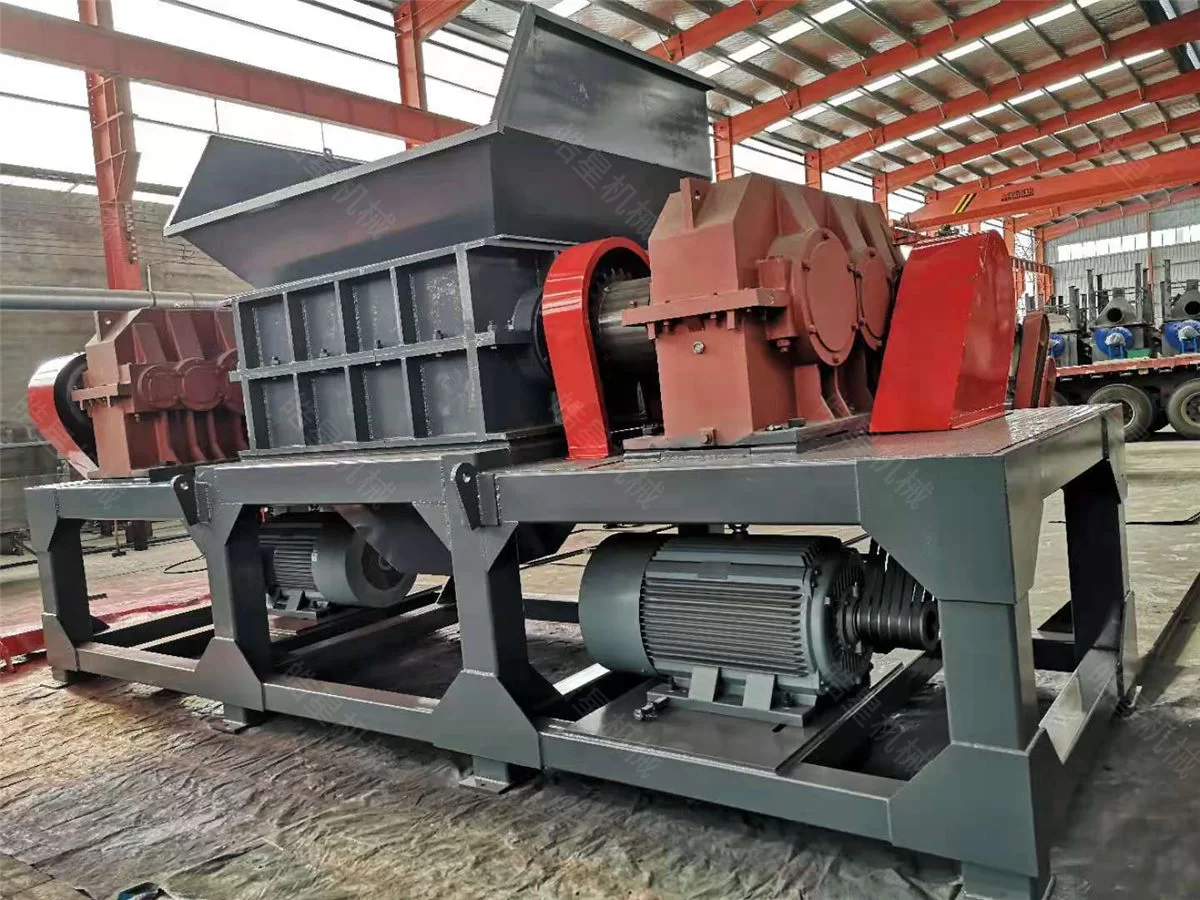
A twin shaft shredder uses low-speed, high-torque cutting, tearing and squeezing to open compressed scrap. The principal purpose is coarse shredding and size reduction rather than producing a uniform final particle size.
Low-density bales may open quickly, allowing some larger individual pieces to pass through the cutting chamber. Dense bales may remain in contact with the cutters for longer and undergo more tearing.
However, this does not mean increasing bale density is an effective way to control output size. Discharge size is mainly influenced by:
Blade width
Cutter hook arrangement
Shaft spacing
Material shape
Number of cutting cycles
Operating load
Whether a discharge screen is used
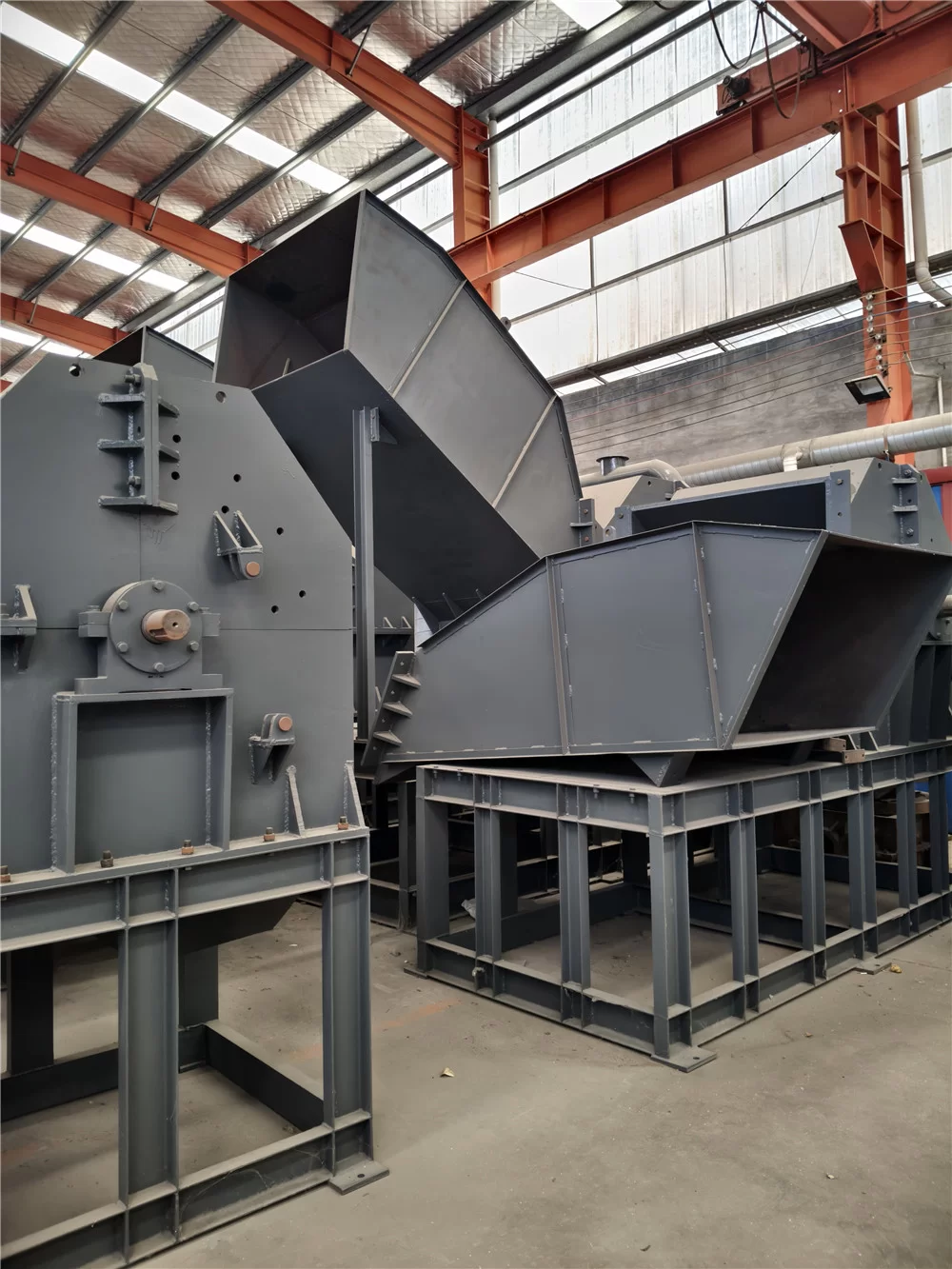
When consistent and smaller material is required, a metal crusher may be added after the primary shredder.
The shredder opens the bales and reduces the size of large pieces. The metal crusher then uses high-speed impact and screen control to produce a smaller and more consistent output for subsequent sorting or furnace use.
A complete processing line may include:
Feeding conveyor → Twin shaft shredder → Magnetic separator → Metal crusher → Vibrating screen → Eddy current separator
The correct arrangement depends on the raw material and the required final metal fractions. Not every baled scrap project requires every machine in this process.
How Bale Density Affects Downstream Equipment
Bale density continues to influence the line after the material leaves the shredder.
A tightly compressed bale occupies relatively little space before shredding. Once opened, the loose material may expand several times in volume. Although the weight remains unchanged, the discharge conveyor must carry a much larger layer of material.
If the discharge conveyor is too narrow or too slow, opened scrap may accumulate under the shredder. This back pressure can interfere with discharge and reduce the output of the entire line.
Unstable feeding can also affect:
Magnetic separator loading
Screening efficiency
Metal crusher input
Eddy current separation accuracy
Dust collection performance
Manual sorting efficiency
Magnetic separators and eddy current separators generally perform better when the material is distributed in a controlled, even layer. Sudden surges from the shredder can create thick material piles, allowing some metal pieces to be covered or carried into the wrong discharge fraction.
The feeding system should therefore be designed for the complete line rather than only for the shredder.
Practical Ways to Improve Feeding Stability
Group bales by material type
Aluminum can bales, light steel sheet bales and mixed heavy scrap bales should not always be processed with the same conveyor settings.
Basic classification before shredding makes the feeding rate more predictable.
Record bale weight and dimensions
If bale density varies considerably, recording the dimensions and weights of representative bales helps the operator set a more suitable feeding interval.
The information also helps the equipment supplier evaluate actual capacity.
Feed one difficult bale at a time
Several dense bales should not be stacked directly above the cutting chamber unless the feeding system has been designed for this operating method.
Feeding one bale at a time gives the shredder enough space to grip, rotate and open the material.
Connect conveyor control to motor load
The feeding conveyor can be programmed to stop automatically when the shredder motor current reaches the upper control limit.
The conveyor resumes after the load falls, reducing unnecessary overload and manual intervention.
Remove unsuitable materials before feeding
Sealed containers, gas cylinders, batteries, fuel tanks, heavy solid parts and pressurized components should be removed before shredding.
Pre-sorting improves operational safety and protects the cutter shafts and drive system.
Match the discharge conveyor to expanded volume
Conveyor selection should be based on the volume of opened scrap, not only on the dimensions of the compressed bale.
Suitable conveyor width, sidewall height and belt speed help prevent material accumulation below the shredder.
Information to Provide Before Selecting a Baled Scrap Shredder
Accurate raw material information allows the manufacturer to recommend a suitable machine and estimate output under more realistic conditions.
Customers should provide:
Clear photos of complete bales
Close-up photos of the bale material
Bale length, width and height
Average and maximum bale weight
Main metal types and approximate proportions
Maximum material thickness
Maximum size of solid metal pieces
Details of wires, cables and long strips
Percentage of plastic, rubber and other impurities
Required input capacity
Required discharge size
Daily operating hours
Purpose of the shredded material
Downstream sorting or crushing process
If the density is unknown, the manufacturer can estimate it from the bale dimensions and weight.
A video showing the bale before and after the straps are removed is also useful. The video can reveal whether the bale stays compact, expands rapidly or contains interlocked pieces that may affect feeding.
Select the Equipment Around the Actual Bale
Bale density directly affects how quickly a bale enters the cutting chamber, how long the shredder takes to open it and whether the production line can maintain stable output.
A larger motor does not solve every feeding problem. Hopper dimensions, cutter design, shaft torque, conveyor control, reverse settings and discharge capacity must work together.
Before confirming the shredder model or promising a fixed hourly capacity, representative bale information should be reviewed. If the material composition varies significantly, a material test can provide a more reliable basis for equipment selection.
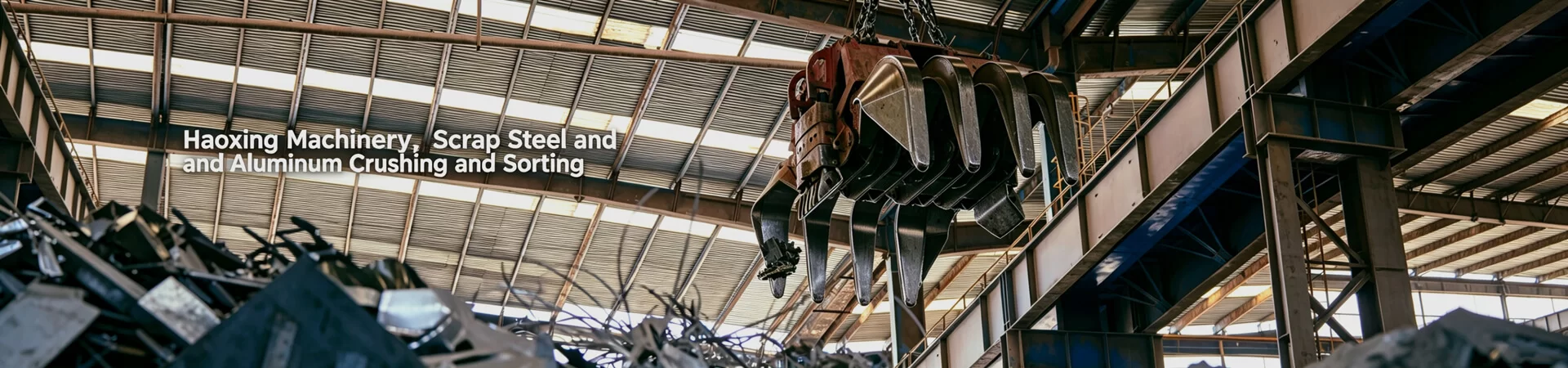
Gongyi Haoxing Machinery Factory manufactures twin shaft shredders and complete baled scrap processing lines in China. According to the material and required final output, the line can include feeding conveyors, magnetic separators, metal crushers, vibrating screens, eddy current separators, dust collection and electrical control systems.
Send us the bale dimensions, bale weight, material photos, required capacity and final product requirements. We will evaluate the material and recommend a suitable shredding and separation process.
WhatsApp: +86 186 2491 0209
Website: www.hxjx08.com