Two metal bales with the same outside dimensions can behave very differently in a shredder. One may open steadily and produce a consistent discharge, while another causes repeated reversals, uneven loading and faster cutting-edge wear. The difference often begins before the bale reaches the hopper.
Feed preparation does not mean dismantling every bale by hand. It means confirming what is inside, removing items that should not enter the machine, and presenting the material in a way that the rotor can grip without severe shock loading. This is especially important when baled scrap metal comes from different suppliers or contains mixed sheet, wire, frames and non-metallic attachments.
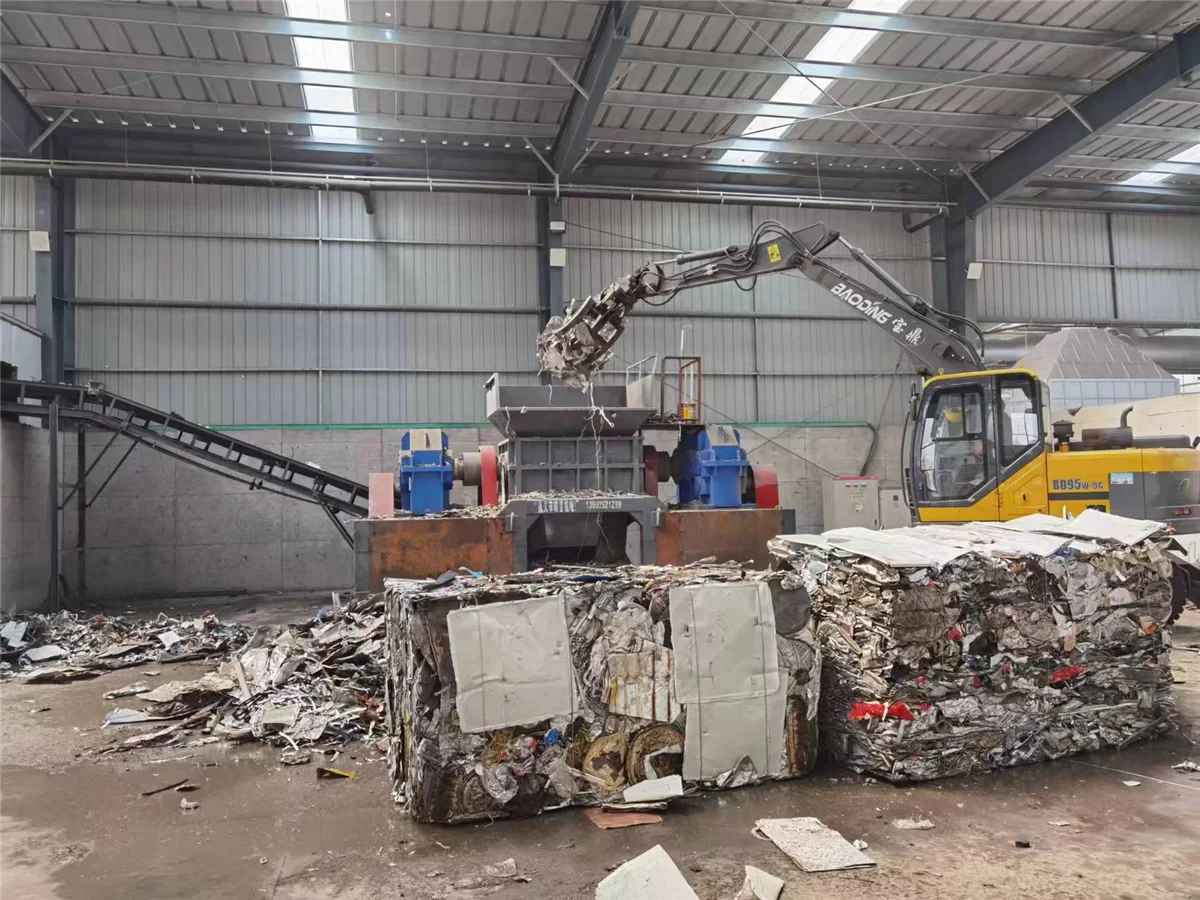
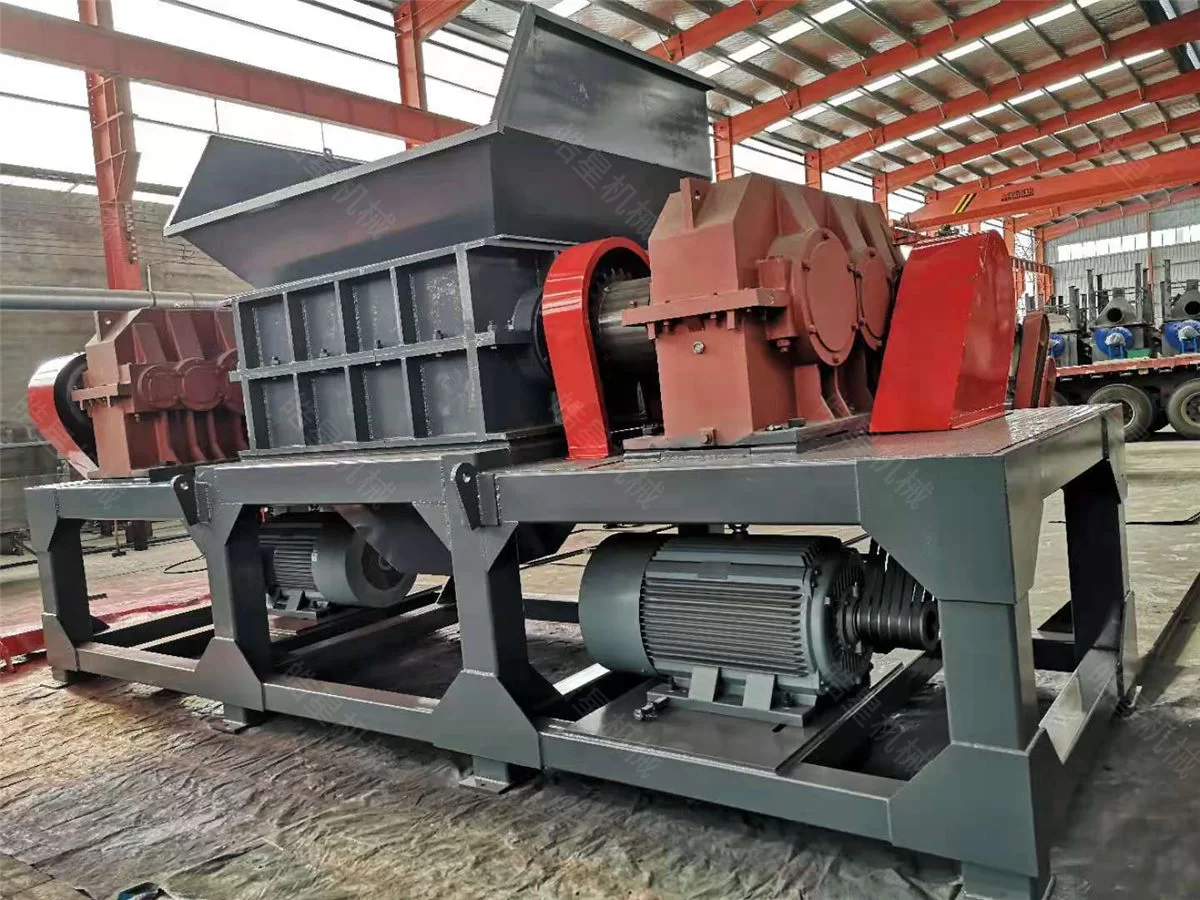
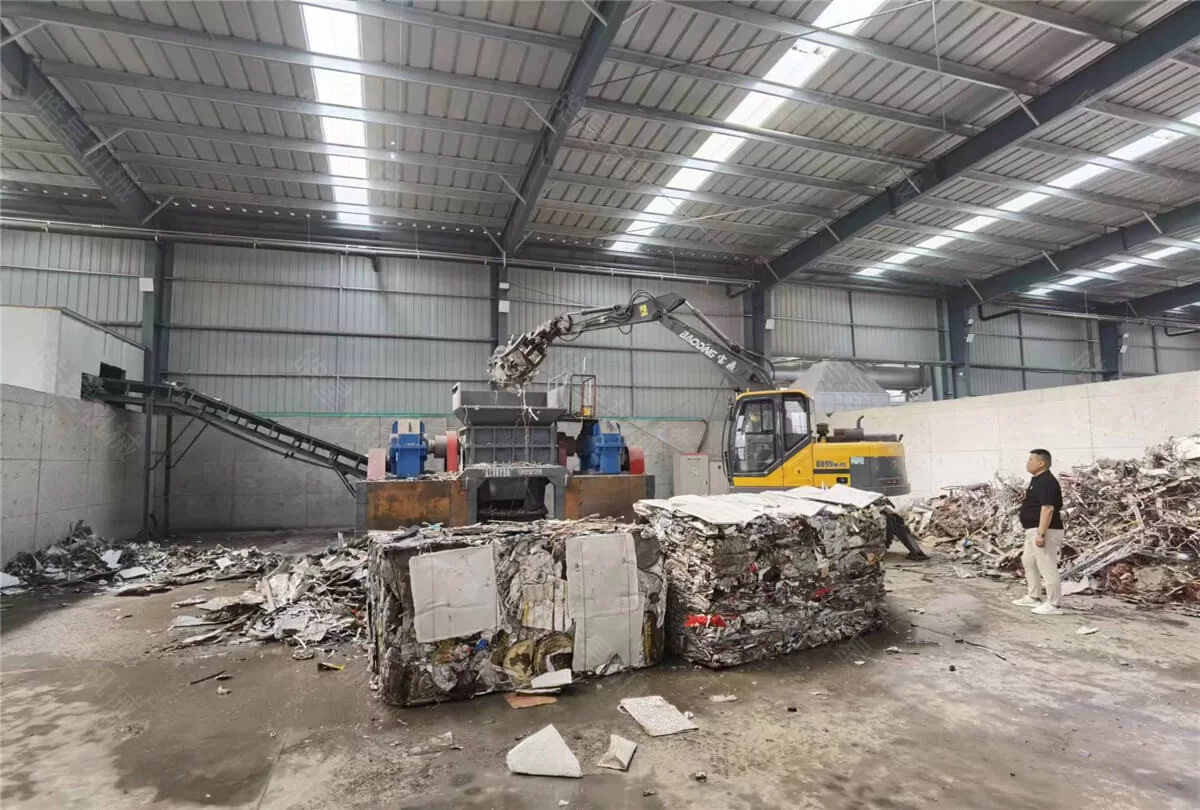
A baled scrap shredder is designed for low-speed, high-torque coarse size reduction. It can open compressed material and break a large bale into smaller pieces, but stable production still depends on bale density, dimensions, composition and feeding method. Good preparation protects the machine without turning the recycling yard into a manual dismantling operation.
Why Bales With the Same Weight Do Not Feed the Same Way
Bale weight alone does not describe how the material will behave. A uniformly compressed bale made from light sheet scrap is different from a bale with a hard center, loose edges and several heavy components hidden inside. The average density may look similar, but the local resistance applied to the shafts can change from one section to another.
The main differences usually come from:
the type and thickness of the metal inside the bale;
how evenly the material was compacted;
the amount of springy wire, long strips or tangled sheet;
the presence of wood, rubber, plastic, dirt or closed components;
the position of steel straps and binding wire;
the way the bale is placed into the feed hopper.
These factors affect how quickly the cutters engage, whether the bale turns or bridges in the hopper, and how often the control system needs to reverse the shafts.
Inspect the Bale Before It Reaches the Conveyor
A visual inspection is the first practical step. The operator should check the outer faces and any exposed openings for unsuitable material. The goal is not to guarantee that every hidden item has been found. The goal is to remove obvious risks before the bale enters the processing area.
Items requiring separate handling can include sealed containers, pressure cylinders, batteries, fuel tanks with residue, unidentified closed vessels and unusually thick solid pieces. These materials should not be treated as ordinary shredder feed. Heavy shafts, thick plate, rail, large castings and similar pieces may require cutting, shearing or another dedicated process.
If bale quality varies by supplier, record the source, bale dimensions, approximate weight and visible composition. Production data becomes much more useful when it can be compared with the material source instead of being recorded only as a daily tonnage figure.
Should Steel Straps and Binding Wire Be Removed?
The correct decision depends on the strap material, quantity, fastening method and shredder design. A few known steel straps may be acceptable for a machine configured for this feed. Loose ends, multiple overlapping bands and long free wire can create less predictable feeding conditions.
Loose binding material may wind around exposed components, pull light scrap into the chamber in an uncontrolled group or remain connected to a partly opened bale. Removing damaged or excessively loose straps before feeding can make bale placement more controlled. Any cutting of straps must follow safe operating procedures because compacted material can expand when the restraint is released.
Operators should never stand in a release path or cut an unstable bale without suitable handling equipment. The safest preparation method is determined by the actual bale condition and the recycling yard's operating procedure.
How Contamination Changes Output
Non-metallic attachments do more than reduce the saleable metal percentage. They also change how the bale behaves inside the chamber. Flexible rubber, fabric and plastic may stretch instead of breaking cleanly. Dirt and abrasive fines can increase wear. Wood blocks and compacted debris may reduce the effective metal throughput even when the feed conveyor appears full.
This is why rated capacity should not be applied to every bale without qualification. Output should be evaluated using representative material. If the feed changes from clean sheet bales to mixed demolition bales, the same machine can produce a different hourly result even when motor power and shaft speed remain unchanged.
For a complete baled scrap shredding line, downstream conveyors and separators must also be sized for the real mixture. The shredder may release dirt, plastic and other attachments that were tightly trapped inside the bale. A line designed only around the incoming bale weight may underestimate the volume of loosened material after shredding.
Feed One Controlled Load at a Time
Continuous production does not mean forcing the hopper to remain full at every moment. The feed rate should follow the shredder load and the time required for each bale to open. Pushing a second bale onto a partly opened first bale can increase bridging and create sudden load changes.
A controlled hydraulic grab, loading box or slat conveyor can help regulate the presentation of each bale. The feeding equipment should allow the operator to pause, reposition or reduce the material flow when the rotor load rises. The best arrangement depends on bale weight, site layout and the level of automation required.
Consistent orientation can also improve repeatability. If rectangular bales are randomly dropped on different faces, the first contact area changes from load to load. During testing, keep the feeding orientation and conveyor speed as consistent as possible so that differences in performance can be traced back to the material itself.
Why Poor Preparation Increases Reversals
Automatic reversing protects the drive system when resistance rises above the control limit. Occasional reversing is normal for difficult feed. Frequent reversing, however, may indicate that the machine is repeatedly meeting a condition it cannot clear in one pass.
Common causes include:
a hard, over-compacted center;
oversized solid pieces hidden in the bale;
long strips or wire that remain connected across a wide section;
uneven feeding that loads one side more heavily than the other;
feeding the next bale before the previous bale has opened;
worn cutters with reduced ability to grip the incoming material.
Preparation cannot eliminate every reversal, but it can reduce avoidable events and make the remaining events easier to diagnose.
How Feed Condition Affects Blade Wear
Blade life is not determined only by operating hours. The contact pattern matters. Clean light sheet applies a different load from abrasive mixed scrap or a bale containing thick solid inclusions. Repeated shock loading can damage cutting edges even when the average hourly throughput appears acceptable.
Uneven bales can also concentrate work on part of the cutter width. If material consistently enters on one side, some cutting positions may wear faster. Regular inspection should compare the condition of cutters across both shafts rather than looking at only the most accessible edge.
Wear records are more useful when they include:
total processed tonnage;
main bale categories;
visible contamination level;
reversal frequency;
cutter position and measured wear;
maintenance or rotation date.
This makes it possible to distinguish gradual normal wear from damage associated with a particular feed stream.
A Practical Bale Acceptance Checklist
Before routine production, establish a simple acceptance standard that yard staff can use without laboratory equipment.
Record the bale length, width, height and approximate weight.
Identify the main metal type and typical sheet thickness.
Check for sealed, pressurized or hazardous components.
Look for thick solid pieces, shafts, castings or heavy structural sections.
Assess visible dirt, rubber, plastic, wood and other non-metallic material.
Check straps and binding wire for loose or projecting ends.
Confirm that the bale can fit the feeding system without unsafe repositioning.
Separate unusual bales for testing instead of mixing them into normal production.
A checklist does not replace operator judgment. It provides a consistent basis for deciding which bales can enter routine production and which ones need additional preparation.
How to Evaluate Whether Preparation Is Working
Do not judge improvement from a single smooth bale. Compare several representative loads under similar settings. Record the net operating time, processed weight, number of reversals and any manual intervention. If possible, also note discharge consistency and the amount of unprocessed oversize material.
Useful indicators include:
more stable conveyor loading;
fewer long reversals or stoppages;
less manual repositioning at the hopper;
more even use of the cutter width;
lower variation in hourly throughput;
fewer unexpected hard objects found during maintenance.
The objective is not to maximize the feed rate for a short trial. The objective is to achieve repeatable production without increasing the risk of damage or creating excessive wear.
Information to Provide Before Equipment Selection
When requesting a model recommendation, provide more than an estimated tons-per-hour target. Representative bale photos and videos are especially useful. Include the bale dimensions, weight range, main metal types, typical thickness, contamination level and daily operating hours.
Also explain how the bales will be loaded, whether there is space for a conveyor, the required discharge form and what equipment follows the shredder. A single machine and a complete line may require different hopper, frame and control arrangements.
Feed preparation is therefore part of equipment selection, not only an operating detail. A realistic description of the incoming bales helps determine the feed opening, cutter arrangement, drive configuration and supporting equipment. It also provides a more reliable basis for estimating output and maintenance requirements.
Conclusion
Stable baled scrap processing starts with understanding the material before it reaches the cutters. Inspection, removal of unsuitable items, control of loose binding material and steady feeding can reduce avoidable reversals and improve the consistency of production.
No preparation method can make every bale identical. The practical goal is to separate routine feed from unusual or hazardous material and to present each accepted bale in a controlled way. When bale records, operating data and cutter inspections are reviewed together, the recycling yard can improve output without treating blade wear as an unavoidable mystery.