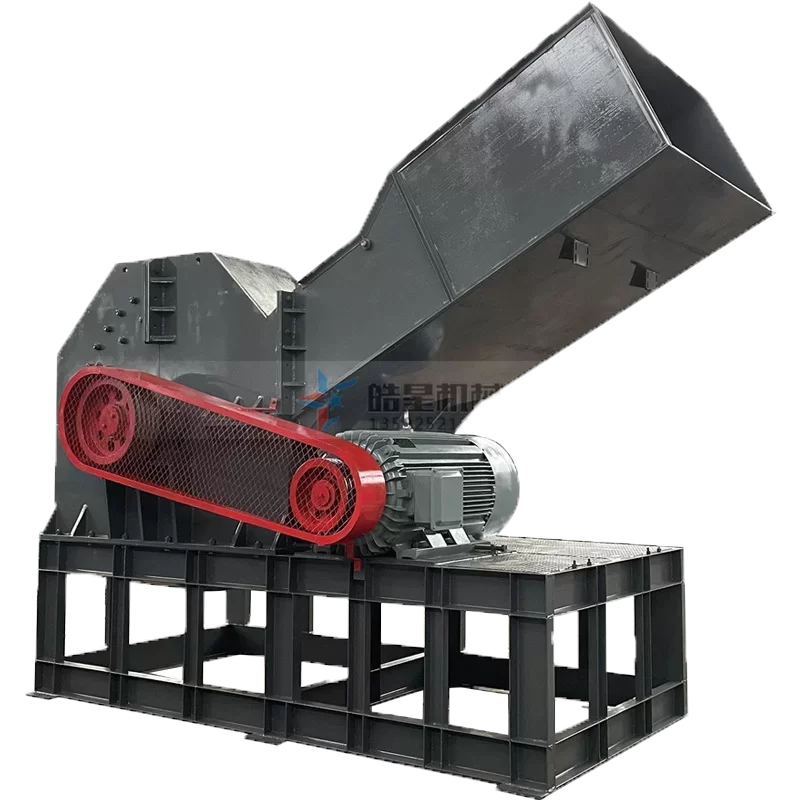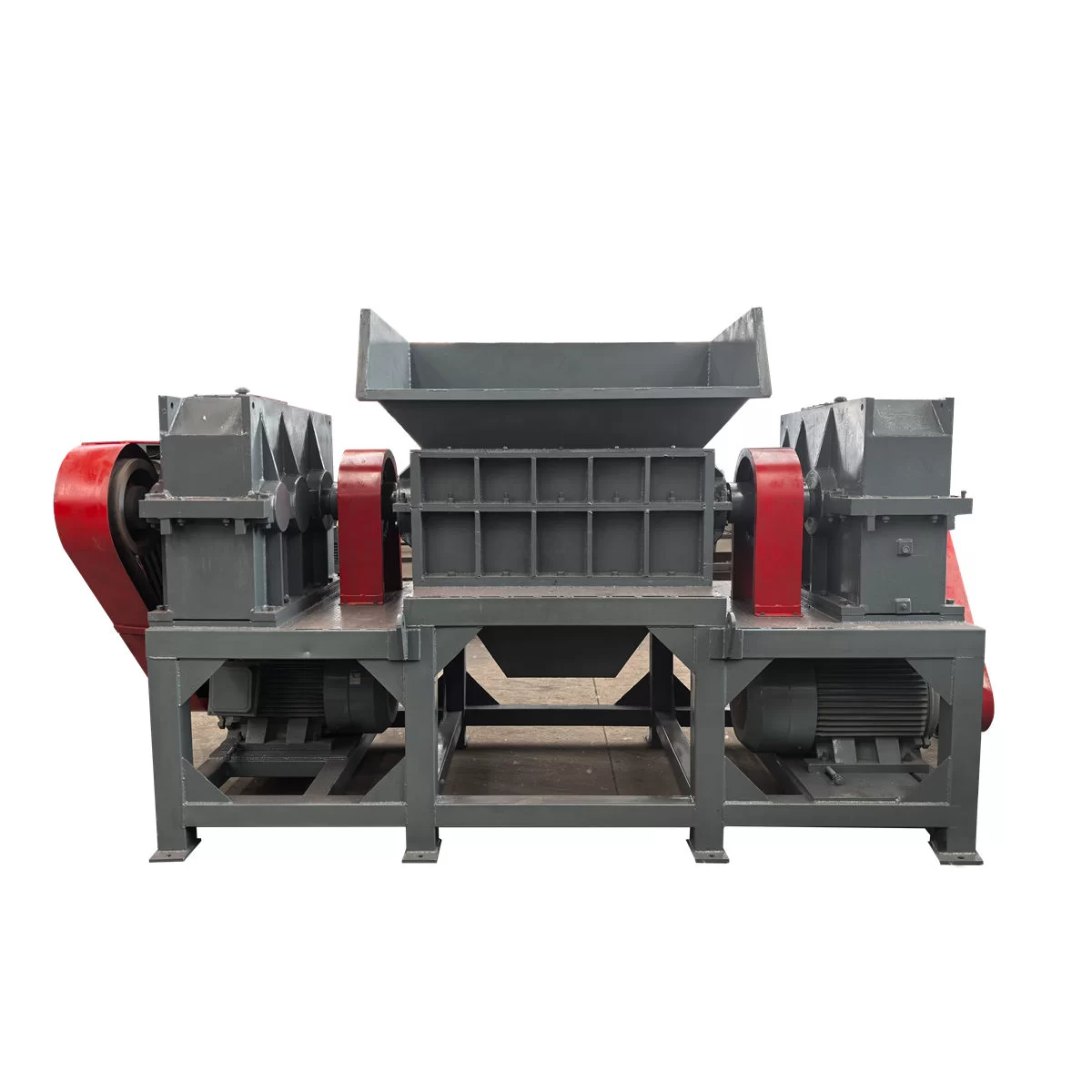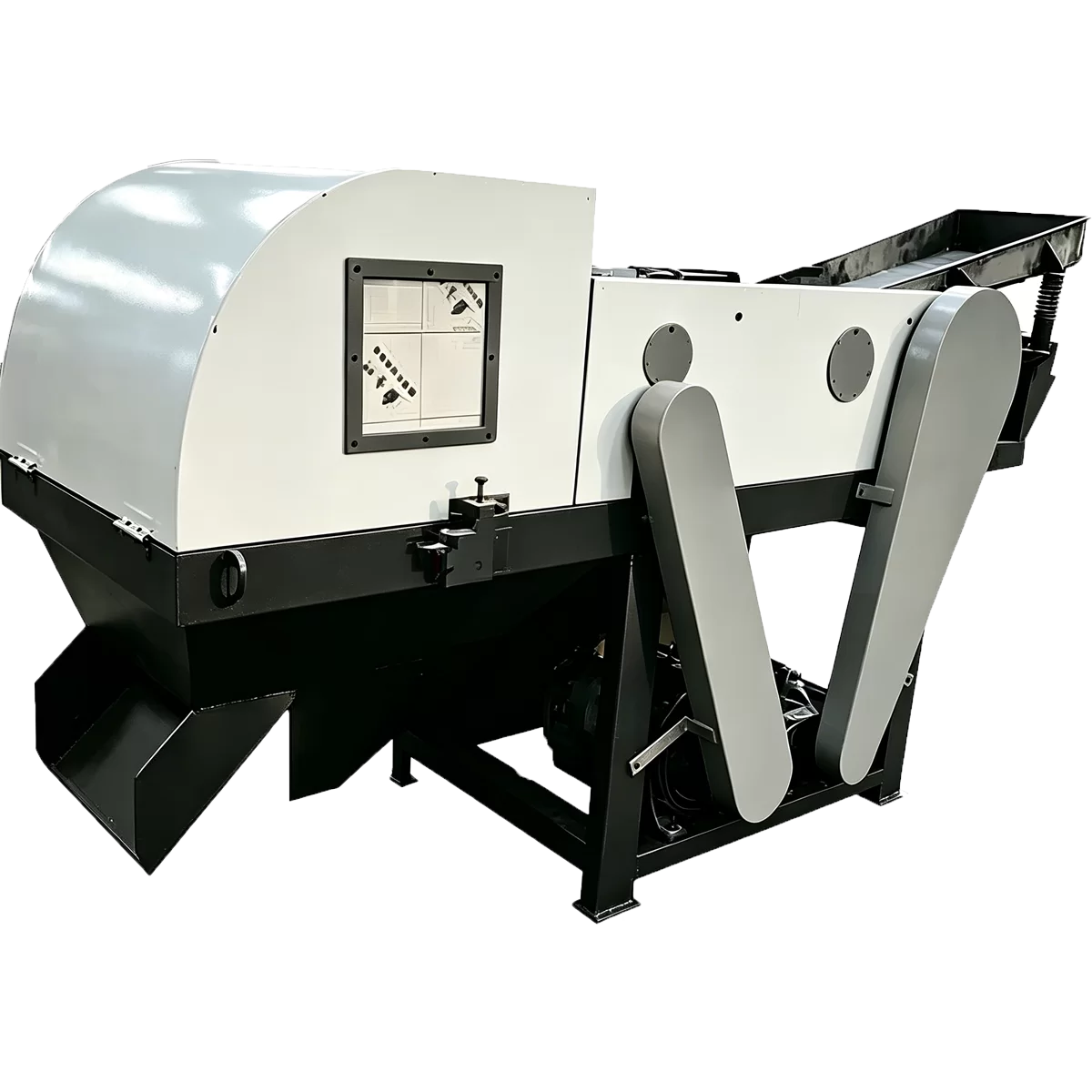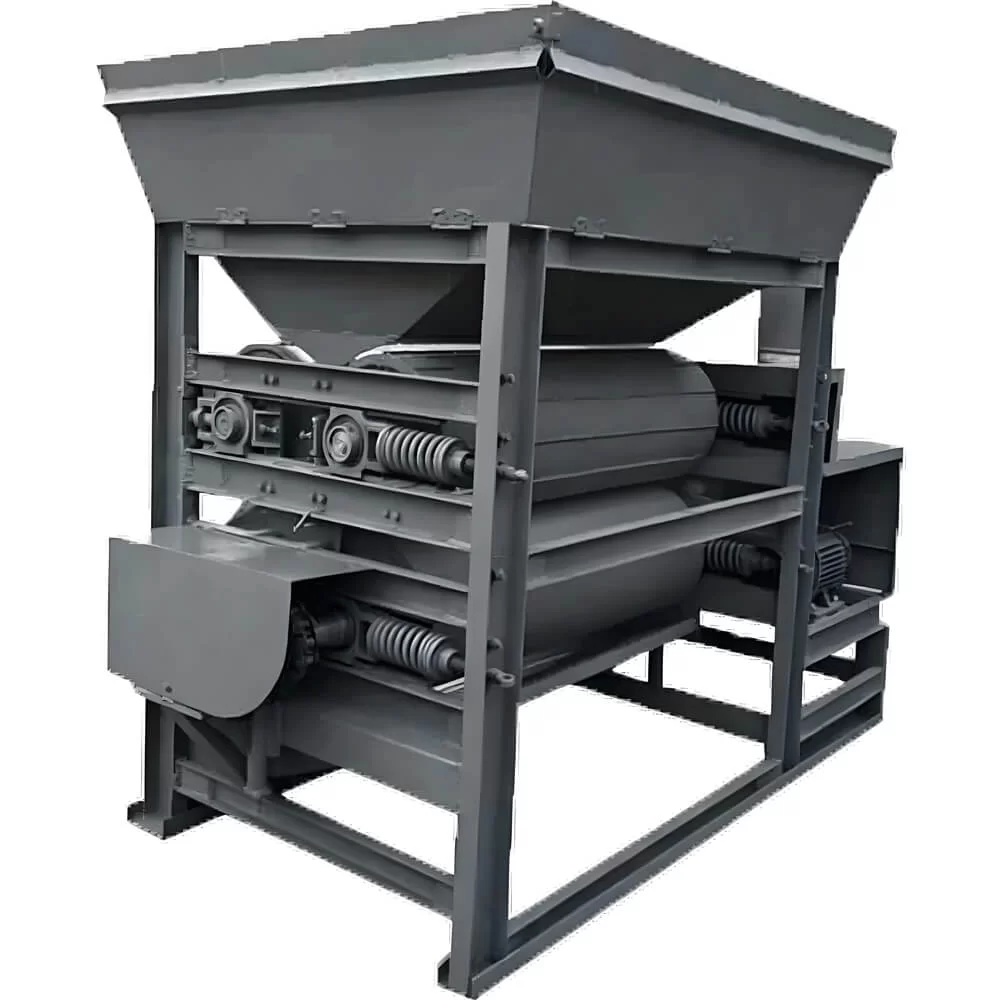
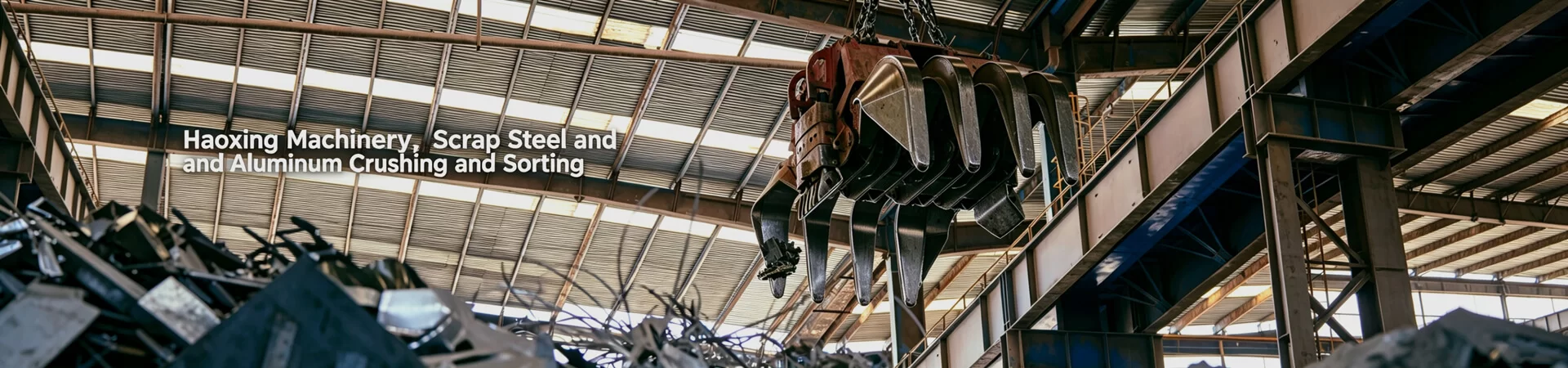
The scrap steel shredding production line developed by Haoxing Machinery integrates multi-stage crushing with intelligent sorting to address core industry challenges in scrap steel recycling—significantly enhancing resource utilization and economic viability.
I. Core Production Process Design
Multi-stage crushing is tailored to feed material characteristics and classified into coarse, medium, and fine stages:
• Primary Coarse Crushing: Heavy-duty hydraulic shredder (90–400 kW), capable of processing mixed scrap steel ≤30 mm thick, producing output ≤300 mm.
• Secondary Medium Crushing: Hammer mill (800–1,200 rpm) reduces material to 50–100 mm.
• Tertiary Fine Crushing: Vertical shaft impact crusher (peripheral speed 60–85 m/s) ensures final product size ≤30 mm.
The complete line comprises upstream coarse shredding, magnetic separators, optical/electromagnetic sorters, and eddy-current separators. The intelligent sorting system significantly improves non-ferrous metal (e.g., copper, aluminum) purity, plastic/rubber separation efficiency, and foreign-material detection accuracy—thereby elevating overall metal recovery to a new level.
II. Innovative Key System Configuration
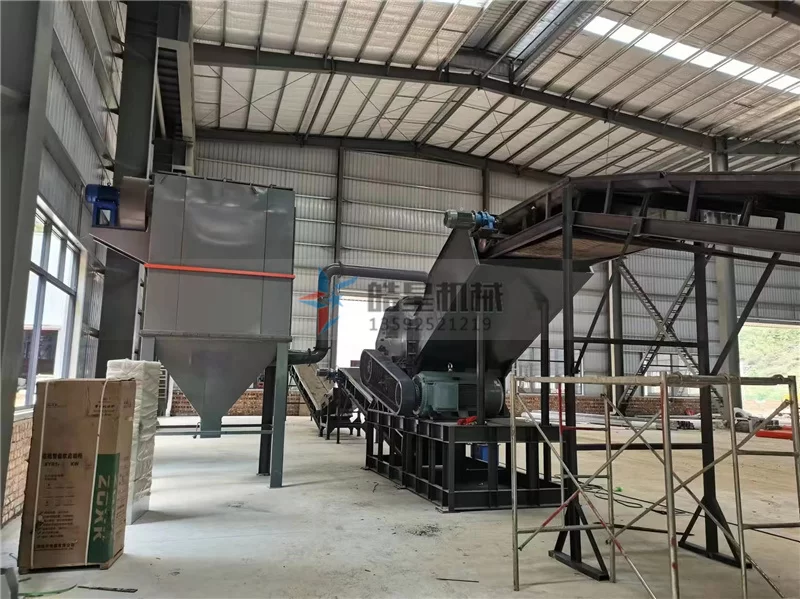
Crushing and sorting modules operate in seamless synergy. Main components include:
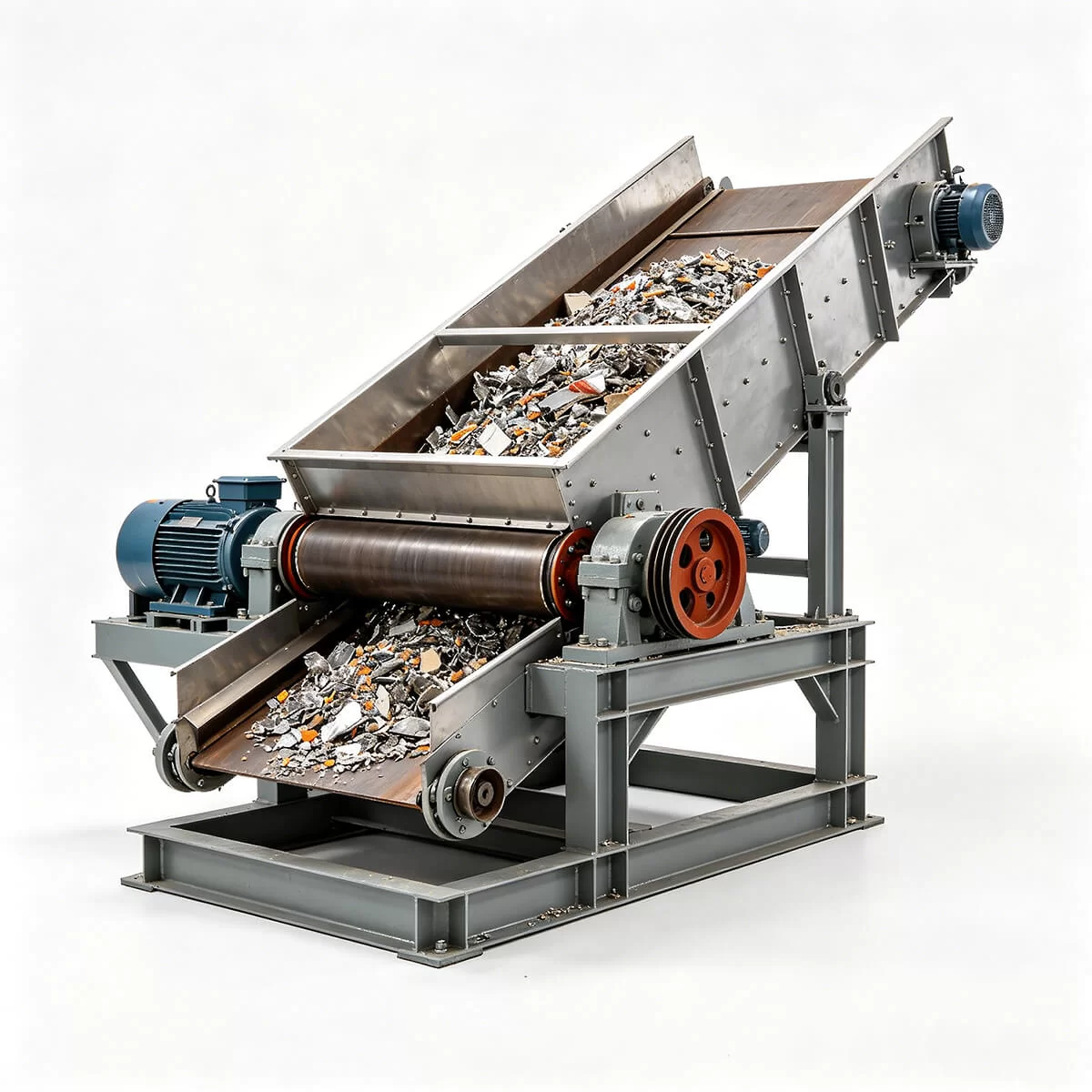
• Feeding: Vibratory feeder or apron conveyor;
• Primary Shredding: Twin-shaft hydraulic shredder;
• Secondary Size Reduction: Dedicated scrap steel shredder;
• Air and Eddy-Current Separation: Eddy-current separator for non-ferrous metals;
• Dust Control: Pulse-jet baghouse or pulse-jet dust collector.
This integrated configuration markedly enhances scrap cleanliness, boosts added value (especially from high-purity Cu/Al recovery), and reduces operational losses.
In summary, capacity-matched multi-material intelligent sorting—customized according to site conditions and feed composition—enables substantial improvement in recovery yield, purity, and ROI. For fully customized engineering solutions, Haoxing Machinery offers site-specific optimization based on your facility layout, scrap composition, and throughput requirements.