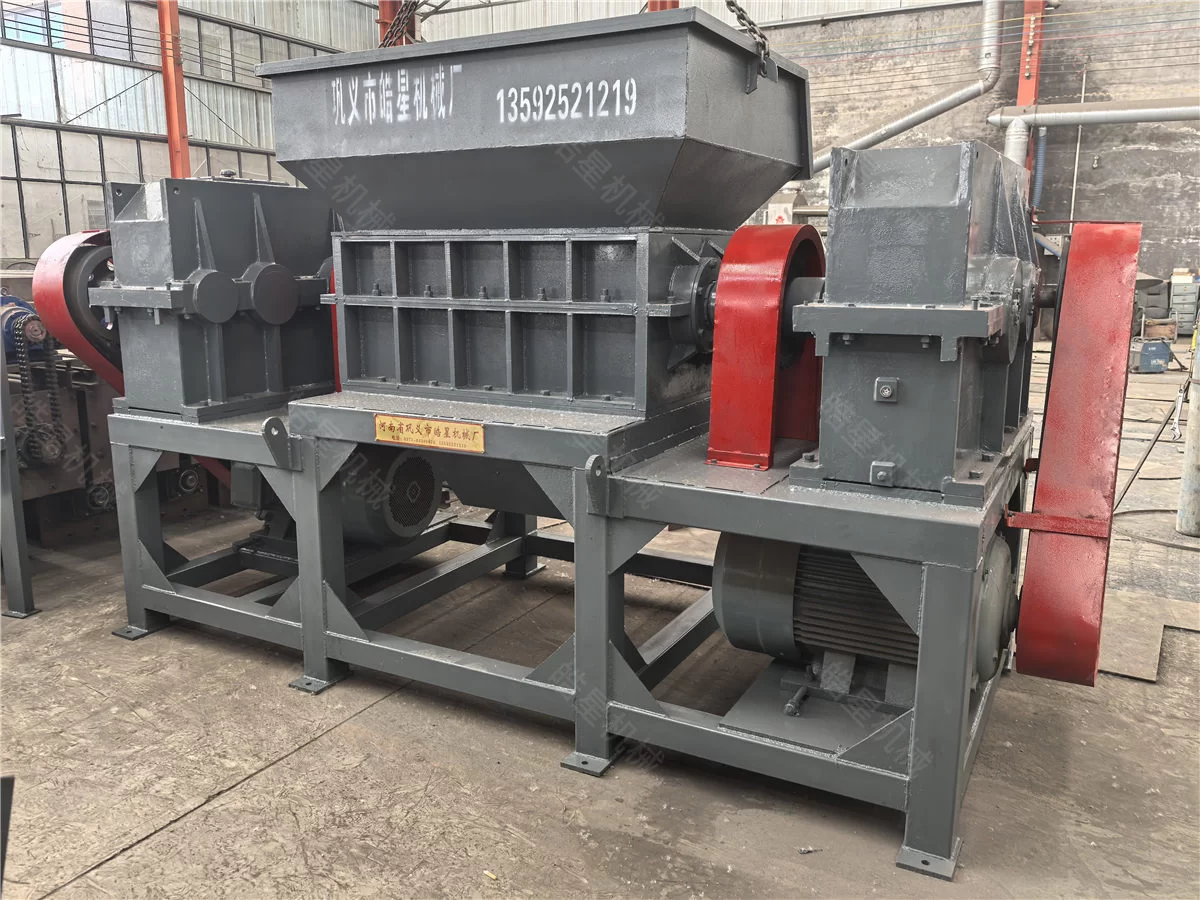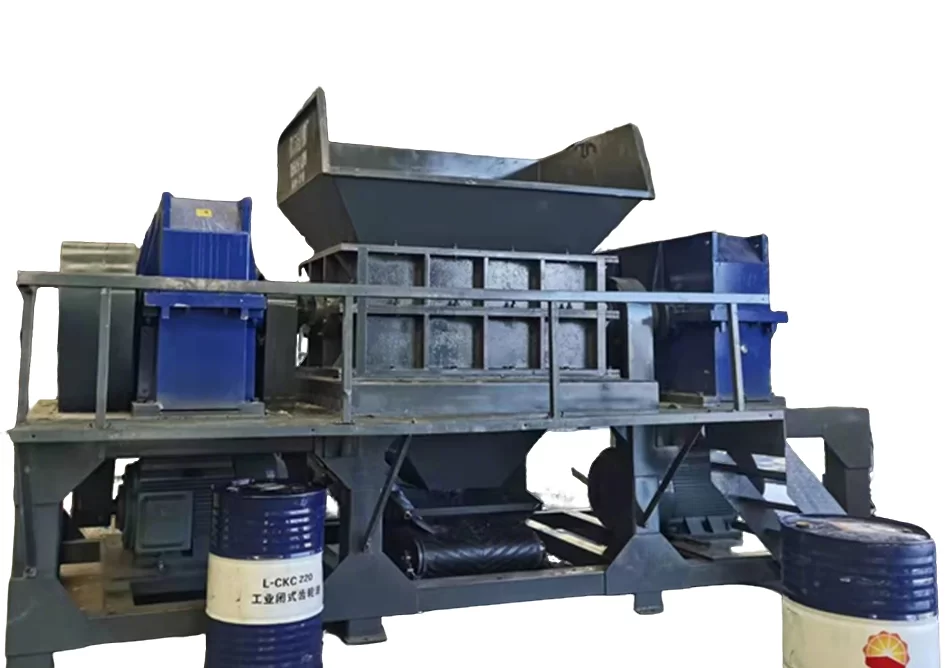
After collection and flattening, used aluminum cans are often compressed into dense bales to reduce the space required for storage and transportation. However, tightly compressed bales are difficult to inspect and may not be suitable for direct sorting or further size reduction. Haoxing Machinery conducted a production test with flattened aluminum can bales to observe the feeding process, bale opening performance, machine operation and final shredded output.
1.Feeding Conditions of Flattened Aluminum Can Bales
During the production test, the flattened aluminum can bales entered the shredding chamber through the upper feeding opening. Bales produced by different baling machines may vary in size, weight and compression density, so the feeding opening should be configured according to the customer’s actual material. If the opening is too small, larger bales may remain above the chamber. If the opening is large but the shaft structure and torque are not properly matched, the cutters may not grip the material effectively.
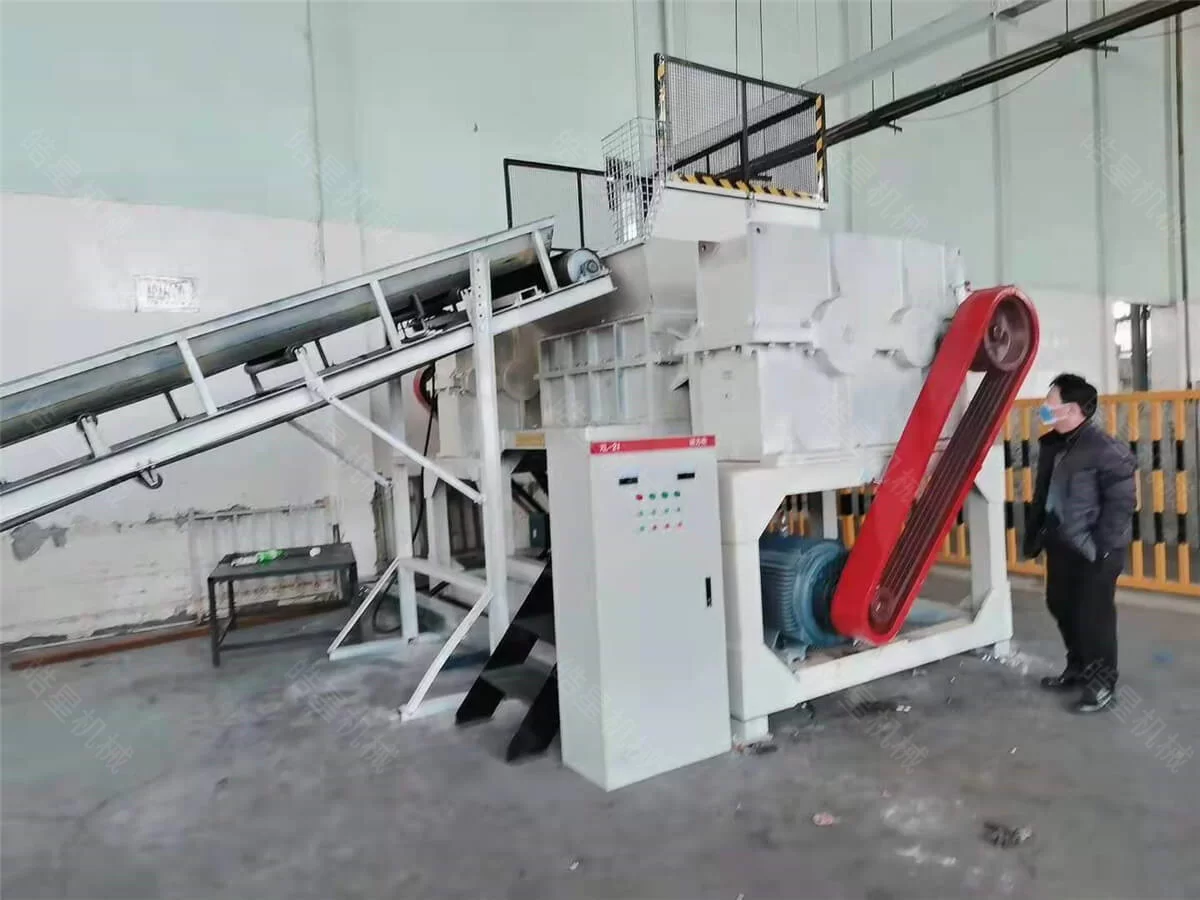
Smaller and lighter bales can be fed intermittently with a forklift or other loading equipment. For continuous production, a chain conveyor or another suitable metal bale feeding system can be added. A controlled feeding speed helps prevent material from accumulating in the hopper and reduces sudden load changes caused by feeding too many bales at one time.
The weight of each bale is also important. Two bales with similar dimensions may require different shredding forces if their compression densities are different. Iron cans, steel pieces, plastic, baling wire and other contaminants inside the bales can also affect machine operation. Before equipment selection, customers should provide bale photos, feeding videos, dimensions, individual bale weight and information about the material composition.
2.Twin Shaft Bale Opening and Shredding Process
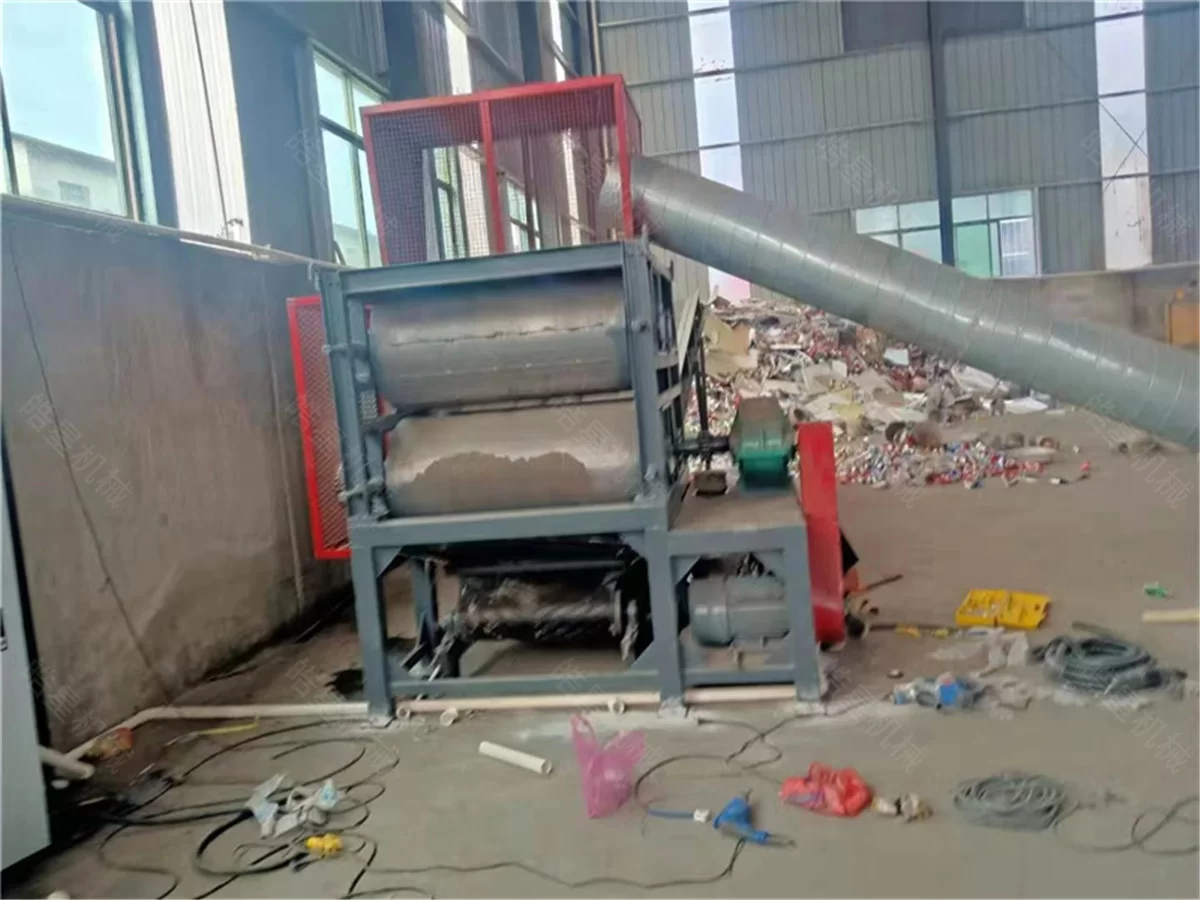
After entering the machine, the two cutter shafts rotate toward each other at a low speed. The cutters apply shearing, squeezing and tearing forces to the compressed bale. Compared with loose aluminum cans, compressed bales have a higher density. The machine must first open the bale structure and then pull apart the cans packed inside it. For this reason, cutter thickness and arrangement are not the only factors to consider. Shaft strength, gearbox configuration and available torque are also important.
During shredding, the cutters first grip the edges of the bale and loosen the compressed outer layer. As the shafts continue to rotate, the bale is gradually opened and the tightly packed cans begin to separate. After repeated cutting and tearing, the complete bale is reduced to loose pieces and discharged continuously through the lower outlet.
If the bale is compressed very tightly or contains thick steel parts and solid metal pieces, the operating load may change. A suitable electrical protection system can monitor machine operation. When the cutters encounter material that cannot be opened immediately, the machine can stop or reverse according to the control settings, reducing the risk of material remaining between the shafts for a long time. Operators should still inspect the feed and keep sealed containers, pressurized items and other unsuitable materials out of the machine.
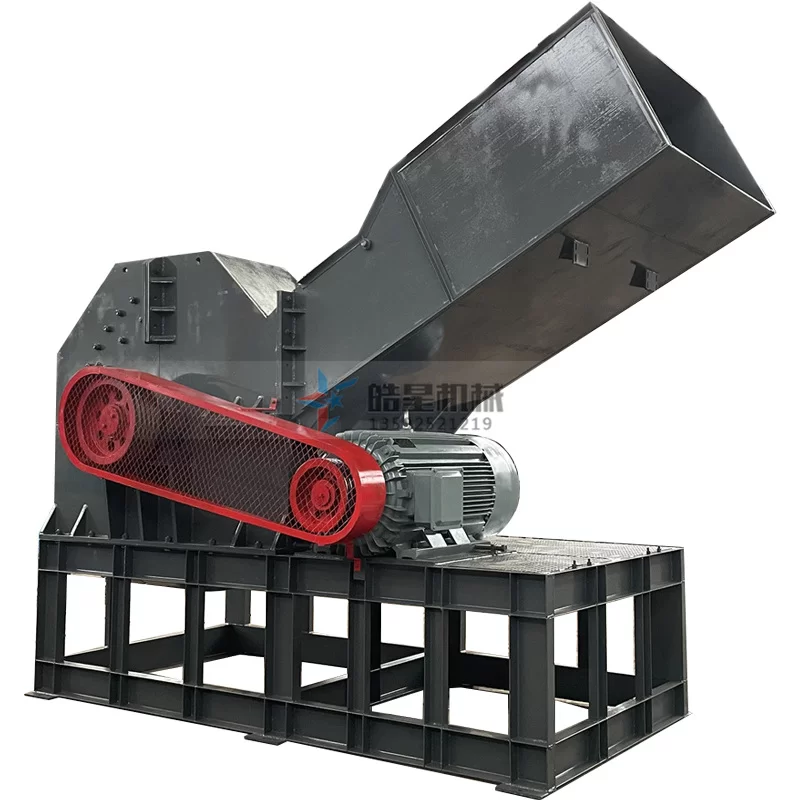
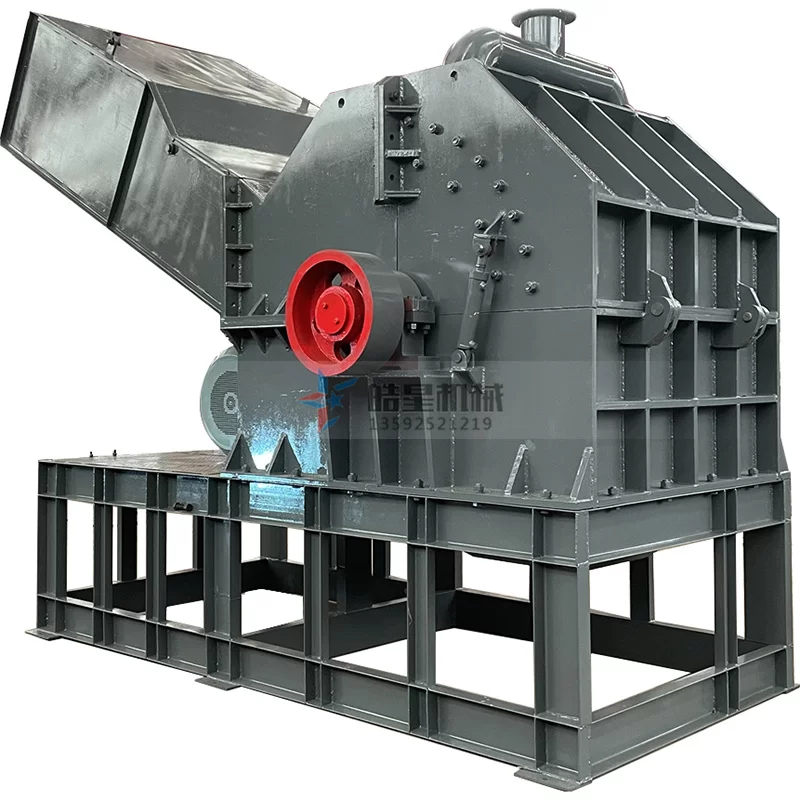
The purpose of an aluminum can bale shredder is not to turn the material into powder in one step. Its main job is to open the compressed bale and complete the first stage of size reduction. Final output size depends on cutter thickness, cutter spacing, shredding cycles and machine structure. If smaller and more uniform material is required, a metal crusher or another secondary size reduction machine can be installed after the twin shaft shredder.
3.Shredded Output and Downstream Production Performance
After bale opening and shredding, the tightly compressed aluminum can bales become loose pieces of metal. The loosened material is easier to convey and inspect. It also becomes easier to identify iron cans, steel pieces, plastic, packaging material and other contaminants. For recycling projects that require further sorting, opening the bale first can help downstream equipment access and process the different materials more effectively.
The shredded cans can be transferred to the next process by a discharge conveyor. If the output size already meets the customer’s requirement, the material can proceed to magnetic separation and manual inspection. If smaller pieces are required, a metal crusher can be added for secondary processing. Magnetic separation equipment can remove steel cans and other ferrous contaminants. More complex mixed material may also require screening or additional sorting equipment.
Production performance should not be judged only by whether the machine can tear the bale apart. Stable feeding, continuous discharge, material wrapping and actual hourly capacity should also be checked. Long steel wire, plastic straps and other strip-shaped material inside the bale may wrap around the shafts. A material test before regular production can help determine whether the cutter arrangement, feeding speed or control settings need to be adjusted.
Actual capacity depends on bale dimensions, individual bale weight, compression density, contamination level and operating method. The same shredder may produce different hourly outputs when processing loose cans and tightly compressed bales. Buyers should not compare machines only by motor power or external dimensions. Daily processing requirements, working hours and downstream sorting needs should also be considered.
This production test showed the complete process from bale feeding and cutter gripping to bale opening and continuous discharge. For used aluminum can recycling projects, a twin shaft shredder can be used for bale opening and primary size reduction. However, the final equipment configuration should be based on the customer’s actual material and downstream processing requirements.
Haoxing Machinery can configure the shredder and related conveyor system according to bale length, width, height, individual weight, compression density, required hourly capacity and target output. If secondary crushing, magnetic separation or other sorting processes are required, the machines can be connected according to the material composition. Before requesting a solution, customers can provide actual material photos, bale videos, dimensions, weight, capacity, local voltage and available installation space. This information helps the technical team recommend a more suitable configuration.