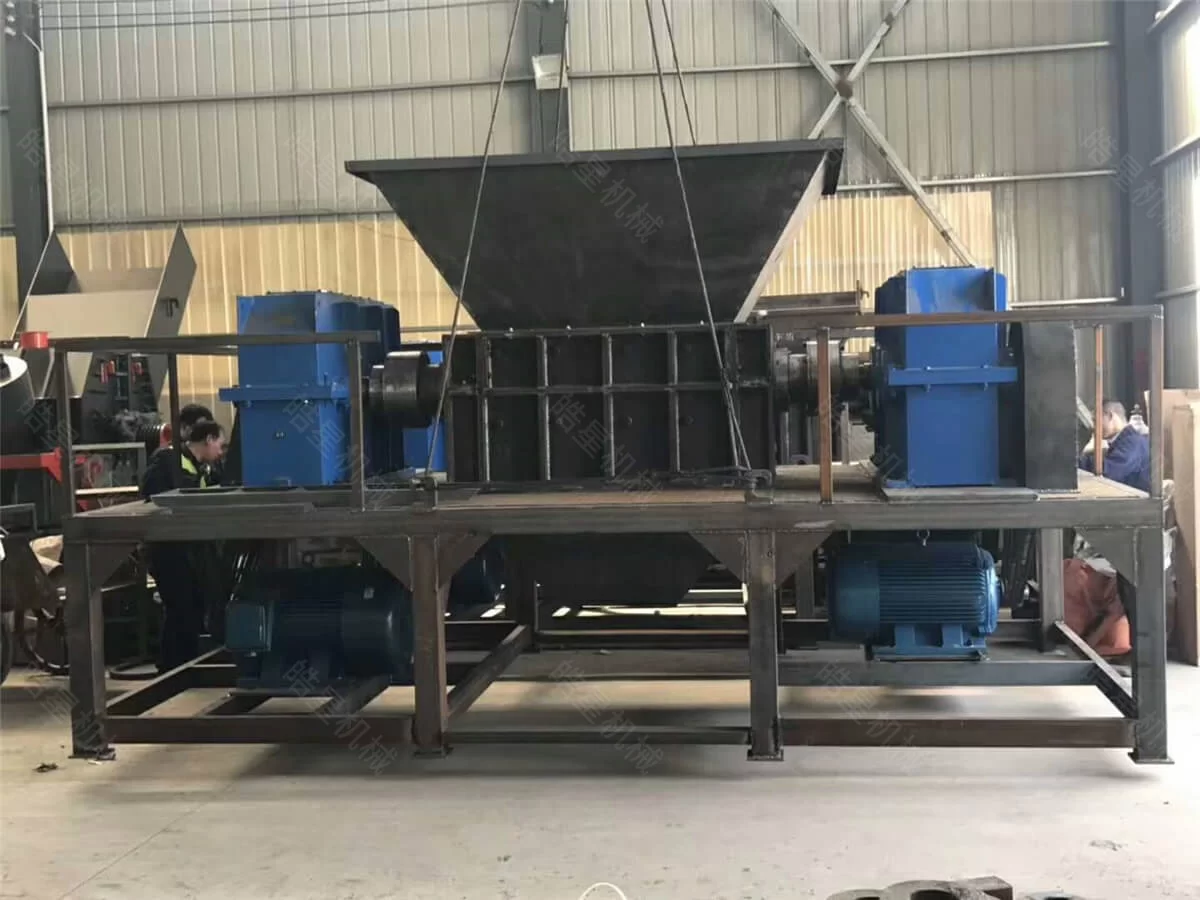
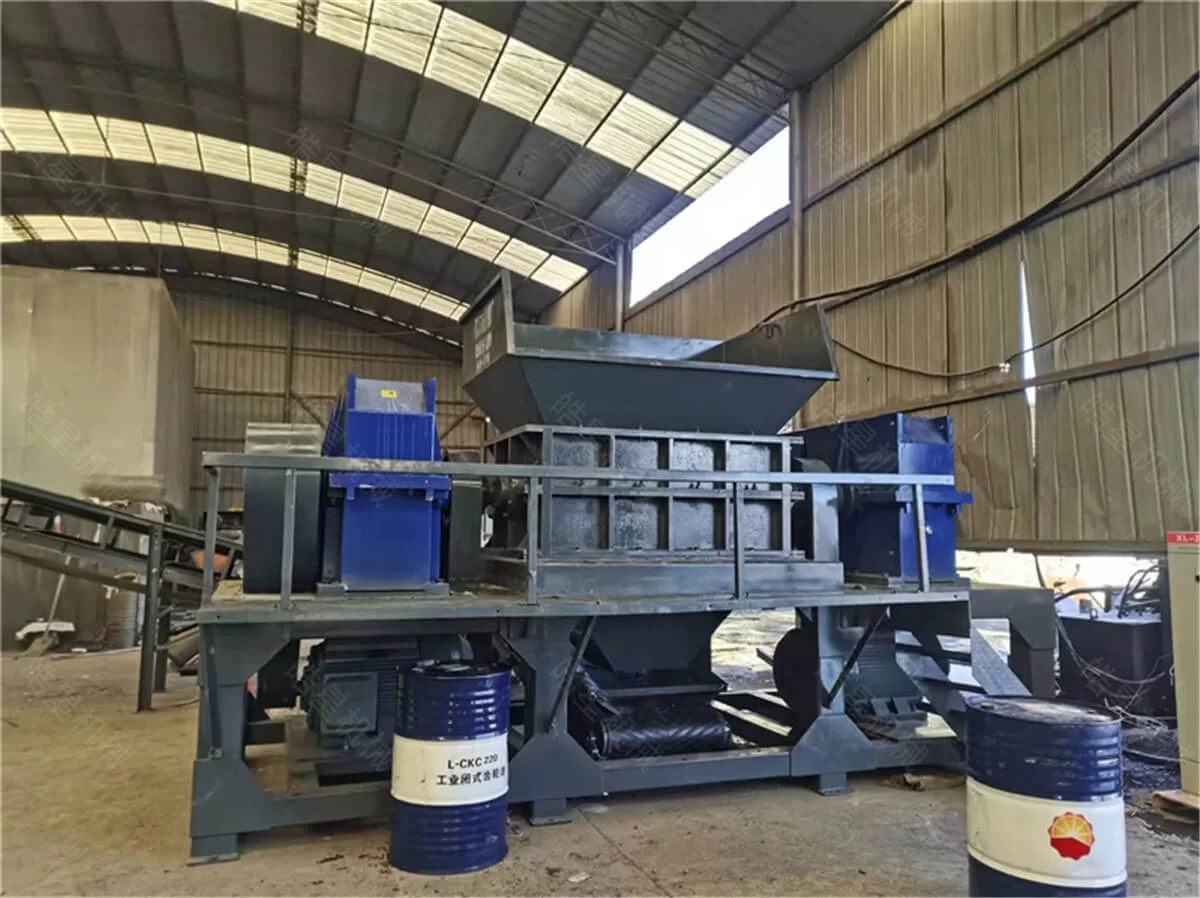
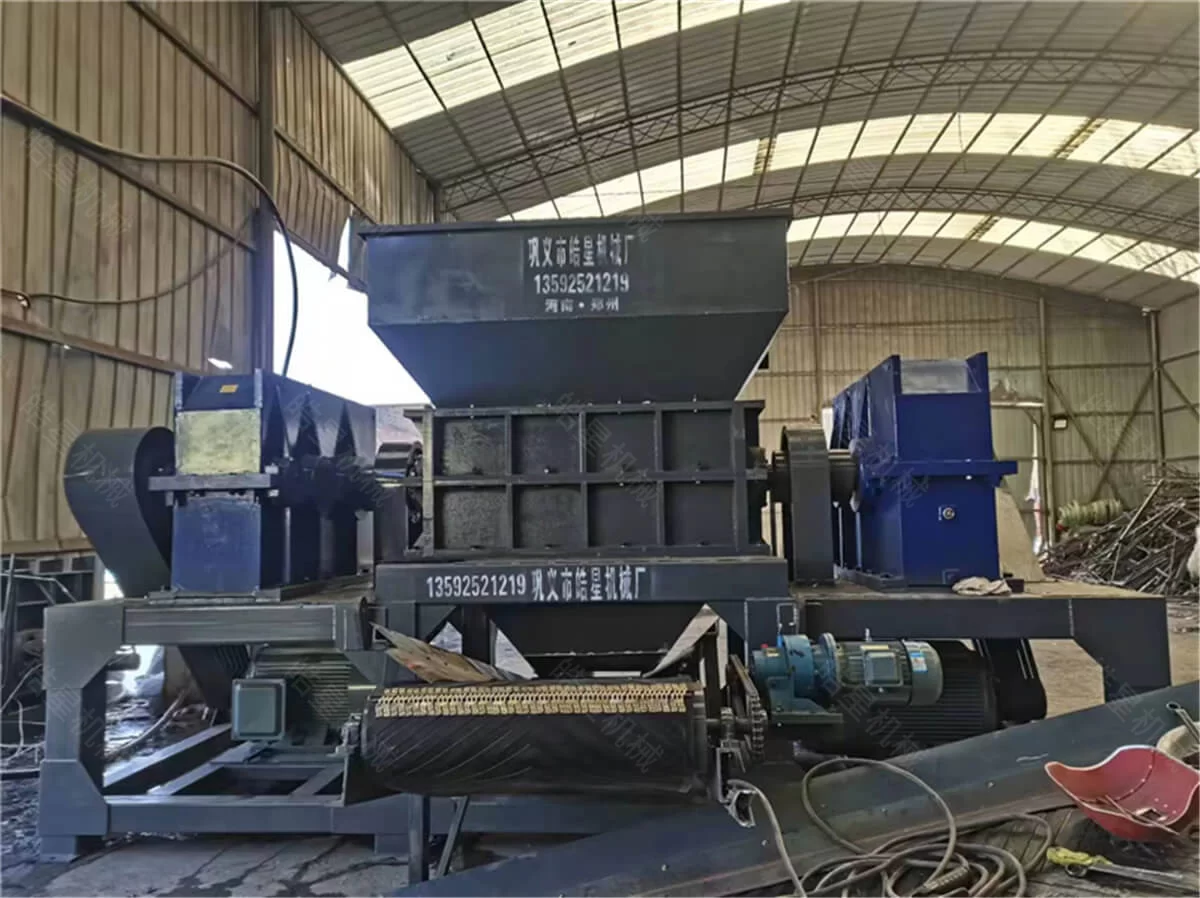
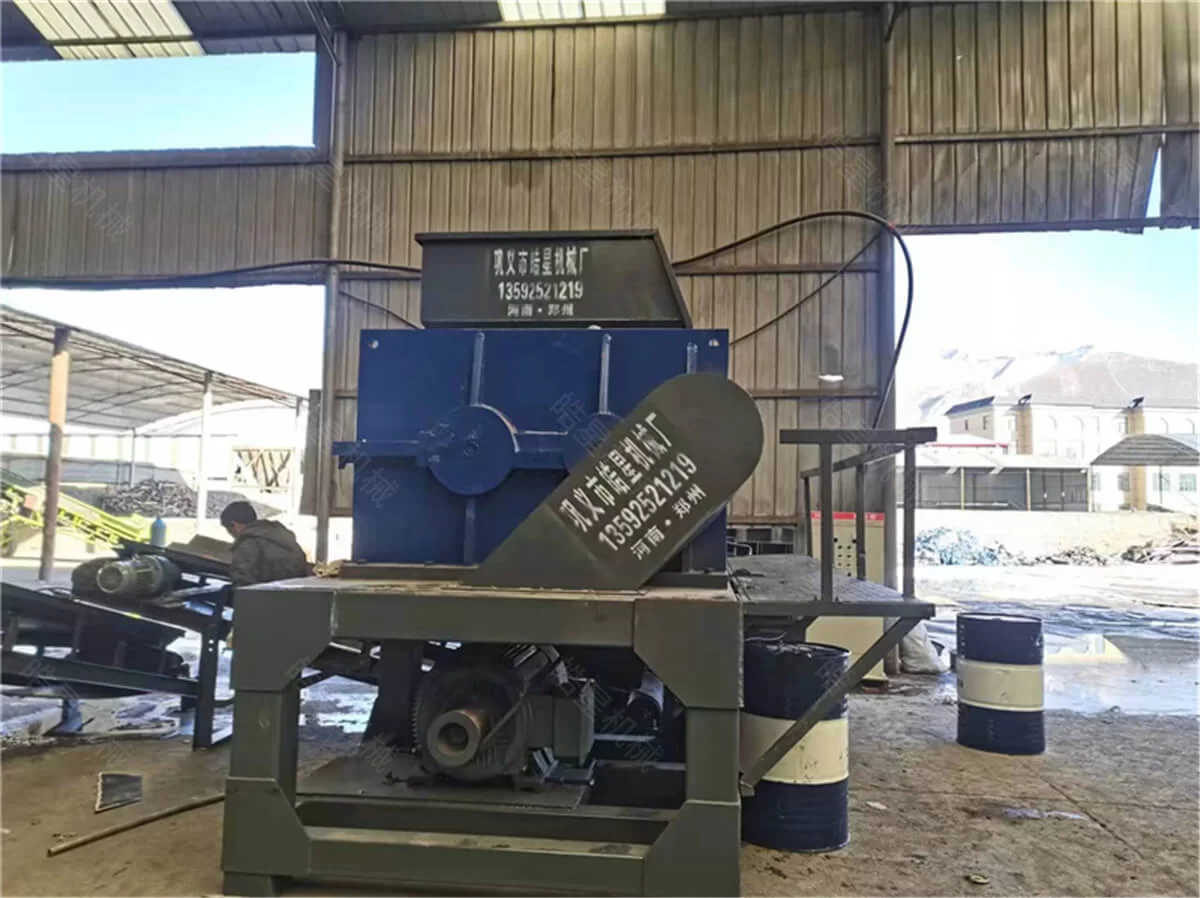
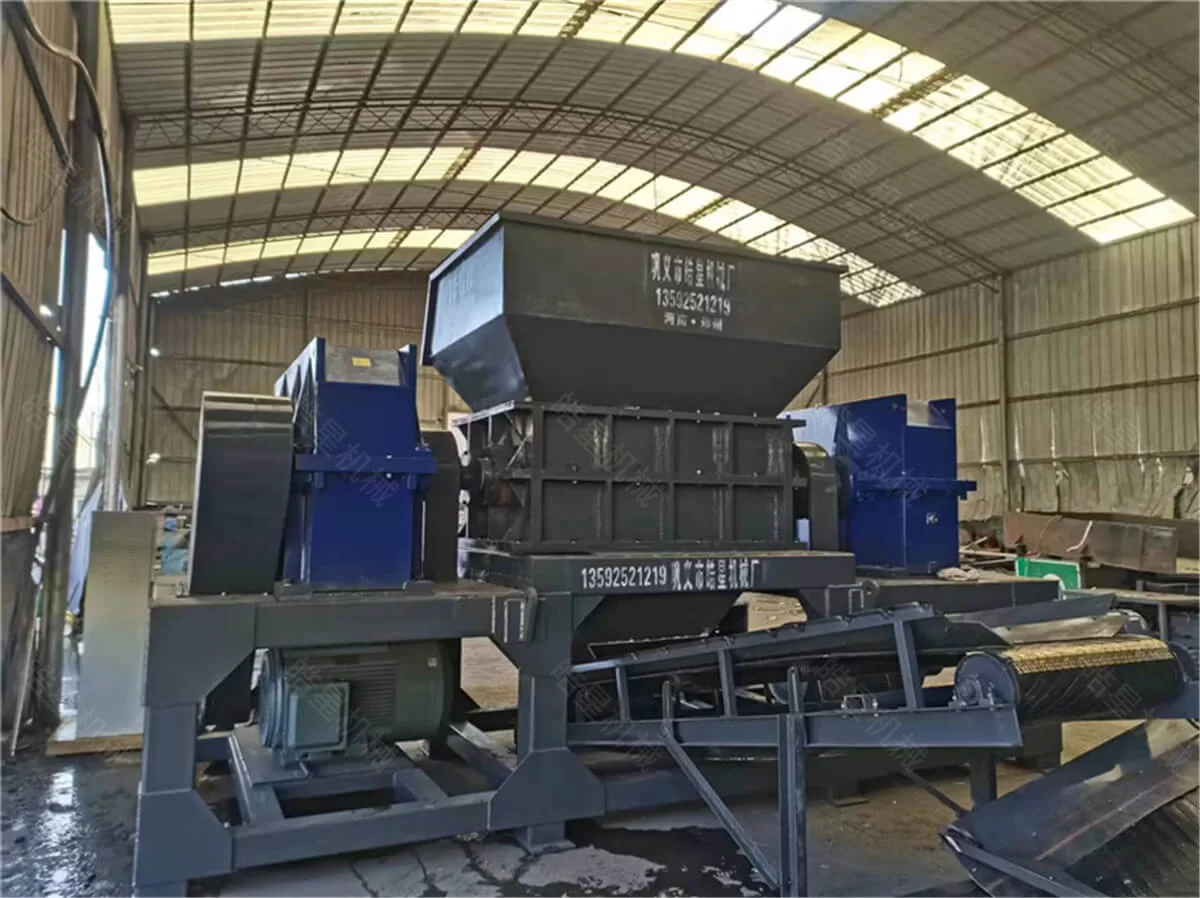
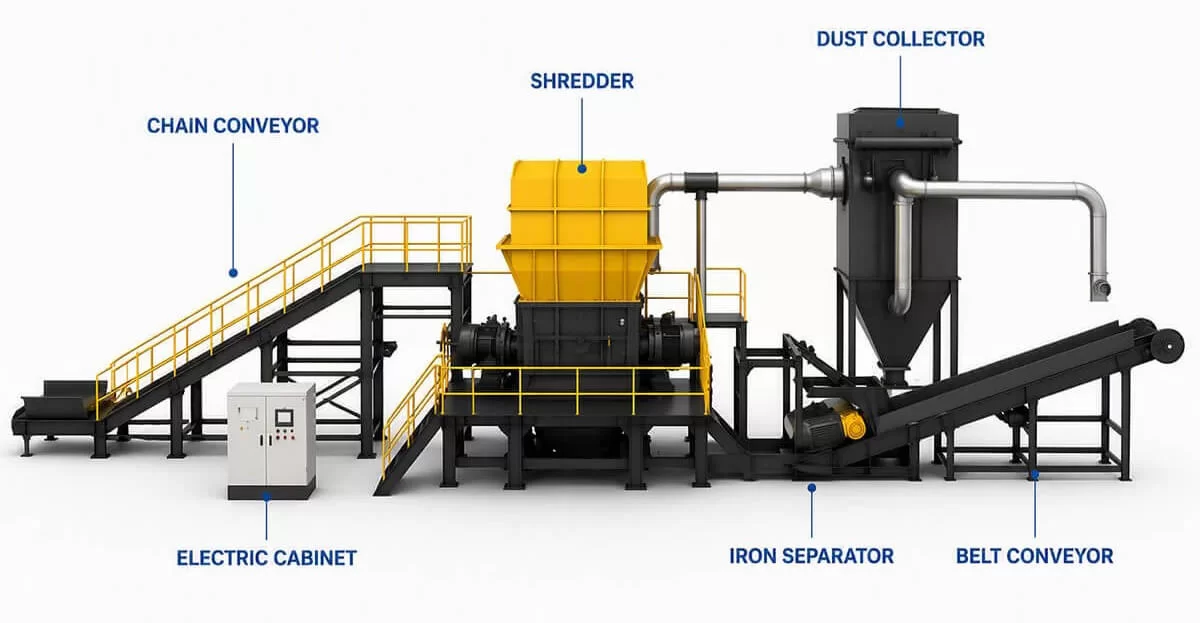
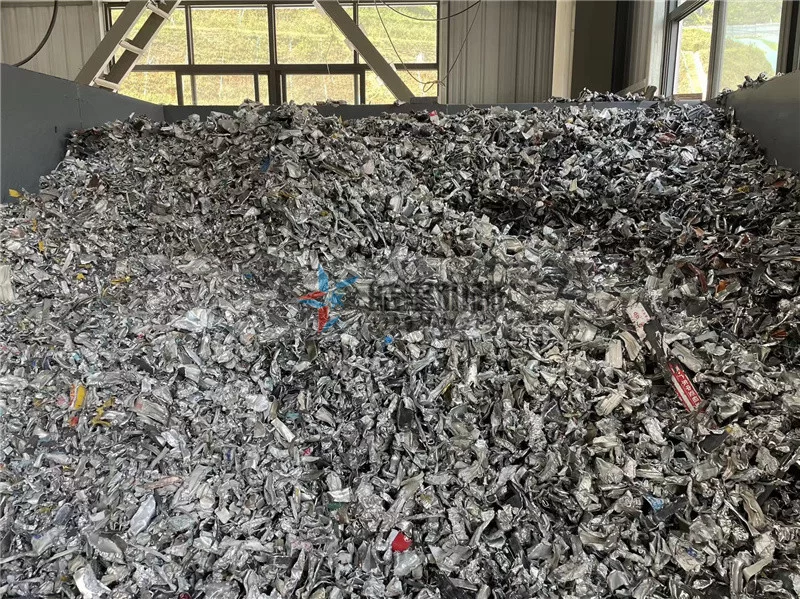
The Haoxing Scrap Aluminum Shredder serves as the core unit within a complete automated recovery line:
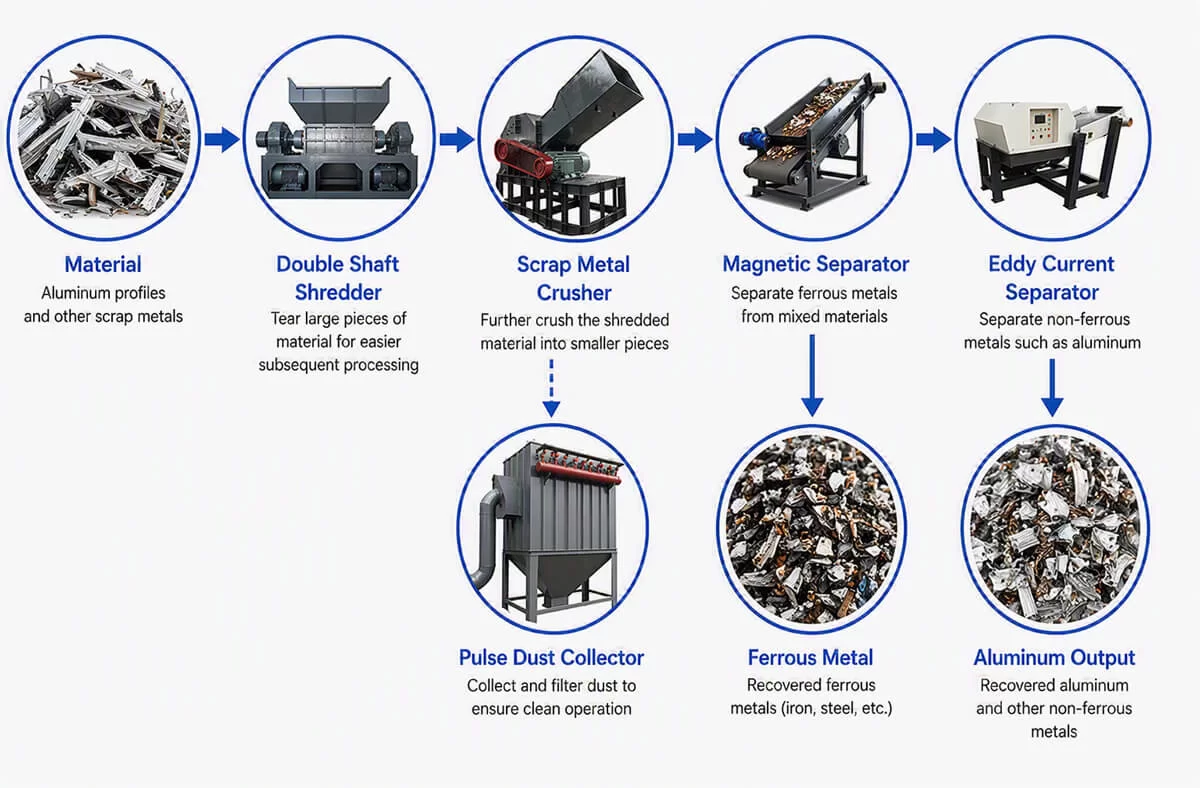
Scrap Aluminum Shredder Working Process
Material Inspection and Preparation
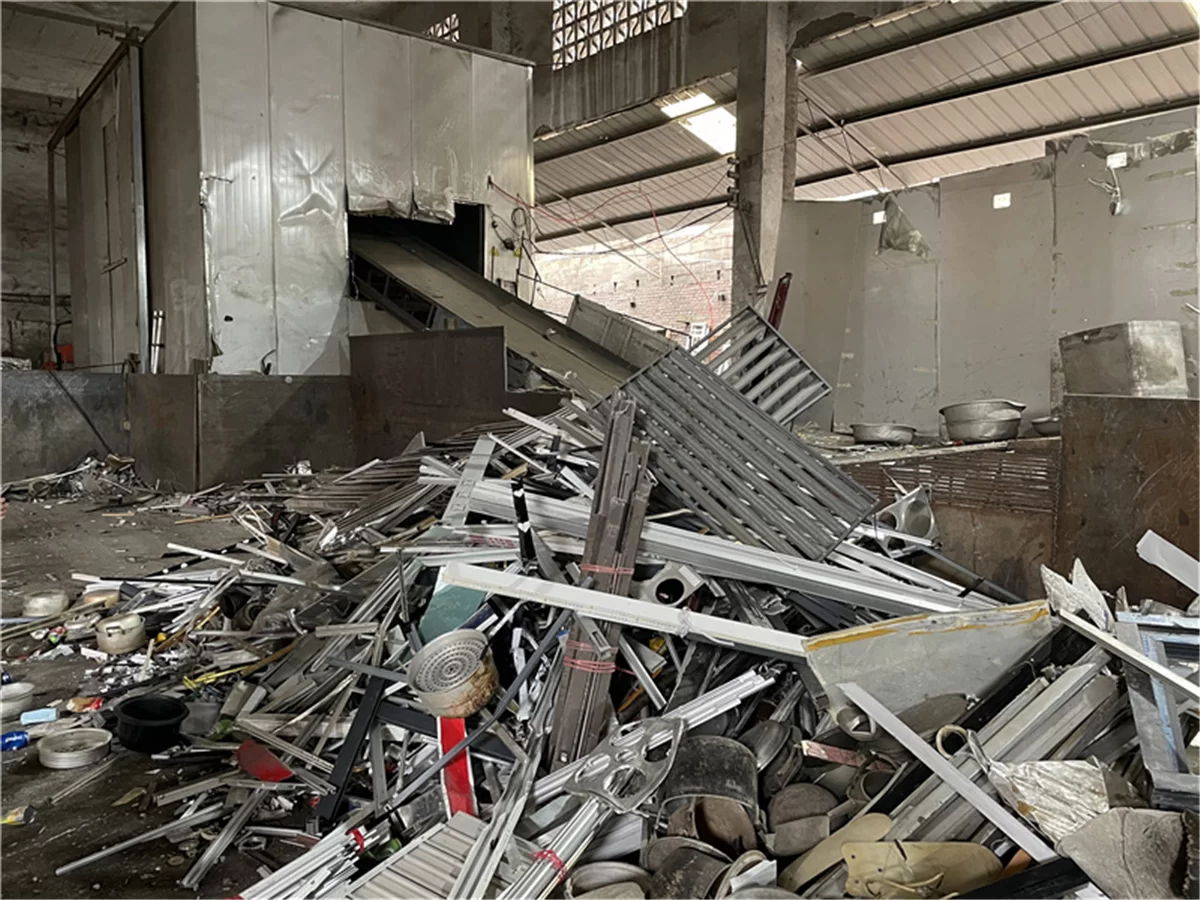
Aluminum scrap should be inspected before feeding. Glass, batteries, sealed components, large steel attachments, residual oil and other unsuitable materials should be removed or handled separately.
The aluminum type, maximum dimensions, wall thickness, individual weight and attached components should be evaluated before the cutter and machine configuration are selected.
Controlled Feeding
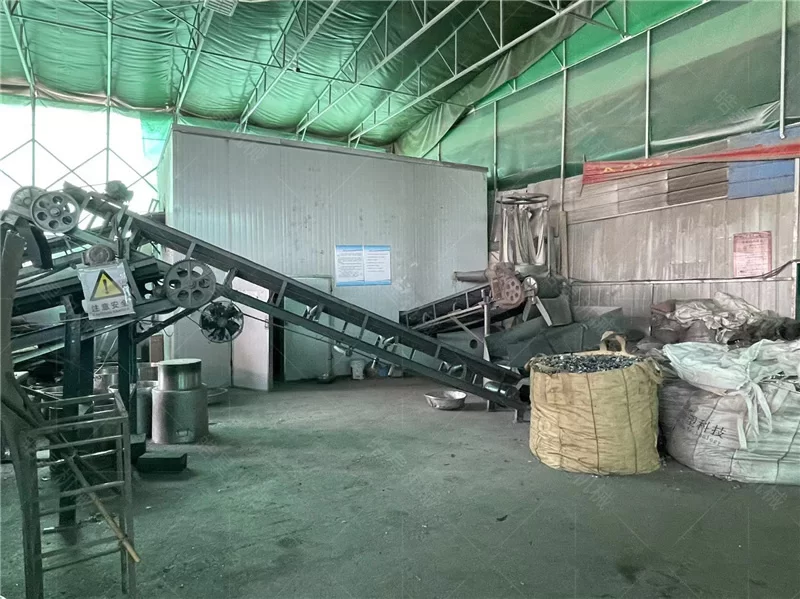
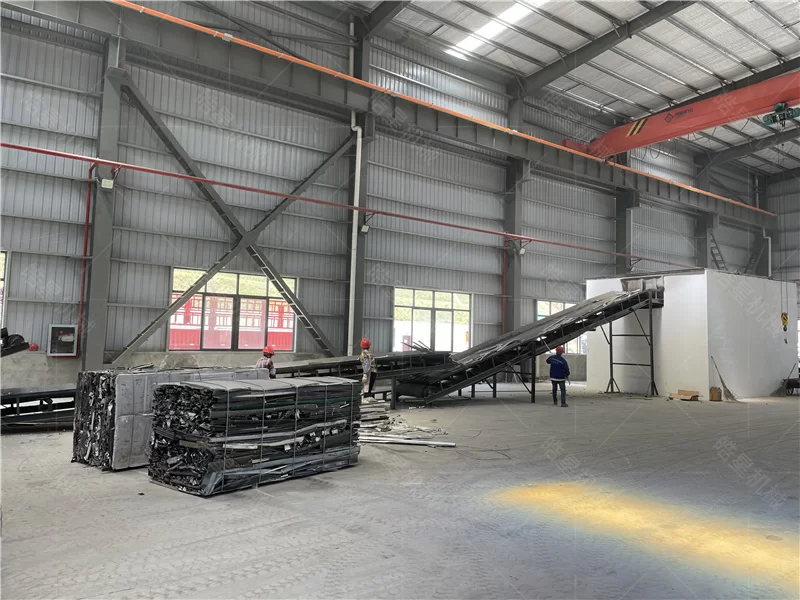
Prepared aluminum scrap is loaded into the feed hopper by a conveyor, grapple or another suitable material-handling device. The feeding method should match the material dimensions, bulk density and required processing capacity.
Low-Speed Twin Shaft Shredding
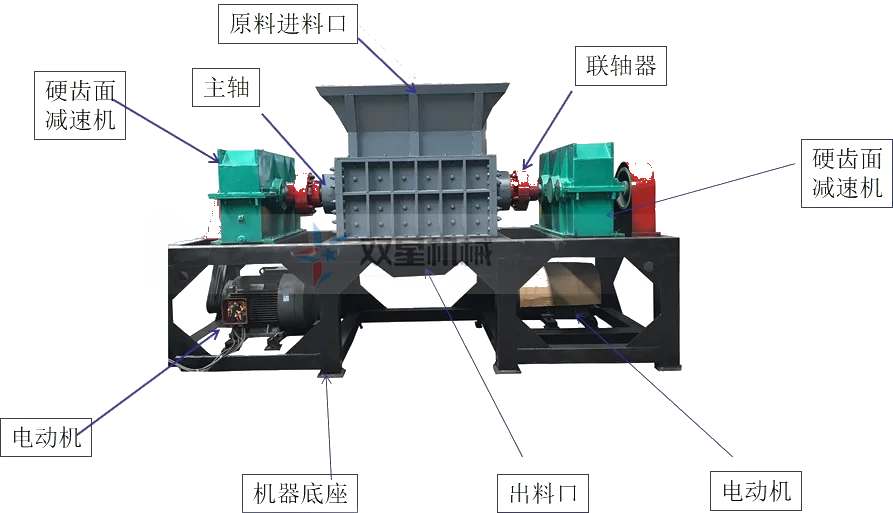
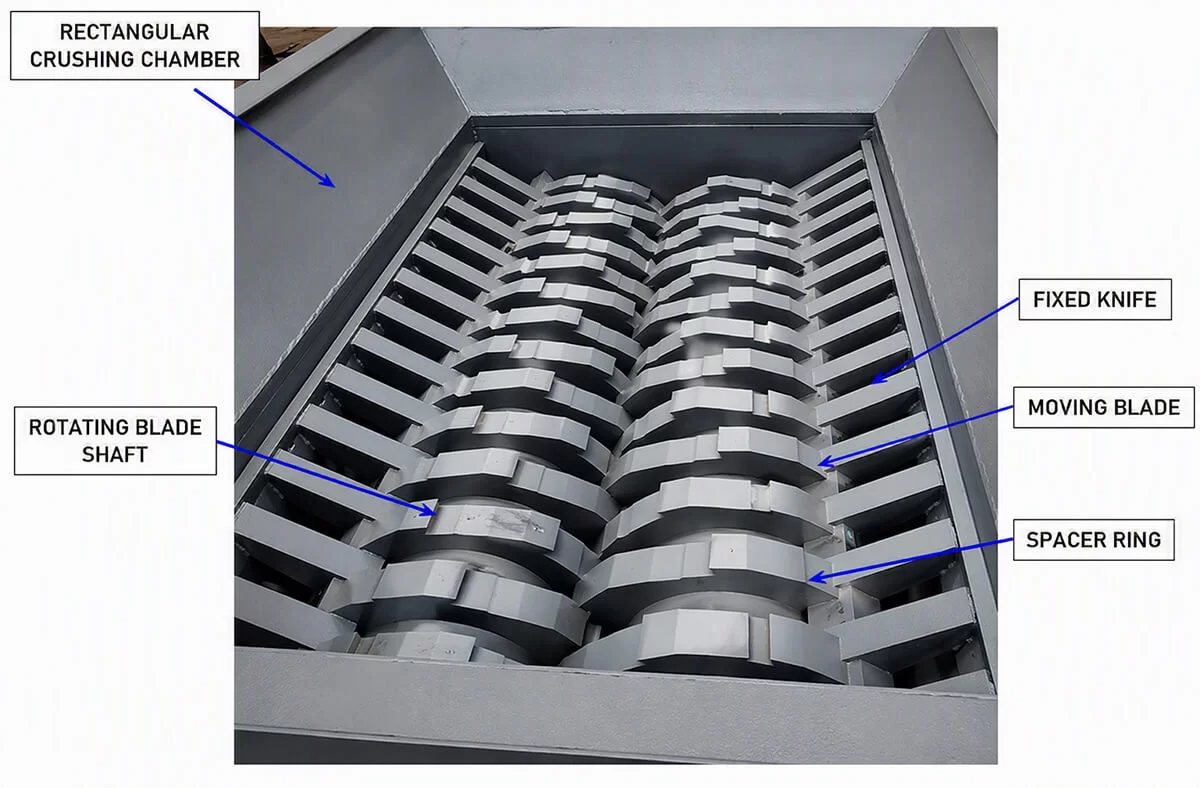
Two gear reducers drive the cutter shafts to rotate toward each other at low speed and high torque. The toothed cutter discs grip and pull the aluminum scrap into the shredding chamber.
The material is repeatedly squeezed, sheared and torn into shorter, looser and more manageable pieces. This working method is suitable for bulky profiles, sheets, containers and irregular aluminum scrap that require primary size reduction.
Coarse Material Discharge
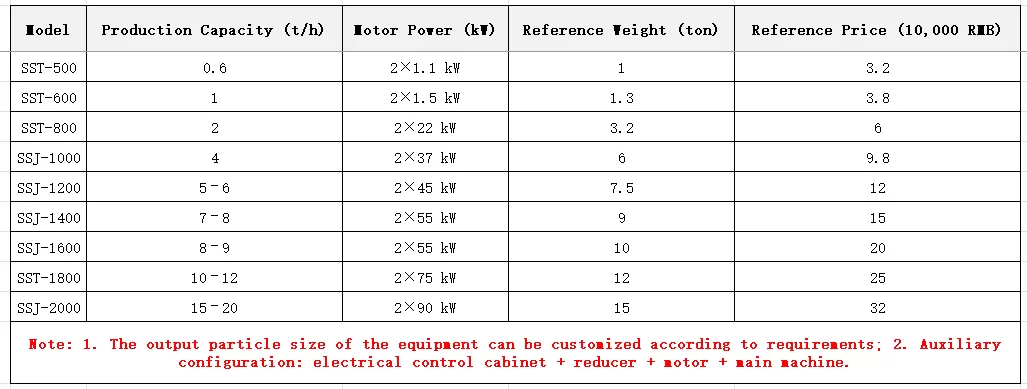
The shredded material is discharged as coarse and irregular pieces. The output condition depends on cutter width, cutter tooth design, blade spacing, shaft speed, material thickness and the number of cutting passes.
A twin shaft shredder does not normally produce the same precise, screen-controlled output as a hammer crusher.
Optional Secondary Crushing
When smaller and more consistent output is required, the shredded aluminum can be transferred to a suitable hammer crusher. The secondary crushing stage further reduces the material and may improve the exposure of attached components.
Optional Magnetic Separation
After shredding or secondary crushing, magnetic separation can recover exposed screws, steel inserts, hinges and other ferrous components from the aluminum-rich material stream.
Optional Screening and Non-Ferrous Sorting
Screening can classify different particle-size fractions and remove excessive fines. Material spreading equipment may be added when more uniform feeding is required before subsequent sorting.
After ferrous metal removal and suitable material preparation, eddy current separation may recover conductive non-ferrous metals from appropriate non-conductive residues.
Automatic Reverse Protection
When excessive resistance or a material jam is detected, the control system can stop and reverse the cutter shafts to help release the obstruction. This function helps reduce prolonged overload on the cutter discs, shafts, gear reducers and motors.
Automatic reverse protection does not replace material inspection. Thick solid attachments and unsuitable foreign objects should be removed before feeding.
Material Collection and Dust Control
The shredded material can be collected directly or transferred to secondary crushing, screening, magnetic separation or other downstream equipment.
Dust collection can be configured around conveyor transfer points and downstream crushing or screening equipment according to the material condition and workshop requirements.
Information Required for Scrap Aluminum Shredder Selection
Aluminum scrap type and representative photos or videos
Maximum material length, width and height
Approximate material wall thickness
Individual piece or bale weight
Loose, bundled, baled or mixed material condition
Types of attached steel, plastic, rubber or glass
Required hourly processing capacity
Expected output condition
Intended downstream process
Loading and feeding method
Local voltage and frequency
Available installation space