Project Overview
Customer-site photos taken on July 5, 2024, showing an aluminum door and window profile crushing plant in Maoming, Guangdong, with controlled feeding, scrap aluminum crushing and eddy current separation.
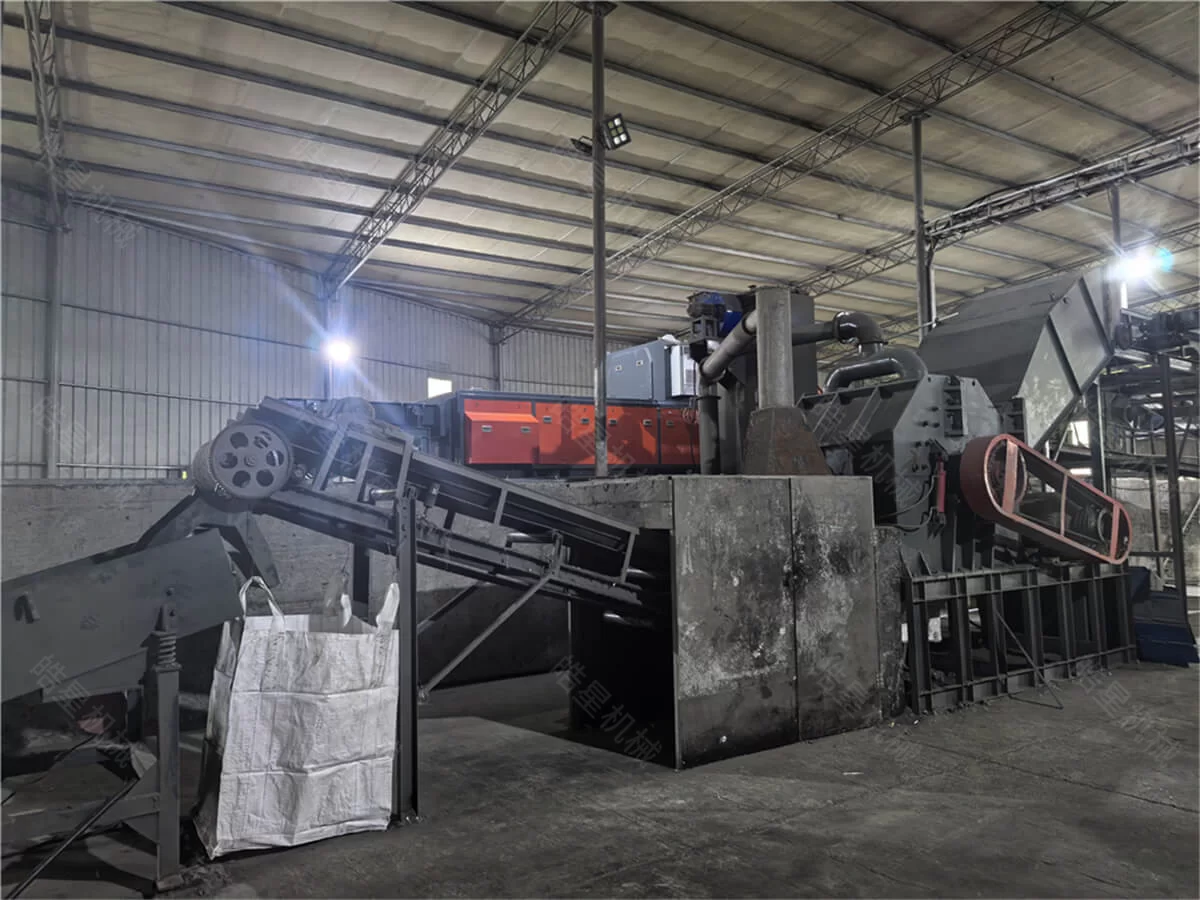
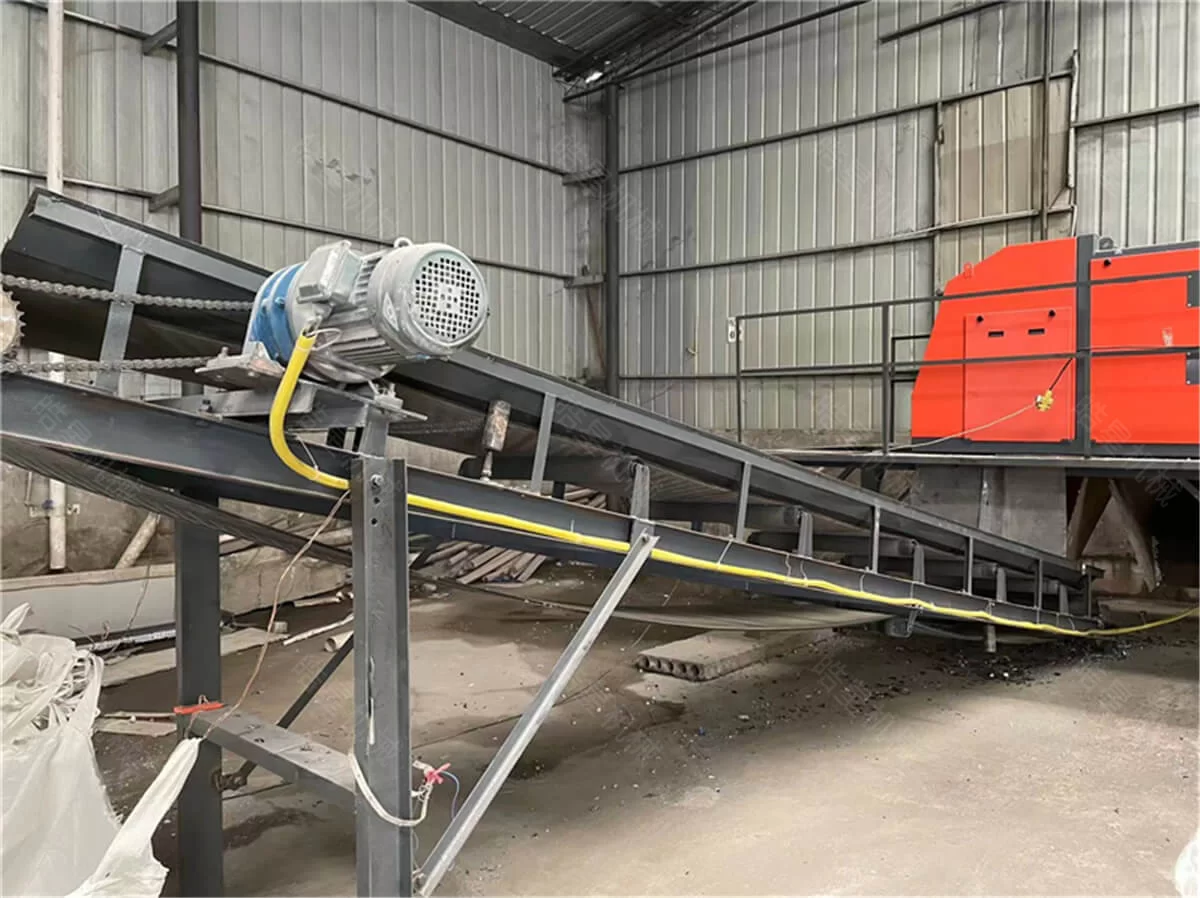
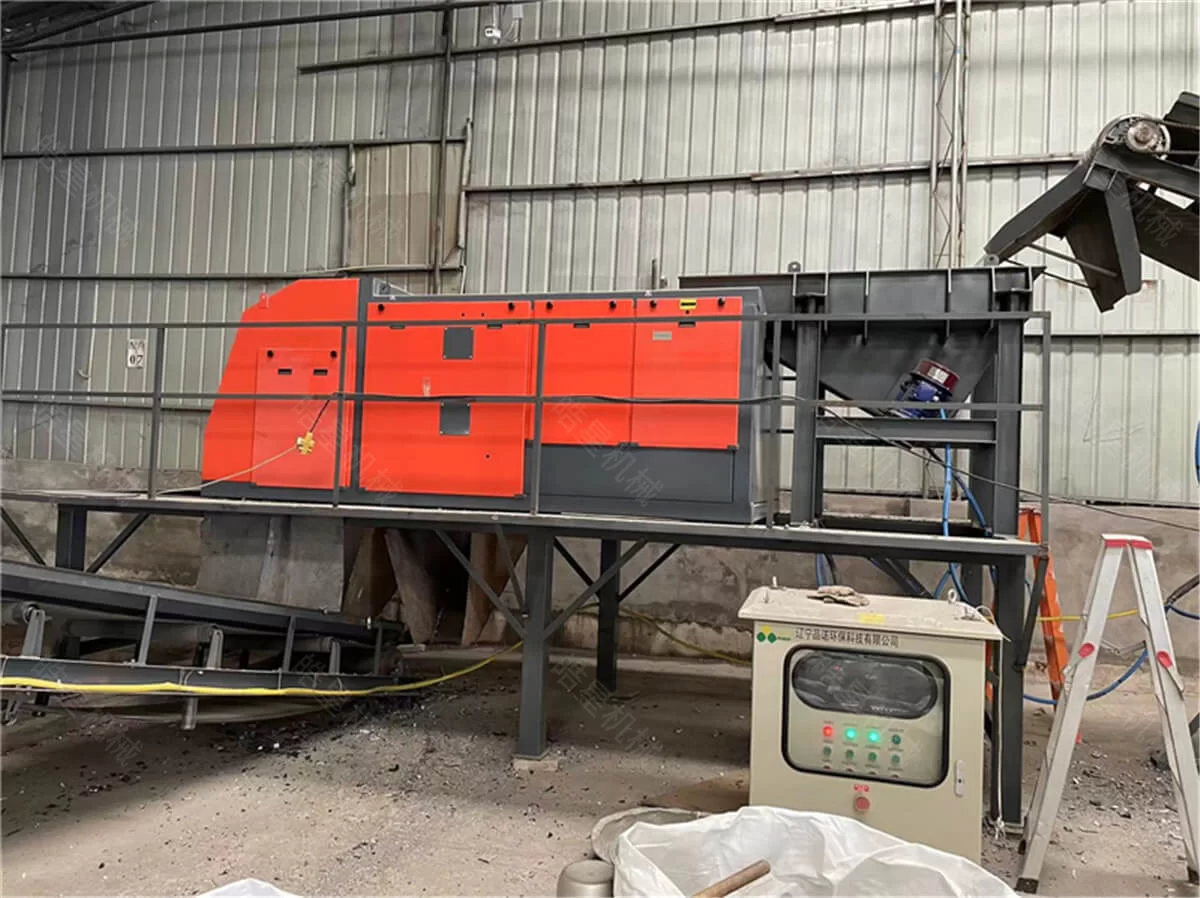
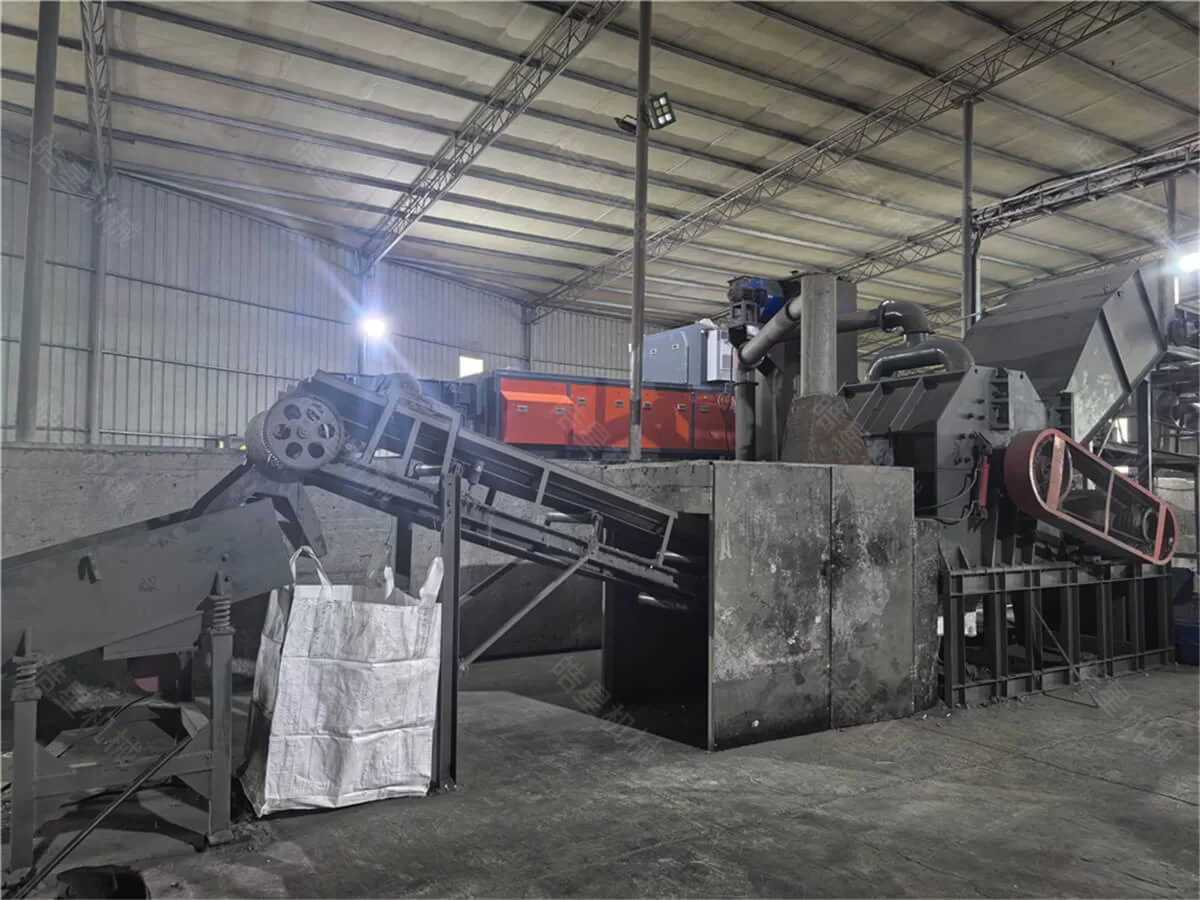
On July 5, 2024, we photographed this Aluminum Door and Window Profile Crushing Plant with Controlled Feeding at a customer’s recycling site in Maoming, Guangdong. The equipment shown in the photos includes the feeding section, scrap aluminum crusher, material conveyors and eddy current separator.
The customer mainly processes discarded aluminum door and window frames, fabrication offcuts and dismantled profile sections. These materials arrive in different lengths and shapes. Some profiles still contain steel screws, plastic thermal-break strips, rubber seals and small fittings, so the customer required a connected crushing and separation system rather than a standalone machine.
Controlled Feeding for Long Aluminum Profiles
Long aluminum door and window profiles can overlap or become interlocked during loading. If a large bundle enters the crushing chamber at once, the crusher load may fluctuate sharply. Irregular feeding can also affect the amount of material reaching the downstream separator.
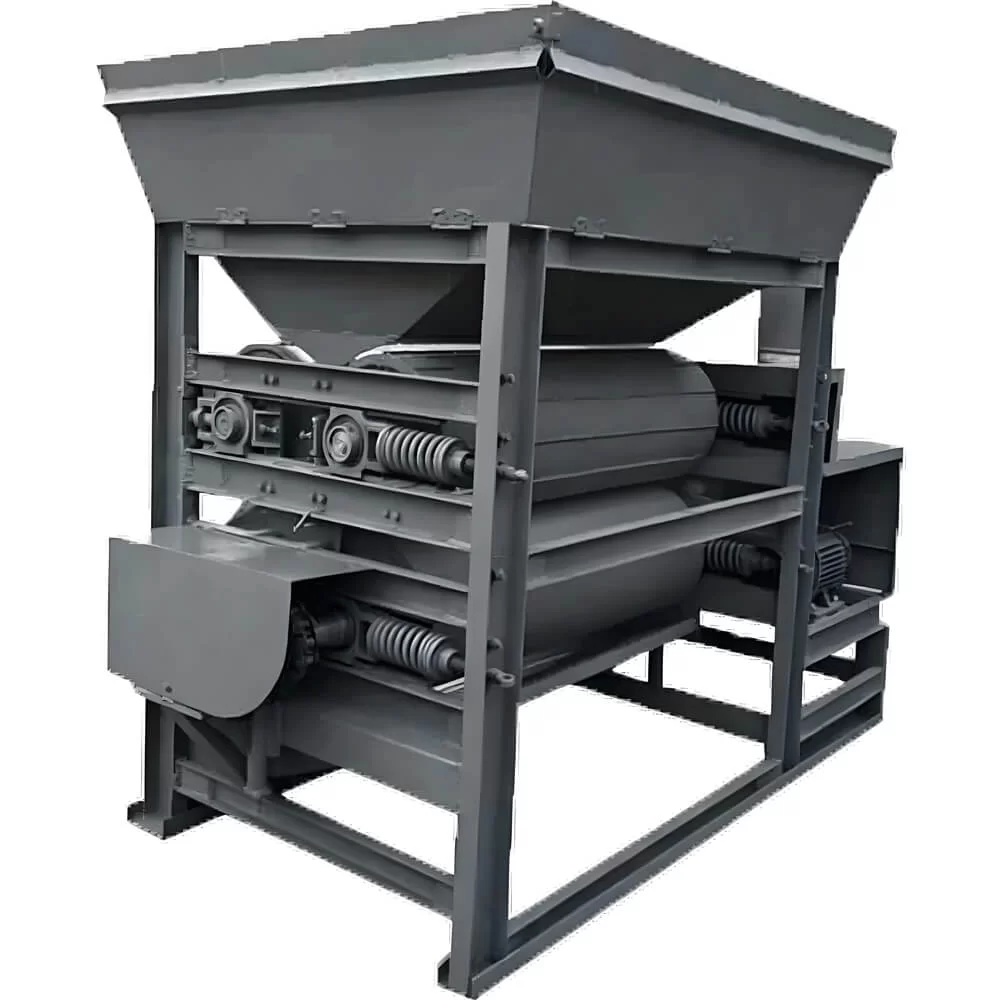
The feeding section at the Maoming site was arranged to provide a steadier material flow. Operators place the profiles on the slat conveyor, where the feeding speed can be adjusted according to the length, shape and volume of the incoming scrap.
This arrangement does not simply reduce the feeding speed. It distributes the material more evenly before crushing, limits sudden feed surges and helps the main machine maintain a more stable operating load.
It also reduces the need to lift long profiles directly into the crusher inlet, making it easier for the operator to observe and control the incoming material.
Crushing Door and Window Profile Scrap
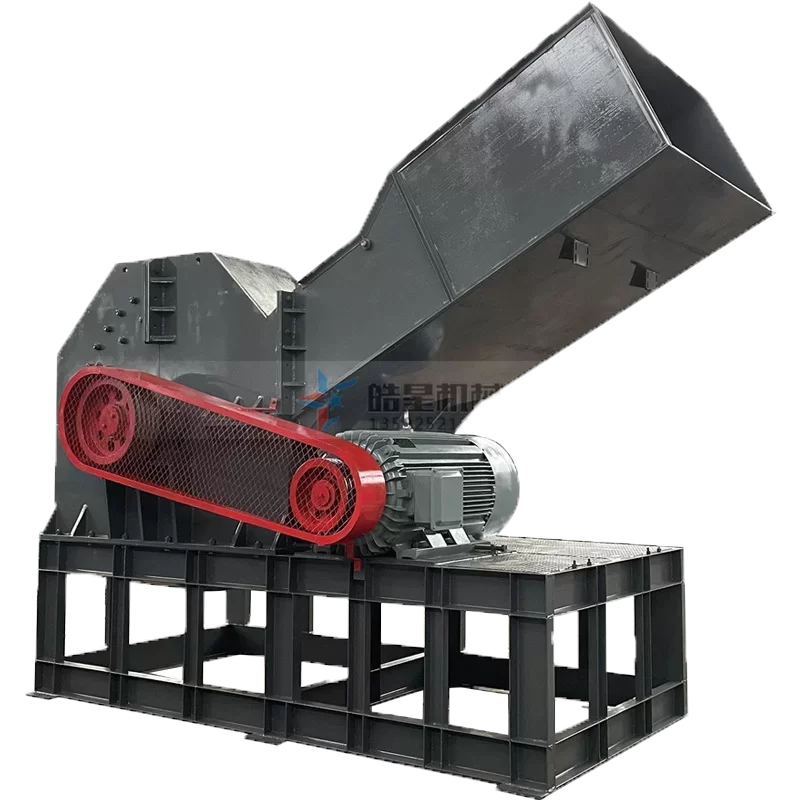
After controlled feeding, the profiles enter the aluminum profile crusher. This is the main size-reduction machine visible in the customer-site photos.
The crusher processes long frame sections and irregular profile offcuts into smaller pieces suitable for conveying and separation. Impact and crushing action open the hollow profile structures and release part of the attached plastic, rubber and small metal fittings.
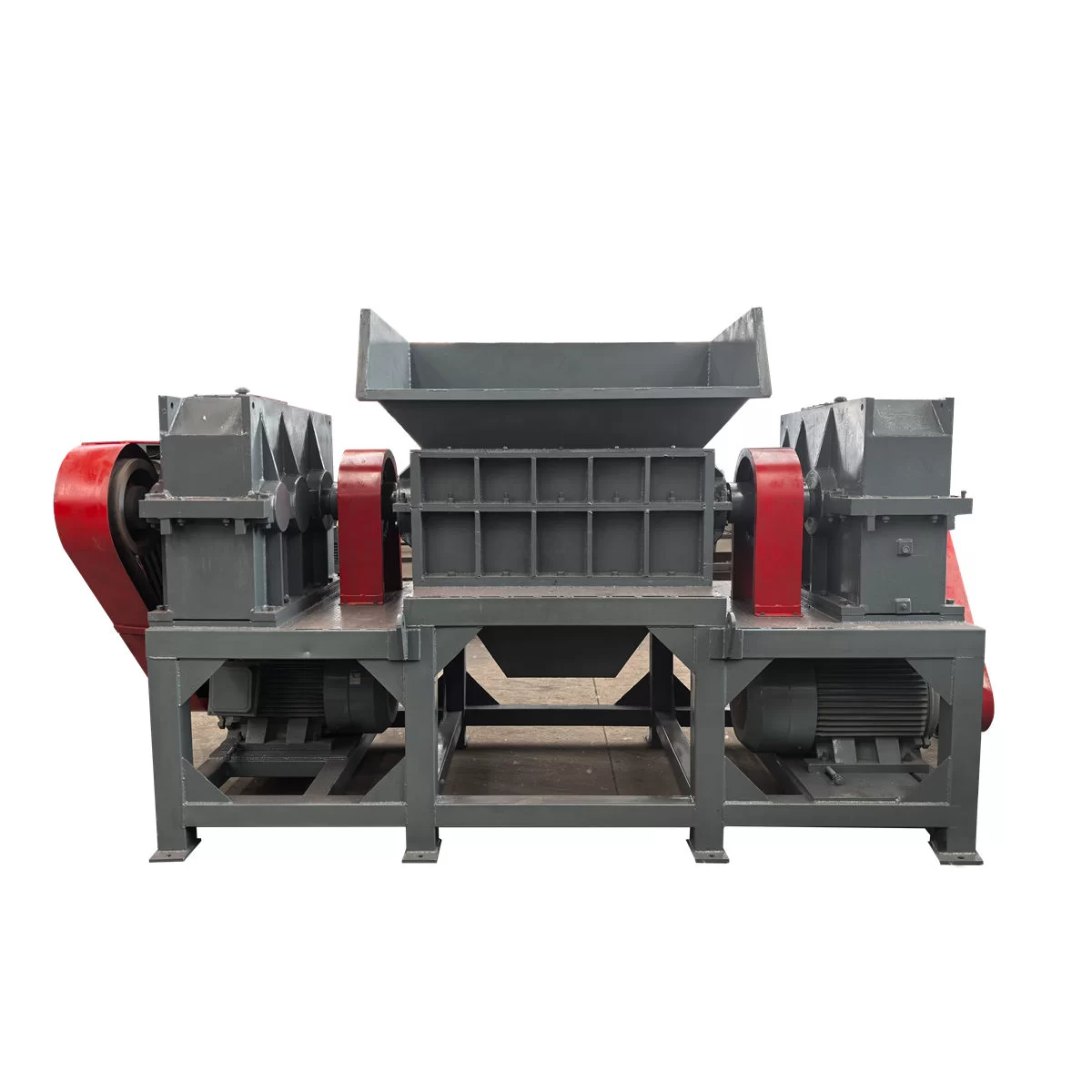
The equipment is identified as a crusher rather than a shredder. A shredder is normally used for low-speed, high-torque coarse reduction or pretreatment. In this project, the scrap aluminum crusher performs the principal crushing stage and prepares the material for the sorting process that follows.
The customer selected an aluminum profile crushing plant because the required process covers more than size reduction. Controlled feeding, crushing, conveying and separation must work together to handle the mixed attachments commonly found on dismantled aluminum doors and windows.
Preparing the Material for Separation
Crushing changes the form of the incoming material and makes downstream sorting more practical. Long profiles are reduced to smaller pieces, while plastic strips, rubber seals and other attachments are loosened from the aluminum sections.
The crushed mixture is then transferred by conveyor to the sorting section. A relatively stable and evenly distributed material layer is important at this stage. If too much material arrives at one time, pieces may overlap and reduce sorting accuracy.
This is one reason why controlled feeding at the beginning of the line remains important throughout the process. It helps regulate not only the crusher load but also the amount of material entering the separation equipment.
Eddy Current Separation of Crushed Aluminum
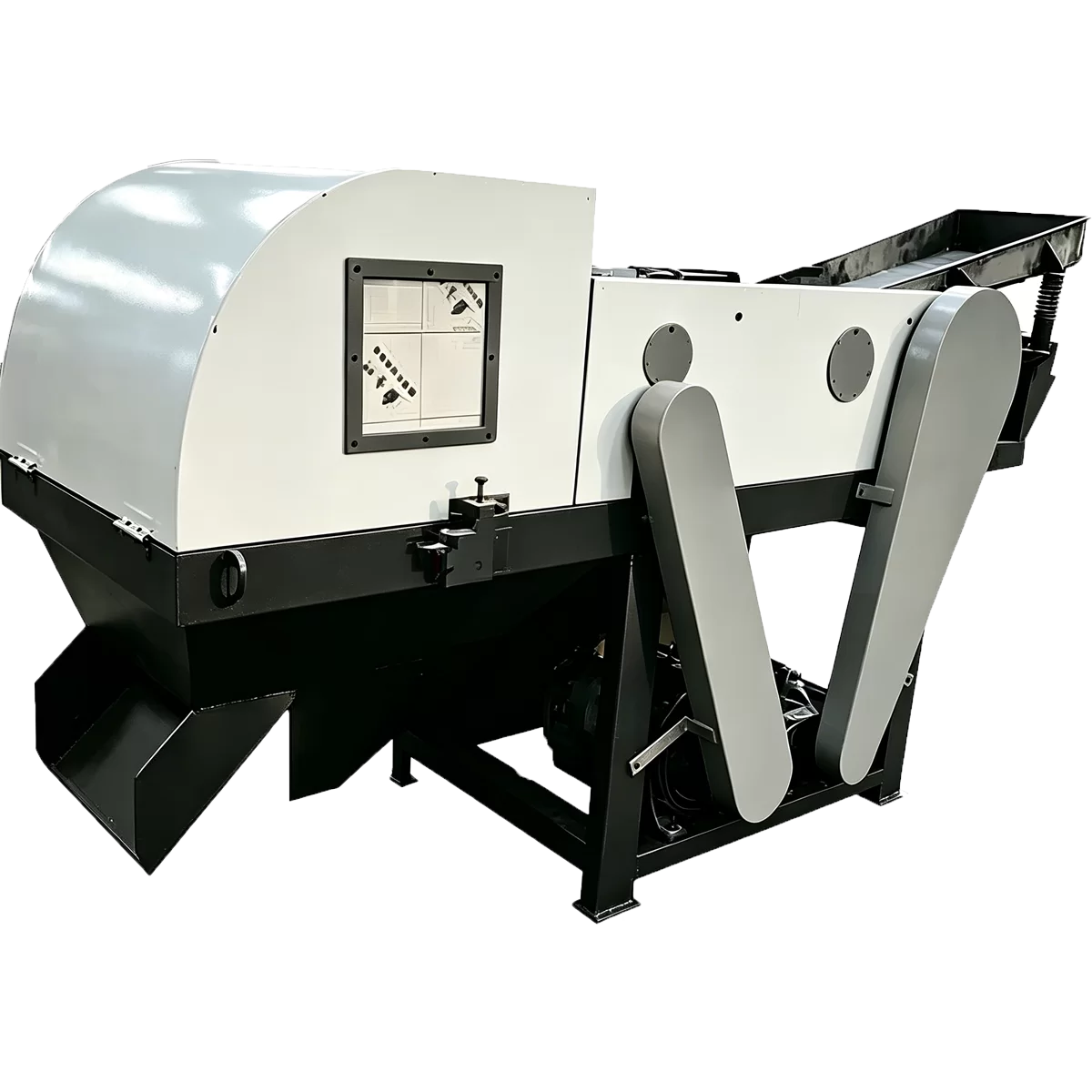
The eddy current separator shown in the site photos is installed after the crushing and conveying stages. It separates conductive non-ferrous metal from non-conductive material in the processed mixture.
As the crushed material passes through the separation area, the aluminum fraction follows a different discharge path from plastic, rubber and other non-metallic residue. Separate discharge points help prevent the recovered aluminum from mixing with the rejected fraction again.
For discarded aluminum doors and windows, this stage is necessary because crushing alone cannot complete the material purification process. The crusher reduces the profiles and releases attached components, while the non ferrous metal separator divides the loosened mixture into separate output streams.
The actual separation result depends on several factors, including particle size, feeding thickness, material distribution and the amount of non-metallic attachments in the original profiles. For this reason, the crushing and sorting sections were configured as connected parts of the same plant.
Material Flow at the Maoming Customer Site
The photographed processing sequence follows the actual direction of material movement through the plant:
Scrap aluminum door and window profiles are placed on the feeding conveyor.
Feeding speed is adjusted according to the condition of the material.
The profiles enter the crusher in a controlled and relatively even flow.
The crusher reduces the long sections and loosens attached components.
Conveying equipment transfers the processed mixture to the sorting section.
The eddy current separator recovers aluminum from the non-metallic fraction.
Separate outlets collect the recovered aluminum and remaining residue.
The layout reduces unnecessary material transfer between individual machines. Operators can observe the feed condition, crushing performance and separation output as parts of one continuous process.
Why a Complete Plant Was Used
A standalone aluminum profile crusher can reduce the size of door and window scrap, but it cannot automatically separate all the plastic and rubber released during crushing. Similarly, an eddy current separator cannot work effectively if long profiles have not been properly reduced and the material reaches the separator in an uneven layer.
The customer therefore selected a complete aluminum recycling line based on the condition of the incoming material. Controlled feeding stabilizes the process, crushing releases attached components, and eddy current separation recovers the aluminum fraction after size reduction.
This configuration is suitable for recycling sites handling a mixture of:
Discarded aluminum window frames
Aluminum door profiles
Fabrication offcuts
Hollow aluminum sections
Thermal-break profiles
Profiles containing rubber seals
Dismantled frames with small steel fittings
Mixed-length aluminum profile scrap
The plant configuration is not fixed for every project. Crusher model, conveyor length, feeding method and separator width should be selected according to the customer’s material and production requirements.
Information Required for a Similar Project
Before selecting equipment for aluminum door and window profile recycling, it is useful to provide:
Maximum and average profile length
Cross-sectional dimensions
Profile wall thickness
Percentage of thermal-break profiles
Type and quantity of attached plastic
Presence of steel screws and fittings
Required hourly processing capacity
Preferred crushed particle size
Required separation result
Available installation area
Feeding and discharge height restrictions
Two batches with the same total weight may require different equipment configurations. Short, clean production offcuts are easier to feed than long dismantled window frames, while profiles containing thermal-break strips require more attention to downstream separation.
Customer-Site Photos from Maoming, Guangdong
These photos were taken at the customer’s facility in Maoming, Guangdong, on July 5, 2024. They document the installed feeding equipment, waste aluminum crusher, connected conveyors and eddy current separation section.
Unlike a factory equipment display, the photos show how the machines are arranged around the customer’s actual material flow. Long and irregular profiles are fed at a controlled rate, reduced to smaller pieces and transferred directly to the separation section.
The practical value of this Aluminum Door and Window Profile Crushing Plant with Controlled Feeding lies in the coordination between its main stages. Stable feeding controls the material entering the crusher, crushing prepares the profiles for sorting, and eddy current separation recovers aluminum from the released non-metallic fraction.