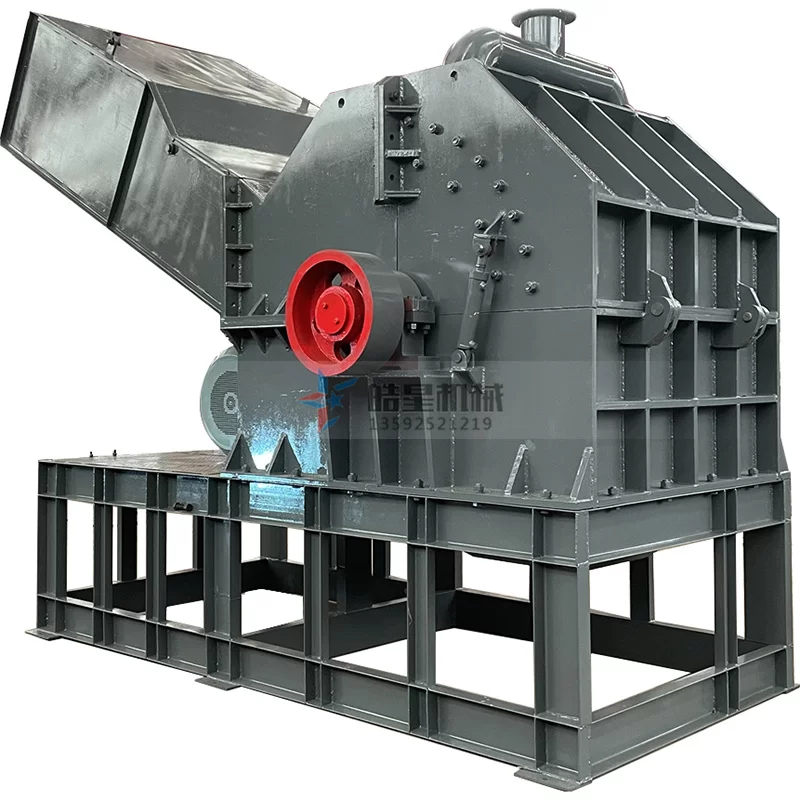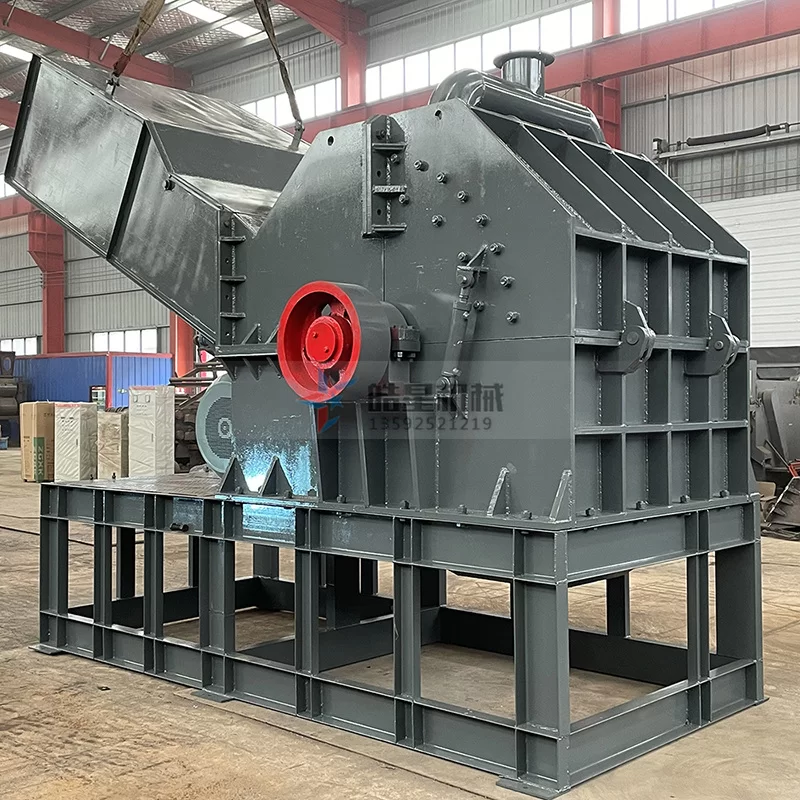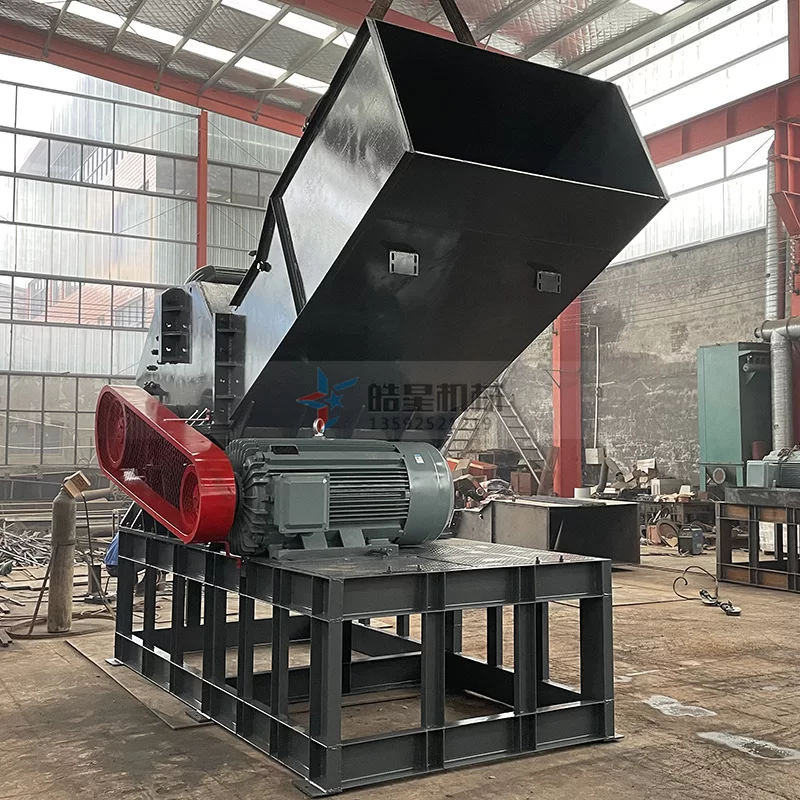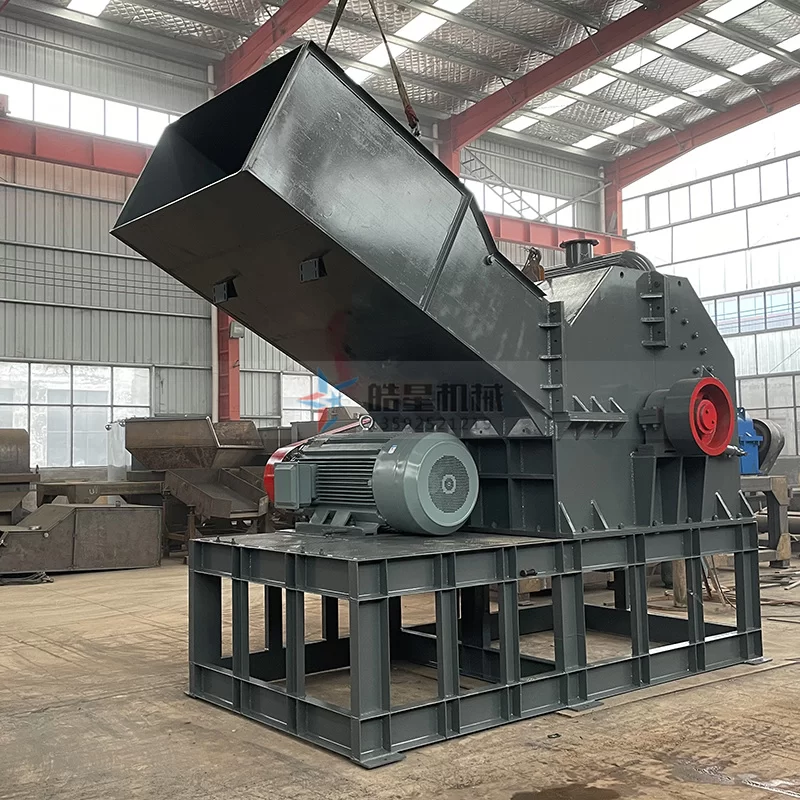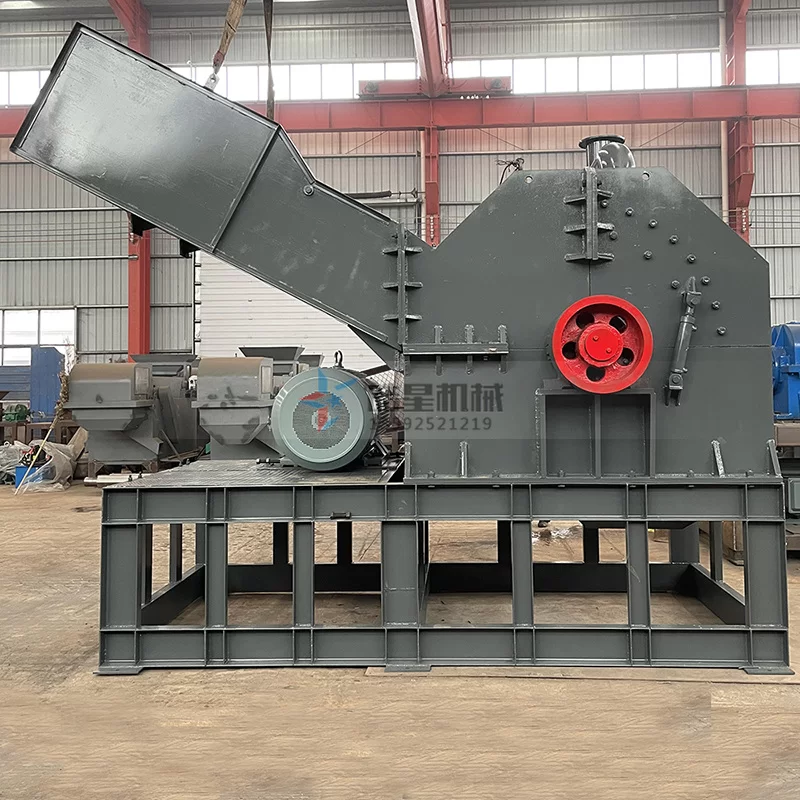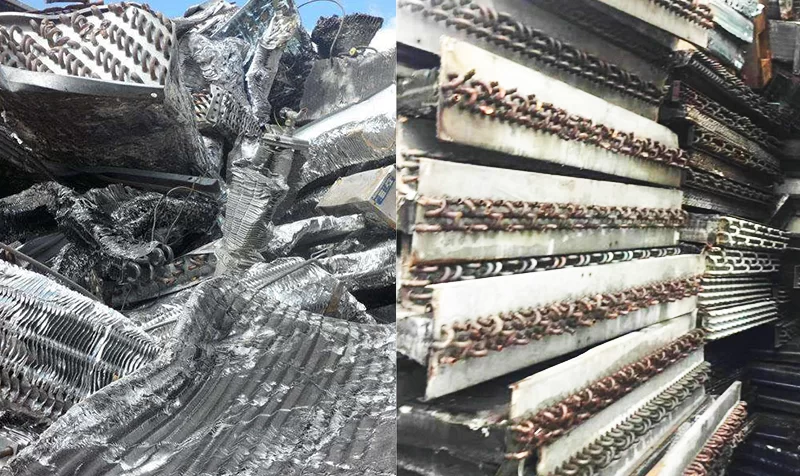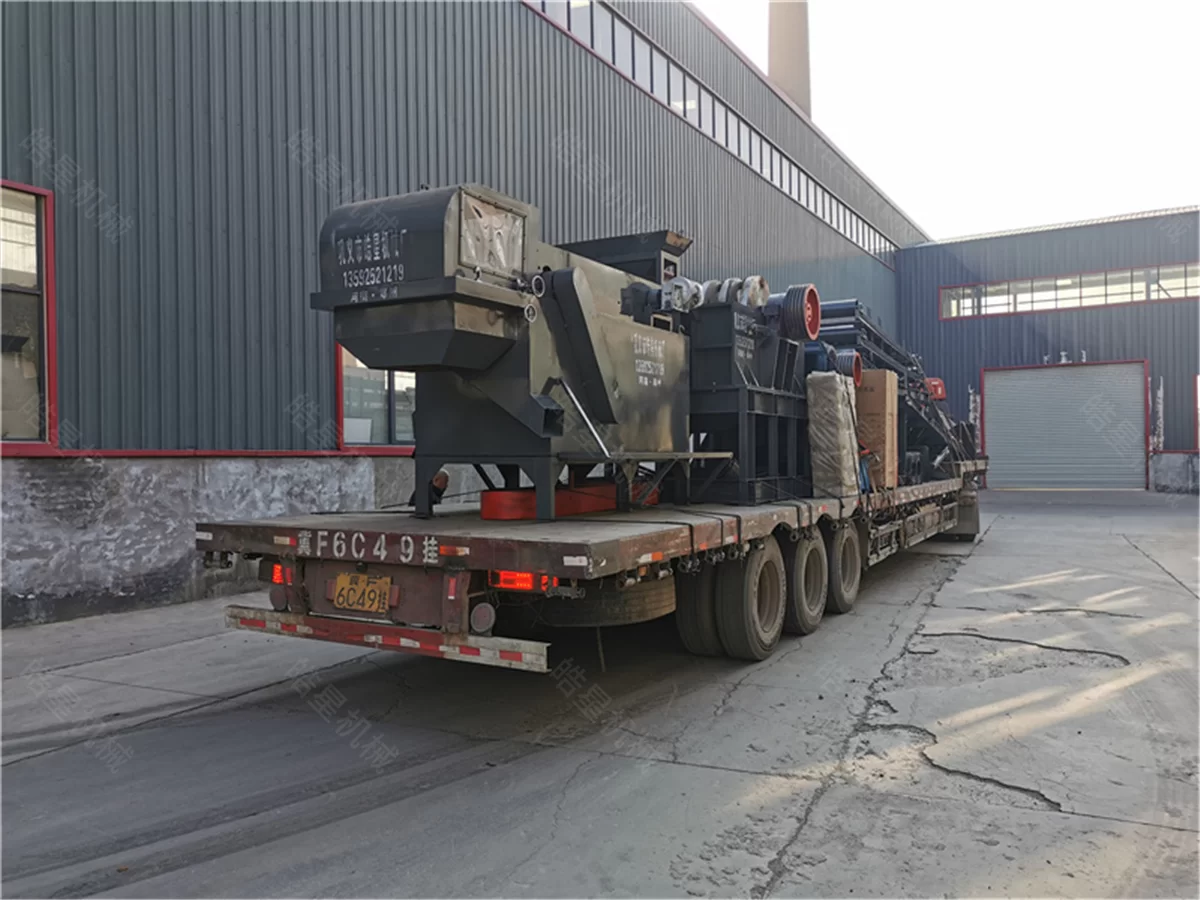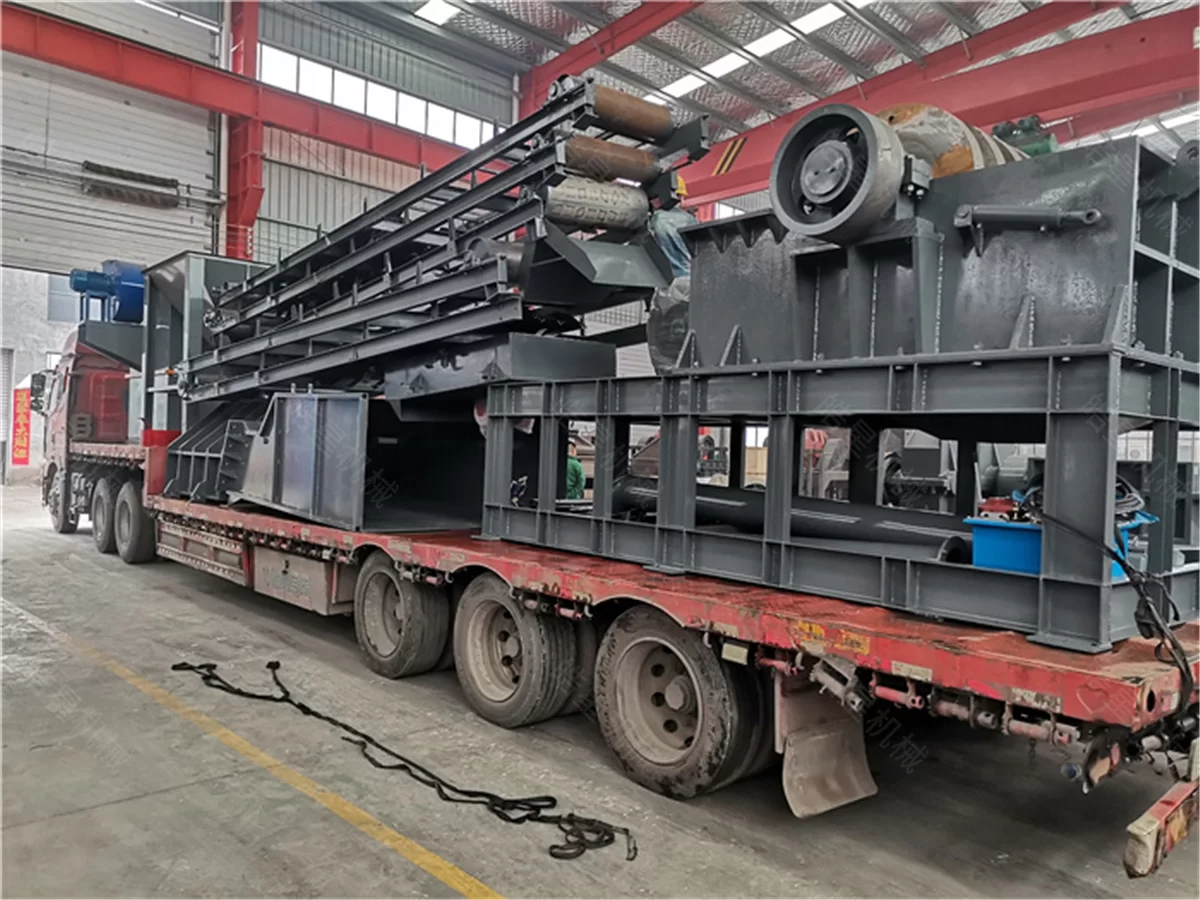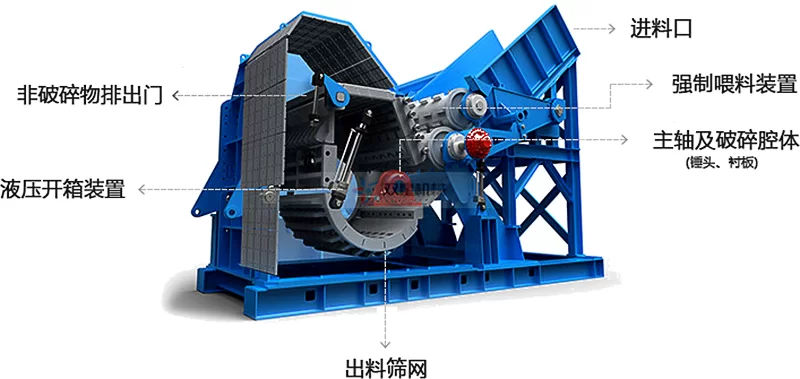
The AC recycling crusher is designed to process prepared air conditioner radiators, copper aluminum heat exchangers, automotive radiator sections and other suitable copper-aluminum composite scrap.
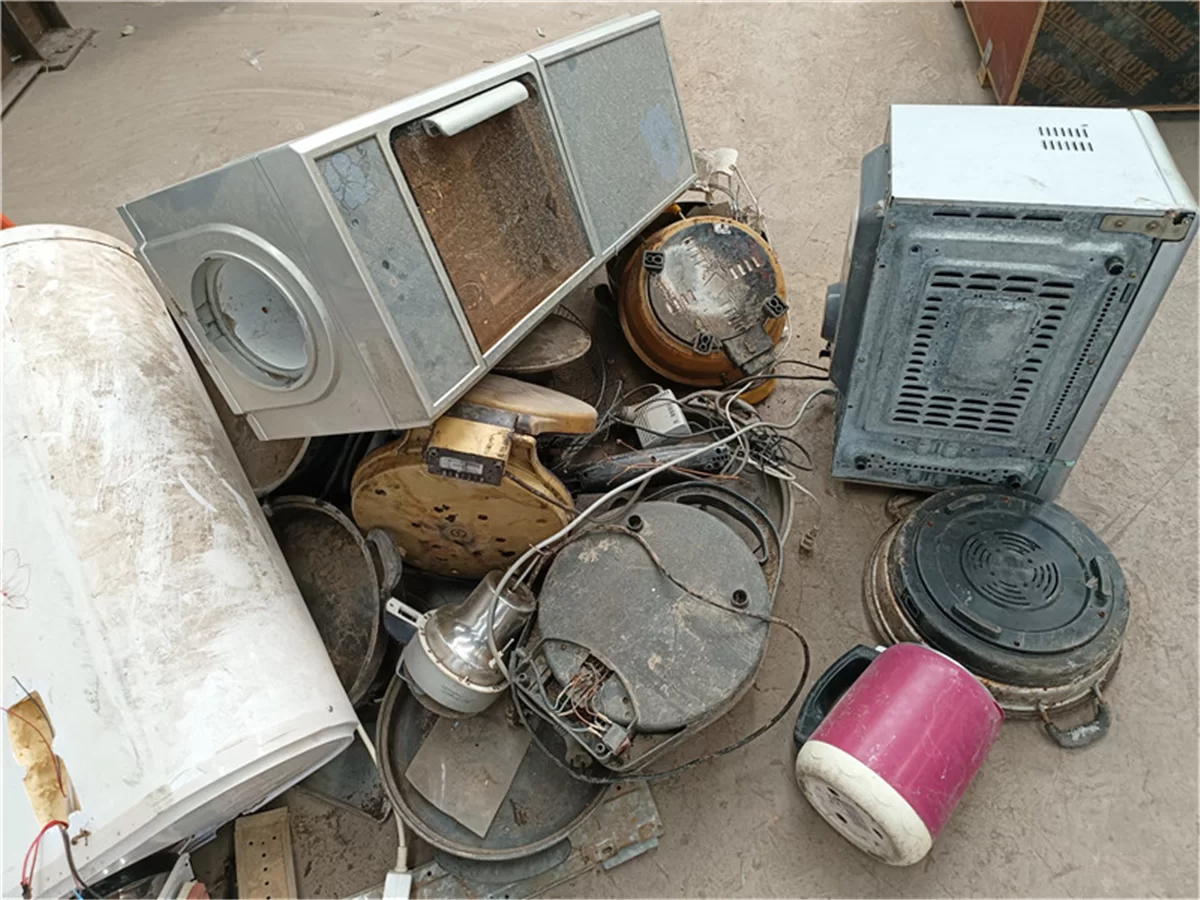
Complete air conditioners must be dismantled and depolluted before mechanical processing. Refrigerant, compressor oil, electrical components, batteries, capacitors, plastic housings and other unsuitable materials should be removed according to local operating and environmental requirements.
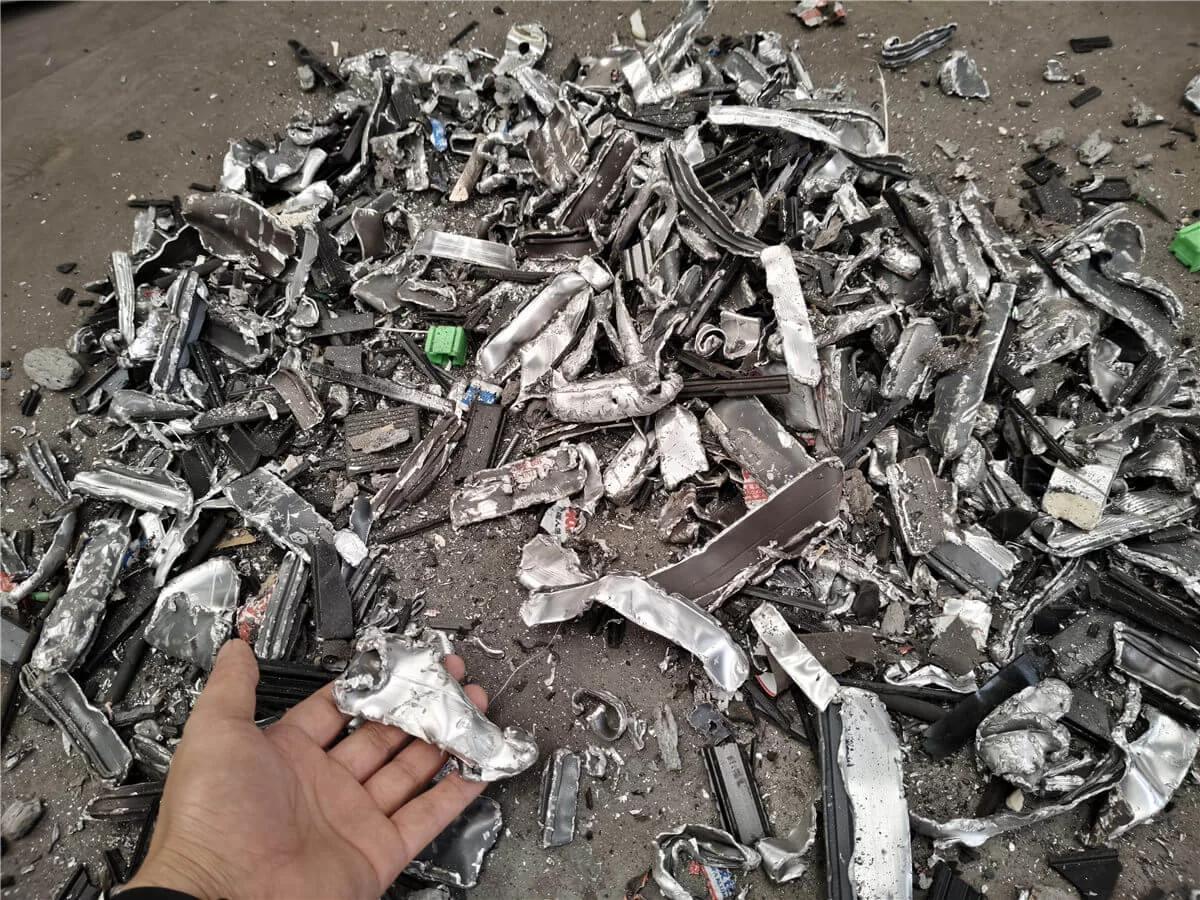
Prepared radiator sections are reduced into smaller pieces so that copper tubes, aluminum fins and attached ferrous components become easier to process in downstream separation equipment. The selected crusher and feeding method depend on the radiator dimensions, material thickness and required output size.
Large or tangled heat exchangers that exceed the crusher feeding limits may require pre-cutting or primary size reduction by a twin shaft shredder. Properly sized and prepared radiator sections may enter the crusher directly.
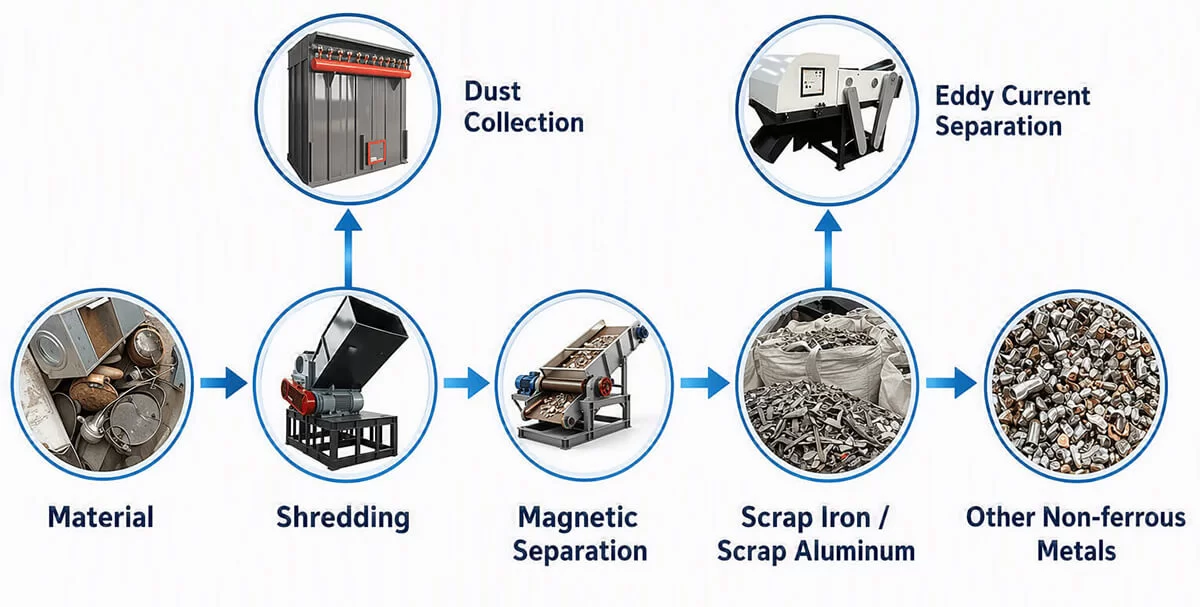
After crushing, a magnetic separator can recover exposed iron frames, steel brackets, screws and other ferrous components from the processed material.
After ferrous metal removal, screening and suitable material preparation, an eddy current separator may recover conductive non-ferrous metals from an appropriate non-metallic material stream. It does not normally separate copper and aluminum into two independent high-purity products.
When separate copper and aluminum fractions are required, additional density separation, sensor-based sorting, airflow separation or manual sorting may be needed according to the particle size and material composition.
The AC recycling crusher can operate as an individual machine or form part of a non ferrous metal sorting line with controlled feeding, crushing, magnetic separation, screening, additional metal sorting, dust collection and centralized control.
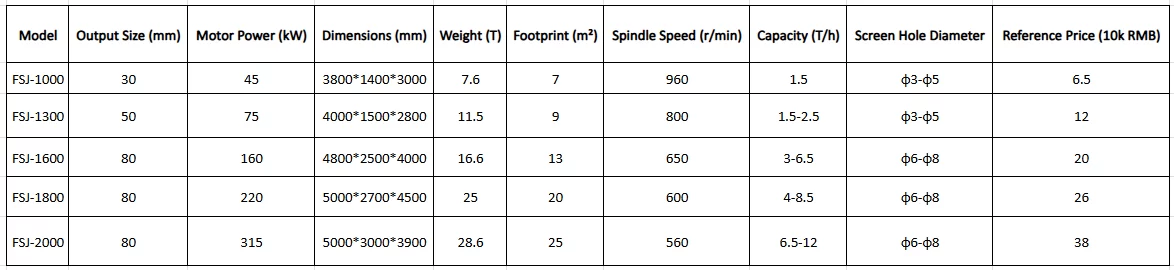
The final configuration depends on the radiator type, maximum dimensions, copper and aluminum content, attached steel and plastic components, required capacity, expected output size and target recovered products.
Prepared Radiators Suitable for Crusher Feeding
The AC recycling crusher is intended for prepared copper-aluminum radiator sections, heat-exchanger pieces and similar composite scrap that fit the feed opening. Complete air-conditioning units, compressors, pressure-containing components, refrigerant circuits and oversized steel frames are not standard direct feed. Refrigerant, oil and other regulated substances must be removed by qualified processes before mechanical size reduction.
Radiator Construction Affects the Process
Automotive radiators, air-conditioner coils, aluminum radiators and copper-aluminum heat exchangers differ in tube material, fin density, steel end plates, plastic tanks and attached frames. The maximum dimensions, individual weight, copper-to-aluminum ratio and remaining attachments should be confirmed before the rotor, hammers and screen are selected.
Crushing and Material Liberation
The hammer crusher reduces prepared radiator sections and helps release copper tubes, aluminum fins and attached ferrous parts. Screen opening, fin density, tube thickness, rotor speed, hammer arrangement, feed rate and recirculation affect output and liberation. A smaller screen can improve size control while reducing capacity and increasing wear.
Separation After Crushing
Magnetic separation can remove exposed iron and steel. Copper and aluminum normally require additional separation according to particle size, shape and degree of liberation. Airflow, density, screening, sensor or manual sorting may be considered. An eddy current separator alone should not be presented as an automatic copper-aluminum separator for every radiator stream.
Information Required for Selection
Please provide radiator type, photos, maximum dimensions, individual weight, tube and fin materials, plastic and steel attachments, hourly quantity, target products and available downstream equipment. Fixed recovery or purity should not be promised without representative material testing.