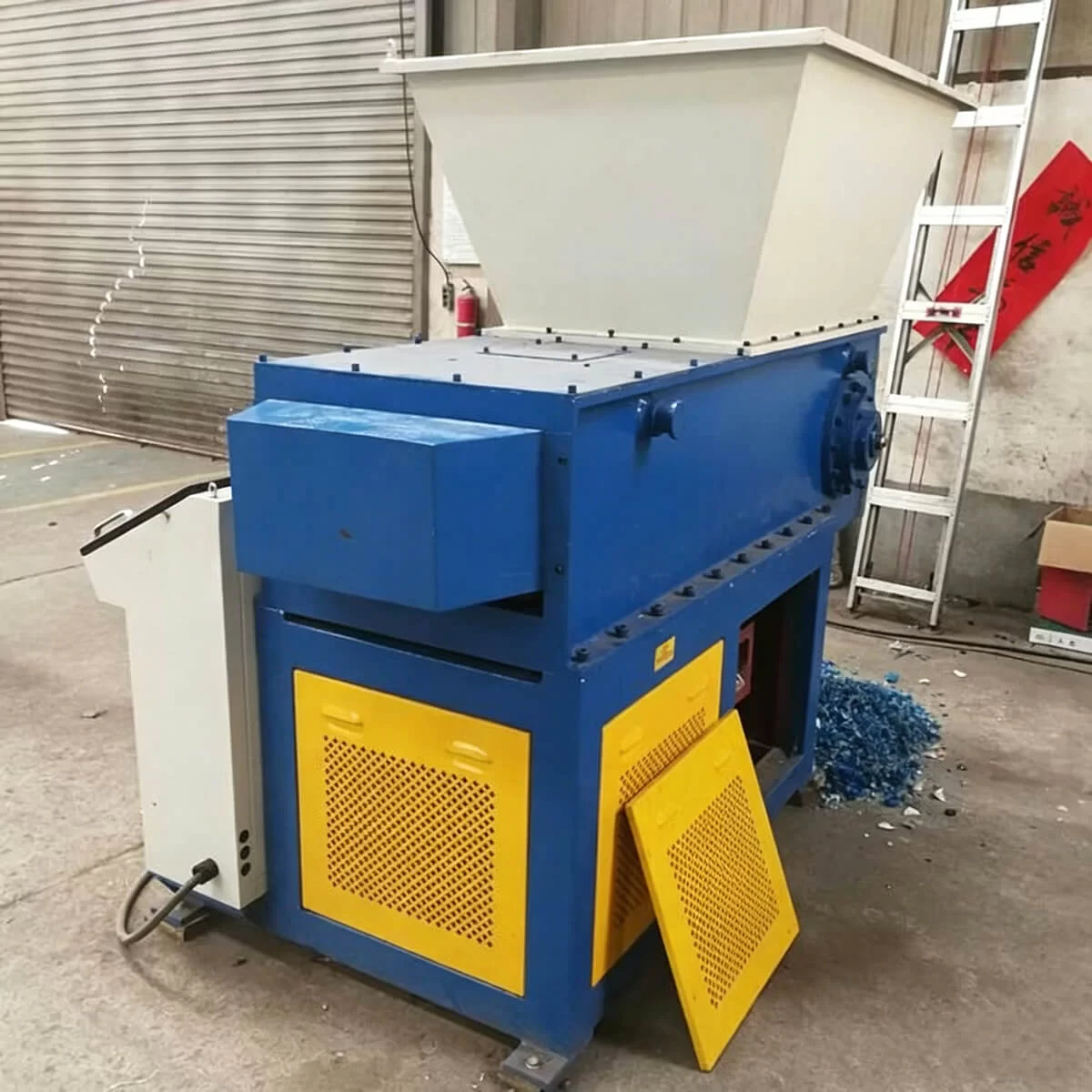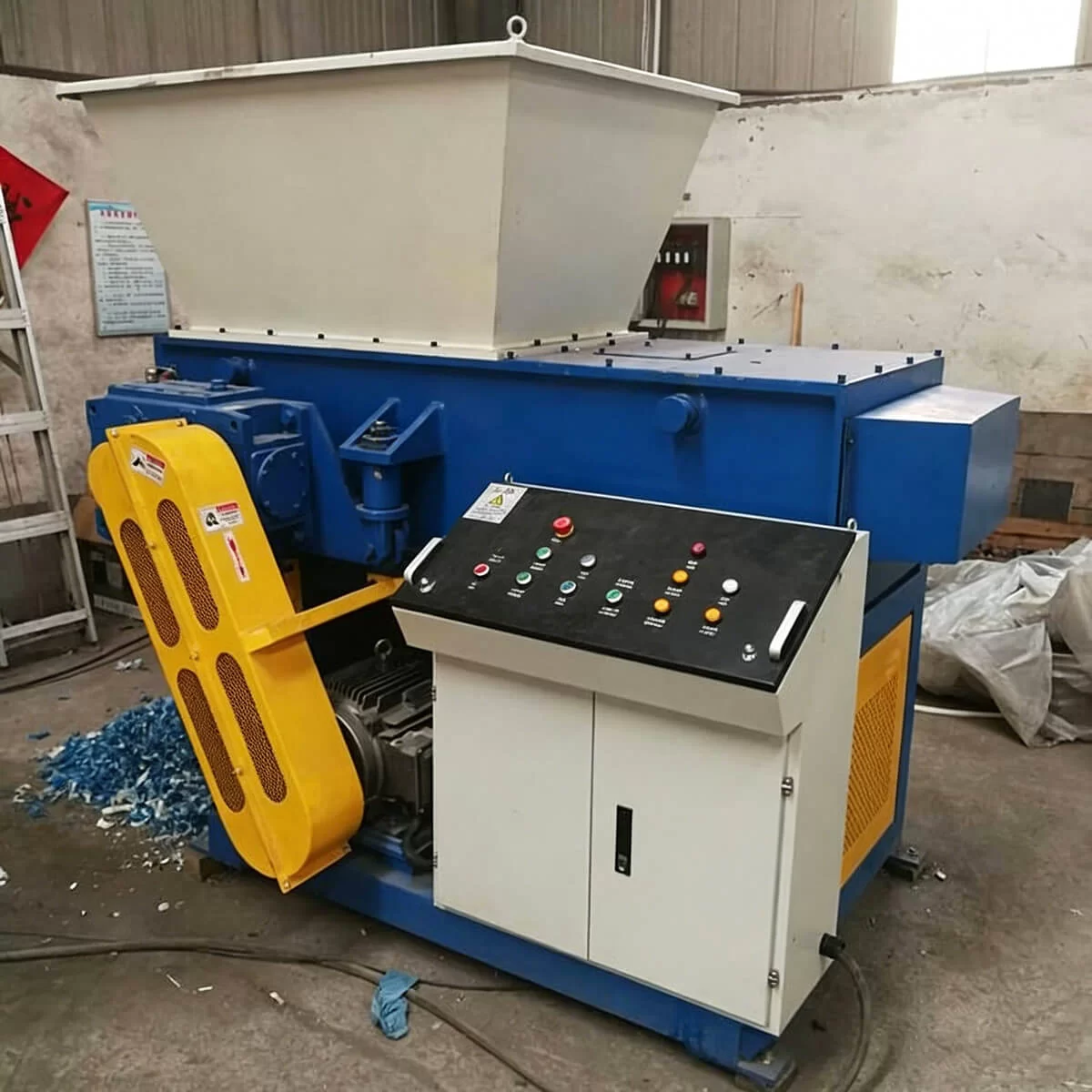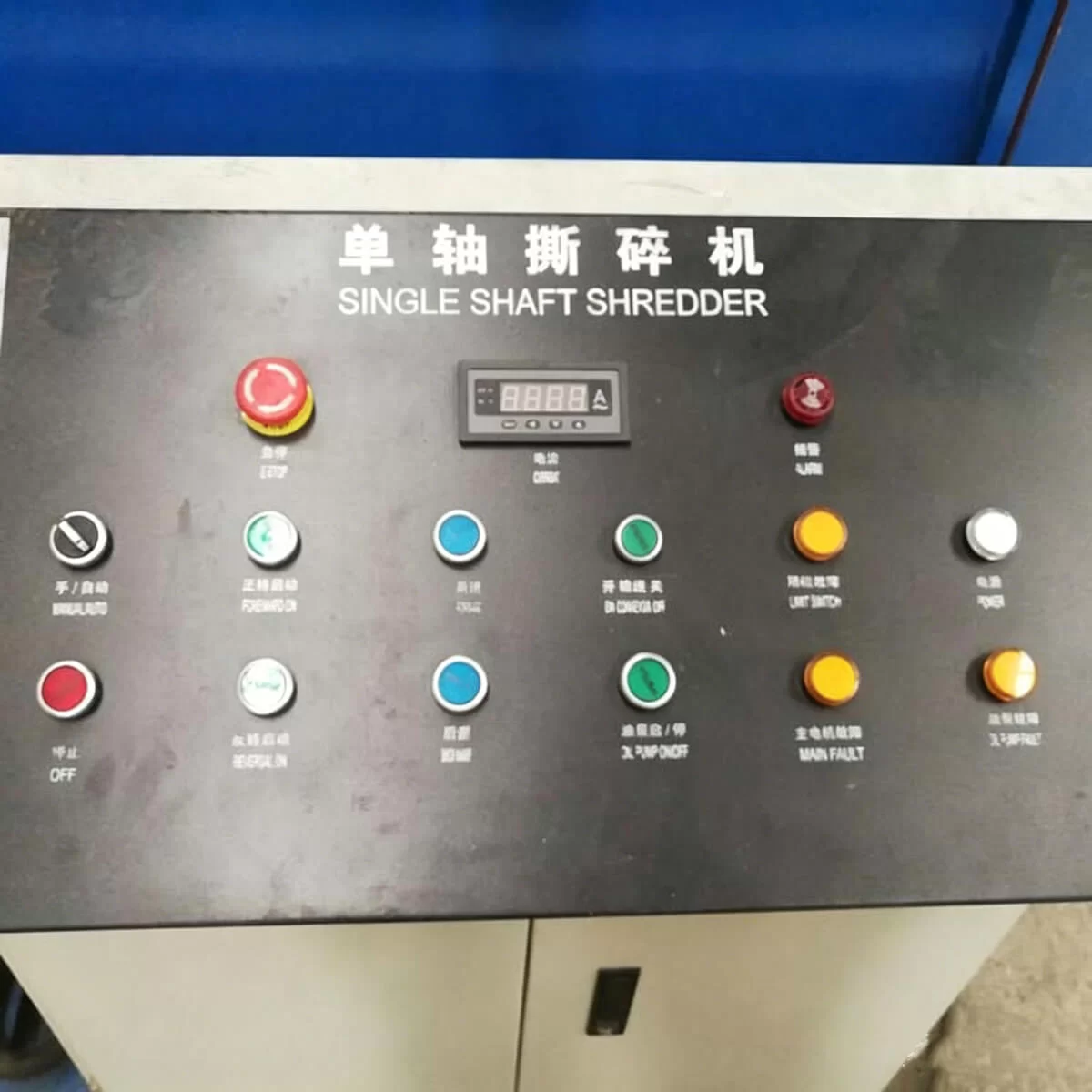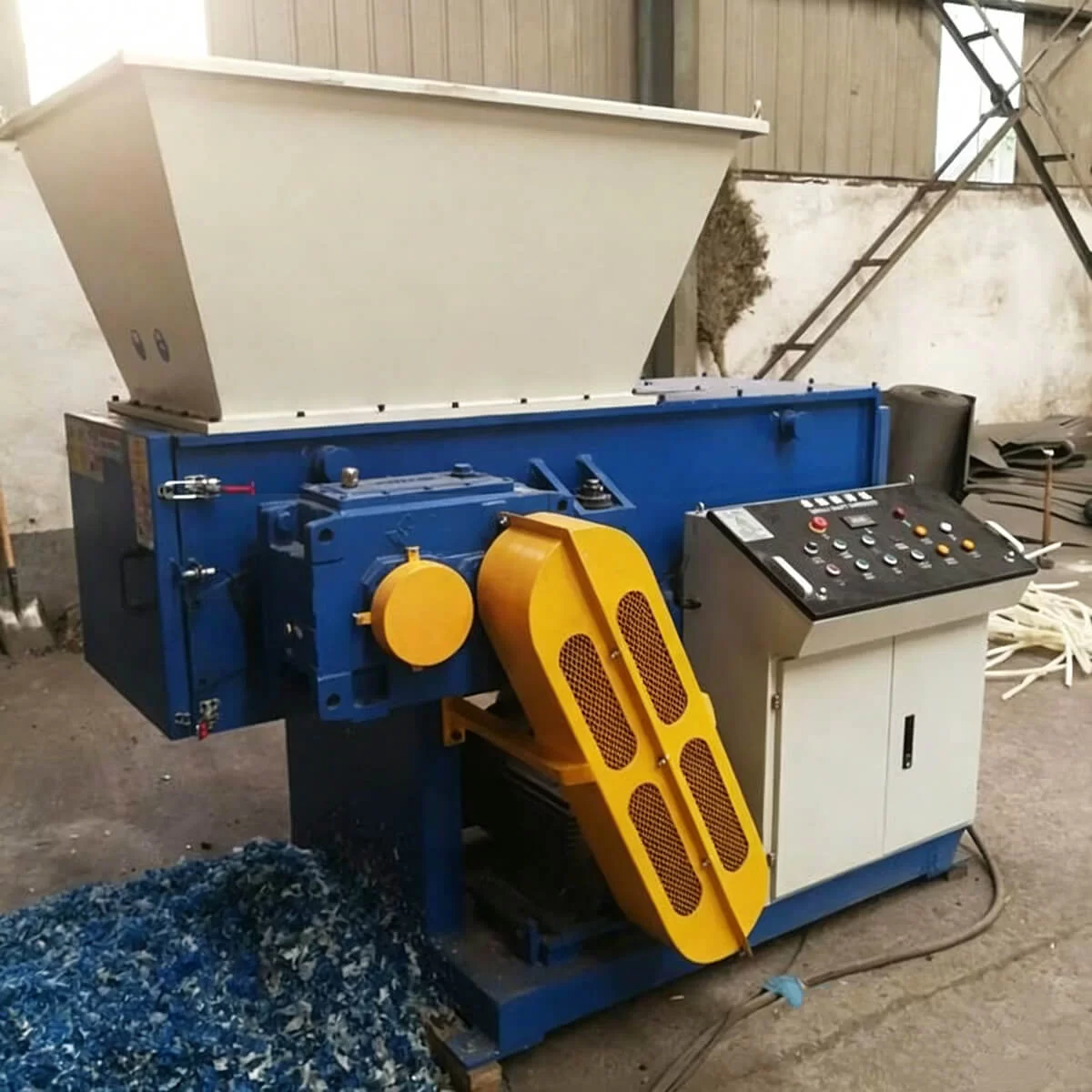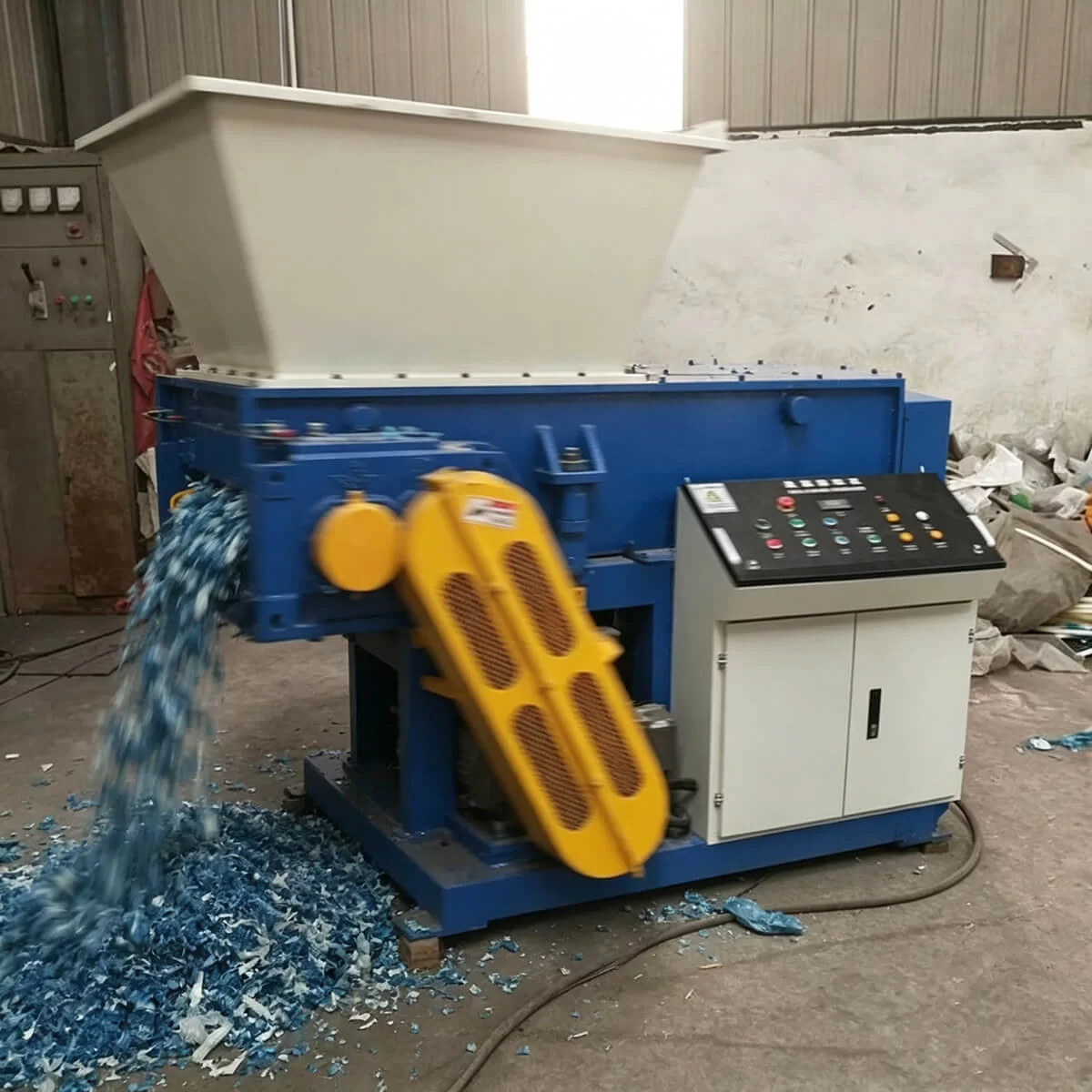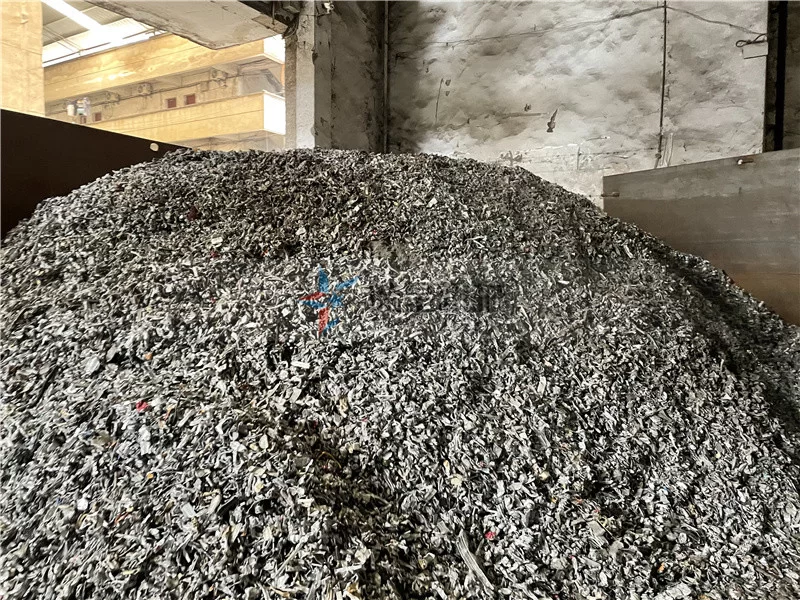
The single shaft shredder is a screen-equipped size-reduction machine used to process plastic lumps, thick-walled pipes, plastic pallets, crates, drums, wood waste, rubber products and selected industrial recycling materials.
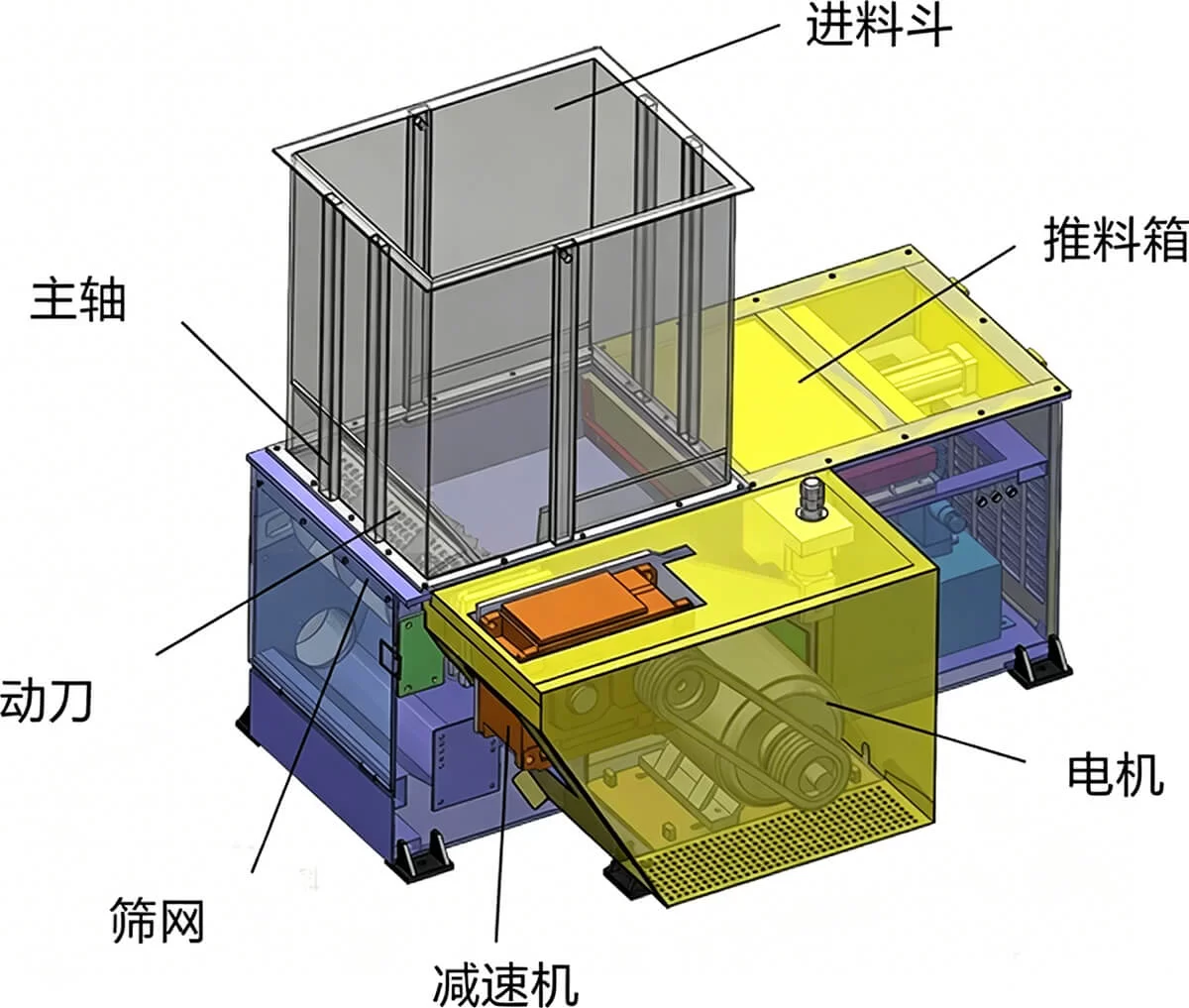
A hydraulic pushing system moves the material toward a single rotating cutter shaft. Replaceable rotor knives work against stationary knives to repeatedly cut the feed until it becomes small enough to pass through the selected bottom screen.
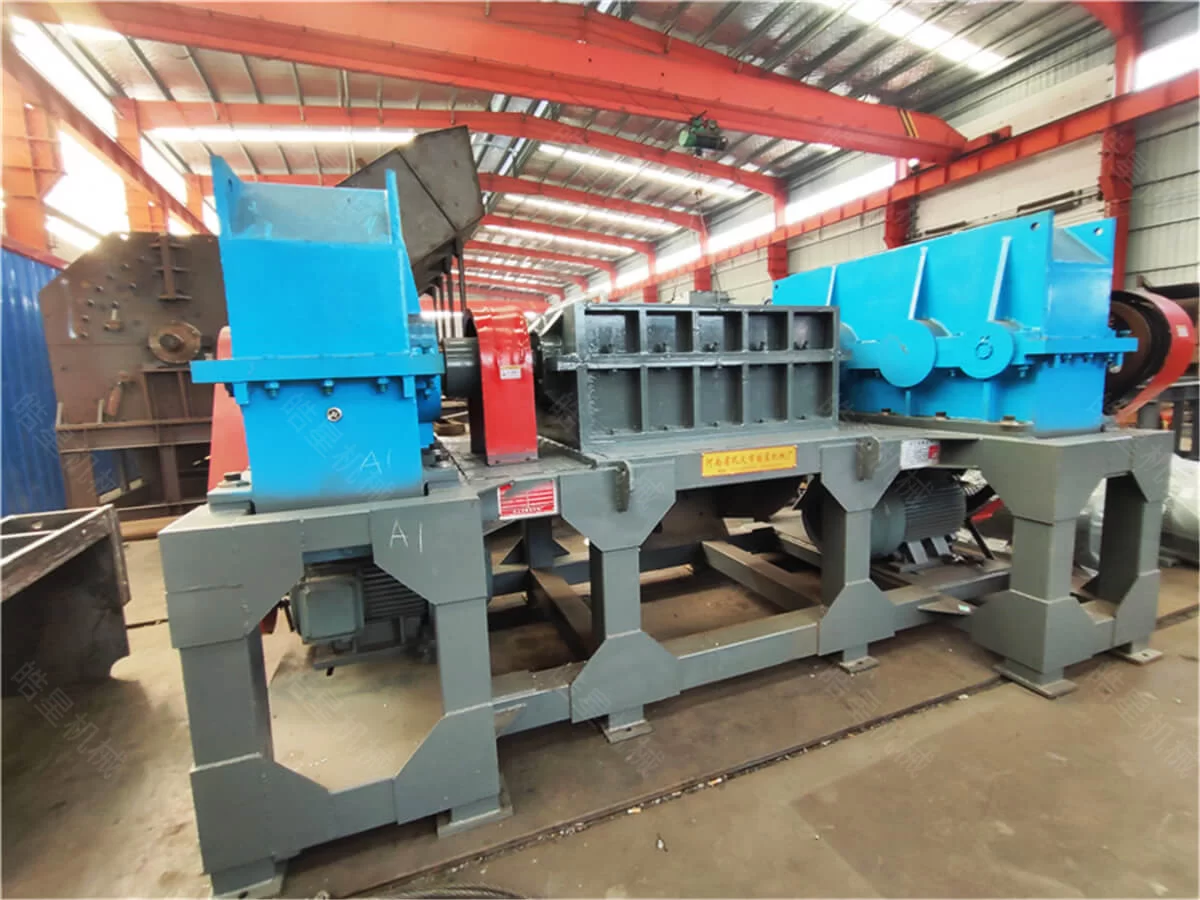
Compared with a twin shaft shredder used mainly for coarse primary size reduction, the single shaft shredder provides screen-controlled discharge and is more suitable when smaller and relatively consistent output is required.
Large hollow products, bundled materials and bulky irregular waste may require pre-cutting or primary processing by a twin shaft shredder before entering the single shaft machine. Whether pre-shredding is required depends on the material dimensions, feeding condition and rotor chamber size.
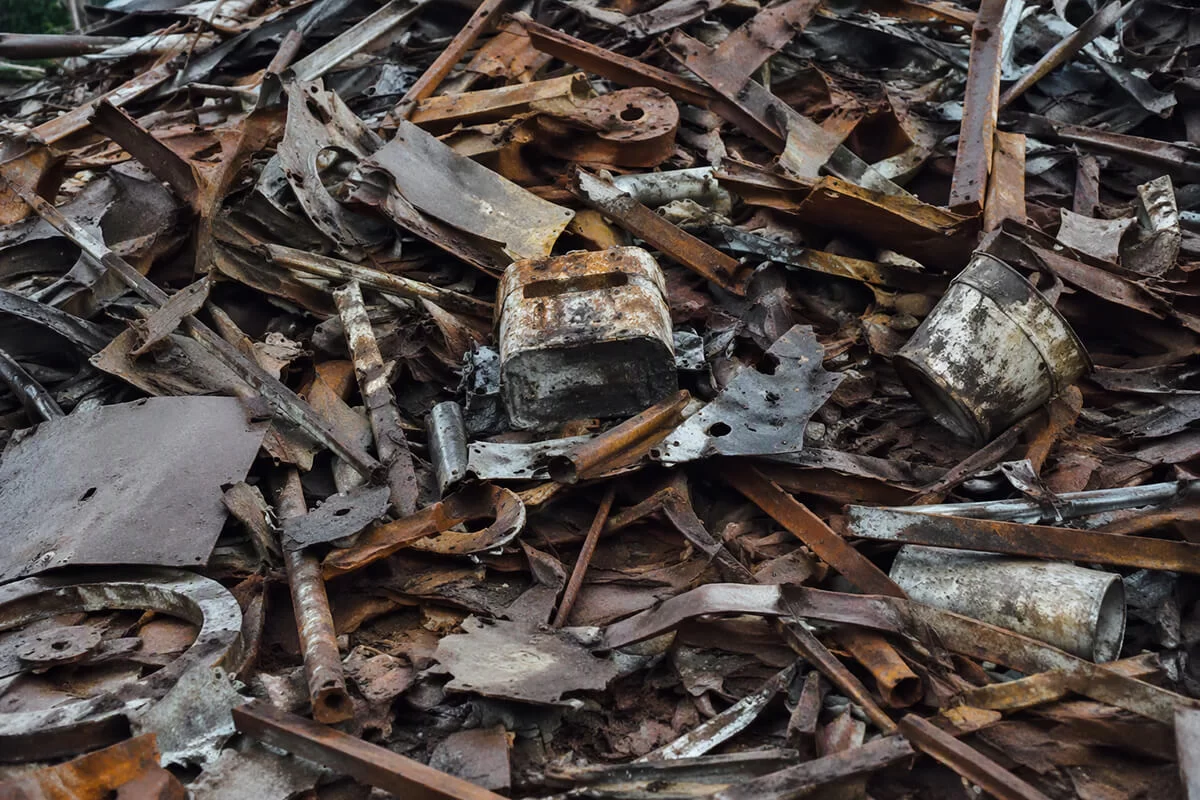
Ferrous attachments, tools, bolts and other hard metal contaminants should be removed before feeding. A magnetic separator may be installed in a downstream process when recoverable iron or steel is present in suitable processed material.
How a Single Shaft Shredder Works
A single shaft shredder uses one low-speed rotor with replaceable knives and a hydraulic pusher that presses material toward the cutting zone. Material is cut between the rotating knives and fixed counter knives until pieces can pass through the selected screen. This operating principle is different from a twin shaft shredder, which uses two counter-rotating shafts for gripping, tearing and coarse opening without relying on a sizing screen.
Materials Suitable for Single-Rotor Shredding
The machine can be evaluated for prepared plastic lumps, thick plastic parts, pipes, pallets, film bundles, rubber products, wood, cables and selected industrial waste that can be controlled by the pusher and rotor. Material suitability depends on dimensions, thickness, toughness, contamination, temperature and the presence of metal attachments.
Materials Requiring Separate Evaluation
Heavy solid steel, pressure vessels, sealed containers, batteries, large shafts, massive castings, abrasive mineral contamination and unidentified hazardous waste are not standard feed. Long flexible material may wrap around the rotor if the cutting chamber, rotor design and feeding method are not selected for it. Mixed waste should be assessed from representative samples rather than category names alone.
Screen Size, Capacity and Wear
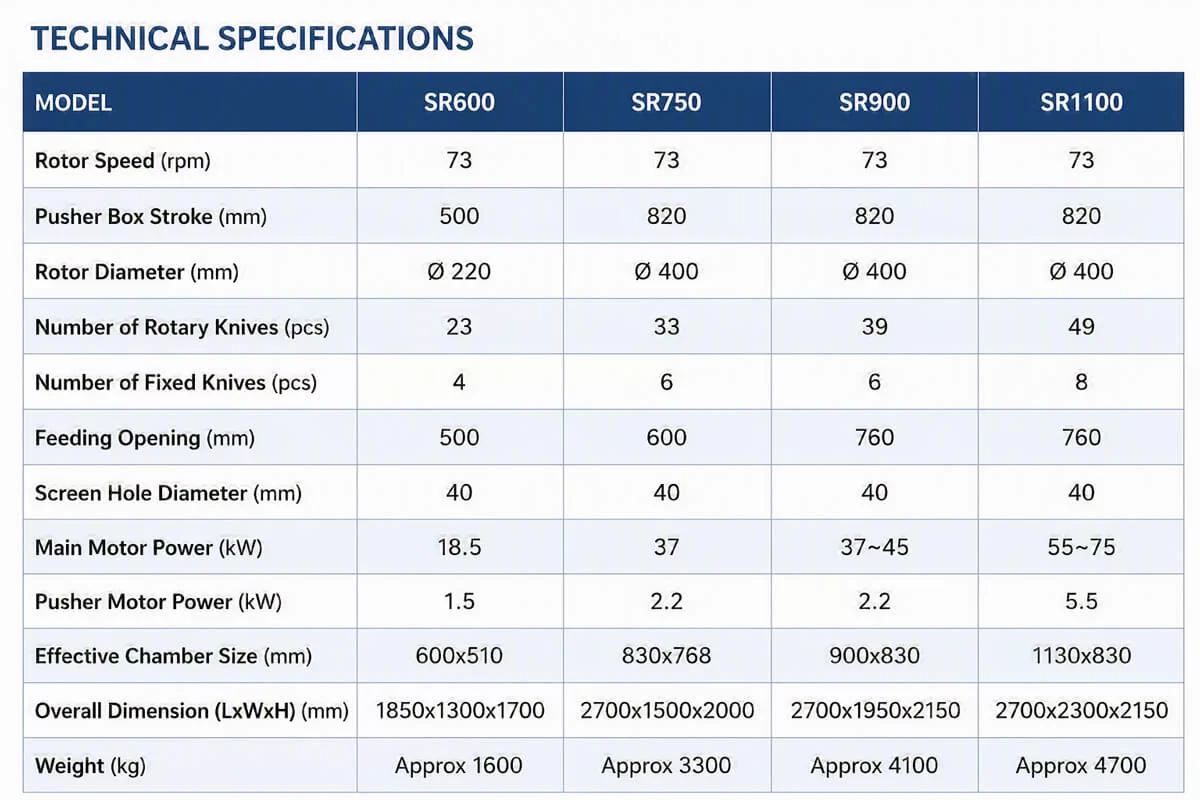
The screen helps control the maximum discharge condition, but output also depends on rotor diameter, knife arrangement, pusher cycle, feed density, material toughness and recirculation. A smaller screen may improve size control while reducing capacity and increasing knife, counter-knife and screen wear. Hourly throughput should therefore be estimated from real material data, not motor power alone.
Selection Data Required
Please provide material photos, minimum and maximum dimensions, bulk density, hourly quantity, contamination, required output size, daily operating hours, loading method and downstream process. These data determine rotor width, chamber volume, pusher system, drive power, screen and discharge conveyor.
Can a Single Shaft Shredder Process Aluminum?
A single shaft shredder can be evaluated for prepared aluminum sheet, profiles, thin housings and selected production scrap when the material fits the chamber and can be controlled by the hydraulic pusher. The applicable thickness, section size, single-piece weight and alloy condition must be confirmed. Large castings, engine blocks, dense solid aluminum and bulky mixed assemblies are not standard feed merely because they are aluminum.
Aluminum Profiles and Hollow Sections
Profiles should be checked for length, cross-section, wall thickness, thermal-break strips, steel inserts and nesting. Long profiles may bridge in the hopper or lie across the rotor, so cutting or controlled orientation can be necessary. Thermal-break aluminum also introduces plastic strips that affect discharge composition and downstream separation.
Can a Single Shaft Shredder Process Cables?
Short, prepared cable pieces may be evaluated when rotor, cutters, screen and pusher are designed for the application. Long flexible cable, wire bundles and steel-armored cable can wrap around the rotor, shafts or bearing protection areas. Complete cable reels, pulling wire and unknown mixed cables should not be treated as normal direct feed.
Cable Preparation and Product Target
The machine selection changes according to whether the goal is volume reduction, opening cable bundles or preparing material for copper and plastic separation. Cable diameter, conductor type, insulation, armor, connectors, oil or gel filling and desired granulation must be provided. A general single shaft shredder may perform primary size reduction, while fine copper recovery can require a dedicated cable granulator and separation system.
Hydraulic Pusher and Load Control
The pusher controls the contact between material and rotor, but higher pushing force does not automatically increase capacity. Excessive pressure can overload cutters, increase heat and cause repeated rotor stops. Pusher speed and pressure should be coordinated with motor current, rotor speed, cutter engagement and screen condition.
Screen Size and Output Control
The screen controls the maximum discharge pathway after the material has been cut sufficiently. Smaller openings usually increase residence time, recutting, heat, wear and power demand. Flexible cable and thin aluminum can behave differently from rigid plastic or wood, so screen selection must follow trial material rather than a universal particle-size promise.
Fire, Dust and Contamination
Fine aluminum, oily scrap, lithium batteries, capacitors, sealed components and energized cable are excluded until safely identified and prepared. Aluminum fines can create combustible dust conditions, while cable insulation can produce heat, smoke and light fractions. Appropriate inspection, dust control, fire protection and housekeeping are required for the actual material.
Project Information Required
Please provide representative photos or samples, aluminum or cable category, maximum dimensions, thickness or cable diameter, individual weight, length distribution, loose or bundled condition, steel inserts or armor, oil or moisture, hourly quantity, desired output and downstream process. The proposal should identify applicable feed, excluded items, screen, cutter arrangement and performance conditions.