Project Overview
See how a twin shaft shredder opens used beverage can bales before an aluminum can bale crusher performs further size reduction and liberation.
This processing test covers both compressed used beverage can bales and loose aluminum cans. The feed may contain flattened cans, intact cans, tightly compacted can blocks, pull tabs, labels, residual dirt and a small amount of mixed packaging contamination. Loose cans have low bulk density, while compacted bales are dense and difficult to open for inspection and separation.
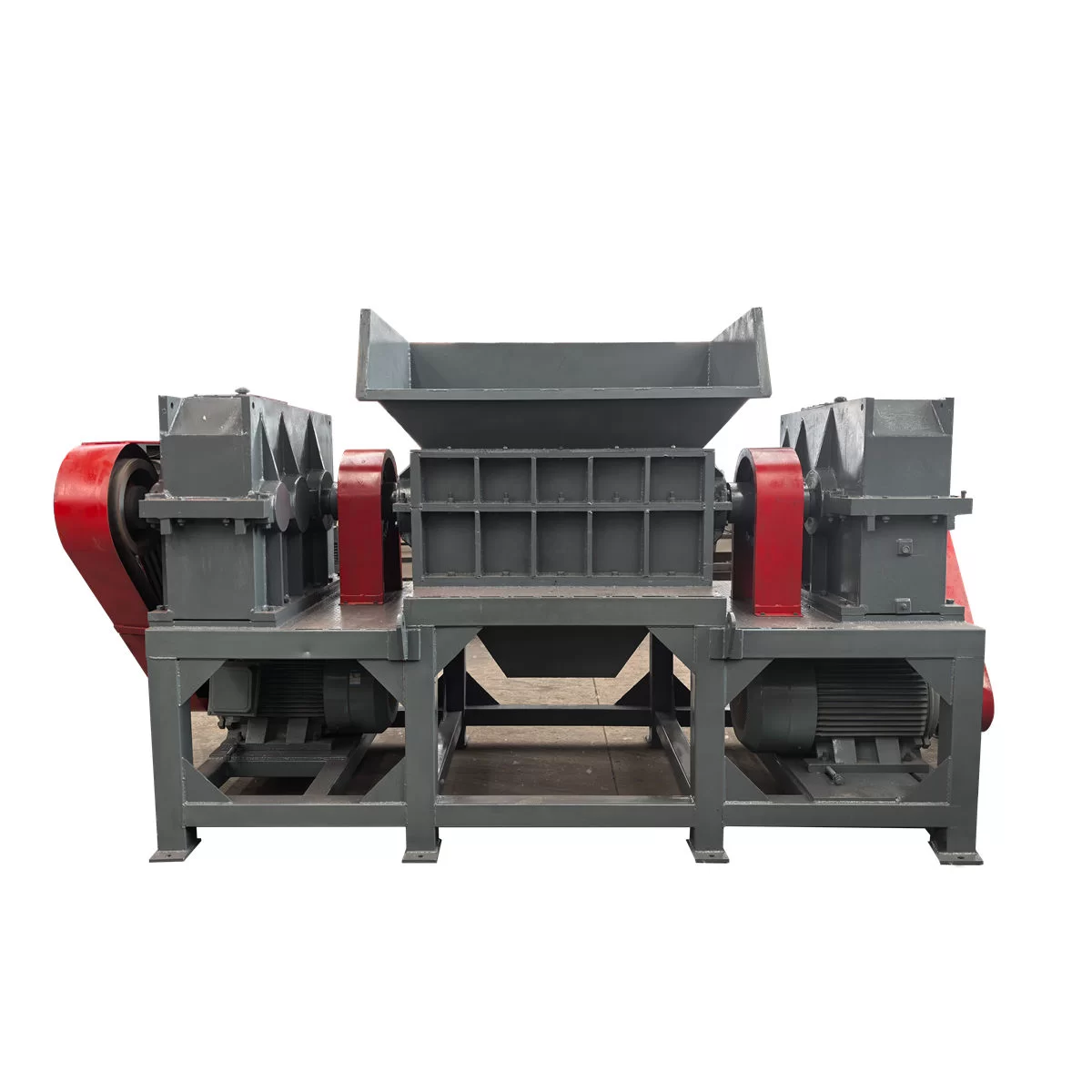
The twin shaft shredder is used as the primary bale-opening and coarse shredding stage. Its low-speed, high-torque cutters grip the surface of the compressed block, tear apart the compacted layers and pull the cans into the cutting chamber. Loose cans are punctured, flattened and torn into smaller pieces as the two shafts rotate toward each other.
After this first stage, the original bale loses its compact rectangular structure and becomes a loose stream of opened aluminum pieces. Large clusters are separated, nested cans are exposed and trapped contaminants become easier to identify. The purpose is to create a stable feed for the next machine rather than produce a finished furnace-grade aluminum fraction in one pass.
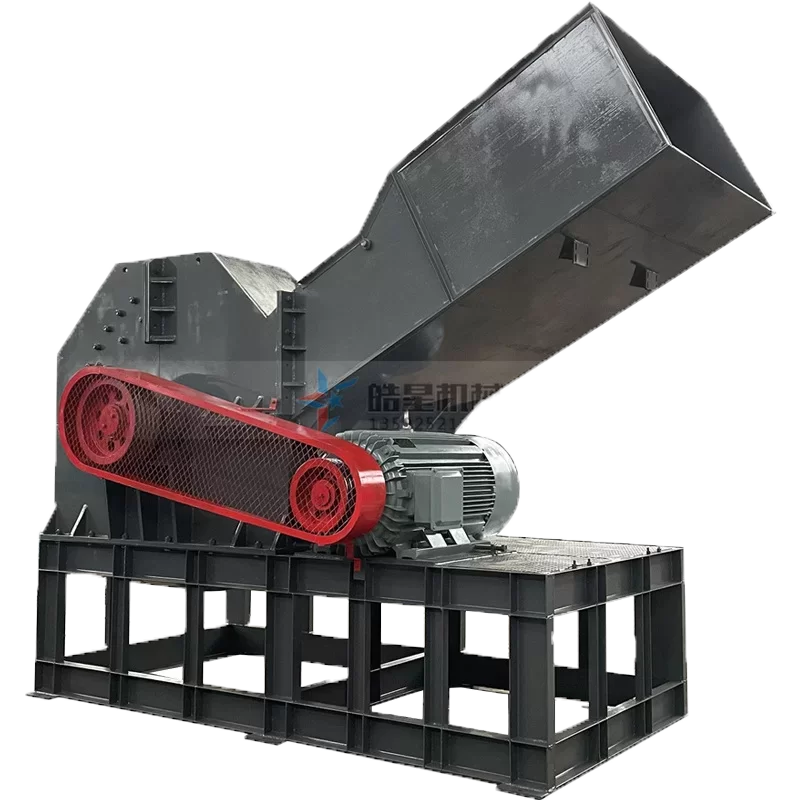
The aluminum can bale crusher performs further impact crushing, opening and densification after the bale has been loosened. Thin can body material is repeatedly struck and folded, producing smaller curled or compact pieces. This stage can improve material liberation and make the discharge more suitable for screening, magnetic removal and non-ferrous sorting.
The two machines perform different duties. The twin shaft shredder handles bulky bales, opens compacted layers and controls the initial feed size. The aluminum can bale crusher further reduces the opened cans and changes their form through impact. Combining the two stages is more suitable for dense bales than asking one machine to complete both bale opening and fine size reduction.
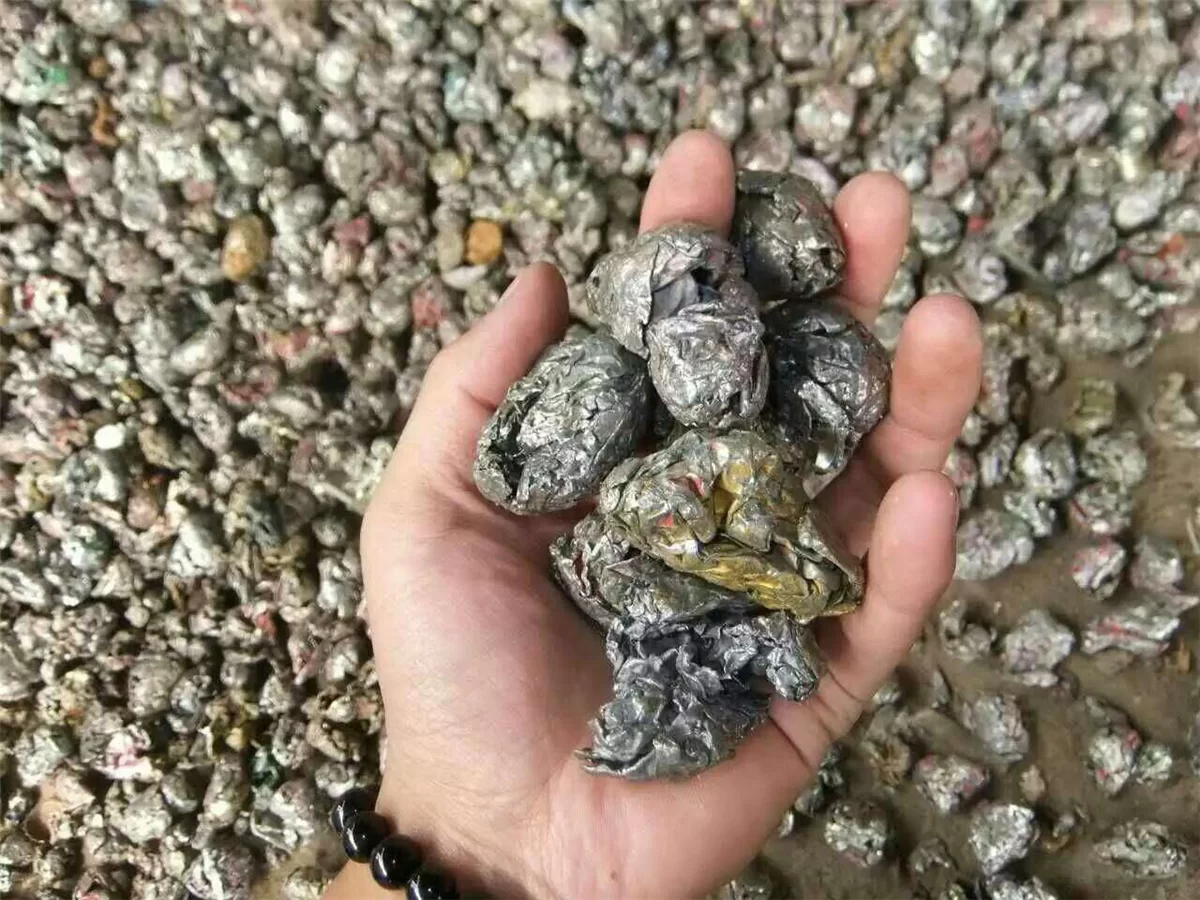
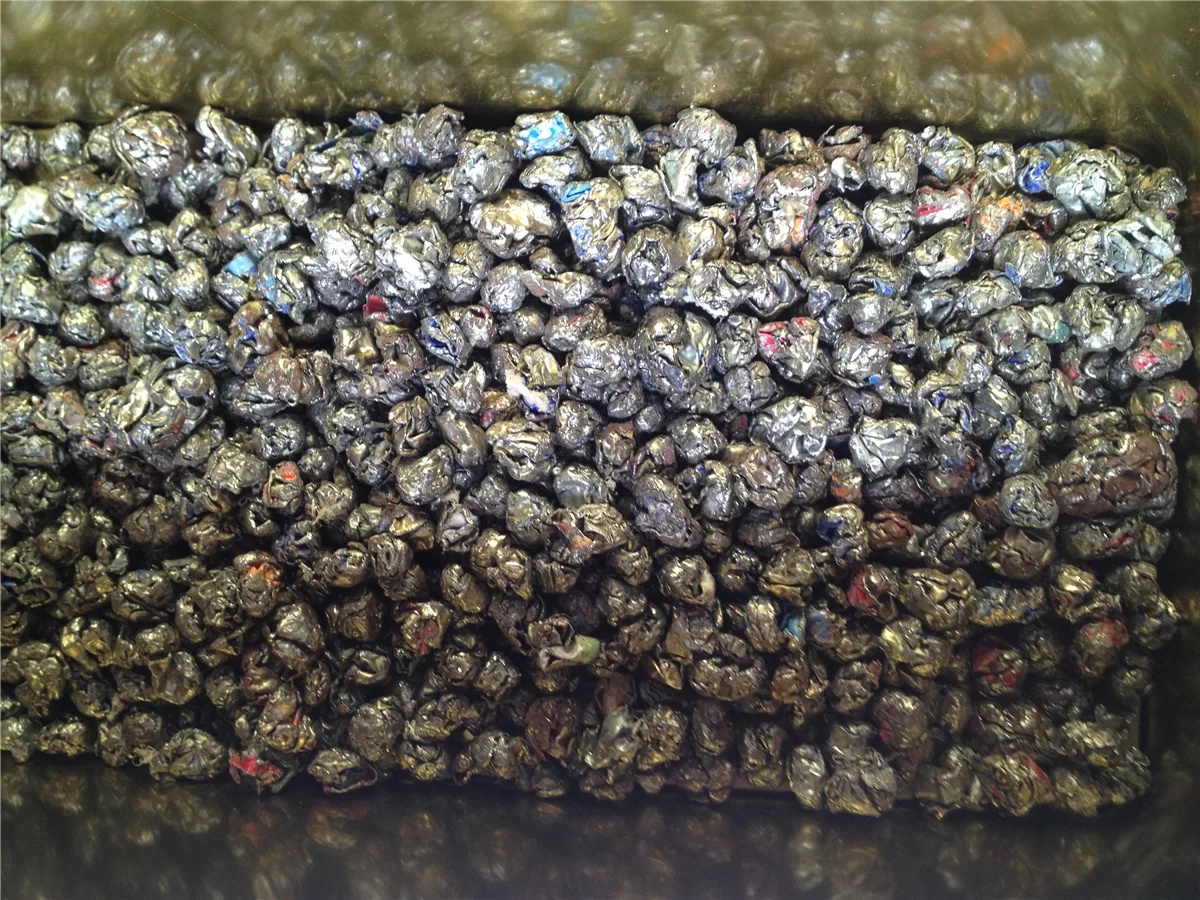
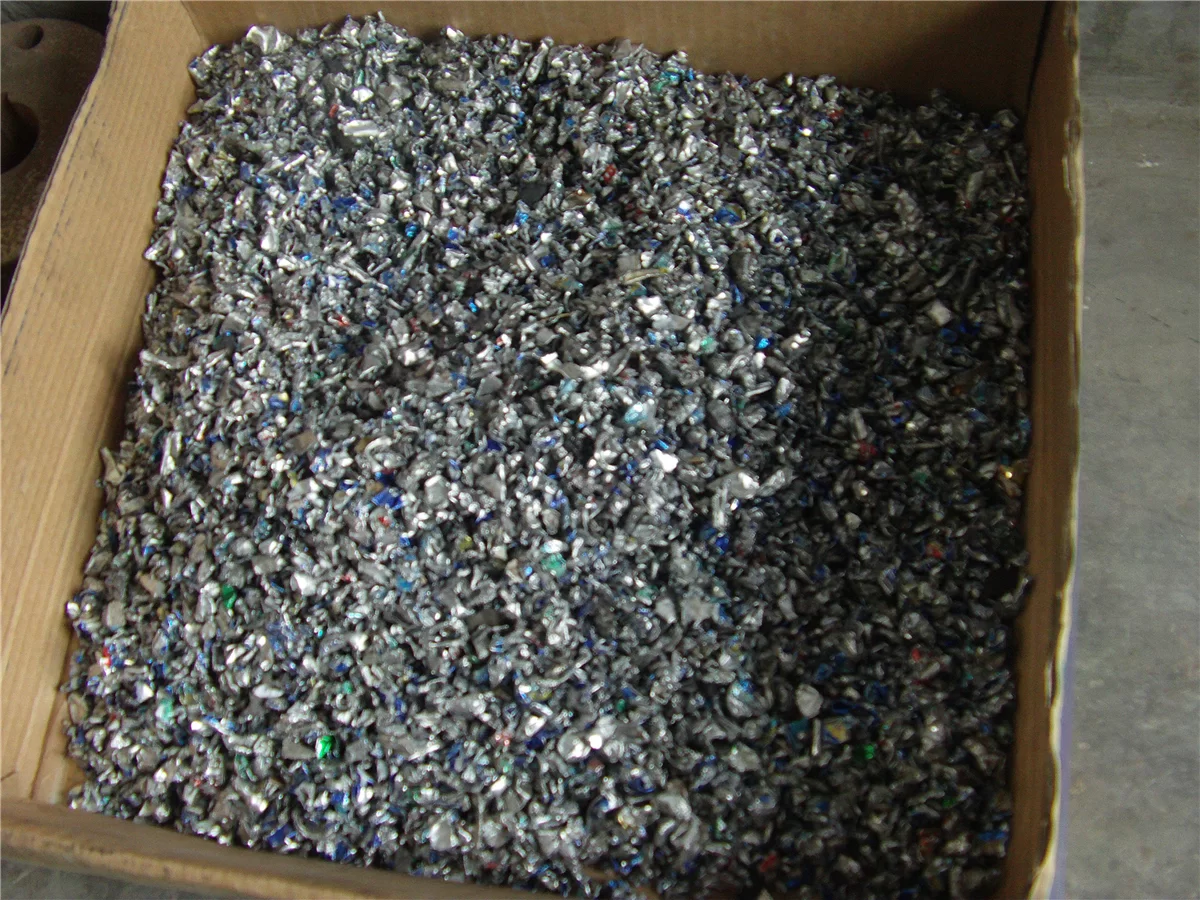
Because beverage-can aluminum is thin and ductile, the output commonly contains folded flakes, curled fragments and compact nodules rather than angular chips. This appearance is normal. Particle shape depends on can alloy, moisture, bale density, paint and coating, cutter arrangement, crusher hammers, grate opening and the selected circulation process.
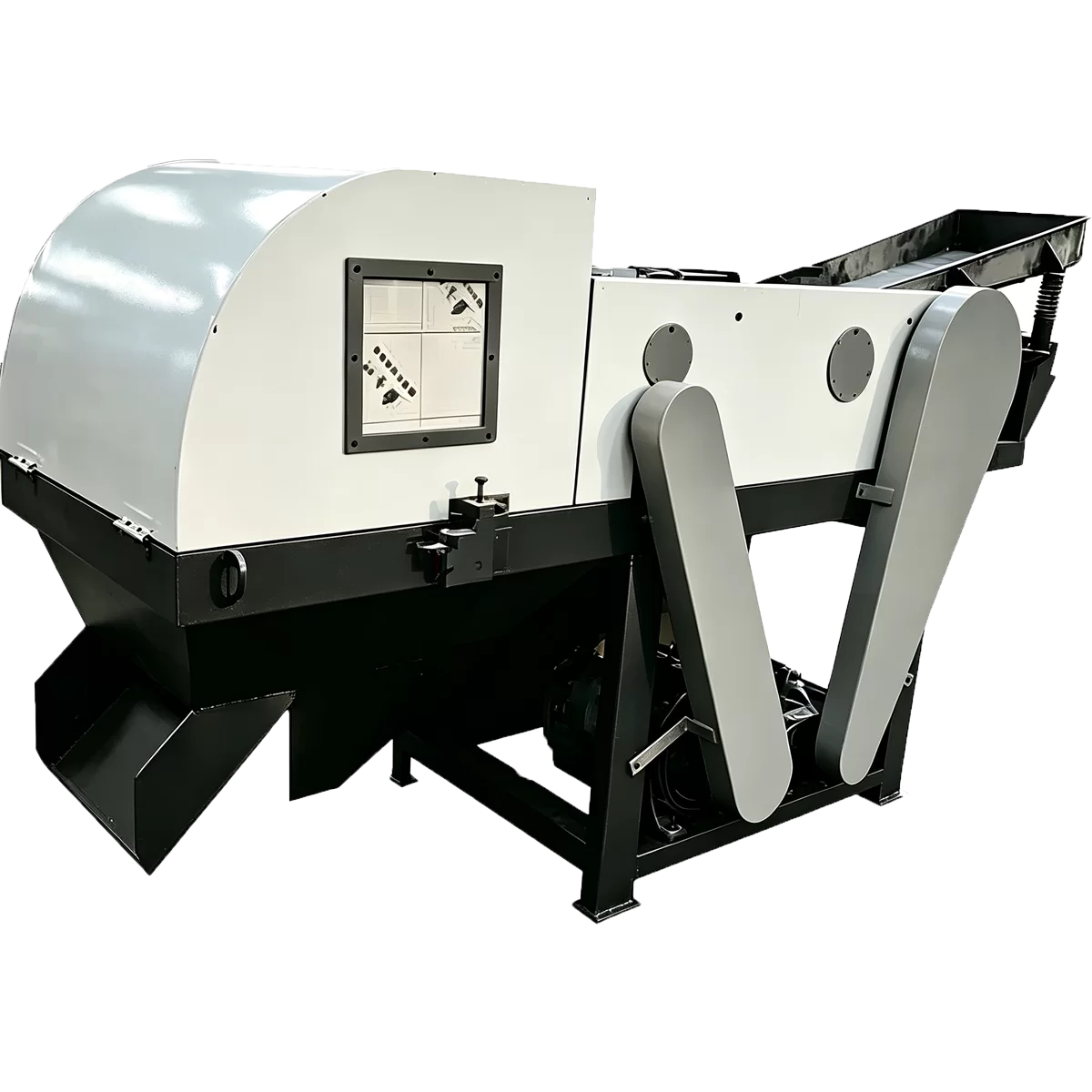
Steel cans, iron straps and ferrous attachments should be removed with a magnetic separator. Labels, plastic film, dirt and other lightweight material may require air separation or screening. If the feed includes mixed non-ferrous packaging, an eddy current separator can help recover aluminum after the material has been opened to a suitable size.
The photographs of a shredding test should be understood as an intermediate processing result unless the material has already passed through the full sorting line. A mixed discharge containing visible labels, dirt or ferrous pieces should not be described as high-purity recycled aluminum. Final purity depends on the following separation stages and the cleanliness of the incoming bales.
Before feeding, sealed cans and containers with unknown liquids, aerosols or combustible residues must be removed. Wet or contaminated bales should be inspected because trapped liquid can increase dirt, corrosion and handling problems. Steel baling wire or strapping should also be considered when selecting the feeding and magnetic-removal arrangement.
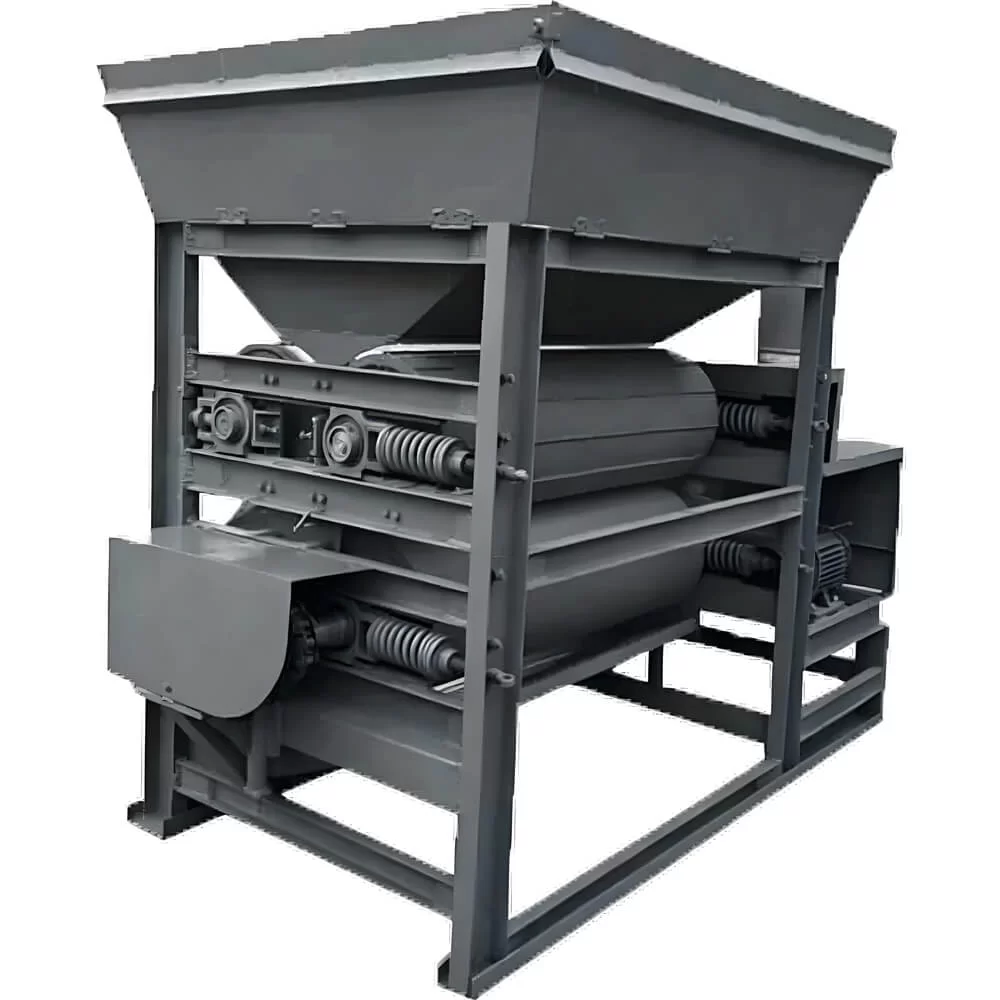
A controlled feeding conveyor prevents an entire compact bale from dropping into the shredder too quickly. Hydraulic pressing or an assisted feeding device may be used when the bale surface is smooth or difficult for the cutters to grip. The discharge conveyor then transfers the loosened cans evenly to the aluminum can bale crusher.
The practical processing effect should be judged by whether the bale is fully opened, whether nested cans are separated, whether the material flows continuously into the crusher and whether contaminants are sufficiently exposed for removal. Uniform particle size is not the only criterion, especially immediately after the primary shredding stage.
Actual capacity is affected by bale dimensions, bale density, moisture, contamination, proportion of loose cans and the required final size. A dense export bale places a different load on the equipment than a loosely compressed collection block. Representative material testing is necessary before confirming hopper size, cutter thickness, motor power, hammer configuration and grate opening.
When only loose aluminum cans are processed, the line may use lighter feeding and may not require the same bale-opening force. When compacted bales form the main feed, the inlet, shafts and drive system must be selected for repeated high-load biting. The equipment combination should therefore follow the real ratio of bales to loose cans.
For recycling yards, the useful result is an opened and reduced aluminum-can stream that can be conveyed, magnetically cleaned, screened and further sorted with less manual handling. The twin shaft shredder and aluminum can bale crusher form a staged process: the first opens and meters the feed, while the second performs further crushing and liberation.