
A recycling line can run well with one truckload and struggle with the next even when the total weight is identical. The reason is often not motor power. It is the composition and consistency of the feed. A straight load contains one clearly defined material family with a relatively stable size, density and contamination level. A mixed load combines materials with different shapes, metals, attachments and handling behavior. Treating both loads as the same feed leads to unstable capacity, unnecessary wear and inconsistent recovered products.
Google search records for the site show sustained interest in “mixed scrap loads,” “straight or mixed scrap loads,” “scrap sorting line” and related equipment. The practical question behind these searches is simple: should the material be shredded first, sorted first, or divided into separate batches before it enters the line? The answer depends on what is actually inside the load and what product the recycler needs to sell.
What Counts as a Straight Scrap Load?
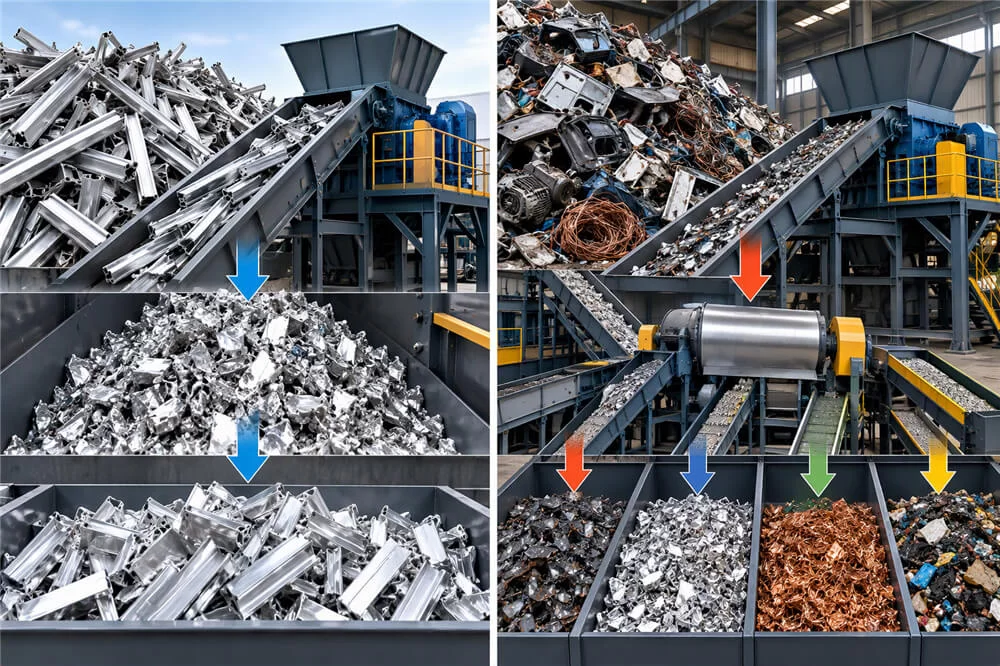
A straight load is not required to be perfectly clean. It means that the main material is predictable enough to plan the process around it. Examples include prepared aluminum profiles from one fabricator, loose steel sheet offcuts, sorted motor rotors, aluminum wheel rims with tires removed, or similar bales produced from one collection stream. The material may still contain bolts, paint, rubber or limited attachments, but the variations remain within a defined range.
Straight loads make controlled feeding easier. The operator can set a stable conveyor speed, select a suitable screen opening and estimate wear from representative samples. Magnetic separation can be sized around a known ferrous content. If the load is already a clean ferrous fraction, an eddy current separator may add little value. If it is a prepared aluminum stream, excessive sorting equipment can increase cost without creating an additional saleable fraction.
Why Mixed Scrap Loads Behave Differently
mixed scrap loads may combine light sheet metal, aluminum profiles, electric motor parts, insulated wire, castings, plastic housings, rubber and pieces of stainless steel. Their bulk density can change sharply from one bucket to the next. Long items can bridge at the hopper while dense cast pieces create sudden rotor loads. Fine material may fall through early, while composite pieces need more liberation before sorting.
A mixed metal scrap stream therefore needs more than a larger shredder. It needs inspection, controlled dosing and a clear rejection policy. Sealed containers, batteries, pressure vessels, free liquids, large solid shafts and unidentified dense components should be removed before feeding. These items are not merely contaminants; they can change fire risk, impact loading and the condition of downstream products.
Shred First or Sort First?
Pre-sorting is usually preferred when valuable intact items can be identified quickly, when unsafe components are present, or when one material can be sold without size reduction. Shredding first is useful when bulky or interlocked pieces prevent consistent conveying and when attached materials must be exposed for later separation. The objective should be liberation, not indiscriminate size reduction.
A scrap metal shredder performs low-speed, high-torque coarse size reduction for bulky and difficult-to-feed material. A scrap metal crusher uses high-speed impact and a screen to produce a smaller, more controlled fraction. These are different stages. Some mixed loads need both; some straight loads need only one. Adding a machine without proving its function can increase power consumption, fines and wear.
A Practical Process Route for Mixed Loads
A typical route begins with receiving inspection and load classification. Material is spread so hidden objects can be seen, oversized pieces are removed, and each batch is assigned to a process recipe. An apron or belt conveyor then meters the feed. Coarse shredding may open bulky pieces, followed by a scrap metal crusher only when smaller screen-controlled output or improved liberation is required.
After size reduction, a magnetic separator removes sufficiently exposed iron and steel. Screening can divide fines and coarse pieces so each fraction reaches the correct sorting stage. An eddy current separator can recover conductive non-ferrous metal from a suitable non-metallic stream, but it does not normally separate aluminum, copper, brass and zinc into four pure products. Sensor sorting, density separation or manual quality control may still be required.
For projects with changing feed, a mixed metal sorting line should be designed with bypasses and adjustable routes. A clean ferrous batch may bypass non-ferrous sorting. A prepared aluminum batch may go directly to magnetic inspection and collection. A complex composite batch may require shredding, screening and several sorting stages. Flexibility is more useful than forcing every load through every machine.
Information Needed Before Equipment Selection
The most useful data is not a general label such as “mixed scrap.” Provide photos of at least several representative loads, the percentage range of major materials, maximum piece dimensions, individual heavy-piece weight, bale dimensions, loose bulk density, moisture, oils, attached steel and expected hourly input. Also define the target products: furnace-ready ferrous scrap, an aluminum-rich fraction, separated motor metals, or merely reduced volume.
A short material trial is valuable when composition changes frequently. The test should record feed rate, current load, bridging, output size, exposed ferrous content, fines, unliberated composites and the quality of each recovered fraction. This information is more reliable than selecting a line from nameplate power alone.
Operating Rules That Keep Product Quality Stable
Keep straight loads separate when their alloy or resale value depends on identity. Do not blend clean aluminum profiles with low-value mixed residues simply to keep the conveyor full. Create receiving categories, photograph unusual loads and use batch records. When a load falls outside the approved recipe, stop and reassess it rather than compensating with a higher feed rate.
For mixed loads, stable output depends on controlled feeding. Sudden dumping hides composition changes and can overload both the shredder and sorting equipment. A metered layer allows magnetic and non-ferrous separators to see individual pieces. Regular sampling of each product bin reveals whether the problem comes from poor liberation, excessive feed depth, unsuitable particle size or a change in the incoming scrap.
Final Selection Principle
Straight loads reward a simple, dedicated process with minimum unnecessary equipment. Mixed loads require stronger receiving control, adaptable material routing and more verification after each stage. The correct line is not the one with the greatest number of machines. It is the one that turns the actual incoming load into defined saleable fractions with acceptable wear, energy use and operator control. Haoxing Machinery can evaluate representative material information and propose a process route based on feed behavior, required capacity and target products.