Project Overview
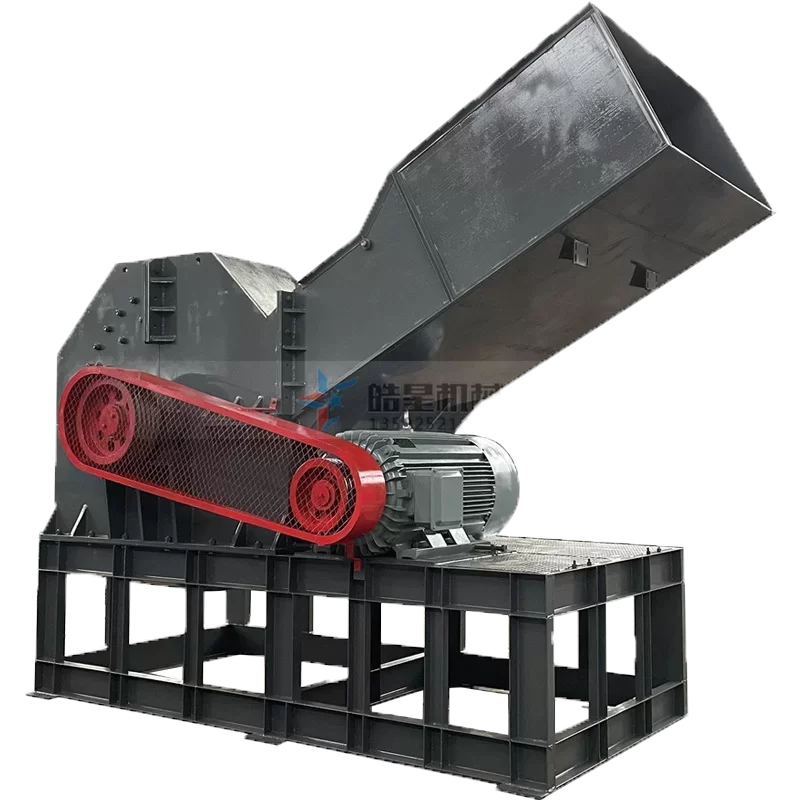
Factory inspection photos show a complete 630 crusher rotor, hammer heads, chamber liners, discharge grids, bearings and V-belts ready for overseas shipment.
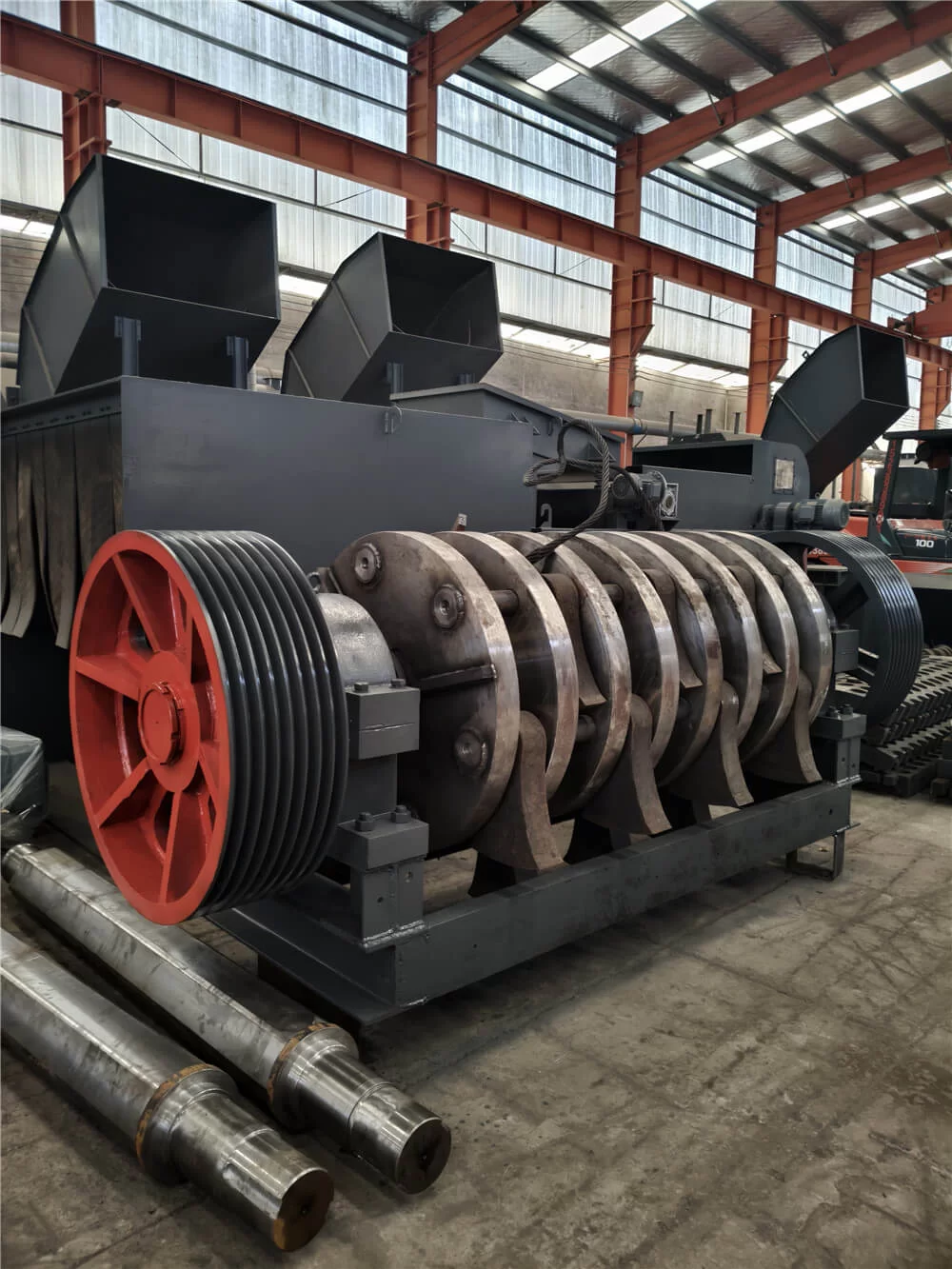
A complete 630 crusher rotor and a coordinated batch of replacement parts have passed the quantity and appearance checks before overseas shipment.
The order was prepared for the maintenance of existing metal crushing equipment. It contains a complete rotor assembly, 42 hammer heads, a full set of crushing chamber liners, a full set of discharge grids, two main shaft bearings and twenty V-belts.
These components perform different functions in the crusher, but they must work together after installation. Checking the model, dimensions and installation positions before production helps reduce the possibility of mismatch during on-site replacement.
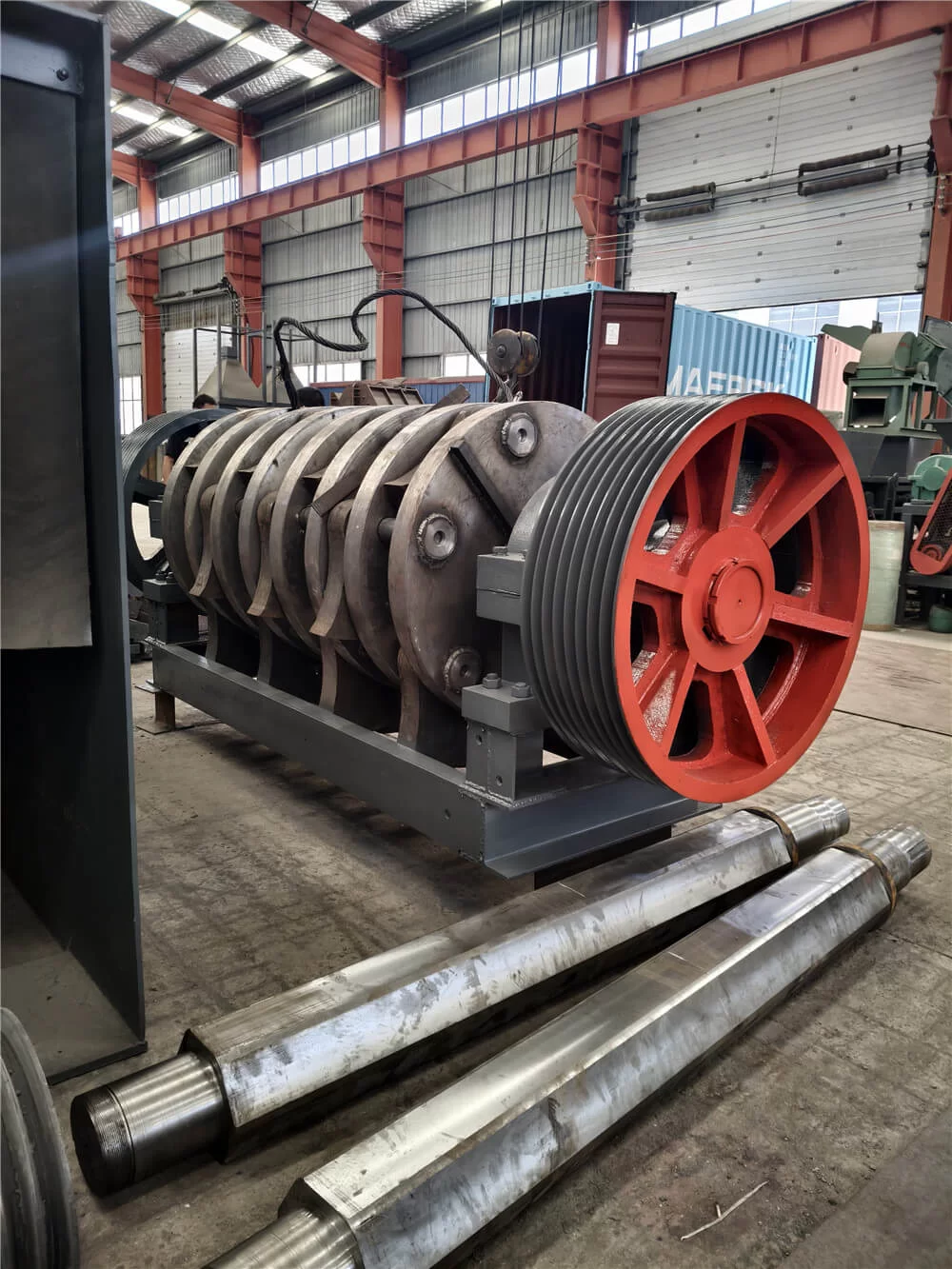
Complete 630 Crusher Rotor
The rotor is one of the main working assemblies inside a hammer crusher. It supports the hammer system and transfers the driving force from the motor and transmission system into repeated impact inside the crushing chamber.
The replacement rotor must match the existing machine in several areas:
Overall rotor dimensions
Main shaft diameter
Bearing installation positions
Hammer quantity
Hammer-pin arrangement
Rotor working width
Rotational clearance
Pulley or coupling connection
Required direction of rotation
A model number alone may not be sufficient for rotor production. Machines made in different periods may use different shaft ends, hammer arrangements or bearing positions, even when the general model name is similar.
For this reason, the original drawing, existing rotor measurements and clear photographs should be checked before a complete replacement rotor is manufactured.
Rotor Inspection Before Packing
Before packing, the rotor was visually checked for its overall condition and completeness.
The main inspection points included:
Visible shaft condition
Hammer installation positions
Rotor-disc arrangement
Welded and assembled areas
Exposed machined surfaces
Lifting and handling positions
General correspondence with the confirmed configuration
The pre-shipment check does not replace the installation inspection at the customer’s site. Shaft alignment, bearing installation, transmission connection and rotation clearance should still be confirmed during assembly.
Replacement Hammer Heads
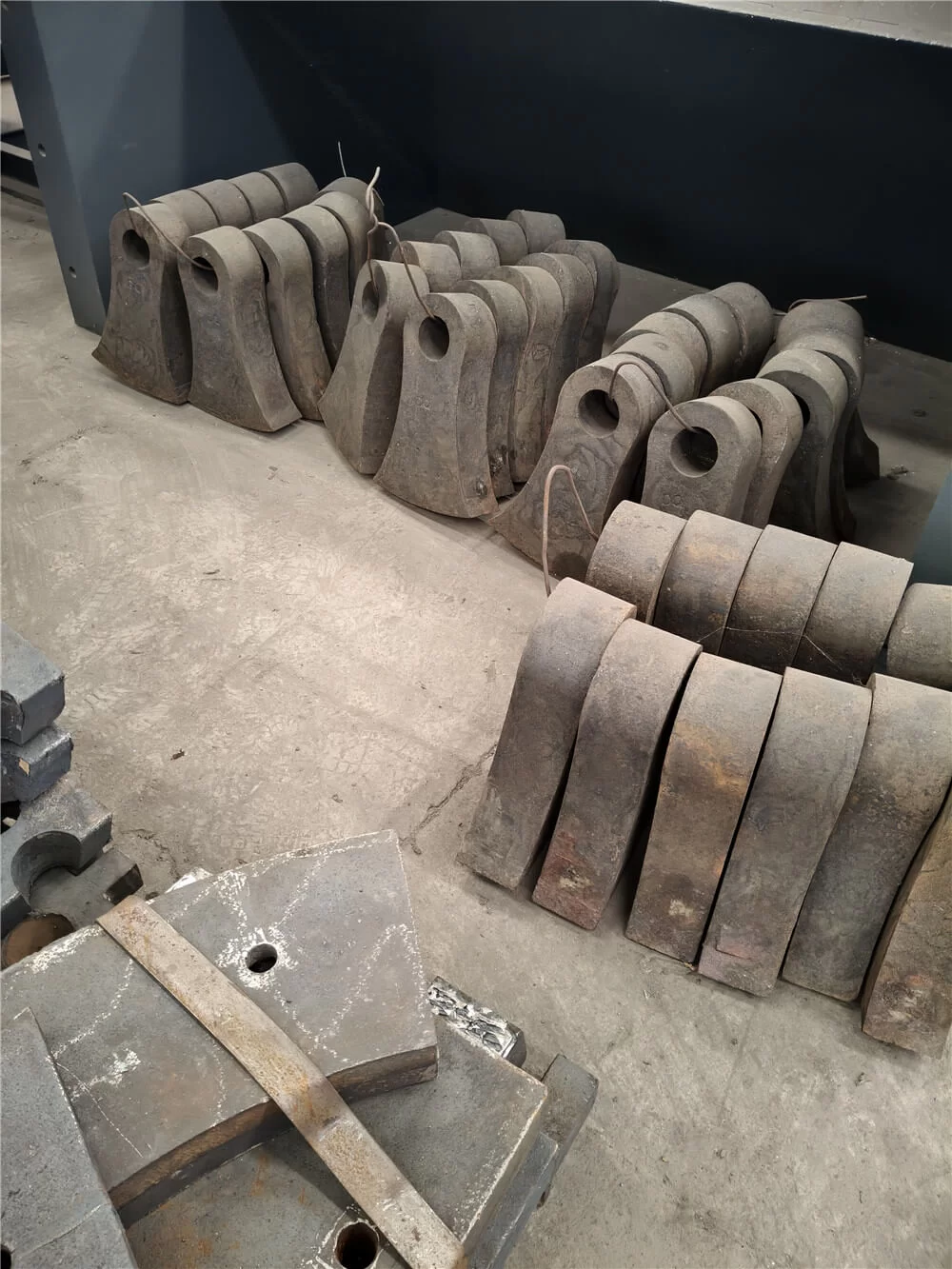
The order includes 42 hammer heads for impact crushing.
Hammer heads are exposed directly to the incoming material. They experience repeated impact and sliding abrasion during operation, especially when processing mixed scrap with changing thickness and density.
Hammer wear is affected by:
Feed material composition
Maximum feed thickness
Presence of hard or unrecognized objects
Material distribution across the inlet
Rotor speed
Continuous operating load
Grid opening and condition
Chamber liner condition
When hammer heads are installed, the rotor should remain properly balanced. Replacement parts should be arranged according to the equipment’s installation procedure rather than being fitted only according to visible wear.
Mixing heavily worn hammers and new hammers without checking weight distribution may increase vibration and place additional load on the bearings.
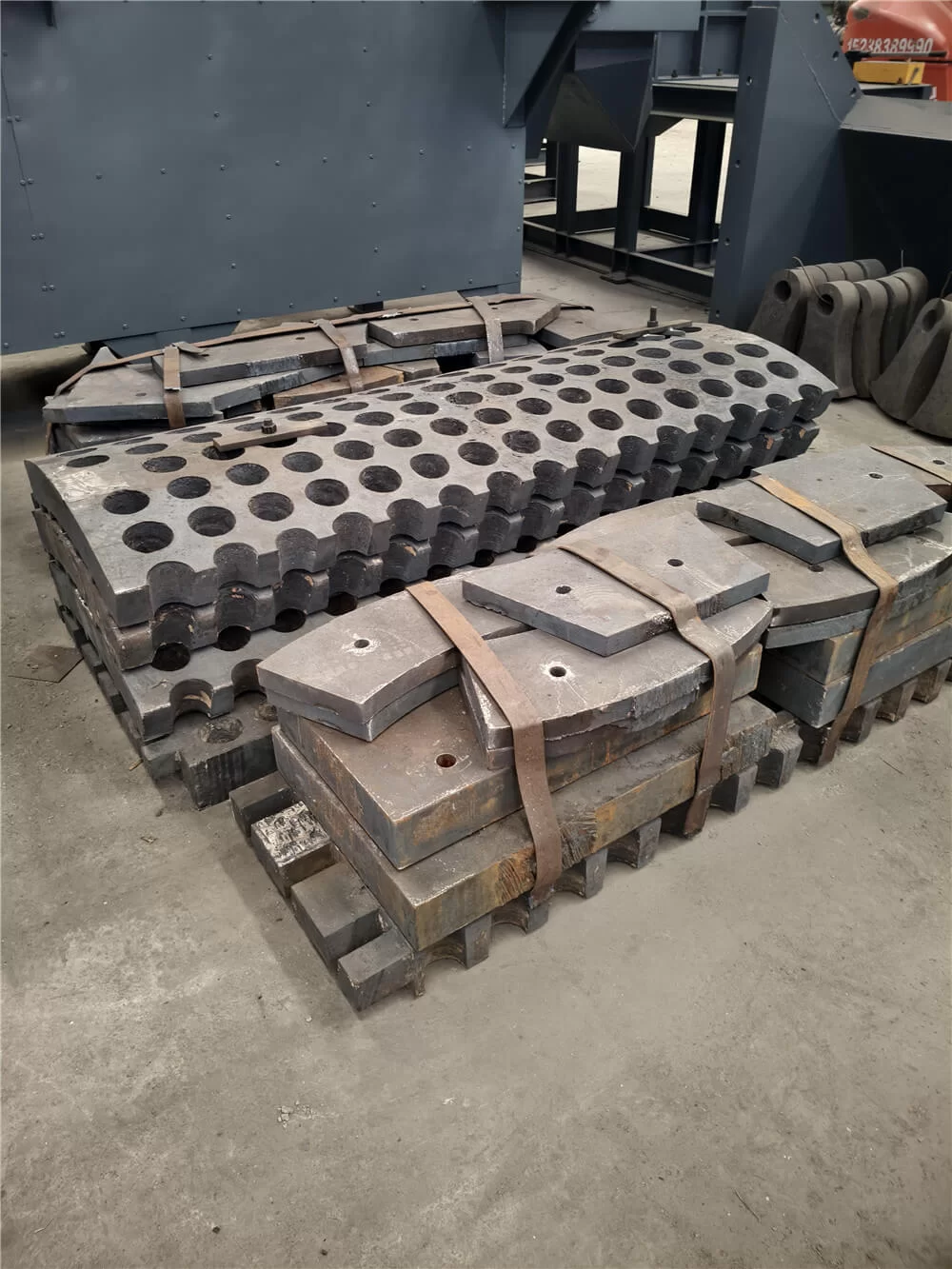
Crushing Chamber Liners
The chamber liners form a replaceable protective layer between the processed material and the main crusher structure.
During operation, scrap repeatedly strikes and moves against these surfaces. Wear is rarely identical across the entire chamber. Areas close to the rotor impact zone and material circulation path may wear more quickly.
The liner inspection should include:
Remaining thickness
Mounting-hole condition
Cracks or deformation
Loose fasteners
Uneven wear areas
Clearance around the rotor
Replacing the liners at an appropriate time helps protect the crusher body and maintain the designed internal working space.
Discharge Grids
The complete grid set controls when processed material can leave the crushing chamber.
Material remains inside the crusher until its size and orientation allow it to pass through the grid openings. The grid therefore affects more than the visible discharge size.
Grid condition can influence:
Material circulation
Residence time
Rotor load
Hammer wear
Hourly output
Oversized discharge
Formation of small particles
A worn opening may allow larger material to leave the chamber. A blocked opening reduces the available discharge area and can increase the amount of material circulating around the rotor.
Grid selection should match the processed material and required downstream result. A smaller opening does not automatically provide a better production result because it may also reduce capacity and increase repeated impact.
Main Shaft Bearings
Two main shaft bearings were included in the maintenance package.
Bearing performance depends on correct installation as well as the bearing model itself. Before replacement, the shaft and bearing seat should be inspected for wear, contamination and dimensional damage.
The installation process should confirm:
Bearing orientation
Shaft fit
Bearing-seat fit
Lubrication method
Required lubricant quantity
Seal condition
Alignment
Initial operating temperature
After installation, the crusher should be operated without material before beginning a loaded test. Bearing temperature, vibration and noise should be monitored during the initial running period.
V-Belts and Transmission Inspection
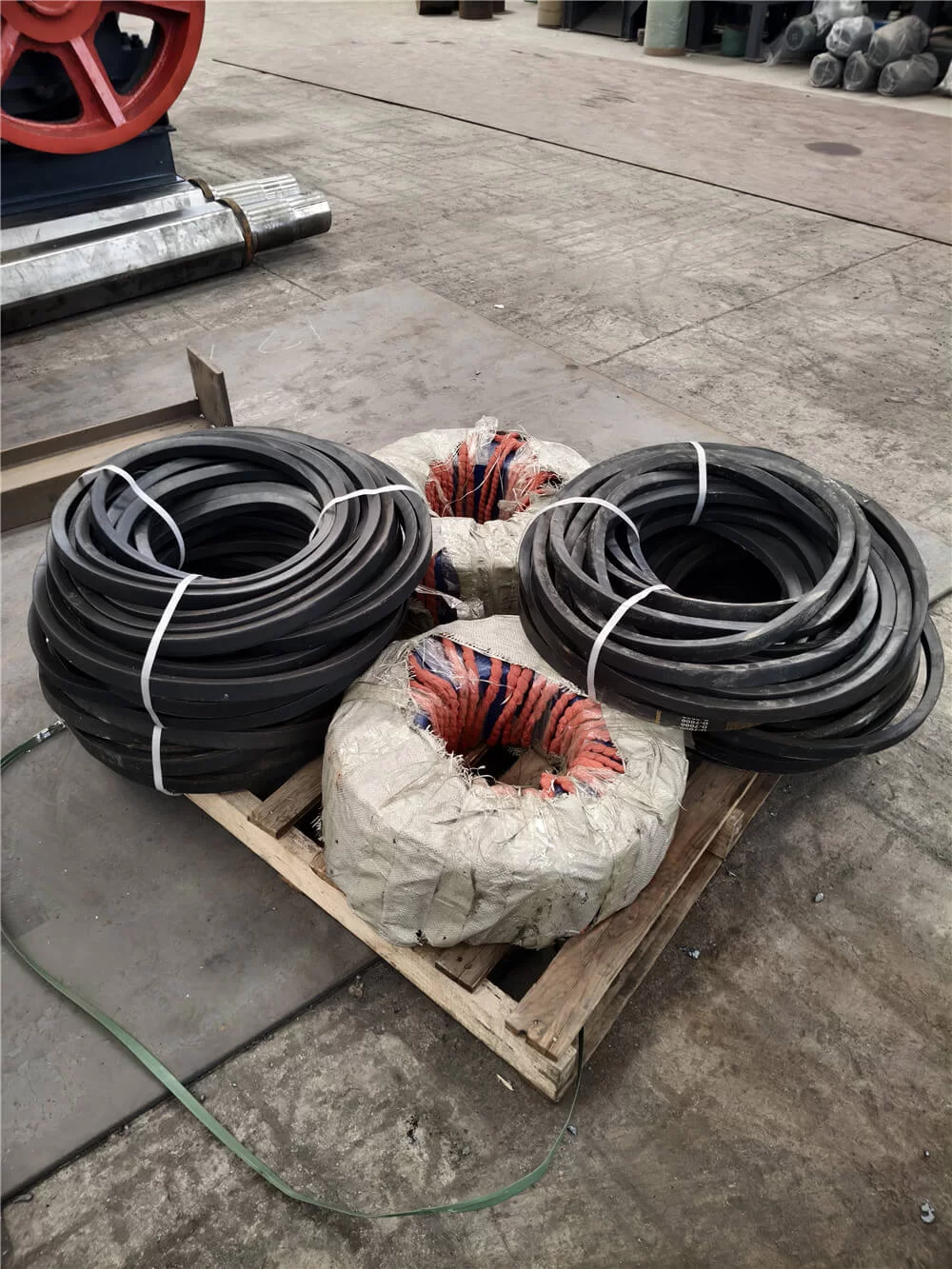
The shipment contains twenty V-belts for the crusher transmission system.
V-belts transfer power between the motor and driven equipment. Belt condition, pulley alignment and tension affect power transmission and operating stability.
During maintenance, technicians should check:
Belt section and length
Pulley groove wear
Pulley alignment
Belt tension
Guard condition
Signs of slipping or abnormal heating
If multiple belts operate as one matched group, replacing only one severely worn belt may create uneven tension. The complete transmission group should be evaluated before deciding the replacement method.
Coordinated Spare-Parts Supply
Supplying the rotor, hammer heads, liners, grids, bearings and belts together allows the customer to plan a more complete maintenance operation.
Instead of dismantling the machine several times for separate repairs, the customer can inspect the rotor system, crushing chamber and transmission components during one scheduled shutdown.
For a replacement-parts order related to a scrap metal crusher, the customer should provide accurate equipment information before production begins.
The most useful information includes:
Equipment model and nameplate
Original technical drawings
Photographs of the existing rotor
Shaft-end dimensions
Rotor working width
Hammer quantity and weight
Hammer-pin dimensions
Liner arrangement
Grid opening and overall dimensions
Bearing model
Pulley and V-belt specifications
Where original drawings are unavailable, measured dimensions should be checked more than once before manufacturing.
Pre-Shipment Quantity and Packaging Check
Before container loading, the complete order was checked against the confirmed supply list.
The inspection covered:
Rotor quantity and visible condition
Hammer-head quantity
Liner-set completeness
Grid-set completeness
Bearing models and quantity
V-belt quantity and specification
Separation of heavy and light packages
Protection of exposed surfaces
Package identification
The rotor and heavy wear parts were prepared for lifting and secured loading. Bearings and belts were packed independently to avoid compression and impact from the steel components.
Ready for Overseas Transportation
After the inspection, the complete rotor assembly and replacement parts were transferred to the container-loading area.
The shipment provides the customer with the components needed to carry out rotor replacement, chamber maintenance and transmission inspection in a coordinated manner.
Haoxing Machinery manufactures and supplies crusher rotors and replacement parts based on confirmed models, drawings, samples and installation dimensions.