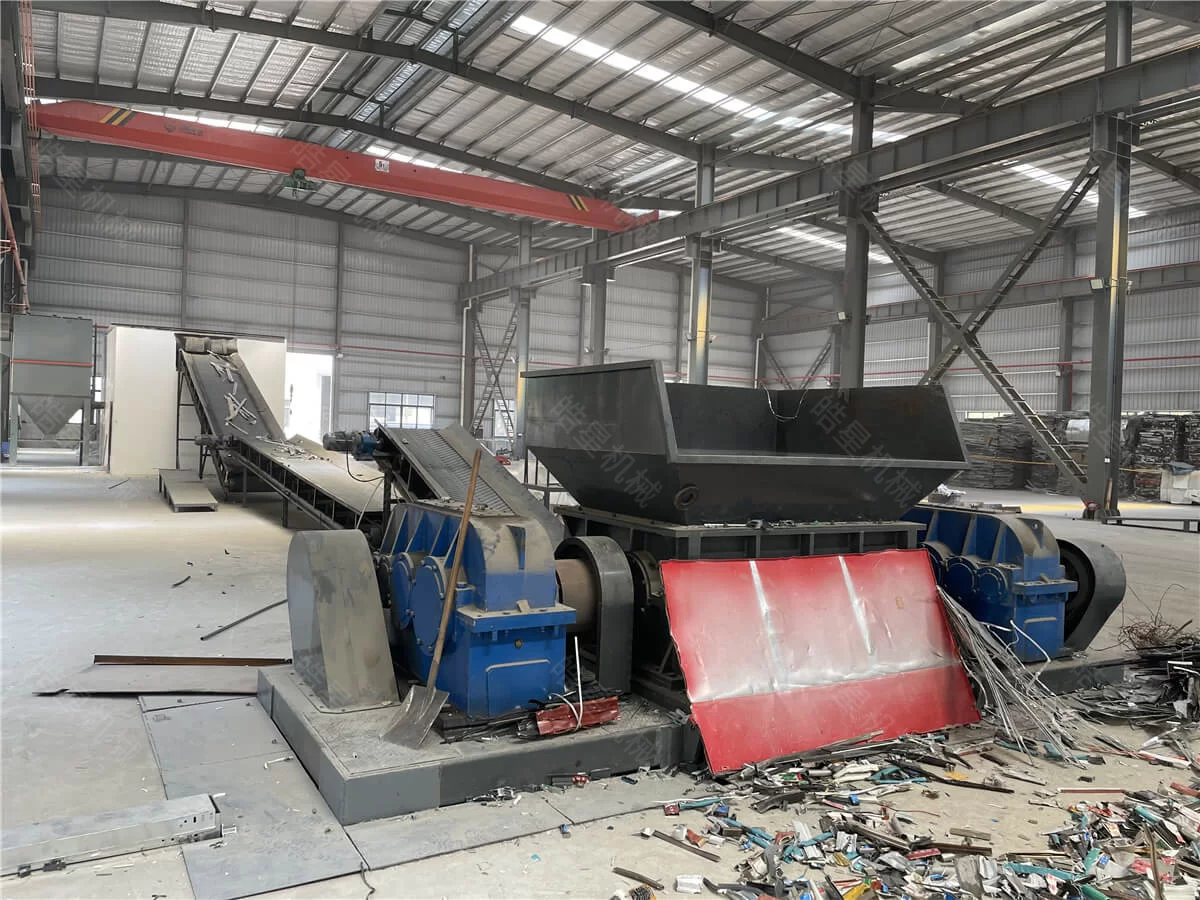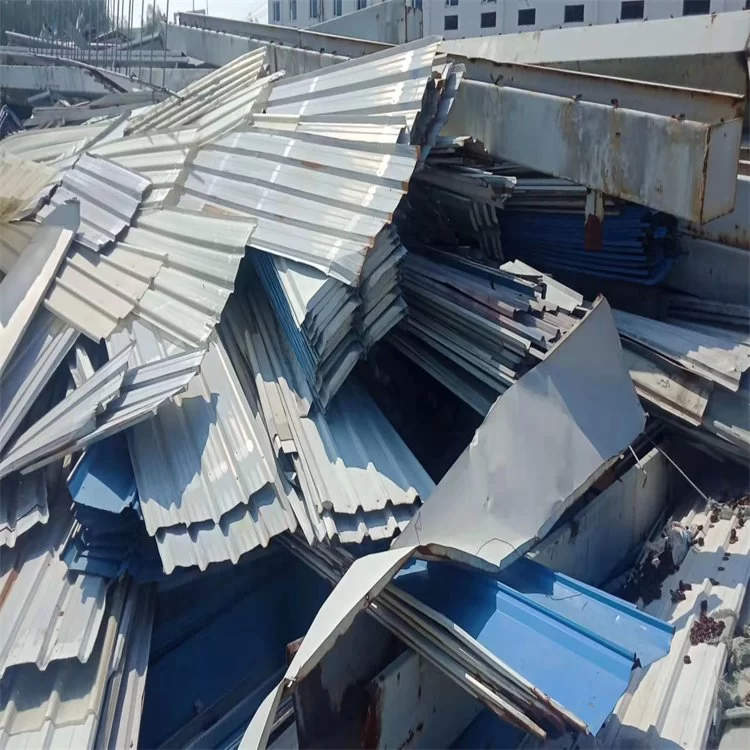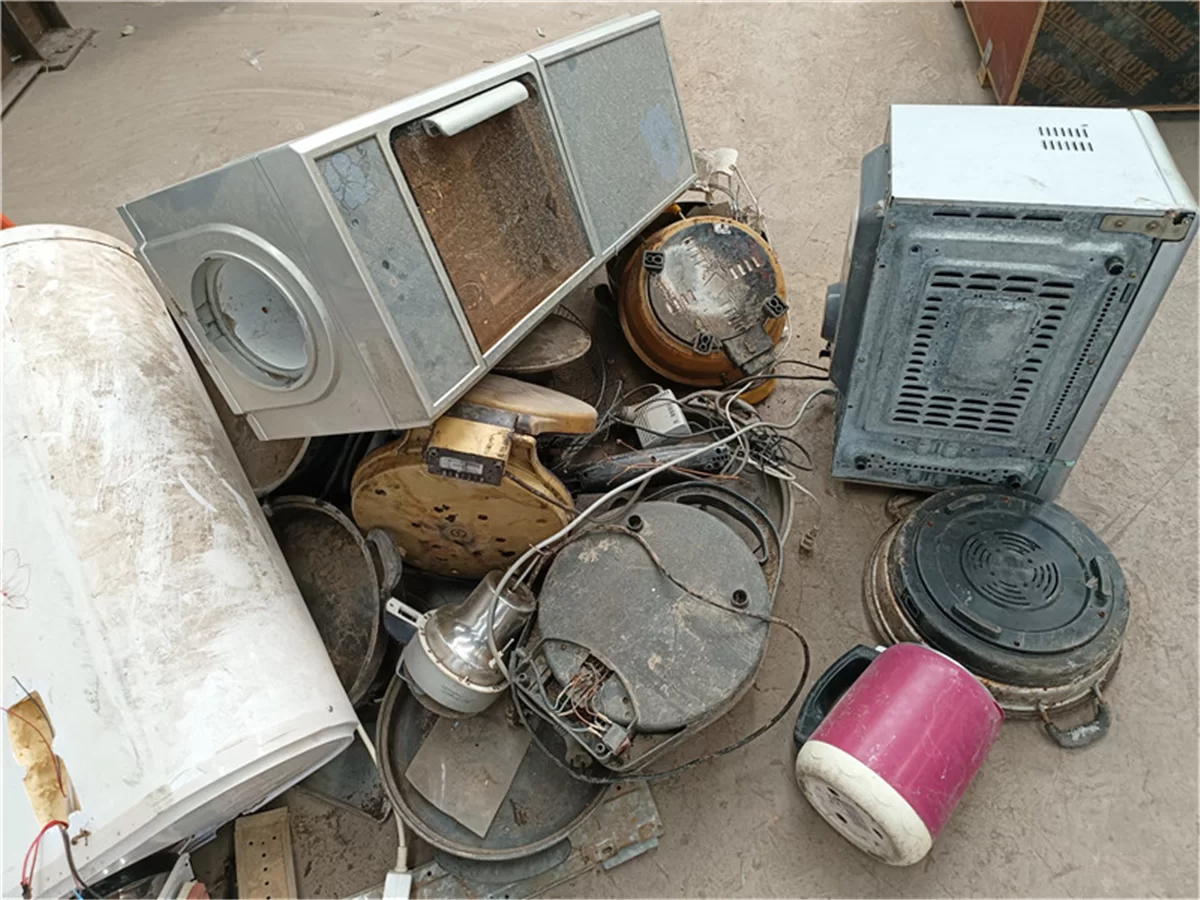

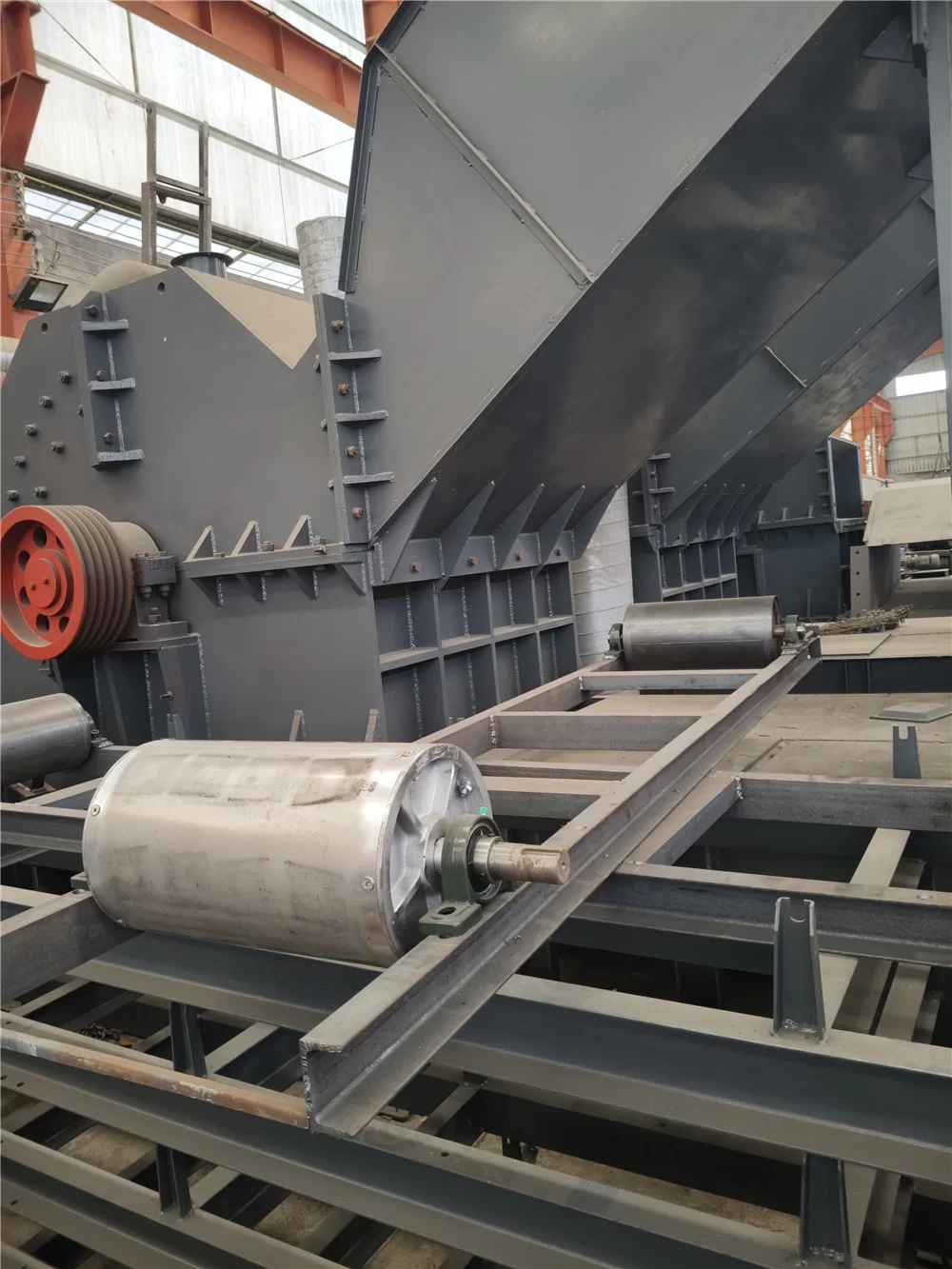
Light scrap steel can occupy a large amount of space even when its total weight is relatively low. Roofing sheets, appliance shells, empty drums and fabrication offcuts are difficult to handle when they remain long, folded or loosely stacked.
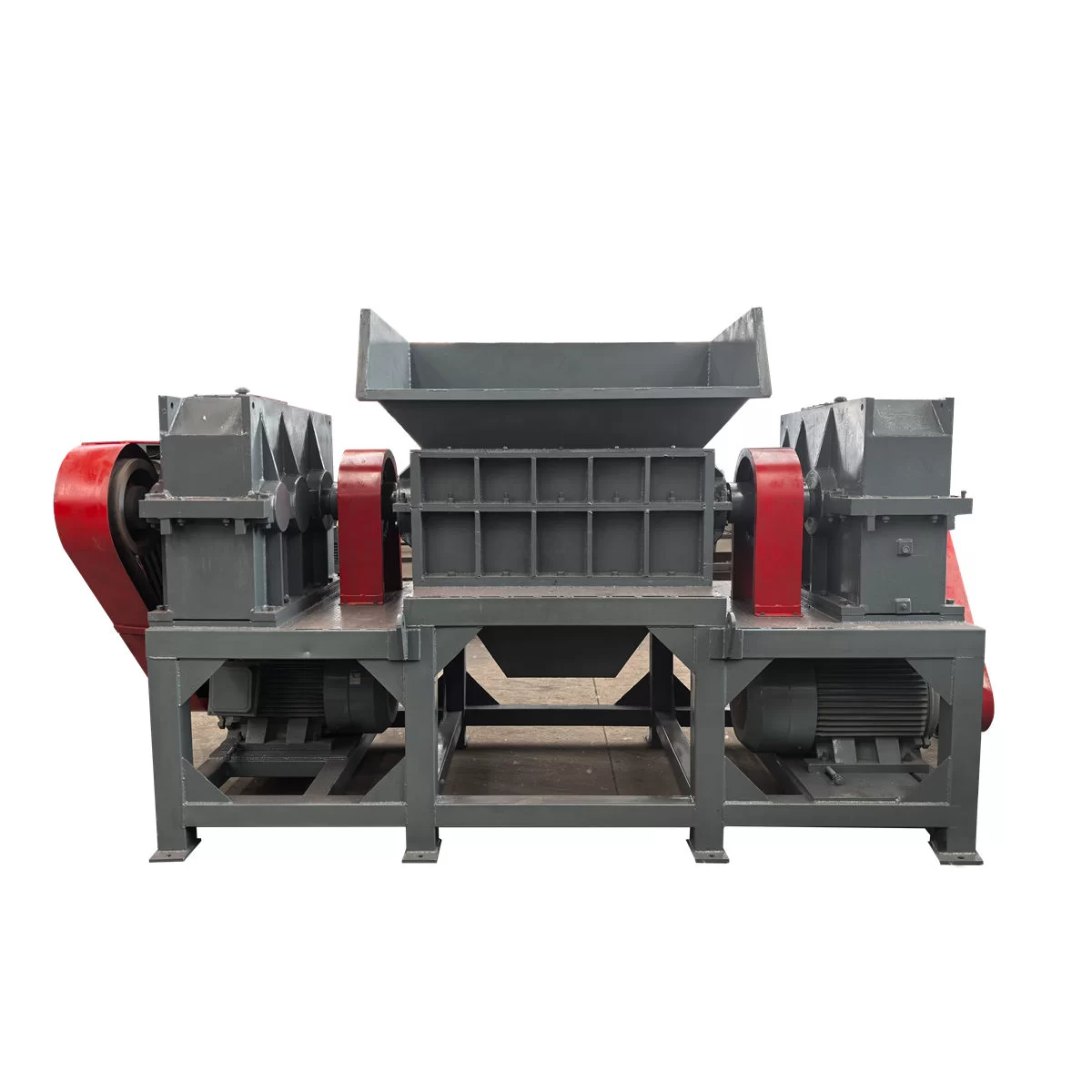
A shredder can reduce these materials into shorter and more manageable pieces, but model selection should be based on the actual scrap form rather than the general description “light scrap.”
What Is Light Scrap Steel?
Light scrap steel commonly includes:
Thin steel sheets
Color-coated roofing panels
Empty and prepared metal drums
Paint buckets
Appliance steel shells
Bicycle and motorcycle frames
Light fabrication offcuts
Prepared vehicle body panels
Tinplate packaging
Moderate-density light steel bales
These materials may be thin, but their folded shape, long dimensions and attached components can make feeding difficult.
Light scrap should not be confused with heavy structural steel, solid shafts, rails or thick castings.
When a Twin Shaft Shredder Is Suitable
A twin shaft shredder is suitable when the main objective is:
Reducing bulky material volume
Shortening long or folded sheet metal
Opening moderate-density bales
Improving conveyor feeding
Preparing scrap for inspection
Preparing material for secondary crushing
The machine works at low speed and high torque. Two cutter shafts grip, fold, shear and tear the incoming scrap.
The discharged pieces are coarse and irregular. A twin shaft shredder does not normally produce the smaller, screen-controlled output associated with a hammer crusher.
Material Shape Matters as Much as Thickness
A flat steel sheet and a folded appliance panel with the same nominal thickness do not enter the machine in the same way.
Selection should consider:
Flat or folded condition
Maximum width and length
Hollow or layered construction
Reinforced edges
Attached hinges and brackets
Whether several sheets are compressed together
Presence of plastic or insulation
A thickness value without material photos is not enough for accurate selection.
Feed Opening and Cutting Chamber
The hopper and cutting chamber must accommodate the maximum prepared material dimensions.
Long panels may bridge across a small feed opening. Wide sheet sections may also need folding, cutting or controlled loading before shredding.
The feeding system should guide the material toward the cutter shafts without allowing large batches to enter at once.
Cutter Width and Hook Design
Cutter width and hook profile influence how the shredder grips sheet metal.
A suitable hook must penetrate, catch or fold the material before shearing begins. If the material is too wide, smooth or tightly layered, the cutter may have difficulty establishing a stable grip.
The final cutter configuration should be selected according to:
Material thickness
Sheet width
Folded condition
Required capacity
Desired discharge condition
Probability of contaminants
Capacity Should Be Based on Real Material
Nominal motor power does not provide a reliable capacity figure by itself.
Actual throughput depends on:
Bulk density
Maximum dimensions
Feeding continuity
Material thickness
Cutter arrangement
Automatic reversing frequency
Attached non-metallic material
Required number of cutting passes
Thin loose sheets may occupy the hopper quickly while contributing relatively little weight. A machine can appear full but still process fewer tonnes per hour than it would with denser scrap.
Shredder or Crusher?
Choose a shredder when the incoming material is bulky, long, folded, compressed or difficult to feed.
Choose a crusher when the prepared material already fits the inlet and the process requires:
High-speed hammer impact
Smaller pieces
Screen-controlled discharge
Greater material liberation
Increased bulk density
Some projects use both machines. The shredder performs coarse preparation, and the crusher completes secondary size reduction.
Appliance Shell Requirements
Prepared appliance shells can be suitable light scrap, but complete appliances should not be fed without dismantling.
Depending on the appliance type, remove:
Refrigerants
Compressor oil
Batteries
Capacitors
Glass
Concrete counterweights
Motors
Large electrical parts
Unidentified liquids
The remaining steel shell can then be evaluated according to its dimensions and attached materials.
Information Needed for Selection
Provide:
Material photos and videos
Maximum dimensions
Typical steel thickness
Bulk density if available
Loose or baled condition
Attached materials
Required hourly capacity
Preferred feeding method
Required discharge condition
Planned downstream process
Conclusion
The correct light scrap shredder is selected from the material shape, feeding dimensions, thickness, density and required downstream result.
Avoid selecting a machine only from motor power or a general hourly capacity. Representative material information gives a much better basis for choosing the cutting chamber, cutter profile, feeding system and drive configuration.