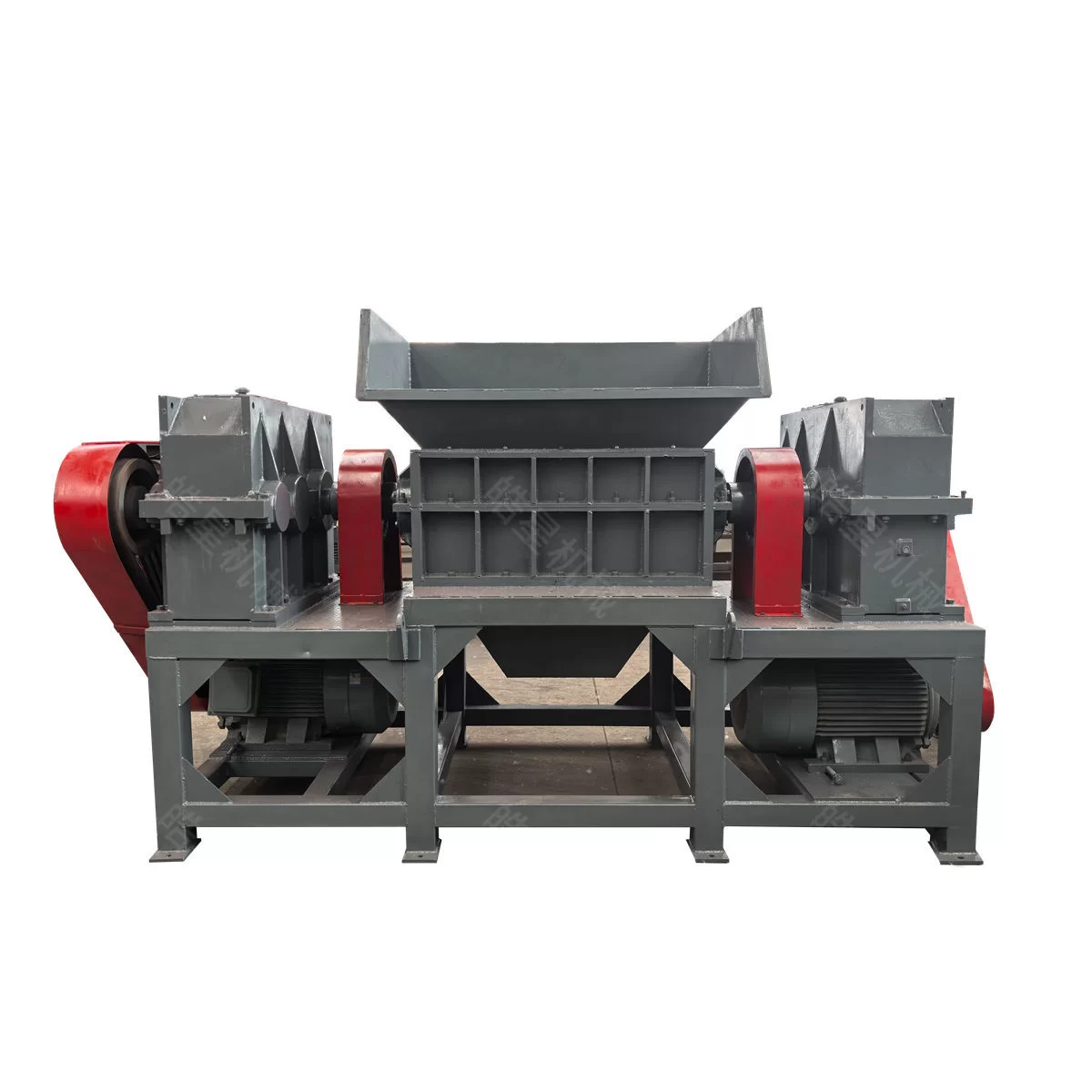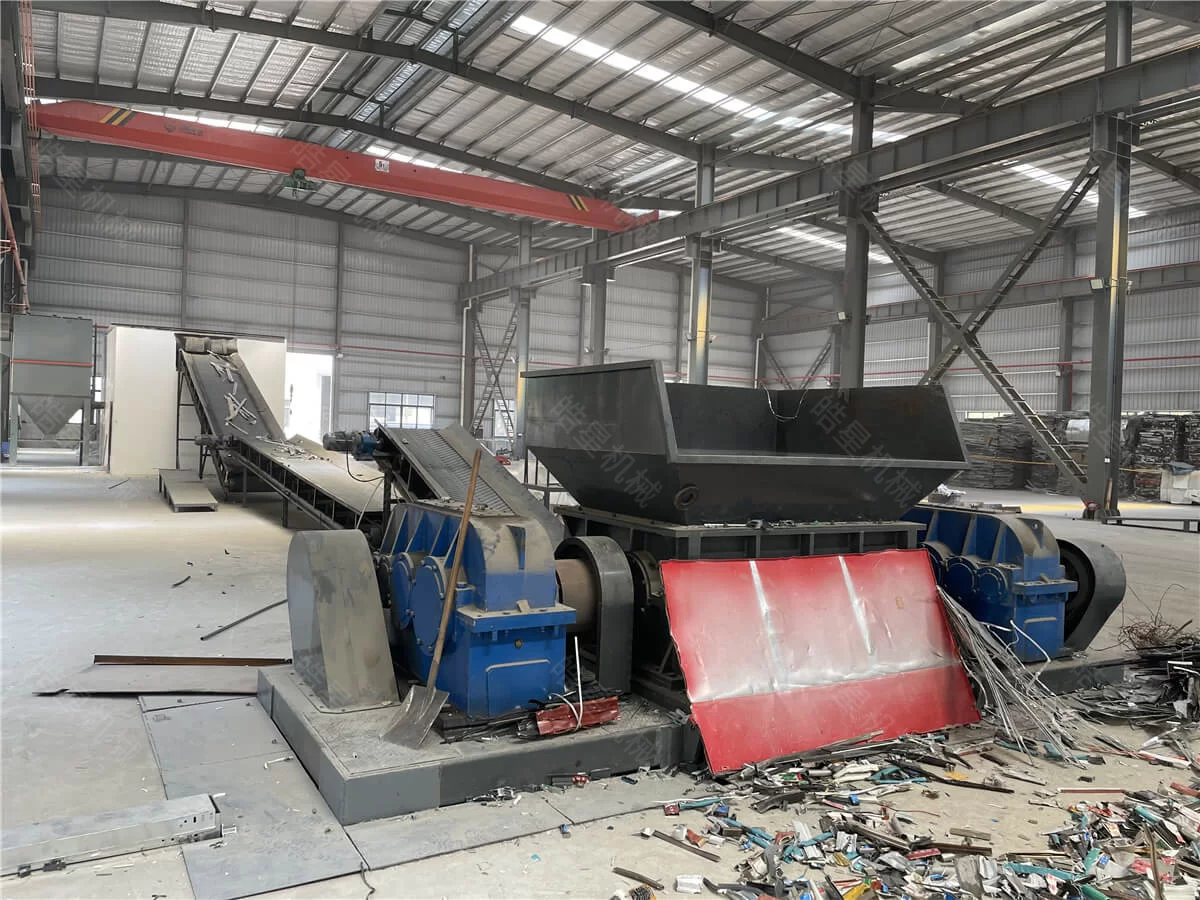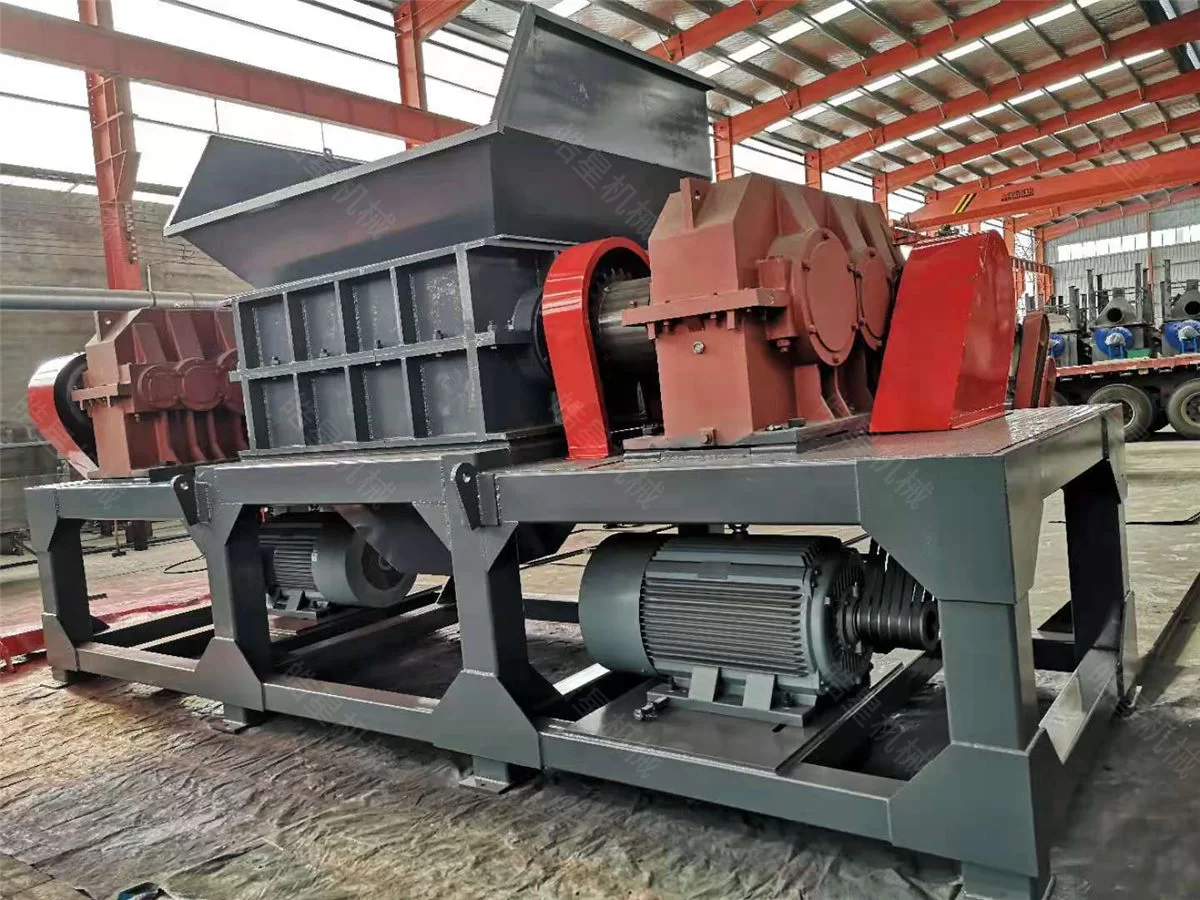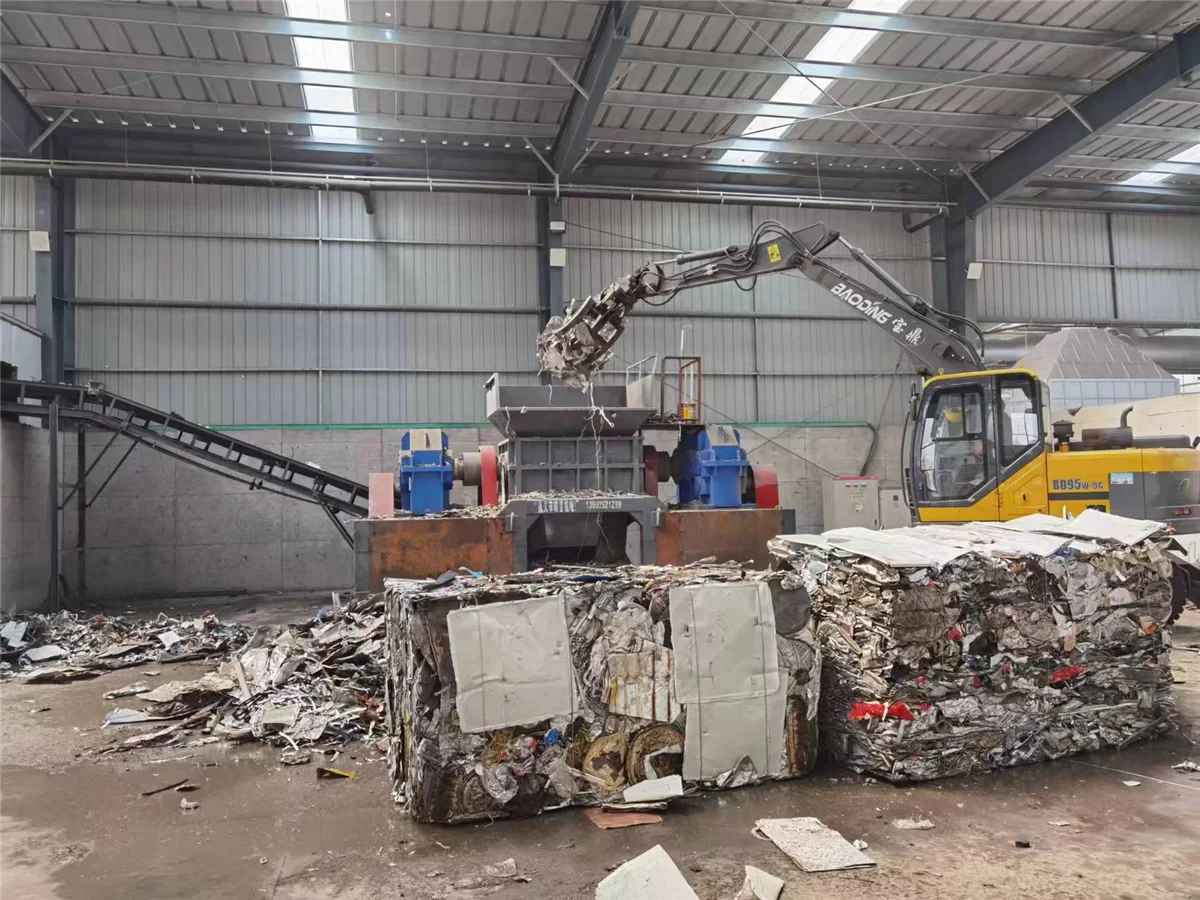

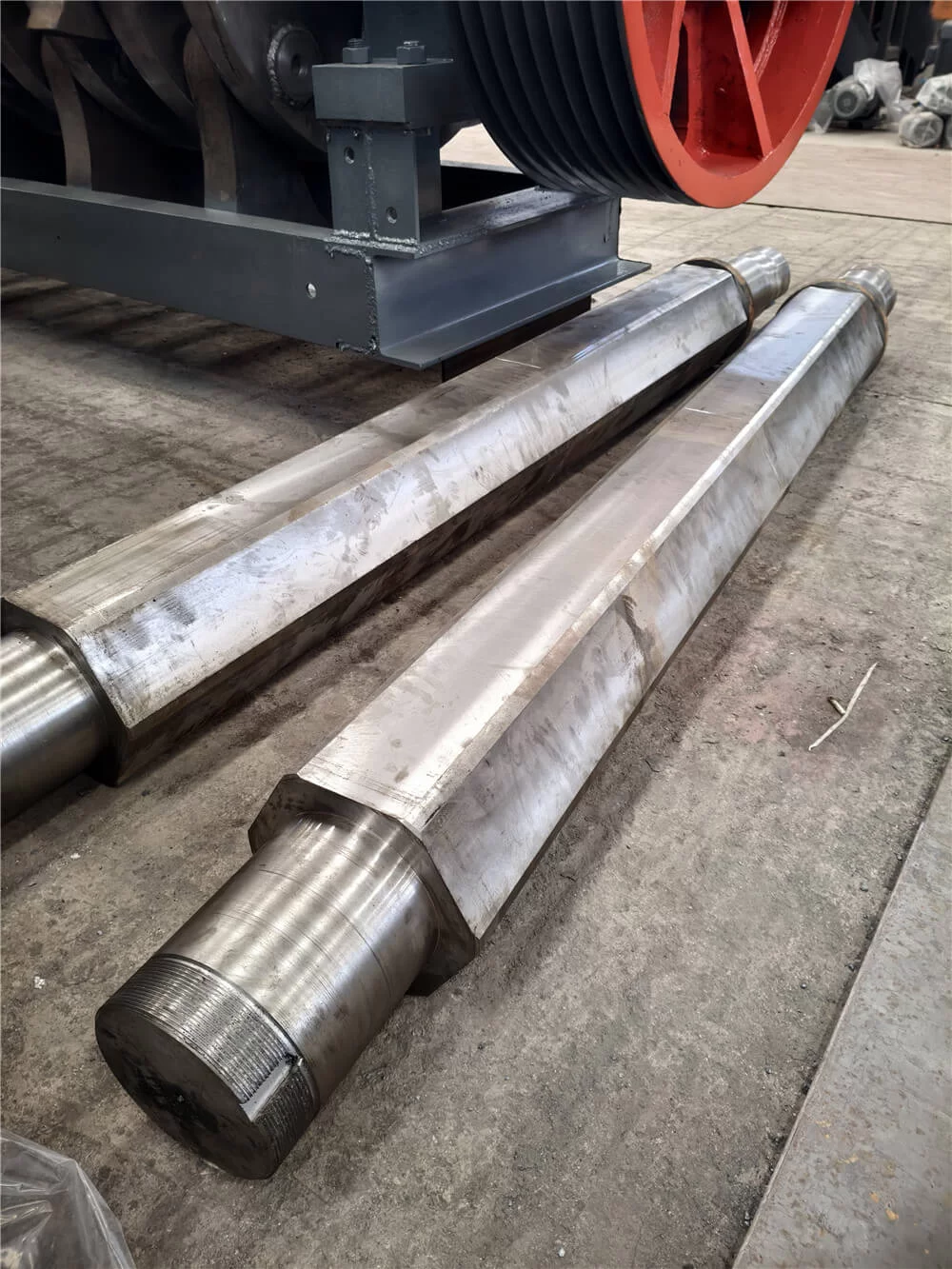
A shredder may be described as a two-ton-per-hour or five-ton-per-hour machine, but that figure has limited value unless the material and test conditions are also stated.
The same shredder can process very different weights of loose sheet metal, compressed bales and dense production offcuts during one hour. Motor power and cutting chamber size matter, but neither provides an accurate capacity figure on its own.
A practical throughput calculation should be based on continuous loaded operation with representative material.
What Does Shredder Throughput Mean?
Shredder throughput is normally expressed in kilograms or metric tons processed per hour. Before comparing figures, it is important to determine what has actually been measured.
Several different figures may be presented as capacity:
Material loaded into the hopper
Material pulled into the cutting chamber
Material discharged from the shredder
Material collected after removing contaminants
Qualified material delivered to the next processing stage
These values are not always the same.
For equipment selection, the most useful figure is the weight of material discharged during a defined period of stable operation. If the project includes screening or sorting, the weight of qualified downstream product should be reported separately.
Basic Throughput Calculation
The basic formula is:
Hourly throughput = discharged material weight ÷ effective test time
For example, if a shredder discharges 750 kilograms during a continuous 30-minute test:
750 kg ÷ 0.5 hour = 1,500 kg/h
The test report should also record:
Total material prepared
Material actually fed
Material remaining in the hopper
Material discharged
Test start and finish times
Automatic reverse time
Feeding interruptions
Downtime caused by material inspection
Without these records, a short peak result can easily be mistaken for continuous capacity.
Why Bulk Density Changes Hourly Output
Bulk density has a direct effect on how much weight enters the machine with each loading cycle.
Loose roofing sheets or appliance shells may fill the hopper quickly but contain relatively little weight. A compact bale of similar external dimensions may contain several times more metal.
This means that two materials can occupy the same hopper volume while producing very different hourly tonnage.
Bulk density should therefore be considered together with:
Maximum material dimensions
Individual piece weight
Material thickness
Bale weight and compression density
Feeding method
Cutting resistance
A high-density feed does not automatically produce higher capacity. Dense material may increase cutter load, reversing frequency and the time required to complete each cutting cycle.
Feed Shape Is as Important as Thickness
A thickness value alone does not fully describe a scrap material.
A flat sheet, a folded appliance panel and several sheets compressed into a bale can have the same nominal thickness but behave differently in the cutting chamber.
Long sheets may bridge across the hopper. Folded metal can resist cutter penetration. Loose wire and narrow strips may wrap around shafts or collect near the discharge area.
To estimate capacity accurately, the supplier should review photographs and videos showing the actual feed condition, not only a written material name.
Loading Intervals Affect the Result
An operator using a grapple may load one bale every few minutes. A conveyor can provide a steadier flow, but its speed must match the shredder load.
If several batches are dropped into the hopper at once, the machine may appear to have high instantaneous capacity. The cutting chamber may then become overloaded, causing frequent reverse cycles and uneven discharge.
A reliable test uses controlled feeding over a sufficient period. The operator should avoid long empty-running intervals as well as deliberate overfeeding.
The loading method should be recorded because it forms part of the capacity result.
How Automatic Reversing Affects Capacity
Automatic reversing protects the shredder when the load exceeds the preset current or torque condition. It is an important function, but frequent reversing reduces effective production time.
Occasional reversing may be normal when opening metal bales or handling folded sheet. Repeated reversing can indicate:
The feed is too dense
Material dimensions are excessive
The cutter hook cannot grip the material correctly
Several heavy pieces entered together
The selected motor or reducer configuration is unsuitable
Unsuitable solid metal is mixed with the feed
A capacity test should record both the number and total duration of reverse cycles.
Capacity Should Be Measured with Representative Material
Testing with thin, loose sample material does not prove capacity for dense bales or reinforced appliance shells.
The test feed should represent normal production, including the expected range of:
Dimensions
Thickness
Density
Contamination
Bale weight
Attached components
If the customer regularly receives several material grades, the more difficult grade should also be tested. Alternatively, separate capacity ranges can be stated for each feed category.
Baled Scrap Capacity
For baled scrap, capacity can also be checked from the number and weight of bales processed.
For example:
Average bale weight: 300 kg
Bales processed in one hour: 4
Total discharged material: approximately 1,200 kg
This gives an approximate throughput of 1.2 t/h, subject to material loss and any residue remaining inside the machine.
The following bale information is required:
Length, width and height
Average and maximum weight
Approximate density
Main metal type
Binding method
Maximum material thickness
Internal contaminants
Two bales of the same size should not be assumed to create the same load.
Loose Light Scrap Capacity
Light scrap steel presents a different problem. The material can occupy considerable space while contributing limited weight.
Large roofing sheets, prepared appliance shells and empty drums may require frequent loading. If the feed opening is too small or the material is not prepared correctly, bridging can reduce the actual output.
For loose light scrap, the test should record both:
Weight processed per hour
Approximate loaded volume per hour
Volume data helps explain why a machine processing bulky scrap may show a lower tonnage than the same model processing denser prepared material.
Discharge and Downstream Equipment Can Limit Capacity
The shredder may not be the only capacity limit.
Actual line output can also be restricted by:
Discharge conveyor width
Magnetic separator capacity
Screening area
Secondary crusher feed opening
Dust collection performance
Storage-bin volume
Manual sorting speed
If the discharge conveyor cannot remove material fast enough, scrap may accumulate below the cutting chamber. A production line should therefore be rated according to its slowest continuous processing stage.
Recommended Capacity Test Method
A practical factory test can follow these steps:
Weigh a representative batch of material.
Record the feed dimensions and condition.
Start the shredder and downstream conveyors.
Establish a stable feeding rate.
Run continuously for at least 30 to 60 minutes where sufficient material is available.
Record any stops, reverse cycles and blockages.
Weigh the discharged material.
Record residue remaining in the hopper and chamber.
Calculate actual hourly output.
Document the discharge condition with photographs and continuous video.
A short demonstration confirms that the machine can process the material. A longer controlled test provides a more useful capacity result.
Information Required for a Capacity Estimate
Before requesting a throughput guarantee, provide:
Clear material photographs
A working or handling video
Maximum dimensions
Typical thickness
Bulk density, if available
Bale dimensions and weight, where applicable
Required discharge condition
Daily operating hours
Planned feeding method
Downstream process
The capacity should then be stated for the defined material and operating conditions.
Conclusion
The actual throughput of a scrap metal shredder is not determined by motor power alone. It depends on feed density, material shape, loading intervals, cutter configuration, reversing time and discharge conditions.
The most reliable figure comes from a continuous test with representative material. When comparing equipment quotations, check how the capacity was measured, what material was used and whether downtime or downstream restrictions were included.