Project Overview
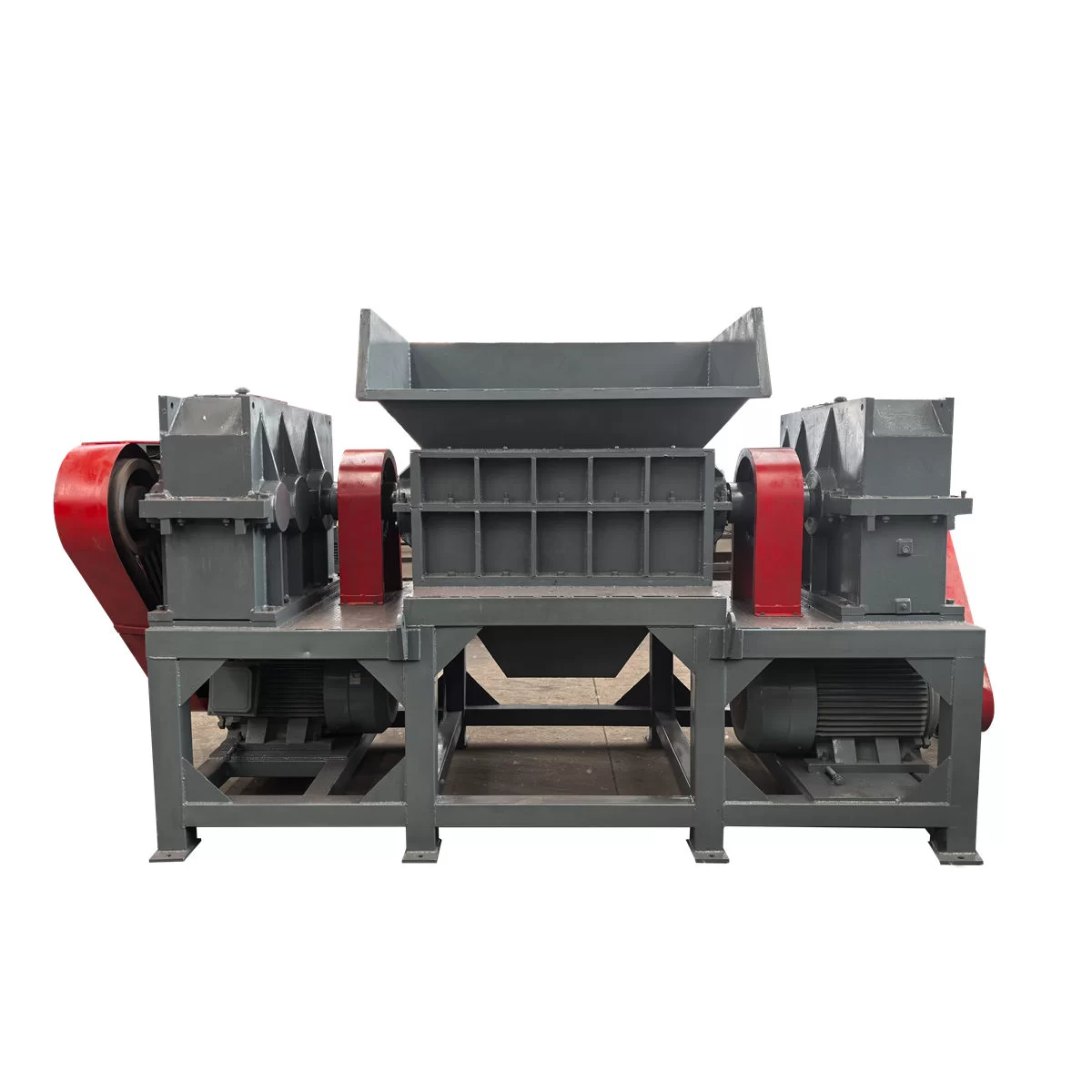
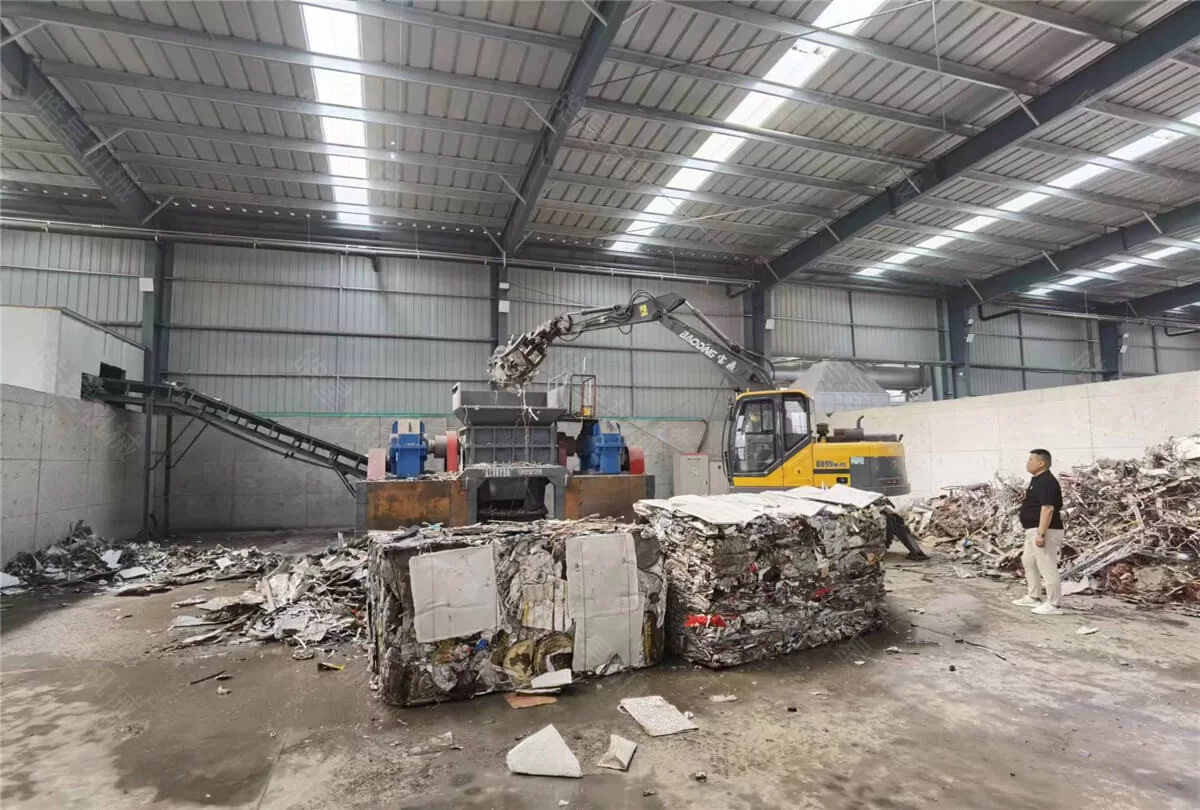
A Chongqing customer uses a twin shaft shredder to open and coarse-shred baled light scrap, preparing the material for conveying, sorting or further processing.
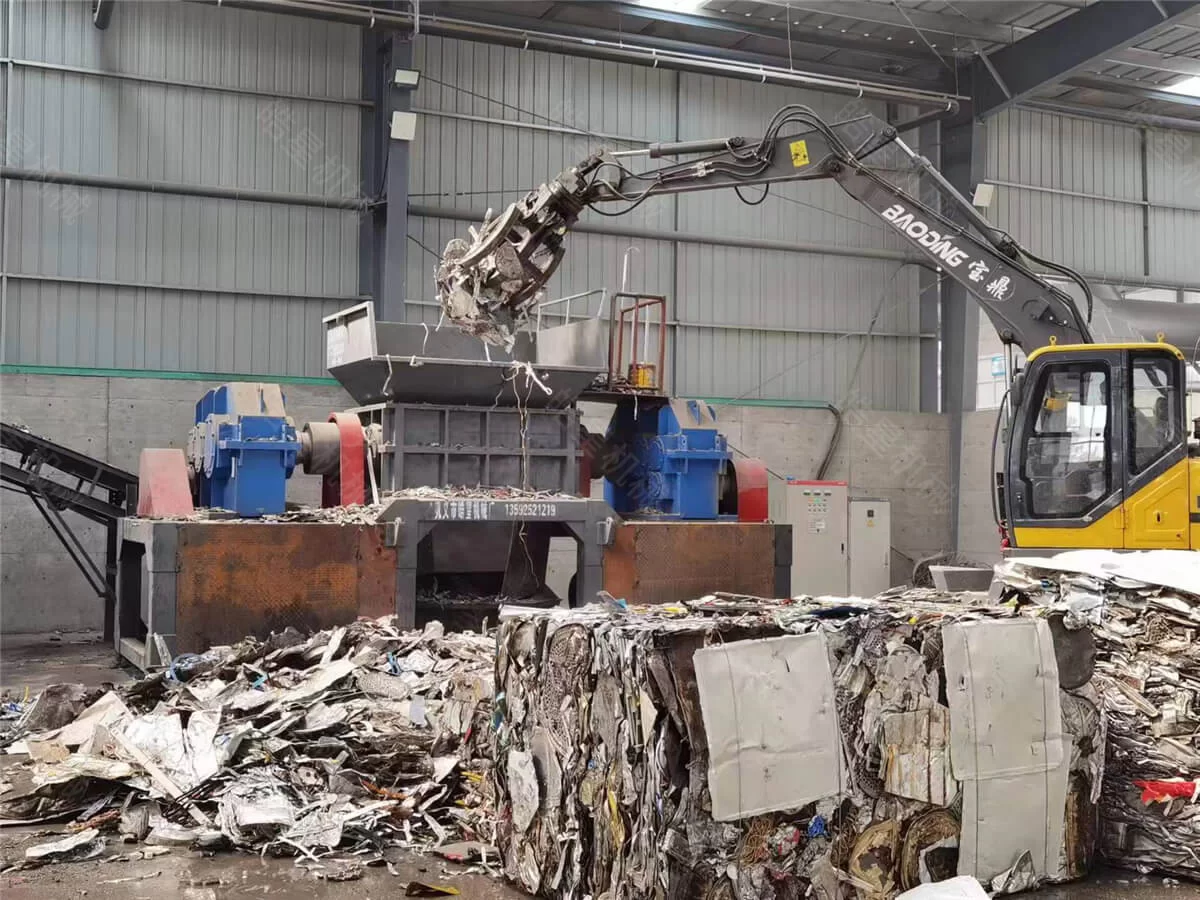
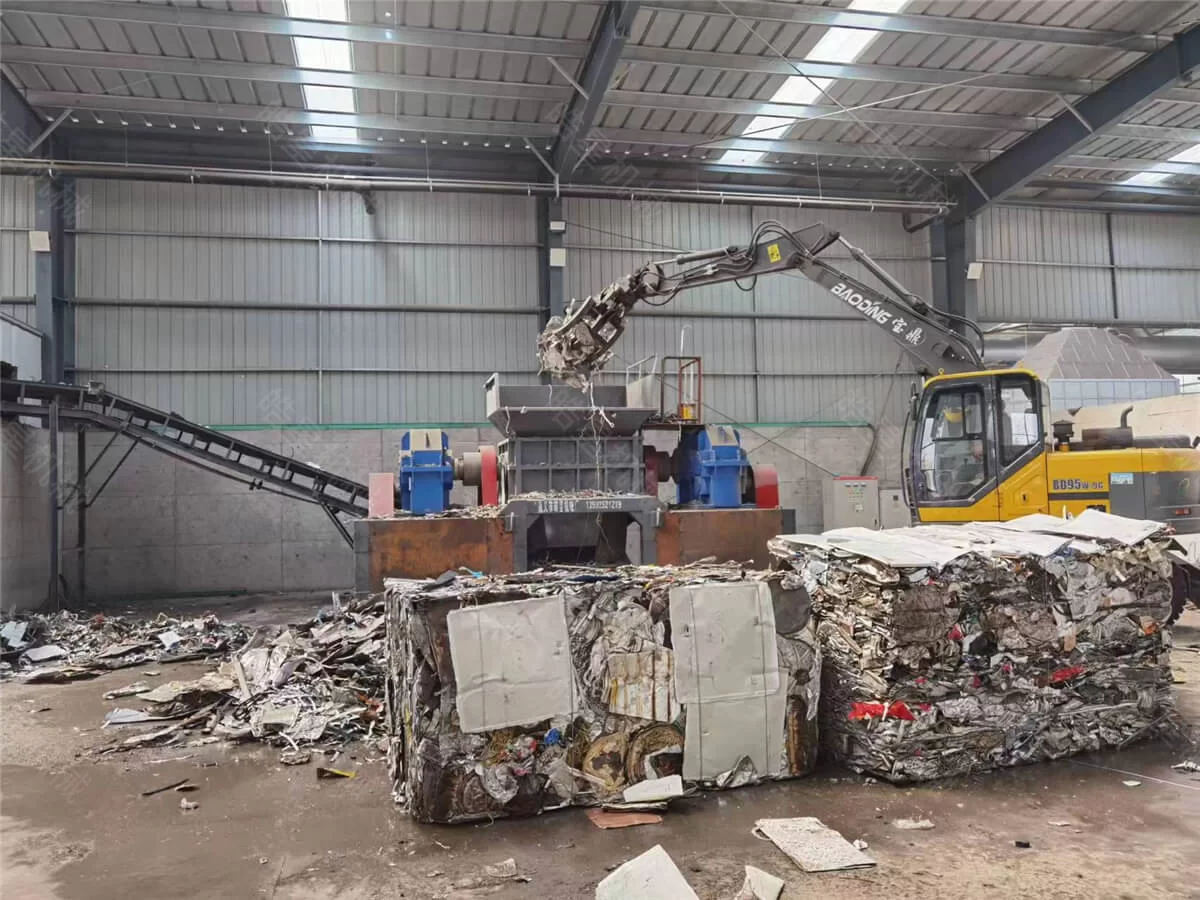
A metal recycling customer in Chongqing needed to process compressed bales containing light-gauge ferrous scrap. The material was tightly packed and difficult to feed directly into the subsequent processing equipment. A twin shaft shredder was therefore installed at the customer’s production site for bale opening and primary size reduction.
Unlike a high-speed metal crusher, the twin shaft shredder operates at a relatively low speed with high torque. Its main job in this project is to grip the compressed bale, tear apart the interlocked sheet metal and produce a looser material stream for downstream conveying and sorting.
Project Information
Customer location: Chongqing, China
Processing material: Baled light scrap
Main equipment: Twin shaft shredder
Processing stage: Bale opening and coarse shredding
Downstream options: Conveying, magnetic separation or secondary crushing
Why the Customer Needed a Twin Shaft Shredder
Baled light scrap normally contains compressed sheet metal, thin steel offcuts and other light ferrous materials. Although baling reduces storage and transportation costs, the dense bale structure creates difficulties during recycling.
The compressed material may not pass smoothly through feeding and sorting equipment. Manually opening the bales also takes time and exposes operators to sharp metal edges. The customer needed a mechanical solution that could open the bales continuously without relying on manual dismantling.
After reviewing the material condition and processing requirements, a twin shaft shredder was selected as the primary processing machine. The two cutter shafts rotate at a controlled speed, pulling the bale into the shredding chamber and tearing it apart progressively.
Baled Light Scrap Shredding at the Customer Site
During production, the baled light scrap is fed into the shredder chamber at a controlled rate. Once the cutters grip the bale, the two shafts work against each other to break the compressed structure and release the material inside.
The shredding process does not aim to produce small, uniform particles. Instead, it opens the bale, reduces oversized sections and separates pieces that have become pressed or entangled during baling.
After passing through the machine, the material becomes noticeably looser and easier to handle. The opened scrap can be discharged onto a conveyor and transferred to magnetic separation, manual sorting or a secondary metal crusher, depending on the customer’s required final product.
Role of the Twin Shaft Shredder in the Production Line
In this application, the twin shaft shredder is used for low-speed, high-torque primary shredding. It is particularly useful when baled scrap is too dense or bulky for stable downstream feeding.
The machine provides several practical functions:
Opens compressed light scrap bales
Reduces large and entangled pieces
Creates a more continuous material flow
Reduces dependence on manual bale opening
Prepares the scrap for conveying and separation
Protects downstream equipment from unstable feeding
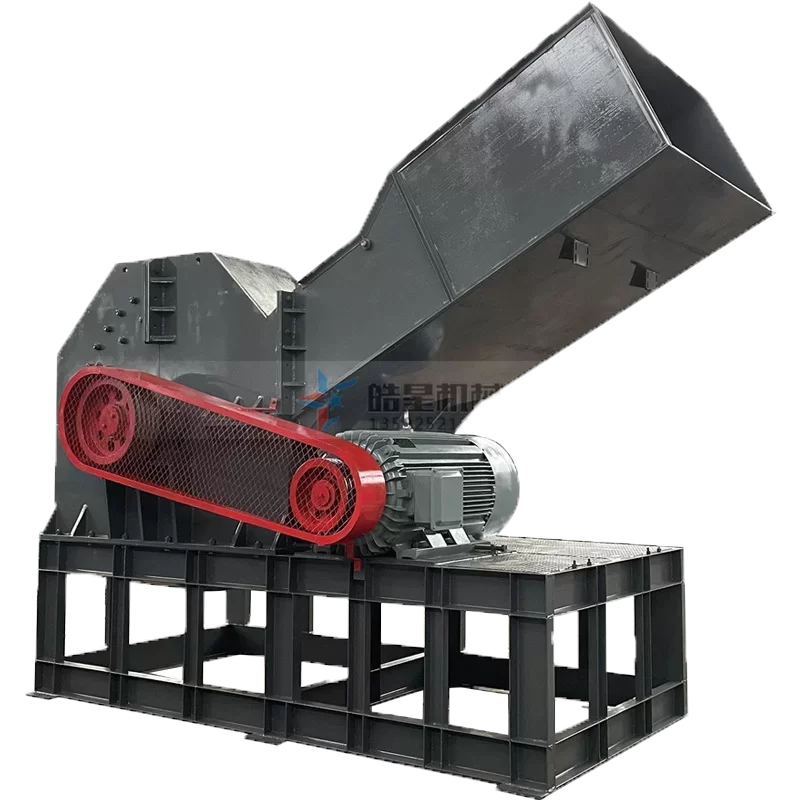
If the customer requires a smaller and more consistent discharge size, the coarsely shredded material can be transferred to a hammer-type crusher. The crusher performs the secondary size-reduction stage, while its screen controls the final discharge size.
Production Results
The on-site test showed that the twin shaft shredder could grip and open the compressed light scrap effectively. After shredding, the original bale structure was broken apart and the material became suitable for continuous discharge and downstream handling.
The output remained relatively coarse and irregular, which is normal for this type of primary shredder. The actual output condition depends on the bale dimensions, compression density, material thickness, impurities and feeding rate.
For this customer, the shredding stage provides a practical transition between baled scrap storage and subsequent recycling processes. It allows the compressed material to enter the rest of the production line in a more manageable form.
Equipment Selection for Baled Light Scrap
Not all scrap bales have the same composition. Some contain mainly thin steel sheets, while others may include wire, appliance shells, plastic, rubber or other attachments. The configuration of the baled scrap shredder should therefore be based on the actual material rather than the bale dimensions alone.
The following information should be checked before selecting the equipment:
Photos or videos of the scrap bales
Bale length, width and height
Average weight of each bale
Approximate compression density
Main metal composition
Type and amount of impurities
Required processing capacity
Required condition of the final material
Available workshop and installation space
Downstream sorting or crushing requirements
These details help determine the appropriate shredder size, cutter structure, motor power, feeding method and downstream configuration.
A Practical Primary Shredding Solution
This Chongqing customer production site demonstrates how a twin shaft shredder can be used to process baled light scrap before sorting or secondary crushing. Its low-speed cutting action is suitable for opening compressed bales and handling interlocked light metal scrap.
For projects requiring only bale opening and coarse size reduction, the shredder can operate with feeding and discharge conveyors. For a complete recycling process, it can also be integrated with magnetic separation, secondary crushing, screening and dust collection equipment.
Customers planning a similar baled light scrap shredding project can provide their material photos, bale specifications, required capacity and expected output condition. Based on this information, the machine configuration and production line layout can be evaluated more accurately.