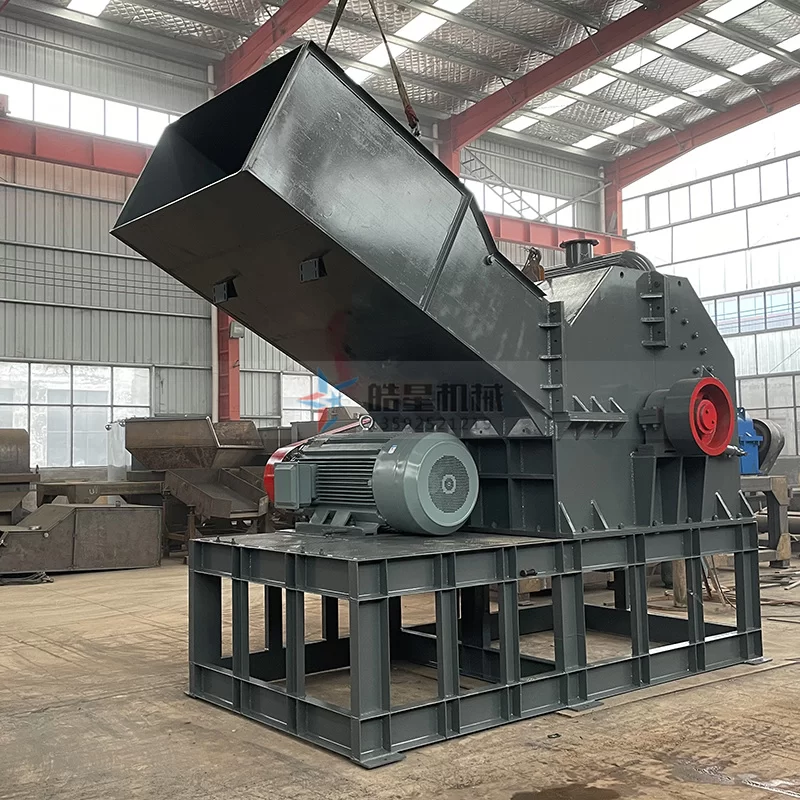

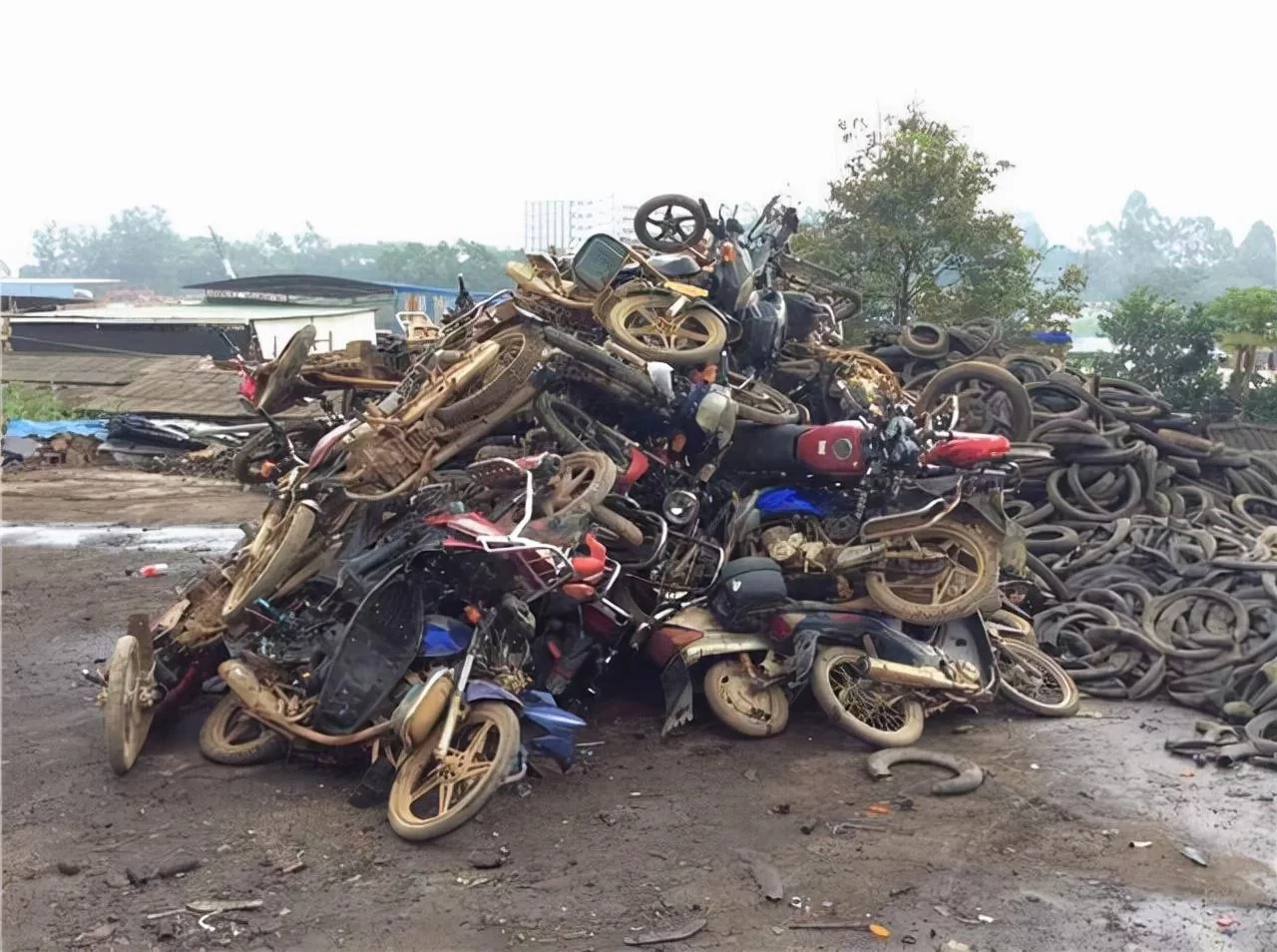
Scrap cars are end-of-life vehicles collected from dismantling facilities, automotive recyclers and scrap metal yards. After reusable parts, operating fluids and unsuitable components have been removed, the remaining material may include stripped car bodies, vehicle shells, doors, roof panels, body sections and light vehicle frames.
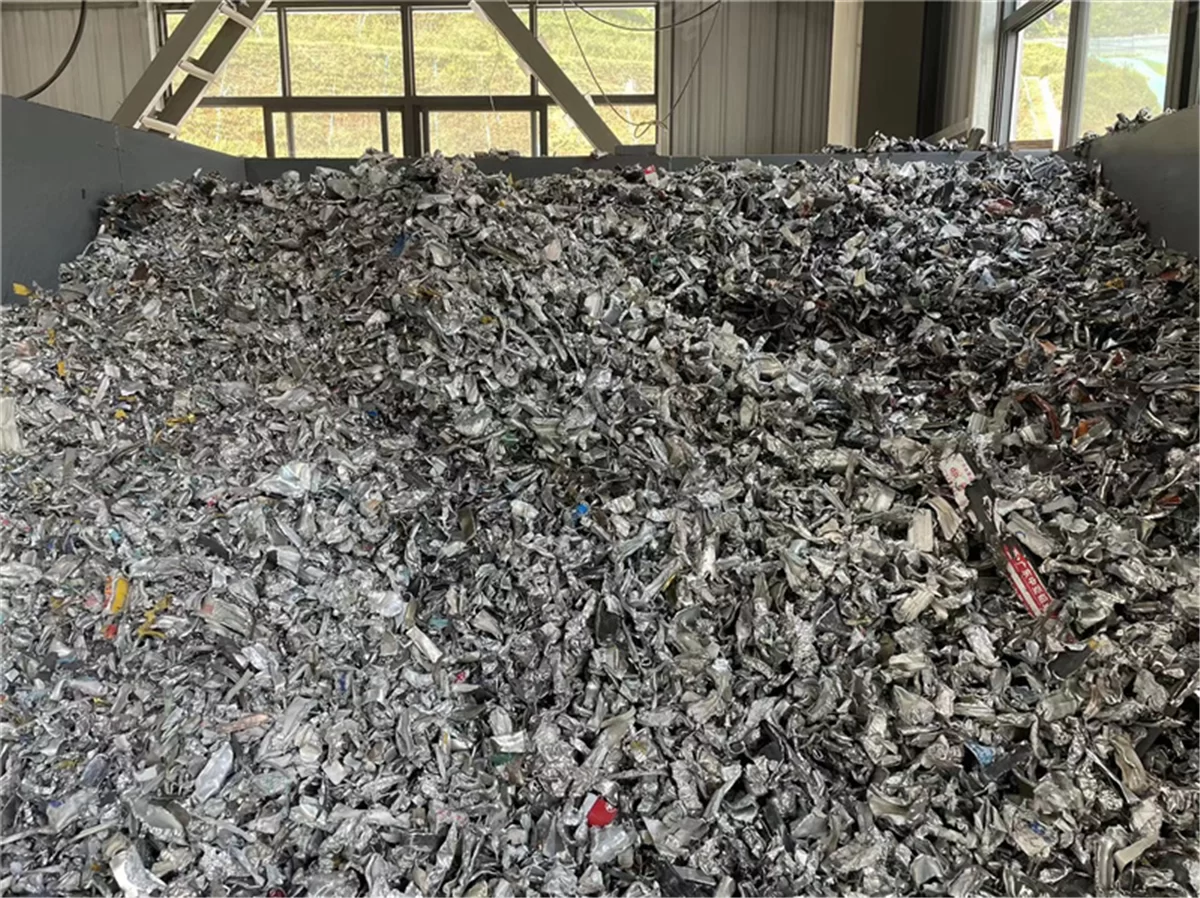
Prepared car bodies contain mainly steel, but they may also include aluminum parts, copper wiring, plastics, rubber, glass and other attached materials. Their bulky shape and mixed construction can make transportation, feeding and separation difficult. A suitable recycling system reduces the vehicle body into manageable pieces and separates recoverable metals according to the required downstream process.
The processing configuration should be selected according to the vehicle type, dismantling condition, feeding dimensions, material thickness, required capacity and expected output.
Scrap Car Materials That Can Be Processed
Typical materials include:
Prepared scrap cars
Stripped car bodies
Car body shells
Vehicle body panels
Car doors
Roof panels
Automotive sheet metal
Light vehicle frames
Prepared van body sections
Motorcycle frames
Bicycle frames
Large truck chassis, heavy vehicle frames, reinforced structural sections and oversized body components should be evaluated separately. Hydraulic shearing, dismantling or cutting may be required before further size reduction.
Vehicle Preparation Before Processing
Scrap vehicles should be dismantled and prepared before mechanical processing. The required preparation depends on local operating rules and the construction of the vehicle.
Items requiring removal or separate handling may include:
Fuel and fuel tanks
Engine oil and transmission fluid
Coolant and refrigerant
Lead-acid and lithium batteries
Tires and wheels
Airbag inflators
Gas cylinders
Fire extinguishers
Reusable vehicle parts
Large glass components
Hazardous or unidentified materials
The intended feedstock is a prepared or stripped vehicle body that has been drained, inspected and brought within the feeding limits of the selected equipment. The intended feedstock is a prepared or stripped vehicle body that meets the feeding requirements of the selected system.
How Is Scrap Car Material Processed?
The process used for scrap cars depends on whether the incoming material consists of stripped vehicle shells, compressed car bodies, separated body panels or cut vehicle sections.
A typical process may include:
Vehicle dismantling and fluid removal → Material inspection → Pre-cutting when required → Primary shredding → Secondary crushing → Magnetic separation → Further sorting → Material collection
Not every project requires every processing stage. Prepared doors, roof panels and small body sections may be suitable for direct crushing if they meet the crusher’s feeding requirements. Large and irregular car shells generally require primary size reduction.
Pre-Cutting and Shearing
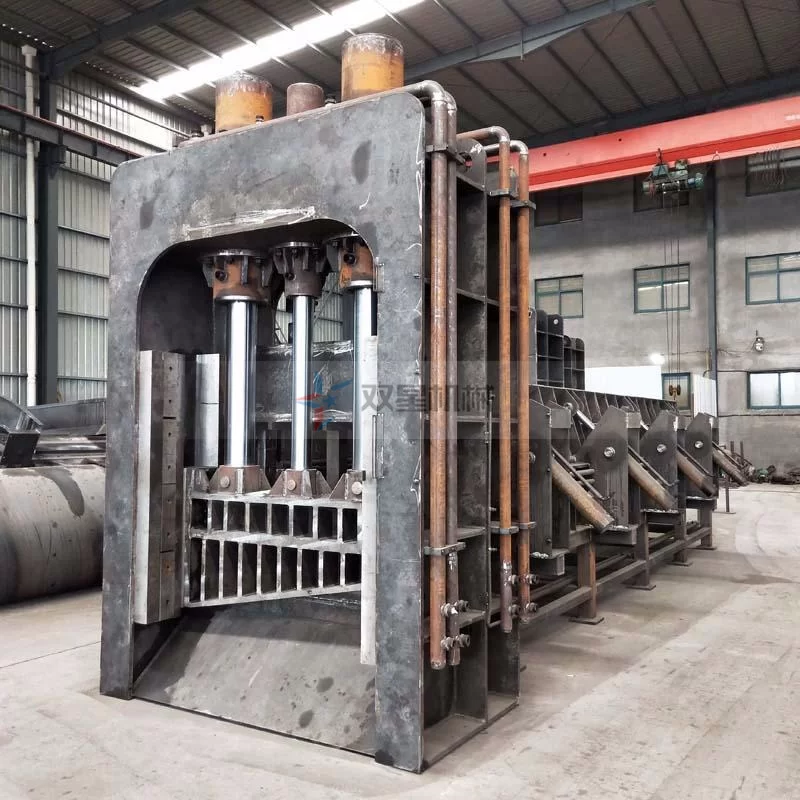
Oversized vehicle sections or reinforced frames may need to be cut before entering the shredder or crusher. A gantry shear, alligator shear or other hydraulic cutting equipment can be selected according to the material dimensions and thickness.
Pre-cutting may be considered when:
The car shell exceeds the equipment feeding opening
Long vehicle sections affect stable feeding
Reinforced frame components are present
Truck or van body sections are too large
The material must be reduced before transportation
Alligator shears are generally better suited to smaller metal sections and profiles. They should not be presented as the standard machine for cutting complete vehicles.
Primary Shredding
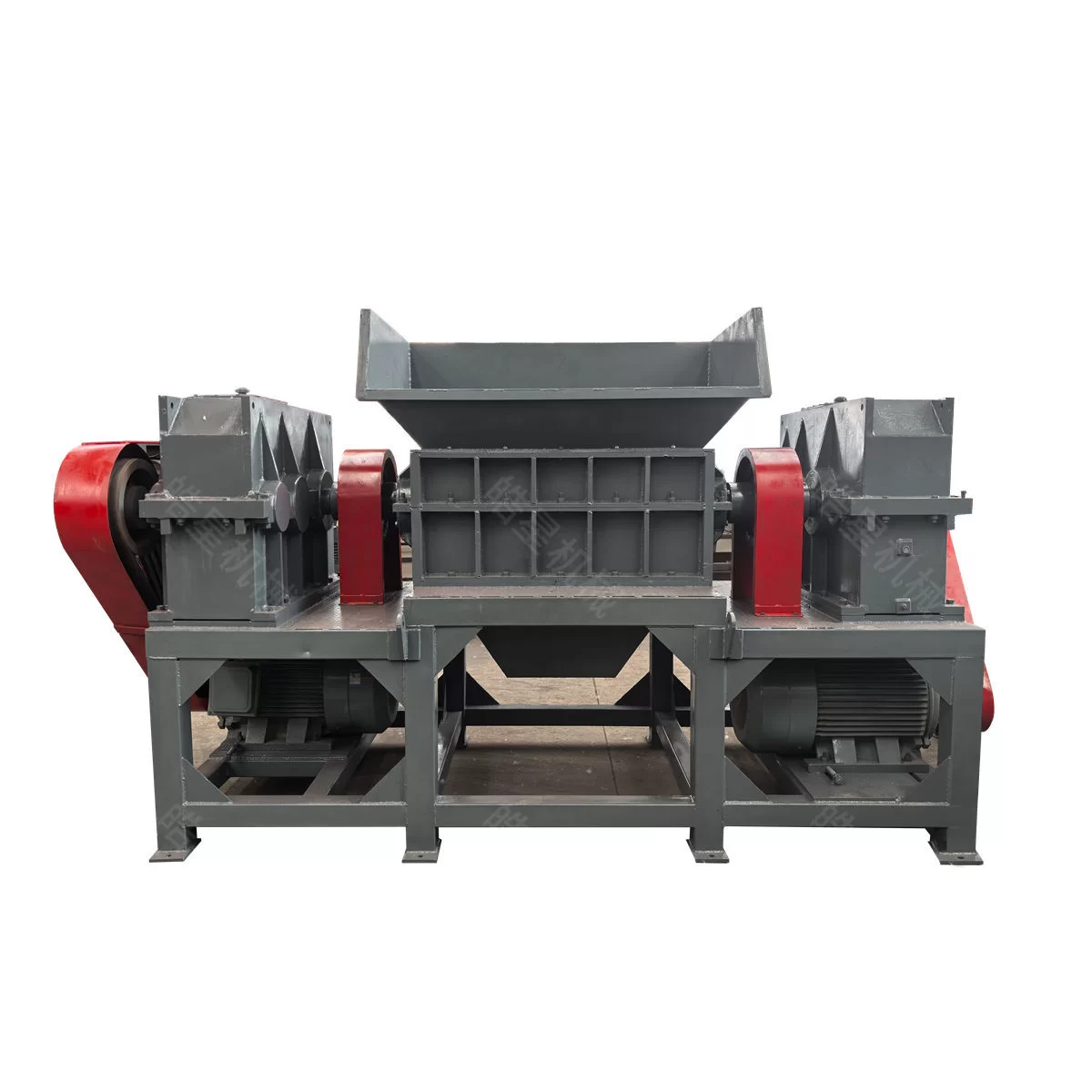
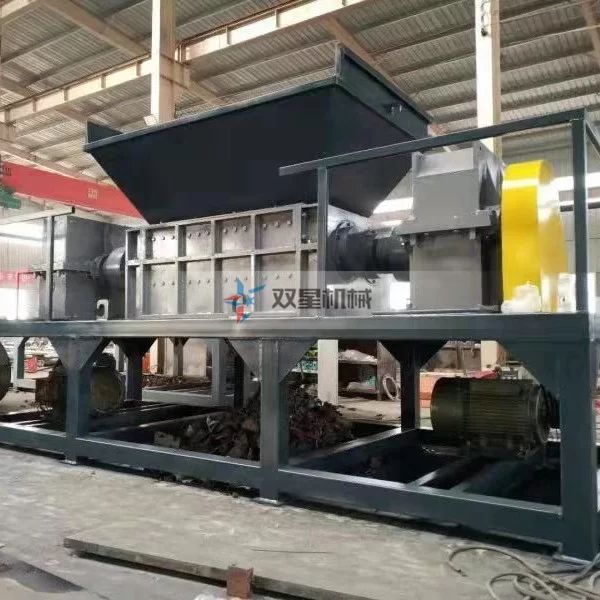
A twin shaft shredder can be used for the coarse size reduction of prepared car bodies and bulky automotive sheet metal. The machine operates at low speed and high torque, using the cutters to grab, tear and shear the material.
Primary shredding helps:
Reduce the size of bulky vehicle shells
Open folded or compressed body sections
Improve downstream feeding stability
Reduce bridging at the crusher inlet
Prepare the material for secondary crushing
Expose some attached non-metallic components
The shredder model and cutter configuration must match the actual body dimensions, sheet thickness and internal reinforcements.
A four-shaft shredder may be considered only when the prepared feeding size, required output and machine design are suitable for the application. Its suitability depends on the prepared feeding size, required output and specific equipment design.
Secondary Crushing
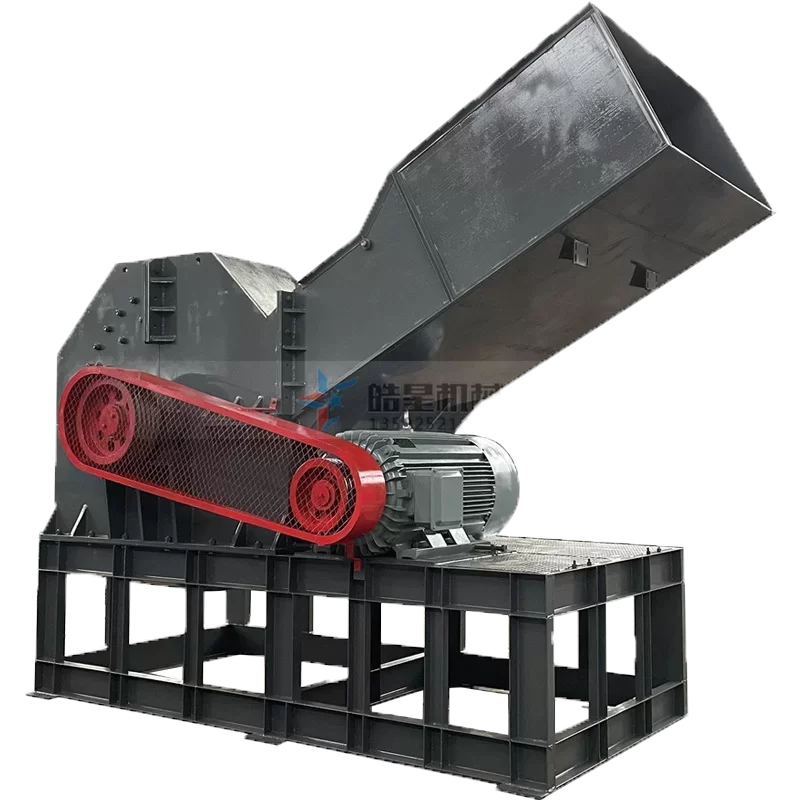
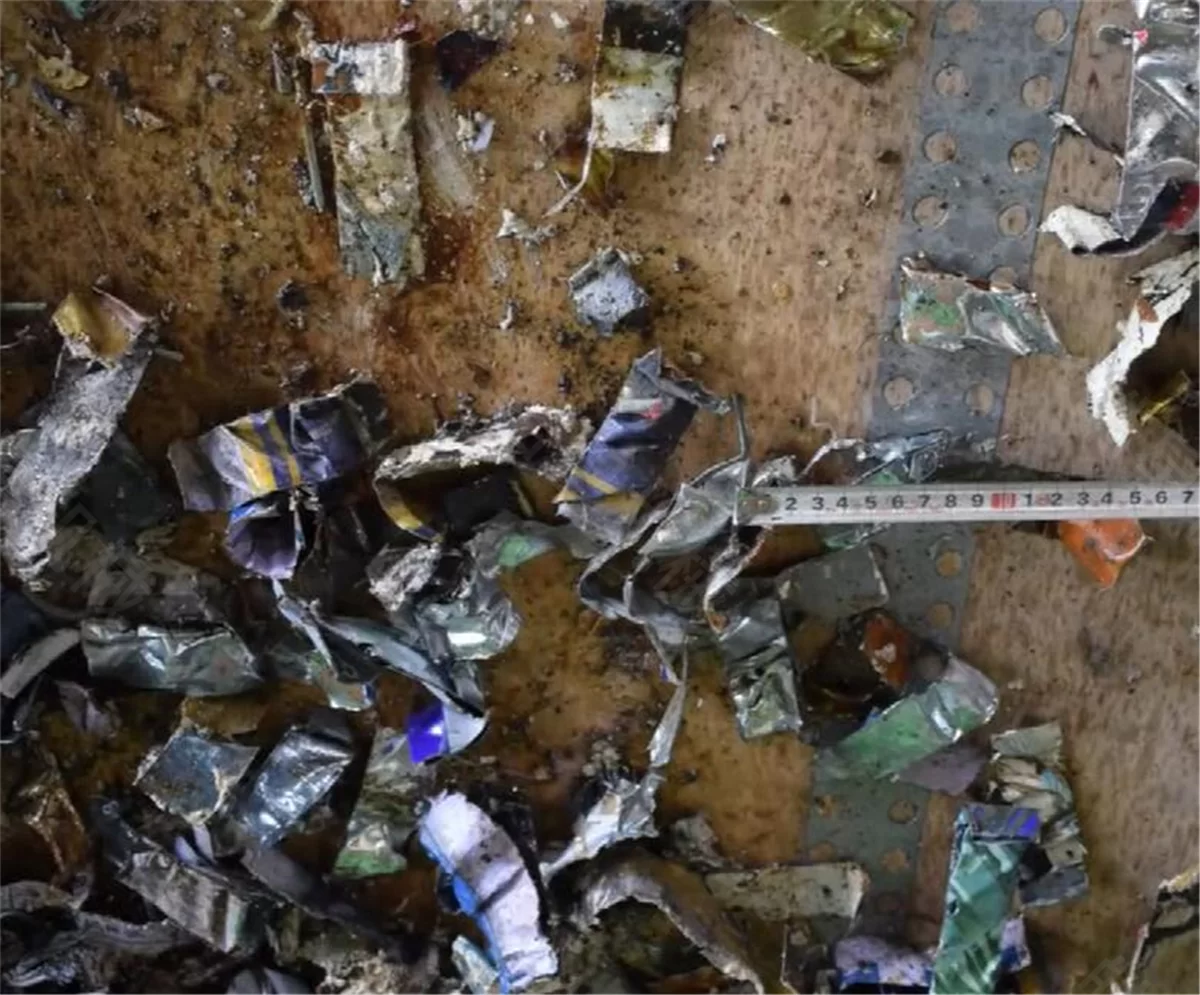
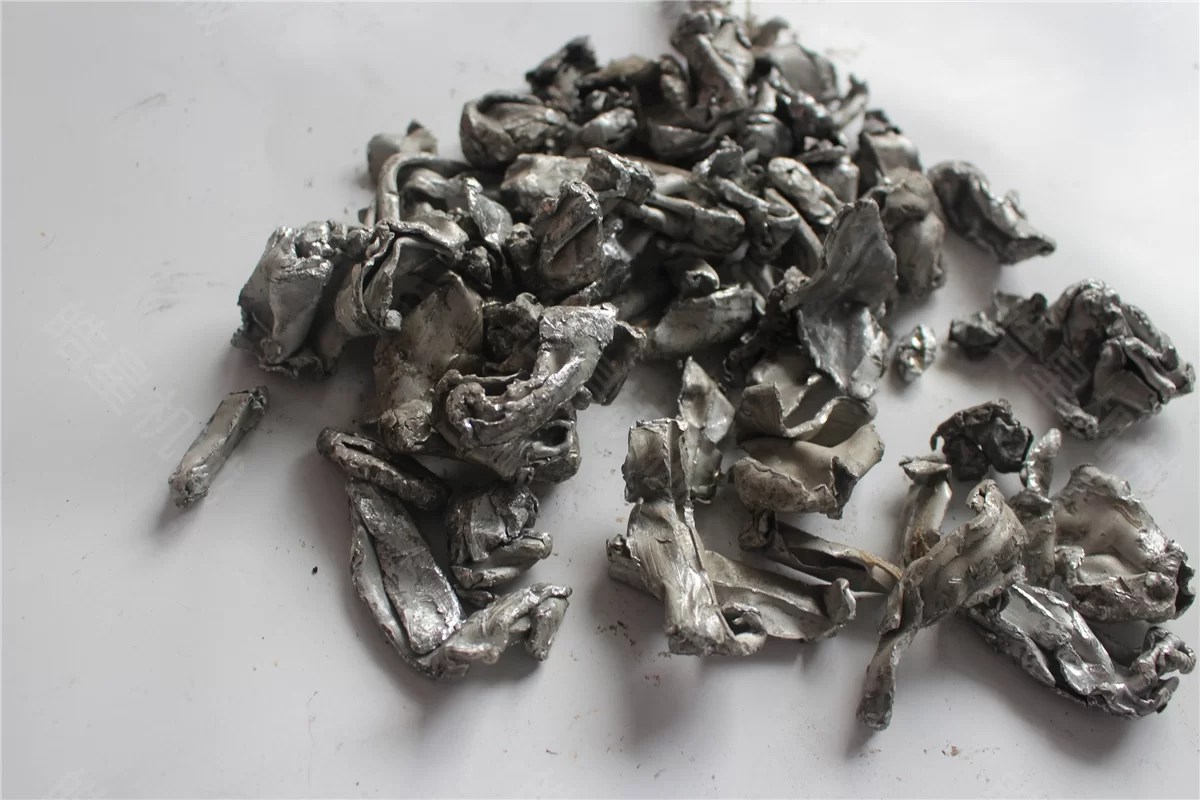
After primary shredding, the material can be conveyed into a scrap steel crusher for further size reduction. High-speed hammer impact breaks and deforms the prepared automotive sheet metal, helping loosen paint, rust and attached non-metallic material.
The discharge size depends on:
Incoming material condition
Crusher model
Rotor and hammer configuration
Screen or grate opening
Feeding rate
Internal vehicle components
Downstream separation requirements
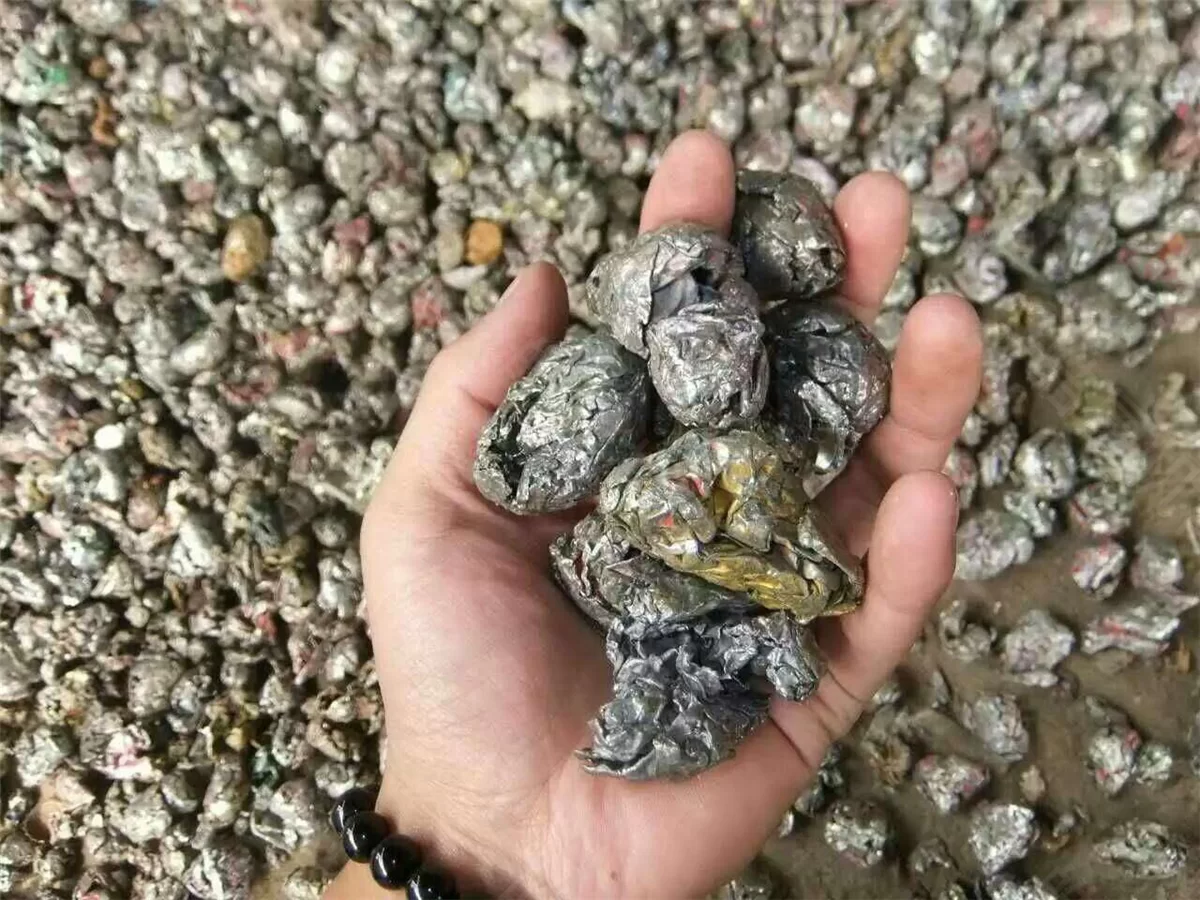
Do not promise a universal output of 5–20 mm spherical granules. Vehicle body scrap is complex, and the actual output size and shape vary according to the machine configuration and feedstock.
Magnetic Separation
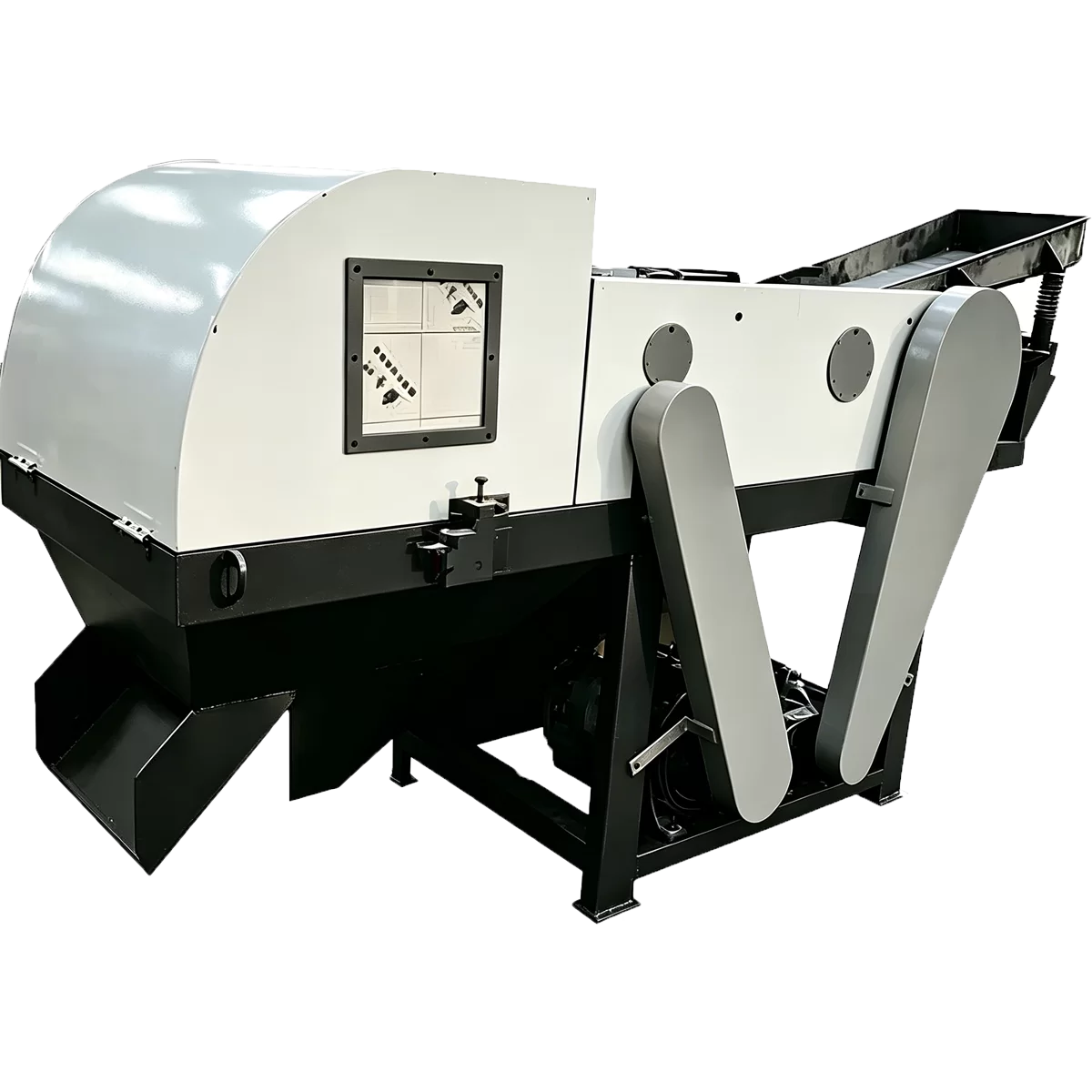
A magnetic separator can be installed after crushing to recover iron and steel from the processed material.
The separation result depends on:
Material particle size
Distribution of ferrous and non-ferrous components
Conveyor speed
Material layer thickness
Magnetic system configuration
Presence of attached or composite materials
Magnetic separation is used to recover exposed ferrous material. The actual separation result depends on particle size, material liberation, conveyor speed, material depth and magnetic system configuration.
Non-Ferrous Metal Sorting
Processed vehicle material may contain aluminum, copper and other non-ferrous metals. An eddy current separator can be considered when the material has been reduced to a suitable and relatively consistent particle size.
The eddy current separator can help recover conductive non-ferrous metals from a prepared non-magnetic material stream. Actual separation performance depends on particle size, material shape, moisture, feeding uniformity and composition.
Do not state a fixed purity of 96%–99% unless it comes from verified testing of the specified material and equipment configuration.
Conveying and Material Handling
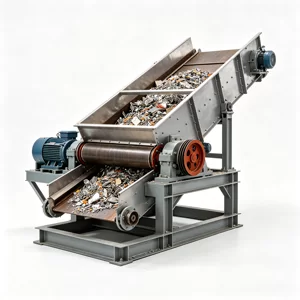
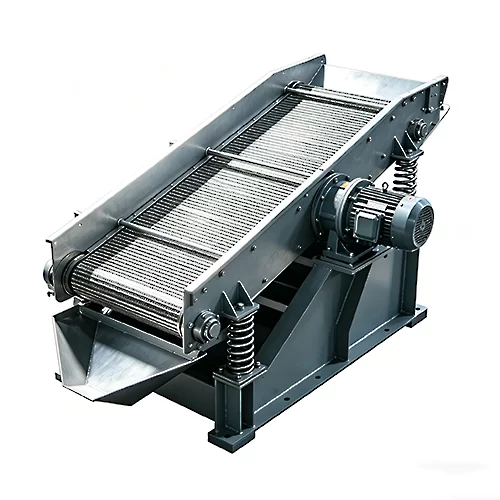
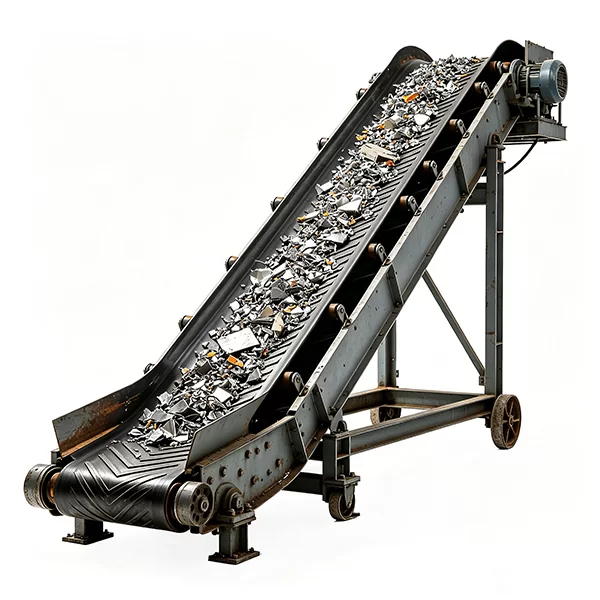
Chain plate conveyors can be used to feed heavy, sharp and irregular vehicle body scrap. Belt conveyors are more commonly used between downstream crushing, separation and collection stages.
The conveyor width, length, inclination and load capacity should be selected according to:
Maximum material dimensions
Individual piece weight
Required processing capacity
Equipment layout
Feeding height
Material impact and sharpness
Dust Collection
Crushing vehicle body scrap can generate dust, rust particles and light non-metallic material. A dust collection system can be configured around the crusher, transfer points and discharge areas.
The required airflow, filter area and duct arrangement should be determined according to the equipment configuration, material condition and workshop layout. Dust collection can help control airborne particles at the crusher, transfer points and discharge areas. The required system should be designed according to the material condition, equipment layout and applicable site requirements.
Selecting a Scrap Car Processing System
Before equipment selection, provide:
Vehicle types and representative photos
Dismantling and depollution condition
Maximum car body dimensions
Loose, flattened or baled condition
Approximate material thickness
Required processing capacity
Expected output size
Types of attached non-metallic materials
Required metal recovery process
Workshop dimensions and power supply
Based on these details, the system can be configured with the required pre-cutting, shredding, crushing, conveying, magnetic separation, non-ferrous sorting and dust collection equipment.
Complete ELVs, Stripped Bodies and Production Scrap Are Different Feeds
Separate complete end-of-life vehicles, depolluted and dismantled bodies, cut body panels, compacted shells and automotive production scrap before selecting a process. Their hazardous components, dimensions, steel thickness, non-ferrous content and attached assemblies are different.
Required Depollution and Dismantling Information
State whether fuel, oils, coolant, refrigerant, batteries, airbags, gas cylinders and other regulated components have been removed. Record whether the engine, transmission, axles, wheels, wiring, catalytic converter, seats, glass and plastic interior remain. The equipment proposal should begin only after the actual dismantling condition is defined.
Choose Cutting, Shredding or Crushing from the Feed Form
Oversized or reinforced vehicle structures may require dismantling, cutting or shearing. Suitable bulky shell sections may use coarse shredding for opening and volume reduction. Prepared shells or automotive production scrap that require impact crushing and improved liberation can be evaluated for an ELV car body crusher. Not every vehicle stream requires every stage.
Recovered Products and Sorting Requirements
Define whether the project requires ferrous scrap, aluminum-rich material, copper-bearing fractions or separated non-metallic residue. Magnetic separation, screening, air separation, eddy current, density, sensor and manual sorting are selected according to liberation and product specifications.
Project Data Required
Provide representative photos, vehicle or scrap type, depollution status, dismantling level, maximum dimensions, weight range, hourly quantity, required output, recovered products, loading equipment, available space, local voltage and environmental-control requirements.