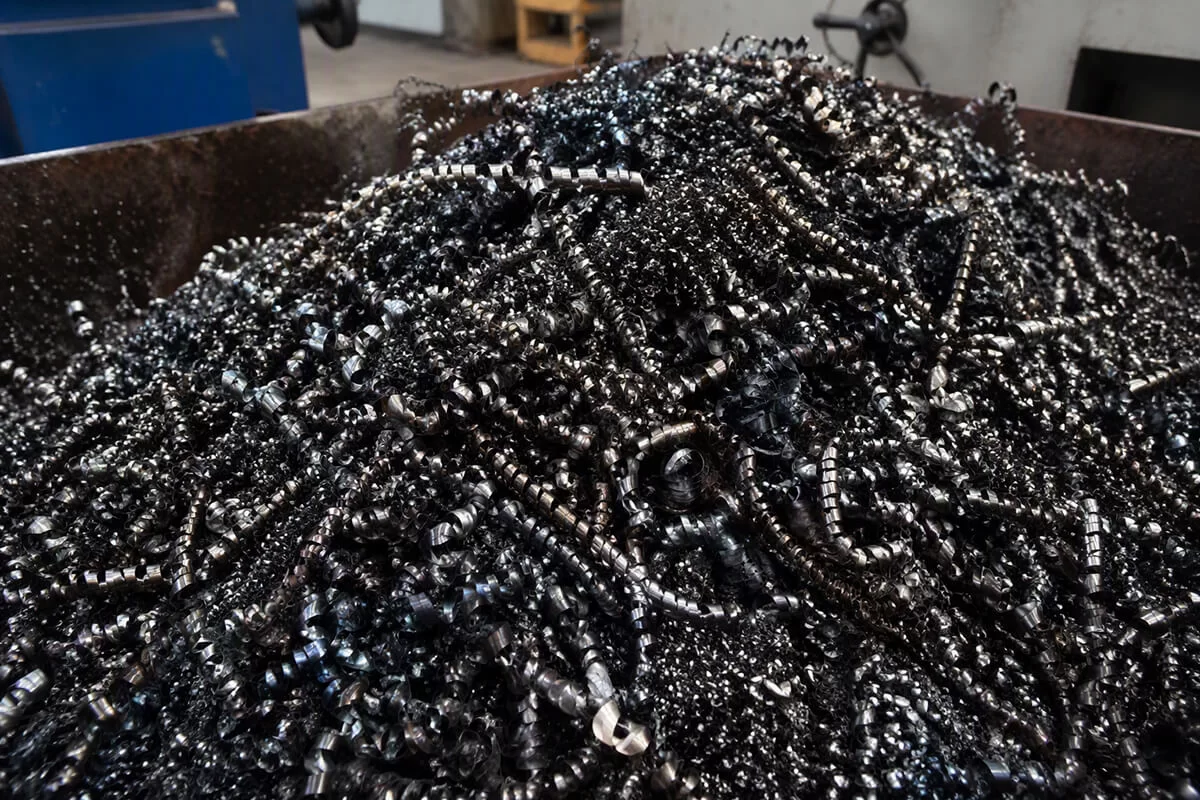
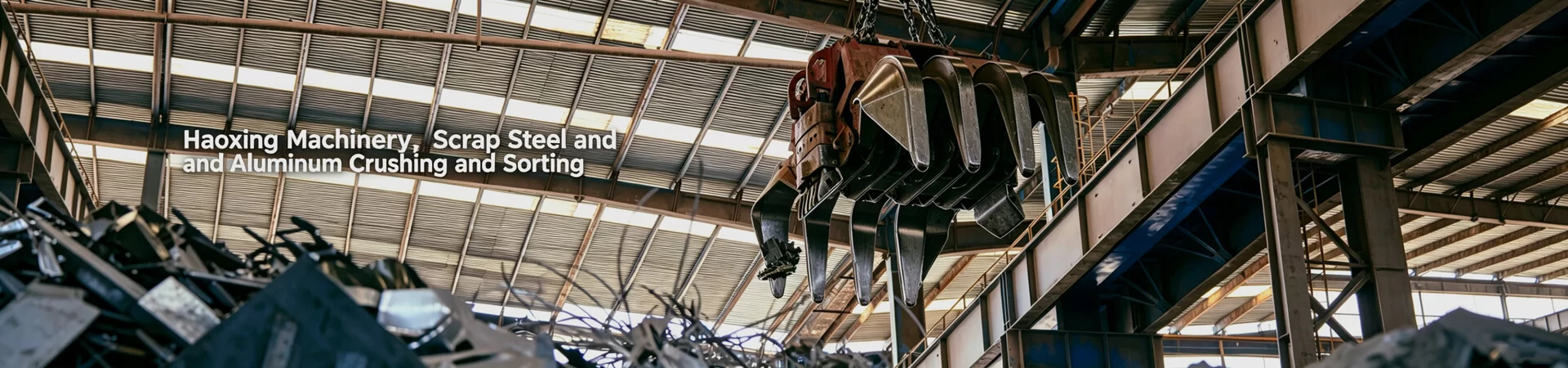
Two bins can contain the same weight of machining scrap and still behave like completely different materials. Long spring-like turnings can bridge across a hopper, wrap around an auger and occupy most of a container with air. Short metal chips may already flow through a chute and enter a centrifuge or briquetting press without another size-reduction stage. The practical question is therefore not whether all metal turnings should be shredded, but whether the actual chip form prevents stable handling or downstream processing.
Start with chip shape, not only metal type
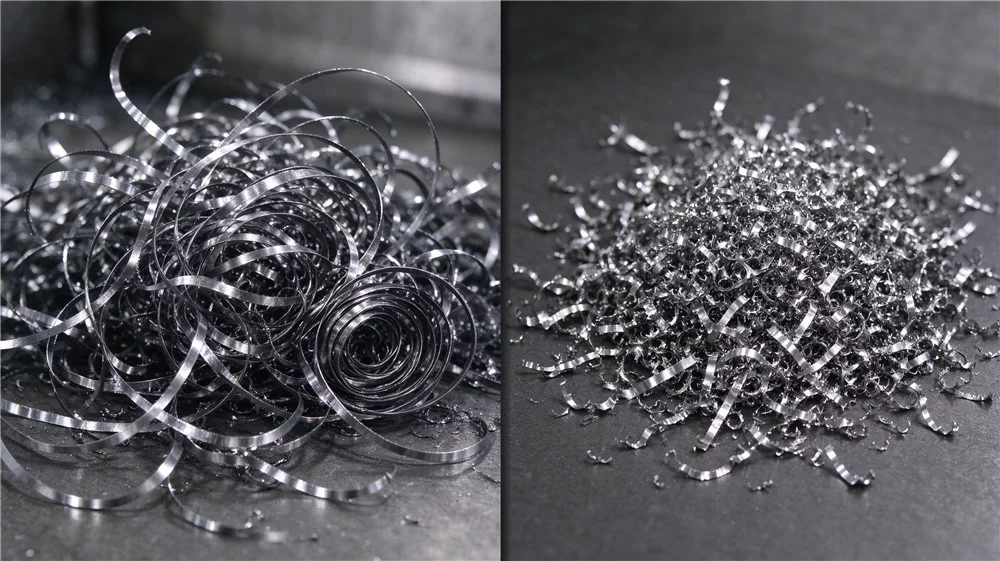
Steel, cast iron, stainless steel and aluminum can each produce long curls, short broken chips or fine fragments depending on the machining operation, tool geometry and cutting conditions. Metal type matters for cutter selection and safety, but chip length, strip width, thickness, curl tightness and entanglement usually determine feeding behavior.
A representative sample should be observed in a container rather than spread flat on the floor. If the material rises in a loose nest, locks together when lifted or spans the hopper opening without falling, it behaves as tangled feed. If it settles freely, can be metered by a screw or belt and does not form a self-supporting bridge, it behaves more like short loose chips.
How long tangled turnings affect a recycling line
Long turnings commonly create four operating problems. First, their low and inconsistent bulk density makes volumetric feeding unstable. Second, interlocked coils can bridge above the inlet even when the machine below has adequate capacity. Third, strands can wrap around exposed shafts, conveyor rollers or screw flights. Fourth, a sudden collapse of a bridged mass can overload the next machine.
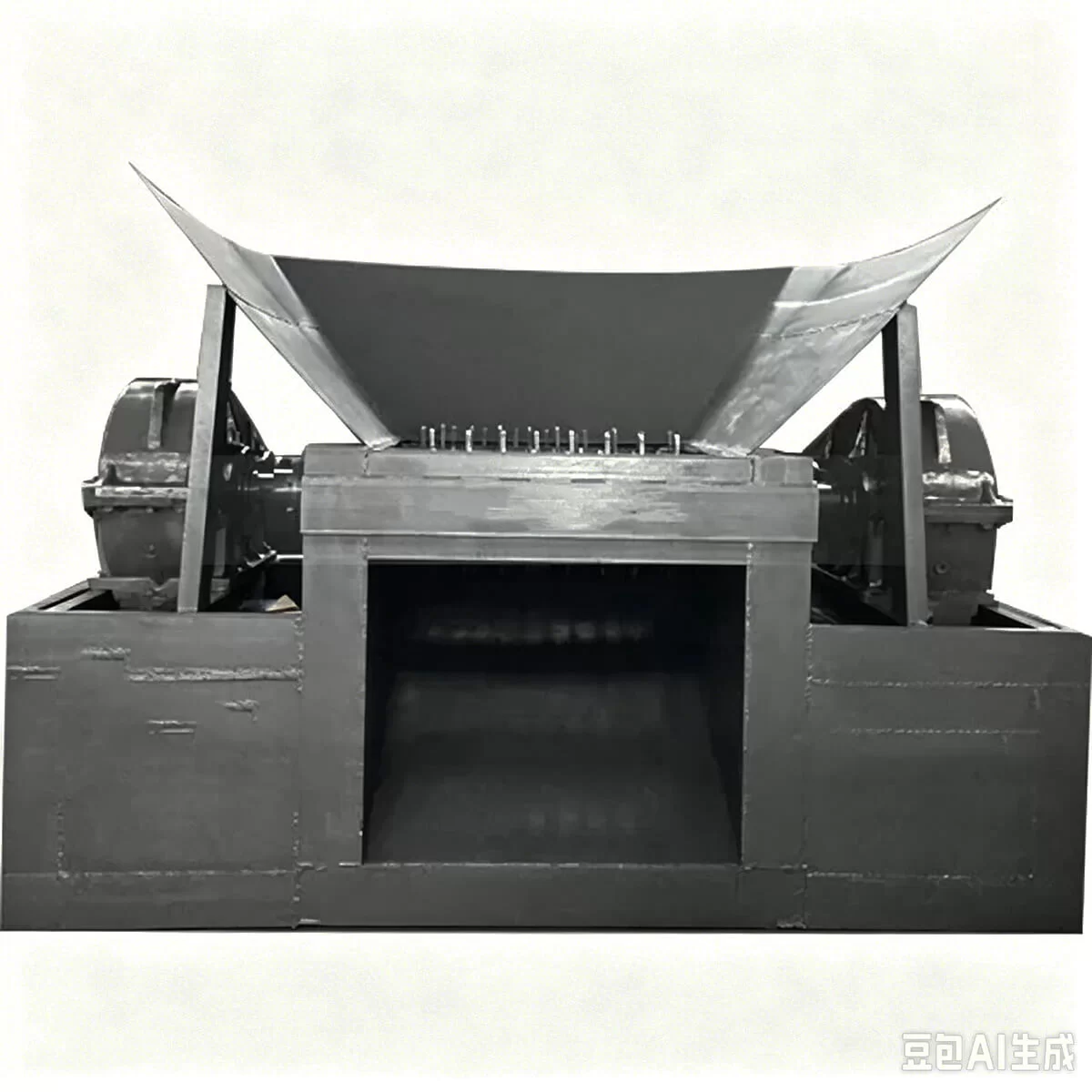
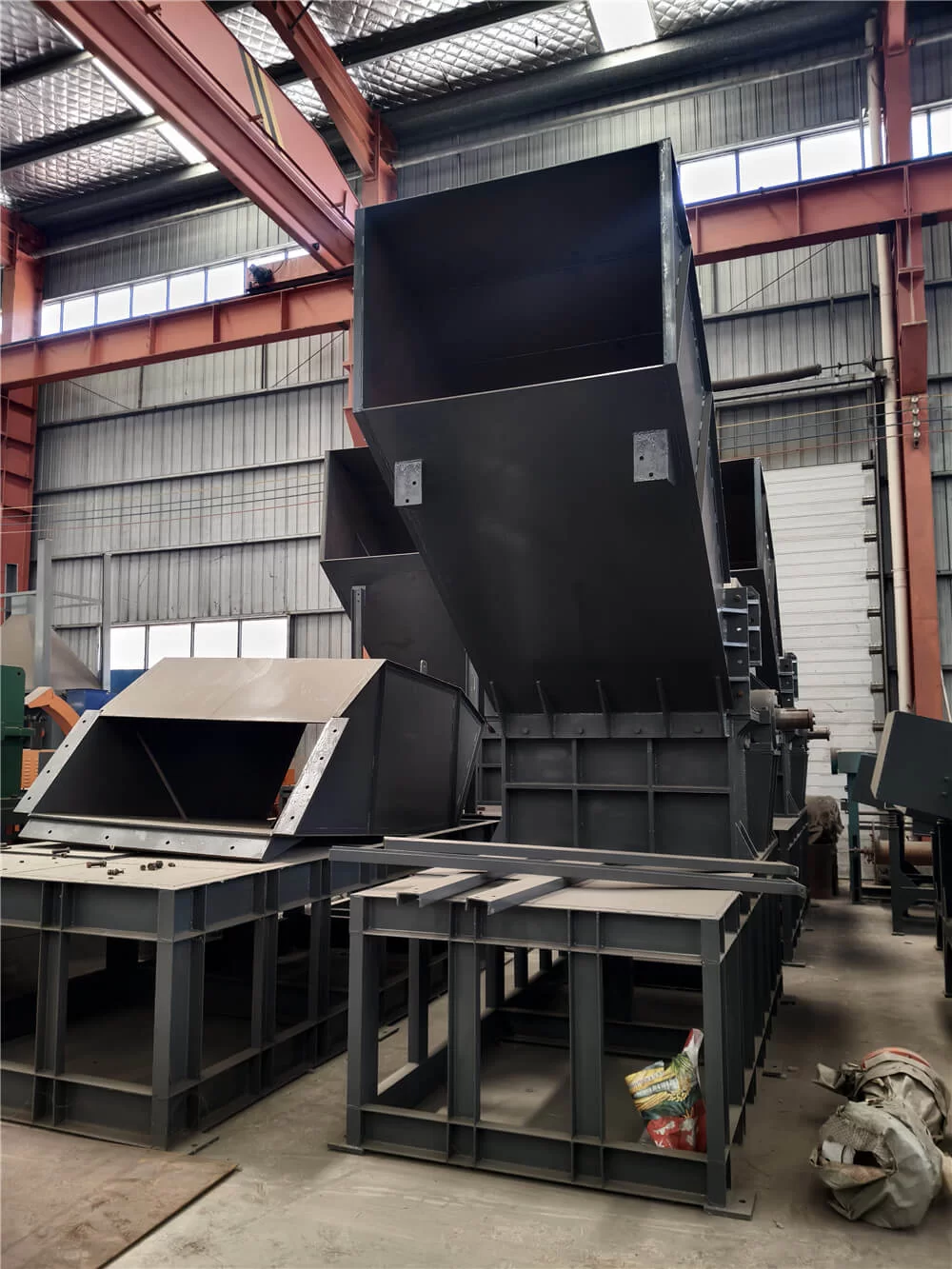
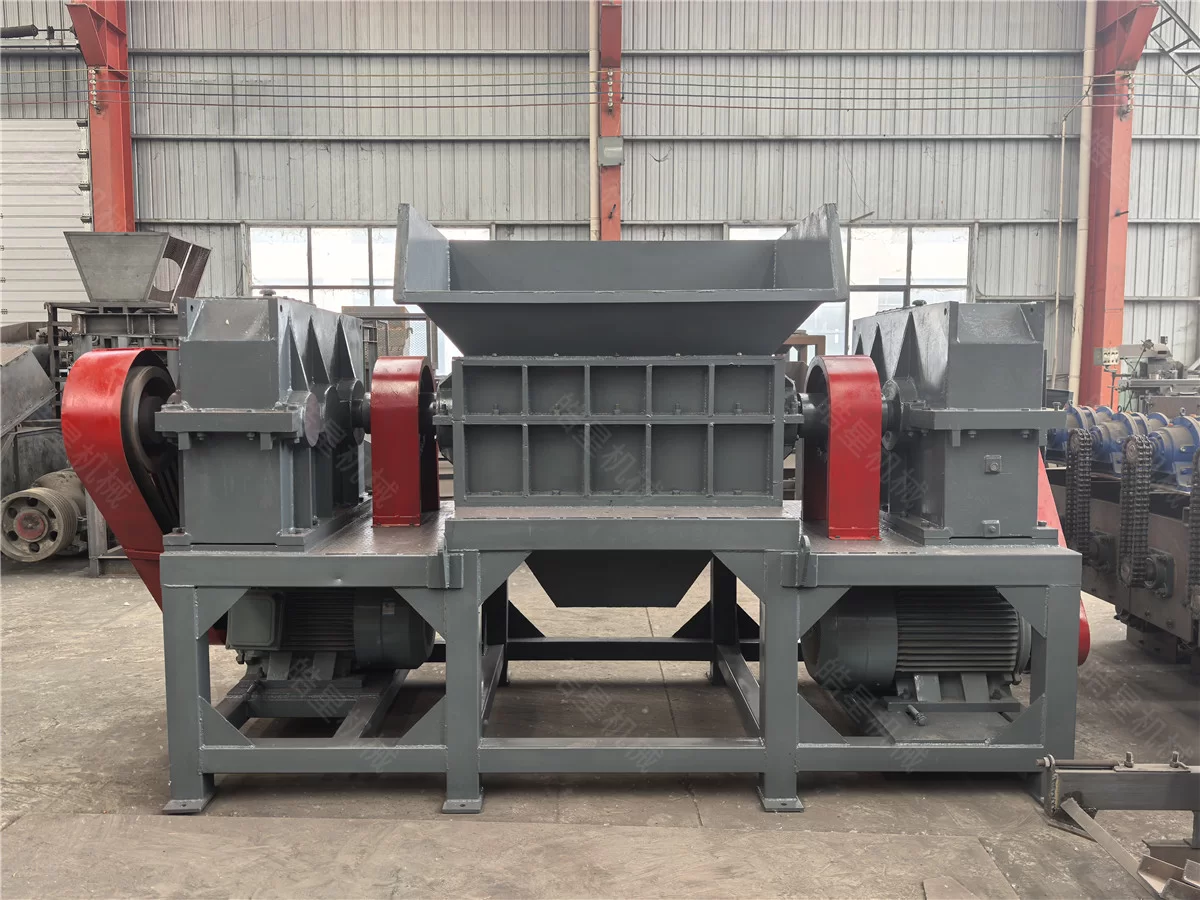
For this feed, a low-speed metal turnings shredder can shorten the curls and break the nest into looser pieces. The objective is coarse conditioning, not fine grinding. A suitable turnings crusher should produce material that can leave the chamber reliably and enter the next stage at a controlled rate. The output will remain irregular because the cutting shafts do not use a fine screen to make identical particles.
When short metal chips may bypass shredding
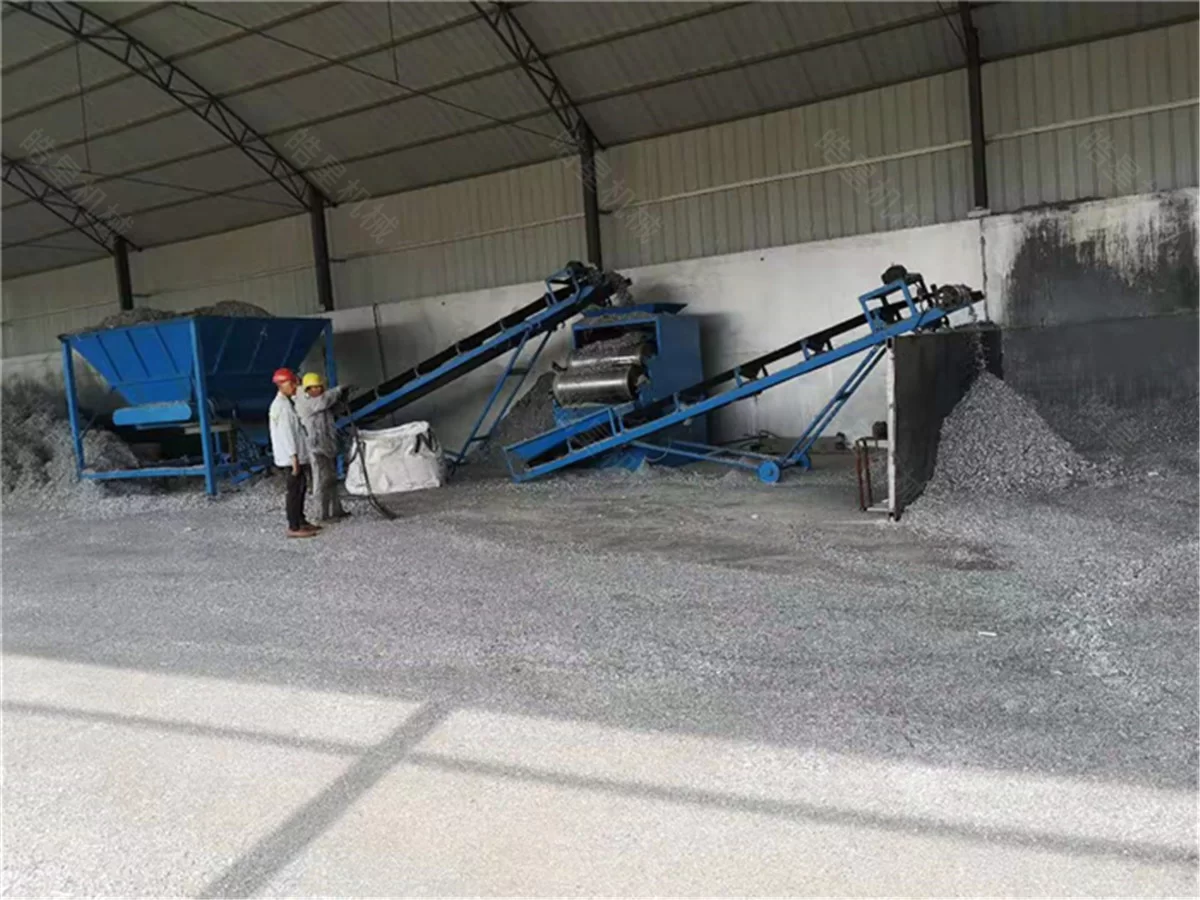
Short chips do not automatically need another machine. Dry, free-flowing chips of consistent size may move directly to screening, magnetic recovery, storage or remelting preparation. Wet chips that already feed steadily may go first to drainage or centrifuging. Clean chips of suitable size may enter a briquetting press directly when the press manufacturer confirms the feeding condition.
Bypassing unnecessary shredding avoids additional power consumption, cutter wear, fines generation and transfer points. It also reduces the chance of mixing alloy grades that were separated at the machine shop. The correct process is the shortest route that delivers stable feeding and the required downstream condition.
Use a simple handling test before choosing equipment
| Observation | Long tangled turnings | Short loose chips |
|---|---|---|
| Behavior in hopper | Bridges or forms a nest | Settles and flows more evenly |
| Conveyor behavior | May wrap or pull in clumps | Usually meters more consistently |
| Typical first step | Coarse shredding may be required | Screening, liquid removal or direct feeding may be possible |
| Main selection risk | Insufficient grip or torque | Adding an unnecessary shredder |
For a workshop test, place an equal known mass in the same container three times. Record the loose volume without pressing it down, then discharge the material through the proposed hopper or chute. Note bridging, clump release and residual material. This small test is more useful than describing the scrap only as steel chips or aluminum chips.
Cutting fluid changes the process decision
Oil and coolant can make short chips stick together and can increase slip at the cutter inlet. Free liquid may also need to be collected before storage or briquetting. The shredder is not an oil-removal machine. If liquid recovery is important, the project may require a draining hopper, centrifuge or collection tray before or after size reduction.
Hot turnings, grinding dust, metal powder, magnesium chips, titanium chips and material containing flammable liquid require separate safety evaluation. These feeds should not be grouped with ordinary cool steel or iron turnings.
Shredding before briquetting is conditional
Long coils frequently need shortening because they do not meter evenly into the briquetting chamber. Short chips may already be suitable. The decision should be based on the briquetter inlet, feed screw, acceptable chip length, moisture or oil limit and required briquette density. Shredding cannot correct excessive coolant, mixed alloys or solid bar ends.
Before a production decision, test the actual material through the proposed sequence. Compare feeding stability, current load, liquid recovery, briquette consistency and the quantity of fines. A process that produces a denser-looking pile but creates more fines or unstable briquettes is not necessarily an improvement.
Information needed for machine selection
Metal and alloy type, including whether grades must remain separate
Typical and maximum chip length, width and thickness
Photos of the loose material and a lifted handful showing entanglement
Bulk density measured without manual compaction
Oil, coolant and moisture condition
Presence of bar ends, tools, bolts or other solid pieces
Hourly mass and the way material will be loaded
Downstream step: conveying, centrifuging, briquetting, sorting or furnace preparation
Conclusion
Long tangled turnings usually need coarse shredding when they bridge, wrap or feed in sudden clumps. Short metal chips may not need shredding if they already flow steadily and meet the requirements of the next machine. Haoxing Machinery evaluates representative material information before recommending cutter geometry, torque, hopper arrangement and downstream equipment, helping avoid both an undersized shredder and an unnecessary processing stage.