Some metal turnings can enter a briquetting press directly. Others should be shortened and conditioned before compaction.
The difference depends mainly on chip length, shape, bulk density, coolant content and the feeding system of the briquetting machine.
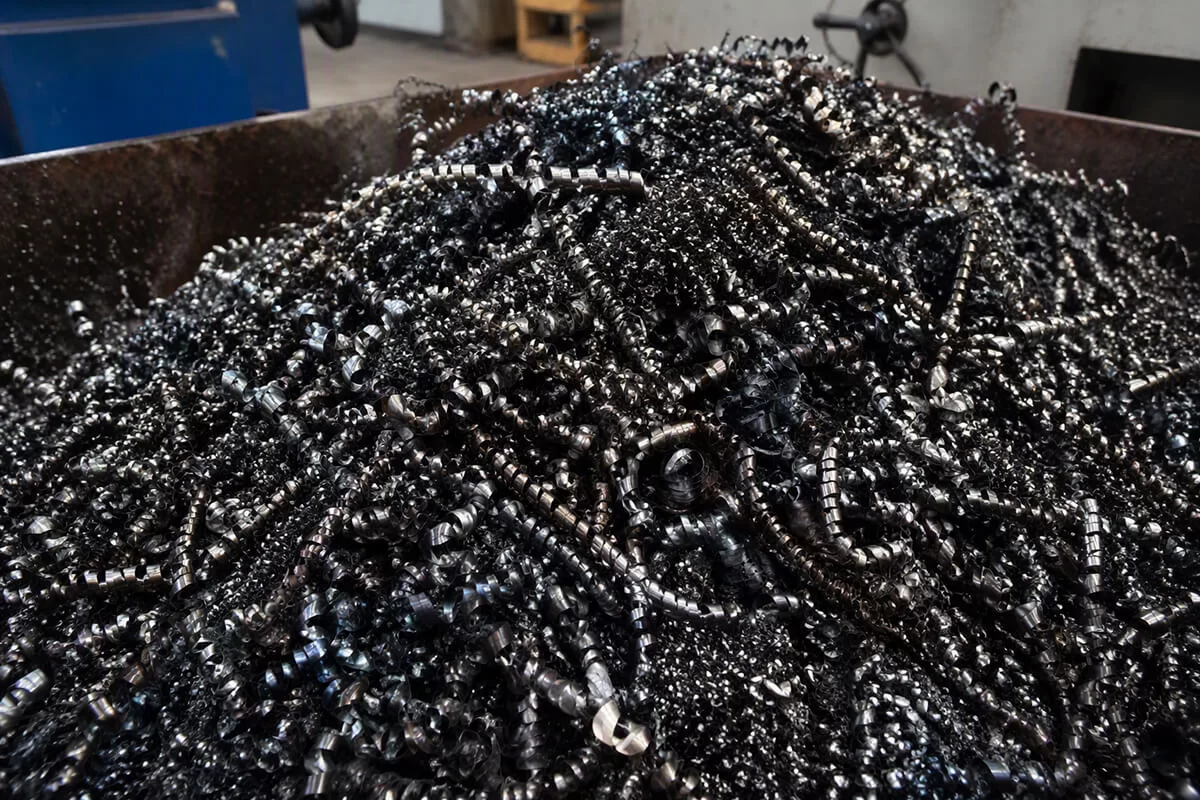
Short, free-flowing chips usually feed more steadily. Long tangled turnings can bridge inside a hopper, wrap around rotating components and create an uneven flow into the compression chamber.
Crushing is therefore necessary for some turnings, but it should not be added to every briquetting project without first checking the material.
What Types of Metal Turnings Are Common?
Machining operations produce several chip forms:
Short broken chips
Spiral chips
Long continuous turnings
Tangled nests
Fine chips
Mixed chips and offcuts
Wet chips containing coolant or oil
Dense cast iron chips
The same metal grade can create different chip shapes depending on the machine tool, cutting speed, tool geometry and machining operation.
A written description such as “aluminum chips” or “steel turnings” is not enough for equipment selection.
When Turnings Can Be Briquetted Directly
Direct briquetting may be possible when the material consists mainly of:
Short and loose chips
Consistent particle forms
Chips that flow through the feed hopper
Material with controlled moisture or coolant content
Chips without long wire-like pieces
Material free from solid bars, tools and heavy offcuts
The briquetting press supplier should confirm the acceptable maximum chip length and feed condition.
Even short chips may require a storage hopper, agitator or controlled feeder to maintain a stable supply.
When Crushing Is Recommended
A turnings crusher is usually considered when the feed contains:
Long spiral turnings
Tangled nests
Continuous strips
Chips that bridge across the hopper
Coiled machining waste
Mixed chips with occasional longer pieces
Material that cannot be conveyed consistently
The objective is to shorten and loosen the turnings, not to grind the metal into powder.
Properly conditioned chips are easier to:
Convey
Meter
Separate from coolant
Store
Feed into a briquetting press
Mix into a controlled production stream
Shredder or Turnings Crusher?
A general-purpose twin shaft shredder and a dedicated turnings crusher are not always interchangeable.
Twin Shaft Shredder
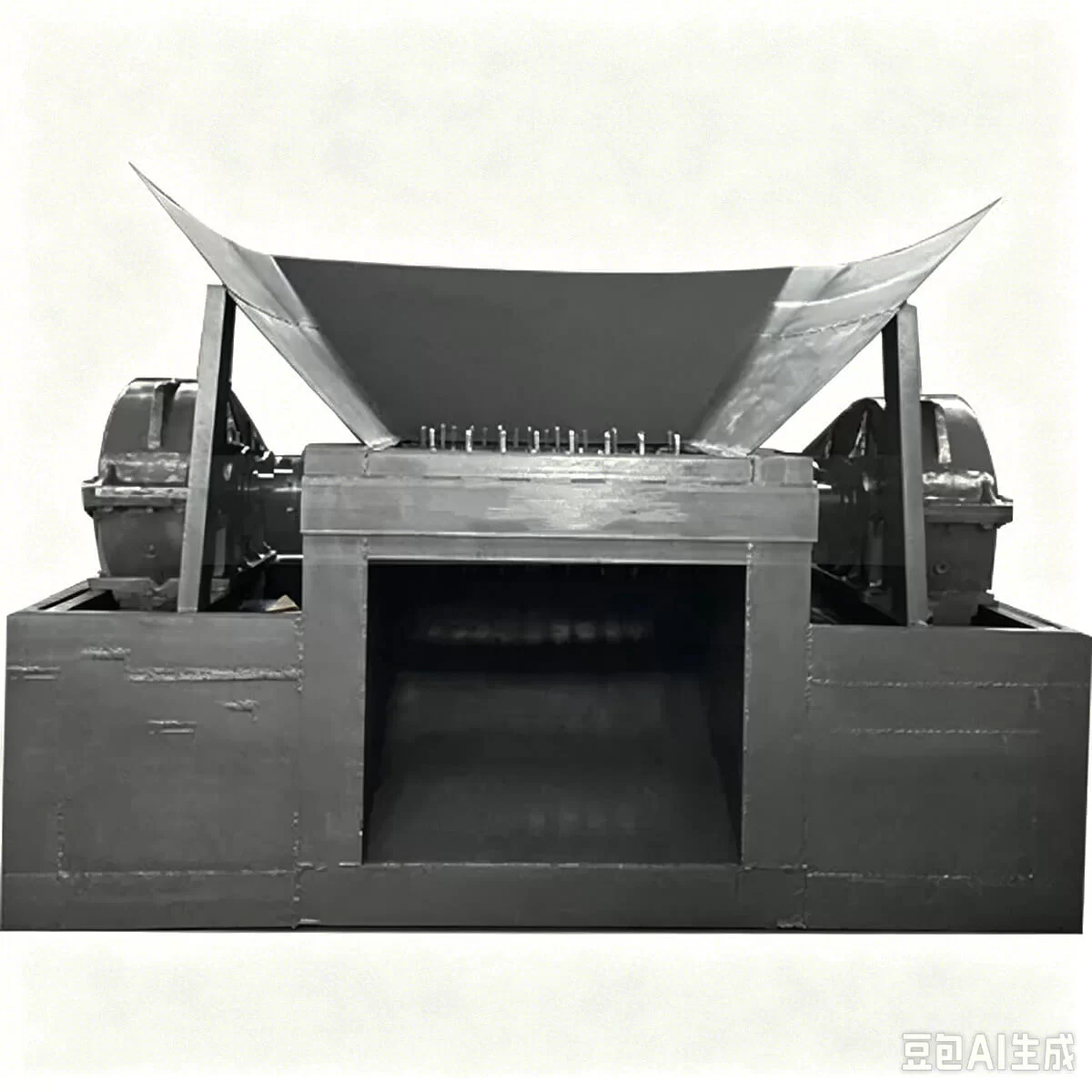
A twin shaft shredder uses low-speed cutter shafts and is more suitable for bulky scrap and larger tangled material. Its discharged pieces can remain relatively coarse and irregular.
Turnings Crusher
A turnings crusher is designed specifically to break long, curled or nested metal chips into shorter pieces. Its chamber, rotor and discharge arrangement should prevent chip accumulation while controlling oversize material.
Equipment selection depends on the initial chip nest size and the required downstream feed condition.
For small, loose machining chips, a large metal shredder may be unnecessary.
Aluminum, Steel and Cast Iron Turnings
Different metals behave differently during crushing.
Aluminum Turnings
Aluminum chips may be soft, flexible and easily tangled. Residual oil or coolant can cause chips to stick together. Repeated processing can also increase the amount of fine material.
The process should shorten the chips without creating unnecessary powder.
Steel Turnings
Steel turnings can be tougher and may form long spring-like shapes. The crusher requires sufficient cutting strength and protection against occasional hard pieces.
Cast Iron Chips
Cast iron chips are generally shorter and more brittle. They may not require the same cutting arrangement as long steel or aluminum turnings. Dust control can become more important when brittle material breaks.
The machine should be selected for the actual metal and chip form, not only the desired hourly capacity.
Coolant and Oil Separation
Many machining chips contain cutting fluid or oil.
The best process sequence depends on how much liquid is present:
Light Surface Moisture
Slightly wet chips may be crushed first and then transferred to a centrifuge or other liquid-separation device.
High Liquid Content
Material containing a large amount of free liquid may require drainage or preliminary separation before crushing. This reduces leakage, improves housekeeping and avoids sending unnecessary liquid through the crusher.
Tangled Wet Turnings
Long tangled chips may trap liquid inside the chip mass. Shortening the material can expose more surface area and improve later fluid recovery.
The equipment supplier should know:
Liquid type
Approximate liquid percentage
Flash point where applicable
Whether the liquid will be recovered
Required residual liquid after separation
Why Over-Crushing Should Be Avoided
Making chips smaller is not always better.
Excessive crushing can cause:
More fine particles
Higher metal loss during handling
Increased dust
Higher power consumption
Faster wear
More surface oxidation
Greater difficulty during liquid separation
The required chip length should be based on stable briquette-press feeding, not on producing the smallest possible particle.
A screen or classifier may be used to control oversize material, but very small openings can reduce throughput and increase repeated crushing.
Oversize Return System
Where the initial chip length varies considerably, a closed processing loop can be useful:
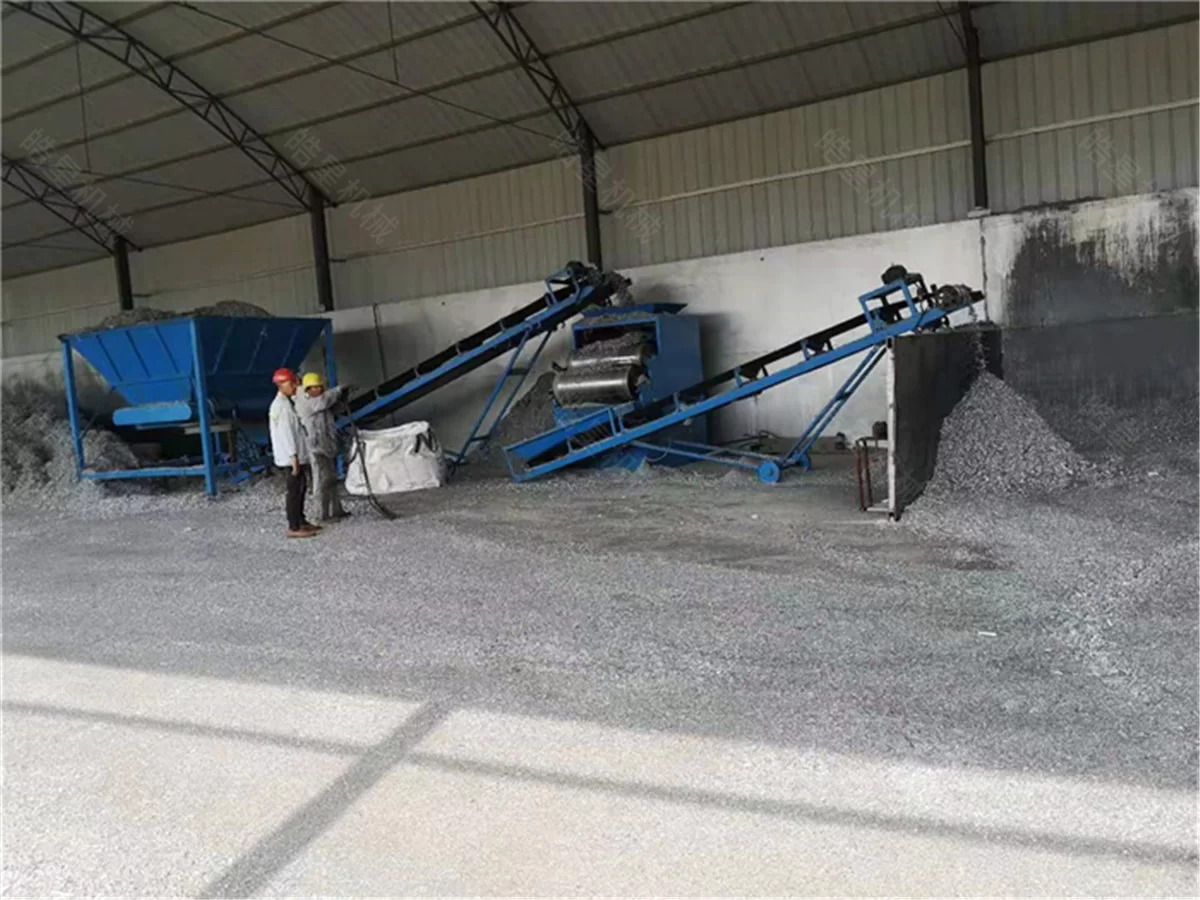
Metal turnings → Controlled feeding → Turnings crusher → Screening → Oversize return → Qualified chips → Fluid separation or briquetting
The screen removes material that remains too long for the downstream equipment. Oversize pieces return to the crusher instead of forcing all material to stay in the chamber for an extended period.
This can provide better control over the final chip condition while limiting unnecessary repeated crushing of already suitable material.
How Crushing Affects Briquetting
Conditioned chips can improve:
Hopper flow
Screw or ram feeding
Compression consistency
Briquette weight stability
Continuous operation
Storage and transport
However, crushing alone does not guarantee a stronger briquette.
Briquette quality also depends on:
Metal type
Chip cleanliness
Remaining oil or coolant
Compression pressure
Die condition
Feed uniformity
Fine-particle content
A briquetting test should use chips prepared by the proposed crushing process.
Capacity Must Be Based on Conditioned Output
If the project requires 500 kg/h of briquettes, the turnings crusher should provide at least the necessary qualified feed rate after removing liquids, contaminants and oversize pieces.
Crusher input capacity should not be confused with qualified output capacity.
For example, one tonne of wet turnings may include a measurable amount of oil or coolant. The dry metal output will be lower after liquid separation.
The material balance should record:
Wet feed weight
Recovered liquid weight
Qualified chip weight
Oversize return
Fine material
Foreign contaminants
Information Required Before Equipment Selection
Provide:
Metal type and grade
Photographs of loose chips and tangled nests
Maximum chip length
Approximate nest dimensions
Loose bulk density
Oil or coolant type
Approximate liquid content
Required hourly capacity
Briquetting press feed requirement
Acceptable maximum chip length
Fine-particle limitation
Available installation area
A representative sample test is recommended when long and irregular turnings form a significant part of the feed.
Conclusion
Metal turnings should be crushed before briquetting when long, tangled or coiled chips cannot feed steadily into the press. Short, consistent and free-flowing chips may not need a separate crushing stage.
The goal is to create a stable briquetting feed, not to reduce every chip to the smallest possible size. Chip length, liquid content, bulk density and the briquetting machine’s feeding requirements should be evaluated together before the process is finalized.