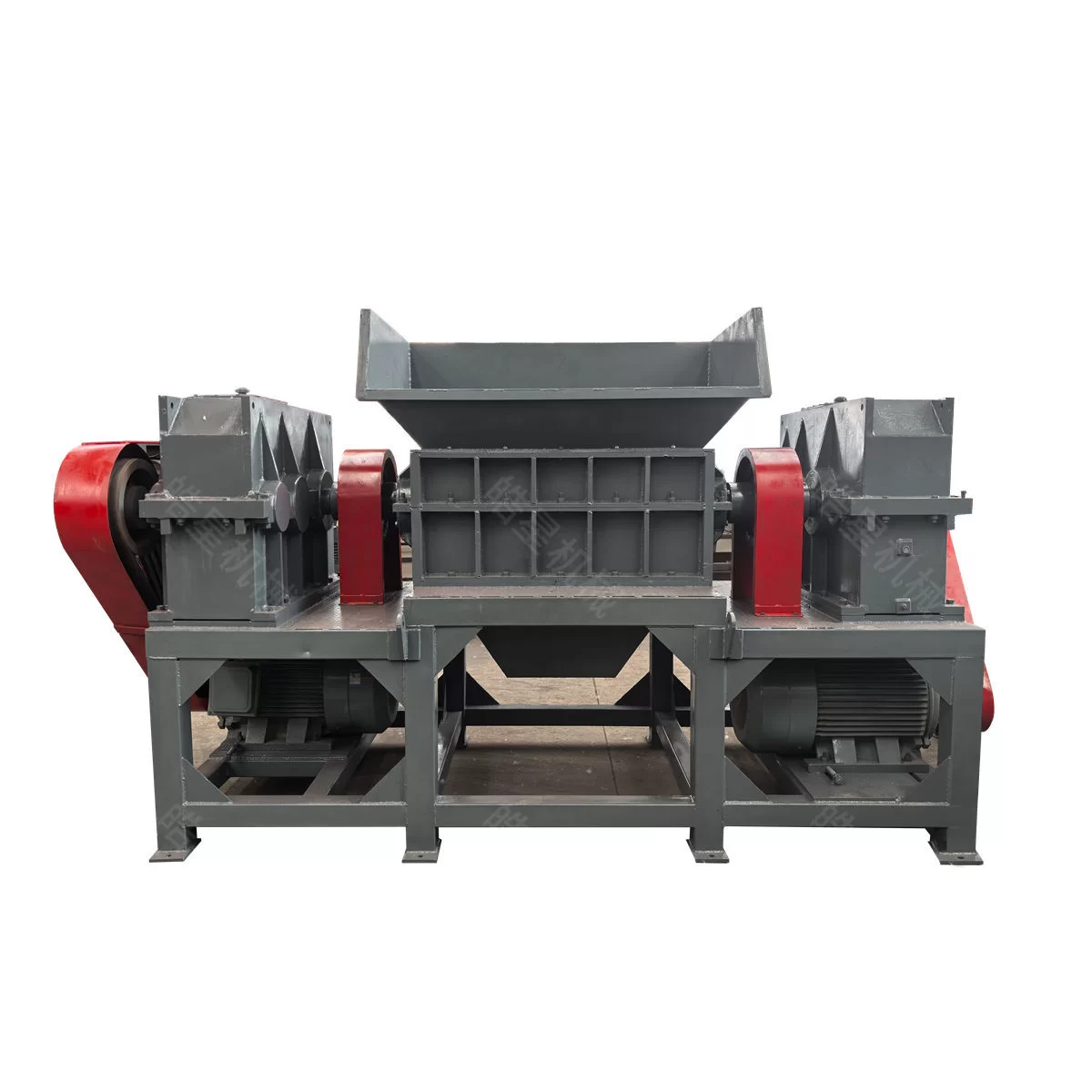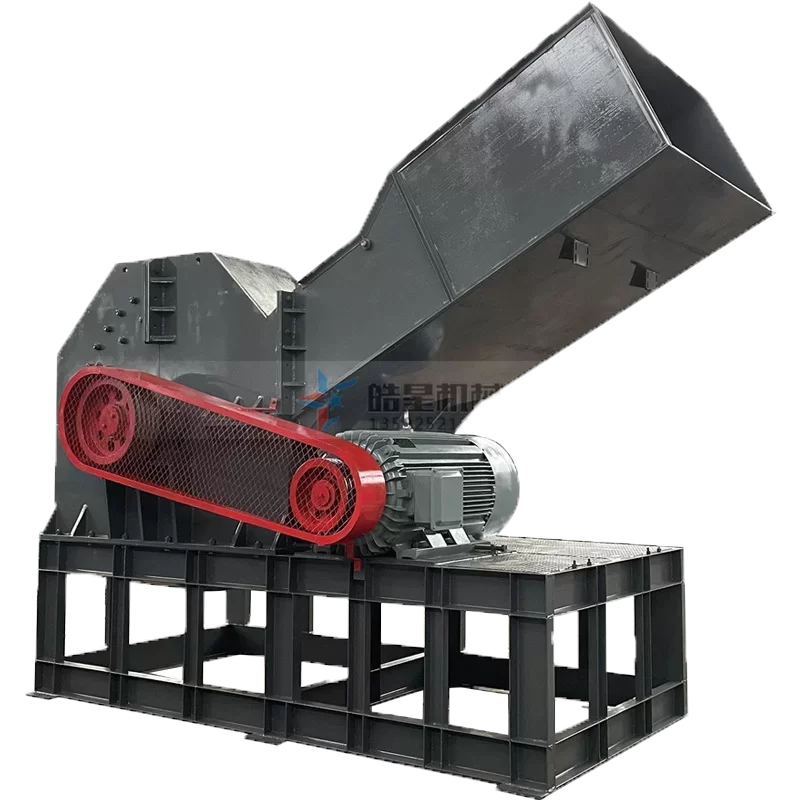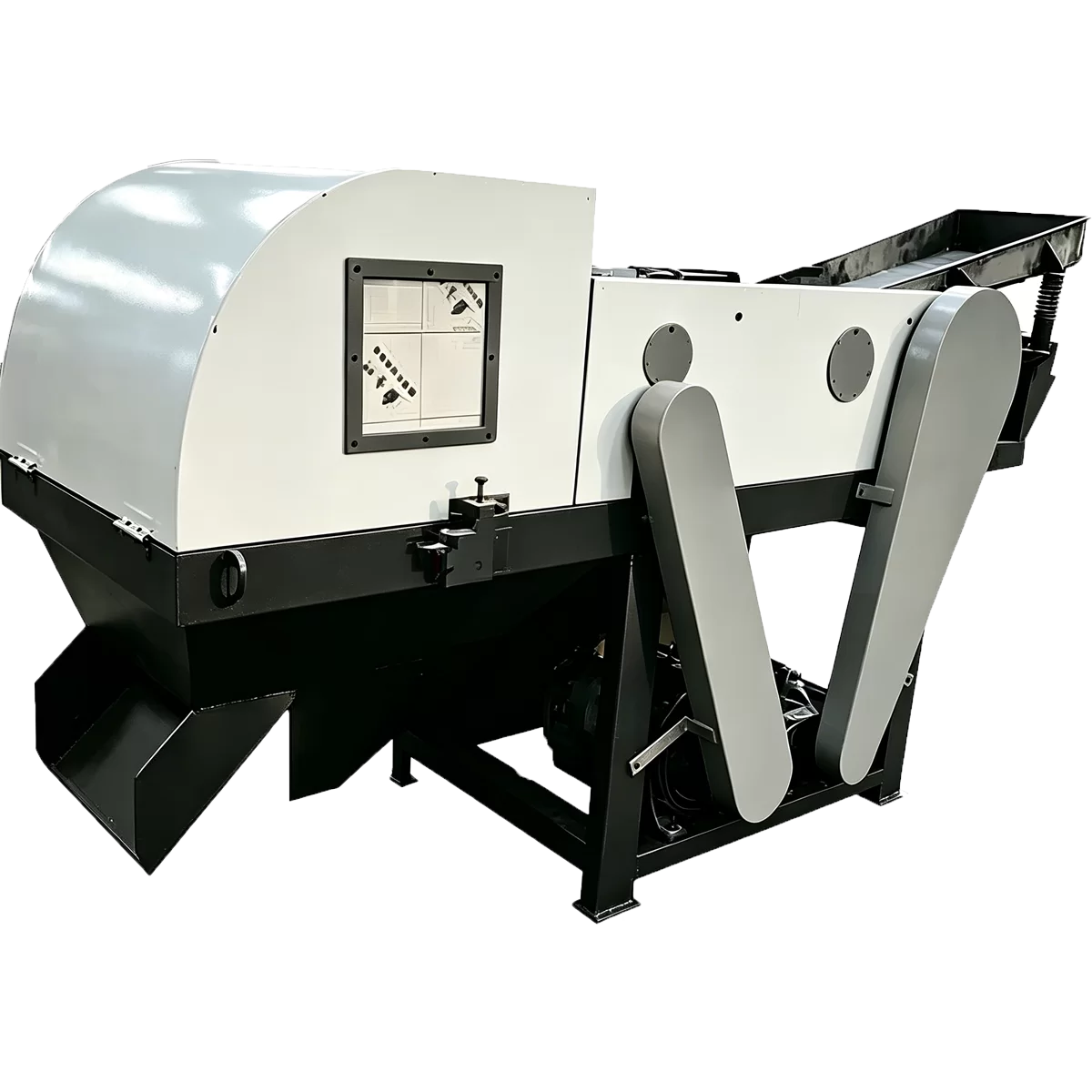

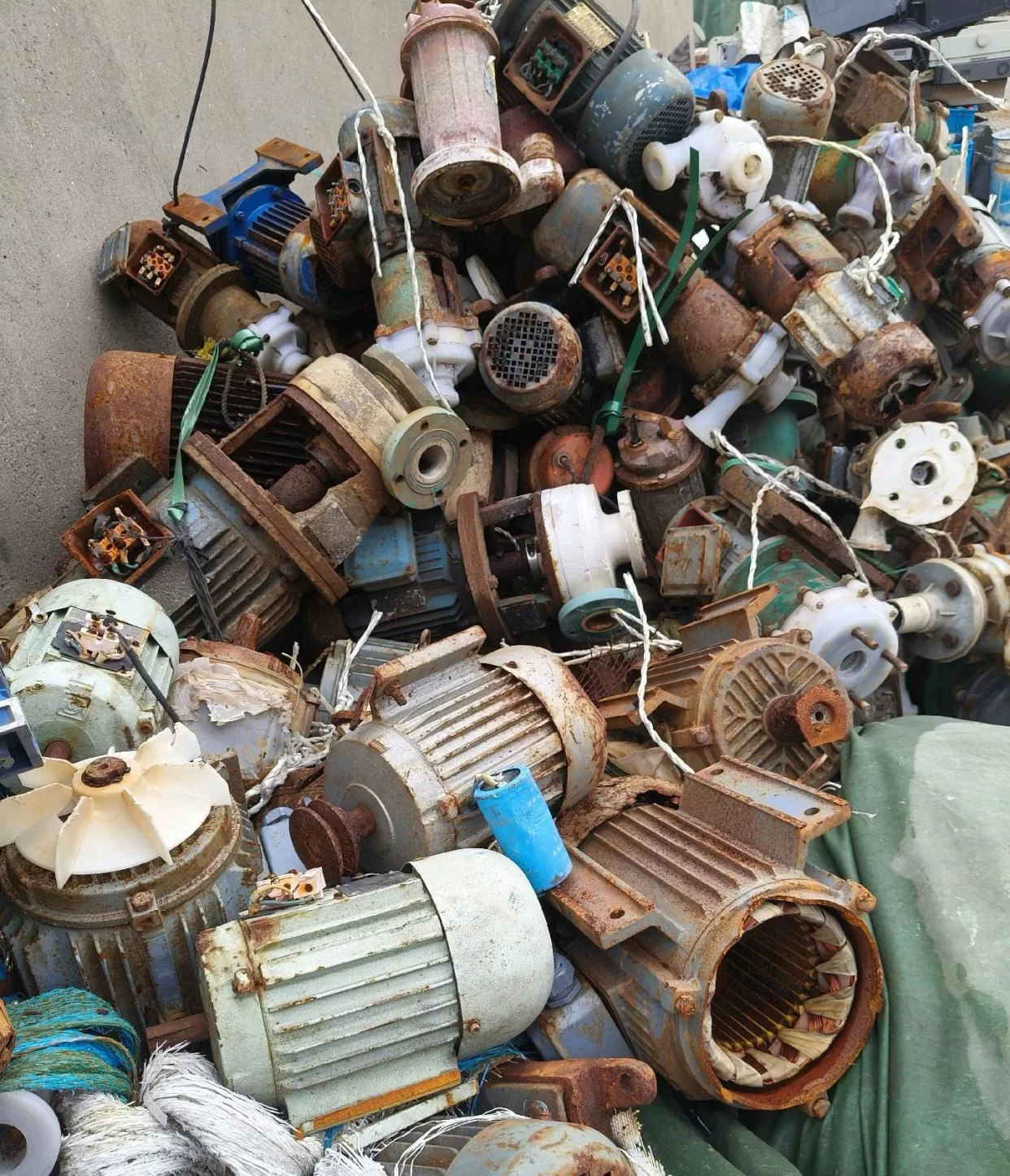
Electric motor scrap contains several materials assembled into a compact structure. A complete waste motor may include a steel or cast-metal housing, stator, rotor, shaft, laminated iron core, copper or aluminum windings, bearings and insulating components.
These parts should not automatically be processed in the same way. Complete electric motors may require dismantling before size reduction, while separated rotors and stators can be directed to equipment selected for their dimensions, shaft structure and winding material.
The purpose of electric motor recycling is not simply to crush the whole unit. A suitable process should release valuable copper or aluminum from ferrous metal while limiting unnecessary contamination between the recovered fractions.
Equipment selection should begin with the actual condition of the incoming material:
Is the motor complete or dismantled?
Has the housing been removed?
Are the rotor and stator already separated?
Are the windings made from copper or aluminum?
Does the rotor contain a long steel shaft?
Are different motor sizes mixed together?
The answers determine whether the material should first be dismantled, cut, crushed or sorted.
Materials Covered by This Page
This page applies to:
Complete waste electric motors
Industrial motor scrap
Appliance motor scrap
Pump motors
Fan motors
Compressor motors
Gear motors after suitable preparation
Copper-wound motor scrap
Aluminum-wound motor scrap
Separated motor rotors
Separated motor stators
Motor housings
Laminated iron cores
Steel motor shafts
Mixed dismantled motor components
Rejected motor parts from manufacturing
Motors recovered from machinery and appliances
Large industrial motors and small appliance motors differ significantly in size, construction and recoverable metal content. They should not be described as one uniform material simply because both are electric motors.
Complete Electric Motor Scrap
A complete electric motor normally contains several connected components:
Outer housing
End covers
Stator
Rotor
Steel shaft
Copper or aluminum windings
Bearings
Insulating material
Fasteners
Attached cables
Cooling fan or plastic cover
Before processing, the motor should be inspected to determine whether valuable parts can be removed through dismantling. In some cases, separating the housing, rotor and stator before crushing gives the recycler better control over the different material fractions.
Complete motors may also carry oil, grease, attached cables, gearboxes or external components. These materials can affect feeding and the condition of the final output.
A complete motor should not be sent directly to a motor rotor crusher merely because it contains a rotor. The crusher must be selected according to the actual feed material it is designed to receive.
Motor Rotor Scrap
A motor rotor is the rotating component inside an electric motor. Depending on the motor type, it may contain:
Steel shaft
Laminated iron core
Copper conductors
Aluminum conductors
Cast aluminum sections
Retaining rings
Bearings
Small attached components
Separated motor rotors are more consistent than complete electric motors, but their dimensions can still vary considerably. A small appliance rotor and a large industrial motor rotor may require different feeding and processing arrangements.
A motor rotor crusher is used to reduce prepared rotor material and help release non-ferrous metal from the iron core and shaft structure.
Before selecting the equipment, the following should be confirmed:
Maximum rotor diameter
Maximum rotor length
Shaft diameter
Shaft length
Total rotor weight
Copper or aluminum conductor type
Presence of bearings
Hardness of the shaft
Required output size
Downstream separation method
Long shafts and oversized rotors may require preparation before entering the crusher. Equipment should not be selected based only on the average rotor size if some pieces are substantially larger.
Motor Stator Scrap
The stator is the stationary section of an electric motor. It commonly consists of:
Laminated steel core
Copper or aluminum windings
Insulating paper
Resin or varnish
Connecting wire
Frame or housing components
Some stators can be processed through mechanical dismantling or winding removal. Others may require size reduction to release the winding material from the laminated iron core.
Whether crushing is suitable depends on:
Stator diameter
Core thickness
Winding material
Amount of insulation
Resin and varnish content
Presence of the outer housing
Required recovery method
Stators should not automatically be grouped with motor rotors in the equipment description. Their internal construction and material-release behavior are different.
Copper-Wound and Aluminum-Wound Motors
Electric motor windings may be made from copper or aluminum. The two materials differ in density, value and downstream recovery requirements.
Copper-wound motors
Copper windings are a major recovery target. The process should release the copper from the laminated steel core while limiting excessive iron contamination in the recovered copper fraction.
Aluminum-wound motors
Some motors use aluminum conductors rather than copper. The recovered non-ferrous fraction may therefore contain aluminum instead of, or in addition to, copper.
Mixed motor scrap
When copper-wound and aluminum-wound motors are processed together, the output may contain both non-ferrous metals. The downstream sorting arrangement should be selected according to the required final fractions.
Customers should not assume that every electric motor contains the same proportion of copper. Motor type, manufacturer, size and construction all affect the material composition.
Inspection and Preparation Before Processing
Before a complete motor or separated component enters the processing equipment, the material should be checked for:
Attached gearbox
Residual oil or grease
External electrical cables
Plastic fan covers
Oversized steel shafts
Bearings
Bolts and fasteners
Sealed components
Mixed electronic parts
Foreign metal objects
Excessive dirt
Material that exceeds the equipment inlet
Basic preparation can improve feeding stability and reduce the chance of unsuitable parts entering the crushing chamber.
Where practical, reusable components and easily removable non-metallic parts may be separated before size reduction.
Does Complete Motor Scrap Require Dismantling?
Not every recycling operation uses the same level of dismantling.
Dismantling may be appropriate when:
Motors are large and individually valuable
Housings can be removed efficiently
Rotors and stators need separate processing
Copper windings can be recovered without intensive crushing
Attached gearboxes or other components must be removed
Different metal fractions need to remain separate
Oversized parts cannot enter the selected crusher
A more direct mechanical process may be considered when:
Motors are small and relatively uniform
Manual dismantling costs are too high
The equipment is designed for the prepared motor size
The customer has downstream separation equipment
Mixed output is acceptable for further sorting
The decision should be based on labor cost, motor size, material composition, required output and available equipment.
Crushing Prepared Motor Components
After inspection and necessary dismantling, prepared motor parts can enter the appropriate size-reduction equipment.
The crushing stage may help:
Reduce rotor and stator dimensions
Break open laminated iron structures
Release copper or aluminum conductors
Separate part of the insulation from the metal
Produce material suitable for conveying
Prepare ferrous and non-ferrous fractions for sorting
Reduce manual handling of compact motor components
The required output should be determined by the following separation process. Producing excessively fine material may increase the amount of mixed metal fines and make clean separation more difficult.
The crusher configuration should reflect the size, hardness and structure of the prepared material. A machine suitable for small motor rotors should not automatically be presented as suitable for large complete industrial motors.
Ferrous Metal Recovery
Iron and steel make up a substantial part of most motor components. The housing, shaft, laminated core and fasteners may all enter the ferrous output.
After adequate size reduction and material release, a magnetic separator can recover exposed ferrous material from the processed mixture.
Magnetic separation performance depends on:
Degree of material liberation
Particle size
Material layer thickness
Conveyor speed
Distribution across the belt
Magnetic field arrangement
Amount of copper or aluminum still attached to iron
A copper winding that remains tightly connected to the iron core may follow the ferrous fraction. The material must first be released sufficiently during dismantling or crushing.
Recovery of Copper and Aluminum
After ferrous material has been removed, the remaining fraction may contain:
Copper wire and conductor pieces
Aluminum conductor pieces
Insulation
Plastic
Rubber
Small non-magnetic metal components
Mixed fines
An eddy current separator can recover conductive non-ferrous metal from suitable non-conductive material, but it does not directly divide copper from aluminum by alloy or value.
If both copper and aluminum are present in the same non-ferrous output, additional sorting may be required according to the customer’s recovery target.
The separator performs best when:
Metal and insulation have been physically released
Material size is reasonably controlled
The feed is distributed evenly
Ferrous metal has already been removed
The material layer is not excessively thick
The discharge divider is adjusted to the actual output trajectories
A complete motor or intact rotor should not be sent directly to the eddy current separator. Size reduction and material liberation must take place first.
Recommended Processing Routes
The processing route should be selected according to whether the incoming material consists of complete motors, rotors, stators or mixed dismantled parts.
Separated Motor Rotors
Material inspection → Removal of unsuitable oversized attachments → Controlled feeding → Rotor crushing → Magnetic separation → Non-ferrous recovery → Material collection
This route is suitable for prepared motor rotors within the size range of the selected equipment.
Separated Motor Stators
Material inspection → Required dismantling or preparation → Size reduction → Ferrous and winding-material separation → Material collection
The specific equipment depends on stator size, winding type and required output.
Complete Small Electric Motors
Material inspection → Removal of external attachments → Required preparation → Appropriate size reduction → Magnetic separation → Non-ferrous separation → Separate collection
Complete motors should only follow this route when their size and structure are suitable for the selected equipment.
Large Industrial Motors
Material inspection → Manual or mechanical dismantling → Separate housing, rotor and stator → Process each component according to its structure → Sort recovered materials
Large motors are generally better evaluated component by component rather than treated as a uniform mixed feed.
Mixed Motor Components
Material inspection → Classification by size and structure → Preparation → Size reduction → Ferrous removal → Further sorting → Separate collection
Classification before processing can reduce load fluctuations and improve the consistency of the output.
Complete Electric Motor Recycling Process
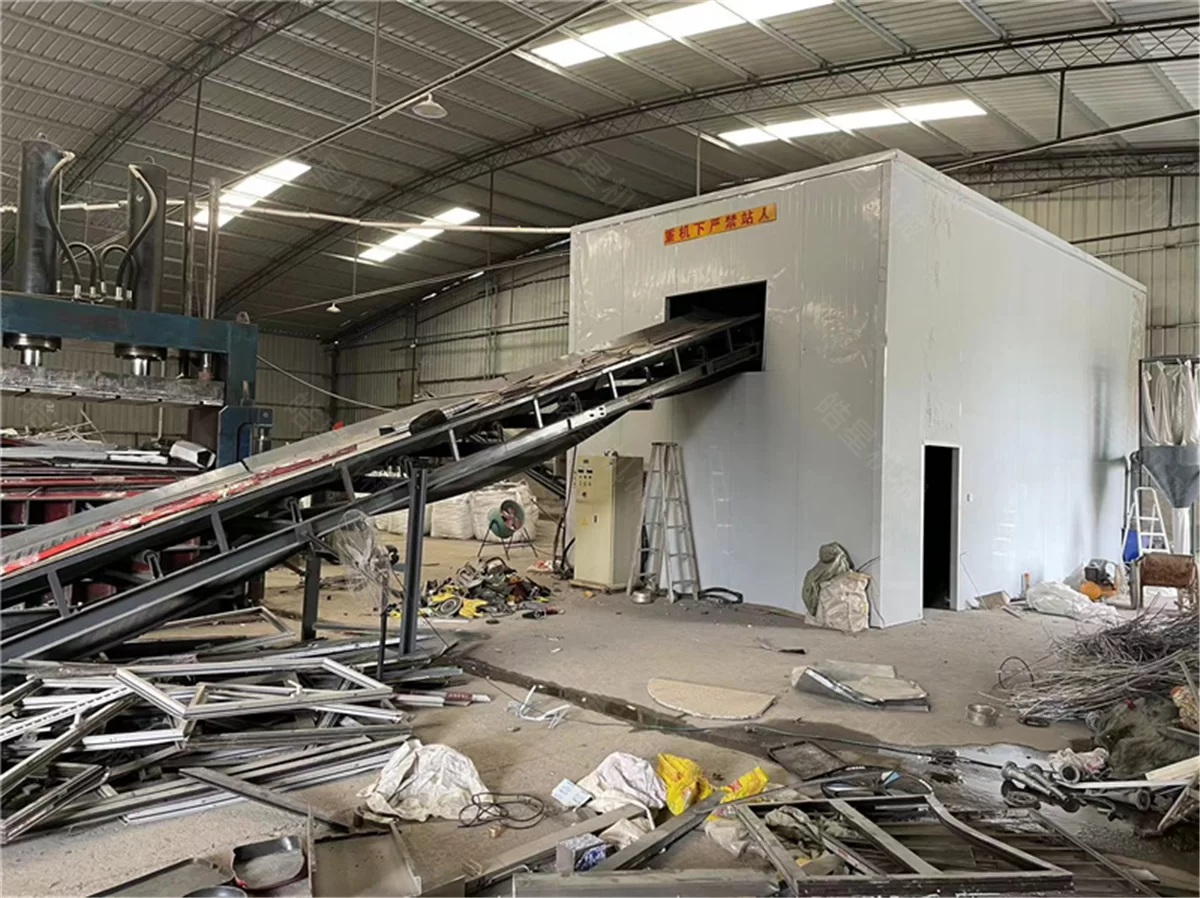
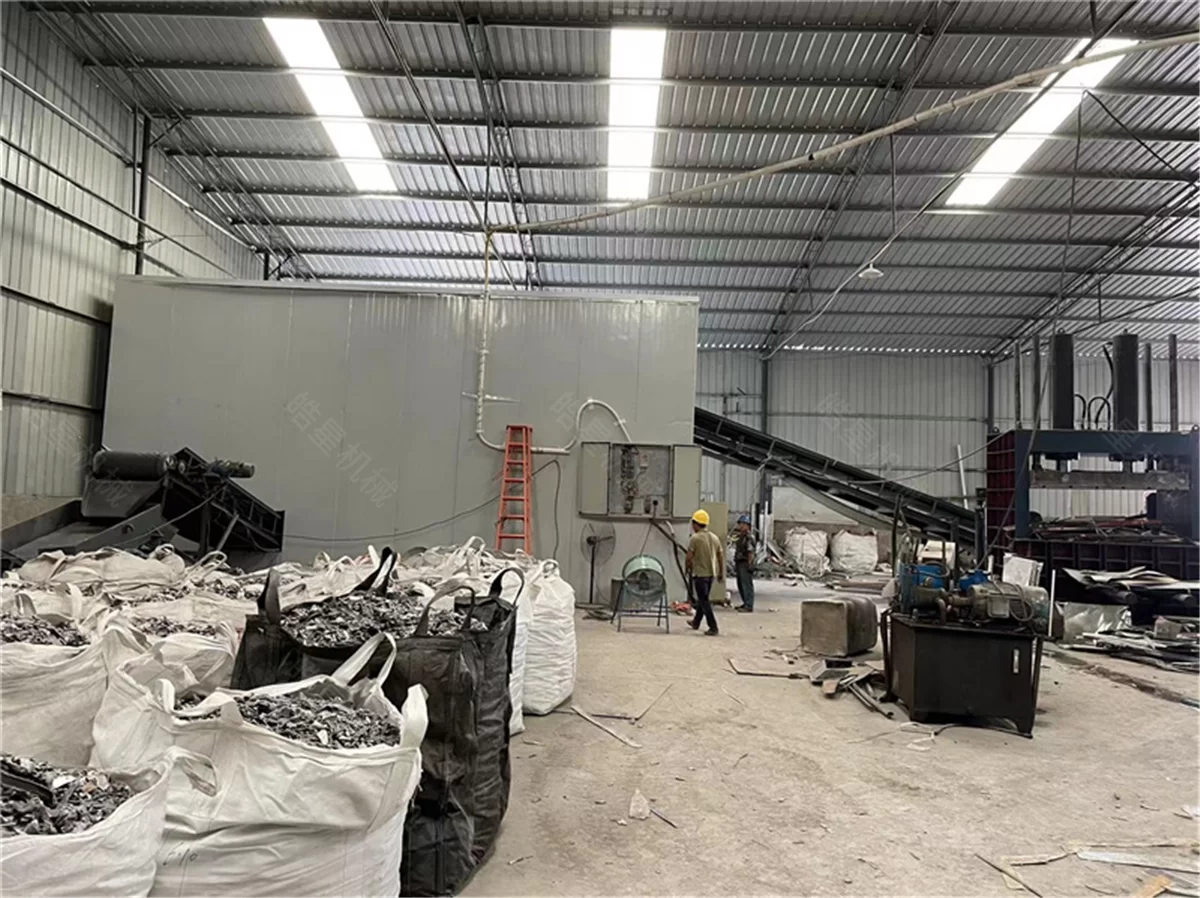
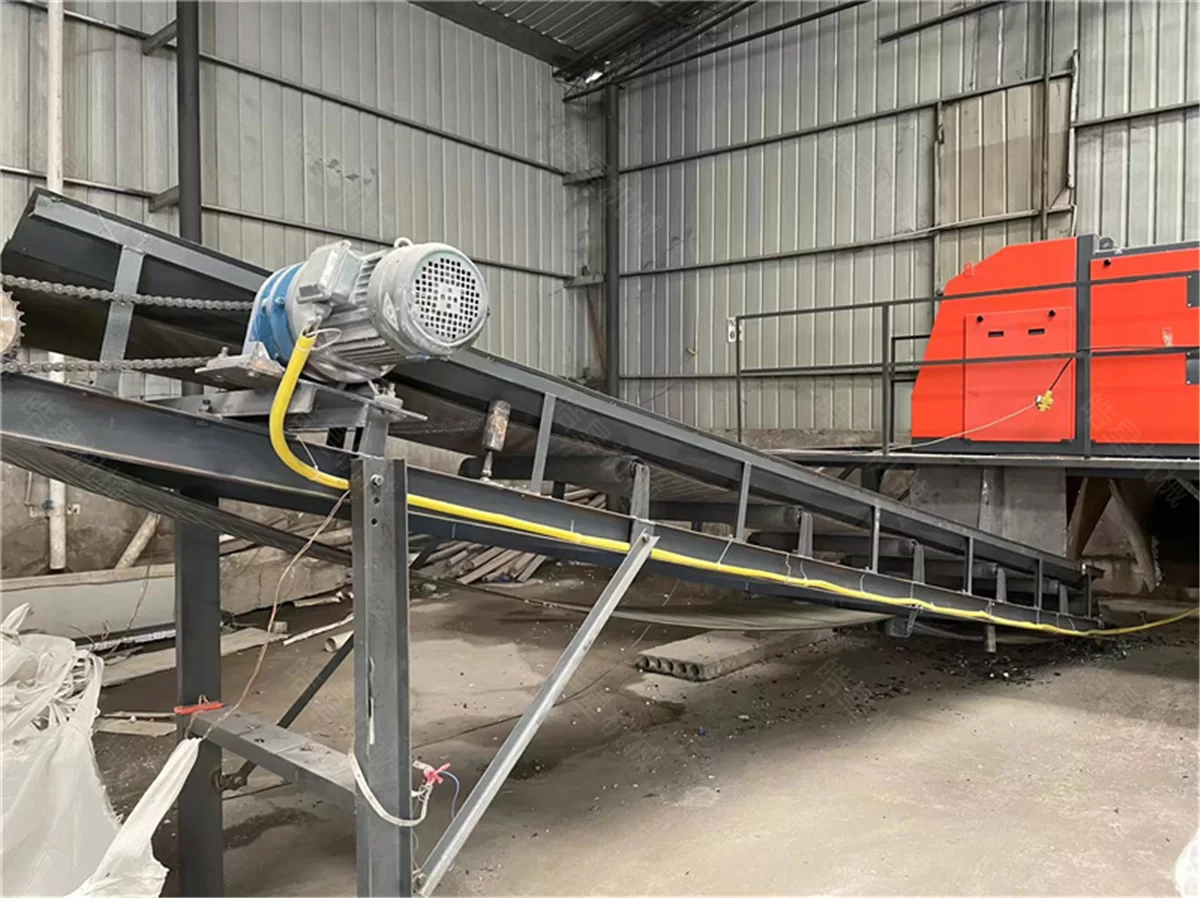
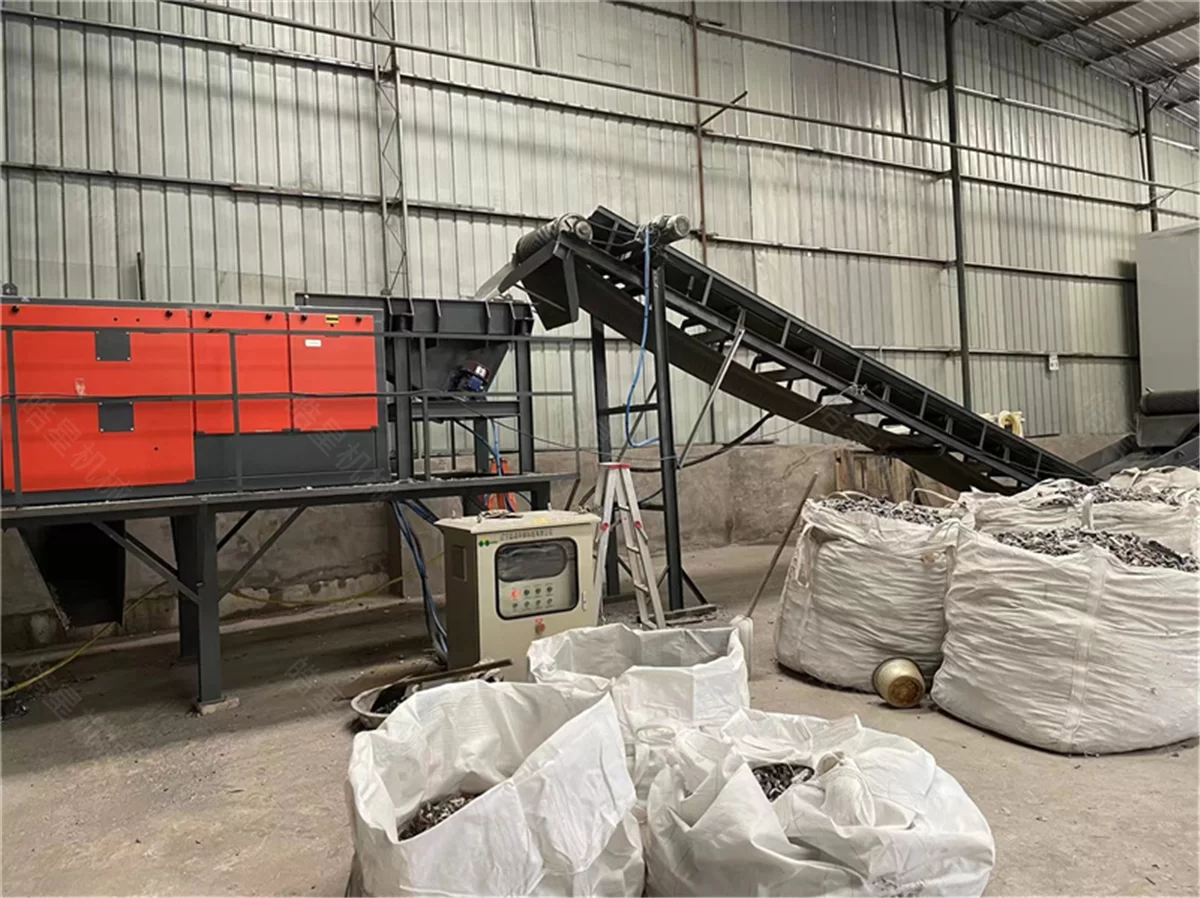
When a customer needs continuous processing rather than a standalone crusher, the equipment can be arranged as part of a scrap metal recycling line.
Depending on the motor condition and required outputs, the process may include:
Material inspection area
Dismantling or preparation station
Feeding equipment
Size-reduction machine selected for the prepared material
Discharge conveyor
Magnetic separator
Eddy current separator where appropriate
Ferrous material outlet
Non-ferrous material outlet
Non-metallic residue outlet
Dust collection equipment
Electrical control system
Not every motor recycling project requires every unit. For example, a recycler processing only separated motor rotors will require a different configuration from a facility receiving complete industrial motors.
Equipment capacities should also be matched. The feeding system, crusher, conveyors and separators must handle the same material flow without creating accumulation between the processing stages.
Equipment Selection by Material Condition
Complete small motors
Confirm the motor dimensions, housing material, external attachments and internal winding type. Preparation may be required before crushing.
Complete industrial motors
Dismantling should be evaluated first. Large housings, shafts and components may exceed the inlet or working range of standard rotor-processing equipment.
Separated rotors
A motor rotor crusher may be selected when the rotor dimensions, shaft structure and metal composition suit the machine.
Separated stators
The process should be selected according to the winding material, stator diameter, insulation and whether the housing remains attached.
Copper-wound motor components
The recovery target is usually copper with limited ferrous contamination. Sufficient release from the core is necessary before sorting.
Aluminum-wound motor components
The downstream process should identify the aluminum fraction correctly rather than assuming all non-ferrous output is copper.
Mixed motor scrap
The equipment should be selected according to the largest and most difficult component in the mixture. Customers should avoid combining small rotors with oversized complete motors without prior classification.
Processed Material Outputs
Depending on the initial material and selected process, the output may include:
Ferrous motor housings
Steel shafts
Laminated iron pieces
Copper winding material
Aluminum conductor material
Mixed non-ferrous metal
Insulation and plastic residue
Bearings and other separated components
Mixed particles requiring further sorting
The actual recovery result depends on:
Motor construction
Copper or aluminum winding type
Degree of dismantling
Size-reduction result
Material liberation
Separation equipment
Operating settings
Amount of mixed input material
A fixed copper content, recovery rate, purity or hourly capacity should not be promised solely from the general description “electric motor scrap.”
Common Problems During Motor Scrap Processing
Long shafts
Long or thick steel shafts can affect feeding and crusher load. Their dimensions should be confirmed before equipment selection.
Mixed motor sizes
A mixture of small appliance motors and large industrial motors can create unstable feeding. Classification by size may be required.
Incomplete material release
Copper or aluminum remaining attached to iron can follow the ferrous output and reduce non-ferrous recovery.
Excessive fine material
Over-crushing can produce fine copper, aluminum, iron and insulation particles that are more difficult to separate cleanly.
Attached gearboxes
Gearboxes may contain different metals, lubricants and heavy components. They should not be treated as ordinary motor housings without inspection.
Incorrect winding assumptions
Not every motor uses copper wire. Aluminum windings may be present and should be considered when evaluating the output.
Benefits of Electric Motor Scrap Processing
A properly selected process can help:
Reduce the size of prepared motor components
Release copper or aluminum windings
Recover ferrous housings and iron cores
Separate suitable non-ferrous material
Reduce manual handling of compact motor parts
Produce separate material fractions for further recycling
Improve storage and transportation of processed output
Adapt the process to complete motors, rotors or stators
Reduce the loss of recoverable metal in mixed residue
The main objective is to release and recover the different materials, not simply to crush the motor into smaller mixed pieces.
Information Required Before Equipment Selection
Please provide:
Photos or videos of the motor scrap
Whether the material consists of complete motors, rotors or stators
Maximum and average motor dimensions
Maximum rotor diameter
Maximum rotor length
Shaft diameter and length
Average weight of each piece
Housing material
Copper or aluminum winding type
Presence of gearboxes
Presence of oil or grease
Percentage of complete and dismantled material
Required hourly capacity
Required output fractions
Preferred particle size
Available installation area
Feeding and discharge height restrictions
Local electrical specifications
Representative material photos and dimensions are essential. The general term electric motor scrap may refer to anything from small appliance motors to heavy industrial units, and these materials do not use the same preparation or processing configuration.