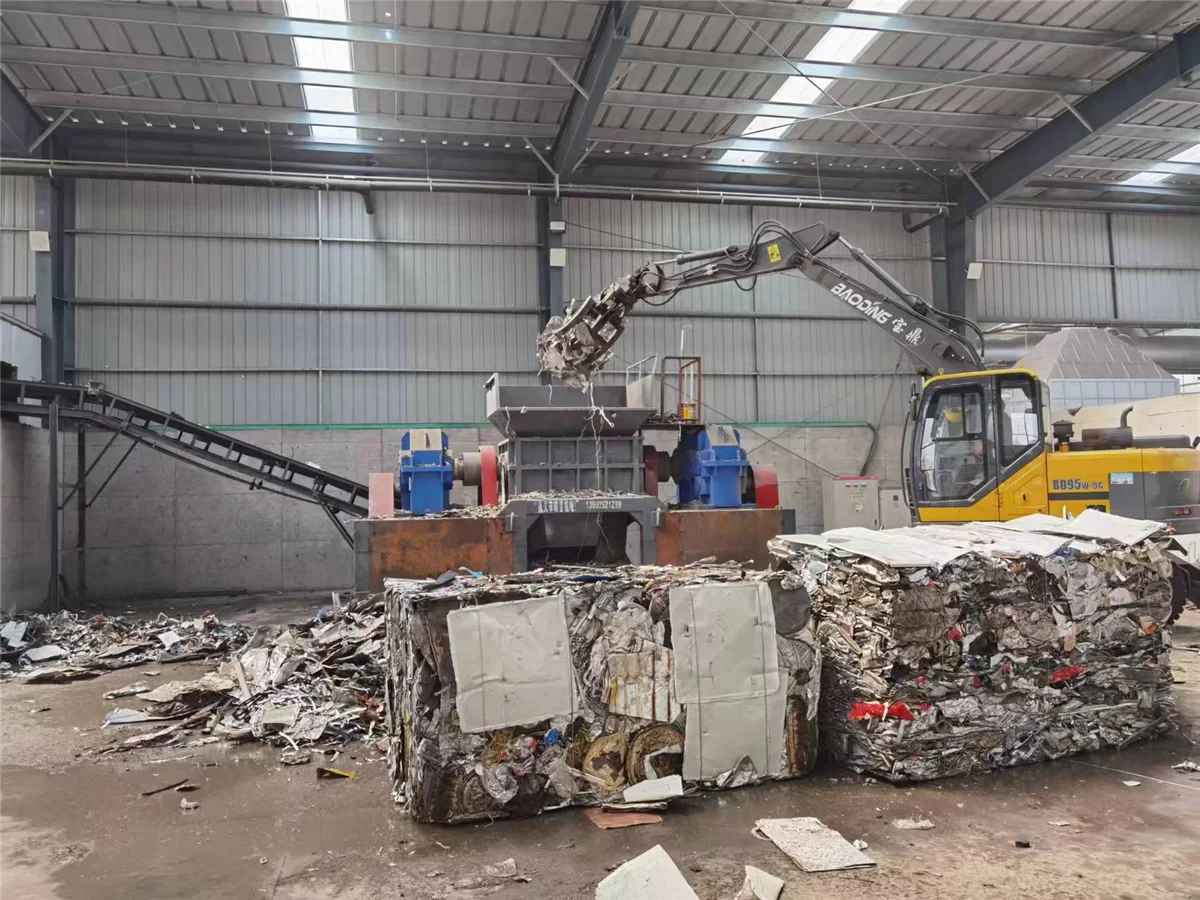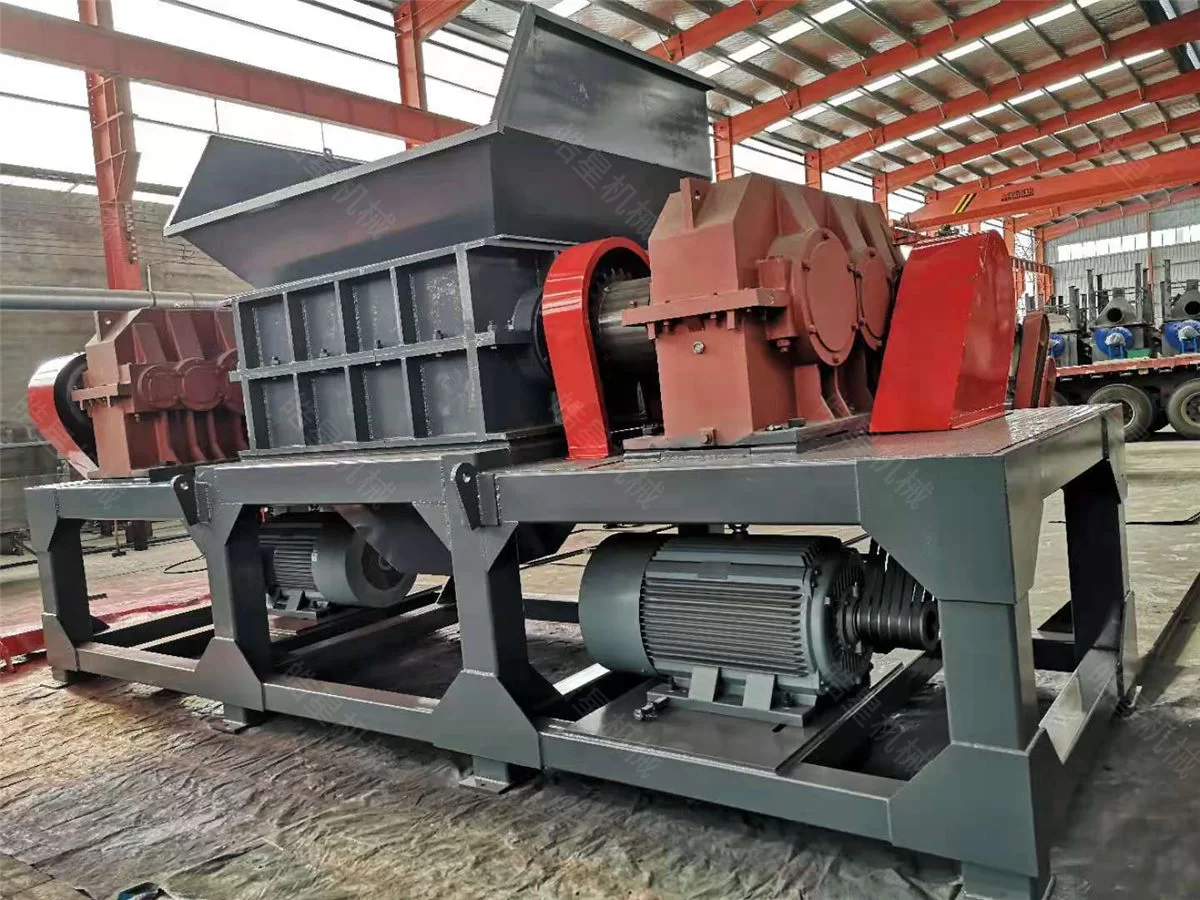
Some compressed metal bales can be fed directly into a twin shaft shredder, but not every bale is suitable.
The decision depends on the bale dimensions, individual weight, compression density, metal thickness and materials hidden inside the bale. A visual check of the outside surface is not enough to confirm suitability.
What the Shredder Does to a Metal Bale
A twin shaft shredder uses two counter-rotating cutter shafts operating at low speed and high torque.
The cutter hooks grip the compressed material, pull it into the chamber and gradually open the tightly packed layers. The bale is reduced into shorter, looser and irregular pieces.
This process is different from hammer crushing. A twin shaft shredder is mainly used for bale opening and coarse primary size reduction. It does not normally use a bottom screen to produce a precise final particle size.
Bales That May Be Suitable for Direct Feeding
Direct feeding may be considered for prepared bales containing:
Light-gauge steel sheet
Tinplate packaging
Steel fabrication offcuts
Prepared appliance shells
Aluminum sheet scrap
Selected aluminum production waste
Moderate-density mixed light metal scrap
The bale must fit the feed hopper and cutting chamber. Its weight must also be compatible with the loading equipment and shredder structure.
The material should be reasonably consistent. Bales with an unknown internal composition require more careful inspection.
Information Required Before Direct Feeding
At minimum, confirm:
Bale length, width and height
Average and maximum bale weight
Approximate compression density
Main material type
Maximum material thickness
Type of binding wire or steel strap
Presence of sealed containers
Presence of batteries or electrical parts
Loading method
Required bales per hour
Photos of an opened bale are more useful than photos showing only the outside.
Materials That Must Be Removed
The following items should not be hidden inside ordinary metal bales:
Sealed pressure containers
Gas cylinders
Aerosol cans with residue
Fuel tanks
Batteries
Closed oil containers
Explosive components
Large solid shafts
Thick steel blocks
Unidentified hazardous material
Automatic reverse protection can help release an overload, but it does not make unsuitable or hazardous material safe to process.
Binding Wire and Steel Strapping
Some bales are held together with steel wire or strapping. Whether these bindings can remain depends on their size, quantity and arrangement.
Loose wire can wrap around rotating components or interfere with discharge. Heavy strapping can also create concentrated loads on the cutters.
The binding method should be shown to the equipment supplier during model selection. Removal may be recommended when the wire or strap presents a feeding or maintenance risk.
High-Density Bales Require Separate Evaluation
A dense briquette or tightly compressed block is not the same as a light scrap bale.
High-density blocks may prevent the cutter hooks from penetrating the material effectively. They can also create a high load across several cutter discs at the same time.
Dense machining briquettes, solid metal blocks, heavy structural pieces and compacted thick offcuts may require another machine or a different preparation method.
Choosing the Feeding Method
Suitable bales may be loaded by:
Grapple
Loader
Chain plate conveyor
Hydraulic loading device
Controlled feed conveyor
The feeding method should prevent uncontrolled dropping of several heavy bales into the chamber.
A conveyor provides a more stable feeding rate for continuous operation. A grapple offers more flexibility when bale sizes vary, but the operator must avoid overloading the hopper.
What Happens After Shredding?
The opened material can be:
Collected directly
Inspected manually
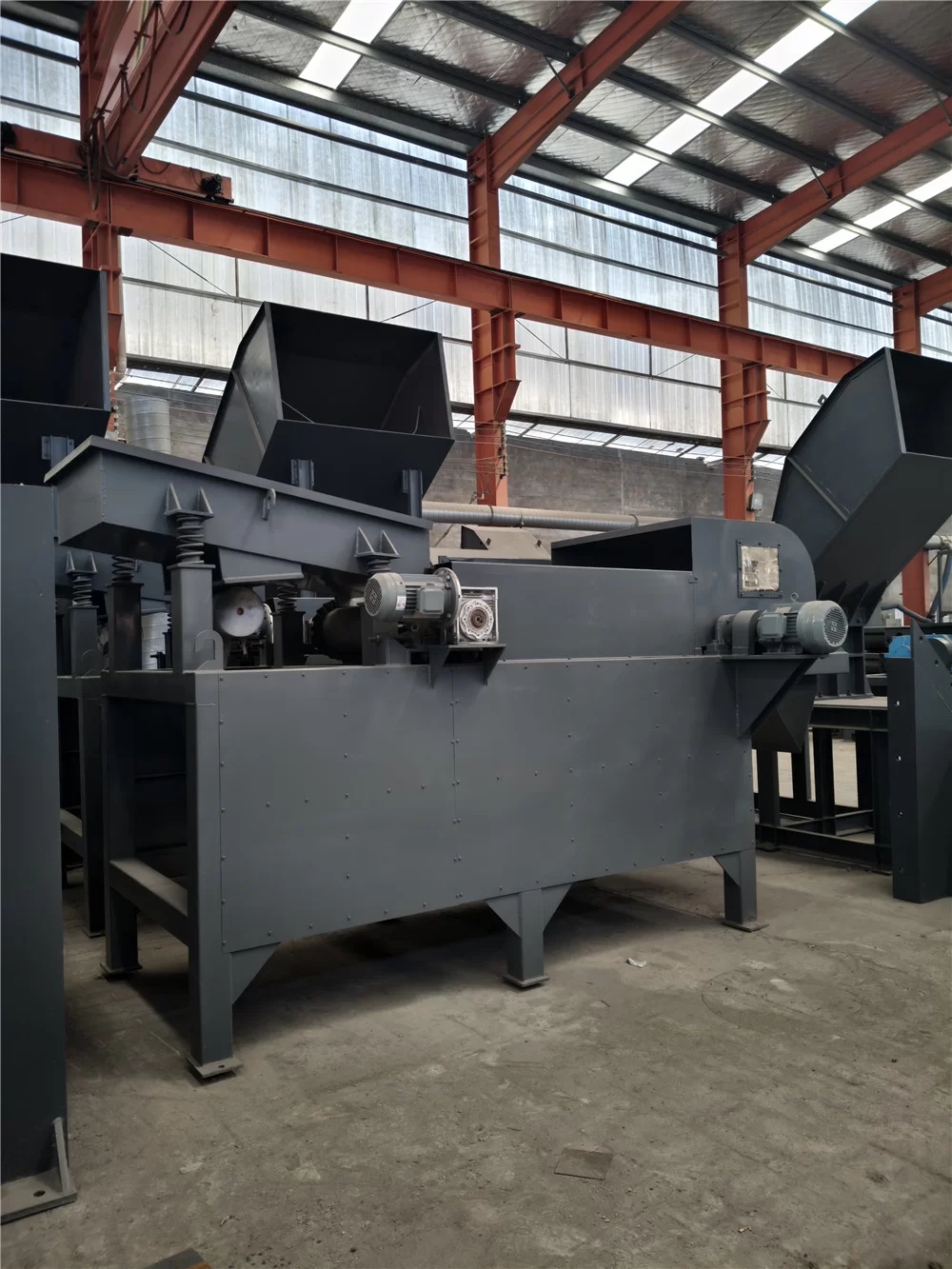
Sent through magnetic separation
Prepared for furnace charging
Transferred to a secondary crusher
Sent to another sorting process
If smaller and screen-controlled output is required, a hammer crusher may be installed after the twin shaft shredder. The shredder and crusher perform different stages of the process.
Direct Feeding Checklist
Direct feeding may be considered when:
The bale fits the hopper and chamber
The individual weight is within the loading limit
The density is suitable for cutter penetration
The material thickness is known
Hazardous items have been removed
Large solid steel parts are not present
The binding method has been assessed
The feeding rate can be controlled
If any of these conditions are unknown, the bale should be opened or inspected before routine processing.
Conclusion
Compressed metal bales can enter a twin shaft shredder directly when their dimensions, weight, density and internal material match the machine configuration.
The term “metal bale” alone is not sufficient for model selection. Providing bale data and representative photos allows the cutting chamber, cutter profile, drive power and loading method to be selected for the actual material.