
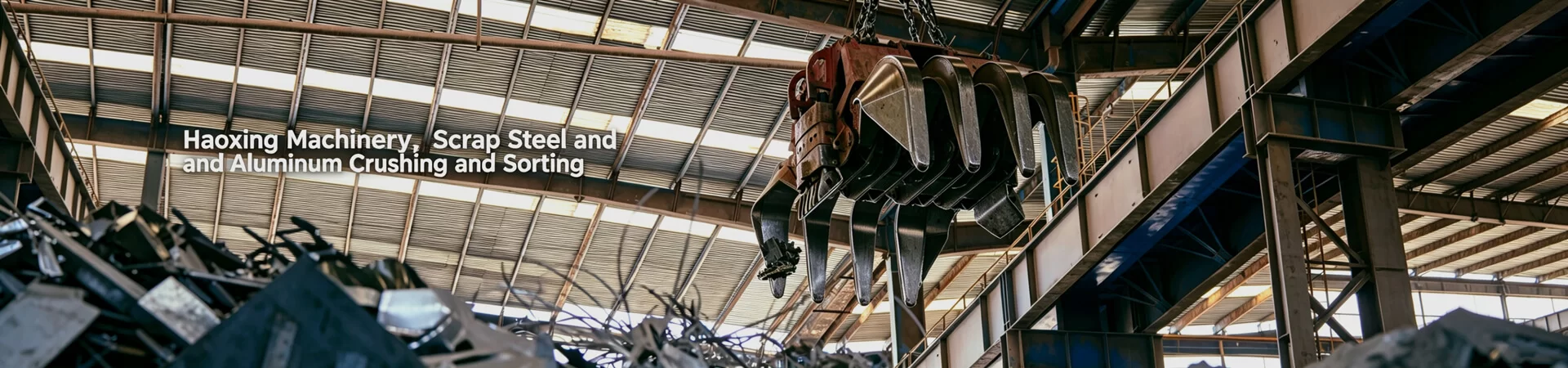
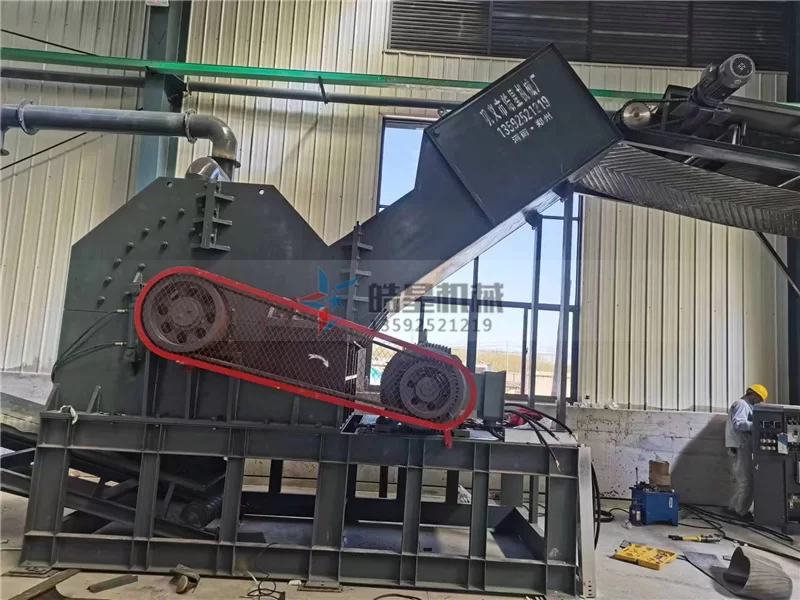
Scrap steel shredders are widely used in ferrous metal recycling, delivering significant value in resource regeneration through crushing, sorting, and environmentally responsible processing. Today, we explore their key benefits across three critical dimensions.
1. Enhanced Scrap Quality via High-Efficiency Sorting
A scrap steel shredder system consists of an integrated production line. High-speed rotating hammers or blades rapidly crush end-of-life metallic materials—including automobile bodies, household appliances, and structural steel—into uniformly sized particles. Subsequent magnetic separation and eddy-current sorting efficiently isolate ferrous metals (e.g., iron/steel) from non-ferrous metals (e.g., aluminum, copper) and non-metallic contaminants (e.g., plastics, rubber). Compared to traditional manual dismantling or shearing—which often introduces impurities—shredding achieves superior material purity. The resulting high-grade scrap meets stringent requirements for electric arc furnace (EAF) and blast furnace feedstock, commanding premium market prices.
2. Broad Material Compatibility Minimizing Resource Waste
Modern scrap steel shredders combine multiple crushing principles to handle diverse feedstocks: decommissioned vehicles, obsolete electronics, construction rebar, and mixed industrial scrap. The 2025-generation shredder lines accommodate heterogeneous scrap streams, meeting flexible downstream demands. By enabling precise multi-metal recovery—such as separate streams of aluminum, copper, and stainless steel—the system maximizes overall resource recovery rates and prevents valuable materials from being lost in landfill or low-value melting.
3. Eco-Conscious Design Reducing Smelting Costs
Compliant with current environmental standards, advanced scrap steel shredders feature integrated dust suppression systems (e.g., pulse-jet bag filters) and fully enclosed structures to minimize airborne metal particulates and noise emissions. The shredded output is compact and high-density, slashing logistics and transportation expenses. Crucially, purified, uniformly sized scrap requires less energy during melting—reducing fuel consumption, lowering slag generation, and cutting CO₂ emissions. This aligns directly with global trends toward low-carbon, green steelmaking.
In summary, scrap steel shredders serve as a cornerstone technology for the circular economy—transforming waste into high-value, ready-to-melt feedstock. For further technical specifications and customized solutions, contact Haoxing Machinery.