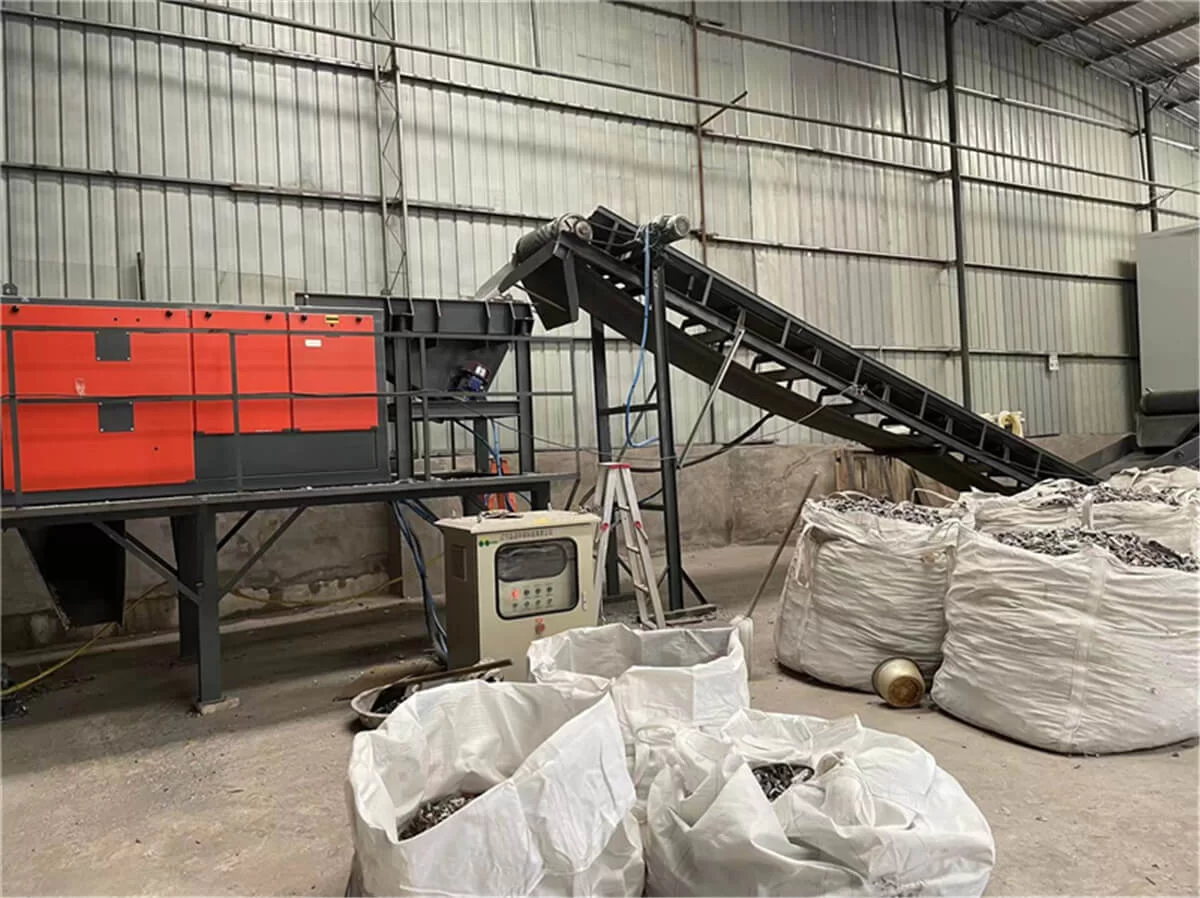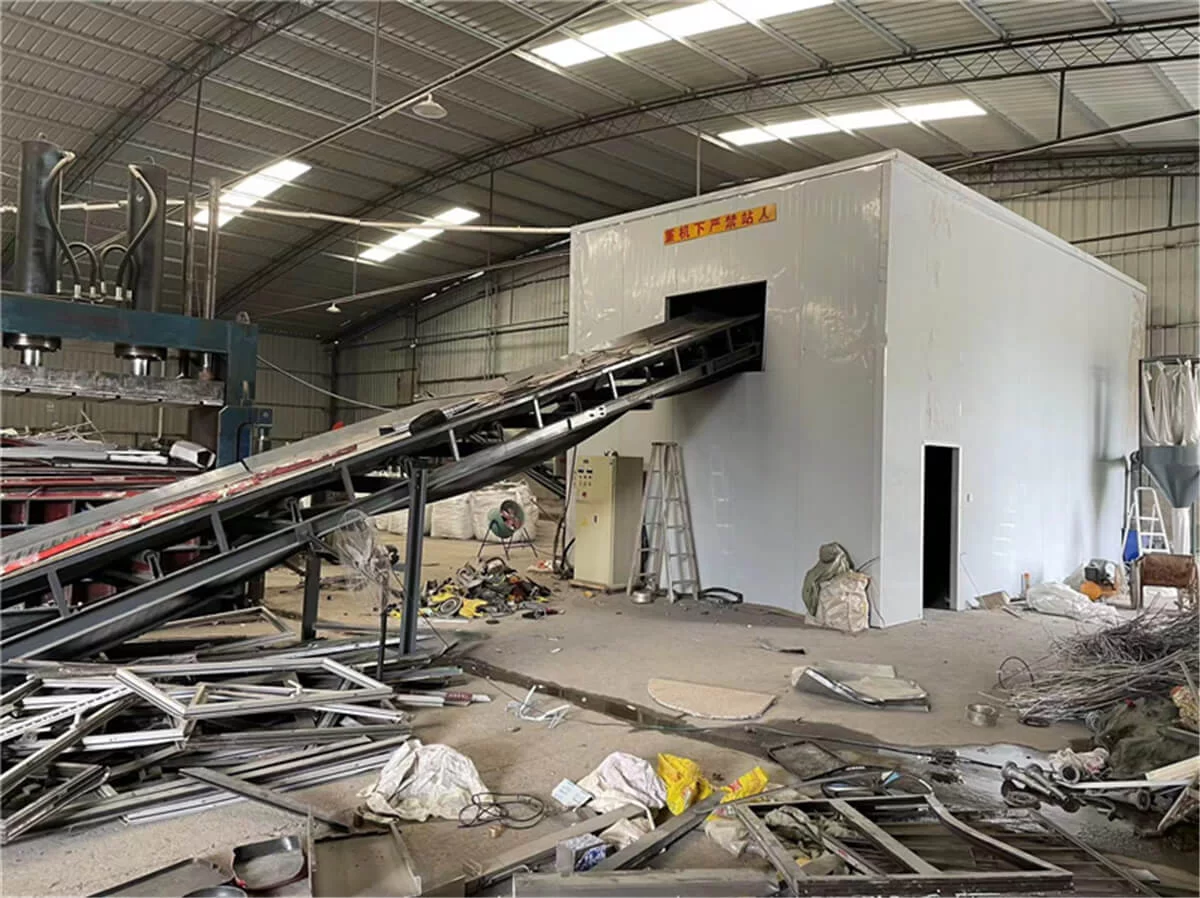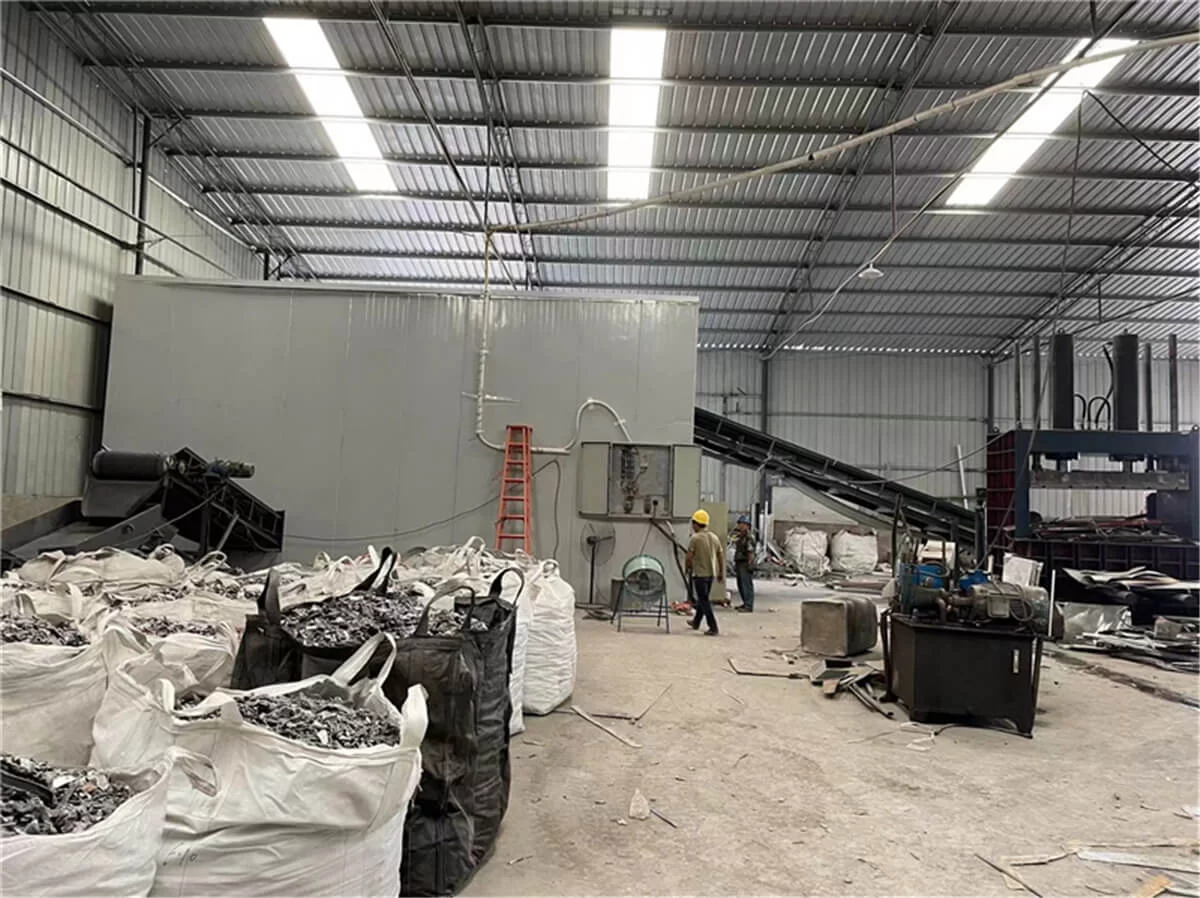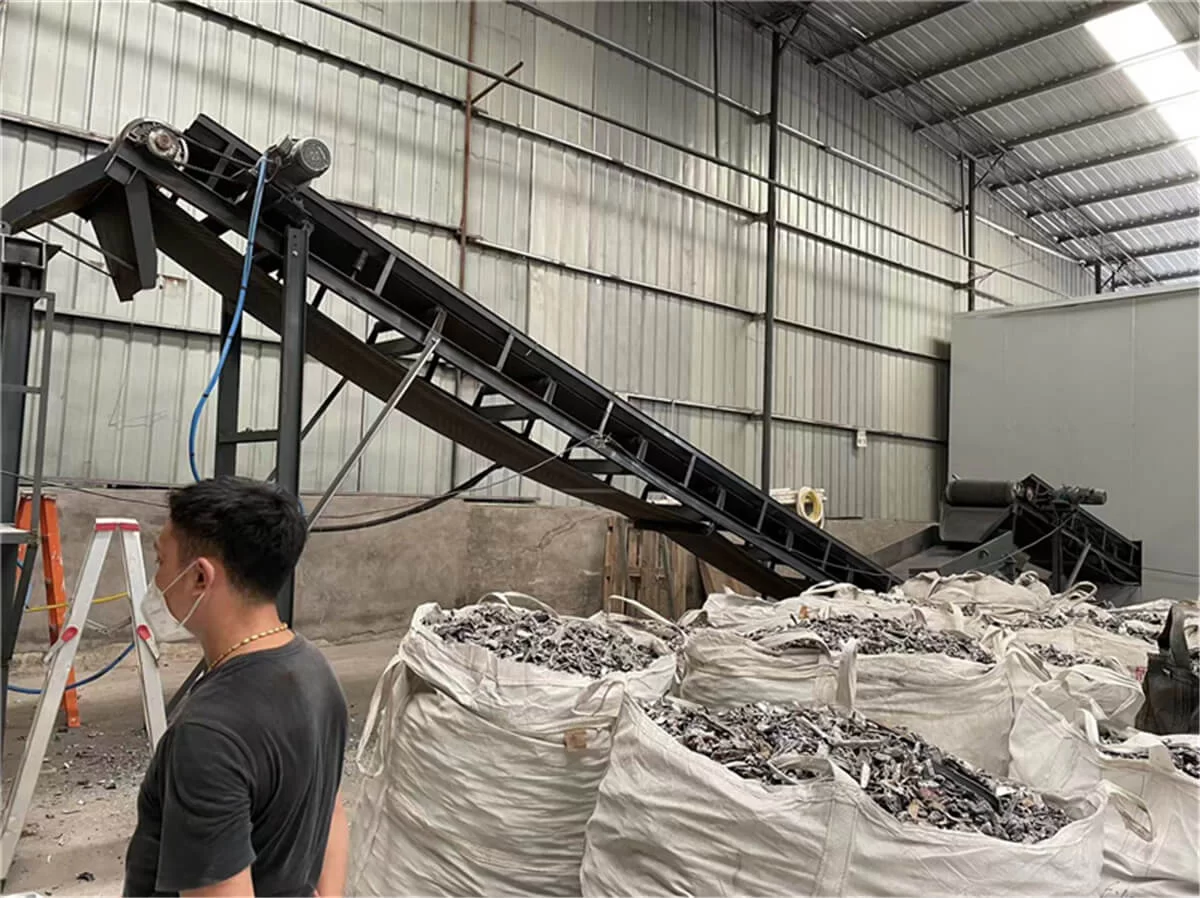
Aluminum Recycling Line

Applicable Materials: Scrap aluminum alloys, thermal break aluminum windows/doors, aluminum extrusions, cast aluminum scrap, wrought aluminum, machinery aluminum, aluminum dross, aluminum ash, used beverage cans (UBCs), aluminum sheet offcuts, and other waste aluminum products.

Product Parameters

Key technical information for quick evaluation.

Power
30kW-450kW(View Specs)
Production Capacity
0.8t/h-15t/h(View Specs)
Output Size
20mm-100mm(Screen Customization Available)
Production Line Composition
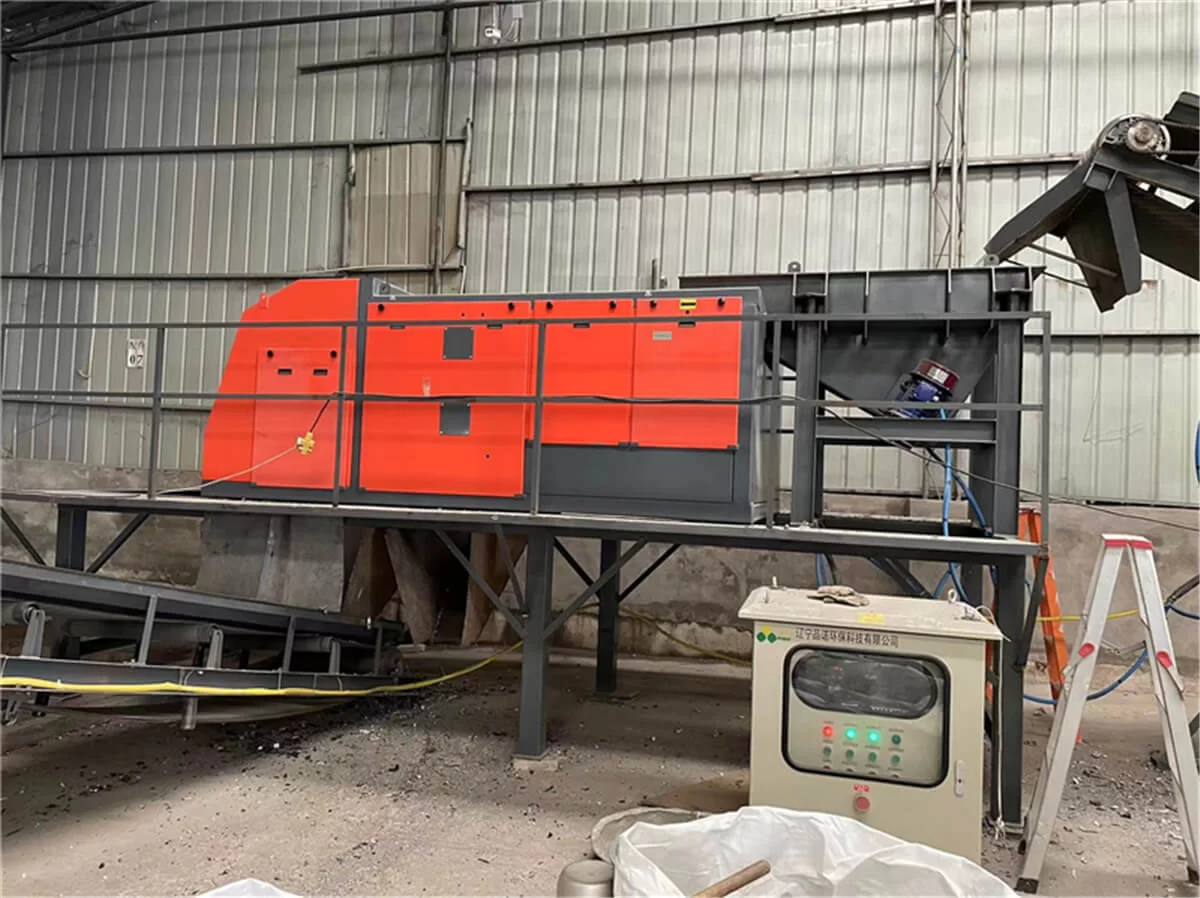
Scrap aluminum crusher main machine, distribution cabinet, motor, workbench, magnetic separator, eddy current separator (optional), double-shaft shredder (optional), etc.
Reference Price
(Price varies by model. See specs or call.)
Product Details

Aluminum Recycling Line

Review the equipment introduction, working principle, advantages and technical specifications in one clear page.

01

Equipment Introduction

Aluminum Recycling Line

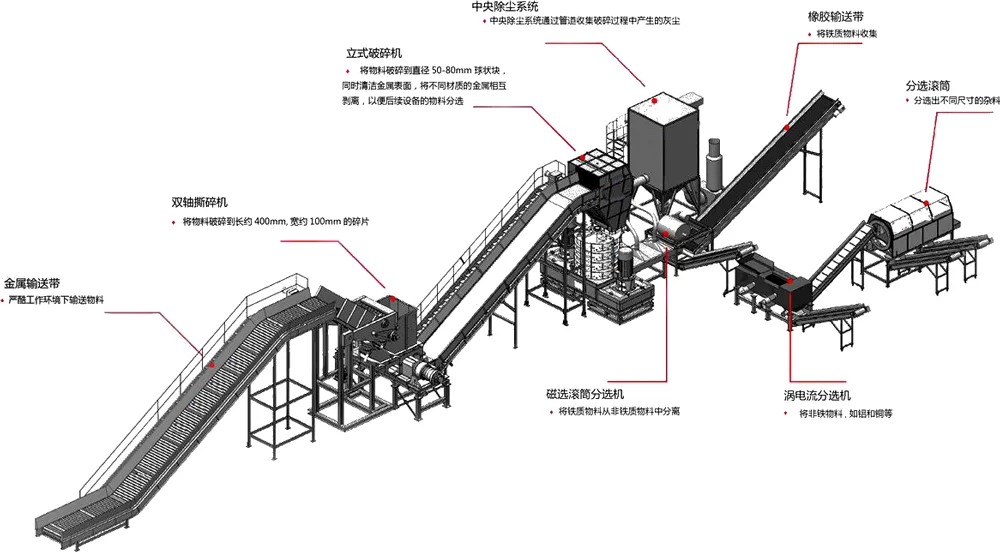
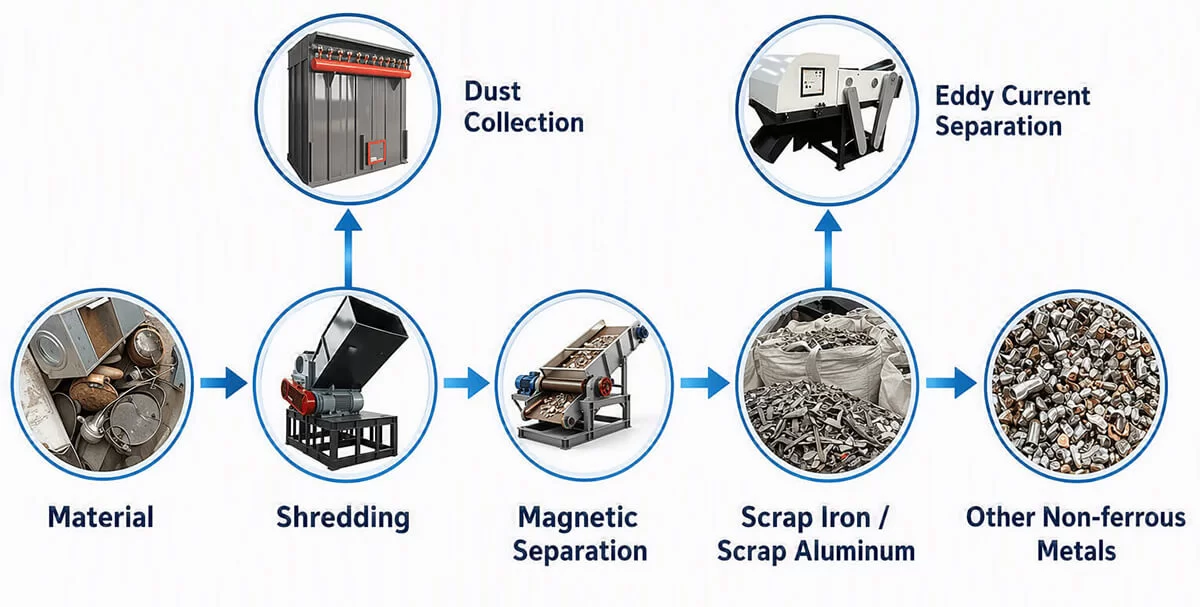
Scrap Aluminum Recycling Line Process Diagram

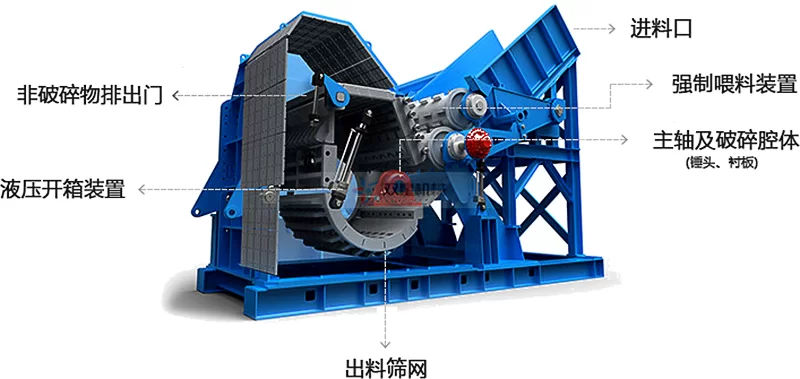
Haoxing Machinery's Aluminum Recycling Line is designed for processing scrap aluminum, aluminum profiles, aluminum alloy waste, UBCs, aluminum-plastic composite materials and other recyclable aluminum materials. The line can be configured with dual-shaft shredding, hammer crushing, magnetic separation, screening, eddy current separation, dust collection and conveying equipment according to material type, required capacity and site layout.

During operation, bulky aluminum scrap is first reduced in size by shredding or crushing. Ferrous impurities can be removed by magnetic separation, and non-ferrous metal separation can be further supported by an eddy current separator. Screening equipment can be added to classify materials by particle size before further separation or collection.

The processed material becomes easier for storage, transportation, sorting and downstream recycling. The final aluminum recovery result, particle size and material cleanliness depend on raw material composition, feeding size, contamination level, screen configuration and separation equipment layout.

This aluminum recycling line is suitable for scrap recycling yards, aluminum profile recycling plants, secondary aluminum processing sites and metal recovery production lines. Dust collection and other environmental control equipment can be configured according to material condition and site requirements.

Applications:

  • Scrap aluminum recycling enterprises

  • Aluminum profile recycling plants

  • Secondary aluminum processing sites

  • Thermal break aluminum window and door recycling

  • Aluminum profile manufacturing offcut recovery

  • UBC and aluminum can recycling

  • Aluminum component recovery from ELV and appliance dismantling

  • Aluminum-plastic composite material sorting

  • Selected aluminum dross and aluminum ash processing, depending on material condition and equipment configuration

02

Working Principle


   Scrap Aluminum Crushing and Processing Production Line Process

The aluminum recycling line uses a multi-stage processing system for scrap aluminum materials. The process can include shredding, hammer crushing, magnetic separation, screening, eddy current separation, dust collection and conveying according to material type and recycling requirements.

  • Shredding: Bulky aluminum scrap such as thermal break aluminum, aluminum profiles, aluminum frames and mixed aluminum materials can first enter a twin shaft shredder for primary size reduction. The shredder reduces large materials into smaller strips or chunks, making them easier for downstream crushing and separation.

  • Hammer crushing: After shredding, the material can be sent to a hammer crusher for further size reduction. High-speed hammers and wear-resistant liners crush the material into smaller pieces and help loosen aluminum from attached plastic, rubber or other non-metallic materials.

  • Magnetic separation: The crushed material can pass through a magnetic separator to remove ferrous impurities such as screws, nails, hinges, handles and steel parts. This step prepares the material for further screening and non-ferrous metal separation.

  • Screening: A vibrating screen can be used to classify the material by particle size. Different screen openings can be selected according to material condition and separator requirements. Proper screening helps improve the stability of the following separation process.

  • Eddy current separation: After screening, the material can be processed by an eddy current separator. Conductive non-ferrous metals such as aluminum are pushed forward by the repulsive force generated through electromagnetic induction, while non-metallic materials such as plastic and rubber are discharged separately.

  • Dust collection: A dust collection system can be configured according to material condition and site requirements. It helps reduce dust generated during crushing, conveying and sorting.

Scrap Aluminum Crushing and Processing Production Line Process:

03

Features and Advantages

Complete Production Line for Scrap Aluminum Crushing and Sorting

  • Heavy-duty structure: The main crusher and shredding equipment are built with a reinforced steel frame, wear-resistant liners and durable crushing parts for continuous aluminum scrap processing. The structure can be selected according to material size, feeding method and production capacity requirements.

  • Shredding, crushing and size reduction: The line can include a twin shaft shredder and hammer crusher according to material condition. Bulky aluminum scrap is first reduced into smaller pieces, and then further crushed to prepare the material for screening, magnetic separation and eddy current separation.

  • Wear-resistant parts: The shredder cutters, crusher hammers and liners can be made from wear-resistant alloy materials. Replaceable wear parts help simplify routine maintenance during long-term recycling operation.

  • Magnetic separation for iron removal: After crushing, the material can pass through a magnetic separator to remove ferrous impurities such as screws, steel parts and other magnetic materials. This step prepares the aluminum material for further screening and non-ferrous metal separation.

  • Screening and eddy current separation: According to material composition and output requirements, a vibrating screen and eddy current separator can be added after magnetic separation. The screen helps classify materials by particle size, while the eddy current separator helps separate aluminum and other conductive non-ferrous metals from non-metallic materials.

  • Dust collection and material handling: The line can be equipped with dust collection and conveying systems according to material condition and site layout. Enclosed or semi-enclosed configurations can also be selected to help reduce dust during crushing, conveying and sorting.

  • Suitable materials: The aluminum recycling line can process various recyclable aluminum materials, including scrap aluminum profiles, aluminum alloy scrap, thermal break aluminum, aluminum extrusions, cast aluminum parts, machine aluminum, UBCs, aluminum sheets and mixed aluminum scrap. For aluminum dross, aluminum ash or materials with high dust content, the configuration should be selected according to material condition and local handling requirements.

  • Customizable line configuration: Feeding conveyor, twin shaft shredder, hammer crusher, magnetic separator, vibrating screen, eddy current separator, dust collector, discharge conveyor and electric control system can be customized according to material type, capacity requirement, output size and site layout.

04

Technical Specifications

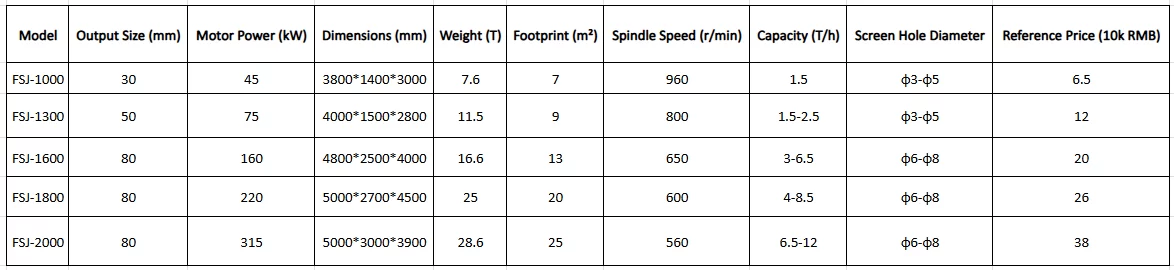
Parameter description diagram for Aluminum Recycling Line | Scrap Aluminum Crushing and Sorting System | Haoxing Machinery:

Scrap Aluminum Shredder Parameter Price List

Note: Specifications are for reference only. Actual capacity depends on material type, material form, feeding size, contamination level, screen opening and production line configuration. Custom configurations are available according to site layout and recycling requirements.

Manufacturer Service

Haoxing Machinery can provide process design, equipment manufacturing, installation guidance, commissioning support, operator training and after-sales support according to project requirements.

FAQ

Frequently Asked Questions

Find common questions about scrap metal crushers, shredders, recycling lines, equipment selection, capacity configuration and operation requirements.

QHow much does an aluminum recycling line cost?

A

The price of an aluminum recycling line depends on several factors, including processing capacity, equipment configuration, automation level, raw material condition, and required final product size. A basic aluminum recycling line costs less than a fully automatic system with shredding, crushing, sorting, and dust collection. To get an accurate quotation, customers can provide raw material photos, capacity requirements, and final output specifications.

QWhat is the capacity of an aluminum recycling line?

A

The capacity of an aluminum recycling line can be customized according to raw material and process design. Common project capacities may range from about 1-15 t/h or higher, depending on feeding size, material density, crusher model, separation equipment, and final discharge size.

QWhat materials can be processed by the aluminum recycling line?

A

The aluminum recycling line can process many kinds of aluminum waste, including aluminum cans, aluminum profiles, aluminum doors and windows, aluminum castings, aluminum radiator scrap, aluminum alloy scrap, and mixed non-ferrous metal materials. For materials mixed with iron, plastic, rubber, or other impurities, separation equipment can be added to improve the purity of recycled aluminum.

QWhat equipment is included in an aluminum recycling line?

A

A complete aluminum recycling line usually includes an aluminum shredder, belt conveyor, metal crusher or hammer mill, magnetic separator, eddy current separator, dust removal system, and control cabinet. The exact configuration can be customized according to the raw material type, required capacity, and final output size.

QWhat is an aluminum recycling line used for?

A

An aluminum recycling line is used to process different types of aluminum scrap, such as used aluminum profiles, aluminum cans, aluminum sheets, aluminum engine parts, and mixed light metal scrap. The line can shred, crush, separate, and clean aluminum materials to produce recyclable aluminum particles or metal pieces for remelting and reuse.

QIs the screen for scrap aluminum processing customized?

A

Yes. The screen or discharge configuration is selected according to the material type, required particle size, and production capacity. Different models may use different screen specifications.

Post a Question

Leave your question about material type, capacity, equipment model or recycling line configuration.

Verification code
Get A Quote

Get Instant Pricing & Specs

Send your email and tell us your material type, capacity requirement and site condition. Our team will provide equipment selection, technical specifications and quotation details.

  • Model recommendation
  • Capacity configuration
  • Recycling line quotation

Request Product Details

We usually reply with equipment details and pricing information as soon as possible.

WhatsApp
💬
WhatsApp
WhatsApp QR Code
Scan or click to chat with us on WhatsApp.