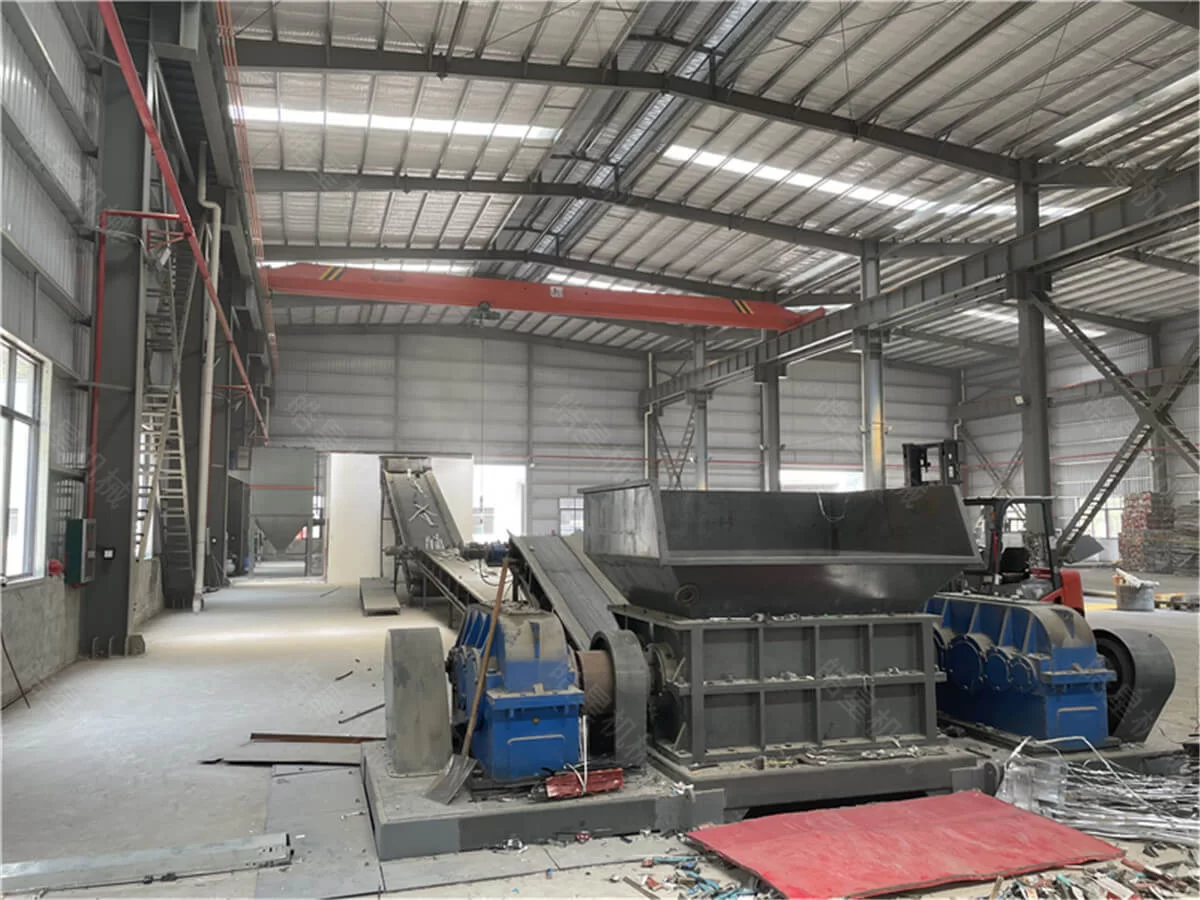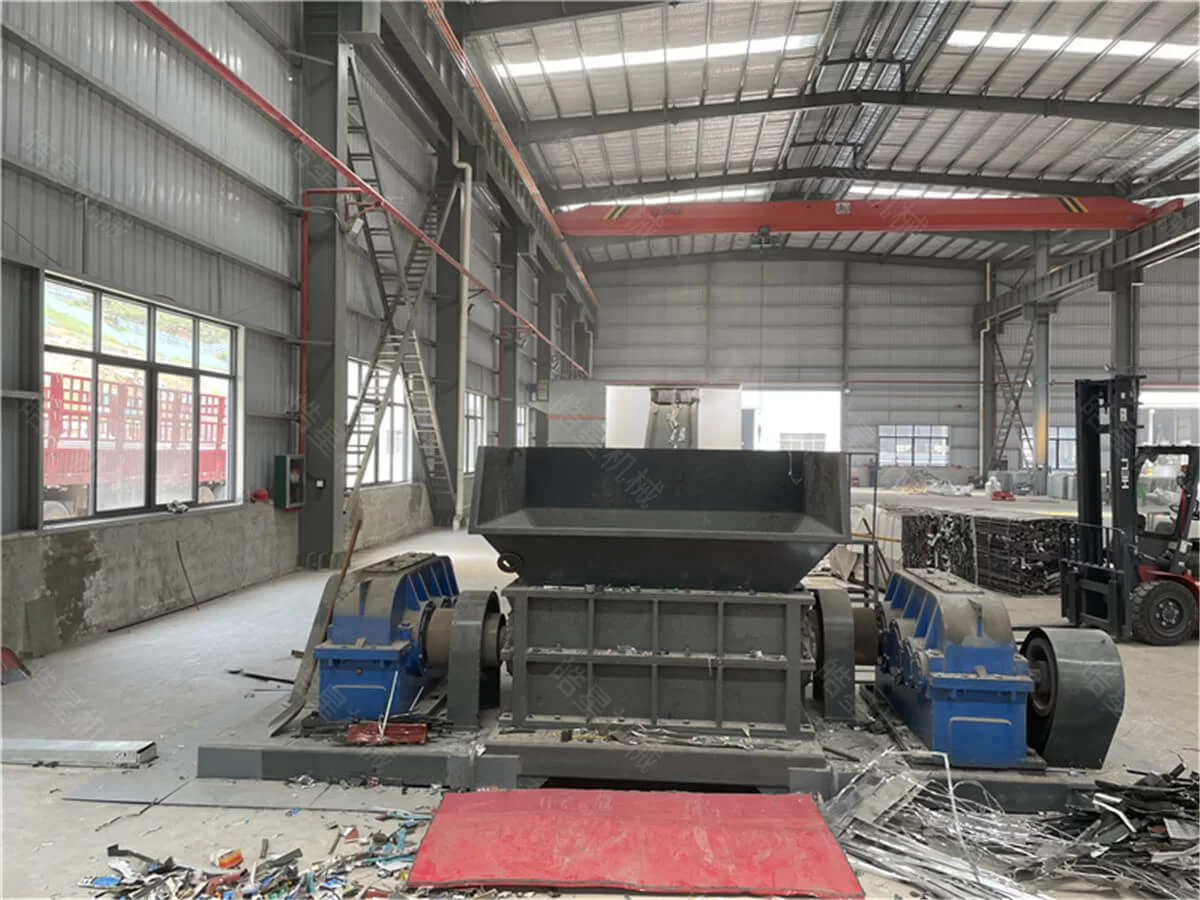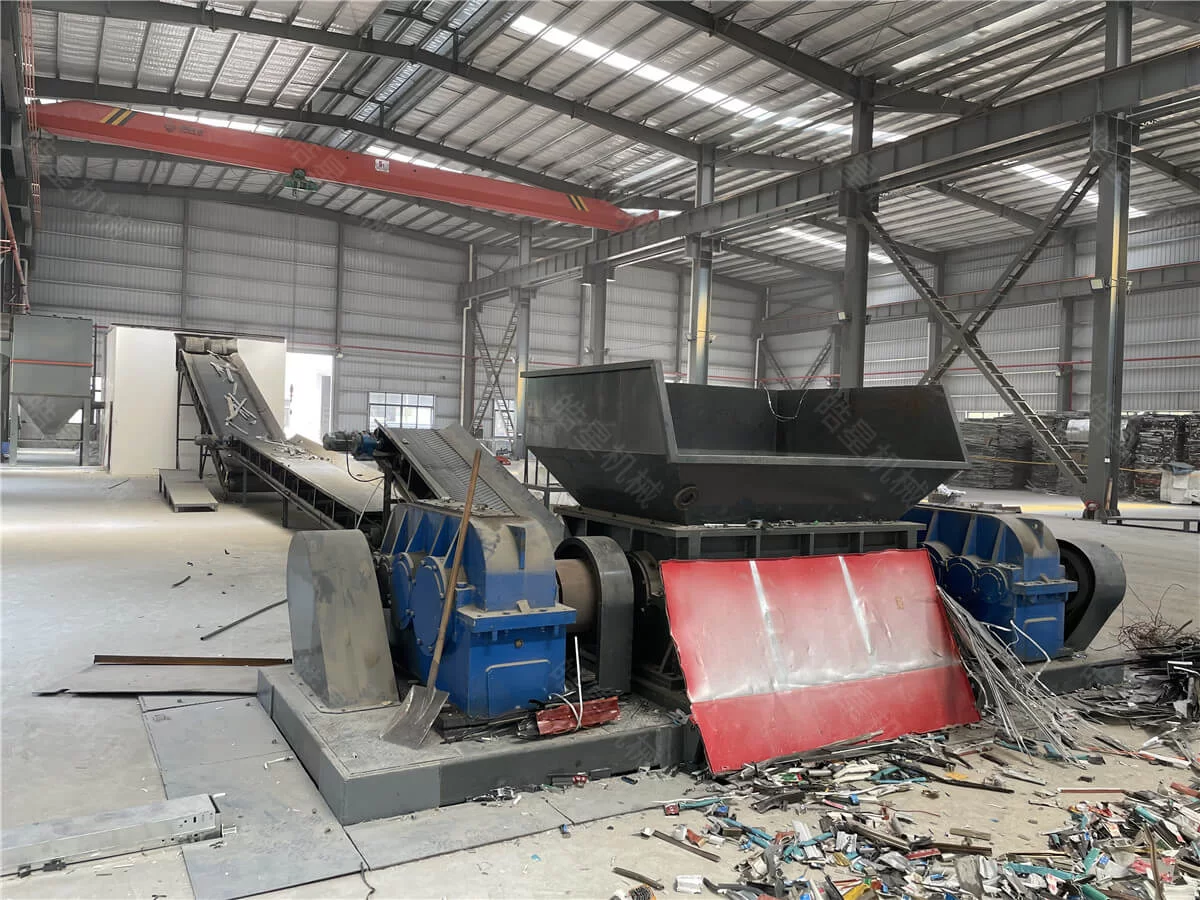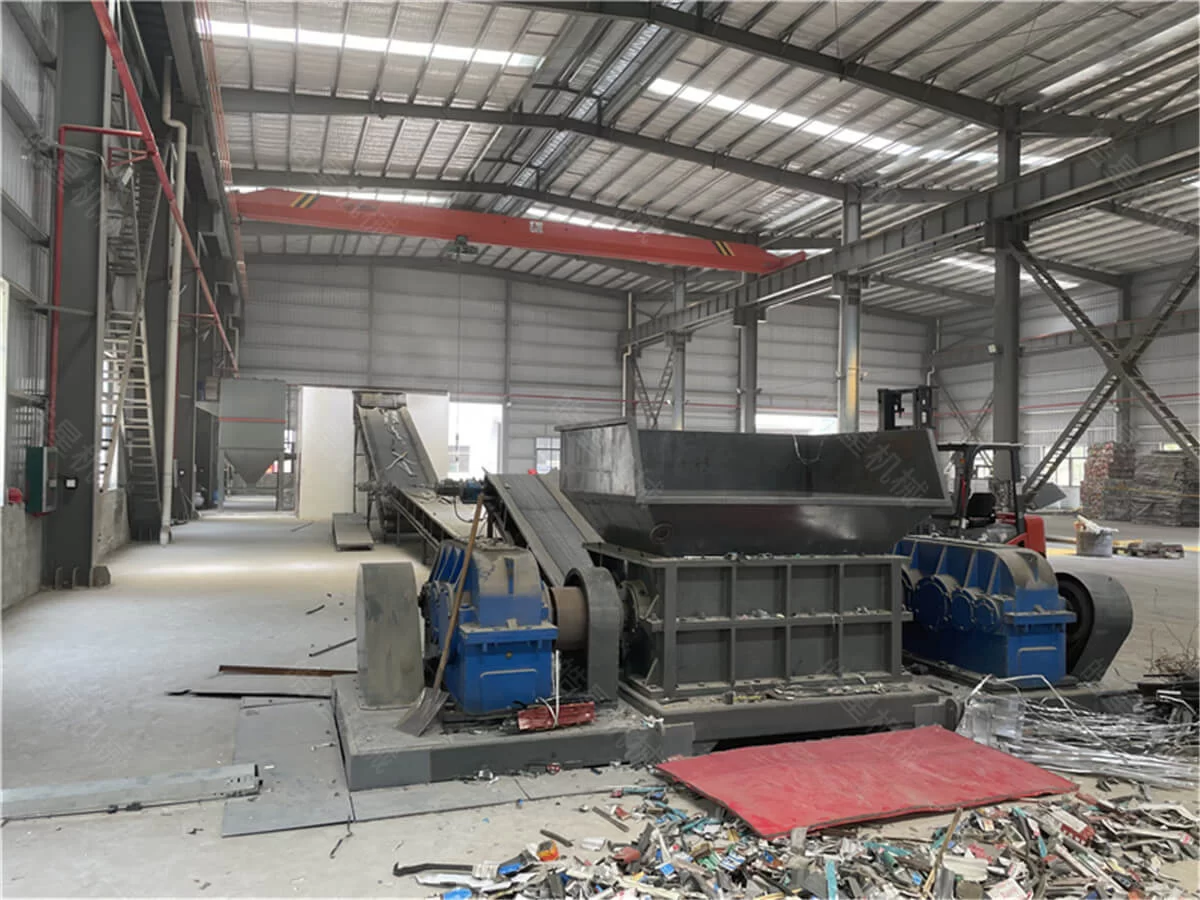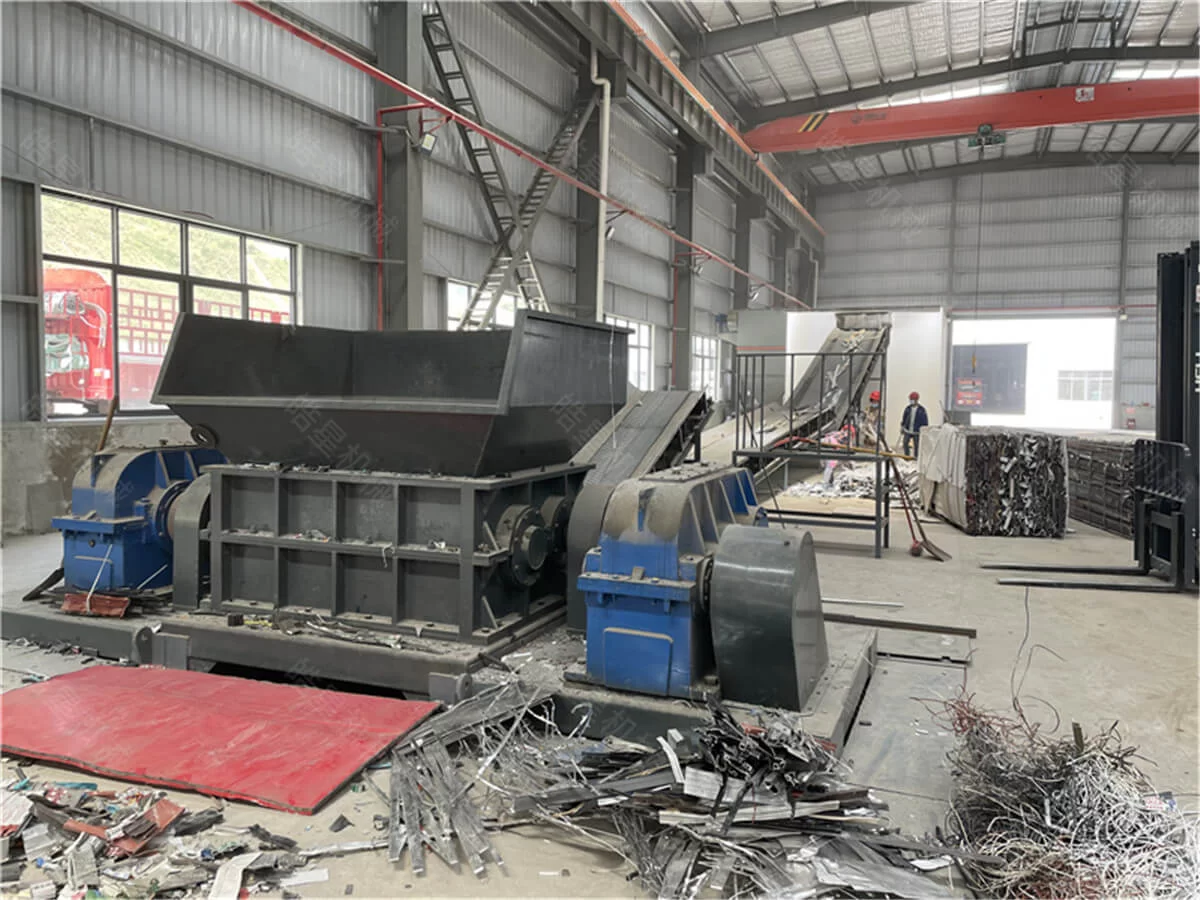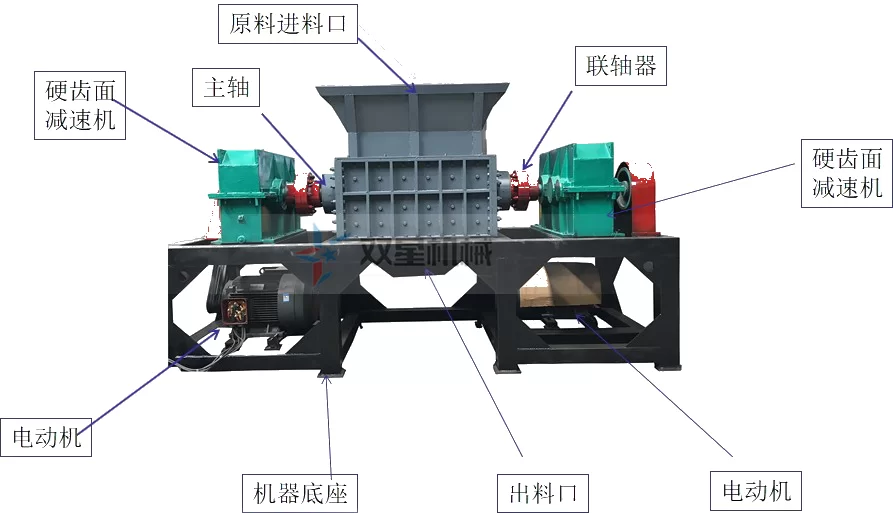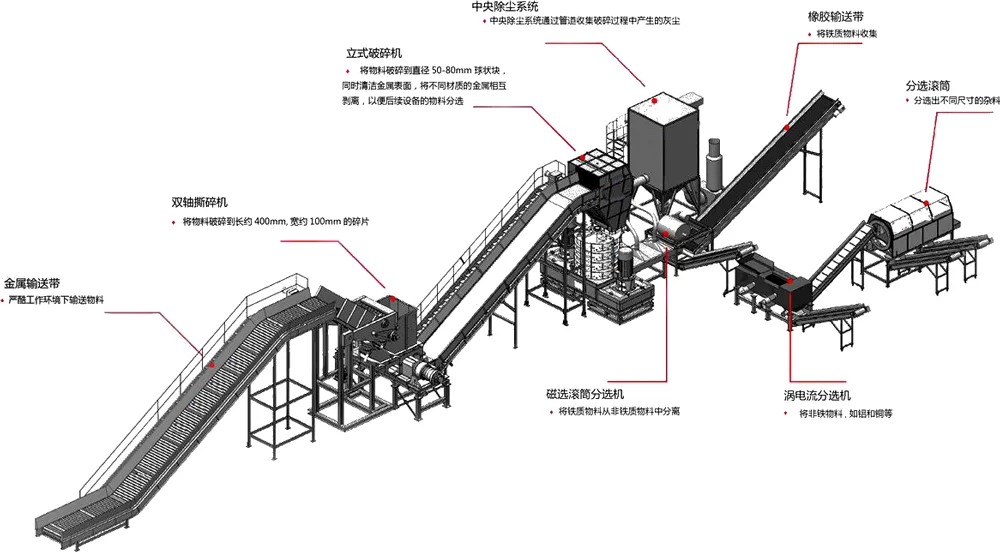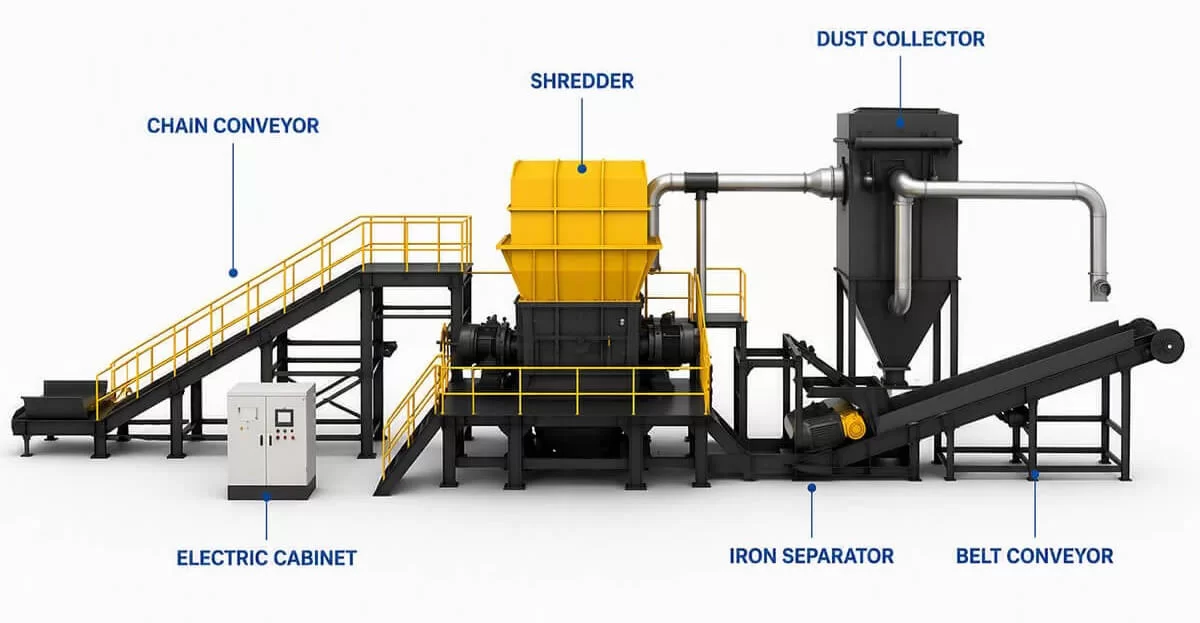
The Baled Scrap Shredding Plant operates as a coordinated system. The feeding equipment, primary shredder, discharge conveyors and optional separation equipment are started and controlled in sequence to maintain stable material flow.
1. Bale Inspection and Feeding
Before feeding, each bale should be checked for sealed containers, batteries, pressure vessels, fuel tanks, explosive items, oversized solid metal and other unsuitable materials.
Approved bales are loaded onto the feed conveyor by a grapple, loader or other material-handling equipment. The conveyor transfers the bale toward the shredder at a controlled rate.
The conveyor width, loading height, chain specification and drive power should be selected according to bale dimensions, individual bale weight and feeding method.
2. Bale Opening and Primary Shredding
The bale enters the twin shaft shredder, where two low-speed cutter shafts rotate in opposite directions. Cutter hooks grip the compressed material and pull it into the cutting chamber.
The bale is gradually opened through tearing, squeezing and shearing. The shredder does not rely on high-speed hammer impact and does not normally produce a precise, screen-controlled final particle size.
If excessive resistance is detected, the control system can stop and reverse the cutter shafts to help release the obstruction. The reverse logic and overload settings should be adjusted according to the processed material.
3. Material Discharge and Transfer
The opened scrap falls onto a discharge conveyor and is transferred to the next process.
The discharged material is normally coarse and irregular. Its condition depends on cutter width, hook profile, cutter spacing, shaft speed, material thickness, bale density and the number of cutting passes.
At this stage, the material can be:
Collected as opened scrap
Sent to manual inspection
Prepared for furnace feeding
Transferred to magnetic separation
Conveyed to a secondary crusher
4. Ferrous Metal Separation
When magnetic separation is included, the opened material passes below or across a magnetic separator. Exposed iron and steel are attracted and discharged into a separate collection area.
The separator should be selected according to material depth, belt speed, metal size, magnetic strength and required recovery condition.
Clean, single-metal bales may not require this stage.
5. Optional Secondary Crushing
If smaller and more uniform output is required, the pre-shredded material can be conveyed to a high-speed metal crusher.
The crusher uses impact and a screen to provide further size reduction. This is a separate processing stage and should only be included when required by the final product specification.
6. Optional Non-Ferrous Sorting
After ferrous metal removal and suitable material preparation, an eddy current separator may be used to recover aluminum or other conductive non-ferrous metals from a mixed material stream.
Not every material is suitable for direct eddy current separation. Particle size distribution, material spreading, moisture, iron removal and non-metallic contamination all affect separation performance.
7. Coordinated Line Control
The connected equipment can be operated through a centralized control cabinet. Equipment start and stop sequences should be interlocked to reduce material accumulation between processing stages.
Depending on the project, the control system can include:
Sequential start and stop
Shredder overload detection
Automatic cutter reversal
Conveyor interlocking
Emergency stop
Material jam alarm
Motor current monitoring
Bearing temperature monitoring
Remote operation and fault display