
Xiongbang Die Casting (Nantong) Co., Ltd. – Model 2000 Metal Crusher and Apron Conveyor Case Study
Project Overview
Xiongbang Die Casting (Nantong) Co., Ltd. is a wholly-owned subsidiary of Wencan Group (SHA: 603348). Founded in 2006, it is one of the largest and most technologically advanced die-casting enterprises in China and a state-certified high-tech enterprise. The company specializes in the research and development and manufacture of precision aluminum alloy automotive castings, including body structural components, integrated structural parts and battery housings, serving leading global automakers such as Mercedes-Benz, NIO, Li Auto, XPeng, Tesla, SERES, and GAC Aion. In 2024, Xiongbang received the third prize of the Jiangsu Provincial Science and Technology Award; in the January–August period of 2026, both output and sales doubled year-on-year.
For a plant that produces over ten thousand integrated high-pressure die-cast rear floor panels per month, return-scrap handling at the melting furnace directly determines whether the entire line can keep pace. The die-casting process naturally generates a steady stream of runners, biscuit ends, edge trimmings and rejected castings — "return scrap" that arrives in every conceivable size and shape. Over-sized chunks melt sluggishly, hogging furnace space, while the mixed geometry keeps piling up at the furnace mouth until somebody with a steel bar pushes it through. At best, it ties up manpower; at worst, it poses a safety risk.
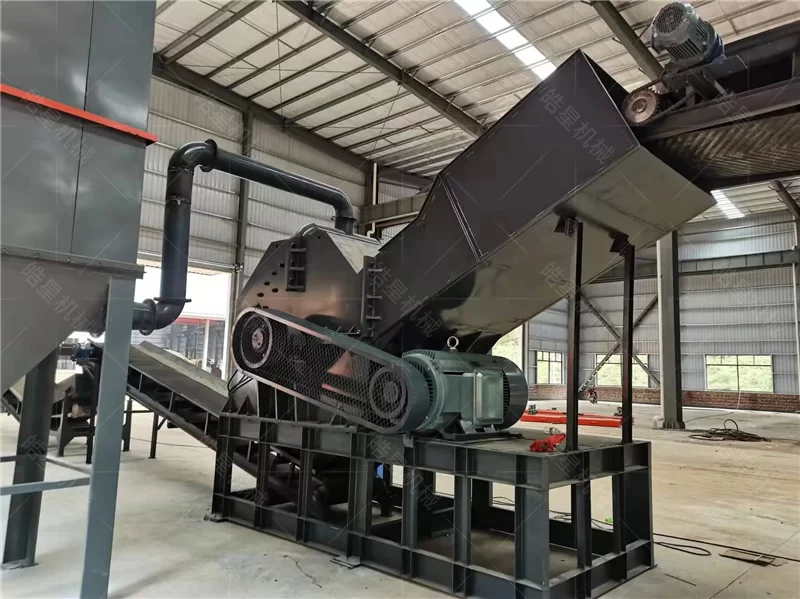
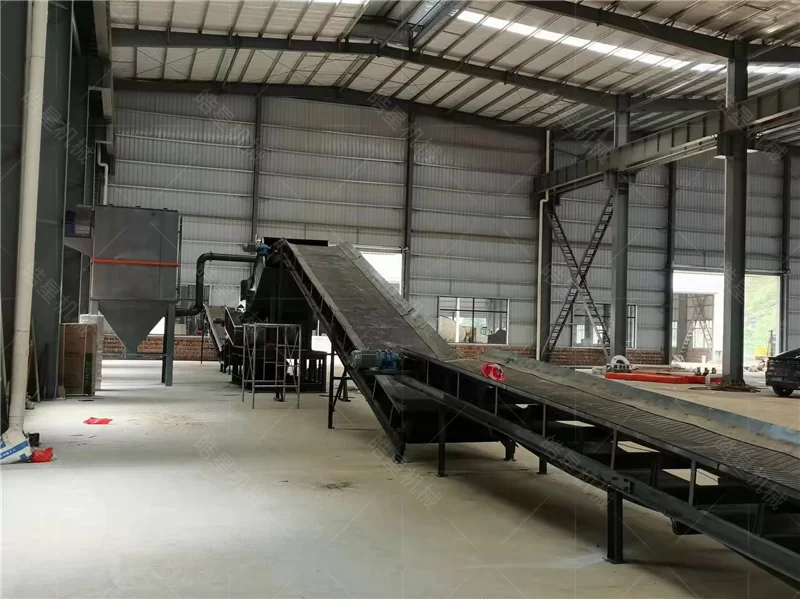
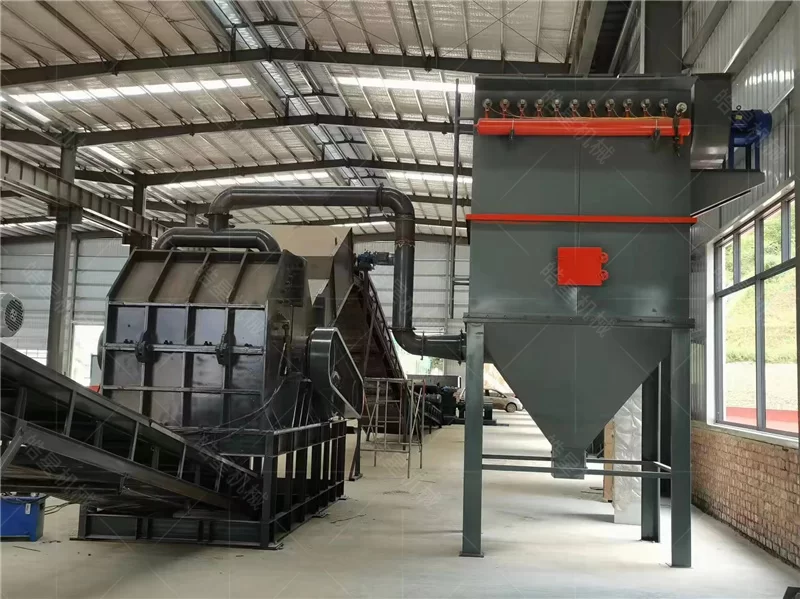
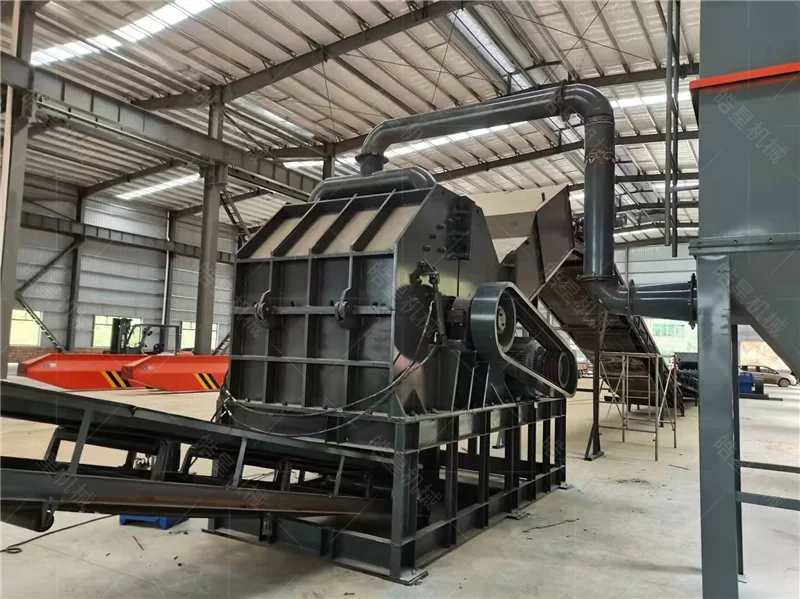
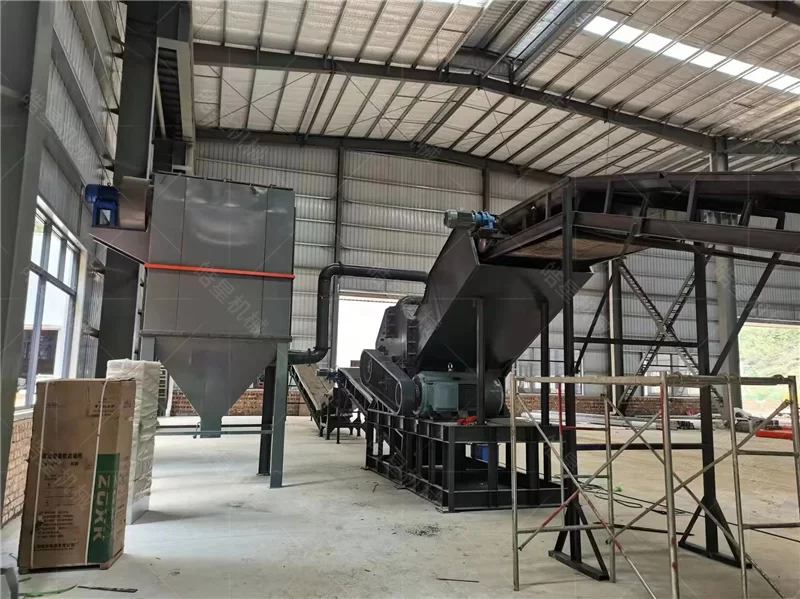
In June 2024, Xiongbang installed a Model 2000 metal crusher and a matching apron conveyor from Gongyi Haoxing Machinery, assigned solely to uniform pre-furnace preparation of return scrap. The workflow is simple: a forklift dumps runners, biscuit ends and rejected castings straight into the apron-conveyor hopper, which feeds the crusher at a steady rate. The crusher's hammers reduce large blocks to a uniform 50–80 mm output, conveyed directly into the furnace feed bins.
What looks like a modest setup resolved two long-standing bottlenecks. First, charging switched from erratic hand-feeding to a steady, even flow — the scrap melts faster and more thoroughly inside the furnace. Second, the charging platform no longer needs a dedicated worker poking the furnace mouth with a pry bar, cutting both labor and risk. The technical team tracked three identical-recipe batches before and after commissioning: after uniform crushing, average melt-cycle time was cut by about 12 minutes per heat, and natural-gas consumption per tonne of aluminum dropped by roughly 7%. As the workshop manager summed it up: “The equipment didn't cost a fortune, but the gas and labor savings paid it back within months.”
Client Testimonial

Mr. Tang, Plant Manager
Xiongbang Die Casting (Nantong) Co., Ltd.
On-site Application
Core Equipment Advantages
Stable Operation
High-strength steel welded frame/ stress-relief annealed/ eliminates cracking from long-term vibration
Extended Service Life
Crushing chamber liners in high manganese steel (Mn13/Mn18) or alloy wear steel/ work-hardened surface hardness up to HB 500+
High Throughput & Efficiency
Large-diameter rotor design/ peripheral speed matched to material/ 15%-20% more efficient than peers
Easy Maintenance
Hydraulic or mechanical lid opening/ one-key chamber access/ replace liners/ hammers without lifting tools