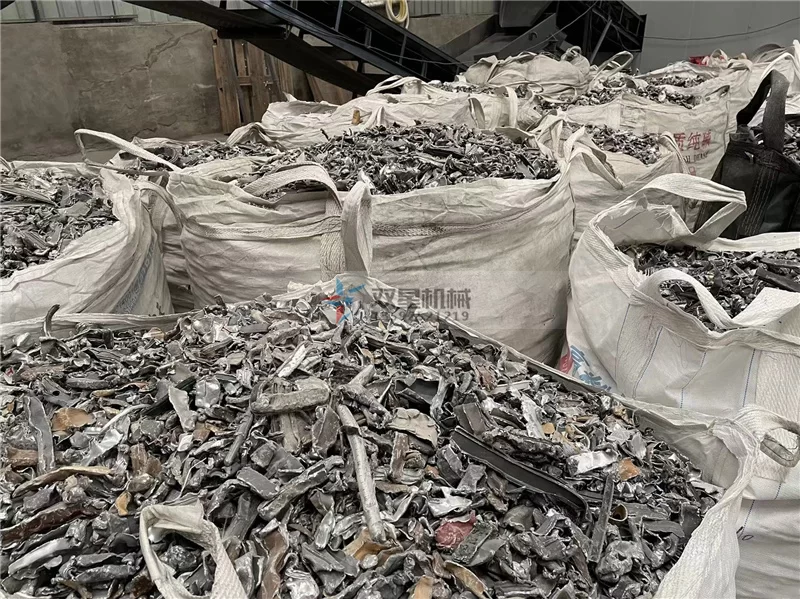
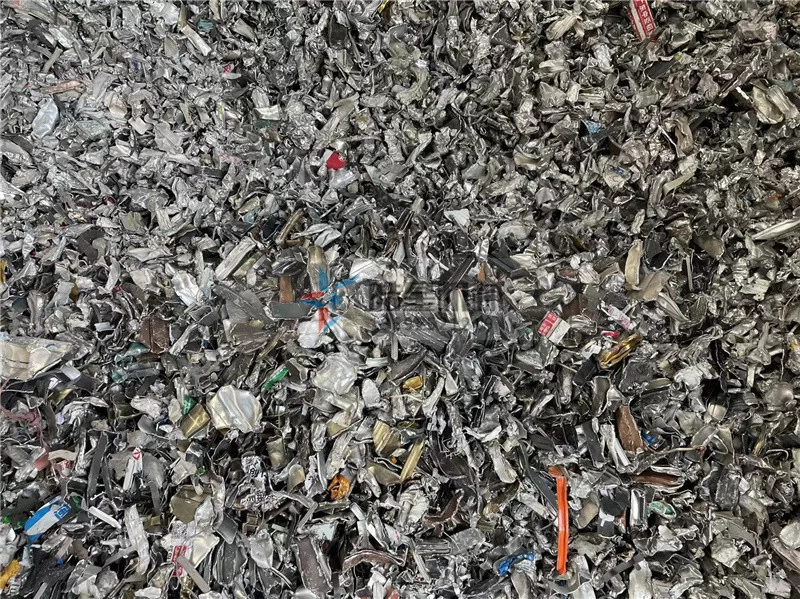
Project Overview
Engine housings made of secondary aluminum casting alloy, which contain elements such as silicon and copper, are characterized by high hardness and good toughness. Conventional crushing methods struggle to achieve ideal particle sizes. Using a high-efficiency twin-shaft shredder equipped with a heav
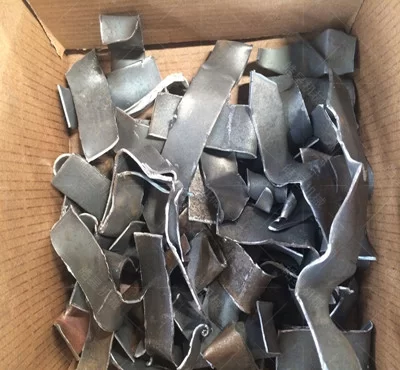
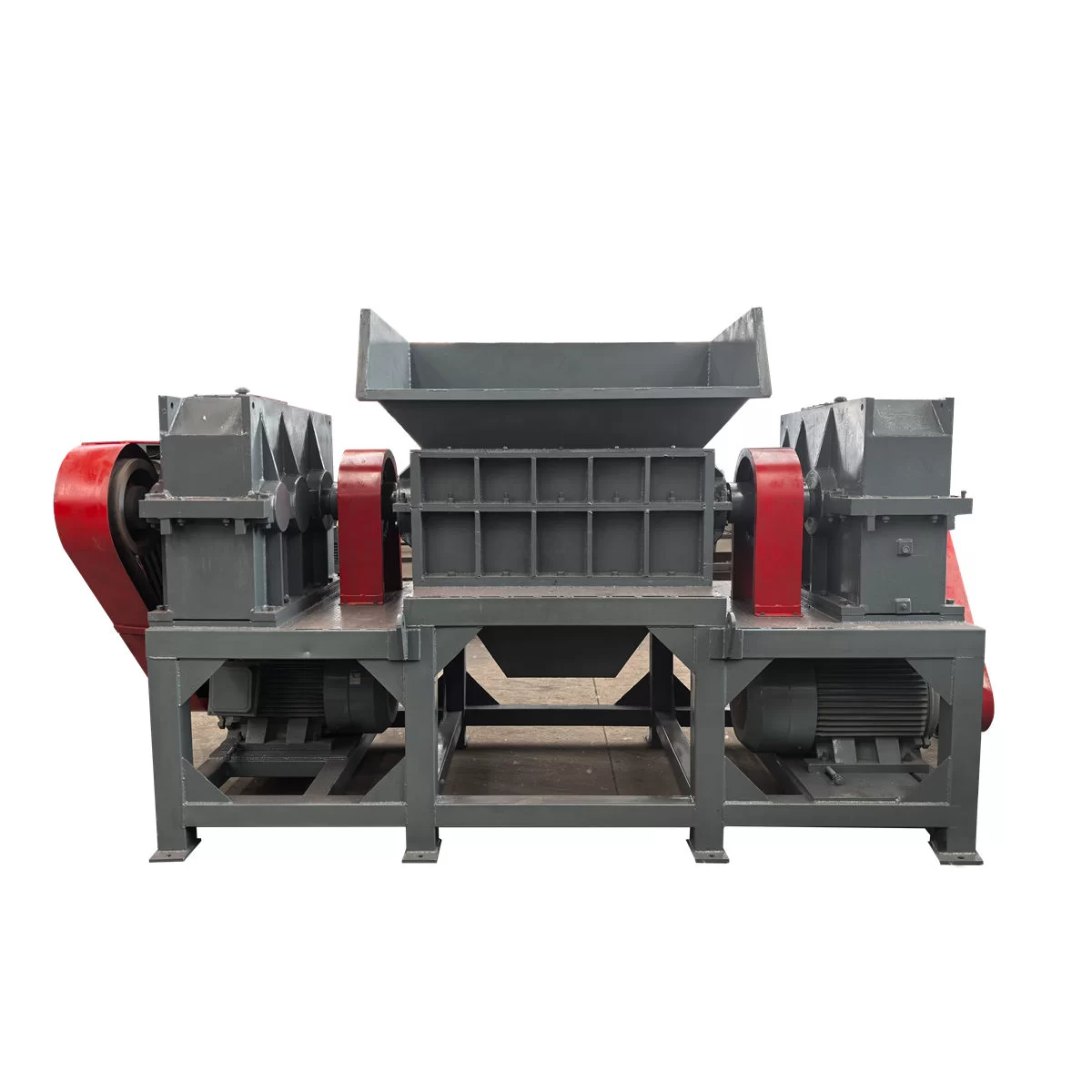
Engine housings made of secondary aluminum casting alloy, which contain elements such as silicon and copper, are characterized by high hardness and good toughness. Conventional crushing methods struggle to achieve ideal particle sizes. Using a high-efficiency twin-shaft shredder equipped with a heavy-duty rotor structure can significantly improve the shredding effect.
The rotor features alternately arranged alloy tools with a tip hardness of HRC62 or above, enabling effective biting and tearing of the housing. When the engine housing enters the shredding chamber, the rotor rotates at low speed with high torque, generating strong shearing and pulling forces. The casting surface is first cut open, and then the internal ribbed plates and thick-walled areas undergo plastic tearing, ultimately forming irregular pieces of 50–80 mm. The shredded material exhibits a bright white cross-section without oxidation or burning, and the aluminum recovery rate can reach over 98%.
Experiments show that when the rotor speed is controlled at 25–35 r/min, the single-machine processing capacity reaches 2–3 tons per hour, with an energy consumption of approximately 45 kWh per ton. Compared with hammer crushing, rotor shredding avoids aluminum chip splashing and excessive pulverization. The shredded pieces facilitate subsequent magnetic separation for iron removal and smelting charging. Melting tests indicate that the shreds reduce melting time by 30% and lower aluminum melt loss to less than 2%, delivering significant economic benefits. In conclusion, the dedicated rotor design achieves the ideal shredding result for secondary aluminum engine housings: “crushing without oxidation and uniform piece size.”